Interview with S. Smith
 I’m excited to share with you all an interview with S. Smith, author of Seed Savers
1. This is quite a political statement, was that your intention?
Not so much. I think it was more about my love of good food. Seed Savers is a love story starring home-grown food. I love food—growing, harvesting, cooking, eating, and sharing it. And I think a lot of people these days maybe are missing out on that. I grew up on a small family farm and we always just ate what we grew, putting the fruit and veggies up for the winter and enjoying the goodness of how much better everything tasted than the “store kind.” Sure, politics obviously comes into the book, but it’s much more than that.
2. I read on your blog that Senate Bill S510, the Food Safety Modernization Act, inspired the story line. But what made you choose to tell the story through the eyes of children for children, instead of writing a piece more geared towards adults?
Actually, although I mention Senate Bill S510 as being the idea behind my story, I believe I wrote Seed Savers prior to hearing about it. I started writing Seed Savers in April of 2010, and most of the internet frenzy on the bill came out after that. I think a friend told me about the bill after reading a draft of my story—it’s hard for me to remember exactly. The inspiration for the book and the reason I wrote for children is covered in the blog titled “How It All Started”(May 2012).
3. There are many documentaries floating around about the habits of companies similarly described in the history of your futuristic world. Have you seen any of them? If so, which ones did you consider the most inspirational or informative? (I’d like to watch them.)
Here in Salem we enjoy the Salem Progressive Film Series, which is a “volunteer organization dedicated to educating and raising awareness of important current events.” They bring in great documentaries and speakers once a month. I have enjoyed going to many of these. I’ve watched movies on water, dirt, food, urban gardening, MONSANTO, etc. As mentioned in the “How It All Started” blog, Food, Inc. truly was a part of the inspiration for my book.
4. You must be a gardener! What are your favorite household ‘crops’? (Mine are lemon balm and rosemary – for the smell, of course.)
Oh my gosh. Well I do live right in the center of town, so I only have a very limited amount of space for my own little garden, but I do love growing tomatoes—I’ve been starting my own from seed for about the last four years—and yes, the fresh herbs are wonderful (cilantro, basil, sage, rosemary, thyme, parsely, dill, oregano….). I also have strawberries, raspberries, blueberries, and one boysenberry bush.
 5. The lupines are a symbol of safety for the children during their flee from oppression to knowledge and fruitfulness (both literally and figuratively). Why the lupine? Does it hold special significance for you?
Well, I think that’s covered in the book. Mt. St. Helens is sort of in our backyard here in Oregon, so we get a lot of coverage about whatever is going on up there. I either heard on t.v. or read somewhere that lupines were the first plant life to come back after the devastation of the volcanic eruption and I jotted it down to use in my book. I still have the scrap of paper on which I wrote it down.
6. Seed Savers is reminiscent of titles like The Giver and Invitation to the Game. Do you often read dystopian society literature? What are your favorites?
The Giver is one of my favorites. I also really love Fahrenheit 451 and The House of the Scorpion.
7. Your book is peppered with verses from the Bible as well as symbols regarding Mother Earth. Do you mind me asking about your religious beliefs? What’s your life’s mission statement? (This is something I find particularly fascinating about writers in general, how C.S. Lewis’ beliefs seeped into The Chronicles of Narnia, the infrastructure of Orson Scott Card’s science fiction and that of Mormonism, and so on…)
“To act justly, love mercy, and walk humbly…” 🙂 I am a Christian, but more importantly, I had to be true to my characters. I didn’t want flat characters, and children at that age often do go to church and have strong beliefs. My two favorite books, Peace Like a River and The Secret Life of Bees, both have spiritual themes running through them. And let’s not forget that Twilight begins with a quote from Genesis.
I certainly hope the book can be viewed for all of its layers and not dismissed on account of some Bible verses.
8. When can we expect Book Two in your series? Have you written the whole series and just timing their releases or are you writing as you go? (I’m dying for the next installment already!)
Thanks! Book two, Lily, will probably be out sometime in August. It is completed and in the editorial process right now. Treasure will be available on Kindle devices soon (in process right now). I have not written the entire series yet, but do have a brief outline. I am currently about one quarter of the way through the first draft of book three.
9. The kids do a lot of traveling as they run away from home to Canada, in the last third of the book. Do you enjoy travel? Have you been to Canada? What are your favorite things about both your hometown and your favorite place to visit?
Is this a spoiler? Yes, I enjoy traveling a lot, but as I get older, I dislike flying more and more. I have been to Canada, but only British Columbia, not Quebec.
Oregon has often been referred to as “the Eden at the end of the Oregon Trail,” and for good reason. It is very green here, and we have gorgeous lakes, rivers, and forests. I live in the Willamette Valley, so when I go to a place without mountains in the horizon, it’s a bit disconcerting.
My favorite place to visit is Logan Pass on the Continental Divide at Glacier National Park in Montana. Even though I live in a valley, I absolutely love standing on the top of high places and looking down. 🙂
10. Is there anything you’d like to share about yourself or your work to your readers and fans that hasn’t already been discussed?
I think Seed Savers is very timely in regard to topics such as the urban garden movement, food deserts, childhood obesity, school gardens, etc. The science teacher at my school (who also has a gardening class) was very much of a help and encouragement to me as I was writing the story. We like the idea of kids having a novel to read in science or gardening class for that literacy tie-in. In regard to my writing process, I don’t always know what my characters are going to do next. They often surprise me as much as they might surprise you (perhaps even more so!) 🙂
Thank you for interview!
Agatha, Eggs, and Book Hounds
In my pursuit to read all things Agatha Christie, I have been reading through her entire Crime Collection. It’s a 23 month program that I set up for myself. I love reading things in lists this way, but the only draw back is in getting an awful lot of Christie at once. In doing that, I found one I didn’t care for a lot faster than I would otherwise. Three Act Tragedy just didn’t do it for me. It wasn’t as exciting, it wasn’t a page-turner. I’m not sure if its my mood, if this one just isn’t my style, or if its Egg. Yes, I have a problem with Egg, and in a bit of stream of consciousness, I will tell you why.
I’m not sure if I don’t like her character or if I’m just hung up on her name. I just know for certain that I can’t go along with the idea of naming a character Egg. It really bothers me. The only remotely forgivable occasion is in True Blood, where there is a rather tall gentleman by the name of Eggs. 1. He’s a dude. 2. There’s an ‘S’ which gives me the impression that maybe its supposed to be his last name. 3. You can call anyone almost anything in the South, but Europeans should be a little more respectable in my opinion. I can say that, I’m from Texas.
I read “Egg” and am immediately filled with images and smells:
* green lights, The Great Gatsby, and eggs for neighborhoods
* lots of colors, Easter egg hunts, odors from the yard due to un-found treasures (yuck)
* yummy smells, too…. breakfast. omelette. Hobo omelette are the best.
* the feel of a cold egg cracking under my fingertips, I like the sound of the crack too
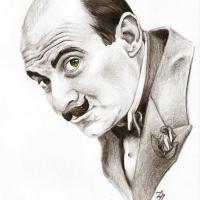
Good or bad, none of these sounds, smells, and recollections should be brought to mind from a charismatic female character in a murder mystery. How funny, too, that she even says “That is a bit catastrophic. To go through life as a Mugg -” in reference to another’s name. Whereas I think, more catastrophic than to be called “Egg”? While pondering this, Sir Charles interrupts my thoughts with some chatter about the murder and then says, “Oh, damn, why do I beat around the bush?” At that, my middle school humor kicks in and I begin to giggle as Egg is being spoken to by a man who used the word ‘beat.’ I immediately feel the need to make a Quiche, or a cheesecake, rather than solve a murder. Although Poirot is the best sleuth around and it is said that he has an egg-shaped head.
Oh Hercule Poirot! “That man! Is he back in England?” “Yes.” “Why has he come back?” “Why does a dog go hunting?” – 3rd Act, Part 10
Although, naming a character Sir Bartholemew Strange nearly makes up for this little irritation about the Egg. In fact, it would be a great name for a dog. I would call him Bartie for short, and I think perhaps he should be a hound of some kind. I have a beagle named Geoffrey Chaucer, perhaps Bartie could be the Walker Hound of my future. I’d love to have a Jack Russell named Agatha. Mmmm, no, not a Jack Russell. I’d like Agatha to be a Fox Hound…
A Piece of Steinbeck

Click on the Book Cover to visit the National Steinbeck Center website.
Title: Of Mice and Men
Author: John Steinbeck
Publisher: Penguin
Length: 103 pages
A friend asked me if Of Mice and Men was a good representation of Steinbeck’s work. Not having read it, but being a die hard fan of East of Eden
Of Mice and Men was written as an experiment, so says the inside jacket of my beautiful Penguin Centennial Edition. Steinbeck himself called it, “a kind of playable novel, written in novel form but so scened and set that it can be played as it stands.” Its true, it is a playable novel. And as complete as a lone standing novella, it could also be a brief chapter in a full length Steinbeck saga that I’ve grown to expect.
My favorites by Steinbeck are long sweeping story lines of depression, written with perfection, where Of Mice and Men is a short stint featuring a relationship between two men as one struggles with the lines between gentility and brute force. When I think of Steinbeck, its for his onion layers of generational secrets, sins, and passions. If given this in hand written form, not knowing what it was from, I think I would guess Steinbeck, but ask where the rest of the book is, thinking this was a bit of back story to something much more epic. I wouldn’t call this a short representation of his work though, its so unique and different. It feels more like a small little corner of his brain, a little tiny piece of the puzzle that makes up Steinbeck’s genius.
For starters, there’s much more dialogue than I usually see in Steinbeck’s pieces, true to the form of a play. There are far less propelling descriptions that push you along a timeline, instead of equating my reading experience to a landscape often seen in those large European antiquarian homes and museums, I feel like I’m looking at one scene or portrait on an average sized canvas. I wasn’t left with a deep sense of having been, step for step, in the same place the characters had walked, like I did with East of Eden. I closed the book saddened at Lennie’s plight, but did not feel the overwhelming gush of reality being poured upon me by a starving man seeking nourishment from the breast milk of a woman who had just delivered a stillborn baby in a barn.
Steinbeck succeeded in his play-novel experiment, and its quite good – I feel like I’m watching a play. But I don’t feel like I’m nose deep in story, reluctant to come up for air even to eat, or drink, or use the restroom; which is usually the case when I read Steinbeck. Who do I recommend Of Mice and Men for? Anyone attempting to guide their reading habits from one genre to another. If you usually read novels and want to try plays, pick this up as a stepping stone. If you are a theatre buff, actor, or director who usually reads plays or screenplays and are in the mood to get your literature on, Of Mice and Men would be a good starting point. It would be a great crossover piece for younger literature students as they are led from one unit to the next, and I think I may use it as such for my daughter, an afternoon project. Although, I wouldn’t spend more time than a afternoon on it, and I will probably never read it myself again.
Dear David Foster Wallace…
I just found another reason to pick up your book that has been staring at me from the W’s on my bookcase.

Weekly Low Down on Kids Books 6/13/12
 Oh my goodness have we been reading! And reading… and reading… and reading some more. The goal for the summer reading program at the public library is 500 minutes. That’s a lot of picture and board books. Yet, one week in and we’ve already reached 250 minutes, so not too shabby. Out of all the many, many, many books we’ve read, here are the top three for the week.
Top pick by Ayla (so much so, I had to re-check it out because she refused to allow it to go back in the library bag to be returned, which also means I’m going to have to find a copy to keep because this book WILL be returned to the library next week):Snog the Frog
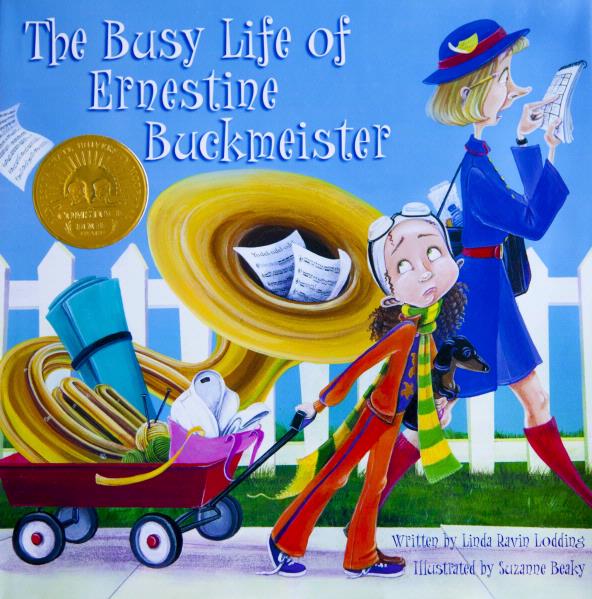
I however, thought The Busy Life of Ernestine Buckmeister
Once Upon a Time, The End
Look! I’m a Guest Blogger!

With a name like Andi Kay and a grandmother not in the least bit shy about her Alabama roots, it should be no surprise that I come from a long line of back woods southern names like Lona Mae, Veramer, and Nova Jane (all said with the longest imaginable drawl ever).
I’ve lived in Texas my whole life, my Dad was born in Lousiana, nearly all my ancestry on my Dad’s side is rooted in a Hicksville anywhere south of the Mason Dixon line. I have cousins who still use the term ‘Yankee’ (and not in reference to a sports team), aunts with award winning casseroles, all my in-laws carry guns, my husband is a redneck millwright, and there is constant debate over whether LaWanda or Betty Sue have the best iced tea. So it should also be no surprise why I find southern literature endearing.
As a ten year…
View original post 498 more words
Brain Trivia Night at Half Price Books Humble
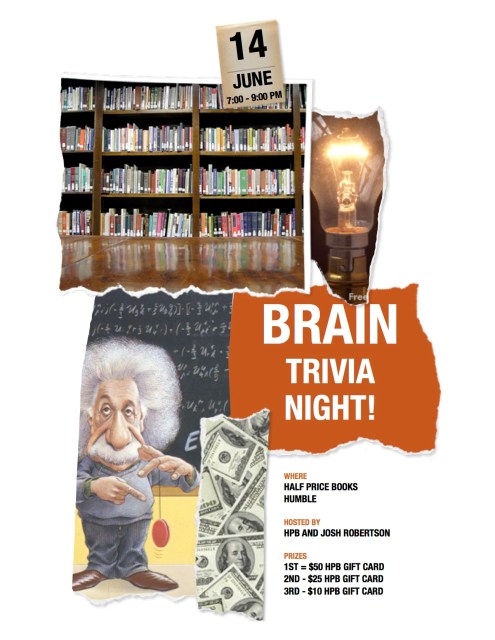 Brain Trivia Night Does your brain bulge from a profusion of facts? Does your family call you a “Know-it-all”? Well, come on down to our HPB Humble store for Brain Trivia Night on Thursday, June 14 from 7 to 9 pm. First Prize winner receives a $50 HPB Gift Card, Second Prize is a $25 HPB Gift Card, and Third Prize is a $10 HPB Gift Card. It pays to be a “Know-it-all.”
The Secret Adventures of H.G. Wells
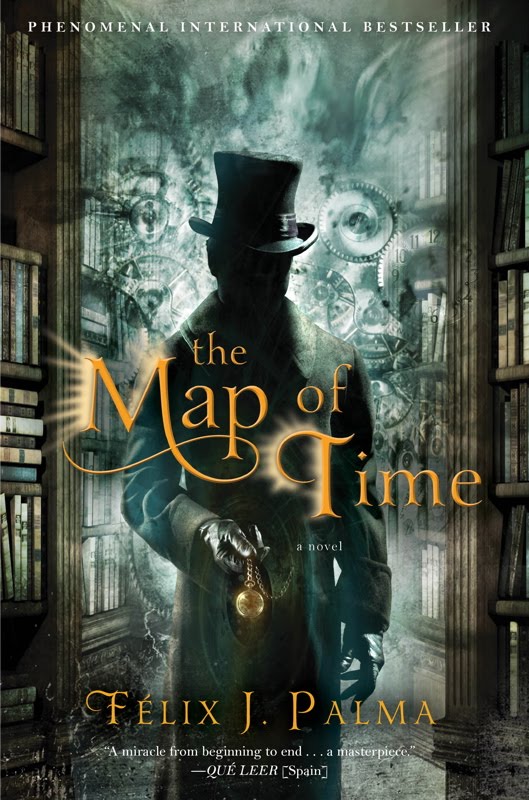 Title: The Map of Time
Author: Felix J. Palma
Publisher: Atria Books
Length: 611 pages
It may have taken me longer than I first supposed to finish Felix J. Palma’s The Map of Time. Yes, there may have been days between reading that I had not expected, because the marketing was so astonishingly gripping. But any distaste I had for this book while I was reading it was purely psychological. It had to have been, because Palma’s writing is brilliant.
My psychological beefs? Let’s see if I can express them.
#1 The premise described in the jacket isnt even remotely a familiar story line until the last 60 pages of the book. Good thing I don’t usually read dust jackets, I just dive in, but I have friends who do who were reading this book roughly around the same time as myself, so on this occasion I went against instinct and read the synopsis. While reading the novel, I felt a bit duped by the summary, anxiously waiting for a time traveling book thief that didn’t arrive until over 500 pages in. The front cover is applicable to all three story lines, but the inner art work is directly related to the end, so the anticipation literally killed my reading mojo. I wish the advertising had been a little more straight forward, except I love the advertising and it clearly worked, therefore on that count, I have not a single suggestion.
#2 The book is really 3 books. At least in my mind it is. Its 3 separate but interconnected stories, overlapping characters and puzzle pieces and the theme of time travel, though not actual time travel. In my perfect world, this book would have been a series of novellas (which I inevitably would have begged to have in one complete volume as an omnibus – see… psychological issues!). Instead of being broken up in generic Part One, Part Twos, etc, I would have mentally prepared the reader for the disconnected yet interconnected adventure with titles. Example: Instead of being called The Map of Time, call the book The Secret Adventures of H.G. Wells. Part One, would be “Book One: The Murder of Jack the Ripper”, or something of the sort. “Book Two: Captain Shackleton’s Love Story” and “Book Three: The Time Lord and the Book Thief.” Perhaps Book Three could keep the original title “The Map of Time” it wouldn’t really matter. I just want to go in with the understanding that these are separate but connected adventures, rather than flailing about wondering if the next paragraph has any relevancy – which it does!
#3 There’s a word mis-used at one point where I believe ‘ancestor’ should have been utilized instead of ‘descendant.’ But that’s really trivial, and no one cares. (It also could have been me getting my time loops all mixed up.)
The story itself, I wouldn’t change a lick, because it’s marvelous. It’s the present structure that I clearly have issue with. Feeling as though the story was disconcertingly disconnected (when in reality as a series I would find it beautifully interconnected) made me set it aside in irritation one too many times. With the internal structure slightly altered with silly titles, I suddenly feel better about the whole thing. I would have found both jacket and description equally fitting and not misleading at all.
Moral of the story (my story, not Palma’s story)… this book is bloody brilliant and I’m keeping it, despite having kicked and internally screamed several times while reading it. Don’t be put off by your own expectations.
Diana Gabaldon Interviews with Anakalian Whims!
 Diana Gabaldon
1. You’ve made it clear that you don’t like your books catalogued as romance (completely understandable – and I agree that they are so much more than that!). What genre would you prefer them to be classified?
Well, so far, I’ve seen them classified and sold (with evident success) as: <deep breath> Literature, Fiction, Historical Fiction, Historical NON-Fiction (really), Science Fiction, Fantasy, Mystery, Romance, Military History (really; the Military History Book Club has carried several of my titles), Gay and Lesbian Fiction, and…Horror. (No, really. A BREATH OF SNOW AND ASHES beat both George RR Martin and Stephen King for a Quill Award a few years back. Very gratifying. <g>)
On the whole, I’d just like to see them classified as “Fiction.” If you call them anything related to a specific genre, you’re just asking for half the people who encounter them to shrug and go, “Enh…I don’t really read that kind of book.” No point in alienating an audience a priori, I mean.
2. The Outlander Series has been a best-selling series for twenty years. Is this what you imagined for yourself? Did you ever think Jamie and Claire’s story would reach this level of fame?
Well, no. I wrote OUTLANDER for practice, in order to learn how to write a novel. I didn’t intend even to tell anyone I was writing it, let alone try to get it published. But you know, Things Happen. <g>
3. There is a lot of detailed history in your novels. Do you enjoy doing the necessary research involved when writing these books? Outside of your research for these novels do you read a lot of history?
I love doing research. I chose to write a historical novel for practice because I was a research professor (though in the sciences), and knew my way around a library. I figured it was easier to look things up than to make them up—and if I turned out to have no imagination, I could steal things from the historical record. <g> (This works really well, btw.)
I enjoy history in general, but am a dilettante reader; I just pick up books I’ve read good reviews of or hear well-spoken of, in just about any period. Reading for pleasure is a whole different animal than doing research—the latter is kind of guerrilla warfare, as opposed to a nice stroll through the scenic landscape.
4. I read that a Dr. Who episode inspired the setting for your books. I’ve been a Dr. Who fan since childhood, so I’ve got to ask: Which actor plays your favorite Doctor?
Oo, hard to choose! I suppose David Tennant wins by a bit—though I _really_ liked Chris Eccleston in his single season, and who doesn’t like Tom Baker? Matt Smith’s very enjoyable so far, but I’ve only seen his first season, as yet.
5. I am completely fascinated by the Geillis Duncan/ Gillian Edgars character. What was your inspiration for including this character in the story?
Oh, a real Scottish witch <g> named Geillis Duncan. See—“steal things from the historical record,” above.
6. I read on your website bio that you hold degrees in various sciences and were actually a college professor. Did you enjoy teaching? Any favorite anecdotes from that life?
I loved teaching; it’s the only thing I miss about academia (and thus I enjoy teaching workshops at writers conferences and the like). Anecdotes…well, there was the class I taught in Philadelphia some years ago. I was teaching a class in Human Anatomy and Physiology, to nursing students from Temple University. One of my favorite students was a black guy in his mid-thirties—all the students were a big older than the usual run of college students; these were mostly people returning to school for a nursing degree—who had a colorful background, but looked rather like the owner of a successful bar: slightly overweight, balding, glasses, conservatively but casually dressed, very outgoing and genial. His name was…well, I’ll call him Wally.
Now, all my students took the same curriculum of nursing classes, so they’d often come in talking about what had happened in the class before mine, which was something like applied techniques—a lab class where they learned to take each other’s blood pressure, draw blood, do CPR, and practice various bedside techniques. This particular month, they’d been doing bedside procedures, with a life-size dummy, demonstrating that they knew how to change a bed, check vitals, check the patient’s general well-being, take care of any personal issues, and do it all while addressing the “patient” in a kind, respectful, informative way.
On this one occasion, they came in very excited, having had an important exam in that class—they _had_ to pass that class, or they’d be thrown out of the nursing program and have to re-apply and start over. And at the end of the influx came Wally, flushed and wild-eyed, in a Complete State.
“What on earth happened?” I asked, whereupon he waved his arms and shook his fist at the heavens.
“I ran with gangs! I been in jail twice! I’ve been shot, I’ve been stabbed! I been married twice and I got three kids, I got out of the gangs, I come back to school—and now I’m about to be kicked out of school and RUIN MY LIFE…because I FORGOT TO WIPE A GODDAMN DUMMY’S ASS!!!”
7. How did your teaching career and background in science affect your approach to writing fiction?
It didn’t. At least, not in any direct or describable way. There are certain parallels between science and art, but part of that is just the way the world _is_, and part of it is just the way my mind works.
8. Do you have any nonfiction publications (other than The Outlandish Companion) in the works? (If so, I can’t wait to read them!)
Not other than a handful of scientific papers. <g> Now, in the fullness of time, I will have THE OUTLANDISH COMPANION, Part II, and am also working on a book about writing, called THE CANNIBAL’S ART. Neither of those will be out ‘til after I finish WRITTEN IN MY OWN HEART’S BLOOD, though.
9. I read that your 8th Outlander book will come out sometime next year. You also have another series, Lord John, which has become popular. You’ve become quite prolific! Do you have any advice for aspiring authors?
It’s the same advice for _any_ writer, no matter what their level of experience:
Gabaldon’s Three Rules for Becoming a Writer:
- Read. Read a lot, read everything. This is where you find out what you like and what you don’t like (and it’s a total waste of time to try to write something you don’t like just because you think it might sell—it won’t, believe me)—and also where you begin to learn the craft of writing. You read two books in the same genre, for instance, and think, “I like this one a lot, that one, not quite so much. Why is that?” Well, the first one has better characters; they seem realer. Oh? And why is that? Mmmm….I think it’s the way they talk. These people sound like people really sound, and the other one’s kind of wooden. OK. How did the writer do that? ‘Cuz everything a writer does is right there on the page; there’s no way to hide your techniques. <g> If you look carefully and read with attention, you’ll start to see things—for instance, that good dialogue usually consists of short sentences and brief paragraphs, while bad dialogue tends to drone on and have convoluted sentences. Or that good dialogue never tells you stuff that the characters already know—whereas a bad writer will often use dialogue as a way of info-dumping on the reader. That kind of thing.
- Write. Unfortunately, this is the only way of actually learning to write. You can read all the books you want, and take classes in creative writing, and they may be useful—but nothing will actually teach you to write, except the act of putting words on the page.
- And the last rule is the most important: DON’T STOP!!
10. I truly appreciate you taking time to interview with me. (Feels kind of like I won the lottery!) Do you have anything you would like readers to know about you and your novels that I haven’t already covered?
Let me see…Oh! We (me, my agent, and Random House <g>) are releasing a series of novellas—originally written for various anthologies—as individual e-books. These are for the benefit of readers who either didn’t see the original anthologies, or who perhaps don’t want to experiment with a collection of unknown-to-them writers just to get one story by a favorite author.
Anthologies usually only keep the reprint rights for a year or two, and once those expire…I can do anything I like with the stories. So. Those stories are beginning to come back to me, and as they do, we’ll make them available individually.
Right now, you can get “The Custom of the Army” as a separate e-novella, for any common e-reader format (i.e., Kindle, Nook, etc.), _in the US and Canada_, and you’ll be able to get “A Leaf on the Wind of All Hallows” (this is the story of Roger MacKenzie’s parents, Jerry and Dolly, during WWII, wherein you learn what _really_ happened to his father) as an e-novella in October.
Because there are different rights in different geographical territories, often I get the international rights to something back well after I get the US rights back. And there are sometimes differences between the print rights and the e-rights. What THIS means is that while UK/Australia/NewZealand fans can’t (yet) get the e-novellas—BUT they’ll be able to get a print collection in October that includes not only “Custom” and “Leaf”—but also “Lord John and the Plague of Zombies” and “The Space Between” (a long novella involving Marsali’s younger sister Joan, Young Ian’s elder brother Michael, the Comte St. Germain (no, of course he isn’t dead; don’t be silly), Mother Hildegarde (and Bouton) and…Master Raymond. (NB: “The Space Between” will be available for the US and Canada in both print and e-book form in February 2013, when the anthology for which it was written comes out—the anthology is titled THE MAD SCIENTIST’S GUIDE TO WORLD DOMINATION, edited by John Joseph Adams. <g>)




 Anakalian Whims