My Favorite White Whale
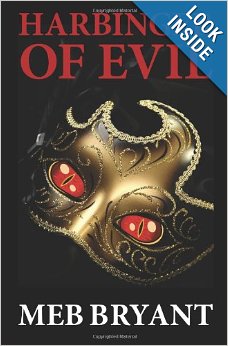 Title: Harbinger of Evil
Author: Meb Bryant
Genre: Crime Fiction/ Mystery
Length: 248 pages
I met Meb Bryant at her book signing at Half Price Books Humble in October. She’s a lovely lady, sweet, professional, wonderful conversationalist. She left with me a signed copy of her book to review for my blog.
I feel terrible that somehow the book ended up in my manager’s stash cube in the warehouse at the store (how completely unprofessional of me). Yes, a little bit terrible because I feel like I should have gotten a review ready for the author sooner – but mostly selfishly terrible because I denied myself this reading experience for two whole months! Words of wisdom, don’t do that… read Meb Bryant’s work NOW.
Between Dutton sending me Elizabeth George’s latest work, a very full Halloween month of book signings, and the general mood of my year – I’ve read a lot of crime fiction this year. A lot more than usual, anyway, I think. Bryant’s crime work is the best of 2013 – no exaggeration – and I’ve read some really good ones. John Oehler is excellent, Elizabeth George always nails character development, Pamela Triolo has a grip on a genre all her own (healthcare mysteries with a registered nurse solving the mysteries), but Meb Bryant blew me away.
I adore Richard Mobey, aka Mobey Dick, he’s my favorite white whale. I thoroughly enjoyed getting to know him, watching him build relationships with the other characters in the novel, witnessing his snotty banter, and finally experiencing him unravel the mystery and put all the puzzle pieces together.
I love the back drop of the novel, there’s no exaggeration with the tagline: New York Crime Meets New Orleans Voodoo. In all my reading history, this is my favorite ‘voodoo’ piece. I can’t think of a better novel set in the French Quarter.
If I had my way Detective Richard Mobey would have a series longer than Inspector Lynley’s, but I have a feeling I won’t be getting my way.
The Sparrow
 Title: The Sparrow
Author: Mary Doria Russell
Publisher: Ballantine Books
Genre: Literature/ Philosophical Fiction
Length: 431 pages
In 1996, 2019 must have seemed so far away. Now, in 2013, while reading Mary Doria Russell’s The Sparrow I am struck with the oddity of dates in science fiction novels and the disadvantage of time. Then again, Russell’s novel isn’t science fiction so much as philosophy and a study of human nature and peoples’ thoughts on God.
It is like 1984 that way, a study of the world as it is and always will be, not just one particular society. And like 1984, The Sparrow is timeless.
More than God and philosophy and all those huge thoughts I’m supposed to have about the book – you know, the ones you discuss in Book Club and during literature courses in college – I was stunned by the humanity of it all.
Quotes about relationships like,
“The antagonism he sensed but could not understand. And finally, ending at the beginning, the almost physical jolt of meeting her. Not just an appreciation of her beauty or a plain glandular reaction but a sense of… knowing her already, somehow.”
Russell’s work is full of those moments. Those gut reactions, nuances, and descriptions of sensations everyone has had at some point in their life – or if they haven’t, they will. Those epic feelings of “knowing,” the ones people adore having in movie-like surrealism, but are completely caught off guard and unprepared when they happen.
Russell has written something uniquely philosophical and thought provoking, but amidst aliens and Christian theology, atheism, Judaism… in space travel and anthropology, I was caught off guard by the sensation of understanding these characters so completely that I felt like they were my own. If not my own, a part of me… or maybe, just me.
I am riveted by the emotional anorexic. I am captivated by the seduction of doing God’s purpose. I am amazed by their choices.
More than that, I wish I could write something like this – something so thoughtful. But I suppose the reality of my life is that I am stubborn and obedient, curious and creative, but not thoughtful. No, I am not that.
I seem to be lacking the thoughtfulness and critical thinking skills, the ability to really pursue enlightenment. Instead, I find myself caught up in the safety and the dogma, and more than anything in the whole book, the innocent friendship between Sofia and DW – that was my favorite part. How simple of me to read something so profound and I just want to bask in a cozy friendship.
Book Coma
 I’ve been a slacker these last few weeks. At least it feels that way. I am behind on my reading – but when am I not? My house is not nearly as clean as I would like it to be – since when is this news? And I’ve been doing an awful lot of just ‘hanging out.’
Just thinking about the act of doing nothing makes me cringe sometimes. I’m a doer. Albeit a relaxed doer, but a doer nonetheless.
Then, I realized, it’s family season. I’m supposed to be hanging out. Thanksgiving just passed. It’s almost Christmas.
Plus, sometimes the reading bug is in a coma because it’s still caught up in the last book you read.
You know that one, “the book hangover.” You can’t move on to a new title with the same level of zest because your brain keeps lulling back to old characters. I felt that way pretty heavily after I finished reading The Hunger Games series in a two-to-three day stint. And now, I have half a mind to re-read the book that has induced this coma… Heirloom by S.Smith.

It is not uncommon to find me looking something like this… and my house does look something like that.
How appropriate that in this season of friends and family, Heirloom has such a gloriously familial title.
There’s just nothing more appropriate in the holiday season than a search for a missing father. Questions that rise up in every little girl’s heart, whether her father is present or missing are subtly addressed in Smith’s book as Lily asks, “Do you think my father will like me?”
Of course, another character responds, you’re his daughter so he loves you.
Little girls just can’t hear that enough.
Then as Lily finally (*spoilers*) makes her way home, I just want to bask in the hominess of it all. I’ve been lurking around in a Seed Savers hominess fog for weeks. In my impatience I want to scream, “When do I get a copy of Keeper!?”
My only response is the last page of Heirloom, “Keeper, Coming in 2014.”
2014 cannot get here fast enough.
If you haven’t purchased your copy of Seed Savers: Heirloom
Hold Your Breath, Make a Wish…
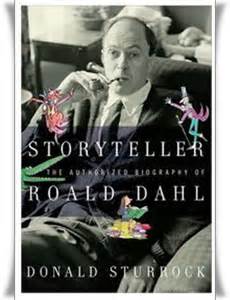 Title: Storyteller
Author: Donald Sturrock
Publisher: Simon & Schuster
Genre: Biography/ Literature
Length: 656 pages
“…Count to three…
Come with me and you’ll be in a world of pure imagination.
Take a look and you’ll see into your imagination.
We’ll begin with a spin…
Traveling in a world of my creation.
What we’ll see will defy explanation!”
I don’t know anyone who didn’t grow up enthralled with Willy Wonka and the Chocolate Factory (the movie). I know many who were equally amazed by the books below, though obviously less because after all there aren’t as many book-nerds as there are movie goers.

I dreamed of writing books like these as a child. As an adult, though I am an aspiring novelist with a novella recently published, however, I find myself longing to be a biographer. That’s where the real talent lies.
Donald Sturrock’s Storyteller: The Authorized Biography of Roald Dahl is fascinating. You wouldn’t think reading a biography on a man who hated biographies would be so riveting, but it is. I also never expected the man who had such a vivid imagination to have such an involved life. For some reason I usually expect people who imagine much to live little. I am constantly being proven wrong.
When reading the opening pages, I was at first struck with how much I previously didn’t know about Dahl at all. Little things, like his height. I didn’t know that Dahl was so tall, six foot five! Then describe his personality: a witty bit of a curmudgeon… an entertainer, someone always intrigued by the best of things… in those early pages I thought I might fall in love with him! Too bad he was married, would be far too old if he were living, and by the way is also dead.
Further into the biography, the magic wears off as he becomes more and more a real person. Everyone has flaws. I find his attachment to celebrity and his name-dropping a huge turn off as a human, but I still adore him. However, rather than continue to adore Dahl the way I did from the start of the book, I find myself completely compelled to discover more about this biographer.
The life of researchers ever pique my interest. I am an amateur. I read and read and read, take notes, and then hop and skip over to a new topic. I rarely develop ideas as thoroughly as I should, and though I never become bored with a topic I quite frequently find myself distracted by the shiny newness of others. A biographer – a good biographer – can’t be so willy-nilly. I respect that. I am envious of that.
In regards to Roald Dahl, all I can say is that you should read Sturrock’s biography. I don’t like giving away spoilers, but I think the year 2014 will be full of Dahl titles, both because I am newly inspired to read them and my kiddo is ready to hear me read the children’s titles aloud, I think.
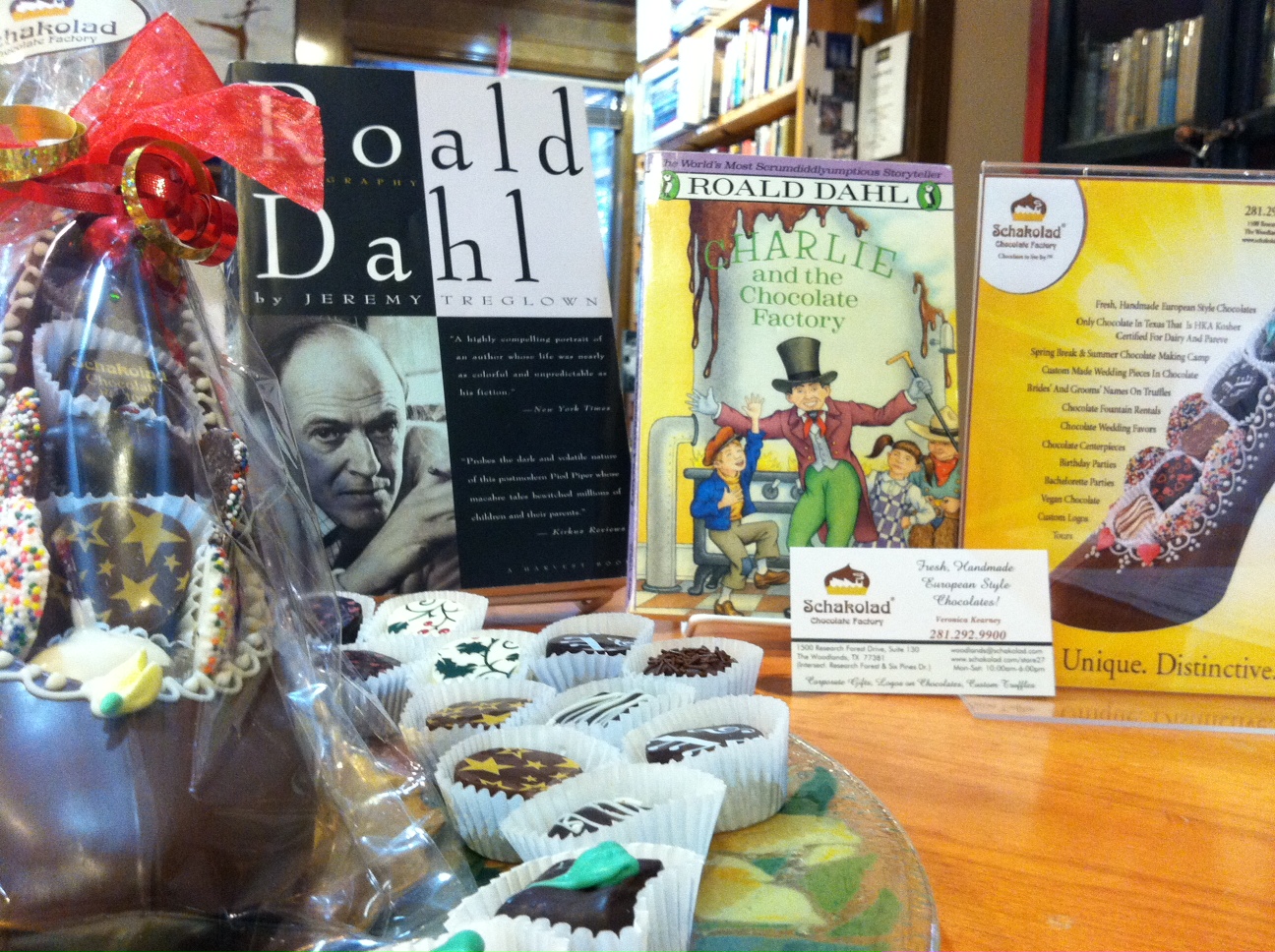
Dahl died November 23, 1990. In honor of his Death-aversary, Good Books in the Woods held a chocolate tasting (compliments of Schaokolad in The Woodlands). One of the patrons had actually met Dahl in person before his death so the discussion, as all discussion at Good Books, was exciting and rather involved.
Seed Savers: Heirloom
Title: Heirloom
Author: S. Smith
Genre: Young Adult
Length: 300 pages
“I haven’t been this in love with a young adult series since Harry Potter,” I wrote after reading the first installment of the Seed Savers Series – Treasure – for the first time. Having now read the second and third installments – Lily and Heirloom – I can happily say that the statement still holds true.
No, there aren’t wizards or magic. The adventure doesn’t reach any of the same fantastical levels, but it is very epic. It is based in a truth that could easily lend itself to being our future. This dystopian society is so intense, because it’s so plausible.
Treasure featured two runaway kids (Clare and Dante) after their discovery of the wonderful world of planting your own seeds and growing your own food, in a government where that is forbidden. They flee for their safety. They flee to learn more.
Lily is where you get to know another character, Clare and Dante’s friend and fellow cohort in the Seed Saving excitement. In this book she blossoms before our eyes into less of a sidekick and more the hero. I was pleasantly surprised to find she had such a huge role in the story. She’s not just the key to almost everything, but the narrator as well! Who knew?
After a long alienation from Clare and Dante, Smith is wise enough to bring us back and feed our curiosity. Heirloom is told back and forth between what’s happening with Clare and Dante, and the world according to Lily. I loved this pattern for a third in a series. It wrapped up some lo0se ends, it led us into asking more questions, and we were able to adventure cross country and learn more about growing plants in a cozy environment in the same book. My brain needed this.
Heirloom, even more than the other two in the series, is full of interesting facts about how a society would get from where it was in the 1980’s to what it is in Smith’s novels. In a time when we are debating GMOs, organics, seeds, and patents, this book is a must have to help middle grade students grasp all the political nuances decisions of today will have on tomorrow. I love that Smith was able to take an intense political topic and weave it into a fascinating (and fun) story.
The fun comes into play, I think, because Smith did not intend to strictly bark all this information at us. It comes from love, and you can sense that as you read. Love for what? “[M]y love of good food,” she said in a blog interview with me once, “Seed Savers is a love story starring home-grown food. I love food—growing, harvesting, cooking, eating, and sharing it. And I think a lot of people these days maybe are missing out on that.”
If you’ve read books one and two, you cannot miss this third part of the series! It’s essential. It has propelled us so much deeper into the story and I’m jittery waiting on the fourth! It didn’t maintain the same read in one sitting quality of books one and two, but I believe that’s because the characters demand more of your time. There is so much more going on, and in the midst of it all they want to teach you as well. That takes more than a day. Clare, Dante, and Lily are growing and stretching their legs, and with them Smith is becoming more detailed and dynamic in her tale. Like good food, Heirloom was made to be savored.
If you haven’t read any of the series, you must. Purchase it for yourself, purchase it for your children for Christmas and read them together – or just swipe the copies and read them yourself. They are so good.
A Homeschool Mom Meets Seed Savers

Click to follow the tour and visit the next blog.
The thing about homeschooling – the awesome thing – is that plans are made, expectations logged, and as a parent you do a lot of letting go of both of those things as your child sort of takes over.
I personally planned on going full force into the alphabet and phonics, drill numbers and be sure my three year old was the smartest on the block. At age two she already knew all the states on the U.S. map south of the Mason Dixon line.
Kiddo, God, and the universe, had other plans. And I like them.
With the help of S. Smith’s Seed Savers series, some extreme budgeting issues (I’ve been the poorest person I know for the last twelve months), and Merriweather’s fabulous foraging site (see the links on the right), we’ve pretty much spent our ‘school days’ in the woods.
It all started many, many moons ago (as I like to say to my kiddo when telling stories)… somehow I was lucky enough to receive a copy of Seed Savers: Treasure from S. Smith by mail. I remember reading some of it out loud, but then giving up and devouring it all alone. I gave up because I wanted to read it faster, I wanted it all to myself, not because Kiddo was anything but cooperative.
 What resulted is a long standing admiration for S. Smith, requests for her to participate in Earth Day 2013 (which she graciously accepted from 3000 miles away) and taking Kiddo to said Earth Day celebration. Before Seed Savers, I was already on a mission to be more self-sufficient and have my own garden, but Seed Savers really solidified that need in my heart. Instead of *wanting* to do it, I got my butt in gear and did it. This shift in my mentality eased over into the preferences of my daughter.
She loved the Earth Day celebration. She got to plant seeds with volunteers from the Mercer Arboretum. She got to watch me raffle off S. Smith’s first two books (Treasure & Lily), and it was all over – these Fall plans I had noted during my pregnancy were half out the window. Without hearing the entire Seed Savers story, Kiddo fell in love with seeds. S. Smith’s words are so powerful they radiate into every aspect of our house just by sitting on the shelf.
We have seen and read The Lorax more times than I can count. On her third birthday her great-grandmother gave her spending money and she spent it at Good Books in the Woods on two Cat in the Hat Learning Library books. One is on Rainforests and the other on Seed Planting.
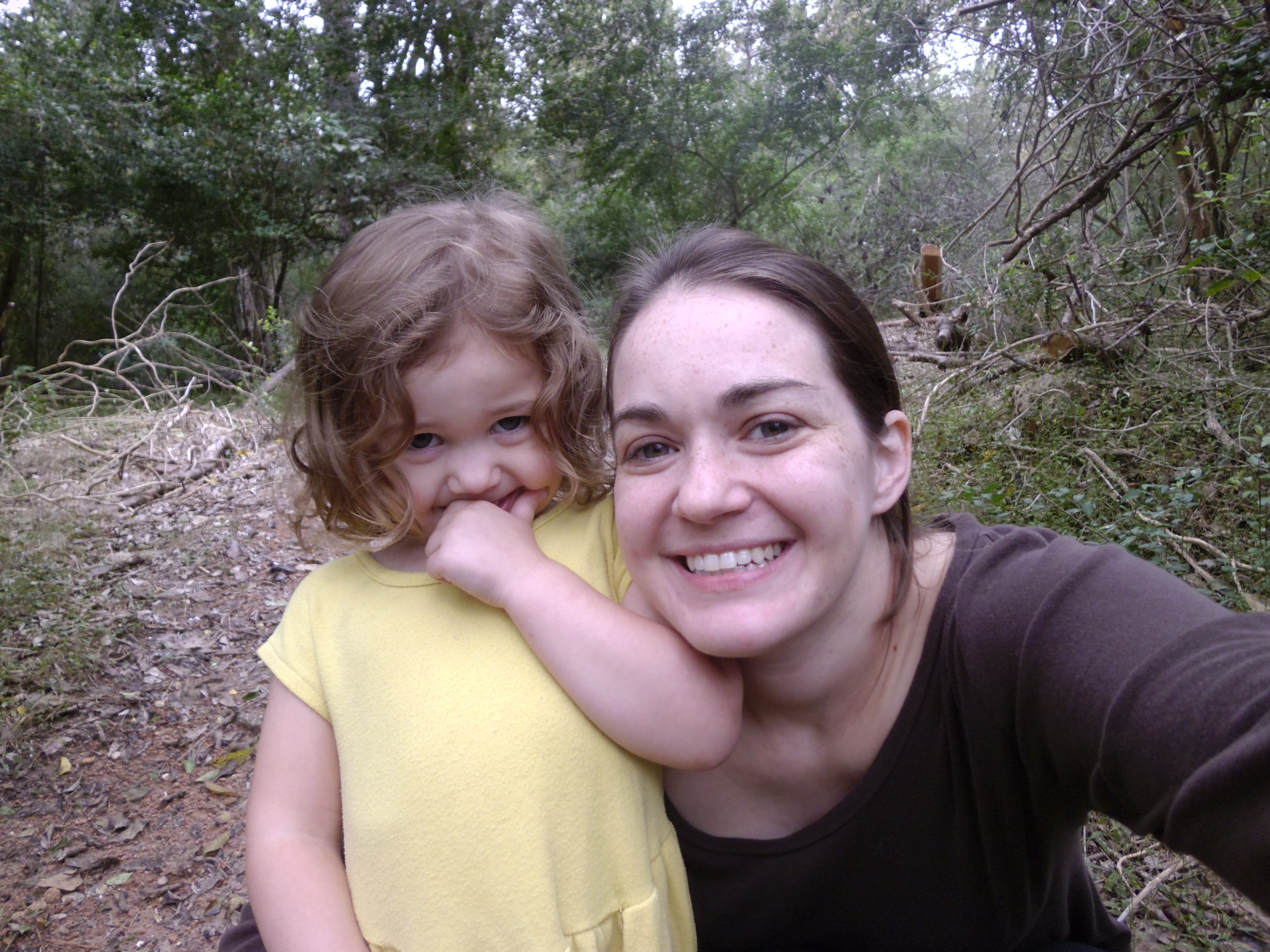 We spend our days looking for birds on the trails, foraging for produce, growing our own bell peppers and okra, and now reading Heirloom as we tromp through the woods.
However, you don’t have to be a mom, a conservative, a homeschooler, a toddler, or a hippie to enjoy the Seed Savers Series. Seed Savers, including the latest – Heirloom – is full of courageous characters, a rich adventure, and exciting philosophical food for thought.
What started out as a really unique young adult dystopian society concept on Smith’s part, has evolved into something more than we initially bargained for. The story is more complex than I anticipated. The effect on our lives has more reach. Smith has matured as a writer along with the growth of her characters. I’m a little disappointed that the stories will, at some point, come to an end…
If you don’t believe me, find out for yourself.
Purchase the Seed Savers Series from Amazon
Visit the Author’s Website: http://authorssmith.com
Go Like Her on Facebook: http://facebook.com/AuthorSSmith
Follow S. Smith on Twitter: http://twitter.com/AuthorSSmith
Whispers for the Soul
 Title: Whispers in the Dark
Poets: Ashley Nemer, Stacy Moran, Torie N. James
Genre: Poetry
A Product of The Art of Safkhet
A Guest Review by Angelina JoiAnn
As I was reading Whispers of the Heart by Ashley Nemer I felt depressed at the beginning by reading words like cry, darkness, kill, and beat. The first poem “They Say” gave me hope with “angel, strength and spirit.” I did not understand why “I walk and feel wetness” is in the “Darkness” poem – I am guessing it is raining, but to me darkness is not wet. Rain is more of a cleansing – a way to feel alive – not isolated. The the depression goes into a vampire and human relationship with “Forever you are mine” and “Immortal Love.” I can picture a vampire saying/writing those words after biting a human. I kind of get the darkness feeling going into the Vampire poems but after that I get thrown off with memories, dog, and grandpa.
While reading Whispers in the Storm by Stacy A. Moran I felt like the section would have been more aptly named Whispers of the Soul. It felt like the poet was writing poems from different growths of her soul, and perhaps had even lost a child. The poetry seemed to speak from a child to a woman, from a woman to a mother and so on. I would have liked to see them organized from love to heart break, but I felt a lot of growth over all and really enjoyed this section.
Whispering Flames by Torie N. James has to be my favorite. I felt like a phoenix flying out of the fire. I felt free while reading the different poems – as though the weight of the first two sections were being lifted off my shoulders.
Overall, I was taken on different feelings and journeys throughout the book and felt the different aspects and growth from the souls of the writers. I did feel that each section had a weird, random organization, and that the poems could have been better placed within each author’s portions, but that’s just my OCD. I enjoyed peeking into each poet’s lives.
I love you, I love you not
 Title: Player Piano
Author: Kurt Vonnegut
Length: 295 pages
“Anita, I love you.” The compulsion was upon him to tell her everything, to mingle his consciousness with hers. But as he momentarily raised his hand from the drugging warmth and fragrance of her bosom, cool, fresh air from the Adirendacks bathed his face, and wisdom returned. He said nothing more to her. – from Player Piano
It wasn’t until I read that paragraph on page 118 that I really began to appreciate Kurt Vonnegut.
I’m stubborn. People love Vonnegut. Especially nerdy literature geeks. I’m a nerdy literature geek. My friends love Vonnegut. I should love Vonnegut. But because I should, because I am appropriately quirky and should be his target market; because of these things, I’ve never cared for him much.
I wrote a character who adores him once. Whenever I read Vonnegut, I summon this character in my brain and try to feel his words the way she does. It gets me through the book… small details got me through Cat’s Cradle (Bokamaru! or somesuch nonsense).
Still, I am stubborn. The excitement that quote on page 118 gave me died down by page 150.
I wrote the character previously mentioned based on another friend’s love for Vonnegut a few years ago. My friend who loved Vonnegut is gone now, so any details on the passion are completely fabricated, only the source is rooted in anything real. My friend and I swapped paperback copies back and forth, and though it’s something I vaguely recall about him, it is not what we bonded over.
So, though he sits politely in my brain any time I pick up something Vonnegut related, I don’t remember which ones he read and which he had not. He had a habit of reading parts of a book and rarely finished many in their entirety. Was Player Piano something he read completely? What were his thoughts while he was reading it? Did he make it to page 118 – did he read those words about mingling consciousness?
I’m stubborn, but beyond being stubborn Vonnegut is tainted for me. There’s too much pressure. Too much connection and disconnection at the same time. Too much expectation.
“I’m more than halfway through this novel in a day and will finish before I go to sleep “, I journaled earlier tonight, “But I am not involved in the story. And my stomach is in knots.”
Instead of preparing for a book club meeting, my mind is with the dead. My mind is on the dead when I get to page 191, “He discovered that there was nothing disquieting about seeing himself dead. An awakening conscience, unaccompanied by new wisdom, made his life so damned lonely, he decided he wouldn’t much mind being dead.”
And when my mind is not with the dead, it is with the merely absent. It’s certainly not here. It’s certainly not in this book. It is on a bike ride with my friends – or off in the manuscript of my second novel that I wish I was finished with already.
So Vonnegut, you will always reside on my shelf. I love the familiarity of your spines and covers loitering in my library. I think you are important. You will not be forgotten, because “Well, sir, it hurts a lot to be forgotten.” And clearly, I think you are beautifully quotable at times. But I do not love you. I’m too stubborn.
Death Without Cause
 Title: Death Without Cause
Author: Pamela Triolo
Genre: Crime Fiction
Length: 297 pages
Murder mysteries are an easy sell. There’s something innately intriguing about one human being ending another. I noticed this not only when I worked retail where people impulsively picked up clearance paperbacks with shiny letters over black spines, but also as I toted around Pamela Triolo’s Death Without Cause.
I took it to get a pedicure at the Kingwood College (or Lone Star, rather) Cosmetology department. It was my mother’s treat for my niece’s birthday and she took me and my daughter along. It’s a great place to take children for their first, as it’s inexpensive and allows the students to practice on not so picky clients. It’s apparently also a good place to talk books.
First thing the girl said was how much she loved mysteries. She talked a minute about her various reading preferences – always a topic of interest to me – and I passed her the bookmark that Triolo included in my copy of the book. For good measure, the girl took a picture of the cover with her smart phone. I hope it results in a sale…
Because even though murder mysteries are a dime a dozen – sometimes, quite literally if you find yourself in the right shop – and even though I generally always enjoy them, there’s a difference between a mystery that fills time and one that’s really good. Triolo’s is really good.
“The nurse was the first and last line of defense for patients,” a character in Death Without Cause observes. What happens when that defense fails against a calculated and knowledgeable killer?
Triolo is a registered nurse as well as a skilled writer. Just read the prologue of Death Without Cause and you can’t help but understand why this woman would want to study medicine and write mysteries to boot! She makes the heart sound solid and sexy and desperately fragile at the same time, an organ too tempting for a psychopath to pass up tampering with.
It’s also clear that Triolo knows what she’s talking about. She’s not just a writer throwing around jargon she’s heard… I always think of films where the character peeks in the stalled car on the side of the road and says something utterly ridiculous and then walla, the car is fixed… No, Triolo is a nurse, sounds like a nurse, and has captured the ambiance of the hospital hands down. I was riveted.
For those who like a bit of a romantic twist, don’t worry, Triolo didn’t leave you out – there’s a little budding love story in the background as well.
I anticipate Triolo being a future bestseller. She radiates the finesse and know-how of others who have written from their career experience… Kathy Reichs, John Grisham, and more. I look forward to seeing her name in the New York Times one day. For now, The Houston Chronicle, I’m sure, will enjoy sharing one of Houston’s best with the world.

Pamela Triolo and Melanie McEwan at Half Price Books Humble during Nurse’s Week.
Aspects of a Novelist
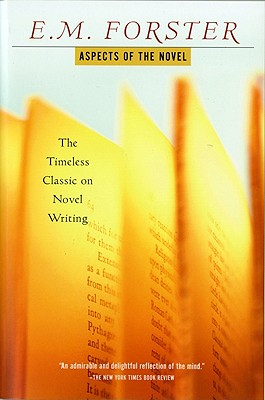 Title: Aspects of the Novel
Author: E.M. Forster
Genre: Literary Criticism
Length: 176 pages
I’ve wanted to be a writer since I was a very small child. So small that I don’t recall the first revelation or declaration. I simply always knew it was something I wanted to do one day. I also have always enjoyed books. I remember loving to read before I was even any good at it. I remember devouring books before my peers had even mastered their letters. This is not because I was smarter than them, not by a long shot. This is just how much passion I had for the idea of language and the written word.
Naturally, I also love books about writers writing… like Stephen King’s On Writing and John Steinbeck’s East of Eden Letters. I even like authors who get bossy about it like Umberto Eco and E.M. Forster. They deserve to be bossy, as they are brilliant.
I fell in love with E.M. Forster in high school when my favorite English teacher of all time told me to get a copy of Howards End. I remember devouring it almost over night and spending nearly a half hour after school discussing it with him. I remember being utterly blown away by Howards End for reasons I cannot even vaguely recall now, but things amaze you at sixteen for no particular reason at all, it is a habit I have tried to keep as I age too.
My debut as a novelist comes out this week – a novella, actually – called The Bookshop Hotel. I’m about halfway through writing the sequel, a book that will be a full length novel twice as long as the novella, and I’m already paranoid about potential reviews hailing my inferiority as a writer. So, I’m consulting one of my heroes for advice, writerly wisdom from the talented author of Howards End.
As I read Forster’s famous lectures, it is becoming clear to me that I will never be E.M. Forster, John Steinbeck, or even an Audrey Niffenegger! I will never be a best-selling New York Times sensation. I’m ok with that, it was never my intention to be infamous. I have other aspirations.
What I would like to do, though, is to tell a few good stories, make some income for my family, and have the satisfaction of stumbling across my books on shelves in unexpected places. That will be enough for me.
In the mean time, I’ll work as though my goal is to be the next Stephen King (on the prolific level anyway), because even though I am not the most talented, I don’t ever want to be accused of being half-assed. I’d rather be untalented than lazy.
So here I am on a Sunday night perusing Aspects of the Novel, munching on every tidbit, taking notes, wondering if Forster himself would have anything positive to say about my stories because the vital elements to a novel he points out are vital indeed and I’m unsure as to whether my characters can live up to that vitality.
“Forster’s casual and wittily acute guidance… transmutes the dull stuff of He-said and She-said into characters, stories, and intimations of truth,” Jacques Barzun is quoted. Let’s hope he’s right.
Whether it transforms me into something wonderful or not, the book is amazing. Every student of literature, lover of books, or budding author should give this one a go. Then again, I am partial, remember, I fell in love with Forster ages ago.




 Anakalian Whims