The Debt & The Doormat & The Socially Awkward
 Title:The Debt & The Doormat
Author: Laura Barnard
The Debt & The Doormat is a number one selling book on Amazon. It’s fun, flirty chick lit with glowing reviews about how hilarious it is.
I believe them.
But in the words of one of my co-workers, “Andi doesn’t like fun.” Apparently it’s true because my socially awkward self had the hardest time relating to the mentalities of the people in the book. On top of not being able to relate, I didn’t laugh, because what I did relate to just makes me tired. I have a lot of debt (students loans), I lead what some might find a boring life (like Poppy). My debt exhausts me and my boring calms me.
I see how it would be funny to other people. I can see this being one of those films starring Keira Knightly and/or Cameron Diaz, in an American version, and me not having any desire to go see it at all whatsoever. It’s There’s Something About Mary funny. It’s Adam Sandler funny. It’s Sex in the City funny. It is not Jane Austen funny. It is not Paul Collins funny.
Me not getting into it is not Laura Barnard’s fault. I can think of a dozen people I’d love to share this book with, because I know they will think it’s the best thing ever. Once I pass the book along, I will even invite them to share their thoughts as a guest blogger here on my blog.
The cover art is spunky, the premise is very Freaky Friday meets Sex in the City, and the writing itself is good. Try as I might, I’m just not that girl. Instead, I spent the better part of a week trying to get into Poppy and Jazz’s story, only to find myself distracted by a biography calling my name on the shelf, or a football game on television. I was almost head over heels involved in the story when the Texans were losing and I found Poppy tied to a bed by a British Thelma (of Thelma & Louise)… but then, of course, the Texans started scoring touchdowns.
Let me be clear, this is not a bad review. Please do not walk away from this post thinking, “I’ll never read that.” I’d say if the cover calls you, you SHOULD read it. If this is your genre, it’s probably one of the best in it. This is more of a testament to me and my reading habits and how much of a typical girl I am not. I will probably recommend this book to customers seeking Laura Giffin and Sophie Kinsella books. If you are a die hard McLaughlin & Kraus (The Nanny Diaries) fan, you will probably want to purchase this book STAT.
The Vikings Take Over Our Library
 As everyone else heads back to school, I looked over the last month and realized we really did treat the hottest months of the year like a summer vacation this year… mostly lolling around the house between events, taking extra naps after our dance parties in the living room, and mostly hiding our pasty skin from the hot, Texas sun. So I tackled cleaning out the closets, while everyone else was out buying school supplies, and organized our life the way it has always been organized in my brain… in unit studies. Of course, that got me in the mood to really tackle “school time” with more vigor and this last week or so we jumped back into the swing of things with Ancient Greece and Rome and then The Vikings and the Celts.
Viking Ships at Sunrise by Mary Pope Osborne was next in our Magic Tree House Adventures. We have not acquired the Viking research guide yet, but I believe there is one. We also re-read DK’s Eye Wonder Viking book, we had read it once before while perusing the exciting world of piracy, and a little repetition is good for a kiddo.
 But the really exciting book for this particular unit study was The Hero Beowulf.
Eric A. Kimmel’s retelling of Beowulf is a pretty neat picture book add on for little people. It’s illustrated by Leonard Everett Fisher and is complete with an author’s note about the original poem in the back. Beowulf, after all, isn’t just a monster myth, it’s the “oldest surviving epic poem in English literature,” all the way from the sixth century, to your hands now.
I can’t reiterate enough how much the classical education style appeals to me by teaching so much history through the other subjects… or rather teaching all the other subjects by tackling history so thoroughly. I love that there are so many resources, like Kimmel’s picture book, to make the tales and the culture more real and the epic poem more accessible when the time comes to tackle the original work; because in classical education everything repeats at a higher level over and over again.
After reading The Hero Beowulf, kiddo ran to grab other books with Viking ships on them and said, “Look mommy, more Beowulfs!” So she doesn’t entirely get it yet, but hey, she’s two.
Aphrodesia
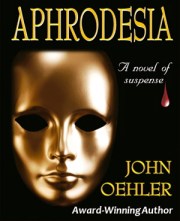 Title:Aphrodesia
Author: John Oehler
Genre: Mystery
Length: 342 pages
I should not have been surprised with a title like Aphrodesia, but ironically, I was. I had half a mind to add Erotica to the genre line, but I wasn’t quite sure if the shoe fit. Oehler’s book is definitely erotic, but there’s a story and a purpose to his rated R material, so I found myself drawn in by things that would normally repulse me. If that’s not good writing, I don’t know what is.
Oehler has managed to capture the world of perfuming in a pretty intense way. I’ve never read anything like it, and highly doubt I’ll ever find or read anything like it again. It’s truly unique.
I’ve read foodie books, coffeehouse style with baked goods, travel books with exotic cooking recipes… nothing has tickled my nose so that I could smell the story so well. It would not surprise me to discover that the author develops fragrances in his spare time as well. His descriptions are gritty, a little dirty, and down right accurate; which, for me, made the whole reading experience a little disconcerting.
If you follow my blog and have previously read Mary Reason Theriot or Kendall Grey, this might be right up your alley. Although Oehler isn’t really comparable to either one of those authors – he’s in a sub genre of all his own making. I don’t quite know what to do with him. I’m simultaneously reminded of the old classic, The Monk, written in 1796 by a guy smitten with the writings of Marquis de Sade, and Elizabeth George with her mysterious detective dramas. Needless to say, I’d like to read something else Oehler has written and see what his non-erotic mysteries read like… or if he writes non-erotically. (This is where that nasty habit of not reading the backs of books or other reviews or blurbs on books comes to bite me in the butt, I know little about an author or their work, until I’ve read most their work. But that keeps life interesting AND keeps me reading, right?)
John Oehler will be signing books at Half Price Books Humble Saturday August 24th and then at the HPB North Oaks the following Saturday. Join the event page here: https://www.facebook.com/events/505154219566449/ for all the details and come out and pick up a copy of his book in person. Probably best done before you read the work, as I anticipate not being able to look him in the face after being made to blush on nearly every page for the first 100 pages of his book. We’ll see how that works out tomorrow. P.S. I’m a little bit of a literary prude, and I’m ok with that. Despite my prudishness… I like this book.
Also, sometimes I include this, often I forget but today I think it is relevant: I had Frank Sinatra playing and Ace warming (Scentsy product).
Coffee… Starbucks… God… Gospel… What?
 Title:The Gospel According to Starbucks
Author: Leonard Sweet
Publisher: WaterBrook Press
Genre: Christian Living
Length: 210 pages
So reading this I realize why I rarely read Christian Living books. I pretty much disagree with most of them. Sometimes they are blatantly wrong, sometimes their nuances are misleading. Sure, I think it’s good to pick one up every now and then, but mostly I’d rather read The Bible, theology, or philosophy, rather than suffer through a water downed less than truthful version of God.
The story of the copy I have of this book is an interesting one, to me. My college room mate’s little sister had it first and her tiny little handwriting (that looks freakishly like my old roomie’s) is peppered throughout. That’s my favorite part about used books – the notes.
Mostly she’s witty… funny little quips from having actually worked at Starbucks creep onto the pages. Cutely reprimanding customers for their silly choice in drink, which I cutely got indignant over because some of those drinks are things I order, seep onto the pages and make my lip curl up. But sometimes she writes something spot on that is exactly what I’m thinking and embodies my entire personal view of this book:
“You can be grateful and enjoy the ‘experience’ but don’t place your walk’s ‘value’ on whether or not you had some ultimate experience.” – Hannah’s note on pg. 51
Indeed. At one point I scribbled a response that said, “Church becomes an entertainment fiasco… the Baptist equivalent of a Vegas Headliner.” Because the Gospel of Starbucks is experience, and Sweet implies over and over that we should be focused on our experience with God. Human beings are kind of crazy and moody… I don’t want my walk with God to be based on my personal experience and how I’m feeling that day. Instead, I’m sorry, but I think we should be focused on GOD… not how we feel so much. Feelings are fleeting. God is steady.
Don’t get me wrong, there’s some good stuff in here. I’d give it a 3 stars “I like it,” but I like it with a shrug. I think I mostly like it for the fun little notes in the margins that Sweet inspired out of previous readers. I like the coffee talk and the Picasso quotes. I like that Sweet encourages people to “live with a Grande passion,” I think living with passion is important. It’s the nuances that get me every time with a book I sort of don’t care for… all those tiny little nuances that leave an after taste. Kind of like Starbucks. I like Starbucks, I do. But everything just kind of tastes like Starbucks after awhile and I’m always eager to find that hole in the wall mom and pop coffee shop that stayed true to the basics. That goes for church too… teach me the word of God, end of story.
The best thing about Sweet’s gospel? It compliments my morning coffee. As it was a hand-me-down title, however, I plan to hand it down to someone else. It’s worth reading, but not a keeper.
A link to Hannah’s blog can be found in my right hand margin: Musings From the Tardis.
My old Roomie writes Coffee Cups in Trees.
But something to take a look at that is a much better view of the world and is quick and to the point is here: http://www.thinkingthroughchristianity.com/2013/08/let-there-be-coffee.html
The Dark is Rising Sequence: Book One
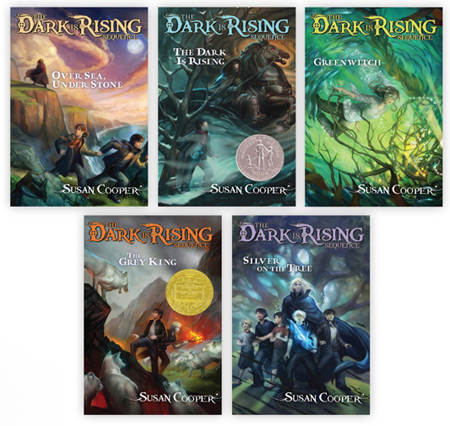
 The Dark is Rising Sequence started in 1965 (probably much sooner if you were to talk to the author) with the publication of Over Sea, Under Stone under the name Susan Cooper Grant. In 1973, The Dark is Rising would come out, followed by Greenwitch in ’74, The Grey King in ’75, and finally Silver on the Tree in 1977. The Dark is Rising was a Newberry Honor book (runner up to the Newberry Medal) and The Grey King actually won the Newberry Medal.
The books have stared back at me from shelves my entire life, but I didn’t actually pick them up to read until this year – my 29th year – for a Young Adult book club at Half Price Books (Humble).
Having finished Over Sea, Under Stone I can officially tell you that I’m hooked. Not only will I finish reading the series, I will be releasing my reviews of each book in a serial here on my blog and I am adding all the books to my daughter’s homeschool curriculum, with some help from a website I stumbled across: http://www.andrews.edu/~closserb/courses_211_review_studyguide.html
Title: Over Sea, Under Stone
Author: Susan Cooper
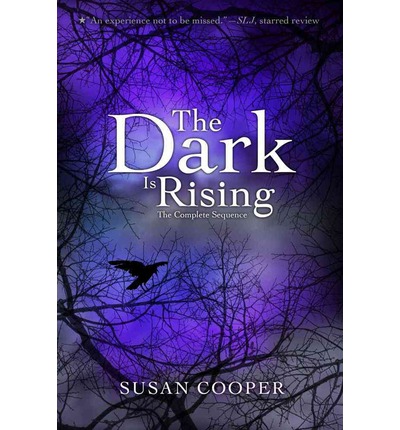
I am reading from this edition.
Genre: Young Adult/ Fantasy/ Mystery
Length: 236 (book one) out of 1082 pages (whole series)
You might wonder why a fantasy series has become a mandatory reading assignment for my daughter. If you follow my blog at all, you might have an idea. Over Sea, Under Stone is just screaming to be part of a King Arthur unit. Pendragon’s name is dropped countless times; myths, legends, fairy tales, and the search for the grail make up all the major plot points; and, it’s full of research and adventure. What better to inspire a ten year old into the exciting world of a lifetime in literature?
The following I took straight from the aforementioned site I stumbled upon re-posted here in case the link ever fails):
A writer must be able to do or manage the skills of writing fiction:
Plot–What sort of story line has Susan Cooper devised? What happens? Is it a satisfying story line? Does it seem appropriate for the story?
 Conflict–What is the conflict of the story? What is at stake if the central characters fail in their quest? Who are the opponents in the story? How do they complicate the plot?
Characters–Who are the main characters in the story? What does Cooper tell you about each one of them? How does each character differ from the others? How does Cooper compare Simon, Jane, and Barney? What is each child’s personality and why is this personality important to the story? Why does Cooper choose children as the heroes and heroine of the story? Why not Great Uncle Merry?
Setting–Where does the story happen? What is the country side like? How is this appropriate to the story? Could Cooper set the story anywhere else and still make it work as effectively as it does now?
Symbols–What objects in the story take on symbolic meaning? In what way is the grail a symbol? Rufus the dog? The manuscript? Each of the characters? The rising tide or the boats? The fact that the grail is found in a cave? The standing stones?
Theme–Considering all of the elements mentioned above, what is Cooper’s point (this gets us into the third form of knowledge; see below)?
 A writer must know about the Arthurian tradition in general and the grail tradition particular:
The grail is an object of great significance and importance. What did you notice in the stories you read? How does Cooper convey this concept in her story?
The grail can be found only by the most perfect of knights. What qualities do Percival, Galahad, and Bors de Gannis have? Does this suggest a reason why Cooper decided to send children rather than adults on the quest?
Grail knights always demonstrate their perfection by undergoing severe temptations. What temptations do Percival, Galahad, and Bors face? What temptations to Simon, Jane, and Barney face?
In the grail stories the heroes live by strict codes of ethics. Describe the grail knights’ value system. What rules do Simon, Jane, and Barney live by?
Grail knights always have a spiritual mentor. Who functions in this role in each story?
How do boats or other symbols like the wind, the number three, or color help to make the stories’ points?
Grail stories often center on illusion and false realities. What illusions do the three grail knights face? How does Cooper suggest that reality is not what the children believe it to be?
Grail stories fundamentally center around the quest for perfection and the test of one’s character. How does the quest test each grail knight or each child in Cooper’s story? What does each child learn from the experience?
Grail stories often involve magical, mysterious, or mystical places like castles or dark forests. Where in Cooper’s story do you notice elements of mystery?
Grail stories ultimately change how the central character views life. What is the effect of the search for the grail on each of the three grail knights? On the three children in Cooper’s story?
A writer must have a message, theme, point, or lesson to communicate.
What is Cooper message? What is she trying to say about the human experience?
In what ways might the children’s experience parallel our own experiences? What do we learn about ourselves from their experience?
What quests do we have to face? How might/should we go about accomplishing these quests? What do we learn from the children’s experiences which might guide our quests?
I love how this enjoyable fiction lends itself so readily to the study of storytelling, the King Arthur tales, the development of legends in general, religious history, as well as the kiddo’s general history lessons as we sort out documented history from legendary fictions developed over time.
This Is Monstropolis
A Weekly Low Down on Kids Books and Guest Blog by Maura M! (2 in 1!)
 Title:This Is Monstropolis!
I’m excited to share this little piece of toddler entertainment gold. This Is Monstropolis is an adorably illustrated flap book that is stuffed to the brim with things for little hands to explore. There is not much text here. The real beauty of this book is the vast amount of things there are in the illustrations to describe to your little one. In the 3 days that we have owned This Is Monstropolis, I’ve probably spent more than an hour discussing the scenes on the 14 pages of this book and what is happening behind each flap. This book is recommended for 3 year olds and beyond, but my 2 year old enjoys it immensely. The Richard Scarry-esque illustrations can be adored by child and caregiver alike and curious 2 year olds can’t get enough of the flap flipping.
Greek Mythology… with children
(Weekly Low Down on Kids Books)
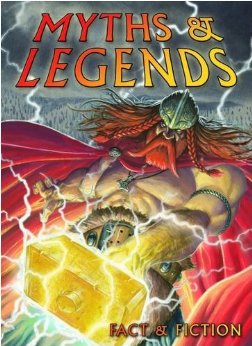
 Unfortunately this awesome image is not from a book. I think it’s from a video game.
The kiddo and I have been reading Percy Jackson & The Olympians: The Lightning Thief by Rick Riordan. Is she a little young to catch everything, of course, she’s not yet three. Is she following the story? Better than you might imagine. I highly recommend that parents read kids stories that are far outside the child’s reading level. By doing this they are exposed to mature language styles sooner, learn new vocabulary words, and in the case of Rick Riordan, appreciate Disney movies like Hercules that much more.
We’re not finished reading Percy Jackson, so this review isn’t about that. This review is about picture books we’ve been reading during the day in preparation for our before bed time romps with Riordan’s Olympians.
 Title: Gods and Goddesses from Greek Myths
Publisher: McGraw Hill Childrens/ Peter Bendrick Books/ Octopus Publishing Group
Retold by: Pat Rosner
Illustrated by: Olwyn Whelan
ISBN: 1-57768-508-3
Typically I provide links and images to the book, where you can find and purchase it, etc. But it seems that Gods and Goddesses lives an off the grid book life. It seems to be extremely difficult to find online and I was in the middle of typing here that I could not find it when I got the idea to check hpbmarketplace.com. I purchased it from a Half Price Books a few years ago, but sure enough the marketplace wins again! As you browse through the prices, you’ll see some are quite expensive. I only paid about $5 for this at the store, I wonder if it is currently out of print. Mine is in mint condition.
The illustrations are delightful, the retold myths thorough but easy to grasp. It’s not kiddo’s favorite book, but I can tell it has helped her grasp what is happening in the Percy Jackson books. Sometimes she just flips through the Greek style pictures while listening to me read Riordan’s work.
If I were in McKinney, TX right now I’d purchase the Fantastic Creatures from Greek Mythology as well, because I like these so much and I think Olwyn Whelan is a genius illustrator. Everything she touches, I think, would be great homeschooling resources.
Other resources we enjoy:

The Labrador Wild
 Title: Letters to the Granddaughter
Author: Philip Schubert
Length: 198 pages
Travel books that focus on the adventure aspect of the traveling really excite me. I loved Bill Bryson’s A Walk in the Woods, enjoy anything on nature, and was really excited to get a copy of Schubert’s own adventures in my hands.
Schubert took on the hefty project of retracing the steps of Dillon Wallace, a man who took the risks of nature by storm and conquered the edge of death several times. Reading about Wallace and Mina Hubbard, and all the others of the major voyages through the Labrador in the early 1900’s shocked me – how had I never heard of this man before? How was he not mentioned along with other well known explorers like Lewis and Clark?
 Schubert’s book is truly incredible, as I suspected it would be. Since its arrival at my home, it has been sitting on the shelf taunting me as I completed other reading assignments and projects that were first in line. My fingers itched to open its pages and my eyes longed to feast on all the many maps and photography both antique and recent.
Despite said maps and imagery, I still had a difficult time picturing just where in the world the Labrador lie. Clearly my geography education is lacking.
Whether or not you enjoy the great outdoors and the sheer adventure of hiking and canoeing, the extensive research and travel done to put this book together is impressive. Whether or not you plan to sit and peruse each and every detail and hunt down Wallace’s original work upon acquiring a copy of Schubert’s book, this title makes for an excellent coffee table book. Already, guests haven’t been able to help but pick it up and thumb through it when coming to my home. The maps, the pictures, seeing the difference between a pair of trees in 1903 versus 2012… it’s all so riveting.
Having read the book, I have no intense desire to trek the route myself (and get killed), but I’d love to find a way to visit the plaque where Mina Hubbard’s husband died. Another especially intriguing location from the pictures is the Three Gorges, on page 117 of the book there’s a stunning photograph of quite an impressive view. I’d love to stand there myself.
 To readers who plan trips to famous writers’ houses, don’t miss out on Dillon’s former house in Beacon, New York. It’s gorgeous. I want it.
To Boy Scouts (my husband is an Eagle), this is a must read. After his days of trekking through the Labrador and documenting his time there, Dillon Wallace “established the Boy Scout movement in Dutchess County and was himself scoutmaster of Troop 1 in Beacon.” (pg.185) His books were later included in the Every Boy’s Library Series.
I’m still on the lookout for copies of the original works by these amazing people, there are plenty online but despite supporting online purchases through Good Books in the Woods, HPBmarketplace.com, and lastly Amazon.com, even Abebooks every now and then… I rarely order online myself. I prefer to find that perfect copy calling my name in the brick and mortar store. When Dillon Wallace and Mina Hubbard’s books finally do call my name, I will excitedly scoop them up because I’ll be adding them and Schubert’s own research to the kiddo’s classical education reading list.
Visit the Author’s website.
Crouching Tiger, Hidden Dragon Kings
The Weekly Low Down on Kids Books/ Adventures in The Magic Tree House
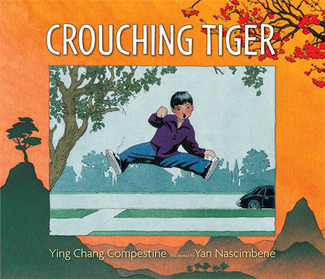 Title: Crouching Tiger
Author: Ying Chang Compestine
Illustrator: Yan Nascimbene
This book was an unexpected treasure from the public library. Kiddo picked this book out herself and I was really excited about it once I was in the middle of reading it.
As a third degree black belt who grew up around a lot of Chinese culture, I love finding unique children’s stories like these. It teaches etiquette, respect for your elders, culture appreciation, diligence, perfection through practice, and each page also has a diagram of a Tai Chi stance.
This was an excellent book to jolt us into our week on Ancient China.
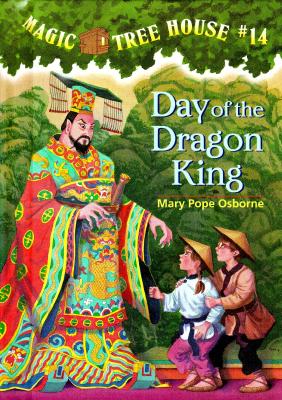 Title: Day of the Dragon King
Author: Mary Pope Osborne
Publisher: Scholastic
Although we don’t have a research guide for this topic, we’ve been perusing all things Ancient China while reading this book this week. There are pages from Life in the Ancient World
 Although we didn’t do anything crafty with this week’s topic, we did enjoy some stir fry for dinner and kiddo got to practice eating with her toddler chopsticks.
The kiddo’s chopsticks are an orange elephant, but the concept is pretty much the same. These things are so handy and I think they are a great way to give your tiny person an ounce of how other countries live.
The Color Purple… aka Slit My Wrist Blood Red
 Title:The Color Purple
Author: Alice Walker
Publisher: Harcourt Books
Length: 288 pages, of which I only read about 75
It is quite possible that if I were to finish this book in it’s entirety without skimming, I might feel like slitting my wrist by the time I made it to the end. So though I only made it 75 pages in, I’m finished reading The Color Purple. I’m weak, or whatever, I can’t handle it.
Regardless of the fact that it is by far one of the most depressing topics out there, I cannot stand reading the dialect. And I’m from the South. Is this how Brits feel when they read Cockney?
I mean, I get it, they spoke that way then. And some people still do. Whatever. But I can’t handle 288 pages of it, on top of all the incest and baby drama.
So while Celie is praying for God to save her from this horrible life, I’m praying for that saving to involve some kind of literacy that will iron out all the times she says “ast” instead of “ask” and turn all the “dats” into “thats.”
God forbid I say this, being that I am a huge fan of reading and I’ve yet to see either of my examples in production – but maybe some stories are better absorbed via a Broadway musical than in a book. (Hearing dialect and reading dialect are very different things to me.) Some things like: The Color Purple and Wicked, for example.
So, since I can’t stomach the book, I’m going to break a rule of mine and attempt the movie or musical soon. I think a story can be important and still not feel the need to suffer through it in certain formats.

What about you guys? Anyone read or seen The Color Purple? Share your thoughts.
Maybe if I can survive the movie, I’ll try again.




 Anakalian Whims