Christie the Queen of Mystery
Title: Mysterious Affair at Styles
Author: Agatha Christie

Join Hercule Poirot in Christie’s classic whodunit series, starting with the first! The lady of the house of Styles is poisoned and it’s up to Poirot and the narrator to uncover the culprit.
I’m sure you’ve heard that Christie is the mother of all mystery, and after reading my second Christie mystery ever, I must say I understand where that idea comes from. I was reading another blog today (http://resolution52.com/adventures-in-resolution52) and the writers really summed my thoughts on Agatha Christie and the mystery world up well when they wrote:
Agatha does it better – but, without Doyle, she probably wouldn’t have done it at all.
You can feel the cornerstone in the structure politely put in place by Doyle’s existence as a writer, but despite my deep love for Sherlock Holmes, you can tell Christie really mastered the whodunit art.
I’m on a mission to read all of Agatha Christie’s crime collection and starting at the beginning did not disappoint. Christie’s cozy mysteries make for pleasant little “FridayReads” (if you’re a twitter follower you know how much I love those) and I look forward to continue my year with Poirot! And soon after following with Miss Marple and the rest.
The goal is to finish the entire crime collection in 23 months, starting now. I’ll be reading three titles a month, so feel free to join me for some or all: http://www.shelfari.com/groups/79392/discussions/418226/Agatha-Christie
How to Buy a Love of Reading… Just buy Gibson’s book
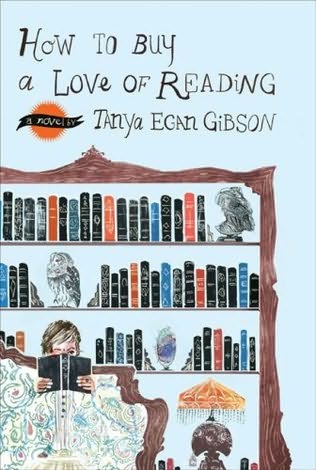 Title: How to Buy a Love of Reading
Author: Tanya Egan Gibson
Publisher: Dutton, a member of Penguin group
Genre: Fiction
Length: 389 pages
I cannot begin to count, honestly, the number of times I was brought to tears by this book. Something that was supposed to be light and fun proved to be something beautiful and amazing, something that moved me more than words can express.
I cannot begin to count, honestly, the number I times I fell in love with Hunter. Over and over again, reminding me of boys I fell in love with in real life. Stranger still, reminding me of myself.
I found Carly amazing, and brave, and beautiful, a character who reminded me of people I both love and hate.
I found Gibson reminding me why I fell in love with Fitzgerald in high school and how I cherish every blessed word of Gatsby and every word written about it.
I found myself wanting to share this jewel with a dear friend who has already left this world and lonely because of all the disappointment in his missing it.
I sit here writing the most incoherent review in the immediate moment of completion because I’m blown away, dazed, and I don’t want it to end, even though the ending is so perfectly final.
Believing the Lie – A Review
Title: Believing the Lie
Author: Elizabeth George
Publisher: Dutton, a member of Penguin group
Genre: mystery
Length: 610 pages
Dutton Books, to my surprise and excitement, kindly provided me with a copy of Believing the Lie, Inspector Lynley’s 17th book appearance, just weeks before its official release date. Despite this book being number seventeen in a series, and having never read any of George’s previous work, I often wondered which characters were reoccurring ones and which were unique to this title. The work and the character development was so seamless, this was unclear until nearly toward the end.
“[…] Darling, secrets and silence caused all of this. Lies caused this,” Inspector Lynley summarizes the novel of which he is supposedly the star. It is refreshing to read a crime writer who gives you such a large cast of characters in such detail, its surprising to find that the lead inspector is more like the wood frame that holds a canvas together than the paint that creates the work of art itself. He is ever in the middle of the action, but rarely the focus, he merely serves as the reason for the story’s existence in the first place.
George writes human tension beautifully. More than a typical mystery, George has written a well crafted drama involving social issues surrounding homosexuals, transsexuals, and the families who love but fail to understand them. During all this family drama, international culture issues, marital affairs, and even a child pornography ring, the biggest truth to be revealed of this murder mystery, is whether there has even been a murder at all.
Typically, when I read mysteries I take the cozy, less than 200 page ones for what I call “bubble bath books,” something I can read in one sitting in the tub. As much as I love those (my cotton candy for the soul), I say with the highest compliment intended, George does not write bubble bath mysteries. And quite different from those sorts of books, this one left me wondering: What Next?
How Alcott Raises Little Women
Title: Little Women
Author: Louisa May Alcott
Publisher: Little, Brown
Genre: Young Adult Classics
Length: 502 pages
I don’t remember learning to read, as I did it from such a young age. I do, however, remember the first books I fell in love with and the first books I read that were difficult for my limited vocabulary. Laura Ingalls Wilder I fell in love with first, I read the entire series several times by the end of first grade. Little Women, however, I fell in love with and learned from in second grade. Little Women taught me new words and phrases, culture, and how I wanted to live.
Josephine March has been one of my heroes since I was seven and first read about her chopping off all her luxurious hair. As a young girl, I identified quite well with her “one beauty” (that amazing hair) and tomboyish ways. I myself, was a ruddy, freckled girl, often found either playing tag football with boys at recess or perched in an oak tree reading a book, hair flowing every which way that my mother did not allow me to cut. My first significant hair cut, I donated two feet to locks of love, and who else was on my mind? Jo March.
I re-read the book multiple times before I left elementary school, getting more and more out of it each time as my reading skills improved. And despite cherishing it always, I set the book aside and did not read it again until my twenty-seventh year, this year, to my one year old daughter.
I opened it up a week or so before Christmas, not realizing it would spur a desire to re-read it every Christmas with my kid for the rest of her life if she likes it as much as I do. It’s such a great Christmas book! Upon this fresh re-read, I also discovered many other things that my brain had forgotten, but my soul must have internalized. For instance, the girls are all distraught and Hannah, bless her soul, “came to the rescue armed with a coffee-pot.”
Like every good American, I am wholly addicted to that black magical brew, it’s in our veins and culture, look at how well Starbucks has taken off. But my family did not keep coffee readily available, my dad won’t touch the stuff and my mom’s mother died of cancer the doctors blamed on her caffeine intake so she never kept it around growing up. So part of me wonders if Alcott played a role in my introduction to it, as I don’t remember a time when I did not love it. I remember sneaking cups of it from the employee break room at the bus barn where I waited with my bus driver between routes in elementary school. In hindsight, I believe it was the reverence that writers hold for it, the way it is talked about in books, that drove me to love it so much, and it very well may have begun with Little Women.
Then, there is Theodore Laurence. I believe every guy friend’s worth that I ever had my whole life was measured against the character of Laurie. He is whimsical, gallant, a rascal and a gentleman. Theodore Laurence is handsome, a friend, and all around a good time. Every girl needs a Teddy-Dear in her adolescent life and if you can’t get one in the real world, its time for yet another read of Little Women so you can live vicariously through Jo!
Jo March taught me to love, to read, to pursue life with a fiery passion, and how to pick my friends. It was Jo March that sparked the first desires in me to be a writer. It was Little Women, and the romance of Jo and the Professor, that set the stage for me to fall in love with the art of Jane Austen and the Brontes. It was the pen of Louisa May Alcott that taught me how to really enjoy books and the thrilling life they have to offer.
Einstein: His Life and Universe by Walter Isaacson – A Review
 Title: Einstein: His Life and Universe
Author: Walter Isaacson
Publisher: Simon & Schuster
Genre: Non-fiction, Biography, Science
Length: 675 pgs.
Albert Einstein was a prick. Not the description you were expecting? Me neither. We always hear about how brilliant he was, how much he changed humanity and the world of science with his great theories. We always see images of his goofy, yet charmingly wild smile and hair. We don’t see him through the eyes of the family he abandoned.
Isaacson is thorough in his research and the language of his biography of Einstein is easy and accessible. He sheds a lot of light on physics formulas that I had a hard time grasping in my high school science classes. But he also sheds a lot of light on Einstein the not-so-family man.
Not only did he and his wife abandon their first child, a girl who history has nearly erased,
“[Hans Albert, Einstein’s son] had powerfully conflicted attitudes towards his father. That was no surprise. Einstein was intense and compelling and at times charismatic. He was also aloof and distracted and had distanced himself, physically and emotionally, from the boy, who was guarded by a doting mother who felt humiliated.”
Einstein eventually divorced his wife, but not before maintaining an emotional affair with his cousin Elsa. “Companionship without commitment suited him just fine,” Isaacson writes about how Einstein toyed with both women’s heartstrings by alternating his attentions between them. In the end Einstein and Elsa did marry, but not before a questionable letter was written by Elsa’s daughter to a friend that mentioned Einstein’s true love interest was the twenty year old daughter, not the mother.
Isaacson’s presentation of Einstein is a great book for high school science and history students. Anyone trying to understand the genius’s formulas should also understand the history surrounding their creation/discovery. His life is also one to discuss with your teen touchy topics of worldview and the importance of values; world changing discovery vs. the importance of family, political and religious affiliations and observations. Each family’s opinion of Einstein’s life will most likely be different, and its one that should be surveyed and critically analyzed.
On Writing, a Review (of King’s Craft)
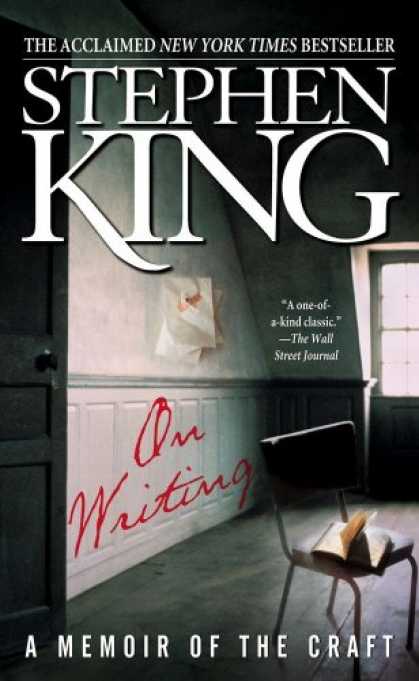 Title: On Writing: A Memoir of the Craft
Author: Stephen King
Paperback Publisher: Pocket Books
Genre: Non-fiction, Memoirs, Writing Guides
Length: 291 pages
My mother saw me reading Stephen King’s On Writing and scowled at me. “That man is so weird, I don’t know why you would want to read any of his crap.” Says the woman who may or may not have read one of his books. Admittedly, I don’t read much of his stuff. I couldn’t really get into Gunslinger, but I loved Low Men in Yellow Coats from Hearts in Atlantis. I have no desire to read most things published in the horror genre, but On Writing isn’t horror, its not even fiction, it’s an amazing memoir and guidebook to how The King’s mind really works.
On Writing is solid advice from a successful writer to anyone who has ever dreamed of being a storyteller. King is entertaining, down to earth, and extremely informative. He is passionate about his work, and despite many blunt criticisms about typical writing flaws, he offers sound wisdom to budding authors.
I found reading On Writing highly motivating. I’ve always been an avid reader, and I’ve always loved to journal and write tidbits of stories that come to me. But reading this really got me in a dedicated routine. I’d start my day off with a little advice from the master of fiction, write the recommended 2000 words for the day, and then pick up some handy little piece of fiction that took my fancy and read until my daughter woke up from her nap.
Since reading On Writing, I’ve got myself on a more solid path to finishing a complete draft of my novel than ever. King doesn’t offer any kind of magic fix for suddenly getting published; he just reminds you that you already have the tools to do the job. He gives you the confidence to press on and keep writing because you love it, not because someone told you to try to make some money at it once upon a time.
King encourages every writer to keep what he calls a writer’s toolbox. In that box he includes the Elements of Style by Strunk, but I think you’d be remiss not to include On Writing in that toolbox as well.
The Brownie and the Princess – A Review
Title: The Brownie and the Princess and Other Stories
Author: Louisa May Alcott

A HarperCollins Publication
Genre: Children’s fiction
Length: 250 pages
As everyone knows, Louisa May Alcott wrote Little Women in the 1800’s and became one of the most well-known and timeless children’s literature authors of all time. The story of the March sisters is one that all little girls discover eventually, even if it isn’t until adulthood with the many movie productions (the most recent in 1994 featuring Winona Ryder, Claire Danes, and many other well-known stars). What a lot of people don’t know is that, just like Jo March, Alcott had many stories published in children’s magazines. The Brownie and the Princess and Other Stories is a collection of those stories.
One of the most delightful things about being a new mom is seeking out children’s books that I either remember loving or discovered later and wish I had owned. This particular collection was published while I was in college, so I missed the joy of reading it as a small child, but am extremely excited about having it available for my daughter.
The story of the Brownie and the Princess teaches good manners and being happy with what you have. Tabby’s Tablecloth is about patriotism and respecting antiques and the sentiments attached to them. The Hole in the Wall is beautifully innocent and romantic in a way. It’s lovely to go back to pleasant stories of gardens and happy moments strung together, skipping, playing, and the teaching of basic goodness, in the midst of a rough day of teething, tears, and tantrums. Books like these help gently aid the teaching of right from wrong.
The Vampire Diaries Review
 Title: The Vampire Diaries Books 1-4
Author: L.J. Smith
Publisher: HarperTeen
Genre: Young Adult Fantasy
The Vampire Diaries is a young adult vampire horror series of novels written by L. J. Smith. The story centers around Elena Gilbert, a high school girl torn between two vampire brothers. The series was originally a trilogy published in 1991, but pressure from readers led Smith to write a fourth volume, Dark Reunion, which was released the following year. The first four novels in the original series: The Awakening, The Struggle, The Fury and Dark Reunion all feature Stefan Salvatore and Elena Gilbert as the main protagonists. The first three novels in the original series are from both Stefan and Elena’s point of view, but the last book in the original series, Dark Reunion, is from Bonnie McCullough’s point of view. – Summary from wikipedia
I initially started reading The Vampire Diaries because I got hooked on the show. I have a rant about television shows, movies, and book reading regarding the whole ordeal here: https://anakalianwhims.wordpress.com/2011/11/09/books-to-movies-to-tv-shows/, basically saying I was shocked to find that I love the series and hate the books.
Well, why bother reading the rest of the series after loathing the first book so much? I’m a start a series finish a series kind of girl, no matter how awful. It’s just polite to give the author a chance to 1) redeem themselves after a bad experience 2) let the characters and story warm on you, sometimes you meet someone and think they are horrible people only later find out they were just having a bad first impression day 3) be sure you weren’t just in a judgmentally bad mood that day.
And I tried, I really did. I read the first volume of books one and two and got all the way through book three of this second volume. One chapter into the fourth part and I gave up. How can the show be so intriguing and the books be so awful? Amazing liberties taken with the story by those fab people in Atlanta, that’s how. These books are truly terrible; I don’t know why I bothered.
Smith has the uncanny ability to make dialogue something I dread. Instead of the simplicity of a he said she said, we get every –ly word found in my third grade Webster’s dictionary thrown at us, even when they don’t make the best of sense. Admittedly, I always hated the overuse of this in writing, but didn’t really understand how much until Stephen King put my own thoughts into words in On Writing. Now that I have read detailed explanations of my own gut instinct, I find it even more nauseating.
L.J. Smith’s original books are merely a reoccurring fad due to people’s fascination with vampires. But if you’re looking for Stefan, Damon, and Elena time – watch the CW television show, it’s available on Netflix. If you’re looking for some Vampire literature, stick to Anne Rice and Bram Stoker. Then, there’s always one of my cotton candy favorites: Robin McKinley’s Sunshine. My copies of The Vampire Diaries series got thrown along with Twilight – the library donation bin.
*Edit/Postscript in the form of a confession: I am not and never have been the target market for this book. It’s unfair for me to judge so harshly when the book was clearly not meant for me and I knew that from page 2 of the first installment.
A Book Review: TumTum & Nutmeg by Emily Bearn
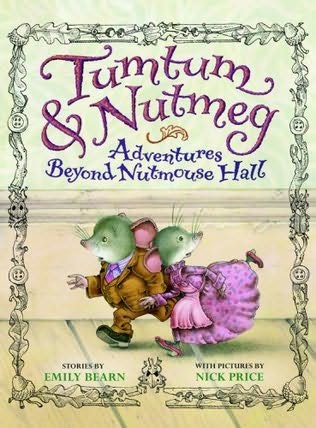 Title: TumTum & Nutmeg
Author: Emily Bearn
Available from Egmont
Genre: Children’s fiction
180 pages from Adventures Beyond Nutmouse Hall by Little, Brown
Please visit: http://www.tumtumandnutmeg.co.uk/index.htm
In the broom cupboard of a small dwelling called Rose Cottage, stands a house fit for a mouse – well, two mice actually. A house made of pebblestone, with gables on the windows and turrets peeking out of the roof. A house with a ballroom, a billiard room, a banqueting room, a butler’s room and a drawing room. The house belongs to Mr and Mrs Nutmouse, or Tumtum and Nutmeg as they affectionately call each other.
Tumtum and Nutmeg have a wonderful life but the children who live in Rose Cottage, Arthur and Lucy, are miserable. So, one day Tumtum and Nutmeg decide to cheer them up…
Tumtum repairs the electric heater in the attic where the children sleep and Nutmeg darns the children’s clothes. Arthur and Lucy are delighted and think a Fairy of Sorts is looking after them.
But then Aunt Ivy with her green eyelids and long, elasticey arms arrives. She hates mice and hatches a plan to get rid of them. Soon Tumtum and Nutmeg are no longer safe to venture out…
Tumtum and Nutmeg is a miniature masterpiece that will be loved by generations to come.– Summary by Egmont
I picked up TumTum & Nutmeg: Adventures Beyond Nutmouse Hall at Half Price Books in Humble, TX a few months back, with the intention of reading the stories to my daughter one day. I had never heard of them, but the front cover looked delightful and reminded me of the childhood days I spent pouring over The Borrowers by Mary Norton.
My daughter just turned one this last month and tired of re-reading every Eric Carle and Marcus Pfister book we own, I decided to see if she could sit through a few pages of Emily Bearn. I thought, maybe we can at least make it to the first illustration.
Low and behold, we were both captivated. I read until she fell asleep, and despite this book being written for very small children, I found I couldn’t put it down and wanted to know what would happen next. I was five years old again, huddled up in a quilt, lost in a world of a little family living in the nooks and crannies of an old house.
TumTum & Nutmeg is wonderful. It is precious in its descriptions and histories, the story is sweet and adventurous, enriching and exciting. I cannot wait to read the additional stories in the compilation and with sheer joy anticipate re-reading this story to my daughter when she is old enough to follow the story and not just my voice. This should be a part of every child’s library.
Books to Movies to TV Shows
I’m a bibliophile – a crazed book junkie. But more than that, I’m a sucker for a good story. So, admittedly, when it comes down to it I can enjoy a well-crafted TV Show storyline just as easily as a classic like Ayn Rand’s The Fountainhead.
I grew up with the token line “read the book, its always better than the movie.” I lived and breathed this credo, I pushed it on others as a bookseller. Up until recently, I’d vow that it was complete and utter truth.
But has anyone noticed how crafty these TV Show writers have been getting? Look at Lost, the whole nation was hooked. And then all the over-rated vampire dramas… True Blood, I must say, was pretty fascinating. The book series counterpart by Charlainne Harris, uuuhhh, cute and funny – but not something that would keep me going back for more except for the fact that I can’t stand being that person that has watched the show or movie and not read all the books, being that person hurts my soul.
The whole phenomenon of liking the show better than the books threw me for a loop. I’m not that person – I always enjoy the books better. Look at The Scarlet Pimpernel: God only knows I adore Jane Seymour, but nothing compares to just reading it all for myself. Jane Austen renditions I could eat up day after day, but you’ll never get me to concede that I’d take any of the movie versions over the books ever. East of Eden, Nicholas Nickleby, Wuthering Heights, Harry Potter, my list of loves goes on and on, and as fabulous as some of the movie versions get they just can never compete with the books.
Until lately. I saw White Oleander and despite its major differences from Janet Fitch’s original work, I loved it, and will re-watch the movie long before I’ll re-read the written format. Girl Interrupted… I adore Susanna Keysen, but man, Angelina Joli and Winona Ryder did such an awesome job, I was riveted. And finally, to my shame, I have a closet addiction to the TV Show The Vampire Diaries. Its lame, I know, the whole ‘I’m in highschool and I’m doomed to love this vampire from first sight’ business is such a racket and mostly I hate it. (The Twilight book series stressed me out beyond belief, I didn’t really care for it although it was entertaining – but overall, pretty awful.) Yet, here I was this week, hooked on the Vampire Diaries (thanks to Netflix) and I thought: The books are bound to be even better, after all they are books.
So, I bought the first two. I’m reading them. I’m HATING them. How did a TV Show screen writer write such riveting stuff based on a book that is not remotely riveting at all? The books are so young, and in comparison the show is so much older. The Elena of the book is so shallow and a huge jerk so far, completely obsessed with herself and her status, and the Elena of the show is actually a bit lovable with the makings of a heroine.
I ask my fellow book readers: How has this happened? Has book quality gone down so low? Has the technology and budgeting of the movie and television industry risen so high to make a lame storyline become something fascinating with visual stimulation? Is it a combination of the two? Does any other book lovers find themselves in this hypocritical dilemma? I love my books. I love discovering the latest Simon Winchester, I love diving into ancient classics, I love studying history and researching ideas and philosophies of the past, I even love my bubble bath reads (the books I call cotton candy for the mind and soul). And sometimes, I find myself loving the movies and shows just a tad bit better.




 Anakalian Whims