The Forgotten Garden, an Overlooked Book
 Over and over again, I saw Kate Morton’s House at Riverton lurking on the general fiction shelves at Half Price Books. I never picked it up, the cover just wasn’t right. Book jackets are magical things. Between the author, the publishig company, brilliant marketing people, and the perception of the onlookers – a book jacket tells all. The House at Riverton just wasn’t telling me what I wanted to hear. Then one day, my boss waves The Forgotten Garden in front of my face. “This is amazing.” It looked amazing. The antique cream color, the ivy, the fairies, the magical nostalgia of a Frances Hodgson Burnett novel… I desired it immediately. I was dumbstruck to realize it was the same author.
The Forgotten Garden is beautiful. Twins, secrets, best friends, a family saga, England, Australian, painters, storytellers, an authoress, spooky deaths… It was the perfect mood follow up to The Thirteenth Tale. It was an amazing read. It took me too long to discover it due to the terrible marketing of the author’s previous book. Thank God, the publisher’s finally gave Morton’s writing her book cover art due.
If you are wondering, I have broken protocol and abandoned my book cover instincts for the sake of reading Morton’s previous work – I bought The House at Riverton and its horrible cover. I plan to read it around Christmas, a review to follow. Her third book, Th Distant Hour is scheduled for me to read Spring 2012.
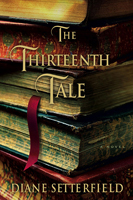
The Thirteenth (Perfect) Tale
 The very first morning I walked into Half Price Books as an employee, it was a cool April. I was wearing my favorite olive green sweater, the sleeves curled just perfectly around my fidgety fingers; too excited to be stilled they fondled the woven material with angst. My boss was giving me the grand tour, and that’s when I saw it for the first time – the name Audrey Niffenegger. It was a hardback copy of The Time Traveler’s Wife, it had shoes on the cover, one large men’s pair, one small little girl’s pair. That’s what drew me to her work first. By the next day, I had devoured the book.
Later, she came out with Her Fearful Symmetry, which I loved even more. I am addicted to Niffenegger’s strange, yet perfect stories, her intense writing is something to be reckoned with. The feeling you can’t let go of once the book has ended is something like no other.
Several years later, still working at Half Price and in charge of the fiction/literature section, my safe haven, my heaven, my home away from home, a place at which I spent many happy hours of sweat and tears and occasional splinters, I stumbled across something new. It was a dark book, it caught my eye because the cover seemed to radiate the ambiance of ‘If you love books at all, you’ll love me.’ It was Carlos Ruiz Zafon’s Shadow of the Wind. He was compared to Umberto Eco and Gabriel Garcia Marquez on the jacket. I devoured it. Again, I was in love.
Those moments, now being properly relayed so that you may understand the depth of my love at first sight memories of these two author’s work can only help define how high a compliment it is for me to say: If Niffenegger’s Her Fearful Symmetry and Ruiz’s Shadow of the Wind were to have a love child, it would be Diane Setterfield’s The Thirteenth Tale.
The Thirteenth Tale moved me in a way I am only moved so rarely for someone who reads so often. Having worked now in a bookstore these past four and half years, I have become both desensitized and overly inspired by everything. Everything interests me with its prospects, the possibility of discovering magic within the pages of something new, as I have in the past. But most things slightly disappoint with their lack of fervor, their severe void of original thought, or the absence of a classic feel.
The Thirteenth Tale is missing nothing. It is rich, full, thorough; it is mysterious and ghostly, beautifully gothic. It is a perfectly woven tale. Vida Winter could quite possibly be my favorite heroine of all time.
The Thirteenth Tale for sale on Amazon.com: http://rcm.amazon.com/e/cm?lt1=_blank&bc1=000000&IS2=1&bg1=FFFFFF&fc1=000000&lc1=0000FF&t=anakawhims-20&o=1&p=8&l=as4&m=amazon&f=ifr&ref=ss_til&asins=0743298039
Time Traveler’s Wife for sale too: http://rcm.amazon.com/e/cm?lt1=_blank&bc1=000000&IS2=1&bg1=FFFFFF&fc1=000000&lc1=0000FF&t=anakawhims-20&o=1&p=8&l=as4&m=amazon&f=ifr&ref=ss_til&asins=0547119798
Crack in the Edge of the World
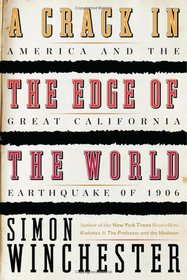
A Book Review
Simon Winchester never fails to fascinate and inform. When I picked up Crack in the Edge of the World, I was surprised to discover that the author I dearly remember for writing The Professor and the Madman (a history of the making of the Oxford English Dictionary) was also a geologist and highly knowledgeable in both language AND the science of rocks – what a foundation! This particular history on the great earthquake of San Fransisco met high expectations of Winchester’s talent compared to his previous work and I recommend this to anyone who likes history, science, or just plain good storytelling.
The Woodlanders
 A quick blurb:
I’ve been up and down with The Woodlanders, mostly based on my mood. I loved it, it lulled, I hated it, and now with its final sentence I love it again. I am finding more and more that this is the sway of things with Hardy and me. His characters are so dynamic and unique and yet you find familiarity in each one every time you turn. He has nailed the human race time and time again, yet he is most known for his nature descriptions. I truly recommend every avid reader to enjoy at least one Hardy a year for literary sustenance.
Scentsy pairing: Shades of Green in the room you are sitting in, but keep Honey Peared Cider going in the adjacent room and let them subtly linger together.
The Duchess of Bloomsbury Street
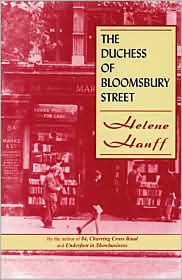 A Review of Helene Hanff’s sequel to 84, Charing Cross Rd.
At the end of 84, Charing Cross Rd. when Helene’s correspondence with London bookseller Frank Doel seemingly came to an end – I cried. Now, in Duchess of Bloomsbury Street when Helene first sees Charing Cross Rd. with her own eyes – I cried again. Helene Hanff is simple, witty, clever, and utterly enjoyable every time she takes pen to paper. I enjoy romping through London with her and cannot wait to read what she has to say about life in America when I finally find myself a copy of Apple of My Eye. And, if I ever visit London, I hope I have even half as many wonderful people available like The Colonel and PB to escort me to all the best sites, and then maybe my trip could be almost as perfect.
Ghosts, Suffragettes, and Skirts, Oh My!
Although Rebecca Kent (also known as Kate Kingsbury or Doreen Roberts) is not English, her Bellehaven Finishing School is, as are all the household staff and students. Well to do Edwardian Brits send their daughters to the care of Meredith Llewellyn, a widowed headmistress who sees ghosts! Not just any ghosts, though, of course only ones that have been killed off before their time!
A sort of “Ghostwhisperer” (tv show starring Jennifer Love Hewitt portraying a woman who talks to ghosts and coerces them to go to the light) for lovers of period pieces and proper society and pesky suffragettes, Kent’s cozy mysteries are just the right medicine to hunker down with while recovering from a Spring cold, hayfever, and all those other things that come with the changing weather.
I’ve finished reading High Marks for Murder, am currently reading Finished Off, and cannot wait to begin Murder Has No Class. Although the series was cut off by the publishers trying to pinch pennies in this recession, the author has wrapped up some loose ends for us here on her website: http://www.doreenrobertshight.com/id4.html.
Georgiana, Duchess of Devonshire
A Review on the biography by Amanda Foreman
For starters, I am baffled by how many people mistake this book for a novel. I have read so many reviews that say it was too historical, too dry for a novel, and that they didn’t get a chance to get into the characters because the story read like a research paper. These people are ridiculous, because it’s a biography and because it was the most fascinating ‘research paper’ I’ve ever read.
I was amazed at how many people Georgiana managed to charm in her life. When you read about all her flaws and mishaps, you expect the world to hate her. I expect that I would have hated her. She constantly gambled, lost all her money, and was continuously lying to everyone around her. She seems silly and a bit hairbrained. But when it comes down to it, everyone that knew her loved her. She set trends, led a political party to greatness, and was a best friend to her children. (Despite the few years she neglected them to go have another child from another man, even her children thought her to be the best mother in the world.)
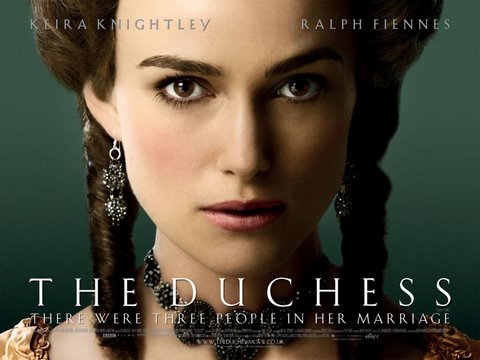
Prior to this biography, I had no idea that she was a great ancestor to the infamous Princess Di. I also found it refreshing to read a biography on royalty that was non-Tudor related. I highly recommend the book, and the movie made after it starring Keira Knightley, although after reading the biography I find the movie a bit deceptive on the character of the Duke.
Red Badge of Courage and Thoughts
As a kid, I remember being completely infatuated with Red Badge of Courage. But there was a time around the ages of nine and ten when anything to do with the Civil War was fascinating. About the same time when teachers brain wash you with the “history” that all things Union were good and righteous (the way Fanny Price and Jane Eyre are good and righteous), and all things Confederate are sinful and misguided, a nuisance the Union had to deal with like Ramona the Pest before she learns her lesson, leaving out all the important political stuff regarding state’s rights.
Now, as an adult re-reading this elementary school favorite by Stephen Crane, I find my childhood obsessions a bit morbid and unfamiliar. The only thing I feel inclined to get excited about is the memory of the excitement over the names of two characters: Rogers and Fleming. My maiden name is Rogers and my real live Hilary Whitney Beaches-like pen pal’s last name is Fleming. (I only dub her as Hilary because between the two of us I’m the only one loud enough to compete with Bette Midler.)
Looking back, it must have been the tomboy in me, appreciating lines like: “When in a dream, it occurred to the youth that his rifle was an impotent stick, he lost sense of everything but his hate, his desire to smash into pulp the glittering smile of victory which he could feel upon the faces of his enemies.” (Chp. 17) Because admit it, that’s a sentence worthy of Twain’s Huck Finn – and all little boys want to be Huck Finn, and all little tomboys want to marry him (as Tom Sawyer’s love is reserved for the girls in ruffled dresses).
In short, not until this book have I been so sure in my decision to have Ayla keep reading review journals from the second she can read and write sentences. I long to know what my specific thoughts were on this book, as I can’t recapture more than a vague idea of having loved it. What was my ten year old self thinking? It’s a good, well written book of irony, but nowhere do I truly see the appeal to a third to fourth grade girl since the majority of the book features a lot of running around and “men, punched by bullets, fall[ing] in grotesque agonies.” (Chp. 19)
Masson Tries to Make You Weep…
 in When Elephants Weep
I enjoyed the anecdotes quite a bit, this parrot learns to say this, that elephant painted that, this species is documented as feeling empathy towards that species in a rare moment, the monkeys are a lot like us, but so are the fish etc. etc. I agree with most the points, animal cruelty is wrong, experimentation needs to have stricter rules, we should treat the animal world with respect. However, I don’t want to become a vegetarian and I didn’t care for how the opening and ending arguments basically boiled down this beautiful essay to we shouldn’t eat meat. Apparently that’s what this was about to them, to me this book was about how beautifully complex our world is, but I can’t argue with the authors themselves. By the end of the book they had achieved a level of redundancy I don’t think I’ve ever managed to read in any other book my whole life. This book’s saving grace was those amazing animals that starred in it, but if I hear /read the word “anthropomorphism” I think I’ll scream, and if someone tries to guilt trip me out of eating my steak I’ll kindly smile, cut, and chew. And if I’m told I’m a bad person for taking my daughter to the zoo, well, I’m sorry you feel that way, I’m going anyway.
Portrait of a James Novel
Henry James’ The Portrait of a Lady is quite possibly one of the most depressing novels of all time. Although there are numerous sentences throughout the book that I would deem some of my favorite quotes, the book as a whole put me in a sad, sad state, and not a deep whimsical sadness like that of Bronte’s Wuthering Heights, just sad. Isabel Archer gets used terribly ill, poor Caspar Goodwood will never have peace, the rotten Osmond gets to keep his prize, and the manipulative Madame Merle (whom I do feel a bit sorry for, but only a bit) gets to runaway to America and leave her consequences behind her. The “incredible twist” towards the end of the book did not seem like a twist at all, but rather was much expected.






 Anakalian Whims