Robinson Crusoe
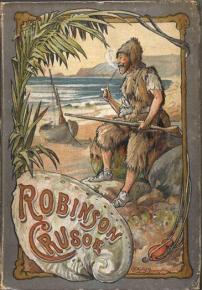
Title: Robinson Crusoe
Author: Daniel Defoe
The only memory I have of my father reading to me is when he read me Robinson Crusoe. I was ten. I don’t remember why, of all the moments, he chose to read this particular book to me – when I was already reading at a post collegiate level on my own and had been for awhile – when my sister and my mother had previously done most of the read-alouds in our family. Maybe it was good timing with work, maybe he was excited I was interested in it, who knows? Neither of us remembers at this point, twenty-five years later, but what we do know is this: It mattered.
So it was a pretty big deal to me when in February of 2018, I found myself in the car on a cross country road trip to the Creation Museum with my daughter, my dog, both my parents, and began reading Robinson Crusoe out loud in the car.
Robinson Crusoe was first published on April 25th, 1719, and even though we know it to be a novel now in 2019, it still has elements that lead first time readers to believe it to be a true account of a man’s travels. It was mistaken as such during its early release, an intentional marketing ploy by Daniel Defoe, because even in the 1700’s, sensational stories are sold most efficiently if we think they’re real. Look at James Frey and his Million Little Pieces “memoir.”
The first edition of the book touted Robinson Crusoe as both author and protagonist, but now we know that Crusoe is merely a character. In my personal opinion, not even the best character, I have always been most drawn to Friday.
There are many things inherently wrong with Robinson Crusoe if you look at the story from twenty-first century eyes: Robinson Crusoe works hard and then God blesses him to become a king-like fellow. One, that’s just not how God works, and many 1700’s boys and girls were then encouraged to be like Crusoe with this lordship at motivation. Two, it highlights the slave trade, and if you ask most modern Americans they’ll tell you this is a story of white supremacy, white privilege, oppression of all others, etc. etc.
Despite these hang ups, I love it. I think it’s a story that starts conversations. We need to be having conversations with our kids. What makes a protagonist? What makes a hero? What’s right? How do you feel about Crusoe and Friday’s relationship? Do you think this is appropriate? Do you think its duplicatable? Should it be duplicatable?
Kiddo was only seven when we read this together, but I think she got a lot of out of it and it definitely gave us a better view of the 1700’s as we studied all aspects of history. We got to the travel the world through the eyes of an author who lived during the times, and whether his worldview was good or bad, right or wrong, Defoe described it all vividly.
Happy Fourth of July

The Half Price Books Humble book club read John Adams by David McCullough this month. We discussed it together Monday night, even though I had only read the first 400 pages. The best thing about holidays, for me, though is their ability to mandate what gets read off the TBR pile next. So this week, as I researched for book club, lounged with family, watched fireworks, and read to the kiddo… this is what freedom looked like:
 Title: John Adams
Author: David McCullough
Genre: History
Publisher: Simon & Schuster
Length: 751 pages
1001 and one things to discuss about this book, and we mostly got caught up in the assessment of the character of John Adams. Was he an ambitious man willing to run off from the family and farm at a moments notice to pursue more exciting ventures of fame? Or, was he a great man of virtue who was gifted with the sight of the big picture, willing to sacrifice personal happiness for the greater good of the establishment of our country? Before reading the book, considering my skepticism regarding ALL politicians, I probably would have said the former. But McCullough has me convinced it was the latter that held true.
Of course, I am biased, mostly by the sheer fact that Adams was a great reader. Nothing romanticizes a person more to me than their love for a good book, for the art of research, and for a passion for knowledge and action. Several times throughout the biography, Adams is quoted saying such excellent things as,
“I must judge for myself, but how can any man judge, unless his mind has been opened by reading.”
Where others in the group found him willing to cast aside his wife and children for politics, I found him endearing. He wrote to his wife avidly. He and Abigail would often refer to each other as ‘dearest friend,’ and their relationship seemed to be what kept him grounded and successful. In addition to that, it also seemed that any chance he had to take his children with him, he did. Off sailing across the pond to Europe, the boys equipped with an educated father and a personal tutor, they got first hand experience seeing how nations make peace and build relationships. Sure, Adams renounced his son Charles later in life and that relationship was never rebuilt before Charles’ death, but in my opinion Charles did not deserve anymore second chances. Charles, the favorite as a child, turned out to be the bad seed in the bunch – possibly spoiled by being the favorite to so many – as he turned to alcoholism and abandoned his family. It was John and Abigail who raised his children and looked after his wife, leaving their own son to his own devices as they tried to do right by all his mistakes.
John Adams was quite the fascinating man, one I have, until now, always overlooked in history. Having shared a birthday with George Washington my whole life, he always got my ‘favorite’ vote as a child. As an adult, the Alexander Hamilton vs. Aaoron Burr phenomena fascinated me – mostly driven by that infamous ‘Got Milk’ ad as well as Joseph Ellis’ riveting storytelling in Founding Brothers
With all this important political talk, I found it necessary to re-read the Declaration. With toddler in tow for nearly all my reading ventures, it’s important to find kid friendly things to read alongside all my own reading. That’s where Sam Fink comes in handy…
 Title: The Declaration of Independence
Illustrated & Inscribed: Sam Fink
Publisher: Scholastic Nonfiction
Length: 160 pages (but only takes about 15 minutes to read aloud)
I absolutely adore this copy of the Declaration of Independence. As a homeschool mom, I love creating my own curriculum and finding unique ways to share information with my kid. Kiddos everywhere, whether homeschooled or public schooled, should find this a fun way to absorb the meaning behind the declaration and be introduced to the ideas of why it was so important for it to be made and signed.
With large print, clear illustrations, and political cartoons to accompany nearly every sentence – if not sentence fragment – Fink helps walk a kid (and even some adults) through every nuance of our founding fathers’ meaning and intention. If read often enough, you may find you have a kid who has memorized the declaration long before they are ever asked to do so for school purposes. This is just a good old fashioned fun picture book that just so happens to also be an important document to our country’s history. Sam Fink is pretty awesome and I am so glad he tackled this project.
In addition to all that,
 Title: George III
Author: Christopher Hibbert
I’ve been plucking through a biography of King George III for awhile now. It’s been loitering on my TBR pile and periodically I get the bug to read a chapter or two.
I am no where near finished reading this book, Hibbert is very detailed but also very dry as a biographer, but I find it a handy reference and do look forward to the times that I decide to sit down with it.
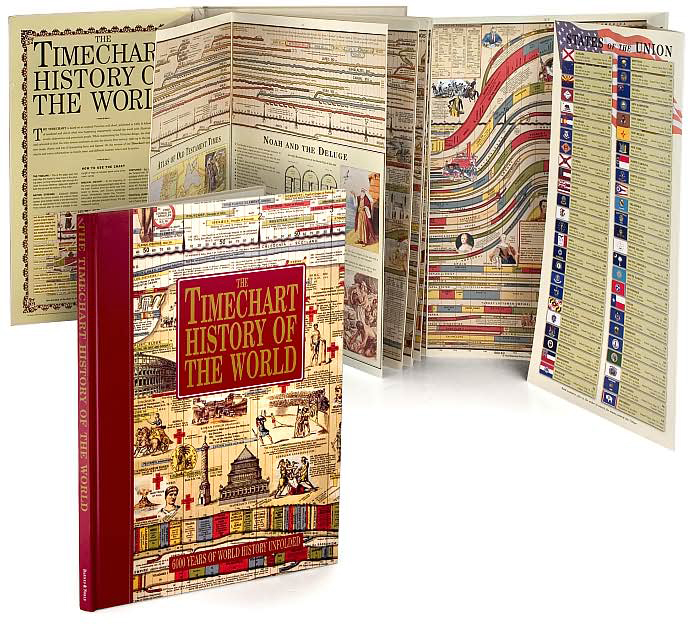
I like having large sweeping views of history as well as the tiny details. Reading through John Adams and peeking here and there at George III this week, I was grateful to have already tackled Napoleon’s Wars recently. It helped me keep straight in my mind what was happening with the French while a few of the Adamses friends were busy getting beheaded. Another handy tool for both children and adults while reading through history is The Time Chart of History of the World
Through a Glass Darkly – A Review
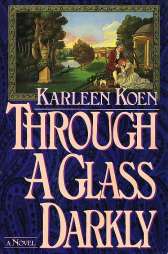
I am reading from a first edition. Click the image to view the most recent book cover.
Title: Through a Glass Darkly
Author: Karleen Koen
Publisher: Random House
Genre: Historical Fiction
Length: 743 pages
*Spoilers*
Depressing. Intense. Captivating. Intriguing. Dramatic. I end this book exhausted.
Karleen Koen has effectively dragged me tooth and nail, screaming, begging to stop, through roughly 6 years (if I followed the timeline correctly) of Lady Barbara Alderly Montgeoffrey’s life. It was long, excruciating, and well, brilliant. I am so tired, feeling as though I lived through it myself, and wonder how Koen managed to write 700 pages of this 1700’s soap opera without bawling her eyes out daily. The children die, the brother commits suicide, the husband has a male lover… can anything go right in this poor woman’s life? The only solace was knowing it was fiction, although I was constantly reminded of Georgiana, Duchess of Devonshire
Even more, up until the last few pages, I wondered how on earth two more novels could possibly follow this one (I didn’t realize while reading that Dark Angels
 I feel terrible reviewing this book, describing it so crudely. Koen states on her site:
“This was such an innocent experience for me, writing without realizing others would read me and have opinions about everything. I’ll never be able to write with the innocence this book displays, but it’s my goal.”
and I don’t wish to be the person that adds to that loss of innocence. The book is good, it really is. Just probably isn’t the best of books to read while plodding through Les Miserables. It makes it hard to see the light at the end of the tunnel in the middle of a rough week!
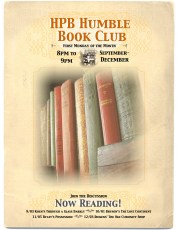
I can’t wait to discuss this book with other readers, as this is the first official Half Price Books Humble Book Club pick. Koen is a Houston resident, so I thought having a local author on the Book Club’s first set of titles would be both exciting and appropriate. The meeting will be held September 3rd from 8 – 9pm, led by yours truly, and I’m getting very antsy. There’s still time to pick up a copy and read the book in time to join the discussion! You won’t be sorry, and there will be more exciting event announcements for September to come… So stay tuned, and start enjoying your Karleen Koen binge now.



 Anakalian Whims