Abuse, Affairs, and Amateurs
Usually if I don’t finish a book, I don’t review it. If I don’t finish it, am I truly the most qualified person to throw opinions on it around to the public.
I’m not talking about books that you CAN’T finish because they are too awful. I’m talking about the ones that I start, I sorta enjoy, and then I simply abandon to read something else – or, I decide that even though it’s interesting, it’s not quite interesting eno ugh. Or, I just get bored with the topic halfway through.
I used to not be this way. I used to barrel through. I used to treat a book like a ship, me its Captain, and come hell or high water I would make it to its end – together. This practice became cause for some dark moods and much wasted reading time.
I picked up Wedlock when I took a sabbatical from my family (sort of) to work full time in the bookstore for a few months. I saw it on the shelf as I was running history and thought, this looks interesting, and I loved Georgiana, Duchess of Devonshire. I thought this one would be similar. And it was. But it wasn’t.
Although the life of Mary Eleanor Bowes is one for the history books, and she was an incredible closet botanist for her time, I found that reading about her life, unfortunately, felt more like reading about Kim Kardashian or Brittany Spears than, say, reading about Marie Curie. The heiress was often in the social limelight, easily wooed by absurd men, and seemed to spend her life being abused by the system. This is to no fault of the biographer, but to the fault of society and the fact that, although intellectuals will complain how enraptured we are as a modern society by celebrities and trashy magazines – the reality is that s ociety hasn’t changed all that much over the last few hundred years.
Moore’s book includes reports worthy of People magazine and Star. Elite gossip regarding who has married whom, how much money so-and-so is in debt, affairs, bastard children… If these things excite you, this book is for you. It just made me tired. It made me very tired, indeed.
So I gave it up. I was halfway through, and I pulled my bookmark and re-shelved it.
I’d love to do a full on study of her botany research. I’d love to visit museums dedicated to her pursuits outside of her abusive marriage. (Alas, I must be content to surfing the internet for now, visiting other bloggers’ reports) I wish I could see her experimental hothouses where she grew exotic plants. But it seems we are mostly to be doomed to read about her trials of being swayed by sociopaths and used for her money. That’s what makes sensational stories, after all, both now and then.
Most people will hear or read her story and say, “Aren’t we lucky that post suffrage, women now will not suffer like this!” But I don’t feel that way. Women will suffer like this as long as they behave like idiots, as long as they swoon over a seemingly kind word, as long as they can’t keep their panties up. I found myself feeling less sympathetic for Mary’s plight and more and more annoyed that she seemed to just dig her hole deeper and deeper. The simplest version of events, boiled down to all the ways she was victimized can be found here: http://historyandotherthoughts.blogspot.com/2013/03/mary-eleanor-bowes.html. Beating and torturing your wife is never ok. Treating any human the way Stoney treated Mary is completely unacceptable. I’m not saying that these things in her life were not awful. I’m just saying there is much she could have done to avoid additional pain, even in that era.
Although I agree with the commentator below in many ways, it pained me to see – centuries later – Mary’s missteps, all the things she could have done to avoid such a terrible life.
marmeladecatOctober 10, 2011 at 5:38 AMI have just finished reading Wendy Moore’s fantastic “Wedlock”, an account of Mary Eleanor Bowes’ life, in particular, her disastrous marriage to Stoney. What a woman, not only did she survive incredible domestic abuse and terror at the hands of her second husband, who tricked her into marrying him, but also had to suffer the heartbreak of losing her older children because of the dictates of the Georgian society of the time. Yet Mary Eleanor’s spirit was not crushed and eventually she managed to escape Stoney’s clutches and obtain just retribution for all his wrongdoings through the courts. The biography reads like a novel, I have never read a historical account so quickly. I can only recommend it.
I didn’t make it to the triumphs. I didn’t make it to the courts. I was still plodding through the terrible ache of lost children, another affair gone wrong with poor Mary not finding true love with her sexual partner yet again. Tip: Keep your dress on, dear. Don’t “fall in love” so quickly, and if you do, practice some propriety. Knowing that bastards very rarely stay with their mothers, why risk having them? I’m not talking about abortion, that to me is also unacceptable. I’m talking about keeping a marriage bed pure – even if you’ve fled from your psychotic husband, shacking up with someone else isn’t going to make everything right, it just makes it all a little bit worse.
Has anyone else studied the life of Mary Eleanor Bowes? What are your thoughts. What do you suppose she was like aside from the tabloids and history books? What would you say to her? What would you ask her?
I’m filing this one away with Anna Karenina.
Georgiana, Duchess of Devonshire
A Review on the biography by Amanda Foreman
For starters, I am baffled by how many people mistake this book for a novel. I have read so many reviews that say it was too historical, too dry for a novel, and that they didn’t get a chance to get into the characters because the story read like a research paper. These people are ridiculous, because it’s a biography and because it was the most fascinating ‘research paper’ I’ve ever read.
I was amazed at how many people Georgiana managed to charm in her life. When you read about all her flaws and mishaps, you expect the world to hate her. I expect that I would have hated her. She constantly gambled, lost all her money, and was continuously lying to everyone around her. She seems silly and a bit hairbrained. But when it comes down to it, everyone that knew her loved her. She set trends, led a political party to greatness, and was a best friend to her children. (Despite the few years she neglected them to go have another child from another man, even her children thought her to be the best mother in the world.)
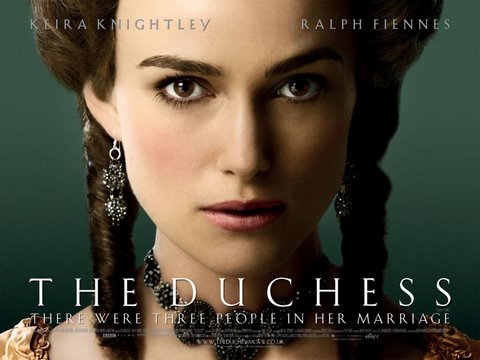
Prior to this biography, I had no idea that she was a great ancestor to the infamous Princess Di. I also found it refreshing to read a biography on royalty that was non-Tudor related. I highly recommend the book, and the movie made after it starring Keira Knightley, although after reading the biography I find the movie a bit deceptive on the character of the Duke.






 Anakalian Whims