Timothy and the Dragon Defenders, Part Three
A Short Story from the Archives of A.Z.K.R., author of Tales of Porcelain Thrones: Middle School Edition
[To read Timothy’s adventure from the beginning, click here.]
Once the commotion of a moving dragon—scales against underbrush, plodding, heavy, footfalls, claws scratching against pebbles—all came to a halt, Timothy began to actually hear the sounds of the forest around him. A myriad of bird calls, most of which he didn’t recognize and sounded rather otherworldly, filled his ears. The wind rushed through the tops of strange trees and under it all, a distant melody, akin to a flute, danced with the leaves. The melody grew louder and Timothy looked about in curiosity.
“Who’s playing music in the woods?” He wonder aloud. And will I remember what it sounds like when I wake up? Beside him, Galen’s ears twitched in the breeze. Until he saw them move in this way, Timothy had thought they where some kind of developing horns.
Galen looked in each direction before starting down a path to Timothy’s right. It was faint and covered in soft grasses. Orange and white flowers waved, tickling the companion’s ankles as they headed to the ever swelling song. Then the music suddenly stopped, as did Galen, who then looked at Timothy and did the twitch with his shoulders that Timothy had decided to interpret as a human shrug.
The two stood there, wondering what to do next, when a small man half Timothy’s size materialized in front of them. He was a fawn, Timothy saw, but he had very little hair. Timothy’s thoughts flickerd again to Narnia as he laughed.
“I said I have no time for tea!” Timothy said, half to Galen, half to himself.
The fellow’s pointy hat slipped back on his bald head and flopped to the side. He scowled at the boy and his dragon.
“What are you two doing in my forest?” The little man demanded.
“Walking. It’s not like we knew it was yours. Or, I didn’t know.”
Galen burped.
“Are you here to smash my house?” This question was directed at Galen, who in turn, burped.
“What do you think you’re doing alone with a dragon, boy? Twelve year old civilian and taking such blatant sides in the war?”
“No, we don’t smash houses.” Timothy said. Then eyeing Galen, demurred, “I don’t think. How did you know I was twelve?”
The gnome-fawn-whatever he was, looked him up and down. “You look to be Twelve,” he said dismissively, arighting his hat as he did.
“You raised by Clubs?” He asked Galen.
Burp.
“What are Clubs? What war?” demanded Timothy.
“Clubs, my boy, are big, mean, and blue. They belch the foulest smells, as they are known to eat garbage, and they have a habit of smashing things. I was in fear of my house, based on the noise and smell. I tried to warn you away with my flute, but it seems you don’t understand music messages and came nearer instead. Dragons, however, are less foul. This one must have been raised by a Club Clan. They’re known to hoard dragon eggs under threat.”
“What war?” Timothy repeated.
“No time to discuss politics on the outside. Get in before we’re seen and I’ll give you your belated history lessons, and—well—news.”
“Seen?” Timothy looked around, then up.
“Not you, The dragon. They’re an illegal species in Zentop, by order of Lord Lucius of Romodore.”
He glanced at the dragon’s tatooed wing, and said “Come along Galen, son of Clubbers.”
Galen, of course, answered, with a burp.
[To Be Continued…]
Timothy and the Dragon Defenders, Part Two
A Short Story from the Archives of A.Z.K.R., author of Tales of Porcelain Thrones: Middle School Edition
[To read Timothy’s adventure from the beginning, click here.]
The purple dragon roared fiercely. A river rushed behind it, the sun made the water glisten, peeking over what almost looked like pines. The sudden brightness pierced Timothy’s eyes and all his senses were overwhelmed at once. He was grateful for the warmth, but the sun beat down harshly on his skin.
“Good thing the basement wasn’t a wardrobe and this place isn’t Narnia,” Timothy said to the dragon. “I’d be freezing and I’ve no time for tea with Mr. Tumnus, I have a test tomorrow.”
The dragon roared. And burped. Bits of Mrs. McCracken’s jelly still lingered on the corners of its mouth.
“So you are?” Timothy asked.
The dragon burped again.
“Ok, then. I’ll call you Burp.”
The dragon shook his head no.
“Belch?”
It shook its head again, then fluttered its wings. The right wing featured a brand, or tattoo, and when they came to rest against the beast’s back again, Timothy saw the name, “Galen” etched into the dragon’s flesh.
“Galen?”
The dragon danced, a bit like the McCracken’s golden retriever puppy when someone dropped bacon on the breakfast room floor.
“Like the Greek physician?”
The dragon danced again.
“So where are we, Galen?”
Galen belched another round, evicting all the glass from the crunched Mason jars into the river as he did.
“Ew.”
The dragon seemed to shrug and began walking away.
“Hey, wait!” Timothy followed. Pebbles from the riverside massaged his bare feet, not so unpleasantly. “Seriously, wait!”
He caught up to the bumbling dragon, “So where are we, anyway?”
Galen burped, then stopped abruptly, and Timothy bumped into a tree to avoid running into him.
Timothy and the Dragon Defenders, Part One
A Short Story from the Archives of A.Z.K.R., author of Tales of Porcelain Thrones: Middle School Edition
Timothy McCracken was having a hard time. He was supposed to be sleeping, but instead of counting sheep, he was counting the taps he heard coming from the basement across the hall. Timothy’s bedroom was downstairs near the kitchen, apart from his siblings and parents who slept on the second story of the house. This suited him fine because it meant he didn’t share a room with his brother Dean, who snored like a freight train. It was also great when he wanted peanut butter sandwiches at midnight, but not so much when the dog whined at the rustling noises coming from the basement.
What was down there besides Mom’s canning jars and Christmas decorations? Did the house have mice? Were ghosts walking around in old shoes discarded in the donate bin? One could never tell after the sun went down and the moon cast shadows through the window.
He pulled his feet from under under his flannel sheets, his yellow gym shorts reflected neon stripes from the moonlight. As soon as his feet hit the cool, wooden floors, he heard a crash from below. Instinctively, he rushed to the sound, accustomed to rescuing younger siblings from their messes and broken things. The crashing of his mother’s preserve jars rang in his ears as he crossed the hall to the basement and took the stairs two at a time. He stopped abruptly at the last step, worried his bare feet might catch glass.
Curling his toes around the edge of the landing, he paused a moment for his eyes to adjust to the darkness. As he stood there, the scent of cinnamon and peaches wafted against his nose, goosebumps pimpled his arms from the cold, but a breath of hot air pressed against his forehead.
“What?”
Slowly, his pupils caught up to the rest of his body and revealed large nostrils flaring in front of him. Purple scales pulsed as the warmth puffed against Timothy’s face. The beast turned and scurried behind the shelves of Mrs. McCracken’s jars, tongue lapping three of them in one gulp, glass and all. TImothy heard a belch and caught a whiff of strawberry currant jam.
“You like Mom’s jam?” he asked the beast, stepping closer. Surely it was safe to follow it, this must be a dream. After all, dragons aren’t real.
In a flash of light, the creature was nearly gone, a tail slithering out a door Timothy had never seen before. The door was heavy and wooden, thicker and shorter than any other in the house. The knob was made of tarnished silver. A bit of light glowed from behind the door–enough so Timothy could see that the knob was spherical and engraved to look like a globe, but with land masses he did not recognize.
As he reached for the knob, heat radiated from behind the threshold and in an instant, Timothy was no longer in his Mom’s basement.
[Come back next week to see where Timothy has found himself!]
Totalitarian Caste Systems in Dystopian Fantasy
A Guest Blog Post by: A.Z.K.R., author of Tales of Porcelain Thrones: Middle School Edition
Totalitarianism is a system of government that is headed by an absolute dictator who supports themselves with some kind of violent force. In a totalitarian country there is no freedom of the people. One example of totalitarianism can be found in Brandon Sanderson’s Mistborn. The Final Empire is headed by the Lord Ruler, who uses emotional manipulation against the populous. They are required to believe only what the Steel Ministry tells them and treat the Lord Ruler as god. The Final Empire is also a caste system. A caste system is a system of government in which people are divided into sections based on race and or job description. The Final Empire is not an exact Caste System sine the Garrison and a few merchants come from the Skaa population.
A better example of a Totalitarian Caste System is Suzanne Collins’s series Hunger Games. In Hunger Games President Snow represents the the absolute ruler and the Hunger Games themselves serve as the violent force. The caste system in Panam is much stricter than the one in the Final Empire. The people are confined to geographically separated districts that are each in charge of one resource that is distributed across the whole country, such as coal lumber, and technology. District Thirteen is the rebel district, their Mistborn counterparts would be the thieving crews. In both dystopian societies the government mostly ignored the rebels, avoiding conflict and keeping the peace. Up until the nineteen forties India was a real life example of a totalitarian caste system. The noblemen and Garrison plus the District two and the capital are equal to the Kshatriyas. Likewise the Chandles are similar to the thieving crews or district thirteen.
Totalitarian caste systems are terrible for everyone except the people on top. Even now as a democracy India is a miserable place still scarred by its past government. On the flip side, the opposite of a totalitarian caste system would be a world with no ruler or government system at all. You may note that in the United States religious freedom only goes as far as it can without infringing on other peoples’ rights. Or it was supposed to anyway. Both extremes are bad. People need guidance, not total dominance. Rules, not oppression.
Marshal Law Hits the Shelves
Marshal Law is live on Amazon as a paperback, an e-book, and for anyone with Kindle Unlimited… Check it out.

This is a fantasy novel…but it’s a little different. Tell us about that.
Marshal Law is a fantasy story, but it looks like a western. It takes place on a world with two suns, which makes most of the planet a dry desert. So it’s a magic story set in a frontier world.
How does magic work in this frontier world?
Strange stones can be found deep underground, and there are various ways to coax power out of them. Some use these stones to build powerful machines, but there are rumors of men using them to perform wondrous deeds.
What’s your favorite part of Marshal Law?
The characters. I love the setting, the picturesque western scene, the dual suns and endless deserts, but the characters who fill the story really stole my heart. Early on, our hero meets a scientist named Dawn who’s run away from the Republic. She’s a genius who can turn the villain’s machines around and make concoctions that do amazing things. Really fun character. Then they meet a boy named Raine who’s on the verge of a breakthrough. His whole life he’s believed he could revive the old magic, even though no one’s ever taken him seriously.
Tell us about your protagonist, Marshal.
He just wants to enjoy his quiet life with his wife and kids, but good stories never let anyone get away with that, do they? Marshal has to leave his family to fight the war, but he ends up playing the role of a father figure to the motley crew that gathers around him, holding them together while they battle to save the frontier.
Is Marshal Law the start of a series?
I’ve got three books planned. The sequel, “Desert Raine,” should be available in the spring. It’s coming along great. Marshal Law does a good job of setting the stage, so in the sequel our characters can further explore the magic and the machines and really push the boundaries of what they know about their world.
Sounds like Marshal Law is a story with a unique setting. Is it similar to any other books?
Anyone who likes Stephen King’s Dark Tower series should find themselves right at home. Same goes for Sanderson’s Alloy of Law. It’s fun to writing at a time when fantasy stories are finding new settings, because, even though there’s plenty of steampunk books with magic thrown in, I can feel like I’m writing something new and not always following another author’s trail.
Did you have to do any research to write about this new world where your story takes place?
A little. Most fantasy stories don’t require research since we just tend to make up whatever we want, but I really loved the idea of planet with twin suns. I did just enough research on binary star systems to make sure the idea would work. Apparently, two suns would probably make the planet a very dry place, so most of Marshal Law takes place in a desert environment. Only a few spots on the continent benefit from nicer weather. Grass and trees are a rarity enjoyed by the wealthy and elite, but Marshal’s revolution may change all that.
Interview with Author Kristen Bickerstaff
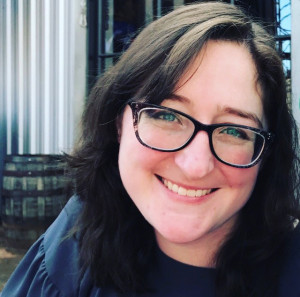
Who is Kristen Bickerstaff?
Writing since she could pick up a pen, Kristen has always loved exploring the worlds and characters that live in her head. She loves writing (and reading) all forms of speculative fiction, from hard SF to urban fantasy. As a member of DFW Writer’s Workshop and Writer’s League of Texas, she’s a firm believer in taking part in her local writing community. Kristen also works with Rooted in Writing as an editor and marketing coach, and she loves helping other authors turn their writing dream into a reality.

I had the pleasure of reading Bickerstaff’s work in The Lost Legends anthology earlier this year and am excited to share an interview I had the opportunity to conduct via Facebook.
Prior to The Lost Legends anthology, what projects had you worked on or completed?
Lost Legends is the first anthology I’ve been a part of, but I also have another anthology coming out in early 2020 around pirate stories that I’m very excited about, called X Marks the Spot. Other than that, I’ve been working on my fantasy novels Embers on the Wind, which is about elemental magic workers called crafters, and Howl to the Stars, which I usually playfully call my “werewolves in space” book.
Lost Legends is a fantasy anthology and you’re known for writing speculative fiction, what draws you to read and write this genre? What is your favorite aspect of it?
I’ve always been one of those people that looks at something mundane as a subway or an overpass and asked “what would happen if someone with magic encountered this?” So that’s how I tend to see the world. Most of my story inspiration comes from odd things I see in real life. A door in someone’s front yard, a glowing necklace, a harvest moon. And I usually just take that a step further: what if the door opens to a place beyond our realm? What if only one person can see the door? Those are the questions I love to ask.
Ray Bradbury once said, “You can’t learn to write in college. It’s a very bad place for writers because the teachers always think they know more than you do—and they don’t. They have prejudices.” What do you think about this statement?
I agree and don’t agree with that statement. I feel like I learned some great things about craft, about the historical landscape before us, through my college writing classes. Honestly the plethora of genres and authors I read during college were so impactful for my formative years. But I was often looked down on for writing fantasy or encouraged to write something more… “literary.” I hope that’s changed since I’ve been at school (and as fantasy has become more mainstream). But I did feel stifled in school for sure, in terms of creativity.
What were your educational experiences like? Do you think these experiences have influenced the kind of writer you have become?

One of the best memories I have of my educational experience is my unfettered access to the library. So many books that I considered touchstones in my literary development, I read because a librarian looked at the book I was returning and then said “you might like this.” Beyond that, I had a couple teachers that really encouraged creative exploration as a child. My third grade teacher loved Shel Silverstein and Roald Dahl, and I remember her encouraging us to try writing in their styles to see how that felt. To this day, she’s still one of my favorite teachers. She encouraged us to think, to daydream, to wonder. I loved that.
Stephen King wrote in On Writing that writers should read a lot to keep their technical and creative tool box full. What are your favorite “tool box” books?
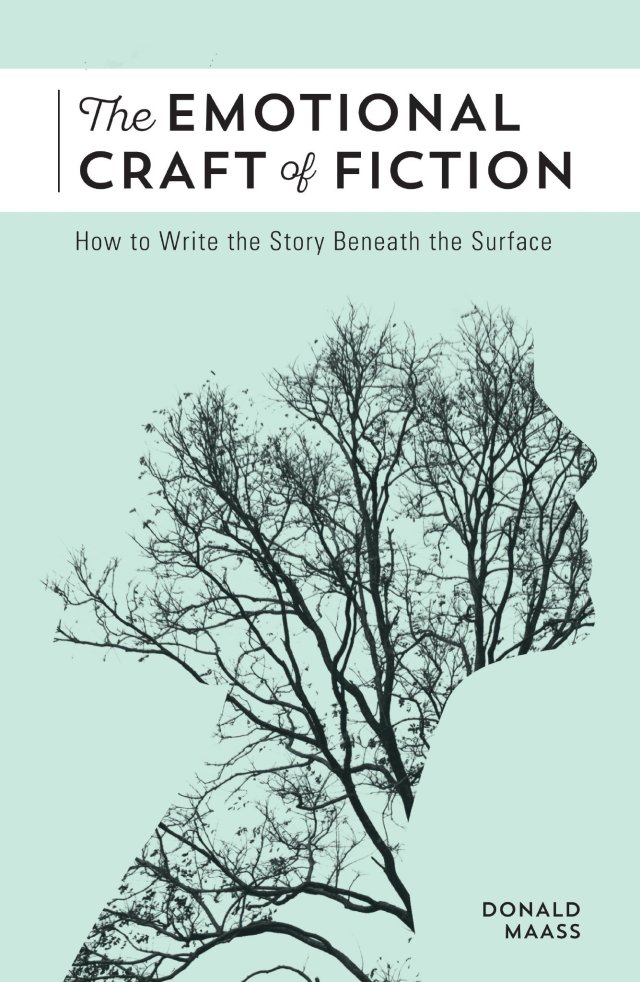
My favorite craft book right now is probably The Emotional Craft of Fiction by Donald Maas. When I went to the Superstars Writing Seminars this spring, he taught a hands-on workshop based on the book, and it really did change the way I write.
What have you read for sheer pleasure recently? What did you enjoy most about it?
I’ve been re-reading Anne Bishop’s The Others series recently, and it’s still such a fun read. It’s a really cool spin on the urban fantasy genre, where non-humans are the dominant species in the world, versus where they’re usually in hiding or downtrodden. I love the characterization throughout the series and the suspense she builds throughout.
What other means do you use to explore fictional worlds? Do you participate in larping, cosplay, pen and paper RPGs, or role playing video games?
No, I don’t participate in the above activities but I’m always really interested in different explorations of fictional worlds.
If you could interview any author (alive or dead) and pick their brain, who would it be? Did that particular author influence your work in any way?
Tough question. I’d love to ask Brandon Sanderson about how he developed the Cosmere universe, because I love the detail of his magic system. I’m doing a re-read of his works this year and it’s just so impressive. I’m a person who always asks “but how does this work” for fantasy elements, and he always has an answer.
Any conventions or events in your near future? Where can fans find you to have copies of their books signed?
Next conference I’m at is Superstars 2020. Then if everything works out, I’ll be going to DFWCon and Dragon Con later in the year.
[Note from Anakalian Whims to readers: If you haven’t been to Dragon Con, GO! I loved my experience in 2016. If you don’t know what Superstars is, visit this site: https://superstarswriting.com. I’ve been wanting to go for years and the timing just hasn’t been right. It’s on my list of to-dos.]
What are you working on now?
Right now I’m focusing on drafting Howl to the Stars and I’ve been really enjoying all the research behind it.
Follow Kristen on Goodreads and Twitter and stay tuned for her future ventures.
Interview with Author and Editor Adam D. Jones

Adam D. Jones is a high fantasy author and editor recently responsible for publishing The Lost Legends anthology. Longtime writer, historian, and musician, Lost Legends is his first book.
Who did the cover art? How did you find them?
The very talented Ryan Swindoll handled that. You can reach him at ryan.t.swindoll@gmail.com if you ever need a cover designed. He also took care of designing the insides, the font, the cool little decals, and everything makes it fun to hold a book. Talented guy. Having a great cover is half of the work.
As a writer, what made you decide to pursue editing an anthology for your publishing debut?
At various conferences and writing groups I’ve met talented fantasy writers and always thought it was a shame they weren’t published. I also needed a project to learn how self-publishing works before launching my own novels. It turned out to be a good move. I’ve learned the ropes, but also got some really good stories into the hands of readers.
You have two short stories included in Lost Legends, do you find short stories to be easier or more difficult to write than longer fictions?
Are you kidding? I spent more than years working on Idna’s Journals and it’s only three pages! I completed two novels in that time.

Lost Legends is a fantasy anthology, what draws you to read and write fantasy? What is your favorite aspect of the genre?
It’s fun. I could go on about the mythopoetic origins of the grown-up fairy tale, the foundational works like Phantasties, and how fantasy helps us understand the abstract truths by taking place in another world, but the best part is that it’s just more fun than any other genre. I want to read about monsters and magic. Who doesn’t?

Did you always love fantasy? What were your favorite books as a child?
The Gunslinger by Stephen King is incredible, and I read it every year. I read all of the books every year until the last one finally came out, and I was up until 4 a.m. finishing that one. I read these books when I was…a little too young for them.
I also devoured the Dragonlance stories and always wanted to write something as big and exciting as those.

Stephen King wrote in On Writing that writers should read a lot to keep their technical and creative tool box full. What are your favorite “tool box” books?
Stephen King’s The Wastelands is a perfect study in “how to write a fantasy book with multiple characters.” Rachel Neumieier’s The Floating Islands has great descriptions throughout, and I often open it to the beginning where she explains scenery and somehow it makes for an incredible opening. And many scenes in David Coe’s Children of Amarid are dogeared so I can remember his neat tricks for making things work.
You’re in a writing group. What does that look like? (What do your meetings consist of?) How has this helped you as a writer?
The Milford Method, a critique approach pioneered by Virgina Kidd, is used every meeting. I can’t recommend it enough.
It’s helpful that the group includes science writers, fiction writers, and songwriters, so we all learn a lot from each other.
Of your stories in the anthology, are there any you anticipate seeing spin off into other work?
I’ve been asked to write more about Idna’s Journals, but I prefer to keep it self-contained, leaving the audience to wonder. When I write short works, I try very hard to avoid the temptation of sequels and spurring on further works, because that often leads writers toward bad work. If you’ve only got a few pages, there’s no room for breadcrumbs and easter eggs that lead to the next story.
But there is a place for that sort of thing. Sarah Bale’s evocative story, Thundermoon Bride, will tie into other works she has coming, and I think that’s a good example of using a short story to hint at something bigger.
If The Lost Legends were to become a Netflix Original or Amazon Prime series, who would your ideal cast be for The Candlemaker?
Interesting story. The protagonist was female in the first draft of The Candlemaker. A real dainty woman who looked as threatening as a sofa cushion, making it easier for people to underestimate her. I pictured someone like Emilie de Ravin’s role in Once Upon a Time. I switched the character to a man because my other story in this collection already had a female protagonist, and it was more fun to write about an awkward guy trying to be cool around a woman who obviously knows more than him. Grant Gustin could pull it off.
Jones has another book coming out in November 2019, called Marshall Law, the first in a fantasy/steampunk series, where the discovery of old magic empowers a few survivors to take on the wicked machines of their oppressors. This new voice in fantasy is here to stay.

The Most Biased Book Review Ever

Title: The Lost Legends
Editor: Adam D. Jones
Today is the day you can buy a physical copy of a book (to be two-day delivered via Amazon to your home) in which the woman I call “the other half of my brain” has written a short-story.
Once upon a time, in college, I had a roommate. I actually had several roommates over the years, but this one is THE Roommate. We shared a dorm. We co-existed. We got a townhouse together, and co-existed some more. We co-existed so well, that fifteen years later, married and with children living in separate cities, we still call each other for morning coffee almost every day. We homeschool our children “together,” planning out the best curriculums and deciphering educational theory by phone. We manage a homeschool Facebook page together, previously referred to as Klemm University, but renamed for our mutual interests as Lovelace Classical Academy (if Facebook will ever allow us to update it, that would be wonderful). But I digress… the point is: She is the other half of my brain. And since we first met, we both knew we wanted to be writers. More than that, we both knew we were writers who simply hadn’t been published yet.
She has lamented and rejoiced with me through every major life event… and now, it’s my turn:
E. S. MURILLO IS A PUBLISHED AUTHOR!
as a contributor to The Lost Legends anthology, edited by Adam D. Jones and Renea McKenzie (more college friends of mine).

This anthology is fun for any fantasy reader, I honestly believe that. The stories are well crafted, edited properly (a huge feat in the indie-publishing world for debut work), and fun. Obviously, An Inconsequential Miscalculation is my favorite, as – by sharing a brain – I was able to see the story as it was meant to be told from its very first incarnation and have had the pleasure of reading it in most of its versions. Reading it in its completed form brings me sheer joy.
Mostly high fantasy, there are a few writers in the mix who are downright funny, the future Terry Pratchetts to the future J.R.R. Tolkiens (My favorite stories are the funny ones)… the anthology has a wide variety of tales, but flows seamlessly as an anthology, which is generally hard to do.
I am exceptionally proud of my friends and would love if all of my fantasy reading followers checked this book out for themselves – you will not be disappointed in it.
Click to order:

Jorie and the Magic Stones
 Title: Jorie and the Magic Stones
Author: A. H. Richardson
Genre: Young Adult Fantasy
Length: 263 pages
Kiddo and I received this book some months ago as a review copy. We adore fantasy and fairy tales and Cabrynthius was an exciting addition to our travels which already included Narnia, the Land of Stories, Neverland, Hogwarts, and more.
Kiddo is six years old and her official review goes as follows,
“Jorie is a great book. I love the adventures she had. I want to learn more about the mysterious book she found under her bed. Please make a sequel.”
She also asked me to include three happy face emojis, of which I will refrain. But if we’re working on a happy face system instead of star ratings, she gives it three in a row. (I think happy faces may be worth more than stars.)
Richardson is a talented children’s adventure storyteller. I can say I probably would have enjoyed this book thoroughly as a second grader, although the average reading level might fall in a third or fourth grade level. As an adult reading a children’s book, the story was appropriately paced, the trials and life lessons were concisely addressed, and I looked forward to reading each chapter with my little girl.
My only criticism for the work as a whole lies in an editorial preference: too many instances of the word “quite.” In future works, I hope that Richardson takes a red pen to every use of the word “quite” and marks it out. Keep three, maybe, but lose the rest. I found the word more distracting than descriptive.
All in all, Jorie and the Magic Stones belongs in children’s libraries everywhere. All kids long to go on a quest and to be chosen, but have to learn lessons of discernment and ethical choice; Richardson presents all these things well. Like my daughter, I look forward to a sequel.






 Anakalian Whims


Our Secret Country
November 16, 2019 at 4:47 am (Education, Reviews) (allegory, books, c.s.lewis, children's books, Christianity, fantasy, homeschooling, Laura Miller, literary commentary, literary criticism, Narnia, neil gaiman, party planning, reviews, The Chronicles of Narnia, turkish delight)
“Most of us, I suppose, have a secret country but for most of us it is only an imaginary country. Edmund and Lucy were luckier than other people in that respect,” C. S. Lewis wrote in The Voyage of the Dawn Treader.
The thing is, the thing that C. S. Lewis as narrator doesn’t address, is that everyone who has ever read the Chronicles of Narnia series *does* have that country. We all visit some version of Narnia in our minds once we’ve been there once. And as it says in The Lion, the Witch, and the Wardrobe, “Once a king or queen of Narnia, always a king or queen of Narnia.”
So here I am, thirty-five, living in the magical world of Narnia as my daughter reads through the series for about the third or fourth time, but this time we’re reading it alongside our homeschool co-op. It is such a treat watching children enjoy the magic of Narnia, and furthermore bask in its magical glory with them.
The Chronicles of Narnia is a well known allegory of the Christian faith set in a fantasy world. Good and evil are clearly define, deadly sins and how they creep into our psyche, how unchecked they fester and change who we are. The stories enthrall children and adults alike, who have a thirst for the eternal, who long for the otherworldly aspect of our universe, the spiritual war that goes on every day unseen to the naked eye, but experienced in living color when you step through the Professor’s “Spare Oom where eternal summer reigns around the bright city of War Drobe.”
We’ve been reading the books together and discussing them book club style with children ranging from 7 to 13 and moms from 27 to 50. At the close of book two, we took a Narnia party break, complete with homemade snowflakes (the kids got to learn about hexagonal snowflake patterns and how to recreate them with computer paper and a pair of scissors), try Turkish delights for the first time (and marvel at why Edmund would basically sell his soul for such an awful dessert), and pose in costume under a welcoming Narnia sign and the iconic lamppost (artistic cardboard craftsmanship compliments of my impressive fiancé, kiddo spray painted it black herself).
Of course, in my typical fashion, I had to read “grown up” books in addition to re-reading the original stories. Because C. S. Lewis made such an imprint on society, there are more literary criticism books about Narnia than there are Narnia books. Most of them written by Christians. However, I found one written by a non-Christian which greatly intrigued me.
The Magician’s Book is an in-depth critical analysis of the Chronicles of Narnia. As much memoir in content as literary analysis, Miller chronicles her own relationship with Narnia and includes insightful conversational commentary by other big name writers of many faiths (Neil Gaiman being one of my favorites). I enjoyed her perspective a great deal and though I was saddened that Aslan the lion did not aid in her understanding the nature of Christ, that she did not come to understand God’s love through Lewis’s fantastical depiction of it.
Still, reading Miller’s work led me down a rabbit trail I’m happy to tumble through, and I’ve already lined up all sorts of other books regarding C. S. Lewis and Narnia to read during the rest of our Narnia journey. Join us. We start Horse and His Boy next and are reading The World According to Narnia by Jonathan Rogers as we go. We plan to finish all seven Narnia books by the end of the school year.
Permalink Leave a Comment