The Lovely Bones
I read this book a few years ago, actually, but with it being so wildly popular again I realized I never wrote a review.
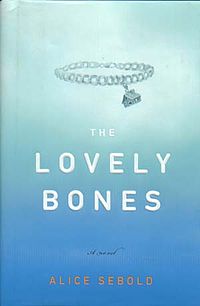 The Lovely Bones is a bit tragic, terrible in its opening rape and murder, hazy with a metaphysical view of heaven, and sad as the family surviving the deceased fourteen year old attempt to function with one less person in the household. Its beautifully written despite its harsh plot points and terrifying point of view, but reading Alice Sebold’s memoir Lucky will help you understand her approach to the story. I highly recommend for 14-18 year old girls to read as a warning to pay attention to what’s going on around you and that the wise choices in life are not always polite nor do they quench certain curiosities.
Buy The Lovely Bones
Gloriously Symmetrical
 As beautiful as The Time Traveler’s Wife is, Audrey Niffenegger’s Her Fearful Symmetry is awful. Every moment, every line is filled with mystery, sadness, and the terrible selfishness of humanity. I loved it.
People have described this second novel as disappointing. I feel as though it was done on purpose. I cried on page one, knowing that the rest of the book could not be even remotely as beautiful or as happy; and by the end I had been disappointed by every character so often, I merely settled into a sigh of understanding. Of course it ends this way, of course. The novel was gloriously backwards, in comparison to Niffenegger’s first book, just as Valentina is a backward version of Julia.
If you read it, I think you’ll understand my meaning.
If you liked it, I also recommend:
The Lovely Bones

The Mercy of Thin Air
Swan
First Book of the Year
 Its 2010, I’m sure everyone is mentioning it, and I’m sure many have a hangover and a ton of resolutions. I don’t, on either count. I only had a bit to drink last night, not a lot, and I’ll carry on through 2010 pretty much as I did in 2009. I have goals, but they are not set because its a new year, instead because that is how I function on a regular basis – lists and goals.
So carrying on in the good old Andi fashion, I read a book today.
I re-read an old favorite from my school days, A Separate Peace by John Knowles. I remember everyone complaining about it in class and thinking that it was brilliant and amazing and wonderful. I thought reading it again over a decade later might somehow alter my views, but my ideas on the book are unchanged. I found the students at Devon just as fascinating and hurtful as before, I found Finny just as radiant, and Gene just as sad. I love their coming of age experiences every time.
Except now, I have a sequel to look forward to – something I didn’t have when I read the book for the first time twelve years ago because I was unaware of its existence. Now, I have a copy of “Peace Breaks Out” on my nightstand and cannot wait to see what life-changing stories Devon has in store for me!
What was your first book for 2010?
A Tale to Swoon Over
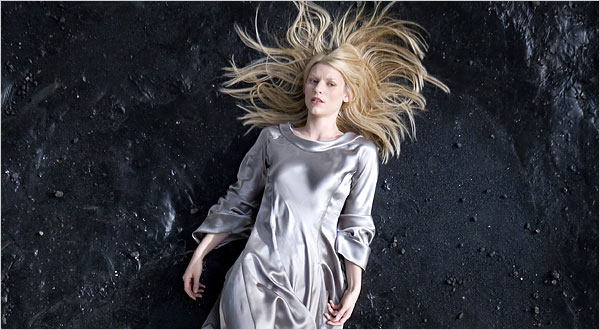
Claire Danes in the major motion picture of Stardust, based on Neil Gaiman's novel
Neil Gaiman’s Stardust is delightful. A lovely little fairy tale for grown ups, the adventure sucks you through a wall into a magical world of falling stars, unicorns, witches, spells, and flying ships. Gaiman provides all the adults in the room a Faerie romance we can swoon over without re-reading Cinderella and Thumbelina for the hundred-thousandth time. We get a handsome Romeo, a bit of a love triangle, true-love from the stars, and a happy ending (even if it goes out with a limp – literally). Stardust made for a wonderful wintery read by the fireplace this Christmas.
Light Holiday Reading
Rebel Angels: Part II in the Gemma Doyle Trilogy by Libba Bray
 Delightful, though predictable, Bray’s second novel in her magical realms series was an exciting and fanciful Christmas adventure. The sequel is much more intriguing than the original piece. I found myself more drawn in to the lives of the girls of Spence while on their Holiday Vacation than I was with their previous escapades at school. Over all, well done and I look forward to Part Three in the trilogy.
Fantasy vs. Reality, Bella Swan Meet Emma Bovary
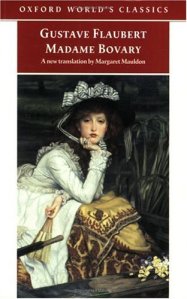 I just finished reading Madame Bovary by Gustav Flaubert, yet another piece of literature addressing the theme of fantasy versus reality. This piece of work should join the ranks of Cervantes’ Don Quixote and Austen’s Northanger Abbey as all the main characters read novel after novel and for some reason become all goofy stupid because of it. Don Quixote is quite funny, though annoying, in all his follies and delusions; Catherine visits the Abbey and acts quite the silly little girl. Emma Bovary on the other hand is a different kind of delusional altogether, she is not funny in her silliness, there is no part of her antics that bring any kind of nostalgic giggle to my heart. Emma Bovary has confused the fruitless passion of romance novels with what she wants for her life, and unfortunately for all involved, that kind of love is not realistic, long-lasting, or even truly desirable. There is so much more to love than what she sells herself short for.

Kristen Stewart, actress, as Bella Swan in the Twilight Saga movies
While reading Madame Bovary and coming to these conclusions, I couldn’t help but compare this theme to the realities of today – to the fad that is known as the Twilight Saga. Since I first read Stephenie Meyer’s books I have told people the story-line of the Twilight Saga is terribly frustrating because it sets unrealistic and pitiful standards on the beautiful thing that is love. Not to say the books are inherently bad, they were entertaining and held my attention until the end, but there are so many things young men and women should understand when sitting down to read these novels. Well, one thing specifically: Edward is not real. Jacob is not real. These boys do not exist, they will never exist. And truth be told, they don’t act like real men, and in the end, even if they did exist, you would be unsatisfied. Beware of expecting the wrong things and becoming the next Madame Bovary, wench of all wenches.
Below is a review of Twilight my sister Nikki Dawn Bratton wrote:
As a woman, I am captivated by the emotional suspense that Stephanie Meyer artfully crafts as this classic romance unfolds.
Classic, you say? Falling in love with a vampire? Yes, classic. As Bella Swan’s desperate desire builds and unravels, it is increasingly clear that the imminent danger in this novel is not so specifically falling in love with a “vampire”. If it were, then the plot would be too fictional to strike so much fear in my heart. It would be too fictional to draw in so many female fanatics ready to ride the thrilling emotional roller coaster.
No, vampires don’t make this story scary – it’s the classic romance driven by the understanding that love is some uncontrollable force that you “fall” into. A young reader being shaped and impacted by this novel will gain the following detrimental (and false) insights on life and love:
True love is uncontrollable. Like Romeo and Juliet, Edward and Bella are drawn to each other. For Bella the mystery behind Edward Cullen is so intriguing that she cannot help but be drawn to him. By the time she finds out who he really is, she states simply “It doesn’t matter” because she is already hooked.
Love is about risk; therefore, the greater your willingness to risk, the greater the love. Bella’s desire to be close to Edward supersedes all her inhibitions. The danger he presents becomes irrelevant to her.
A woman’s emotional attraction and sensual stimulation are the best tools she has for determining how much risk is right for her to take. This is the only determining factor in how much she should “love” a man who has caught her attention. Bella seeks no counsel from her family, her friends, or anyone else. Her response to Edward is purely and solely based on her own inward thoughts, desires, and emotions.
The understanding that it is right for a woman to give as much as she deems correct. Bella constantly reminds Edward that it is her choice and her desire to be with him despite the danger. To this end, Edward concedes.
The scariest thing about this book is that it is shaping the hearts of young readers because culture largely already agrees with the underlying elements of classic romance novels. When you break it all down, it’s another story of an ordinary girl who notices something extraordinary in a man and offers him her whole heart for the desperate desire to be something other than ordinary to him – regardless of the cost. There is nothing fictional about such a scenario. Just the happy ending that satisfies our feminine longings.
The problem with this is what those insights lead to:
Women being unprotected and willing to enter secret relationships when they are captivated by something they see as extraordinary.
In this “fictional” love story, Bella’s inside information and personal experiences with Edward, unknown to all others, play out thrillingly. However, real life rarely packs the same sort of thrills. Just as Bella’s life hangs on Edward’s ability to control his own temptations, so are the lives of so many young ladies. They secretly place their hearts in the hands of young men who are struggling with their own secret addictions and temptations.
Men taking advantage of young girls willing to give themselves away out of emotional desire.
Although Edward knows and states that he is not good for her, she insists on being with him regardless of what logic or self-preservation dictate. Although our fictional hero, Edward, is able to resist the temptations that he feels, this is often not the case in the real world.
Women who cannot be satisfied with a real man, full of all the human flaws, not crafted on the pages of a romance novel. With this picture of romance in her head, will any man every really be worthy of a woman’s life long devotion? Edward’s captivating smile and chiseled body are immortal. Edward’s emotional attraction to her is a mirror of her own feelings. The total package is not reproducible outside the pages of a fictional romance.
Therefore, your chief concern when analyzing the cultural impact of Twilight should not be teens intrigued by vampires. It’s the “love” story that will eat them alive.
In short, read Twilight and New Moon, Eclipse and Breaking Dawn to your hearts content. Inwardly swoon all you want, but please, please, please, read Flaubert’s Madame Bovary as soon as you do. Get acquainted with Emma Bovary and understand her weakness for all affairs and selfishness, and remember that is not a road you want to take. Real love, real passionate and blissful love is patient, kind, does not envy, does not boast, is not rude or self-seeking, is not easily angered and keeps no record of wrong. It’s also a daily choice and a lot of hard work. Do it right and you will see the fruits of your labors. Do not expect butterflies and tingles every time you look at the object of your affection, but don’t be so certain that they ever completely desist either.
I love my fantasies, but I know I cannot be so involved in them to find reality boring. Books are awesome, but real life is the ultimate treat.
Buy Madame Bovary from Amazon.com
(And for fun, because I love this guy… http://musingsofahighschoolvampire.wordpress.com/2009/06/13/musings-of-a-high-school-vampire-cursing/)
The Piano Tuner by Daniel Mason
 The Piano Tuner
“‘It doesn’t matter. It is just a story, I suppose.’ ‘Yes, Mr. Drake […] They are all just stories.'”
Libraries, Librarians, Bookshops, and Booksellers…
from The Giant’s House by Elizabeth McCracken
“I was a librarian when I met him. That much is important. I had my library, which I loved and despised. All librarians, deep down, loathe their buildings. Something is always wrong – the counter is too high, the shelves too narrow, the delivery entrance too far from the offices. The hallway echoes. The light from the windows bleaches the books. In short, libraries are constructed by architects, not librarians. Do not trust an architect: he will always try to talk you into an atrium.
“Space is the chief problem. Books are a bad family – there are those you love, and those you are indifferent to; idiots and mad cousins who you would banish except others enjoy their company; wrongheaded but fascinating eccentric and dreamy geniuses; orphaned grandchildren; and endless brothers-in-law simply taking up space who you wish you could send straight to hell. Except you can’t, for the most part. You must house them and make them comfortable and worry about them when they go on trips and there is never enough room.
“My library was no exception.”
George Orwell
When I worked in a second-hand bookshop — so easily pictured, if you don’t work in one, as a kind of paradise where charming old gentlemen browse eternally among calf-bound folios — the thing that chiefly struck me was the rarity of really bookish people. Our shop had an exceptionally interesting stock, yet I doubt whether ten per cent of our customers knew a good book from a bad one. First edition snobs were much commoner than lovers of literature, but oriental students haggling over cheap textbooks were commoner still, and vague-minded women looking for birthday presents for their nephews were commonest of all.
Many of the people who came to us were of the kind who would be a nuisance anywhere but have special opportunities in a bookshop. For example, the dear old lady who ‘wants a book for an invalid’ (a very common demand, that), and the other dear old lady who read such a nice book in 1897 and wonders whether you can find her a copy. Unfortunately she doesn’t remember the title or the author’s name or what the book was about, but she does remember that it had a red cover. But apart from these there are two well-known types of pest by whom every second-hand bookshop is haunted. One is the decayed person smelling of old breadcrusts who comes every day, sometimes several times a day, and tries to sell you worthless books. The other is the person who orders large quantities of books for which he has not the smallest intention of paying. In our shop we sold nothing on credit, but we would put books aside, or order them if necessary, for people who arranged to fetch them away later. Scarcely half the people who ordered books from us ever came back. It used to puzzle me at first. What made them do it? They would come in and demand some rare and expensive book, would make us promise over and over again to keep it for them, and then would vanish never to return. But many of them, of course, were unmistakable paranoiacs. They used to talk in a grandiose manner about themselves and tell the most ingenious stories to explain how they had happened to come out of doors without any money — stories which, in many cases, I am sure they themselves believed. In a town like London there are always plenty of not quite certifiable lunatics walking the streets, and they tend to gravitate towards bookshops, because a bookshop is one of the few places where you can hang about for a long time without spending any money. In the end one gets to know these people almost at a glance. For all their big talk there is something moth-eaten and aimless about them. Very often, when we were dealing with an obvious paranoiac, we would put aside the books he asked for and then put them back on the shelves the moment he had gone. None of them, I noticed, ever attempted to take books away without paying for them; merely to order them was enough — it gave them, I suppose, the illusion that they were spending real money.
Like most second-hand bookshops we had various sidelines. We sold second-hand typewriters, for instance, and also stamps — used stamps, I mean. Stamp-collectors are a strange, silent, fish-like breed, of all ages, but only of the male sex; women, apparently, fail to see the peculiar charm of gumming bits of coloured paper into albums. We also sold sixpenny horoscopes compiled by somebody who claimed to have foretold the Japanese earthquake. They were in sealed envelopes and I never opened one of them myself, but the people who bought them often came back and told us how ‘true’ their horoscopes had been. (Doubtless any horoscope seems ‘true’ if it tells you that you are highly attractive to the opposite sex and your worst fault is generosity.) We did a good deal of business in children’s books, chiefly ‘remainders’. Modern books for children are rather horrible things, especially when you see them in the mass. Personally I would sooner give a child a copy of Petrenius Arbiter than Peter Pan, but even Barrie seems manly and wholesome compared with some of his later imitators. At Christmas time we spent a feverish ten days struggling with Christmas cards and calendars, which are tiresome things to sell but good business while the season lasts. It used to interest me to see the brutal cynicism with which Christian sentiment is exploited. The touts from the Christmas card firms used to come round with their catalogues as early as June. A phrase from one of their invoices sticks in my memory. It was: ‘2 doz. Infant Jesus with rabbits’.
But our principal sideline was a lending library — the usual ‘twopenny no-deposit’ library of five or six hundred volumes, all fiction. How the book thieves must love those libraries! It is the easiest crime in the world to borrow a book at one shop for twopence, remove the label and sell it at another shop for a shilling. Nevertheless booksellers generally find that it pays them better to have a certain number of books stolen (we used to lose about a dozen a month) than to frighten customers away by demanding a deposit.
Our shop stood exactly on the frontier between Hampstead and Camden Town, and we were frequented by all types from baronets to bus-conductors. Probably our library subscribers were a fair cross-section of London’s reading public. It is therefore worth noting that of all the authors in our library the one who ‘went out’ the best was — Priestley? Hemingway? Walpole? Wodehouse? No, Ethel M. Dell, with Warwick Deeping a good second and Jeffrey Farnol, I should say, third. Dell’s novels, of course, are read solely by women, but by women of all kinds and ages and not, as one might expect, merely by wistful spinsters and the fat wives of tobacconists. It is not true that men don’t read novels, but it is true that there are whole branches of fiction that they avoid. Roughly speaking, what one might call the average novel — the ordinary, good-bad, Galsworthy-and-water stuff which is the norm of the English novel — seems to exist only for women. Men read either the novels it is possible to respect, or detective stories. But their consumption of detective stories is terrific. One of our subscribers to my knowledge read four or five detective stories every week for over a year, besides others which he got from another library. What chiefly surprised me was that he never read the same book twice. Apparently the whole of that frightful torrent of trash (the pages read every year would, I calculated, cover nearly three quarters of an acre) was stored for ever in his memory. He took no notice of titles or author’s names, but he could tell by merely glancing into a book whether be had ‘had it already’.
In a lending library you see people’s real tastes, not their pretended ones, and one thing that strikes you is how completely the ‘classical’ English novelists have dropped out of favour. It is simply useless to put Dickens, Thackeray, Jane Austen, Trollope, etc. into the ordinary lending library; nobody takes them out. At the mere sight of a nineteenth-century novel people say, ‘Oh, but that’s old!’ and shy away immediately. Yet it is always fairly easy to sell Dickens, just as it is always easy to sell Shakespeare. Dickens is one of those authors whom people are ‘always meaning to’ read, and, like the Bible, he is widely known at second hand. People know by hearsay that Bill Sikes was a burglar and that Mr Micawber had a bald head, just as they know by hearsay that Moses was found in a basket of bulrushes and saw the ‘back parts’ of the Lord. Another thing that is very noticeable is the growing unpopularity of American books. And another — the publishers get into a stew about this every two or three years — is the unpopularity of short stories. The kind of person who asks the librarian to choose a book for him nearly always starts by saying ‘I don’t want short stories’, or ‘I do not desire little stories’, as a German customer of ours used to put it. If you ask them why, they sometimes explain that it is too much fag to get used to a new set of characters with every story; they like to ‘get into’ a novel which demands no further thought after the first chapter. I believe, though, that the writers are more to blame here than the readers. Most modern short stories, English and American, are utterly lifeless and worthless, far more so than most novels. The short stories which are stories are popular enough, vide D. H. Lawrence, whose short stories are as popular as his novels.
Would I like to be a bookseller de métier? On the whole — in spite of my employer’s kindness to me, and some happy days I spent in the shop — no.
Given a good pitch and the right amount of capital, any educated person ought to be able to make a small secure living out of a bookshop. Unless one goes in for ‘rare’ books it is not a difficult trade to learn, and you start at a great advantage if you know anything about the insides of books. (Most booksellers don’t. You can get their measure by having a look at the trade papers where they advertise their wants. If you don’t see an ad. for Boswell’s Decline and Fall you are pretty sure to see one for The Mill on the Floss by T. S. Eliot.) Also it is a humane trade which is not capable of being vulgarized beyond a certain point. The combines can never squeeze the small independent bookseller out of existence as they have squeezed the grocer and the milkman. But the hours of work are very long — I was only a part-time employee, but my employer put in a seventy-hour week, apart from constant expeditions out of hours to buy books — and it is an unhealthy life. As a rule a bookshop is horribly cold in winter, because if it is too warm the windows get misted over, and a bookseller lives on his windows. And books give off more and nastier dust than any other class of objects yet invented, and the top of a book is the place where every bluebottle prefers to die.
But the real reason why I should not like to be in the book trade for life is that while I was in it I lost my love of books. A bookseller has to tell lies about books, and that gives him a distaste for them; still worse is the fact that he is constantly dusting them and hauling them to and fro. There was a time when I really did love books — loved the sight and smell and feel of them, I mean, at least if they were fifty or more years old. Nothing pleased me quite so much as to buy a job lot of them for a shilling at a country auction. There is a peculiar flavour about the battered unexpected books you pick up in that kind of collection: minor eighteenth-century poets, out-of-date gazeteers, odd volumes of forgotten novels, bound numbers of ladies’ magazines of the sixties. For casual reading — in your bath, for instance, or late at night when you are too tired to go to bed, or in the odd quarter of an hour before lunch — there is nothing to touch a back number of the Girl’s Own Paper. But as soon as I went to work in the bookshop I stopped buying books. Seen in the mass, five or ten thousand at a time, books were boring and even slightly sickening. Nowadays I do buy one occasionally, but only if it is a book that I want to read and can’t borrow, and I never buy junk. The sweet smell of decaying paper appeals to me no longer. It is too closely associated in my mind with paranoiac customers and dead bluebottles.
1936
THE END
Electra Dietz
1851-1912
SHH!
Here Lies the Librarian
After years of service
Tried and True
Heaven Stamped her
OVERDUE
-Richard Peck
The Bookshop
 The Bookshop
“In 1959 Florence Green, a kindhearted widow with a small inheritance, risks everything to open a bookshop – the only bookshop – in the seaside town of Hardborough. By making a success of a business so impractical, she invites the hostility of the town’s less prosperous shopkeepers. By daring to enlarge her neighbors’ lives, she crosses Mrs. Gamart, the local arts doyenne. Florence’s warehouse leaks, her cellar seeps, and the shop is apparently haunted. Only too late does she begin to suspect the truth: a town that lacks a bookshop isn’t always a town that wants one.”
The blurb above was provided by shelfari.com. The quote below is from the book itself:
“A good book is the precious life-blood of a master spirit, embalmed and treasured up on purpose to a life beyond life, and as such it must surely be a necessary commodity.” – P. Fitzgerald’s The Bookshop
Fitzgerald’s work is cozy, depressing, beautiful, and romantic – if you’re a booklover. I became so infatuated with the growth and decline of this little shop, I had to read every book mentioned by its characters. Of course, Lolita by Nabakov is the work up for the most debate in this little village, and until my encounter with Florence Green, Lolita had never been high on my list of must read books. I thank Fitzgerald for introducing me, it has been quite an experience.





 Anakalian Whims
Origins and Thoughts, and Original Thoughts
January 19, 2010 at 5:44 am (JARS, Reviews, The Whim) (book, creationists, darwin, family relationships, fiction, history, intelligent design, irving stone, religion, review, social commentary, the origin, theology, victorian era)
My thoughts on Irving Stone’s The Origin so far… (I’m on Book Ten)
Despite being an enjoyable novel, its astonishing how much humanity is lacking in the description – it has the feel of a 1950’s family sitcom, Leave It to Beaver meets the Darwin family in Victorian England.
I like Irving Stone’s version of things, however. It gives a detailed time line of publications and events. Its a good source to use as an introduction to the study of evolution: names, dates, and important essays, journals and other writings are handed to you chronologically on a silver platter so that you can jot them down and do additional research afterward.
The book is quite clever, actually, sidestepping every controversy and smiling noncommittally.
“They established a routine in which everyone fitted harmoniously,” (from book nine: the Whole Life) seems to be the theme of the book, rather than the development of the theory of evolution. It is full of lines like: “The Manuscript on Volcanic Islands moved along felicitously.” Even through his many illnesses and the death of his two daughters, Charles Darwin seems to have led a very charmed life.
I discussed all this with a member the physical JARS book club, and she pointed out something important that I failed to notice: this is exactly the way a man of the Victorian Age would want his biography written. The Victorian era was a time when the upper class mastered the art of smiling and pretending everything was fine, introducing what my friend described as “that very British attitude of ‘Get Over It and Move On.’ ”
http://rcm.amazon.com/e/cm?lt1=_blank&bc1=000000&IS2=1&bg1=FFFFFF&fc1=000000&lc1=0000FF&t=anakawhims-20&o=1&p=8&l=as4&m=amazon&f=ifr&ref=ss_til&asins=0451168100
Permalink Leave a Comment