The Mad Women of the Moors
Re-experiencing The Brontë Sisters, Part One
In 2024 I read Brontë’s Agnes Grey alongside the Literary Life Podcast. I hadn’t read a Brontë novel in years, more than a decade I believe. Though I greatly appreciate the Brontës, I’ve always been more of a Jane Austen girl. It’s a rare reader who loves both equally, I find. The Brontës wrote Gothic revival tales with a flare for romanticism (romanticism the movement, not romanticism featuring a meet-cute and happily ever after), whereas Jane Austen wrote satire. The Brontës make me sad and despair for humanity while Jane Austen makes me laugh at society’s nonsense. All four women had much to say about the world around them, they just said it very differently.
Agnes Grey, written by the youngest Brontë, Anne, is not the most riveting of classic works and I suspect it wouldn’t still be in print if Wuthering Heights and Jane Eyre weren’t currently so popular. I love to pair reading experiences, rabbit trail from one book to another, an exercise of associative reading, so I plucked a book I already had on my shelf and read it as well.
The book was The Madwoman Upstairs by Catherine Lowell, a contemporary literary mystery with the meet-cute kind of romance thrown in. The book follows fictional character Samantha Whipple through Oxford as the author fan-girls over Emily Brontë’s Wuthering Heights and Charlotte Brontë’s Jane Eyre. In a season when I am aggressively purging subpar books from my collection (we have over 5,000 volumes–I stopped counting long ago–and have legitimately run out of space) The Madwoman Upstairs is one I have chosen to keep, for now. I think my oldest might enjoy it after studying a Brontë book or two, it’s an easy breezy weekend novel.
That time might be coming soon as the trailers for this new Wuthering Heights movie blasts across the internet, appalling most readers I know. Teaching Wuthering Heights just moved up my to-do list as I counter parent pop culture, so that when my teen encounters the story for the first time it is not at the hands of the debaucherous movie industry who is advertising what looks like a Fifty-Shades version of what they are calling the “greatest love story ever told.” I thought it was a cautionary tale of what happens to humanity when we give into the monster of sin instead of slaying it. On a supernatural level, Wuthering Heights brings me back to Beowulf (I might be broken, because everything brings me back to Beowulf, it’s a favorite) and the torment of the wild (sin nature and Satan… Heathcliff has that whole Esau archetype going for him that reminds me of Grendel). On a psychological level, Cathy and Heathcliff remind me that sin nature is to be quashed lest we wander the moors ever after as lost souls unable to reach heaven. Apparently, that is not the popular reading, and Hollywood has turned it into some steamy lip biting panty dropper. Gross. But, I haven’t read the book in a coon’s age, and it’s possible I read it poorly and just saw the message I wanted to see.
Alice Hoffman said, “Read Wuthering Heights when you’re 18 and you think Heathcliff is a romantic hero; when you’re 30, he’s a monster; at 50 you see he’s just human.” When I was in my teens, I definitely read him as a tempting monster. I know I read Jane Eyre and Tenant of Wildfell Hall in my twenties, but I cannot recall if I re-read Emily’s work when I first read her sisters’ and stumbled across Gaskell’s biography. I’m 41 now and I’m curious to know how I read Heathcliff today.
English author Jeanette Winterson wrote on her website in 2011:
I read Wuthering Heights when I was sixteen and had just left home. I did not read it as a love story. I thought it was a loss story. Heathcliff loses Cathy. Cathy loses Heathcliff. Edgar Linton loses Cathy, their daughter, his life, and Thrushcross Grange. Hindley loses Wuthering Heights. His son Hareton is dispossessed, Heathcliff’s revenge on everyone, including himself, is matched by Cathy’s death-wish (Why did you betray your own heart?). Heathcliff is a foundling. As an adopted child I understood his humiliations, his ardour, and his capacity to injure. I also learned the lesson of the novel that property is power. It seemed to me that if you want to fall in love you had better have a house. Whatever Emily Bronte was doing, it was not the sentimental interpretation of this novel of all for love and the world well lost. Cathy is a woman and can’t own property in her own right. Therefore she can’t rescue Heathcliff unless she marries Edgar (and that is part of her plan but Heathcliff has already misunderstood and disappeared). Much later when her daughter marries Heathcliff’s horrible son Linton he gleefully claims that all her property is now his – and when he usefully dies, all that was hers passes to Heathcliff. Heathcliff himself starts with nothing—and so can’t marry Cathy. His gradual gain of every house, horse and heirloom belonging to the Earnshaws and the Lintons is his revenge and his ruin. What’s love got to do with it? (All right, quite a lot, but this is not a love story).
As I begin my journey of rediscovery, I find I agree that it is a story of loss. I also think it is a story of revenge, and possibly a story of ghosts… I’ll get back to you in Part Two of this blog series.
(As an Amazon affiliate I earn from qualifying purchases.)
Haunting Jasmine
I have a cousin I’ve never met. She married my actual cousin that I grew up playing with on a good chunk of our weekends when we were kids – and special holidays – so she’s not really MY cousin, but I have a habit of adopting people that way. My family is weird, he’s the great grandson of my Grandfather’s sister, but I spent more time with their family than a lot of people spend with first cousins. Unfortunately, he flitted away out of state and I haven’t had a chance to spend time with his lovely bride.
She’s been a published author for quite awhile now, longer than I’ve been running this blog, but I had conveniently lodged that information into some lost corner of my brain – until recently, as he and I played Scrabble over Facebook.
Anjali Banerjee is the lovely woman my awesome cousin chose to spend the rest of his life with and I’m so pleased to finally read one of her books. While reading Haunting Jasmine, I felt like perhaps we were kindred spirits, as we have both written about bookstores, and clearly have a mutual passion for the written word.
She’s just way better at using those words than I am!
Title: Haunting Jasmine
Author: Anjali Banerjee
Genre: Women’s Fiction
If you’re in the mood for a haunted bookshop, a fabulous Indian aunt, a god hanging out with Dr. Seuss, Jane Austen, Beatrix Potter, and a number of other ghosts – then you might need to find yourself a copy of Haunting Jasmine. Set in the north west, there’s a nice bit of ocean, some chilly weather, rain, hot tea, and a divorcee you might want to spend a day with in Seattle.
The writing is easy to get into, and she made lucky choice to use the word wafted – we all know how much I love that word, I think.
There’s a bit of a romance, but nothing too over the top to actually place it in the romance genre – it’s more about Jasmine and her journey to understanding herself and the nature of her aunt’s shop.
It’s definitely worth a bubble bath or day off, and I’m not just saying that because I’m biased. 🙂
The Haunted Bookshop
“It’s one of the uncanniest things I know to watch a real book on its career – it follows you and follows you and drives you into a corner and makes you read it. […] Words can’t describe the cunning of some books. You’ll think you’ve shaken them off your trail, and then one day some innocent-looking customer will pop in and begin to talk, and you’ll now he’s an unconscious agent of book-destiny.” – pg. 121, The Haunted Bookshop by Christopher Morley
 Title: The Haunted Bookshop

Author: Christopher Morley
Length: 265 pages
I am constantly haunted by books. As a reviewer your TBR pile grows and grows, but there are books that you want to read that no one is asking you to that sit and lurk until finally they demand that you pick them up.
I purchased The Haunted Bookshop years ago; it was the same time I bought Parnassus on Wheels. Nearly two years after finally reading my first encounter with Morley, I’ve finally been hunted down and captured by his wonderful sequel.
“There’s only one way to lay the ghost of a book, and that is to read it.”
 Now that I’ve revisited Roger and Helen Mifflin, however, I just want more. I want to know what happens after this glorious book fetish mystery. After Parnassus on Wheels, it was exciting to see Mr. and Mrs. Mifflin after they settled down. But now I want to know: how does all the inadvertent advertising change the face of Mr. Mifflin’s business. I want to hang out with these fine people until we experience their inevitable deaths. Favorite characters deserve that much, for their fans to sob at their memorials.
Mostly, I adore Mr. Mifflin’s constant book recommendations. As long as people love books there will be books about bookstores, I am convinced, because the truly bookish seek out recommendations from their favorite characters, always. That was the romance, for me, in writing The Bookshop Hotel. I hope in time that fans will see more similarities in my work to Christopher Morley than to Debbie Macomber (of whom my writing has been compared) and the like. Ultimately, however, I’m happy with however I am categorized as long as people are enjoying them.
Do You Believe in Ghosts?
 Title: The Thirteenth Tale
Author: Diane Setterfield
Length: 406 pages
Publisher: I read from the Atria Books Book Club Edition
The first time I read this book it was July of 2011. I was no longer on maternity leave, but my daughter still seemed very, very small. We were a sleepy household then, despite her running around long before her playmates and peers had begun taking their first steps. I remember mostly listening to this book on audio because I had a hard time keeping my eyes open when I was home – but I wasn’t actually napping ever. It was excellent and I adored it. That’s why I encouraged the HPB book club to read it for our August discussion that will take place tomorrow night (August 4th, 2014).
One of my fellow clubbers emailed me already, saying he only gave the book a 5.5 out of 10. He had questions I can’t repeat in a review due to spoilers. I had meant to take this month off and discuss from memory, but his questions and low rating for a book I remember describing as the perfect tale forced me to pick it up and read it again.
And I discovered that I disagree with him…
I feared I would have my mind changed by time and growth. I feared I would have read so many wonderful things since my first reading that somehow the magic wouldn’t shine to brightly and mysteriously the second time around. I feared the ghost story wouldn’t feel so ghostly, knowing the ending.
But my fears were unwarranted, because I still loved it. I loved it all.
“There is something about words. In expert hands, manipulated deftly, they take you prisoner. Wind themselves around your limbs like spider silk, and when you are so enthralled you cannot move, they pierce your skin, enter your blood, numb your thoughts. Inside you they work their magic.” – pg. 9
 Diane Setterfield has expert hands. She manipulates words deftly. She takes a reader prisoner with her storytelling. Vida Winter winds herself around your limbs like spider silk and will enthrall you. Charlie will render you so terrified you will not move, except to turn the page; Adeline March will pierce your skin, and become a knot stuck in your throat; Isabelle will enter your blood and startle you; Emmeline will numb your thoughts. It is the best, most believable ghost story I’ve ever read.
Also this week, I’ve watched the BBC screen version of the story. Yes, there were a few things changed, much left out, but overall I was pleased with the production. We were able to watch it on youtube.
First of all, it was brilliantly cast with Vanessa Redgrave. I adore her and she is exactly how I imagined someone like Vida Winter to be. She appears in so many of my literature to film favorites, like Atonement, Howards End, and Mrs. Dalloway. She’s such a classy lady. I must say, too, that I think she looks fabulous with Vida’s red hair.
Some people express a distaste for the “name-dropping,” the characters discussing books and how they shaped their lives. There are a lot of Jane Eyre references. If you’ve read my book (The Bookshop Hotel) you’d know that I am not one to find this unfavorable. In fact, that is my favorite sort of book, and it is in this fashion that I have discovered my most cherished reading experiences: from characters who pointed me in the right direction. Characters always have more impact on me than real people. They have no stake in it, I can trust them, they gain nothing by convincing me or failing to convince me to choose a certain book or behave a certain way. For this I love them. For this I respect them more than the living and breathing.
Only a character could get me to listen to a ghost story with an open mind. Only a character can bring to life the fantastical, the magic, the mystery, and the excitement of a ghost story. Only a character could make me see and understand a ghost.
Do you believe in ghosts? No? Read The Thirteenth Tale and Vida Winter might change your mind.
Ghosts, Suffragettes, and Skirts, Oh My!
Although Rebecca Kent (also known as Kate Kingsbury or Doreen Roberts) is not English, her Bellehaven Finishing School is, as are all the household staff and students. Well to do Edwardian Brits send their daughters to the care of Meredith Llewellyn, a widowed headmistress who sees ghosts! Not just any ghosts, though, of course only ones that have been killed off before their time!
A sort of “Ghostwhisperer” (tv show starring Jennifer Love Hewitt portraying a woman who talks to ghosts and coerces them to go to the light) for lovers of period pieces and proper society and pesky suffragettes, Kent’s cozy mysteries are just the right medicine to hunker down with while recovering from a Spring cold, hayfever, and all those other things that come with the changing weather.
I’ve finished reading High Marks for Murder, am currently reading Finished Off, and cannot wait to begin Murder Has No Class. Although the series was cut off by the publishers trying to pinch pennies in this recession, the author has wrapped up some loose ends for us here on her website: http://www.doreenrobertshight.com/id4.html.
The Lovely Bones
I read this book a few years ago, actually, but with it being so wildly popular again I realized I never wrote a review.
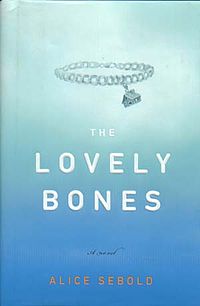 The Lovely Bones is a bit tragic, terrible in its opening rape and murder, hazy with a metaphysical view of heaven, and sad as the family surviving the deceased fourteen year old attempt to function with one less person in the household. Its beautifully written despite its harsh plot points and terrifying point of view, but reading Alice Sebold’s memoir Lucky will help you understand her approach to the story. I highly recommend for 14-18 year old girls to read as a warning to pay attention to what’s going on around you and that the wise choices in life are not always polite nor do they quench certain curiosities.
Buy The Lovely Bones
Gloriously Symmetrical
 As beautiful as The Time Traveler’s Wife is, Audrey Niffenegger’s Her Fearful Symmetry is awful. Every moment, every line is filled with mystery, sadness, and the terrible selfishness of humanity. I loved it.
People have described this second novel as disappointing. I feel as though it was done on purpose. I cried on page one, knowing that the rest of the book could not be even remotely as beautiful or as happy; and by the end I had been disappointed by every character so often, I merely settled into a sigh of understanding. Of course it ends this way, of course. The novel was gloriously backwards, in comparison to Niffenegger’s first book, just as Valentina is a backward version of Julia.
If you read it, I think you’ll understand my meaning.
If you liked it, I also recommend:
The Lovely Bones

The Mercy of Thin Air
Swan
The Ghost and Mrs. McClure by Alice Kimberly
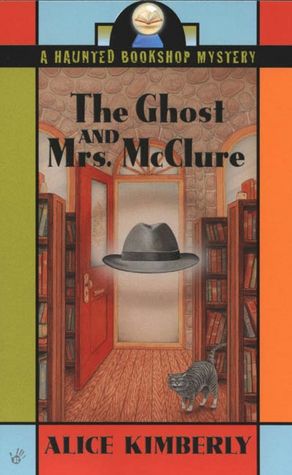 The first of the Haunted Bookshop Mystery Series is adorable. I want to shop Buy the Book (a small bookstore that reminds me of Houston’s Murder By the Book), hug Penelope McClure, and exchange witty dialogue with her resident ghost P.I. Jack Shepard. Like her Coffee House Mystery Series (written under the name Cleo Coyle), Alice Kimberly’s bookshop murders are fun, endearing, and most importantly, cozy.






 Anakalian Whims