Wild and Free

Once a year or so I choose an audiobook to listen to that is NOT for my children. I have an auditory processing disorder, which makes listening hard; but as a firm believer in working brain muscles, building skills, and asking for as few accommodations in life as possible, I work on my listening through audiobooks. It takes me months to listen to a book that I could otherwise read in an hour or two. (I read, according to my husband, extraordinarily fast.)
My audiobook choice the last few months has been Ainsley Arment’s The Call of the Wild and Free: Reclaiming Wonder in Your Child’s Education. I chose this one, frankly, because it was available on Spotify and as a homeschool mom for the last decade (and a homeschool aunt for the last two), I have tried to read anything and everything published on and within the homeschool community since my early twenties. It’s important to me to understand a lot of ideas to really feel comfortable choosing direction for our family. Although I firmly land in the Classical /Charlotte Mason corner of the homeschool realm, I have read a great deal on all the corners. I like that Ainsley Arment has as well. She has done her research, she has put in the hours, she is a fantastic source of information.
I needed the affirmation this week as I was recommending groups to new homeschool moms and realized I had been blocked from the one I was trying to recommend! I also, apparently, had accidentally been complicit to stirring a pot in another, by sharing it with people. You see, I classically educate my kids via the Charlotte Mason method, but I don’t limit myself to one particular curriculum or another. I refer to Ambleside Online, I look for ideas on The Charlotte Mason Cottage Curriculum, I utilize the free resources on the Well Educated Heart/Libraries of Hope website. I meet my kids where they are with resources I can afford. Many times I choose my own living books altogether, ones not mentioned on anyone’s published curriculum. For this, I’m not a part of any group. For this, I’m often evicted from certain communities for not doing the same thing the others are doing. If you don’t use Ambleside Online exactly as listed, I feel you are shunned by the AO purists. When I was using Classical Conversations resources as I saw fit, I was constantly admonished for not “trusting the process.” Veering my own direction as I meet the needs of my children is not leaving the path of God’s design, as I’m quite certain God does not have a hard rule on studying a specific topic in September verses February, or a requirement to do school for 8 months rather than year round, or that everyone has to been on the same exact topic at the same time in order to be part of a community. For this, I found Arment’s book a life giving relief after being a maverick black sheep in most homeschool communities. I show up for my kids to have people, I’m in the online groups for the exchange of ideas. I determined this week, I should probably just stay off the internet unless I’m blogging because my ideas are too fluid for those who write their own curricula.
The humor in this mentality amongst homeschool groups is that: aren’t we all bucking the system already? Why would those staying out of a system that doesn’t work for them choose to be a lemming in another system. Sharing ideas and curricula you’ve made is wonderful. I have some I’ve made as well; but when I share it, I share it knowing that it will (and should) be tweaked by the family using it. Why? Because each family unit is unique, each student is unique. I’m sharing what worked for me in case it works for you. I love reading through what works for others to see if it will work for me. The idea that our homes must all be identical is insane to me.
So without realizing it, I have embodied what Arment describes as “wild and free” for years, despite being methodical and extremely diligent. Being wild doesn’t mean abandoning guidelines, rules, or structure. It often comes with embracing rhythms rather than strict schedules. It comes with studying high school level Chemistry as an 8th grader, outside sprawled in the grass, but regularly sitting at the table for Algebra I. It means knowing that STEM can absolutely be prepped for through nature study. I actually had to defend that online earlier this week… the idea that a student can be fully prepped to engage in college level science due to their extensive nature studies was something I thought was common sense. Look at Isaac Newton, for example. People actually think you cannot study fractals and Fibonacci swirls, chemistry, physics, trigonometry, and calculus, without sitting in a classroom at a desk. I find this baffling. Nature philosophy is how every scientist from the beginning of time got their start, why does modern society discredit it so quickly?
If you are a parent doubting your ability to walk the homeschool path through graduation with you child, I urge you to read Arment’s book. Also try Julie Bogart’s The Brave Learner, Charlotte Mason’s Home Education series, and Law’s and Lygren’s How to Teach Nature Journaling or Anna Comstock’s Handbook of Nature Study. If you’ve been on the homeschool path awhile and don’t seem to “fit” anywhere, read The Call of the Wild and Free and know that it is ok. Your kids are learning, you probably do have friends, it just doesn’t feel like it sometimes when people get pigeon-holed into “you must do it this way or the highway” mentalities.
To anyone reading this, I do not subscribe to the practice of gatekeeping knowledge. My toxic trait is: the second someone tries to do so, I absolutely think less of them. After reading Arment’s book, I think quite highly of her.
Jane Austen’s Use of Satire In Northanger Abbey
by: A.Z.K.R., from Tales of Porcelain Thrones: Middle School Edition
Jane Austen was an author in Regency Era England. She wrote satirical novels and enjoyed mocking the frivolities of English society and “the Novel” itself. Satire as defined by Webster’s New Word Dictionary is a literary work in which vices and follies are held up to ridicule, satire doesn’t have to be funny, but Austen’s work definitely is.
Jane Austen was born nine months after the beginning of The American Revolution, she had several brothers, and one sister (Leithart 1). Austen was an avid reader and loved novels, but she still found them a little ridiculous. Austen wanted her books to reflect the real world, showing real dangers. Instead of writing about bandits and murderers, Jane’s villains included liars and social climbers. Jane Austen was fighting against stereotypical heroines, bizarre and dangerous social expectations, and the problems of treating novels like real life. Yet, ironically, Jane Austen’s novels were realistic, which was sort of the point. Jane Austen wrote about real problems in a funny way. Even for someone who does not live in Regency Era England, Austen’s characters represent real types of people and can help give young women the wherewithal to avoid the Big Bad Wolves (John Thorps) of the world and find their very own Prince Charming (Henry Tilney).
Austen starts her book Northanger Abbey with a mockery of a novel’s heroine. Austen does this by describing her heroine, Catherine Morland, as normal, and “almost pretty,” emphasizing her normality by saying her family was neither rich nor poor, her father was a clergyman, neither of her parents were abusive, and her mother was—unfortunately—alive. Catherine loves reading novels, but not history books. These are all in direct contrast to the kinds of heroines Catherine herself reads about over the course of the book, stories such as Ann Radcliffe’s The Mysteries of Udolpho where the heroine, Emily St. Aubert, is beautiful, orphaned, and well versed in the arts. Catherine’s neighbors, the Allens, a childless couple of some fortune, decide to take sixteen year old Catherine to Bath. Bath is a tourist destination in England, complete with spas, parties, and shopping centers, which served many as a ‘coming out’ excursion (Cunliffe 41). Austen was able to write about Bath well because she lived there. Even while making fun of novels, Austen used some of their troops to her advantage, such as having a relative or family friend taking a young heroine on a coming out trip.
In English society one couldn’t just walk up to someone and talk to them, you had to be introduced by someone you already knew, forcing everyone to rely on family, family friends, other acquaintances, or the master of ceremonies. At Catherine’s first ball Mrs. Allen laments constantly that they don’t know anyone of consequence, while Catherine wishes they knew anyone at all (Austen 30).
At Catherine’s second ball, the master of ceremonies introduces her to Henry Tilney. Halfway through a conversation that they were having, Tilney interrupts by saying, “I hitherto have been very remiss, madam, in the proper attentions of a partner here; I have not yet asked you how long you have been in Bath.” Jane Austen mocks polite society through Henry Tilney’s comical performance of asking Catherine all the ‘right’ questions, such as ‘how long have you been in Bath,’ ‘do you enjoy Bath,’ ‘Is this your first ball,’ et cetera. Tilney, although he thinks society is silly, still follows its rules, and remains a respectable young man.
Jane Austen uses Catherine’s naivety to point out how unspoken rules can be extremely problematic, and even dangerous. The real dangers of society were people like the Thorps, social climbers and narcissists, who used these unspoken expectations to put other people in sticky situations. The Thorps, through a series of blunders, suppose that the Morlands have lots of money. They had already met Catherine’s older brother, James, at Oxford. Upon meeting Catherine with Mrs. Allen, they supposed that she would receive the Allen’s fortune due to the kind way the childless Allens were treating her. They catch their mistake when Isabella Thorp becomes engaged to James Morland and she receives a letter about James’s future income, one that sounds reasonable to the Morlands, but is disappointing to the gold digging Thorps. Isabella attempts to break off the engagement to run off with Henry Tilney’s older brother, Captain Frederick Tilney, but this proves to be her downfall. Captain Tilney, unlike his brother, is a rake, he doesn’t care about any of societies rules, and breaks the social customs that were actually worth keeping.
Because the Thorps thought Catherine so rich, and John Thorp planned to marry her, and they gossiped about her wealth in order to make themselves look better. At a theater, they brag to General Tilney, Henry’s father, who then wished to have Catherine married to his son. In order to empress her he invites her to stay at his home, Northanger Abbey for a holiday. Catherine is naive and unaware of the Thorps deceptions until she receives a letter from her brother explaining Isabella’s behavior. She is totally unaware that money is the reason General Tilney is interested in her alliance. Henry however is aware that his father cares a great deal about money, and isn’t sure why he is interested in having Catherine for a daughter-in-law. With these events Jane Austen is showing us the true the ‘villains’ of society, and how Catherine was totally oblivious to their presence. She was so caught up in the idea of bandits and mysterious murderers that she could not see the danger at the end of her nose.
‘The Novel’ becomes increasingly important in this part of the story, as it leads to Catherine’s embarrassment several times over the course of her stay at Northanger Abbey. Catherine’s preconceived notions about abbeys, established while reading gothic romances, leads her to disappointment when discovering modern renovations inside the home of her hosts. She fails to find secret passages, or incriminating letters, as the heroine Adeline did in Radcliffe’s Romance of the Forest, in her guest room and, worst of all it leads to a terrible confusion regarding the cause of Henry’s mother’s death. General Tilney is harsh, but not villainous. He takes good care of his servants and his estate, hence the renovations. He wants his children to marry well, thus his interest in Catherine’s supposed inheritance. General Tilney’s stony demeanor, combined with Catherine’s overconfidence in the reality of novels, leads her to make the worst of blunders: she makes assumptions. She speaks briefly to Miss Tilney, Henry’s sister, and finds she was not at home when her mother died, leading Catherine to assume no one was at home when Mrs. Tilney died. Catherine suspects foul play. Her blunder is discovered when she sneaks into Mrs. Tilney’s old room and is discovered by Henry. When she admits her thoughts, he admonishes her. He and his brother had been home when his mother had died, and she had perished of sickness rather than ill treatment. General Tilney’s behavior had nothing to do with skeletons in a closet. Catherine’s gothic fantasies stop here; she has learned and grown. The dangers are not ended, though.
The Thorps, angry due to their hurt pride, speak to General Tilney again and tell him not only that the Morlands are not rich, but that they were exceedingly poor, projecting their own flaws onto Catherine. General Tilney, in a rage, comes home and sends Catherine off in the middle of the night without a chaperone or money. The situation is quite unforgivable, but Catherine doesn’t yet understand and cannot fathom what she has done to displease General Tilney. Henry later comes to her house to explain and offer his hand in marriage, not just because he loves her, but because he feels responsible due to his father’s behavior. General Tilney, of course, does not approve.
Jane Austen, for all her realism, never leaves her stories with sad endings. Henry’s sister, previously forbidden, marries the man she loves, and by a novel twist of fate, now financially outranks her father. She demands that General Tilney allow Catherine and Henry to marry, and her will is done. Jane Austen defends the ending of her own book, at the beginning of the story, while talking about novels in chapter five. “For I will not adopt that ungenerous and impolitic custom so common to with novel-writers, of degrading by their contemptuous censure the very performances, to the number of which they are themselves adding— joining with their greatest enemies in bestowing the harshest epithets on such works, and scarcely ever permitting them to be read by their own heroine, who, if she accidentally take up a novel, is sure to turn over its insipid pages with disgust. Alas!” (Austen 42) Jane Austen is talking about Catherine’s own habit of consuming dramatic stories, but she’s also explaining here, that despite her book calling out the faults in these stories, its still a novel its self.
The story is funny, you can’t help but laugh when Catherine finds not evidence of murder, but instead laundry receipts in the cabinet. This is not was makes it satire however, Jane Austen books are satire because of exactly how it is funny: elements of the story mock society, and express its difficulties, she’s calling to attention problems regarding expectations when they are appropriate and when they are silly. We’re lucky to have Jane Austen doing this is a humorous manner as opposed to long dry articles listing the problems of society like a grocery list. Not all satire is presented in a comical fashion, but a point is better made when it provokes some kind of emotion, either anguish, or in Jane Austen’s case, joy.
Works Cited
Austen, Jane. Northanger Abbey. Signet Classic, 1996.
Cunliffe, Barry. The Roman Baths at Bath: Authorized Guide Book. Bath Archeological Trust, 1993.
Leithart, Peter. Jane Austen. Thomas Nelson, 2009.
Radcliffe, Ann. The Mysteries of Udolpho. Penguin Books, 2001.
Radcliffe, Ann. The Romance of the Forest. Oxford University Press, 1988.
The Year in Books
We read a lot. We are homeschoolers, so of course we spend a lot of time reading. I was at the pediatrician years ago with my oldest, an old man I didn’t know who didn’t know me… he complimented how articulate and well mannered my child was and then found out we homeschooled and immediately started lecturing me on the dangers of screen time and video games. I said, “Sir, we don’t even own a console.” He would not let up. He was convinced that being homeschooled meant we sat around and did nothing but watch TV and played video games. Funny thing is, now we don’t even own a TV. My teenager will tell you, we don’t have time for TV, because there are so many things to read. We play outside, we hang out with friends, we play musical instruments, we participate in clubs, she flies planes, and we read and read and read.
A lot of our books we read together, some (not not many) I read alone. This year (2025), we read:
- Writing to Learn by William Zinsser
- Napoleon’s Buttons by Le Couteur and Burreson
- Desiring God by John Piper
- The Magnificent Ambersons by Booth Tarkington
- The Scarlet Letter by Nathaniel Hawthorne (I actually read two different editions back to back with notes, as I was teaching it.)
- The Bringer of Fire by Oehler (I did not let my teen read this one)
- Why Read Moby Dick? by Philbrick
- Pride & Prejudice by Jane Austen
- The Communist Manifesto by Karl Marx
- The Peter Rabbit Library by Beatrix Potter (this is an ongoing favorite and I love having babies to re-read these to)
- Why? by Anne Graham Lotz
- Rapunzel (all the versions, every one we could get our hands on)
- The Adventures of Tom Sawyer by Mark Twain (another one I enjoy teaching to more than my own kids)
- Purgatorio by Dante
- The Great Gatsby by Fitzgerald
- All the Arnold Lobel picture books, including a few new ones I had not owned when my oldest was small.
- Jane Austen by Peter J. Leithart
- Hank the Cowdog by John R. Erickson (my son is obsessed with the books and the podcast, I think we have them memorized now)
- New Essays on The Great Gatsby by Matthew J. Bruccoli
- The Los Angeles Diaries by James Brown
- I Know Many Songs… by Brian Kiteley
- The Parrot’s Lament by Eugene Linden
- On Reading Well by Karen Swallow Prior
- Common Arts Education by Chris Hall
- You’re Not Enough (and That’s Okay) by Allie Beth Stuckey
- The Count of Monte Cristo by Dumas
- Everything we could get our hands on by Trina Schart Hyman because we love her.
- Midnight at the Bright Ideas Bookstore by Matthew Sullivan
- The Enchanted April by Elizabeth von Arnim (an annual Easter tradition at our house)
- Gatsby’s Girl by Caroline Preston
- Animal Farm by George Orwell
- The Disappearing Spoon by Sam Kean
- The History of Rasselas, Prince of Abissinia by Samuel Johnson
- Under the Greenwood Tree by Thomas Hardy
- A Hobbit, a Wardrobe, and a Great War by Joseph Loconte
- Rebel of the Sands by Alwyn Hamilton
- The World of Pooh by A.A. Milne
- Lightfoot the Deer by Thornton W. Burgess
- The Pursuit of Love and Love in a Cold Climate by Nancy Mitford
- The Geography Behind History by W. Gordon East
- String, Straight-Edge, and Shadow by Julia E. Diggins
- Anne of Green Gables by L.M. Montgomery
- Dracula by Bram Stoker
- Hamlet by Shakespeare
- World Enough & Time: On Creativity and Slowing Down by McEwen
- The Discarded Image by C. S. Lewis
- Drake Hall by Christina Baehr
- Anne of Avonlea by L.M. Montgomery
- The Floating City by Pamela Ball
- Moth and Spark by Anne Leonard
- That Eye, The Sky by Tim Winton
- Socrates Cafe by Christopher Phillips
- The Chemical History of a Candle by Michael Faraday
- Beauty and the Word by Stratford Caldecott
- Under the Wide and Starry Sky by Nancy Horan
- The Great Divorce by C.S. Lewis
- Nathaniel’s Nutmeg by Giles Milton
- J.R.R. Tolkien’s Santifying Myth by Bradley J. Birzer
- Engaging the Christian Scriptures by Aterbury and more
- Journey Into Summer by Edwin Way Teale
- Kon Tiki by THor Heyerdahl
- Lethal White by Robert Galbraith
- Be Strong (Joshua) by Warren W. Wiersbe
- A Chant to Soothe Wild Elephants by Jaed Coffin
- Anne of the Island by L.M. Montgomery
- Sightings by Sam Keen
- Maisie Dobbs by Winspear
- Local Girls by Hoffman
- Early Christian Writings: The Apostolic Fathers
- Rosencrantz and Guildenstern Are Dead by Stoppard
- How to Teach Kids Theology by Luce and Williams
- Medea and Other Plays by Euripedes
- The Infinities by John Banville
- Climbing Parnassus by Tracy Lee Simmons
- How to Keep From Losing Your Mind by Hudson
- Sharing His Secrets by Vickey Banks
- Goblin Market by Christina Rossetti
- Uglies by Scott Westerfeld
- The Last Rakosh by F. Paul Wilson (straight to the nope pile)
- A History of France by John Julius Norwich (he is one of my favorite historians)
- Book Trails for Baby Feet
- The Halloween Tree by Ray Bradbury
- Don’t Mom Alone by Heather MacFayden (a gift from my midwife after having baby number four)
- The Fall of the Year by Dallas Lore Sharp
- The Natural History of Selborne by Gilbert White
- Heaven by Jennifer Rothschild (donated this too)
- Cultural Literacy by E.D. Hirsch Jr.
- Bringing Up Boys by James C. Dobson
- Ourselves by Charlotte Mason
- The Story of Holly and Ivy by Rumer Godden (we read this every Christmas)
- One Man’s Christmas by Leon Hale
- The Iliad by Homer (Fagles)
- Hallelujah by Cindy Rollins (another annual tradition)
- Quietly in Their Sleep by Donna Leon
- Easily 300-400 picture books because I have three children under five and that’s what we do for hours on end.
I purged a lot this year, as you can see there’s a lot of chaff in this list. But I found favorites I will re-read with every child as well. We’ve been purging a lot as our shelves are stuffed to the gills (about 22 seven foot units retired from Half Price Books) and then some. I decided I don’t actually need more books, I need to be more conscientious about curating the ones I have, so I’ve been donating hundreds of volumes I’m done with every year… but we still have a packed inventory, because we are homeschoolers and we are readers.
As for this year, I truly enjoyed the chemistry titles. I actually enjoyed teaching high school chemistry, especially with the literature bent, essay writing, and speech giving I required of the students. The kids had more fun with the labs, obviously, but Napoleon’s Buttons, Faraday’s papers, and The Disappearing Spoon are all keepers, for sure.
I got rid of most the contemporary fiction, and kept the classics. I loved The Scarlet Letter when I read it in high school and I loved it even more while teaching it. The book as a whole is so much richer right after reading Dante’s Divine Comedy. “The Custom House” introduction hits so much deeper as an adult.
What did you read this year? Were they re-reads or new reads? A mixture of both? What was your favorite? What will you read again every year?
Getting to Know Charlotte
A Homeschool Life…
When I was first sold on homeschooling, I was smitten with the classical model. I learned later that most “classical” models being advertised in the United States are actually “neo-classical” in practice. They have taken an essay written by Dorothy L. Sayers on the Trivium and pigeon-holed it into something it wasn’t exactly meant to be. The neo-classical model sort of married the United States educational “ideal” and pushes intense academia early, limits the elementary school years to a lot of memorization (the grammar stage), and taken to the extreme (like anything taken to an extreme), steals joy from students and teachers alike.
If you have followed my blog for the last fifteen years, you might remember me “homeschooling” my toddler. (FYI, pre-school is just parenting, not homeschooling. It’s literally PRE school.) Pressured by a narcissistic ex who demanded that my then three year old be able to read already (it’s not developmentally appropriate to force formal reading lessons on children under six), be able to copy out poems (it’s not developmentally appropriate to force small children to write, look up x-rays of their hand bones), and wanted her to be trained as some government super spy assassin (I am a third degree black belt in Kung Fu, but some people have watched too many movies and have no sense of reality and I used to be married to “some people”). Homeschool regret #1: giving into the pressure of my ex to do formal reading lessons because she was bright and could do it and I was hyperlexic and was reading at age three despite knowing that educational studies have long stated that formal lessons shouldn’t begin until six. Homeschool regret #2: ever handing her a worksheet in kindergarten, which wasn’t often, but still…
The things I am proud of, however, is that despite all this pressure, we always focused on living books above all else and I encouraged verbal narrations for years. I do not regret the neo-classical homeschool co-ops we joined (and left), they held an important role in our lives at the time and I met some cherished and beloved friends there even if I was regularly told: you’re not very classical, you’re too Charlotte Mason. The first time I heard that, I started doing some research…
I learned that Charlotte Mason was very classical, and what calls itself classical these days just isn’t. Honestly, it doesn’t really matter, what matters is that I still very much subscribe to both tactics of education and as my oldest is now in highschool and I have three more children with one creeping up on kindergarten (FYI: kindergarten is also PRE- school), I’ve been doing even more reading and research and want to share my favorite resources… the ones I don’t regret.
First: if you’re new to homeschooling or not loving your current homeschool rhythm, this is my favorite link to send parents: The Five Flavors of Homeschooling. I like to share this link so much, I have gotten restricted on Facebook as a potential scammer, despite not having violated the group rules in any of the places I posted it. Knowing your “flavor” can save you a lot of money on homeschool pursuits, and I definitely feel like (having been a single homeschool mom who wasn’t receiving child support that was owed) Charlotte Mason and Unit Studies are the easiest to accomplish for FREE.
Which brings me to my next two resources: Ambleside Online (not an online school) and Well Educated Heart, two curricula that are totally FREE. Ambleside Online is named “online” so as to not confuse it with the Christian private school based on Charlotte Mason’s philosophy still operating in the UK. It’s a full “scope and sequence” and any time you can’t find a title for free or a price you can afford, you can usually access it on Project Gutenberg or substitute it with something suitable. The focus is having the students read real books and source documents, narrating those books, and embracing the idea that Education is the Science of Relations by making connections to things they have studied and the world around them. Well Educated Heart is very similar, but clusters the material into something like unit studies, despite Charlotte Mason discouraging unit studies (because she wanted the children to make the connection, not have the teacher present the ideas already connected). Well Educated Heart offers their curricula for free and the feature I like most is that the audio files are also available on their site for… wait for it… FREE.
But wait, what is narration? That brings me to my third resource that I like to send people: Episode 7 of Cindy Rollins’s podcast The New Mason Jar. I had already read Karen Glass’s book Know and Tell (as well as Charlotte Mason’s original Home Education series) when I stumbled across the podcast episode and I think the podcast is a more approachable way for people to access the road to narration because (Gasp!) a lot of people don’t want to read the books (it actually drives me nuts, but I kind of get it: people are busy, especially mothers). The beauty of pursuing the art of narration isn’t just in the brain development aspect (which is phenomenal), it’s also the price tag… narration is… you guessed it… FREE. No fancy writing programs, no workbooks checking reading comprehension, no drama. A verbal narration costs nothing but the work of a brain muscle and a listening ear plus time. As the students get older a composition book and pen will do the trick. Charlotte Mason educations are truly thorough and affordable. I still teach essay writing, Charlotte Mason purists say they don’t, but a narration is basically an expository essay written beautifully. I still don’t use curricula to teach essay writing, we use narrations and read a lot of well written essays (and sermons) and writing memoirs. My oldest loved Zen in the Art of Writing by Bradbury (after reading Fahrenheit 451) and Zinsser’s On Writing Well. Her seventh grade year also included Annie Dillard’s Pilgrim at Tinker Creek and Writing Life. I think the inspiration of her favorite authors talking about their writing lives was the most effective writing tutor I could have ever received.
Other things I’m pleased I did, but will definitely do more of with the younger ones:
- Fairy Tales: read all the fairy tales
- Music: classical music, folk songs, sea shanties, hymns… studying music throughout history and enjoying it in passing has done nothing but enrich our lives and our studies. My oldest plays the tin whistle, piano, clarinet, violin, and pretty much any instrument she can get her hands on. She also enjoyed two years of choir.
- Scripture Memory Box
- Poetry: we added a memory box just for poetry and the kids are loving it. Instead of being set up the way it is for the scripture memory box as described in the YouTube video I linked, it only has month tabs and we read a poem every day that month. This is in addition to the poetry we study for language arts.
- Picture Study: I want to be more intentional about this in the future, but currently we just decorate our home with real art. Paintings we find at Goodwill or garage sales plus a few John William Waterhouse prints I have always loved.
- Classical Conversations songs: they’re neo-classical, they’re expensive, but my goodness if you can find the CDs used somewhere or splurge on their overpriced app, the kids love and remember their awful songs! The Timeline song has been an atrocious gift that keeps on giving and I’m so happy it was and is a part of our lives.
This semester (Fall 2025), the oldest and I have been reading Charlotte Mason’s Ourselves. One of the fun things about homeschooling in the teen years is that as they grow and reason and read for themselves they really start to see the light regarding the choices you have made as a parent and educator over the years. Ourselves isn’t her favorite book, she didn’t catch right off the bat that Mason was alluding to Prudentius–She hasn’t read Prudentius. I’m 41 and have only read some of his work and The Fight for Mansoul just happened to be one of them because I’m a ‘buy all the Latin texts I can afford’ junkie.–But she is having thoughtful conversations with me about it and understands the value of it having been assigned. She can describe the Trivium and how it is needed when learning something new… you always start with the grammar stage (memorizing new facts, acquiring basic knowledge on a subject), move to a logic and dialectic stage (when you can understand and reason through the ideas presented in the subject at hand), and finally rest in a state of rhetoric (being able to express the ideas persuasively), and that these stages will be repeated throughout your whole life as you pursue new things to learn because education is a lifetime pursuit. It’s exciting to be here, even though she’s only in 9th grade, only fifteen years old, even though she wanted to start college courses several years ago and won’t be actually starting one until next semester, it is so exciting to be here and the teen years are absolutely my favorite… and I think Charlotte Mason (and more importantly God) has had a lot to do with that.
(As an Amazon affiliate I earn from qualifying purchases.)
Instilling Financial Wisdom

Title: Stock Market Investing For Teens
Author: Myles West
ISBN: 9798416564322
Pages: 149
Theme Music: The FatRat Warrior Songs: Reminiscence
Ok, maybe the Theme Music was a little much, but I mainly listened to this while I read Myles West’s investment guide for teens and planned kiddo’s future. According to West, only 35% of kids 12-19 (as of 2021) had ever had a savings account, and though I agreed to read this book and leave an honest review in exchange for a free copy, I definitely sat and patted my back for having savings accounts for both my kids and choosing this particular title to review. I have always assumed helping children plan for their financial future was the norm, I did not realize how in the minority I was until this book.
While married to my oldest’s father, we suffered a lot of hardships, many that began and ended with financial irresponsibility and abuse. It was during those years that I realized how important it was to not just “agree” about money, but to understand when you are and are not speaking the same language when discussing money topics. It’s not enough to agree that it is “good to save,” questions like “how do you plan to save?” must also be answered accurately. Newsflash: “Win the Lottery” is not a good answer. Spending is a touchy subject too. Agreeing that bills should be paid on time is not the same thing as someone actually paying their bills on time, or even prioritizing those bills over their vices. And although I am grateful for the skills I learned while foraging for food in the woods when he kept grocery money from us so he could buy beer, that’s obviously not the place I want my kids to be in life. Ironically, I was reviewing financial books even then. I knew the “right” answers, but I didn’t know how to help my then spouse make the right choices. The new goal is to simply help my kids learn to make the right choices before they are married so they don’t find themselves acting like or married to someone who tackles money like my ex.
It’s not just enough to start a savings account, though, although that’s a great start. We talk a lot of about being a good steward of our finances in our house. As a homeschool mom, I have the opportunity to teach my kids all the inner workings of household management throughout the day while we tackle math, reading, history, and science. My oldest can now budget out and cook dinner once a week as part of her home economics, she’s eleven. She has been taught to save money for pets and their care and upkeep. We have a two year old puppy, a seven year old hermit crab, one year old Australian tree frogs, and she has set up a freshwater aquarium for a betta fish whose extra plant features she has to earn by doing the dinner dishes every night.
Even this is not enough.
Around 8th-9th grade I plan to add the Math-U-See Stewardship curriculum to our school days. When that happens, I’m also going to add West’s investing book to the required reading list.
As an adult, I’m familiar with most of what was discussed for Americans (West’s book also tackles actions available for Canadian citizens), so I read through the 149 page book in one sitting as soon as I took it out of its package. A teenager being exposed with the terminology and ideas for the first time will have to peruse it more thoroughly. Although West does an excellent job defining terms and laying out a thorough getting started guide, I would consider it just that––a guide to get started. A teen would (and should) take a great deal longer than a nine month old’s nap time to digest this book. It’s good stuff.
In addition to the well rounded and systematic way West approaches investing for the first time, I love how he also touches on volatile markets. Many adults pushing kids to invest don’t properly address the risk factor, but I think West handles it well. The risk is real, but these are things you look for…
The best part, West doesn’t act like his book is the end all be all of everything. In a household where our mantra continues to be “Education is a lifetime pursuit” you bet your britches I was delighted to read West write,” The more you know, the less likely you are to make mistakes. Your reading and thinking may also lead to improved investing techniques and performance.” He then continues to encourage his readers to learn about successful investors and firms as well as those who have failed. “[…]there is always more to learn…”

Vikings!
Kiddo is studying Early American History at co-op this year. So, naturally, we’re already super into it.
I thought we’d be diving into the Pilgrims or the Revolutionary War at the start, but the tutor has wisely chosen to go back and lay the ground work for the Americas with ALL the early explorers. At home, we study all the world’s history chronologically so we love that the course is being tackled this way, despite the fact that it means we’re back pedaling over things we studied this last year. Repetition is good, anyway.
Her homework was to read D’aulaire’s Leif the Lucky. We collect all D’aulaire’s work so both of us were pretty pleased with the assignment. Although we did get distracted and took a detoured into studying the Northern Lights, why they occur, what they look like, and why Leif might have thought he saw Odin riding a chariot through the sky.

We read the assigned pages, and then looked for more… we highly recommend listening to some Danheim while you study. I’m loving Janeway’s fictional depiction of Eric the Red and Leif Ericson, and Landmark books have never steered us wrong.

Click here for additional resources if you want to study this subject as well.
Homeschooling During Covid
We’ve always homeschooled, thank God. Educating this way has been the biggest blessing of our lives. Post-divorce, during single motherhood, it was the easiest way to spend the most amount of time with my kid while staying on top of her education. In homeschooling, a little bit of time goes a long way. As a public school graduate, the public system always seemed like for every second of education occurring, there were hours of waste. Homeschooling is efficient, we cover a lot of ground in less time.
“Play is the work of childhood,” and I want my kid to have lots of play time.
During the chaos of sheltering in place, school getting canceled, and whatnot, the only thing that changed for us was me going to work (I got laid off a few months before I was planning to quit), and attending our extra curricular activities. A good chunk of our daily lives looked the same, just more relaxed. Way more relaxed.
Now, in the midst of so many of our friends dealing with school district uncertainty, virtual public schooling, Zoom courses, and a plethora of other dramas–we’re going on with life business as usual. Our co-op is so small and cozy, and several members already recovered from Covid, so we still get to meet as usual.
So what does our Classical Homeschooling life look like?
At Home:
We started a formal Spelling curriculum last year, just using McGuffey’s Speller and memorizing wasn’t cutting it for us. The Workout Spelling books are fantastic and I highly recommend them.
We’re flying through Math-U-See Delta and using Singapore 3A on review days to keep all those math skills sharp. (We do math every day, year round: Math-U-See we maintain her appropriate grade level and Singapore we do the year before. She tested above grade level on her end of year CAT last year, so we think this routine works for us.) We finished the Mensa K-3 reading list this summer and have been plugging away at the 4-6 list and loving it.
As a family, we’re making a point to learn more recipes in the kitchen. I quit buying bread at the grocery store this month and am officially baking all our bread myself. Something I’ve always loved to do, but not had the time and energy to maintain doing it regularly. Now we both have a routine and baking and cooking has been a magical experience instead of a stressful one. She has to help with a minimum of one meal a week, next semester I’m increasing it to three. Hopefully by next year she’ll be making more things on her own, but as it stands if she goes to college with only what she knows now, she’ll be eating a lot of waffles and french toast.
She’s still working through the Botany science curriculum she started this summer in addition to helping me prep for the Introduction to Chemistry and Physics science class I teach at the co-op. We have a stockpile of MEL Science kits we can’t wait to dig into.
At Atrium:
The kid’s course load isn’t light, by any stretch of the imagination, but so far she’s loving it… Early American History, Critical Thinking & Logic, Introduction to Chemistry & Physics, Poetry, Writing & Rhetoric: Fables, Fix It Grammar, Song School Latin 2, Art, Kung Fu. (I’m teaching two Latin classes, the science class, and Kung Fu. Course load sharing with other moms is so fun, as every morning I get a well deserved coffee break while the other moms are “on deck.”)
Extra-curriculars:
So swimming was a great choice for us for 2020. Dipping kids in chlorine seems like a pretty safe choice and the kid swims like a fish now!
I’m not going to lie, I’m a tad envious of her piano lessons. She’s rocking them and composing music like there’s no tomorrow. She graduated the Let’s Play Music program amidst a pandemic and it was worth every penny and then some.
So, if you’re homeschooling this year for the first time ever and need help, message me. If you have ideas for things we’re covering, please share them! (Your favorite DIY science labs and dinner recipes are welcome!)
Hello Wilderness, We’ve Missed You
Since moving away from our beloved Timberlane Estates, we’ve been in dire need for nature. Especially with this winter we just had – harsher than I remember winter being – wet, muddy, colder sooner, and nowhere cozy to defrost. Temporary living arrangements have caused us to leave the comfort of having a nearly 1000 square foot library just down the hall from our beds. We also don’t have a fireplace here. It’s been a long time since I lived without a fireplace. But the change is good, it’s helped us redefine necessities, discover the beauty of new public libraries we hadn’t yet visited, save m oney for the land and dream home we want, and teach our daughter lessons she might have otherwise missed.
We’ve also discovered the Lake Houston Wilderness State Park. We went from 100+ acres of trails and exploration that we knew like the back of our hands to not having anything most of the winter, to Lo! And Behold! 4700+ acres of trails and wilderness closer than we could have ever imagined. Ask and ye shall receive. Take a ride down the highway and pay attention to those marvelous brown signs!
It costs $3 per adult to get in, kids under 13 and senior citizens are free. OR (and this is what we’ve done) it’s $25 for a year pass for an adult and three adult guests; basically, a family pass.
We’ve been back about every other day since we’ve discovered it. We walk, tromp, and read. We snack and picnic, we play in the creek, we stare at the trees. We read all the sign posts and discover new plants we’ve never heard of. We soak up vitamin D and work our muscles.
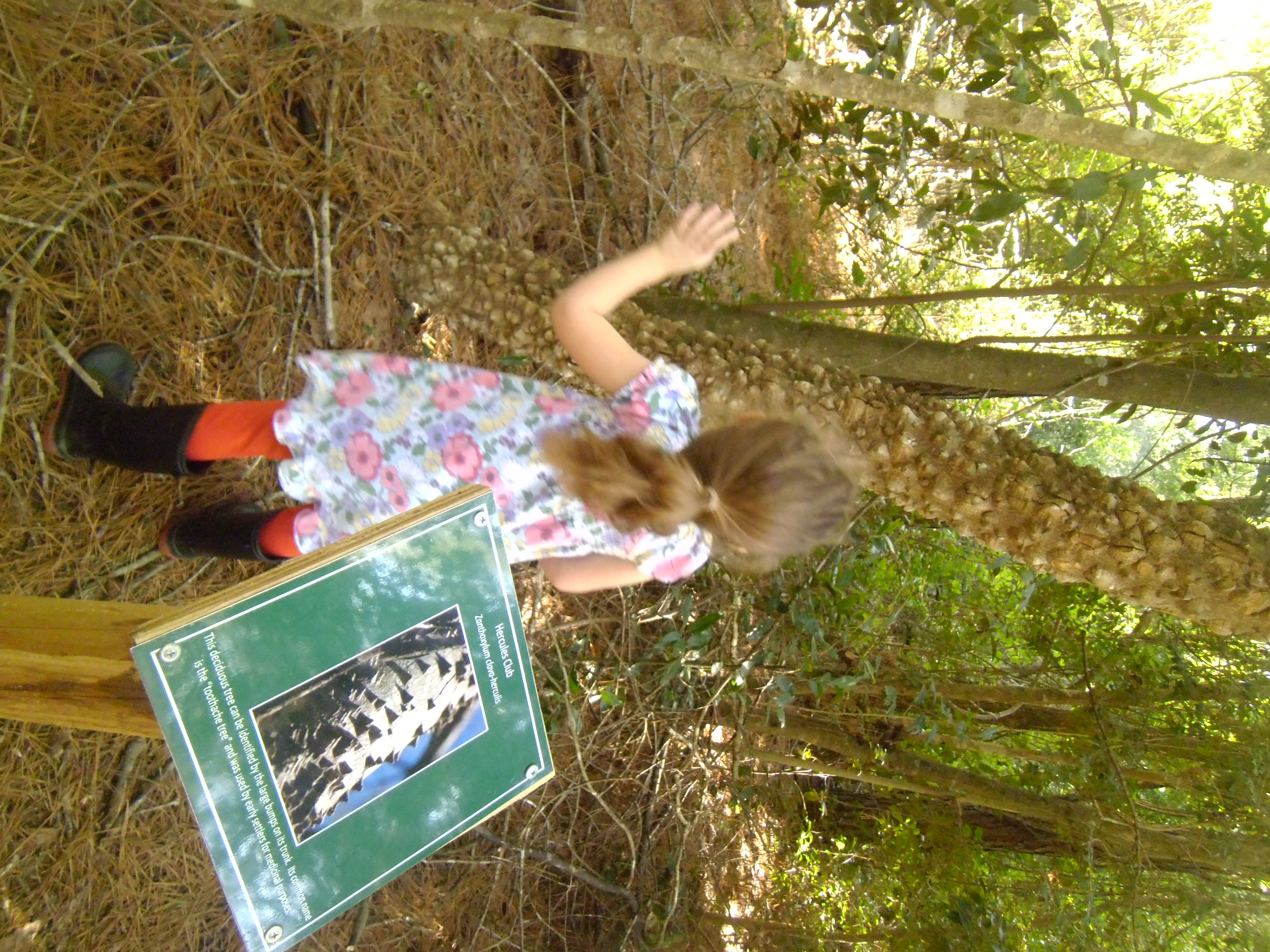
To the left you’ll see a Hercules’ Club. We were pretty excited about this discovery and did a mini-research project on it when we got home.
In all this much needed tromping and new library resources at my fingertips, I stumbled across a Guide to Wild Foods and Useful Plants
Happy Fourth of July

The Half Price Books Humble book club read John Adams by David McCullough this month. We discussed it together Monday night, even though I had only read the first 400 pages. The best thing about holidays, for me, though is their ability to mandate what gets read off the TBR pile next. So this week, as I researched for book club, lounged with family, watched fireworks, and read to the kiddo… this is what freedom looked like:
 Title: John Adams
Author: David McCullough
Genre: History
Publisher: Simon & Schuster
Length: 751 pages
1001 and one things to discuss about this book, and we mostly got caught up in the assessment of the character of John Adams. Was he an ambitious man willing to run off from the family and farm at a moments notice to pursue more exciting ventures of fame? Or, was he a great man of virtue who was gifted with the sight of the big picture, willing to sacrifice personal happiness for the greater good of the establishment of our country? Before reading the book, considering my skepticism regarding ALL politicians, I probably would have said the former. But McCullough has me convinced it was the latter that held true.
Of course, I am biased, mostly by the sheer fact that Adams was a great reader. Nothing romanticizes a person more to me than their love for a good book, for the art of research, and for a passion for knowledge and action. Several times throughout the biography, Adams is quoted saying such excellent things as,
“I must judge for myself, but how can any man judge, unless his mind has been opened by reading.”
Where others in the group found him willing to cast aside his wife and children for politics, I found him endearing. He wrote to his wife avidly. He and Abigail would often refer to each other as ‘dearest friend,’ and their relationship seemed to be what kept him grounded and successful. In addition to that, it also seemed that any chance he had to take his children with him, he did. Off sailing across the pond to Europe, the boys equipped with an educated father and a personal tutor, they got first hand experience seeing how nations make peace and build relationships. Sure, Adams renounced his son Charles later in life and that relationship was never rebuilt before Charles’ death, but in my opinion Charles did not deserve anymore second chances. Charles, the favorite as a child, turned out to be the bad seed in the bunch – possibly spoiled by being the favorite to so many – as he turned to alcoholism and abandoned his family. It was John and Abigail who raised his children and looked after his wife, leaving their own son to his own devices as they tried to do right by all his mistakes.
John Adams was quite the fascinating man, one I have, until now, always overlooked in history. Having shared a birthday with George Washington my whole life, he always got my ‘favorite’ vote as a child. As an adult, the Alexander Hamilton vs. Aaoron Burr phenomena fascinated me – mostly driven by that infamous ‘Got Milk’ ad as well as Joseph Ellis’ riveting storytelling in Founding Brothers
With all this important political talk, I found it necessary to re-read the Declaration. With toddler in tow for nearly all my reading ventures, it’s important to find kid friendly things to read alongside all my own reading. That’s where Sam Fink comes in handy…
 Title: The Declaration of Independence
Illustrated & Inscribed: Sam Fink
Publisher: Scholastic Nonfiction
Length: 160 pages (but only takes about 15 minutes to read aloud)
I absolutely adore this copy of the Declaration of Independence. As a homeschool mom, I love creating my own curriculum and finding unique ways to share information with my kid. Kiddos everywhere, whether homeschooled or public schooled, should find this a fun way to absorb the meaning behind the declaration and be introduced to the ideas of why it was so important for it to be made and signed.
With large print, clear illustrations, and political cartoons to accompany nearly every sentence – if not sentence fragment – Fink helps walk a kid (and even some adults) through every nuance of our founding fathers’ meaning and intention. If read often enough, you may find you have a kid who has memorized the declaration long before they are ever asked to do so for school purposes. This is just a good old fashioned fun picture book that just so happens to also be an important document to our country’s history. Sam Fink is pretty awesome and I am so glad he tackled this project.
In addition to all that,
 Title: George III
Author: Christopher Hibbert
I’ve been plucking through a biography of King George III for awhile now. It’s been loitering on my TBR pile and periodically I get the bug to read a chapter or two.
I am no where near finished reading this book, Hibbert is very detailed but also very dry as a biographer, but I find it a handy reference and do look forward to the times that I decide to sit down with it.
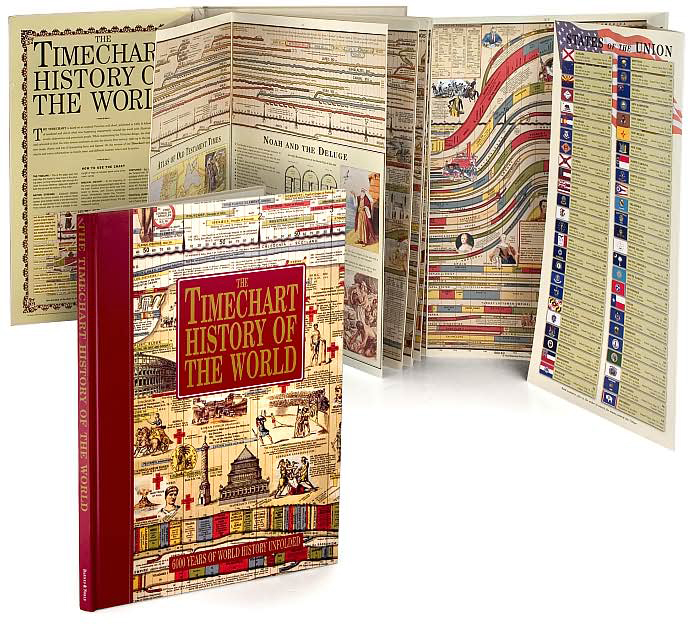
I like having large sweeping views of history as well as the tiny details. Reading through John Adams and peeking here and there at George III this week, I was grateful to have already tackled Napoleon’s Wars recently. It helped me keep straight in my mind what was happening with the French while a few of the Adamses friends were busy getting beheaded. Another handy tool for both children and adults while reading through history is The Time Chart of History of the World





 Anakalian Whims