An Education in Crabs
Not too long ago, I wrote an article for Money-Fax.com that featured this paragraph:
Hermit Crabs
Hermit crabs are fantastic little creatures. You might even have fond memories of fishing them out of the ocean yourself or keeping them in your elementary school classroom. Hermit crabs are popular, and with good reason. They are just about the least expensive terrarium dweller you can hold.
A small plastic container, a fish bowl, or an old tank you find at a garage sale – almost anything can serve as a hermit crab habitat. Fill the bottom with sand and rocks and place a tray of water and a few extra shells larger than the one the crab currently inhabits in the tank. Again, only $10 spent at your local Wal-Mart or pet store can set you up for life of the crab.
The crab itself will cost anywhere from $5 – $15 and their food will cost about $3 per can. While that may sound like a lot for a hermit crab, these cans last quite awhile. All in all, you could easily have a hermit crab join your family for an initial cost of $20 – $40, depending on what you choose to purchase. – http://money-fax.com/4-inexpensive-family-pet-ideas/
A few weeks ago, however, we went to the beach and caught ourselves a few hermit crabs with our four year old. Remembering my own article, I thought, we should keep these – it would be a fun starter pet and kiddo has already been begging for a new pet. (We have two dogs, but you know kids, they want tiny creatures to pester and nurture.)
So I headed up to the gift shop and bought a hermit crab kit. $25. It came with a free crab, but I told the lady at the counter that we had two downstairs under the dock.
“Oh, those are saltwater. They’ll die if you take them home and don’t have a saltwater aquarium. You should probably take the free one anyway and let those ones go. These are freshwater brought from Florida.”
“Oh, ok.”
Then, she informed me that it’s best to buy an extra one. They are community creatures.
“Sure, let’s do it. We’ll let the other two go and take these two home.”
So, I took the little plastic container downstairs, full of gravel, a shell, a sponge, and food – plus two tiny crabs.
We explained to kiddo that the others needed to be free and she had no problem with that, after all, we were taking these fun ones home and she understood that the others had come from the ocean and these two from a shop. She asked about extra shells, because we’ve read Eric Carle’s Hermit Crab book a thousand times.
We set the crabs up in the house when we got home from the beach that day and made plans to do some research and visit the pet store within the week. We knew the plastic container was too small for our comfort – but we thought we were just being those people who spoil their pets. I had no idea. No. Idea.
Nerd that I am, naturally, I bought a book. I was a little disappointed that it was a “for dummies” title,  because I’m a book snob and they seem so over marketed and written – well – for dummies. BUT, they are actually great starting points for any kind of research on anything. They are simplistic, concise, and give you the terms you need to dive deeper. Terms you wouldn’t know to look up otherwise. Like wikipedia, but more reliable, except the links aren’t necessarily up to date.
So it turns out, hermit crabs ARE community creatures. In the wild they live with hundreds of other crabs. It also turns out that the smallest container you want for these guys is a ten gallon tank for two small crabs. Cheap guru that I am, I could have gotten one from a garage sale, but I didn’t. I gave my sister our unused 20 gallon tank when we moved and my niece’s and nephews now have a tiny pet turtle. I went the lazy route and bought a brand new ten gallon at PetsMart. $30. (If you’re keeping track – remember my article peaked at a $40 expense to keep a crab alive. So far in this story we’re at $55 pre-tax.)
EVOLUTION OF A CRABITAT
I bought more gravel to cover the bottom of the tank. $10. I bought a crab shack because they need a place to hide. $8. A fake plant my daughter loved to make “it all so beautiful.” $4 (Actually, she paid for that one.) I was feeling pretty good about this terrarium. Really good.
Then, I served pinterest. I know. Pinterest!
It led me to a lot of websites, blogs, and hermit crab advocates. I discovered that I wasn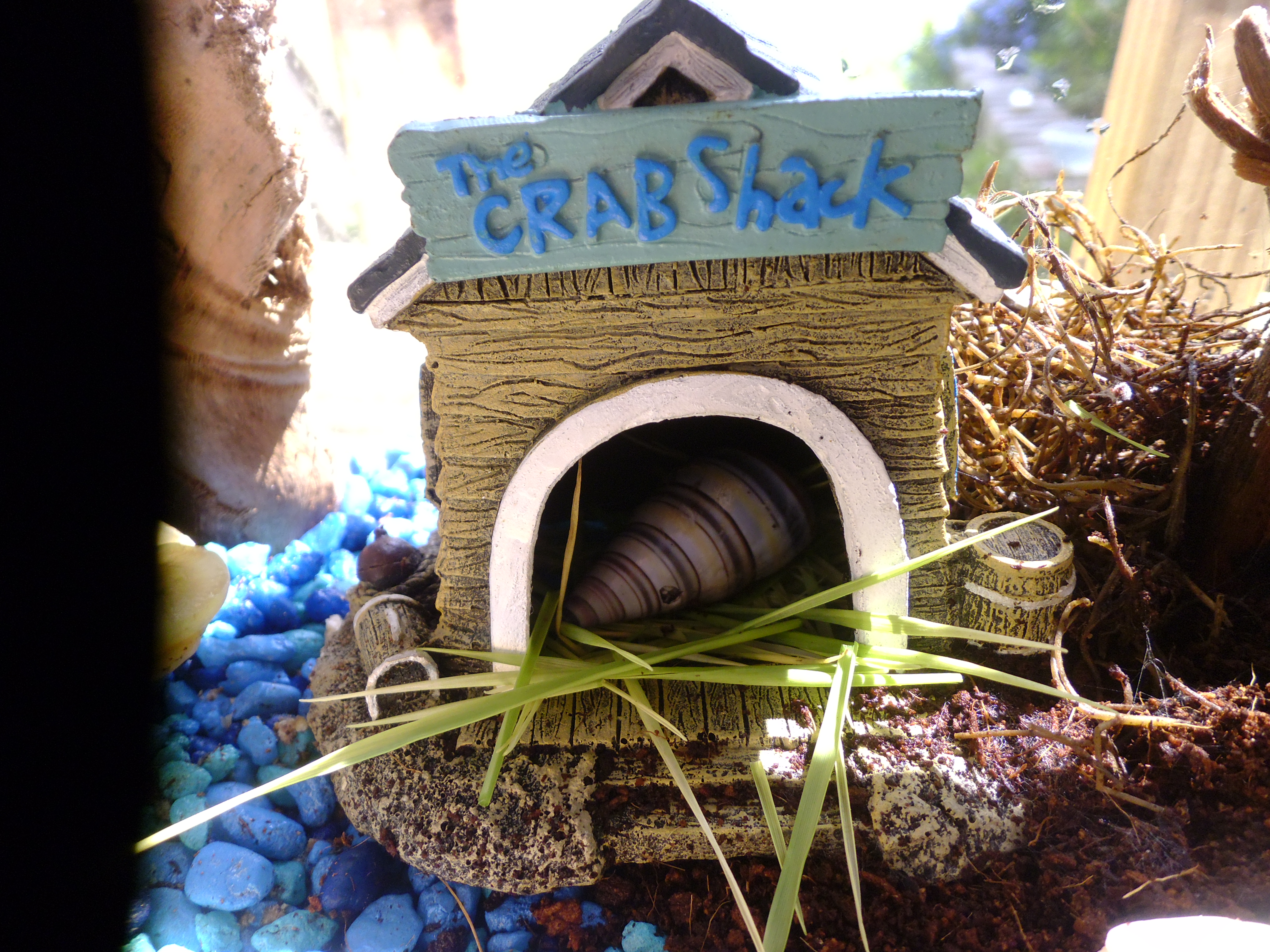 ‘t supposed to have gravel in the tank. They don’t like gravel. They like soil substrate. They like to bury themselves. Not just like, they NEED. Hermit crabs molt and to do so, you need 6 inches of soil for them to dive into. Also, they’re climbers. They want tree limbs. Also, each crab needs its own hiding place, so one crab shack won’t cut it. They want to live together but need their own bedrooms. Who knew?
Also, they need a fresh water pool and a salt water pool. So you need two kinds of water conditioners. And two kinds of pools. And a mister to keep their climate humid enough because they have evolved gills – they can’t breathe in dry air.
By this time, I lost track of itemizing – but one trip to PetCo later and I’d spent another $70 or so. While I was there, I also bought a wheat-germ plant that they had for sale for cats, but is actually good for crabs, which the workers didn’t know, I had just discovered this in all my internet surfing and wild book reading at the library.
I still need a heater, but I can’t afford one at the moment. We’re in Texas, so I set the tank outside if I think they’re getting too cold – but come winter, these guys are having another $50-$100 spent on them.
On the plus side: I think they’ll live. In captivity – because we con people into $25 habitats that slowly kill the crab – they live 3 months to 3 years. In the wild, they live up to 30 years. We’re shooting for a longer lifespan here. We’re also using this as an educational project… we’re building an ecosystem. Soon, we’ll add rolly pollies (they help keep the terrarium clean and co-habitate well with the hermies… again, who knew?)

(Additional notes: hermit crabs can eat from your kitchen and like a wide variety of things in their diet that include meat, vegetables, and fruits. We have begun a notebook compiling these lists. One of ours has already changed shells twice – because he’s indecisive, not because he’s growing so much – and apparently this is common so it’s good to have not just one or two shells but a wide variety of empties at their disposal.)
Spike and Spanish
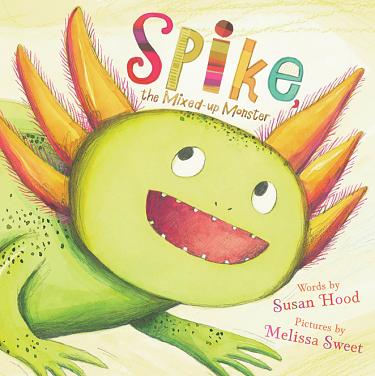 Title: Spike, The Mixed-Up Monster
Author: Susan Hood
Illustrator: Melissa Sweet
Genre: Picture Book
Ay, caramba!, we just read this before bed this evening and we love it! First off, I’m a sucker for an axolotl. I discovered them about two years ago when an avid reddit surfer sent me some images they had found. Strange but cute creatures are kind of our thing, and an axolotl definitely fits the bill.
I remember thinking there should be a picture book about them. I love kids picture books featuring the odd ducks of the planet and offer educational value at the end of the story. I have tons of them lined up in my head that I haven’t written yet. My favorite thing about Hood’s book is that she incorporates Spanish words through out the story and the last few pages include research about the creatures who made an appearance. There’s so much educational value to this book and I can’t wait to own a copy. (We read from a library book.)
Referred to as a water-monster by the Aztecs, I was introduced to these tiny creatures as Mexican Walking Fish. Either way, they are super cute, come in all different colors, and if ever there was an animal worthy of a picture book it would be this one.
I absolutely adore Melissa Sweet’s illustrations. They are bright and spunky and the kiddo was riveted by each and every page. Sweet captured the essence of the story with care and finesse and I look forward to seeing more of her illustrations on picture books in the future.

Fibonacci
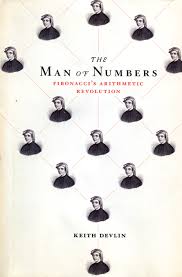 Title: The Man of Numbers
Author: Keith Devlin, PhD
Publisher: Walker & Company
Genre: Math History
Length: 183 pages
Swirl by Swirl – a child’s picture book – is where it started. We checked it out from the library once, then twice, and finally again and again. It’s about the Fibonacci sequence found in so many spirals in our natural world. We love it. Of course, it has a bit in the back about the Fibonacci sequence and the math involved, and that’s cool too, something to instill in young minds so that the re is familiarity with the topic before they begin Algebra in their tweens.
Of course, at some point I picked up The Pythagorean Theorem, and there Posamatier mentions Ptolemy and his great work The Algamest as well as Fibonacci’s Liber Abaci. Naturally, I requested these at my local library. “There’s a book about Fibonacci called The Man of Numbers that’s here if you want to read that while you wait for the others to come in,” she told me. Yes, yes, I would like to read that while I wait for the others.
I checked it out.
I ended up starting and finishing it, however, in one sitting while my kiddo made use of the sixty minute literacy computer session I allow her if she’s been good prior to coming to the library that day. It was good. Quick. Informative. And of course, just made me want Liber Abaci even more.
Devlin gives you all the necessary history in the concise nature of a mathematician. He even laments how most mathematicians are concerned about the math and the theorems and not necessarily who originally came up with them or their history, causing much of the history surrounding mathematical ideas to be lost or misconstrued. Who cares? It’s about the numbers.
I care. Historians care. We don’t care as much about the numbers as we do about the theory, the philosophy… we care about math’s heritage more than the practice of being all mathy. At least that’s how I feel. I’ll leave number crunching to my husband and daughter – I’ll just be able to tell them who came up with that particular way to crunch.
With all this caring comes the discovery that Fibonacci’s name wasn’t even Fibonacci. Devlin recounts the fact that the man’s name was Leonardo and he hailed from Pisa. Leonardo Pisano, as the people of that time and culture would say. But he referred to himself as fillies Boracic, “son of Bonacci.” Yet, his father’s name wasn’t Bonacci, so people assumed he meant that he was of the family Bonacci… the Bonacci family evolved and later historian Guillaume Libri coined the name Fibonacci. Hundreds of years later. Leonardo was renamed Fibonacci in 1838.
Fibonacci also referred himself as Leonardo Bigolli… a named once translated would be “Leonardo Blockhead.” Though, Devlin asserts, it’s doubtful that Fibonacci was calling himself a blockhead.
 That brings us to our latest picture book selection… Blockhead: the life of Fibonacci. This delightful picture book was written by Joseph D’Agnese and was illustrated by John O’Brien. Even though there’s a lot we don’t know about Fibonacci’s real life or how he came to discover his mathematical findings the way he did – it’s fun to imagine what his life was like and where he might have come up with his self-proclaimed nickname “Bigolli.”
For good measure, we re-read Swirl by Swirl afterward and are looking forward to memorizing a few things in the upcoming months.
The first is from Brahmagupta (quoted in Devlin’s book):
“A debt minus zero is a debt.
A fortune minus zero is a fortune.
Zero minus zero is a zero.
A debt subtracted from zero is a fortune.
A fortune subtracted from zero is a debt.
The product of zero multiplied by a debt or fortune is zero.”
The second are the first ten numbers in the Fibonacci sequence: 1, 1, 2, 3, 5, 8, 13, 21, 34, 55.
Springtime Means Seed Time
We are kind of in love with our librarians at this “new” library branch. We loved our librarians at the old house, don’t get me wrong, but these ones have definitely weaseled their way into our hearts. Case and point – there’s this adorable seasonal bin one of the children’s librarians puts together, and of course, we find the *best* things there.
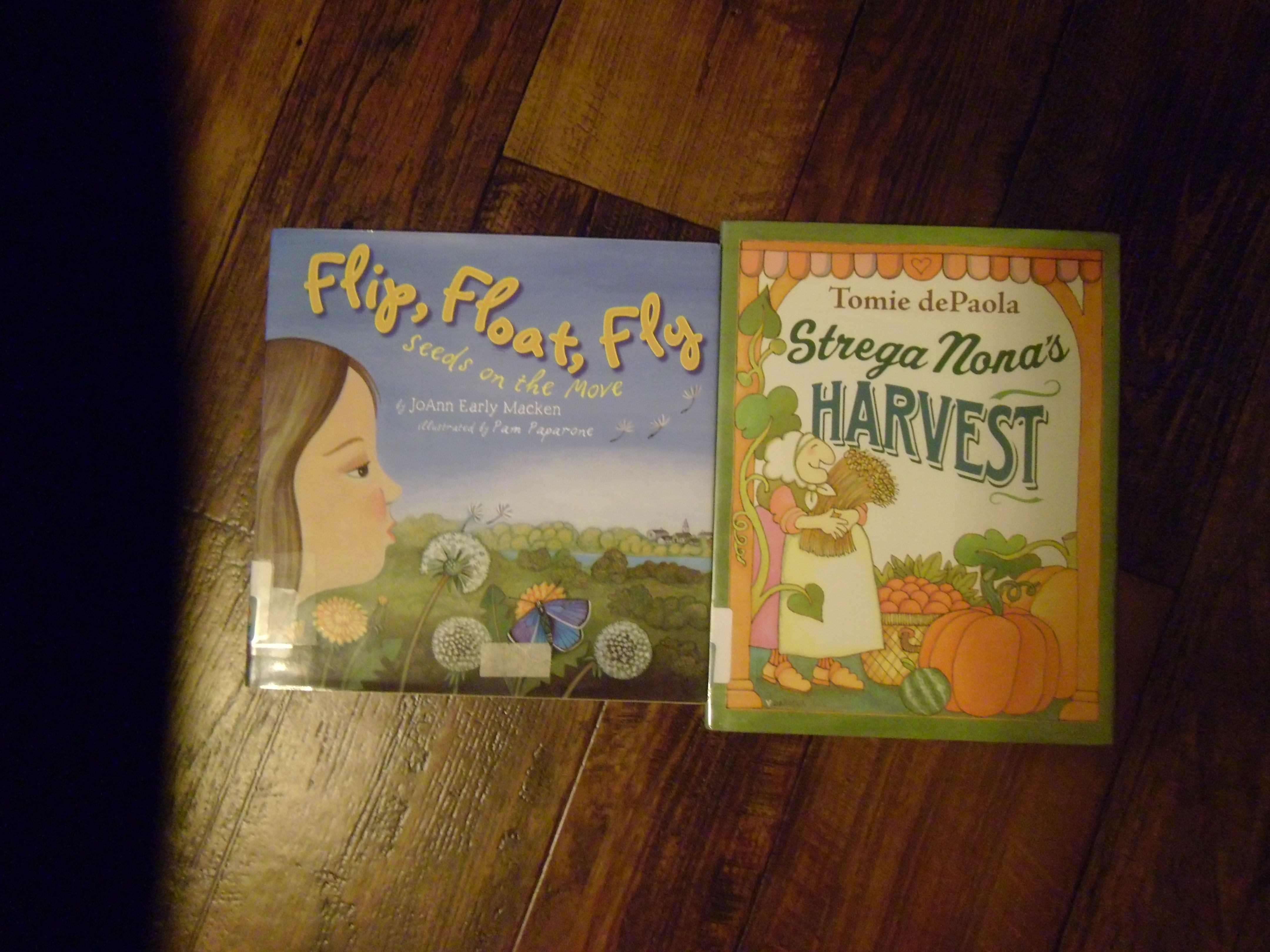 This week, it was Flip, Float, Fly
Of course, when we’re not reading and planting ourselves… we’re out and about playing in creeks and inspecting the forest.

Swirl By Swirl

Title: Swirl By Swirl
Authors: Beth Krommes & Joyce Sidman
Genre: Picture Book / Educational
We actually read this one quite a bit ago, I was hoping to review it when I finally got around to purchasing it, but I can’t wait any longer. It’s too wonderful to keep under wraps any longer and it has been an inspiration to my kiddo who now draws swirls and “round ups” into all her artwork.
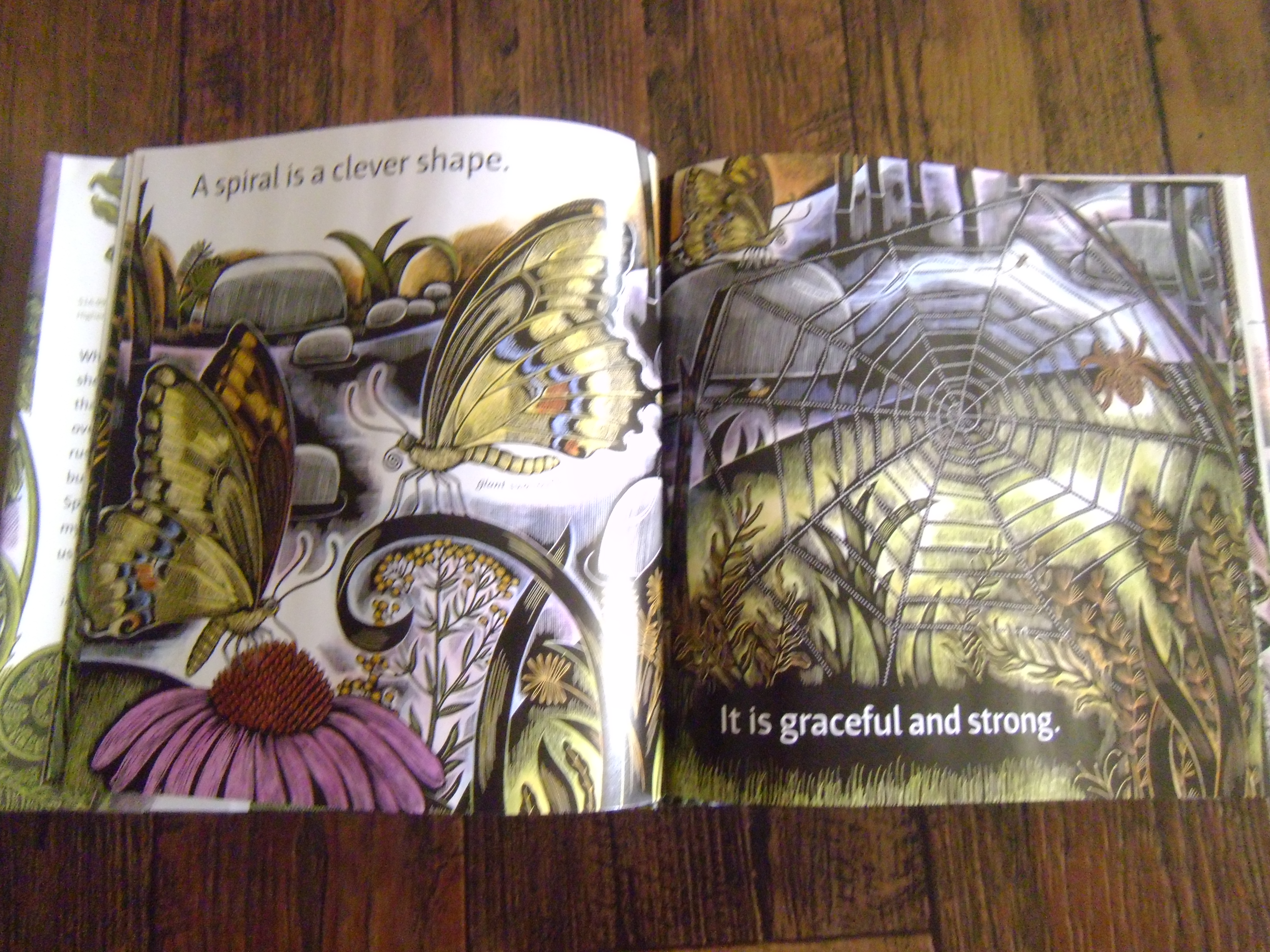
The book is all about finding math in nature. About how snails, flowers, and everything have mathematical patterns that create functional things we can see. It first page by page identifies all these things… spider webs, tendrils on foliage, the curls of animals’ tails, etc.
Then, it explains the how and why of it all.
Kiddo’s eye lit up at the end of the book every time (we had to read it over and over again before we turned it back into the library). My four year old’s mind was blown.
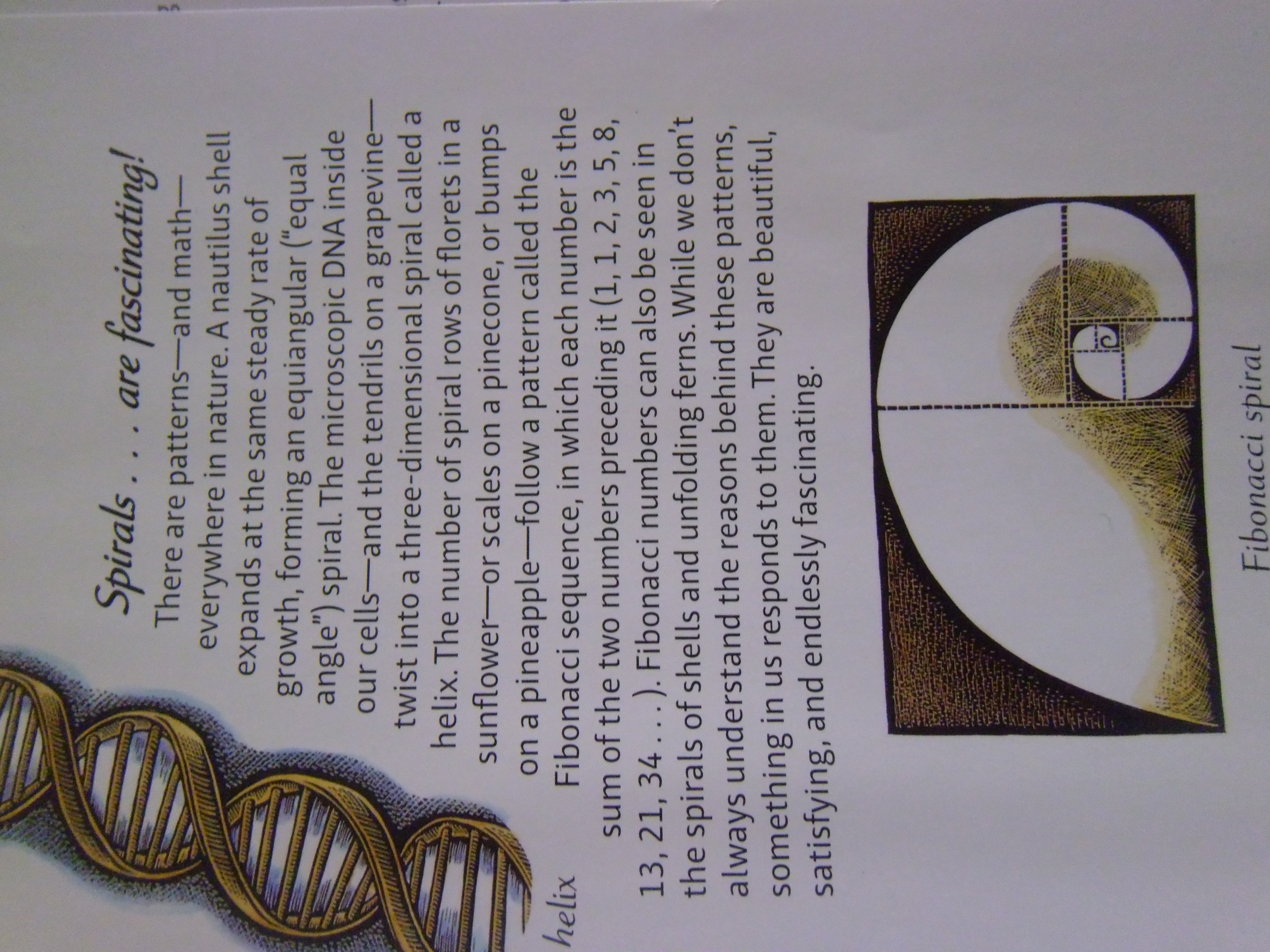 I want to have this book on hand when she’s older as well, to revisit and enjoy the beautiful illustrations again and again through out her studies. It’s so lovely.

A Boy Called Dickens
* A Weekly Low Down on Kids Books *
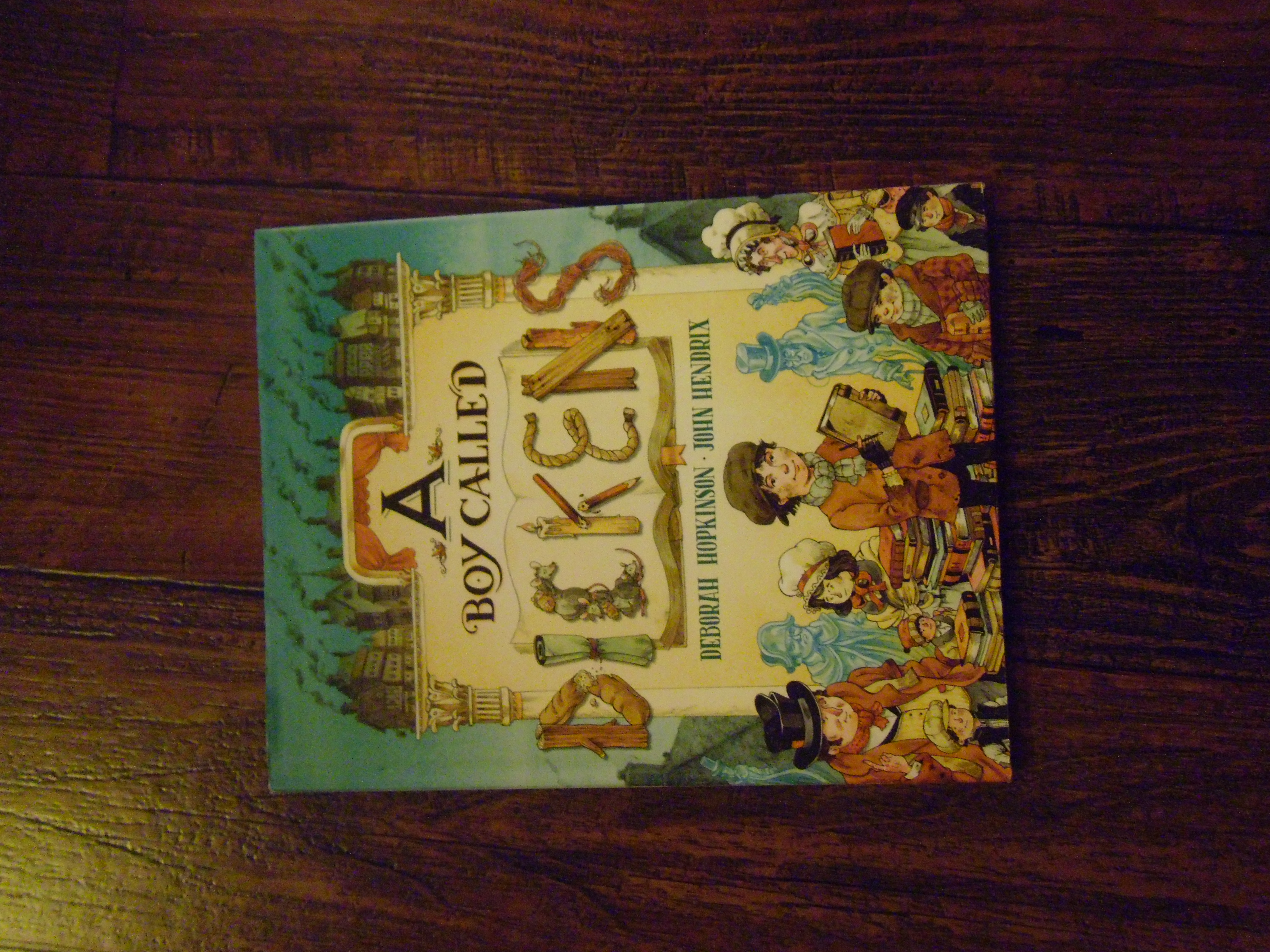 Title: A Boy Called Dickens
Author: Deborah Hopkinson
Illustrator: John Hendrix
As a homeschool family, we’re suckers for the educational picture book. Especially biographies.
A Boy Called Dickens tells the life of Charles Dickens. Obviously there are some creative liberties taken with Dickens’ boyhood thoughts and how he might have come to write certain stories, but that happens with any piece of biographical fiction.
As an adult Dickens fan, you recognize characters peeking around corners and haunting the boy’s subconscious as he works at the factory, tells stories to his friend, helps get his family out of debtor’s prison, and finally returns to school.
When I finished read the book, kiddo said, “Let’s read it again.”
I was out of breath from my strained fake British accent. I’m not an actress, but I like to make story time fun. It takes more effort than I’d care to admit. “No, I’m not reading it again right now.”
“Well, I think we should do the same thing with this one – let other kids read it!”
“You mean you recommend it?”
“Yes.” She gave it a literal thumbs up, with a tongue half sticking out the side of her mouth in thought.
Any biographical picture books you can find are great teaching tools, and you might as well fill them with as much information as you can while they’re sponges. History is easiest to remember as a tale, Dickens world and era becomes one you can touch and taste. Telling it from his boyhood makes it more relatable to a tiny one. Whether you’re a homeschool mom, or just someone who reads to your kids when you can, this book is a great resource; it’s colorful, factual, and engrossing.
(If you’re a seasonal reader, this one is perfectly wintery.)
Houston Pow Wow 2014
Already in the mere four years I’ve been a homeschool mom, with my child not even “school age,” homeschooling in general has proven to be as much an education for me as it is for her. When you homeschool, field trips feel imperative. Not only do you want your kid to interact in the world, but even the most extreme homebody, if not an agoraphobe, gets a touch of cabin fever now and again.
 In 2012, we discovered that Houston has an annual Pow Wow and attended. I documented that trip here. The kiddo loved it. We studied everything a two year old could “study” about Native Americans at that time and watched a lot of Pocahontas after the event. The culture, the dancing, the drums, the music, the food, I tried to dip my very pasty child in the whole experience. She came away desperately wanting an out fit just like the girl’s she took a picture with in my previous blog post (see left).
Life happened and we missed the 2013 gathering, though we do intend to attend every year.
 This year, though kiddo didn’t do much in the way of pre- Pow Wow “research,” I felt the need to grab a book. On my lunch breaks I’ve been perusing The Five Civilized Tribes
I’m not done reading, so a full review cannot commence. Currently, I’ve read through the Choctaw segment and now am knee deep in the Creeks. The book, however, is thorough and enjoyable though – as the Christian Science Monitor reported – “pure history, sober, and fully documented.” One would assume that it would read dry, but it’s not. Sober and dry should not be used interchangeably when speaking of history, but often it is. Especially when dealing with the history of the Native American Indian tribes. Their cultures are too colorful and their history too rich to ever be considered dry.
My favorite bit about the Choctaw is how thoroughly devoted to educating their children they were. Building school houses and hiring teachers was a huge deal for them. They built educational requests into their treaties. Although I don’t agree with institutionalizing, I do find it interesting how much they wanted to learn about those infiltrating their land. Some would say that it was an effort to assimilate, but I don’t think so. I think it was more of an effort to understand. Understanding and knowledge is important to me, though, so perhaps that is always how I will interpret those sorts of actions.
 We don’t speak with the competitors at the Pow Wows much. I’d like to know what tribes they are affiliated with, who their ancestors are, whether they live next door or on a reservation. I’d like to talk to them all, interview them all, watch them all more closely. But they are there for a competition and seem to be far more in the public eye than what could possibly be comfortable. Instead we politely nod, smile, purchase raffle tickets for Indian Blankets, donate money to musicians, and try not to take too many invasive pictures of the dancers. Instead, my child makes friends with their children for the day and blows bubbles, and desperately contains herself from touching their bead work and feathers, lest a fiercely intense father of a playmate scowl at all his hard work being undone.
The event is beautiful. It’s all so beautiful.
Today, however, it was rainy and cold. The Pow Wow had to be moved from the arena to a pavilion. The show must go on, though, rain or shine, and despite the cold and the wet, they danced, and they were brilliant and kind. Kind – even when my daughter said quite boldly during their prayer time, “But Indians DON’T PRAY!” I promise I didn’t teach her that. I popped her little butt and said, “Everyone prays, now bow your head.”

Literacy and Education
Every day I read. And since having a child, every book I read is filtered through a mental checklist of sorts: Would this be useful to Kiddo? How would I feel about her reading this? What age is this appropriate for? How can we apply tools, principles, morals, themes, etc. that we learn from reading this to our lives?
Does this mean she’s the center of my universe and I do it all for her? No. I read for myself. It might not seem like it when I’m making lessons plans, blogging reviews with Amazon affiliate purchase links (every time YOU buy a book by clicking the link from my site, a portion of that money is used as much needed income – thank you), posting about bookstore events, etc. But I do so much of it for me it verges on selfishness. This is my vice, my hobby, my job, my world. I am a book fiend and somehow I have made that work for me on as many fronts as possible.
But even with all that self-serving book binging going on, determining how my reading material could mold the mind of my child – whether directly or indirectly – is a constant subplot to my life story.
If I weren’t homeschooling, would I have been interested in titles like Why School?
I laughed at myself several times this week. By the time I’m done raising my daughter I could have a PhD in education, going by my thirst for educational theory. However, it’s not even remotely close to what I desire to earn a PhD in. Is every parent required to study this hard? No. Is it necessary to do all this leg work to be a homeschool mom? Absolutely not. You are qualified to teach your child just by virtue of being their parent and longing to make a priority of their spiritual, educational, and physical growth, of viewing your parent-child relationship as something worthy of being tackled with excitement and care. But for those naturally driven to research and reading, for those who have undeniably lofty ideas regarding the swoon of academia, for those who possibly have an unhealthy love for pens and paper, stacks and shelves, mahogany and oak, for those people it’s a little hard not to fall “victim” to the pull of differing philosophies regarding your life choice to teach your child yourself. (God help me when it comes to instructing her on the laws of grammar as I’ve never quite mastered getting over run on sentences, they are my favorite grammatical mistake. Those, and sentence fragments, I suppose.)
 Why School? is a diminutive sized hardback with a picture of an old one room schoolhouse on the front. Behind the schoolhouse – identical to what I long to build on my future homestead, although much larger I’m sure – is a vast sky of blue inviting you to all the possibilities contemplation and the school of thought might have to offer you. The book begins with a tale about a janitor who had suffered some brain damaged, but chose to work at a community college to be around “where it happens” and to have access to materials he could study and/or take home to his daughter. It was a beautiful tale regarding academia and how it is viewed from different sets of eyes. Most people see it as a mandatory road map in life, one they can’t get out of. Some see it as a golden ticket to the land of opportunity. Few actually see it for what it is meant to be: a place to learn.
The author, Mike Rose, talks about many things regarding school and college and life. He discusses blue collar life vs. white collar life. He addresses a few political issues, some I agree with and some I don’t. But one thing is clear: he is passionate about learning. He is passionate about education. Rose’s goal is to make others aware of the importance of developing the mind and taking charge of what we put in it, whether it be tools and life skills or book facts.
“We live in a time of much talk about intelligence. Yet we operate with a fairly restricted notion of what that term means, one identified with the verbal and quantitative measures of the schoolhouse and the IQ test. As the culture of testing we live in helps define achievement and the goals of schooling, it also has an effect on the way we think about ability.” – pg. 73
I loved that part. I loved how he addressed the parts of the brain used by those who work with their hands. My husband works with his hands, he is a millwright. More than anything, I want to balance my child’s developmental education with things both her parents are passionate about. I want her to continue to love books, but I want to allow her to be passionate about building things (the girl is a master tower builder when it comes to legos and VHS tapes). So much creative energy is dismissed when people look at their mechanic or a machinist. People do not understand how even your diner waitress is the Queen of her domain, has mastered brain patterns you cannot fathom, and has an internal clock and rhythm you could not duplicate without years of practice and training. I understood this example Rose provided well, having waited tables just long enough to say I learned to do it the best I ever could and could not do it forever. (I was a good server, well-liked by most my customers, but I was no Wanda.)
 I read chapters of Rose’s book in between dives into Adolescent Literacy Research and Practice. Where Rose is quaint and inspiring, though thoughtful and well-spoken, Adolescent Lit. is all academic essays, lengthy work cited pages, references to studies and schools of thought. The book is written by public school educators for public school educators, but one would be remiss if they didn’t hear the constant hum of “Homeschooling is the answer” to nearly every issue they address. The writers would laugh, I think, as there is an entire section dedicated to how people tend to read things and find support for their own arguments and core beliefs even where there may be none.
Timothy and Cynthia Shanahan were the contributors I enjoyed reading the most. They talked in great detail about what literacy is truly about, what being able to write is for, and how important it is in the education process to not confuse its purpose. Literacy and developing good writing habits are at the core of understanding any subject – not just literature – but math, science, and history as well. Writing isn’t merely about communicating what you have learned, but a process of diving deeper into a subject and gleaning a more thorough understanding of it. Not just about memorizing facts and regurgitating, but thinking about what those facts mean to you and how that may or may not affect your world view. It is about engaging the brain and coming up with new thoughts about old concepts. It is about developing theories from research. It is about invention and progress. It isn’t just about basic comprehension, it’s about eventual enlightenment on any given subject.
Several essayists in the book discuss the issue of the misconception that writing is only for the literature major and how there is only one way to read. There is great detail on how the practices for reading a science text cannot be considered the same as those to read classic fiction. So many do not address this, which is why we have children in our schools reading their chemistry and physics homework, plodding their way through formulas, but they haven’t internalized it. They only barely understand, it’s passion-less math or vague theories… whereas teaching these same kids how to read their science text (and giving them more than just standard textbooks, but also journals produced by scientists and articles from the professional world) will bridge the gap between the information and the passion to do something with that information. Not everyone is Einstein, but we are not raising independent thinkers with a drive to feed their brains. We are raising frustrated honey bees who have been deprived of pollen, and by doing such a thing they become useless drones who produce nothing.
I say this screams “homeschool is the solution” to me because the essence of the discussion in the book is teach a child to read for each appropriate discipline and you give them the world. You teach them how to teach themselves. You teach them how to use their brains and be studious and good stewards of their minds. Not for the sake of a grade, not for an award or blessing, but for the act of embracing the knowledge itself. We are driven by standardized tests – and I get it, how else do you assess where a child is when you must maintain some semblance of order while still addressing the needs of 30 students at a time. How else do you sort them out and provide the best education possible? If you can, you teach them at home. Smaller classrooms, a personal relationship, true observing of where that child is developmentally and how you can aid them on the path to true literacy. In Texas a homeschool is considered a private school run out of the home. If there was nothing I liked about Texas (and I love Texas, but if I didn’t), this fact alone would keep me here as long as possible.
There’s also a thing called Unschooling that I’m finding more and more I lean to (I am combining classical education and unschooling education styles in my “private school” that is the Klemm home). Unschooling is child driven. You pursue their interests with a passion when they have them. You learn what you can while they are motivated to learn it. Every moment is a possible classroom moment. The other day we researched praying mantises after discovering one in the garden we were weeding. Kiddo was so excited and immediately went to her bug book and found a picture of one, thrilled to see something in the book that she had just seen in real life. Well that’s easy when they’re in pre-school, people like to say. Yes, it is. But it can continue to be that way as they get older.
“Reading classrooms at the secondary school level typically tend to minimize student choice (Guthrie & Davis, 2003). However, giving students opportunities to ‘self-rule’ and ‘self-determine’ can make learning more personally meaningful and intrinsically motivating (Deci & Ryan, 1985, Deci, Vallerand, Pelletier, 1991; Ryan & Powelson, 1991).” – pg. 286
What do you think?
Welcome to PreSchool at “Klemm University”
Teach Your Child to Read Outside and Play – A Lot
It’s been awhile since I shared a bit from our homeschooling adventures. Since my last homeschooling post, we purchased Teach Your Child to Read in 100 Easy Lessons and have progressed to Lesson 9. We’ve taken Poet Laureate and Professor Mark Strand’s advice about memorizing 1500 lines of poetry and memorized the first four verses of Psalm 1, with the intent of memorizing a verse a week until we know the whole book by heart (no, I did not do the math on this and I have no idea how long it will take – I think the less I know in this regard the better). We’ve moved, and have done a lot of exploring our new school-site – via bubble blowing. We’ve learned to play Checkers (pretty exciting for an almost four year old), and we’re tackling bead projects.
Drawing Dinosaurs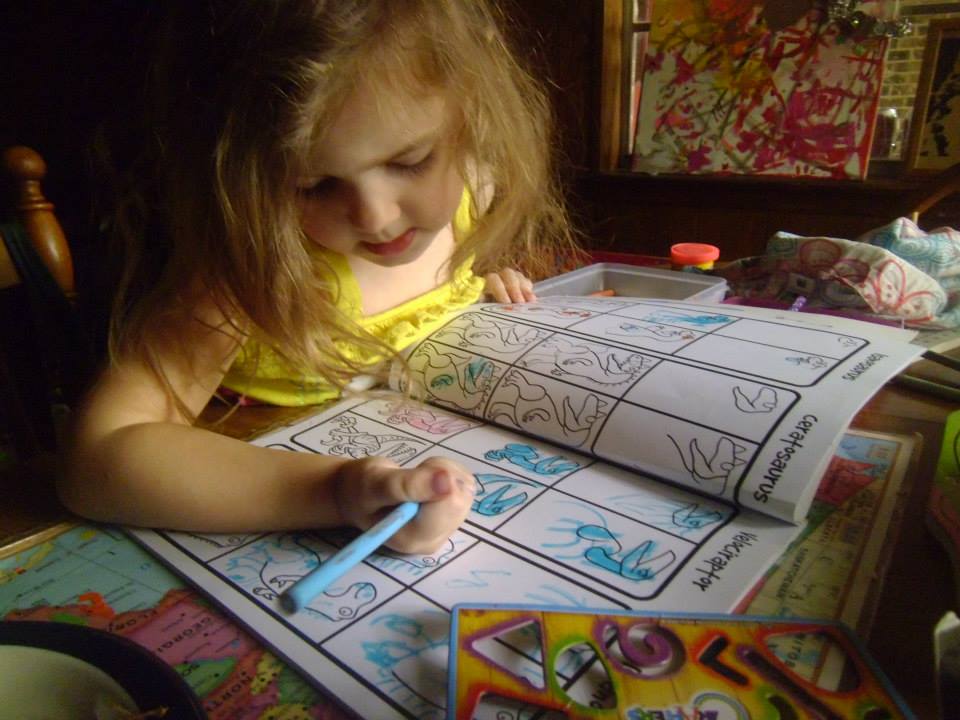
She got this cool dinosaur coloring book awhile back, but has really taken to it in the last few months. The book teaches your kid how to draw properly named dinosaurs step by step. Whether you’re a die hard dinosaur believer, or a skeptic to their existence, all kids love dinosaurs – they’re just so cool!
Activity books like these teach kids to follow step by step instructions, help with dexterity and handling writing utensils, and keep them busy for thirty minutes to an hour at a time. Win, win for everyone.
Moving and Acoustics
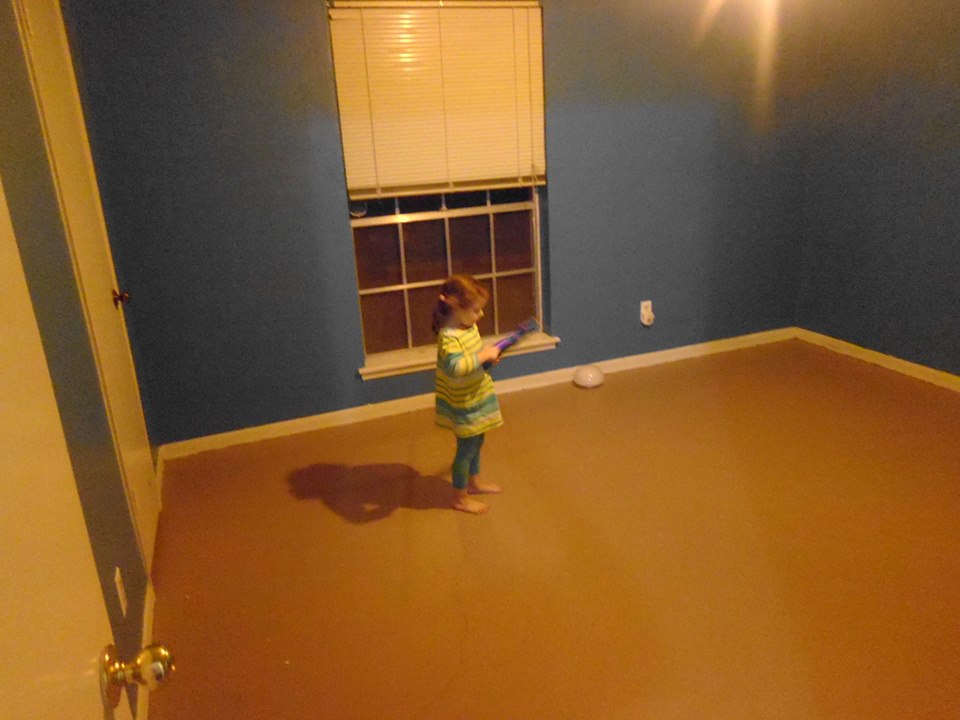 The great thing about moving with a small child is teaching your kid the art of donation from a young age. What we don’t need anymore, we’ve been donating. For a kid who has outgrown those things, it’s time consuming, but giving them the knowledge and opportunity to come to conclusions about their own belongings is an eye-opening experience. I haven’t forced her to get rid of anything, and I’m overjoyed to have so many moments when my kiddo comes to me and says, “Mama, I don’t need this anymore. We can give this to another kid.” And off to Goodwill we go. (At our garage sales she selected things to sell and was quite the little negotiator. She made about $5 off old toys other kids carried off and put that money right in her piggy bank. Now, she keeps telling me she has plenty of money for Chick-fi-la…)
On top of all that, every kid should get a chance to stand in an empty room and shout at the top of their lungs. (Or spin in circles singing All Around the Mulberry Bush while shooting a soft dart gun…)
 Teach Your Child to Read in 100 Easy Lessons
This book came highly recommended by my sister who has taught 5 kids to read (not including myself when I was 4) and has 2 more that are on their way to starting lessons. The above link is for Amazon.com, but I actually purchased my copy from hpbmarketplace.com.
Teach Your Child to Read goes straight into the phonics and skips the step of learning what a letter is called. My kid could already identify all her letters and knew most of her phonics, but she’s enjoying diving right into the decoding process by seeing an “m” and knowing to say “Mmmmm.” We’re only on Lesson 9 and she can already read words like “mat” and “sat,” “am” and “Me” just by sounding them out. These beginning lessons do not teach sight words but sounding out and decoding a word even if it means you don’t understand the word right away. I like this because it allows a child to read outside their vocabulary and have the tools to learn new words.
We do the rhyming and say it fast/ say it slow exercises while outside playing bubbles:
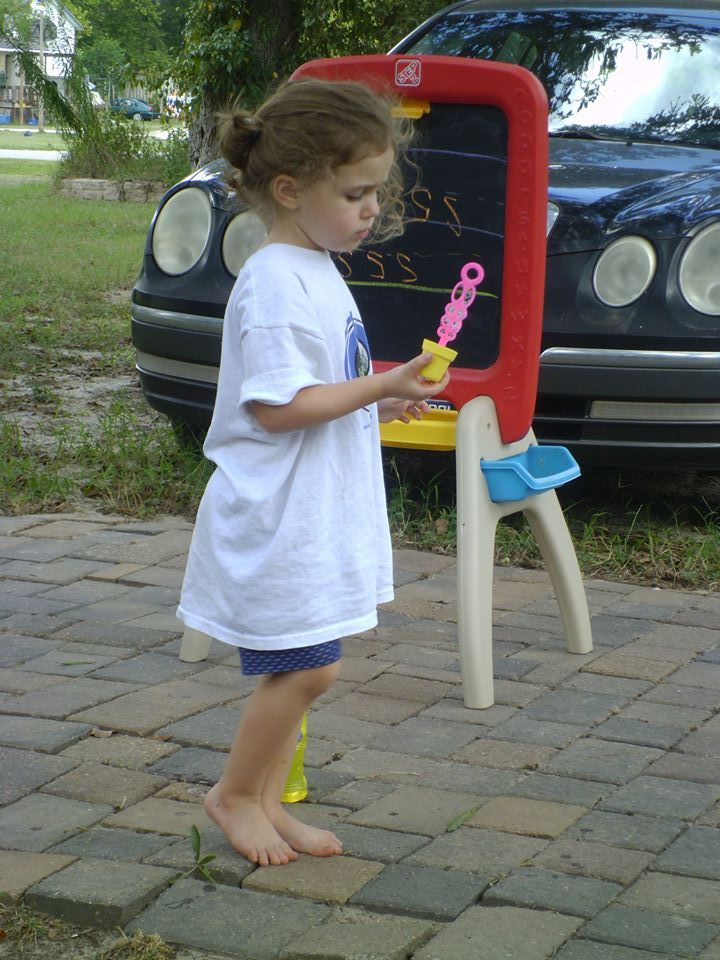
Here, she’s not just practicing the “sssss” sound (and writing it, look at the chalkboard behind her), she’s also blowing some stellar bubbles while sporting a Seed Savers t-shirt, compliments of S. Smith, author of the series. Kiddo adores Sandy and the shirt she gave her.
Beads and Dexterity
No preschool program is complete without crafts!
While moving I rediscovered some craft supplies from my own childhood. I thought about donating these as well, but kiddo begged to do a bead project and I determined that these were worth saving. The star was her first try, it took about an hour to complete; so if your preschooler doesn’t quite have the patience and attention span, be prepared to split a project like this into two sessions.
 Check out Klemm University for more frequent updates. We are an online homeschool group based in Texas and would love for other homeschool moms, teachers, and general citizens to pipe in with ideas for keeping our educational journey more exciting, diverse, and thorough. Come join the conversations!
Life Lessons in Paint
Homeschool ing is a little more than having a lot of books at your disposal. Not much more, mind you, because books can answer all life’s questions – but still there’s a little bit more.
Our version of more involves a lot of art supplies. I wait for great sales, sometimes I even buy used canvases for next to nothing at Goodwill and garage sales and whitewash them, I’ve even been known to pull canvases out of trash cans. I’m that mom. One way or another I want to get art supplies into my daughter’s hands, and not the “kid” version s – I want her to have real paint, real brushes, and real canvases to work with.
At Christmas we requested that in lieu of toys and other items that will end up donated when she outgrows them or trashed when they are obliterated from use, to gift her art supplies instead. We’re not depriving her for the sake of enrichment, I assure you. I believe free play is essential and important. The girl gets tons of toys on her birthday and throughout the year and has mountains of them. Does she need mountains of them? No. Will we use the art supplies? Oh yes.
Thus began our friends and family slowly jumping on board with how we handle our week, our budget, and our holiday requests. As my daughter started to produce piece after piece (some not shown as they were gifted away prior to me thinking out documenting them)…

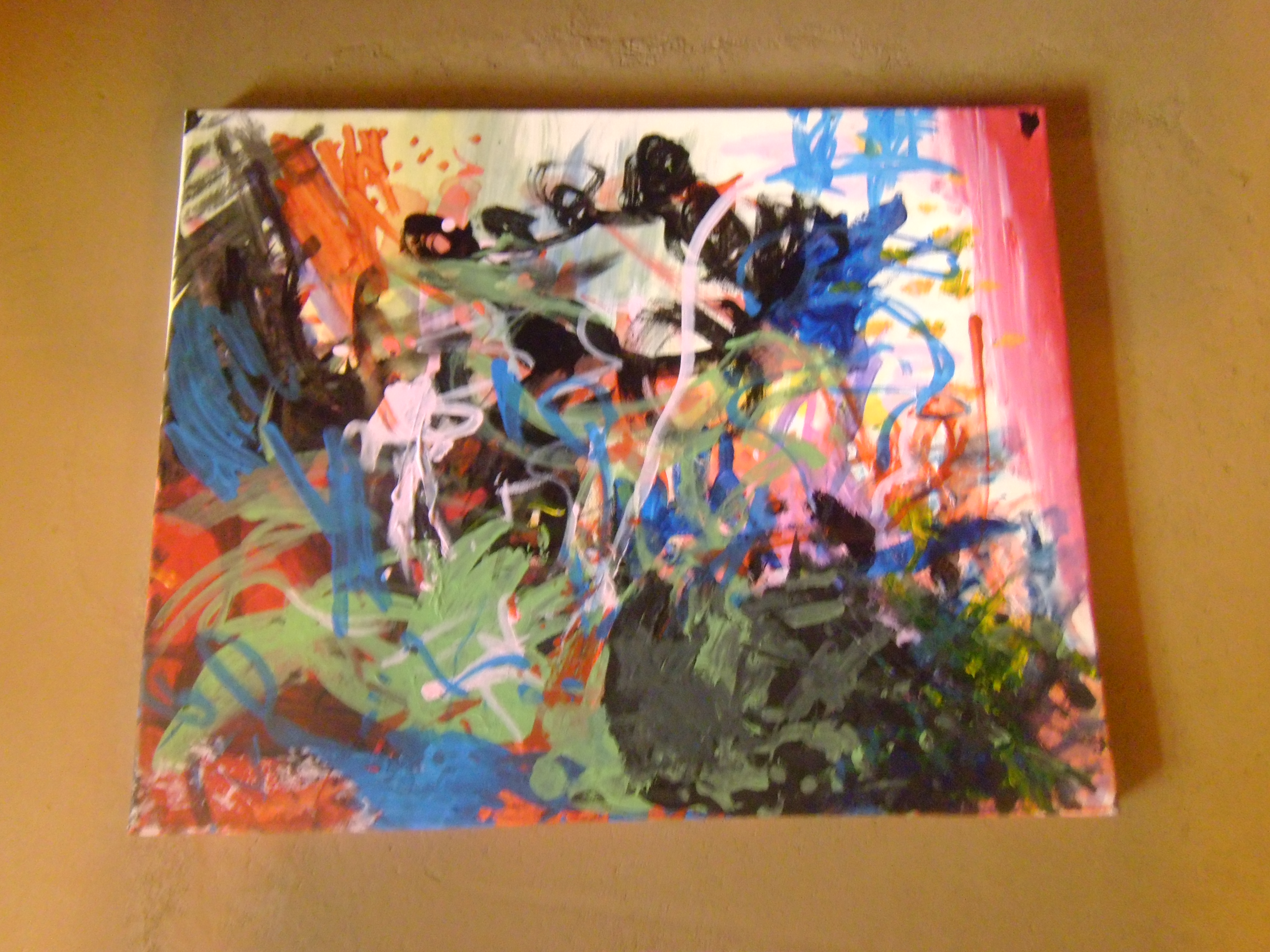
She chooses her own colors, even mixes them if she has to and decides which brush she wants to use at any given moment.  Each piece is entirely her own and we even discuss what she wants to name each one.
Pursuing art in this fashion is a daily exercise in understanding the scientific side of color (what it takes to make a color), as in the beginning we started only with primary colors, though we have been gifted additional ones. She is learning about texture, movement, and how to convey emotion.
In addition to that, she understands saving and budgeting for things she wants. How to prioritize certain desires: sometimes she uses birthday money for books, sometimes for toys, and sometimes for her own art supplies. (Even more often, she opts to put it in the piggy bank or fund an extra trip to Chick-fila.)
It also brings the books we study to life.
Since birth, I have made a point to introduce her to as many of the Getting to Know the World’s Artists
We read through The Metropolitan Museum of Art’s “Monet’s Impressions: Words and Pictures by Claude Monet” all the time. She seems to like the Impressionists a lot.
Which kick started our trips to the lake, taking paints and canvases to paint outdoors like they discuss in one of our favorite art books:
Picture This!
We also have a book on Frida, called “Frida Maria: A Story of the Old Southwest” by Deborah Nourse Lattimore, because all art forms are welcome in our house, as well as every bit of history we can find.
Which is why we also picked up a copy of “Leonardo: Beautiful Dreamer” by Robert Byrd at the library. We’ve been reading a few pages of that every day and I could not be more pleased with a picture book.
More than anything in this adventure through motherhood and homeschooling, I’m realizing that so much of ‘homeschooling’ has very little to do with what I know or what I can teach – it’s about granting access to where the knowledge is. It’s about handing her the tools and giving her the freedom to figure it out, to learn, and discover. So many times people argue that homeschooling stunts children to only learn what their parents know, when in reality it is quite the opposite. When they have so much free time, under a little nudge here and some pointers there, children are much more likely to learn to learn for themselves. A parent’s job, a teacher’s job, is to provide the tools for them to do that.
I didn’t think these things from the get go. I merely picked up books that caught my attention. I got her the art supplies initially because I had taken art in high school and my sister has always had natural talent with a sketchbook. I wanted my kid to get these things in her hands sooner rather than later because I had a lot of anxiety regarding art supplies – I was afraid to be freely creative because I feared being wasteful with something considered semi-precious. But over the last year and a half of actively putting these supplies in my kid’s hands, I have shaped a philosophy.
Here is a canvas, here is a paintbrush, here are some paints, here are a few books that show you the glorious nature of art throughout history – suddenly, you have a child who is beginning to understand history, humanity, science, and the world at large. Imagine the implications when I give her the tools to language and math. The sky is the limit and the list of people who learned to think through information on their own become the inspiration: Einstein, Curie, Alcott, Da Vinci…






 Anakalian Whims