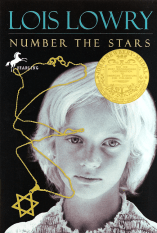
 Title: Number the Stars
Author: Lois Lowry
Genre: Young Adult
I have been a long-time fan of Lois Lowry from my wonderful experience with The Giver in the sixth grade. At that time I was completely in love with all things dystopian society. Ironically, when I wasn’t reading dystopian society literature (Invitation to the Game will always hold a special place in my heart), I was devouring all things holocaust. An all-time favorite World War II book being Corrie Ten Boom’s The Hiding Place. So how did I miss out on Number the Stars, a holocaust novel written by my favorite dystopian society young adult novelist? I don’t know. But if you also suffer from this mishap – please do yourself a favor and remedy the situation, no matter how old you are.
What I love most about reading this as an adult is that the book is set in Denmark, and King Christian X plays a role in the landscaping of the novel. I missed out on learning any details about King Christian X during my World War II studies in school, so I pretty much knew next to nothing about him prior to this novel. Not that there is a lot to learn about him in the pages of Number the Stars, but definitely enough to make me want to go pick up a biography on him the first chance I get. The little tidbit in the novel about how he rode the streets of Denmark on his trusty horse, Jubilee, every morning and greeted his subjects is so endearing and immediately peaks my interest. The story Lowry includes about the little boy and the Nazi soldier… ‘Where are his bodyguards?’ asked the Nazi. ‘All of Denmark are his bodyguards,’ the boy responded. Brilliant deviance and loyalty! Did this really happen or is this a bit of fiction Lowry put into her tale? Either way, I like it! Still, I mean to find out the answer!
I’ve decided this wonderful piece of literature will not be lost on the kiddo. The beauty of homeschooling is having the ability to choose the absolute must-reads for her education. The beauty of a classical education is being able to have age appropriate reading material for everything that is meant to be learned. No missing out on any particular piece of literature because it hits the wrong age group when you’re studying any particular topic. Number the Stars has been added to the list; and yes, there really is a list. (It’s never too soon to start writing curriculum!) The other beauty of homeschooling is that as a parent your education is never quite done either. There will always be something to read – something to study – to make sure I don’t miss a beat while schooling the kiddo.
For more about the occupation of Denmark and the nation’s amazing effort (and success!) in saving their Jewish population during the war, visit this site: http://www.auschwitz.dk/Denmark.htm
A Book I mean to check out:


Permalink
Leave a Comment
 Old MacDonald’s Farm – Humble
… Is such a great place to take kids. Ayla has a blast just running in any place that has vast, open spaces. Add farm animals and swing sets, and you just can’t go wrong. It’s only $8 a person to get in, so even if you’re not one of those cool people with coupons (like me), it’s pretty cheap if you only have one kid. The baby goats were easily kiddo’s favorite as they were about the size of a one year old beagle, you know before the hounds get fatter, so they were easy to maneuver around. Although we didn’t use these particular things, because we were only there for about an hour, there’s a swimming pool and pony rides too. The most gratifying part for me, as both a mom and a reader, was when she was able to identify the pigs, having seen them previously in her Gossie & Friends books.
Woodlands Waterway & Park

> Kiddo making friends with Guitar playing strangers; these two lovely people were incredibly sweet considering my daughter totally invaded their date night.
Find a parking spot, buy your picnic food at HEB (which is right there), and head on over to the park. Again, the kiddo loves having vast, open places to run and play, and apparently everyone is willing to share balls and frisbees with a toddler. Good thing too, because I think she may have stolen them otherwise. What’s great about hanging out here, I discovered thanks to my bestie, is that you can pretty much hear any concert being held at Cynthia Woods Mitchell Pavilion for free. This is great for families with small kids and poor students because you can pop in for a bit, not feel obligated to stick around for the whole thing, but still hear a great show. Artists will sell demo cds (for donation only, of course) and the hipsters sit around and play their guitars while dads throw footballs with their kids. It’s great. There was a lady there this evening at the Jason Mraz and Christina Perri non-show that had citronella candles and bottles of wine, made me incredibly jealous, she was so cozy and prepared.
Meteor Shower
I’d write about our meteor shower adventure last night, but really we just did even more running in fields and caught a few really low flying airplanes that kiddo thought was pretty cool. We sang Twinkle Twinkle Little Star and pointed out stars, and that was it.
Permalink
2 Comments
 Title: The Planets
Author: Dava Sobel
I’m impressed with how accessible Dava Sobel has made Astronomy. As a New York Times journalist, she brings all the important information to the table. As a writer, she’s a story teller of the highest degree. Beautiful, fluid, and full of all the ancient romance of the stars, The Planets is full of history, poetry, and all the most relevant of scientific discoveries. Sobel’s work is not only a pleasurable read, but the dream-find for a homeschooling mom intent on classically educating her child.
With Sobel’s newspaper background, the book is very readable; a proficient sixth grader shouldn’t have a problem with it. I plan to use this for my child’s eleven year old Astronomy lessons, along with a middle grade level study of Ancient History, as Sobel has filled the book with quotes from or about many of the Greats. “Pythagoras believed the cosmic order obeyed the same mathematical rules and proportions as the tones on the musical scale,” (pg. 163.) introduces an entire chapter dedicated to man’s fascination with the planets and how that has been celebrated through the centuries through the art of music.
Always presented to me in school as a pitiable underdog, small and petite, Pluto was my favorite planet. Even more so when it was first threatened by the idea of being stripped of its planetary status, I became indignant, an uneducated supporter of allowing it keep its rank in the sky and in our textbooks. Like an older sibling protecting a small child, I felt like it was a personal attack to say Pluto wasn’t really a planet. I was angered that someone had decided to take back all I had been taught and strip this little planet of a description I thought it had earned. After reading Sobel’s explanation of Pluto’s discovery, history and status and then a chapter on Uranus, I think I may be sold on the reasons why Pluto title as the 9th planet is threatened and that Uranus is actually my new favorite. So heavily tied to the literary works of Shakespeare in name and attitude with such a unique history, my new knowledge of Uranus now pales my previous love for Pluto – a childish emotion of elementary proportions, tied to an association with the Disney dog.
I have other books by Sobel lurking around in my library, and I can’t wait to dive into those when I’ve exhausted this particular topic. I look forward to reading Longitude and see if she attacks the subject of geography with the same fervor as she did Astronomy.
Permalink
Leave a Comment

Best Gift Ever
When starting my day, I almost always flick on the switch to the radio and set my mood. There’s cooking breakfast music, dancing music, workout music, sex music… there’s music you write to, music you relax to, music you mow the lawn or party to, there’s I’m working on the car music, there’s its raining outside music… and of course, every book lover has their favorite reading music.
Lately, my favorite reading music has been Andreas Vollenweider‘s Cosmopoly album. As a child of the 80’s and 90’s, I still listen to most my music on cassette and cd, and some all time favorites are still on vinyl. So, even though I love making playlists on my computer, I’m a big fan of purchasing cd’s and have yet to invest in an ipod or whatever is the new greatest way to listen to stuff. This particular purchase was a fabulous $3.00 item from a clearance sidewalk sale at my favorite Half Price Books store about a year ago.
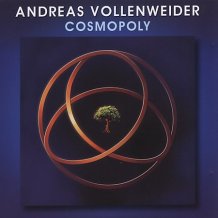 While listening to the calm, but not sleepy, tunes of Vollenweider’s many instruments, his work suits both jazz and classical moods, and I’ve found it to be a perfect companion to Ayla’s school time. School time is quite short, as she’s only a year and a half. But while she masters holding a writing utensil and hanging out at the kitchen table while snacking on cheerios, I’ve been reading segments of Susan Wise Bauer‘s History of the Ancient World to her each morning. I know, its silly, but I feel so much more cultured when listening to World Music while reading World History. (We also throw in a story from the children’s bible if she’s being extra focused that day, its got more interesting pictures for a toddler.) When she’s had enough of sitting still, we put her work away for later, I hang out on the couch and continue my reading and she has a dance marathon in the living room. Its kind of our thing, and Vollenweider manages to be both soothing enough for me to read and peppy enough for Ayla to go all Flashdance and Footloose with the dogs.

from Eric Carle’s The Very Quiet Cricket, features great reading noise for baby at the end of the book
After Ayla goes to bed at night, I usually read while my husband watches TedTalks on Netflix. After he falls asleep, though, the music I read to is a little bit different. Its the music of a quiet house. My tea pot steaming on the stove, my beagle jingling around the house as he nestles into a cozy place to sleep for the evening. Through open windows comes the singing of crickets, frogs, and cicadas. Sometimes I can hear Solovino, our stray cat, pad by the front patio windo. You would think cats would be quiet and stealthy, he can be, but mostly he likes to taunt my dogs. Solovino was born under our deck, the other kittens from the litter found homes via neighbor friends and moved away, but Solovino now stalks our street and kills our mice population. There are about four houses that ‘share’ him. My next door neighbor gave him his name, she says it means he is “an univited guest that doesn’t want to leave,” but if we were all true to ourselves we would admit that we would hate to see him go. He is the loudest meower that has ever lived, you can hear that cat all the way across the neighborhood and some days I spend my reading time blocking out his competitive high pitched sing song MEOW while also intermittently egging him on with a cat call of my own. Now, while I type, the gentle hum of a fan is buzzing and I can just barely hear the hubby breathing in his sleep. As soon as this post is done, its back to the books, because the sound right now is in that happy soothing place (teetering on the virge of annoying, but too calming to quite get there).
Do you listen to music while you read? What is your favorite music to read to? If you don’t, what is your reading environment like… indoors, outdoors, do you start the kettle to hear the whistle blow, do you wait until night to hear the cicadas chirp?
Permalink
1 Comment
 I haven’t been this in love with a young adult series since Harry Potter. I haven’t been this in love with an individual young adult book since Lois Lowry’s The Giver, unless you count How To Buy A Love Of Reading by Tanya Egan Gibson (but her book, though it features a group of teens, is not really for young adults as far as I’m concerned.) I plucked it out of my mailbox, opened it, and read it in one sitting… 221 pages of exciting young adult goodness! I devoured it, and it was delicious. Book One of Seed Savers, titled Treasure, is no misnomer. This book is truly a treasure!
Author S. Smith has written the latest and greatest of young adult dystopian society novels. In the spirit of the previously mentioned Lowry novel and and Monica Hughes’ Invitation to the Game, Smith has given us solid middle grade tale featuring a new (and somewhat real) futuristic threat – illegal gardening. It’s yet another great pre-cursor to students preparing to read Orwell’s 1984. Educators everywhere should be aware of this rising star in children’s literature.
The detailed history of how this society came to be is part of its unique twist. Most dystopian society stories don’t spend a lot time telling you how it got this way, just that it did and people didn’t notice, the path somewhat alluded to but not specific. Smith helps point out the steps leading up to this future with factoids that suspciously resemble things that are happening in both the farmlands and corporate America. From living organism patents made legal in the 1980’s to genetically engineered seedlings, Smith spells out just exactly how this future (though a little outlandish in a society newly obsessed with being eco-friendly in its marketing) could quite possibly go from where it is now to the kind of United States described in the book (corporations and the government in bed with each other making trouble for the little people – Banks, anyone?… in combination with the idea that a government can make a plant illegal – marijuana comes to mind). Yet, she does this effortlessly, without killing the flow of the story.
I personally love social commentary presented through the art of fiction. (You like this too? Check out this site: http://www.jstor.org/discover/10.2307/371512?uid=3739920&uid=2129&uid=2&uid=70&uid=4&uid=3739256&sid=56242603693). I find it compelling and quite frankly the best way to address particular situations that when written about in a nonfiction format becomes an irate rant. I love the way it personalizes events and characters in a book so quickly, in a way that the average story cannot do. Get under the skin of an art fanatic… make it impossible for art to be appreciated, collected, loved (if you’re not a reader, check out the movie Equilibrium, then again, if you’re not a reader what’s up with you reading my blog? What brought you here? Leave me a comment.) Tug at the heartstrings of a gardener… attack the very core of their being by telling them in this reality, they can’t have one.
Needless to say, I loved it. S. Smith, you are brilliant, my dear, and I can’t wait to read the rest of the series. This one is going on loan to my nieces and nephews, is getting short listed on my very long list of required reading for my daughter who will one day be homeschooled. It will be the fun fiction to parallel our botany classes that week, the friendly reminder of why she will be taught to tend her own garden, and perhaps raise a chicken.
Buy Your Copy of Seed Savers Today!
Visit the author’s website here: http://authorssmith.com/
Want to start your own garden (before its too late!), check out Mel Bartholomew’s Square Foot Gardening tutorial: http://www.youtube.com/watch?v=N5Lu-7FIj_g
Also for fun, check out this blog: http://www.thisgardenisillegal.com/
Permalink
10 Comments

My Daughter, Ayla, at the Zoo
… We Go On Adventures.
Today we went to the Houston Zoo and Hobbit Hole Cafe.
The Houston Zoo is a great place to take kids. When I was a kid it was free, but it wasn’t nearly as nice as it is now, and frankly, I’d rather pay money to enjoy my experience and see the animals enjoying their environment than go to a free zoo without shade, no amenities, and sad-looking creatures on display. The Houston Zoo of 2012, is beautiful. Paved (but not crappy concrete) walk ways, gorgeous fountains and statues, lots of shady spots and places to buy drinks and snacks (but they still let you bring drinks and snacks into the park, kudos and brownie points for that), and relatively happy looking animals.
The only animals that don’t look happy are the obvious ones… lions and tigers who should probably have more space, even though their habitats are quite large, and the injured animals that are being rehabilitated. The lions and tigers are too cool for school, as most cats are. They look grumpy and bored. Although the male lion did a lot of showing off, he posed for the cameras and even roared for us, he also got pissed off when we wouldn’t go away afterward and peed on the glass. There is no way on God’s green earth you can convince me that the lion did not piss on that glass directly in front of us on purpose to give us a lesson in privacy and manners. It was done in the attitude of ‘You came, You saw, I even showed off for you, NOW GO!’ As for rehabilitated creatures, there’s a bald eagle there named Liberty who has a cast because she was found in 2000 with a bullet through one of her wings. Her habitat is open to the sky, but she has no ability to fly. Beautiful bird with a sad, sad tale. Her cast today was neon green, which I thought was a cute touch.
I was looking forward to the otters because Ayla loved the otters at the Dallas Aquarium last year. They had a female otter that just swam and swam and swam in circles the whole time we watched. She did tricks and Ayla just giggled and laughed and thought it was the most wonderful thing she’d ever seen. The otters today were sleepy and looked oh so cozy snuggled on top of eachother. At that point, Ayla looked pretty sleepy too, so it wasn’t a disappointing moment at all.
 But the big deal for us today were the giraffes and elephants. Ayla’s room is mostly decorated with these wonderful beasts and we’ve been spending a lot of time the last few weeks going over their names because without being reminded she calls them dogs. I really wanted her to make the connection between the live animals and their artsy counterparts on her walls and in her books. Lucky me, I got the reaction I wanted once we got home and she recognized the animal above her changing table as a giraffe with the most wonderful level of awe ever.
When she is older, I plan to get a zoo membership. We will be homeschooling and I think weekly outings to the zoo and the museums in the surrounding area will be a great addition to her library visits and lessons. (http://www.houstonzoo.org/membership/) For $94 a year I can get free admission all year for my entire household, plus discounts in the gift shop and special events, and a whole lot more. I’d say its a worthy amount to put towards Ayla’s “tuition.”
 After our Zoo adventures, we went to the highly praised Hobbit Hole Cafe. Granted, I know Ayla was tired and pretty much done for the day and this could have affected my experience a great deal, but man that place does NOT live up to its hype. Hobbit Hole, sounds wonderful and bookish, and foodie fabulous, right? Well, the food was good, nothing to get all hot and bothered about, but nothing to complain about either. I had a Gandalf Classic (sandwich with mushrooms, avocado, and swiss cheese, I paid extra for onion rings (which were excellent). Despite the large sandwich, I could have done with more onion rings… $1.99 for 5 rings, I don’t care how delicious, I want a bigger pile of rings… after all, I DO eat like a HOBBIT! Other than the wonderfully named sandwich menu, though, nothing else was hobbit-esque or Lord of the Rings fashioned, other than the movie posters on the wall at the entrance. Most of the people around me (not my table, but in the cafe at large) were eating enchiladas. They’ve also got Jamaican dishes on the menu that, according to the Jamaican who was sitting next to me, don’t taste how they should.
Still, good food, but not worth going back to due to the awful service. Long wait at the door, long wait at the table, long wait for silverware once food started arriving, long wait for straws, long wait for food that wasn’t ordered with the other food, long wait for, well, everything. In addition to the long wait, we were crammed against other tables and lots of traffic. My chair was literally being crushed by the chair next to mine… and they were randomly assorted plastic lawn chairs. We were sitting at a square table slammed next to a circular table and I had the unfortunate luck at sitting in the awkward joint area, while I prayed the chair behind me didn’t slam into my back from people coming up the patio ramp to the front door. On top of all that, those chairs (put there to create an aisle where there wasn’t one and give people waiting at the hostess desk a place to sit) were being used by servers to set plates of food down because the plates were too hot to carry and too heavy to juggle (Anyone hear of tray service? Sorry, too long a server at a tray service only restaurant makes me cranky about people carrying plates diner style with their sleeve dipping into my food. Its gross.) When we were done, the server had us tally up our meals and food on the back of a bill and figure out what we owed ourselves. I’m assuming they don’t have a system in which you can easily split checks, I get that, but don’t ask me to do math on an 8 top, that’s your job. I can say that because I’ve waited tables with the best of them.
Once again, the food was good, but over all I’d only go back if I was in a group and somebody else wanted to go. It’s not on my list of places to return, but I feel like it should have been, because I’ve read so many glowing reviews (one even states that if you don’t like the establishment you’re just a terrible person). I fear they get the vast majority of their business from the false promise of their fabulous name. So people who love it… what did I miss?
Permalink
Leave a Comment
Please read this post in its entirety before you judge.
I’m a be prepared kind of person. So even though I don’t have any kids, I want to be prepared if and when I do. With that in mind, I’d also like to say that I truly believe in the old saying (Marx was it?) that “the hand the rocks the cradle rules the world” and that if we are bothering to spit children out of our bodies, we should be prepared to be well invested in their lives AND their education. For some people, the best they can do is sending their child to learn from someone else, whether it be public school, private school, or private tutoring. I believe that a healthy combination of many things including home schooling would be best I can do for my children.
In this post, I want to share my planned curriculum/ education plan for my children. I’m posting it because I want input. I want my fellow bloggers to pipe in and tell me what’s its missing, what they would add, etc.
So… take a look:
The Lesson Plan (2nd edition)
Staples to be exposed to: A bible verse a week, two hours of reading a day (minimum), two hours of exercise a day, one hour of cleaning or gardening a day, never more than one-two hours of television/movies per day on average.
Try to include one audio lesson per week that changes from subject to subject… perhaps a book on CD once a month.
A possible minimum of 200 volumes to read per year… count it up once the lesson plans are more specific, like the Darwin and Egypt Studies.
Ages 2-3
• 2 15 minute Kung Fu lessons through out the day
• ABC’s, 123’s, etc.
• Learn a new bible verse each week (or segments of verse)
• Practice singing various songs
• Story time for as long as you can get them to listen
• Incorporate daily “art time”
Age 4
• Start McGuffy’s primer
• Basic addition and subtraction (using objects)
• Start 30 minute Kung Fu lessons a day
• Once a week nature walks, berry picking, plant and animal identification
• Learn new bible verse each week, Ten Commandments
• Singing time
• Story time for at least thirty minutes a day
• Daily art time
• Reading to include:
All the Beatrice Potter books
All the Dr. Seuss Books
Mercer Meyer Books
Age 5
• McGuffy’s first and second reader
• 30 minute Kung Fu lessons every day
• Learn basic Chinese words, purchase Chinese lessons on audio
• Learn basic Spanish words, purchase Spanish lessons on audio
• Learn new bible verse each week, Beatitudes
• Singing time, basic music lessons, early piano
• Once a week nature walks, berry picking, plant and animal identification
• Learn to make tarts and pies with the berries, include basic arithmetic with kitchen supplies
• Daily art time
• Take turns reading stories to each other for an hour a day
• Reading to include:
The Chronicles of Narnia – C.S. Lewis
The Little House on the Prairie series – Laura Ingalls Wilder
Grandma’s Attic series – (research and buy)
Beverly Cleary books
• History and science lessons to correspond with questions asked… ie:”Mommy, where do bricks come from,” sit down and do research on the topic. Keep track of such questions and research adventures in a notebook and incorporate them into fun games the following week to keep the things fresh in their mind, but unassociated with the question. Have them make up a story about a brick maker and an adventure he had, etc.
• Organize once a month field trips to places like the zoo or the museum.
Age 6
• McGuffy’s third reader
• 45 minute Kung Fu lessons every day
• Continue with basic Chinese and Spanish
• Start American Sign Language
• Start basic Latin
• Music theory, piano lessons, and fun singing time
• Continue once a week nature walks and baking parties, in these get more focused and researched with science and math lessons. Go into detail on how water boils and bread rises, the science of heat, talk more about the math behind cooking. On nature walks talk about all the plants, the science of those plants, their origin, how to use them in the kitchen. Also, in the kitchen, teach them to tell time and utilize a timer.
• Continue reading out loud to each other for an hour a day and memorizing a bible verse once a week.
• Continue once a month field trips.
• Basic anatomy
• Daily art time, creative assignments pertaining to anything we’ve read or started learning.
• Reading to include:
Amelia Bedelia books
Max and Me and the Time Machine
Louisa May Alcott
Let the Circle Be Unbroken seriesluding a twenty-six word spelling and definition list every week (one word from each letter of the alphabet, go in order)
• Start a basic Spanish vocabulary list each week as well, 10 words a week.
• 1 hour Kung Fu lessons a day, to include the work out as well as Chinese history and philosophy.
• Piano lessons with Stephen, find a children’s choir to join or look into local children’s theatre
• Continue once a month field trips.
• History lessons to include: Susan Wise Bauer’s History of the World and historical fiction books
• Each month we’ll pick an animal to study… what they eat, where they’re from, different names people use for them all over the world, they way they move, how they affect humanity
• Continue learning a new bible verse each week.
• Continue reading to each other for an hour a day.
• Swimming lessons in the summer.
Age 8
• McGuffy’s fifth reader
• Enroll in Kung Fu lessons at Davey’s school
• Piano lessons, children’s choir, children’s theatre activities if they like
• Reading to include:
The Looking Glass Wars Trilogy
Alice in Wonderland – Lewis Carroll
The Lord of the Rings series
• Continue with basic Latin, basic Spanish, basic Chinese, and ASL
• History lessons to be included topically with books we read and languages studying. Also read Susan Wise Bauer’s History of the World.
• Start working through basic Science texts (use the textbooks as a loose outline to collect interesting literature on those topics)
• Spend an hour every other day with math assignments
• Go to first Kung Fu tournament, continue going every third month if they enjoy them
• Start multiplication tables
• English Grammar, start including a twenty-six word spelling and definition list every week (one word from each letter of the alphabet, go in order)
• Continue learning a new bible verse once a week.
• Continue once a month field trips.
• Continue once a month animal studies… what they eat, where they’re from, different names people use for them all over the world, they way they move, how they affect humanity, and how humanity affects them.
• End of year project on any topic.
Age 9
• Archery classes
• Do a Native American Indian Study
• Native American Legends and practices
• Camping trip, teach to fish
• Have the multiplication table memorized
• Master division and word problems
• Find/hire a Spanish teacher or kids Spanish classes
• Continue listening to Chinese audio lessons
• Continue Piano lessons
• Continue Latin and ASL lessons
• Reading to include:
The Wrinkle in Time Series – Madeleine L’engle
The Prince and the Pauper – Mark Twain
The Five Little Peppers and How they Grew – Margaret Stewart?
• English Grammar, cont. including a twenty-six word spelling and definition list every week (one word from each letter of the alphabet, go in order)
• Continue learning a new bible verse once a week
• Continue once a month field trips
• Continue Kung Fu lessons
• Continue once a month animal studies… what they eat, where they’re from, different names people use for them all over the world, they way they move, how they affect humanity, and how humanity affects them.
• Make sure we have covered basic TX and U.S. History (have all the president’s memorized).
• End of year project on anything.
Age 10
• Continue Kung Fu and Piano lessons, along with any activities they enjoy that go along with that (ie: tournaments, recitals).
• Continue learning one bible verse a week.
• Continue with Spanish, Latin, and ASL lessons.
• Go to Deaf Fest.
• Mastery of Fractions.
• Continue once a month animal studies… what they eat, where they’re from, different names people use for them all over the world, they way they move, how they affect humanity, and how humanity affects them.
• Obtain a fifth/sixth grade curriculum for science and history to be covered, or write own.
• Study the weather, climates, environment, etc. Spend the year completing a 20 page assignment on any major weather event in all of history. Combine the 12 animal studies from the year into this assignment by including information on how those 12 species were affected (or not affected) by the major weather event.
• Enroll in any electives desired at the middle school (second half of being ten).
• Cover lots of music and art history, as well as basic European history (summer vacation in England).
• Start reading the Get A Grip On… series. We own Evolution, Ecology, Astronomy, and New Physics.
• Reading to include:
Harry Potter – J.K. Rowling
Anne of Green Gables series – L.M. Montgomery
I am Charlotte Doyle – Avi
The Giver – Lowry
The Phantom Tollbooth – Junger
Age 11
• Start covering the Russian alphabet, start mastering basic Russian vocabulary, study Russian culture and history. Spend the year completing a 30 page research paper on Russia. Learn to cook Russian dishes. Vacation in Russia.
• Buy a Rosetta Stone for Russian.
• Continue translating basic Latin texts.
• Spanish and Latin lessons should be conversational, translate history and science lessons into Spanish and Latin and then back to English again.
• At some point in time I want to include Hebrew lessons
• History reports due once a month, pick their own topic out of lessons covered (2-3 pages).
• History lessons would include three sessions of reading and researching a week and two history channel selections that tie into the topic of each week.
• Spend a year putting together a “States” project together; include a 1-2 page written assignment on a state event that had/has international impact. Include a 10 page paper on the state that they find most interesting. Include in depth study on the presidents, their wives and their significance.
• Field trips to the beach, summer swim team if interested.
• Science: the equivalent of sixth grade basic science – Home-school or public school science classes for labs and such.
Read Get a Grip on Ecology
Study basic botany and whatnot
• Choose a sport at the middle school to join, or continue with Kung Fu training, or both.
• Start using modules (like from middle school) for math lessons, mastery of each topic before moving on.
• Reading assignments to include:
Invitation to the Game
Push Cart Wars – Jeanne Merril
Robinson Carusoe – Daniel Defoe
Robin McKinley books
Sir Arthur Conan Doyle books
A Christmas Carol – Charles Dickens
Remaining Harry Potter books
• 50 Book Challenge every year. Shelfari account and reviews on each book read.
• Continue memorizing one bible verse a week, but now include in depth word studies, meaning, history, and context of the verses.
• Piano lessons continue, unless they want to pick up another instrument (more than welcome to join the middle school band).
• Health, Kinesiology, Grey’s Anatomy and whatnot
Age 12
• Hire a Russian tutor
• Continue a sport. Continue musical instrument. Begin voice lessons if interested.
• Spend the year studying the Chinese culture. 35 page report due at the end of the year. Read through Kung Fu: History, Philosophy & Technique. Vacation in Taiwan.
• Study the nature and history of the Asian religions. Study Chinese poetry. Include discussions on our worldview.
• Begin reading through the U.S. History List
• 5 page once a month history reports due on any topic, 3 of these assignments through the course of the year may be incorporated into the 35 page China report.
• Reading to include:
Dai Sijie, go through his writing together, discuss worldview
• Astronomy, spend the whole year on stars and planets – field trip to NASA with friends. Space Camp?
• Pre-Algebra modules.
• Continue once a week bible verses and 26 word vocabulary tests.
• 10 page animal report on animal of choice, incorporate information on how the stars and planets affect this animal. Find out if this animal is part of any of the astrological charts and discuss metaphysical ideas and world view.
• Take Chinese calligraphy classes together somewhere.
• Egypt Studies (refer to the JARS Egypt project/ Appendix)… these studies will overlap ages 12-13 and take 4-6 months or as long as interest in subject is maintained
• Field trips to Museums are a MUST
Age 13
• Start Greek lessons
• Algebra modules
• Once a month 6 page history reports due on any topic.
• Geology, field trips to include rock climbing and natural science museums. Include introductory topographic map information to lead into age 14 topographic map stuff.
• Additional reading material:
Yearning for the Land: A Search for the Importance of Place – John Warfield Simpson
The Map that Changed the World – Simon Winchester
• Continue studying musical instrument, Continue playing or practicing a sport.
• Continue bible studies. Go through the history of Christianity up through the Roman Catholic Church.
• History lessons would transition from our Egypt study into Alexander the Great and the Greek/Roman period.
Possibly include the Manfredi trilogy
• Greek History, Greek Mythology. Architectural and cultural studies. 40 page end of year report. Vacation in Greece.
• Read The Illiad and The Odyssey together.
• Reading to include Bauer’s Novels:
Cervantes – Don Quixote
Bunyan – Pilgrim’s Progress
Swift – Gulliver’s Travels
Austen – start with Pride and Prejudice, if we can’t fit ALL of Austen we must include Northanger Abbey
Dickens – Oliver Twist, Great Expectations, Nicholas Nickleby
Bronte – Jane Eyre
Hawthorne – The Scarlet Letter, House of Seven Gables
Melville – Moby Dick
Stowe – Uncle Tom’s Cabin
Flaubert – Madame Bovary
Dostoyevsky – Crime and Punishment
Tolstoy – Anna Karenina
Hardy – The Return of the Native
James – The Portrait of a Lady
Twain – Huckleberry Finn
Crane – Red Badge of Courage
Conrad – Heart of Darkness
Wharton – House of Mirth
Fitzgerald – The Great Gatsby
Woolf – Mrs. Dalloway (read Michael Cunningham’s The Hours together)
Kafka – The Trial
Wright – Native Son
Camus – The Stranger
Orwell – 1984
Ellison – Invisible Man
Bellow – Sieze the Day
Garcia Marquez – One Hundred Years of Solitude
Calvino – If on a Winter’s Night a Traveler
Morrison – Song of Solomon
Delillo – White Noise
Byatt – Possession
A Separate Peace and Peace Breaks Out – John Knowles
Wizard of Oz and Maguire’s Trilogy, also see the musical “Wicked”
Literary Criticism Assignment for the year: Discuss Fantasy vs. Reality, What literary pieces throughout history have focused on fantasy vs. reality? What novels have skewed your idea of reality? Include a study in pop culture when a novel or set of novels have skewed the public’s view of fantasy and reality? (Twilight, Harry Potter, pretty much any book fad, follow the rise of the book in culture, the economic value, quote reviews, and find any/all statistics regarding behavior directly or indirectly related to the fad.)
• Start studying plays and theatre history, as well as films and film history.
• Cover a brief stint on writing, creating, and publishing:
Penguin Special – Jeremy Lewis
Learning a Trade – Reynolds Price
Infamous Scribblers – Eric Burns
• Continue taking any electives that the public schools offer.
• Go through 365 Intellectual book together.
• Dickens on the Strand and Ren Fest every year.
Age 14
• Bauer’s List to be read on Monday’s and Wednesdays, Tuesdays and Thursdays are to cover all other material, Friday’s schoolwork will be determined on a weekly basis
The Story of Me: Autobiography and Memoir – PART TWO of The Well-Educated Mind
Augustine – The Confessions
Margery Kempe – The Book of Margery Kempe
Michael de Montaigne – Essays
Teresa of Avila – The Life of Saint Teresa of Avila by Herself
Rene Descartes – Meditations
John Bunyan – Grace Abounding to the Chief of Sinners
Mary Rowlandson – The Narrative of the Captivity and Restoration
Jean-Jacques Rousseau – Confessions
Benjamin Franklin – The Autobiography of Benjamin Franklin
Henry David Thoreau – Walden
Harriet Jacobs – Incidents in the Life of a Slave Girl, Written by Herself
Frederick Douglas – Life and Times of Frederick Douglas
Booker T. Washington – Up from Slavery
Friederick Nietzche – Ecce Homo
Adolf Hitler – Mein Kampf
Mohandas Gandhi – An Autobiography: The Story of My Experiments with Truth
Gertrude Stein – The Autobiography of Alice B. Toklas
Thomas Merton – The Seven Storey Mountain
C.S. Lewis – Surprised by Joy: The Shape of My Early Life
Malcolm X – The Autobiography of Malcolm X
May Sarton – Journal of a Solitude
Aleksandr I. Solzhenistyn – The Gulag Archipelago
Richard Rodriguez – Hunger of Memory: The Education of Richard Rodriguez
Jill Ker Conway – The Road from Coorain
Elie Wiesel – All Rivers Run to the Sea: Memoirs
• Geographical mastery: memorize locations of every significant country on the globe. Study topographic maps, pick twelve countries not already studied and write a ten page report on each. Include topographic information, and create a topographic map of at least one region.
• History to cover all the third world countries being memorized and the history of map-making.
• Additional reading material:
• One page animal report including information on how the topography/terrain of their homeland affects them and their lifestyle to be tacked onto the end of each country’s report… the animal must be from/found in that country.
• A Study of Mormonism and various occults and secret societies around the world. Go in depth. Include the various occult studies in the geographical, political, and economic studies of the third world countries verses America. Discussions on our world view. Cultural aspects of religion and money, how one affects the other and whether it should or not.
Books on Mormonism, Freemasons, The Templars, etc.
• Darwin Study – see appendix
• Darwin Study to lead into Biology I material
• Additional reading material:
The Anthropology of Turquoise: Meditations on Landscape, Art, and Spirit by Ellen Meloy
• Geometry
• Continue utilizing Shelfari
• Start looking through writing competitions for college scholarships
• Choose any language to pursue.
• Pick the country, set up a budget, and schedule the family vacation.
• Choose any electives or regular courses at the public school.
• Continue bible verses and historical/contextual studies.
• Continue sport and music lessons of choice… join the public school choir? Or band?
Age 15
• Bauer’s List to be read on Monday’s and Wednesdays, Tuesdays and Thursdays are to cover all other material, Friday’s schoolwork will be determined on a weekly basis
The Story of the Past: The Tales of Historians (and Politicians) – PART THREE of The Well-Educated Mind
Herodotus – The Histories
Thucydides – The Peloponnesian War
Plato – The Republic
Plutarch – Lives
Augustine – The City of God
Bede – The Ecclesiastical History of the English People
Niccolo Machiavelli – The Prince
Sir Thomas More – Utopia
John Locke – The True End of Civil Government
David Hume – The History of England, Volume V
Jean-Jacques Rousseau – The Social Contract
Thomas Paine – Common Sense
Edward Gibbon – The History of the Decline and Fall of the Roman Empire
Mary Wollstonecraft – A Vindication of the Rights of Woman
Alexis de Tocqueville – Democracy in America
Karl Marx and Friedrick Engels – The Communist Manifesto
Jacob Burckhardt – The Civilization of the Renaissance in Italy
W.E.B. Du Bois – The Souls of Black Folk
Max Weber – The Protestant Ethic and the Spirit of Capitalism
Lytton Strachey – Queen Victoria
George Orwell – The Road to Wigan Pier
Perry Miller – The New England Mind
Joh Kenneth Galbraith – The Great Crash 1929
Cornelius Ryan – The Longest Day
Betty Friedan – The Feminine Mystique
Eugene D. Genovese – Roll, Jordan, Roll: The World the Slaves Made
Barbara Tuchman – A Distant Mirror: The Calamitous Fourteenth Century
Bob Woodward and Carl Bernstein – All the President’s Men
James M. McPherson – Battle Cry of Freedom: The Civil War Era
Laurel Thatcher Ulrich – A Midwife’s Tale: The Life of Martha Ballard
Francis Fukuyama – The End of History and the Last Man
• Algebra II
• Chemistry
• Continue sport and music lessons of choice
• Continue lingual studies
• Interested in any certifications?
• Interested in any activities at the public high school?
• Go through European literature and history
• In depth study on Catholicism all the way up to Martin Luther. The History of the protestant and catholic churches, how that affects America historically and politically. Discussion of our World View. Read ALL C.S. Lewis material.
• 50 book European literature/history challenge in chronological order of history itself…
To include:
Man of Blessing: A Life of St. Benedict – Carmen A. Butcher (H)
Autobiography of Henry VIII – Margaret George (FIC)
The Constant Princess – Philippa Gregory (FIC)
Mary Queen of Scots – Margaret George (FIC)
Georgiana Duchess of Devonshire – Amanda Foreman (H)
Horatio Hornblower series – C.S. Forster (FIC)
• Vacation in Europe, go backpacking this time
• Additional Reading to include:
Age 16
• Bauer’s List to be read on Monday’s and Wednesdays, Tuesdays and Thursdays are to cover all other material, Friday’s schoolwork will be determined on a weekly basis
• Bauer’s Part Four: Plays
• Pre-Cal/Trig
• Physics, read the Get A Grip on New Physics book.
• First aid and CPR certified
• Interested in any activities at the public high school?
• Continue sport and music lessons of choice
• Start taking college courses at the community college or AP Duel Credit at the High School or a mix of both: English, History, Macro-Economics and Government
• In depth study of sexuality, culture, nature vs. nurture and political stand points. Discussion of world view. Include in depth scientific research.
Jeffrey Euginedes’ Middlesex
Wesley Stace’s Misfortune
Ovid’s Metamorphosis
Recall Mrs. Dalloway and The Hours
• In depth study of art history and the relationship between sexuality, religion, and politics with art.
• Vacation to country of interest (tie into art)
Age 17
• Bauer’s List Part Five – Poetry
• Margaret George’s Helen of Troy to accompany the re-reading of The Illiad
• Calculus, Business Calculus
• Read A Beautiful Mind by Sylvia Narr
• Biology II
• Anatomy
Complete Grey’s Anatomy
Find the Anatomy Color Books
• English II
• Micro-Economics through the college
• History II…. Any or all of these can be taken at the community college or mixed with AP Duel Credit classes at the High School, whichever they prefer.
• Continue with any sport and/or music lessons
• Continue with their language courses
• Really start making their own plans
By Age 18
I hope to send them out into the world with an associate’s degree and a rock solid understanding of all religions and faiths. From there, they can choose whatever they wish/ God has led them to: more education, whatever job opportunities, more travels, missions, work with their father (whether Jon is still a millwright or if we’re running our own businesses). The garage apartment would be built for them to live at home if they like for minimal rent fees (give them benefits without making them irresponsible).
Feedback desired and encouraged.
Permalink
5 Comments
« Previous page

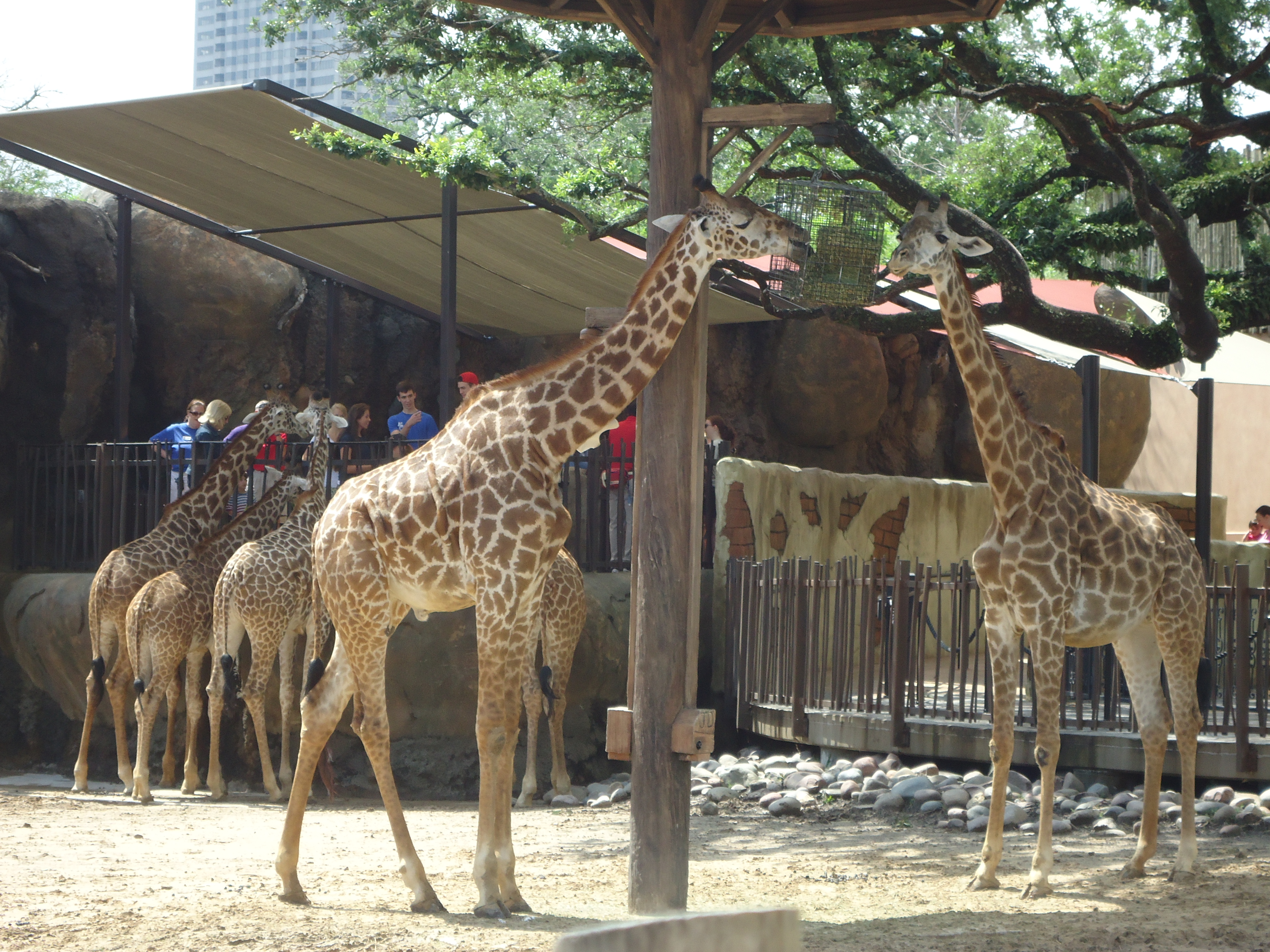 But the big deal for us today were the giraffes and elephants. Ayla’s room is mostly decorated with these wonderful beasts and we’ve been spending a lot of time the last few weeks going over their names because without being reminded she calls them dogs. I really wanted her to make the connection between the live animals and their artsy counterparts on her walls and in her books. Lucky me, I got the reaction I wanted once we got home and she recognized the animal above her changing table as a giraffe with the most wonderful level of awe ever.
 After our Zoo adventures, we went to the highly praised Hobbit Hole Cafe. Granted, I know Ayla was tired and pretty much done for the day and this could have affected my experience a great deal, but man that place does NOT live up to its hype. Hobbit Hole, sounds wonderful and bookish, and foodie fabulous, right? Well, the food was good, nothing to get all hot and bothered about, but nothing to complain about either. I had a Gandalf Classic (sandwich with mushrooms, avocado, and swiss cheese, I paid extra for onion rings (which were excellent). Despite the large sandwich, I could have done with more onion rings… $1.99 for 5 rings, I don’t care how delicious, I want a bigger pile of rings… after all, I DO eat like a HOBBIT! Other than the wonderfully named sandwich menu, though, nothing else was hobbit-esque or Lord of the Rings fashioned, other than the movie posters on the wall at the entrance. Most of the people around me (not my table, but in the cafe at large) were eating enchiladas. They’ve also got Jamaican dishes on the menu that, according to the Jamaican who was sitting next to me, don’t taste how they should.




 Anakalian Whims
Seed Savers – a series to be treasured
June 8, 2012 at 1:00 am (Education, Reviews) (books, Christian fiction, dystopian society, fiction, gardening, homeschooling, kids books, reviews, S. Smith, Seed Savers, self-sufficient living, series, social commentary, Treasure, young adult)
Author S. Smith has written the latest and greatest of young adult dystopian society novels. In the spirit of the previously mentioned Lowry novel and and Monica Hughes’ Invitation to the Game , Smith has given us solid middle grade tale featuring a new (and somewhat real) futuristic threat – illegal gardening. It’s yet another great pre-cursor to students preparing to read Orwell’s 1984
 . Educators everywhere should be aware of this rising star in children’s literature.
The detailed history of how this society came to be is part of its unique twist. Most dystopian society stories don’t spend a lot time telling you how it got this way, just that it did and people didn’t notice, the path somewhat alluded to but not specific. Smith helps point out the steps leading up to this future with factoids that suspciously resemble things that are happening in both the farmlands and corporate America. From living organism patents made legal in the 1980’s to genetically engineered seedlings, Smith spells out just exactly how this future (though a little outlandish in a society newly obsessed with being eco-friendly in its marketing) could quite possibly go from where it is now to the kind of United States described in the book (corporations and the government in bed with each other making trouble for the little people – Banks, anyone?… in combination with the idea that a government can make a plant illegal – marijuana comes to mind). Yet, she does this effortlessly, without killing the flow of the story.
I personally love social commentary presented through the art of fiction. (You like this too? Check out this site: http://www.jstor.org/discover/10.2307/371512?uid=3739920&uid=2129&uid=2&uid=70&uid=4&uid=3739256&sid=56242603693). I find it compelling and quite frankly the best way to address particular situations that when written about in a nonfiction format becomes an irate rant. I love the way it personalizes events and characters in a book so quickly, in a way that the average story cannot do. Get under the skin of an art fanatic… make it impossible for art to be appreciated, collected, loved (if you’re not a reader, check out the movie Equilibrium, then again, if you’re not a reader what’s up with you reading my blog? What brought you here? Leave me a comment.) Tug at the heartstrings of a gardener… attack the very core of their being by telling them in this reality, they can’t have one.
Needless to say, I loved it. S. Smith, you are brilliant, my dear, and I can’t wait to read the rest of the series. This one is going on loan to my nieces and nephews, is getting short listed on my very long list of required reading for my daughter who will one day be homeschooled. It will be the fun fiction to parallel our botany classes that week, the friendly reminder of why she will be taught to tend her own garden, and perhaps raise a chicken.
Buy Your Copy of Seed Savers Today!
Visit the author’s website here: http://authorssmith.com/
Want to start your own garden (before its too late!), check out Mel Bartholomew’s Square Foot Gardening tutorial: http://www.youtube.com/watch?v=N5Lu-7FIj_g
Also for fun, check out this blog: http://www.thisgardenisillegal.com/
Permalink 10 Comments