Dracula
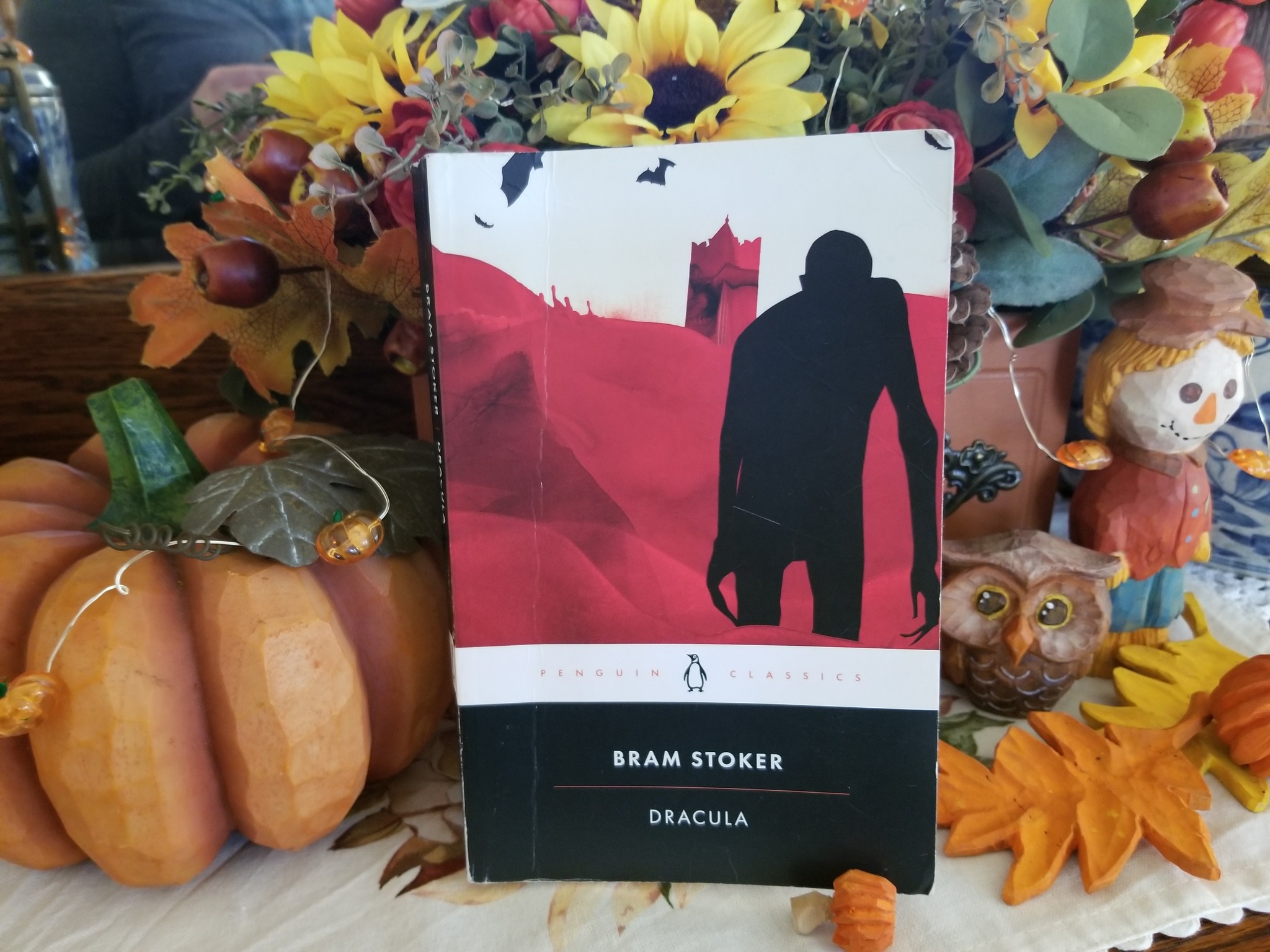
I walked my fifteen year old through Bram Stoker’s Dracula this October. I thought it would be a fun way for a ninth grader to celebrate Halloween. I also thought it would be a neat one to cover with my newly developing book club: The San Salvatore Book Club, primarily made up of my older mentors in my Baptist church. There were gasps of “Are you sure?” and polite “I think I’ll bow out of that one” to which I promptly said, “Why? It’s such a beautiful Christian allegory!”
Side note: I’ve been listening to the Literary Life Podcast with Angelina Stanford for about two years now, caught up on most the episodes and sometimes use them to supplement my home school when I need to be doing something other than teaching literature. My number one complaint to my husband is, “they act like no one knows this and everyone knows this!” to which I am learning every day that, actually, no Angelina Stanford is right: not everyone knows this. I’m not always claiming to have the correct most perfect reads, but I have been shocked to learn I have been reading differently than mainstream society since childhood. So my Angelina Stanford grumbles have ceased now that I know she is operating from the experience of people genuinely not knowing about the material she shares and I’ve been operating under the experience of not sharing because I thought everyone knew. That being the case, my apologies if some of what I share simply sounds like it came from her podcast. It is unintentional, though, yes I listened to her Dracula episodes back in February to make sure when we discussed it in October, I would not have skipped over anything that I assumed “everyone already knew.”
While I was teaching Dracula, I realized I had never written about Dracula on my blog. My blog began, I think, during the height of the Twilight series and I spent so much time focusing on how we shouldn’t be romanticizing vampires with chests that sparkle and misplaced teenage angst, I forgot to write about the roots of vampire lore and my love for Stoker’s classic work, which is in fact a Christian medieval quest to kill a dragon disguised as a techno-thriller. I also realized that I don’t remember what of my essays, stories, and discussions over the years ended up in my journal or my blog, or was relegated only to bookstore employee discussions as we cleaned the store each night. I have spent years reading C. S. Lewis, G. K. Chesterton, George MacDonald, all the classics, yet my blog is mainly limited to home school material and book reviews sent to me by authors and publishers. Therefore, as I begin to teach high school literature to my oldest, I imagine there is a lot of who we are as readers not documented on Anakalian Whims.
To read Dracula well, I think you need a foundation in Genesis, specifically 1:26-4:16. It’s important to read John 1 where the New Testament is clear that Jesus is the Word. It’s important to know a little bit about Jewish and Mesopotamian mythology regarding Lilith, who was a demon and seductress, the disordered first wife of Adam who feeds on children and relishes in child sacrifice as opposed to feeding and nurturing children from her own body as God designed. “Lilitu” was a “night monster.” In my teaching notes, I recommend re-reading the book of Revelation (so you can remember how the bible used imagery of dragons and oceans) and Beowulf. While reading Dracula, you might need to recall stories like Hansel & Gretel, Bluebeard, Homer’s The Odyssey, Dante’s Divine Comedy, Spenser’s The Faerie Queene, and Shakespeare’s Hamlet. It’s easy to enjoy Stoker’s work without these tales fresh on your mind, but it might also be easy to fall victim to Freudian false interpretations if you’re not reading from the framework that Stoker was actually writing during the Gothic revival of the 1800’s. You’ll be limited to the Victorian techno-thriller, which is still awesome, and see all the wrong “imagery” of suppressed sex, which is inaccurate and not awesome.
You have to keep in mind the quote from Devendra Varma: “During the period when the forces of Christianity were nearly spent and materialism had dislodged spiritual values, the Gothic novelists planned their novels with an awareness of the Deity and the consequences of a just fate. The villains learn in due course that the wages of sin is death.”
With that in mind, we enter a world where the monster in the night is indeed an evil to be vanquished, not to be loved for his sparkly chest and undying devotion to trying to get the girl. Traditionally, the villain in these stories is a symbol for Satan, a metaphor for evil itself. We see these villains portrayed as witches, monsters, vampires, and werewolves, who modern literature is now conflating with handsome boys who just need more hugs. Since the dawn of time, human beings have suffered from an evil that must be conquered, and in Stoker’s Dracula we have a group of Christians on a quest to conquer that evil… the “Son of the Dragon” or “Son of the Devil” named Dracula. The best literature will always remind us that the ultimate battle is between the Dragon (the monster) and the Savior (Jesus), and the Savior has already won. That is exactly what makes Dracula one of the best pieces of literature. The monster is the problem, the monster is not the love interest. As C. S. Lewis said, “Who is the witch? The witch is Lilith. The witch is Circe. Every child is born knowing who the witch is.” As Angelina Stanford said, “The monster is not the wounded person, the monster is the [cause of the] wound.”
I don’t want to repeat all the information already available to the public for free on The Literary Life Podcast, but I do want to share some of my favorite parts of the novel that get my skin all tingly when I read them. I’ll try not to repeat too much of what they focus on in the podcast.
In chapter two, we walk through an octagonal room. In Babylonian culture, the eighth realm is the realm of the gods, a realm where for Christians, false gods, fallen angels, and demons congregate. Eight, therefore, is often considered a number affiliated with the occult. Charlemagne’s Aachen Cathedral, where his tomb resides, is an octagonal shape believed to be a mesh of where God meets the secular as it is a circle with straight lines and points. I ask my students what they think Stoker is trying to tell us by Harker walking through an octagonal room as he enters Dracula’s residence, just after a wild carriage ride that resembles a descent into Hades.
Later in this chapter, Dracula throws a mirror out the window. It is absolutely chilling as the mirror in medieval tradition is a symbol of divine truth. It doesn’t matter how many times I read Dracula, the Adversary both literally and figuratively throwing Divine Truth out the window gives me chills every time.
The setting of Whitby, which has a castle or abbey with an extensive graveyard by the sea sets itself up for so much intense imagery and meaning. We have our Gothic trope intermingled with the real history of the Synod of Whitby, where two traditions were ended. Meanwhile Dracula is asking Harker if a man of England can have two solicitors or more? Stoker is tossing around ideas of can man serve two masters? Who will man choose? Dracula is basically asking, how can I trick England into abandoning God and worshiping me? Whitby Harbour had a history of ships crashing, which will offer up opportunities for both Tempest and Rime of the Ancient Mariner allusions.
Stoker offers layer after layer of symbolism with the names and social positions of the characters as well. The podcast talks extensively about the roles of women in Victorian society and how Stoker played with Lucy being the “Light of the West” and “angel of the house” and Mina being the modern woman (I’m not sure if they covered the meaning of her name which sums up to be “Resolute Protection of the Lord”), but my favorite is actually the role of the men in this allegory. We have a fellowship of knights on a quest, all devoted to one woman (Mina), headed off to kill a dragon (Dracula), interwoven with Aristotle’s classical elements: Abraham Van Helsing, the professor (Merlin/ father figure, fire); Arthur Holmwood, the future Lord Gadalming (nobility whose name means “Of God-helm” in the Surrey Kingdom where there is a village called Thursley, near Hammer Pond and Thor’s Stone… King Arthur/ Thor, thunder, or air); John/ Jack Seward, whose name means “Guardian of the Sea,” is a doctor and scientist (a knight on our quest, water); Jonathan Harker, Mina’s husband whose name means “The Lord has Given” (earth); and our fifth man Quincey Morris, a cowboy from Texas (the fifth element) and (spoiler alert) our “Good boy. Brave boy. […] all man.”
From a book review standpoint, Dracula is hands-down a five star book. Above I shared my favorite pieces of a very complex allegory, but there’s so much more to it covered in the series of episodes of the Literary Life Podcast, and even more in my teaching notes, imagery that covers the Eucharist, Anti-Eucharist, Passover, John the Baptist and Anti-John the Baptist imagery. The story is one of wars to fight devils and ends on All Saint’s Day, celebrating rebirth in Christ and the achievement of Heaven. If you’re not seeing these metaphors for yourself when you read please go listen to the podcast episodes so that you can enjoy this beautiful work of fiction (and truth) for yourself.
(As an Amazon affiliate I earn from qualifying purchases.)
The Best Interview Ever!
 I had the privilege of reading an advance copy of George Wright Padgett’s latest novel, Cruel Devices. I was pleased to share a cover reveal earlier in the season here on my blog; and now, I’m proud to post my latest interview with an author I’ve grown to respect and adore.
AW:I’ve done an interview with you before and I don’t want to ask all the same questions as last time…
Yet, Cruel Devices is so different from your previous novel, Spindown, that old questions apply to your new work. Never mind that you added the pressure of the two of us conducting the best interview ever! I’m not sure I can fill those shoes. 😉
Cruel Devices feels like the story just rolled out of bed completely wonderful and polished without effort. Maybe it fell from the sky like a dream; maybe it didn’t – but was its inception as easy for you as it feels? What drove you to write something so unique from what fans thought they could expect from you?
GWP:
That you say the writing feels effortless is a high compliment. I assure you that it wasn’t the case (just ask my editor and beta readers). It’s said that gold is refined by putting it through the fire seven times; Cruel Devices went through the ‘refinement process’ a lot more than that.
As for the differences between this novel and the last: Let me begin by saying that I love science fiction and I’m so very grateful that Spindown has been well received by the sci-fi community, but I felt it important to avoid being cast as only a writer of that genre. I know it can be risky to genre hop, but I want to establish early on to any readers that may follow me I intend to do stuff that may or may not involve outer space or robots.
I’m hopeful that someone that enjoys reading George Wright Padgett novels are reading them because the stories are well crafted and require them to think about aspects of life while going on an adventure. So after Spindown, I chose a story topic and setting that was as far removed from it as I could get. Cruel Devices takes place on modern day Connecticut on Earth (no alternate universe or anything like that). Just a semi-normal guy around normal people, but exposed to extraordinary circumstances.
I’ve always enjoyed how an author like Michael Crichton would write something like Andromeda Strain (which is a hard sci-fi story if there ever was one) and then he’d jump the fence to do something like Jurassic Park, or Rising Sun, or tackle time travel with a story like Timeline. Or look at H.G. Wells, he delivered The Invisible Man, The Time Machine, War of the Worlds, The Island of Dr. Moreau and all those other great tales. They’re wonderfully different stories (BTW he didn’t write any sequels to these), but they can’t be confined to a single genre other that than they’re all speculative fiction – to use a modern term for it.
Hopefully Cruel Devices (and the steampunk detective novel to follow it) won’t alienate my hard sci-fi readers. I’ll return to the genre in a few more books.
 AW: Cruel Devices feels like you really dug deep into your inner Stephen King (although it is very much your own work and I love it!). Is he an author you typically read much of?
GWP:
Stephen King is without a doubt one of the grandmasters of horror, and Yes, I’ve read him. What’s interesting is the reason that I began reading his work was not for horror at all. My colleagues kept going on about how wonderfully developed his characters were. I realized that I had to check their claims out, and discovered that he is a master of the craft and has a remarkable ability to create characters that seem as real as your next neighbor. It’s worth noting that the main character in Cruel Devices is also a master horror writer on the level as King and even mentions him as a contemporary.
AW: The main character is an author who starts the book out dreading his book signings, finding his fame a nuisance. I love having you out for book signings, please tell me that this particular aspect of your character’s development was not drawn from your own feelings or experience. 😉
 GWP:
GWP:
*Smiles* No, I love meeting my readers in person. Please come see me Dec. 13th at Half Price Books in Humble and I’ll prove it.
I suspect that the character of Gavin Curtis did enjoy his readers at one time, but soured that’s over time. The reason he’s become embittered towards fans is he feels that they’ve trapped him artistically. He views himself as victim of his own success held captive by his creation. He wants to move on from writing pulp vampire detective stories, but his audience won’t let him. A major theme of the book is control, and his readers control him by forcing him to write what he doesn’t want. So he naturally rebels and resents them and the vampire detective character of his stories.
Many years ago I heard something about abstract expressionist artist Mark Rothco. The story goes that when is ex-wife hooked up with his agent, Rothco attempted to sabotage his painting work so the couple wouldn’t financially benefit from him. The more he tried to offer sub-par work the more his popularity and fame increased. I don’t know how true any of that is, but the idea intrigued me enough to include my version of that concept in the novel. Gavin’s fan base grows exponentially the more he mockingly offers worn out tropes in hopes that the readers will stop reading so he may pursue ‘serious literary writing’.
 AW: Every author, like Gavin, has those questions they get bored with people asking about their book and their writing process – but also like Gavin, every author has those questions and comments that grab their attention, the questions they wish they were asked. What do you wish people would ask you about Cruel Devices? Why?
GWP:
Again, I’m not jaded like the character of Gavin Curtis, I love answering questions. I think it’s amazing that I get paid to lie (on the page) to people. I especially like questions surrounding themes and concepts of my stories. Some readers simply read for plot and action, which is fine, but I enjoy talking to people about how the work made them think and possibly examine their own opinions on things.
AW: If a book club were to read your book, what would you hope they would talk about? (If a book club were to read your book, would you make a guest appearance?)
GWP:
The protagonist is a spoiled, egotistical, prima donna who at first seems as unlikeable as Ignatius J. Reilly in A Confederacy of Dunces with a mix of Billy Halleck from Thinner. As the story unfolds, the complex layers of Gavin’s personality are revealed one by one until we see at his core he’s actually (do I dare say it?) a hero, or maybe it’s better to call him a reluctant hero. I enjoyed the reactions of my beta/critique group when presented with a seemingly unredeemable main character. Early on in the critique process one of the other novelists in my group took me aside and sheepishly asked “Should I like this guy? He really seems like a jerk.” I informed him that the character’s off-putting manner is deliberate, but he’d be rooting for him by the end of the book.
As far as participating in a book club:
I’d consider it a privilege to attend a book club reading Cruel Devices (or Spindown) though I think it’d be more fun to appear anonymously and at some point during the discussion dramatically tip over the coffee table exclaiming “That’s not what the author meant by using that metaphor!” When the other readers gathered there would challenge this, I’d reveal who I was and storm out of the meeting. Talk about making an impression!
 AW: How was writing Cruel Devices different from writing your previous work, Spindown? I understand that asking an author to pick their favorite out of their own work can be a little like asking a parent to choose a favorite child – but really, which one do you enjoy more? Which one did you enjoy writing more?
GWP:
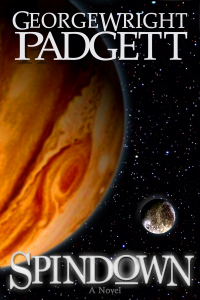
The question is easier to answer than you might think because I enjoyed them both for different reasons. First of all, the stories are structured completely different from each other. Spindown is more of a quest adventure in which the characters are attempting to gain their freedom by reaching the superintendent station before they expire. Though a lot of introspection takes place along the way, the goal to make it to the end of the moon base is as destination driven as Dorothy finding Oz or Joseph Conrad’s Marlow character in Heart of Darkness going up the river to find Kurtz.
Cruel Devices on the other hand is more of a mystery. Gavin spends much of the book trying to understand what is going on and why things are happening to him.
The second thing I want to mention is since Spindown and Cruel Devices are books in two very different genres (sci-fi and horror) it didn’t feel like I was writing a second novel at all. The storytelling rhythms are noticeably different for the rise and falls of horror opposed to sci-fi. I think I’d actually convinced myself on a subconscious level that I was writing a second 1st novel (which in fact, I sorta was).
AW: Do you feel like you’ve grown as a writer between the two books? In the last few years as a published author, what have you learned about books, publishing, and the writing process that you didn’t know before publication? What do you wish you had known prior to your book deals?
GWP:
My experiences from Spindown helped me know what to pack for the journey of writing this book. Having gone through the process before, I knew to expect there would be times when things would get tough, but I had the confidence to get through because eventually you come out the other side.
I also learned to trust my instincts more on this book – to recognize and allow ideas in that maybe were not in the original blueprint outline for the story. Permitting that flexibility resulted in a much more ‘organic’ story than if I’d remained rigid to concepts that snuck aboard later in revisions. I think this may be how that ‘fall out of bed’ natural feel that you mentioned above was achieved.
As for the publishing business questions, I am grateful to have met up with a small publisher called Grey Gecko Press. I tip my hat to anyone who self-publishes; I understand that to be a tremendous amount of work that I’m just too lazy to do myself. My publisher takes care of all the non-writing behind the scenes details that are necessary to make and format my books. This allows me to focus on writing without getting bogged down in the machinery.
AW: I can’t help but long for a replica of the deadly typewriter to be present at your future events. Any chance of that happening?
GWP:
Unlikely – It’s at the bottom of the river *wink*
AW: If you were to select a soundtrack for people to listen to while they read Cruel Devices, what songs would make the list?
GWP:
I love this question. It’s funny you ask because the book originally had a number of songs embedded into it. In the first draft of the novel a lot of attention was paid to the grand re-opening of the bridge near the resort. Radio station WHCN, The River 105.9 (which is a real Connecticut station) was heard in the elevators, restaurant, cab rides, etc. The station contest played songs about bridges and rivers so I had the music constantly in the background of whatever was happening to Gavin.
I used Bridge Over Troubled Water-Simon & Garfunkel, The River– Bruce Springsteen, Take Me to the River – Al Green, etc. to name a few. The only reference to survive the editing process was Bobbi Gentry’s 1967 hit Ode to Billie Joe in which the lyrics describe someone throwing something off the Tallahatchie Bridge. As of yet, I have not attempted to listen to these songs while reading the book. If you try doing this, let me know how it turns out.
A final note: I appreciate all that your blog does to support Indie authors, mainstream writers, and everyone in between. Thanks for featuring Cruel Devices.

http://george-p.com/cruel.htm http://georgewpadgett.wix.com/author
A Fancy Dinner Party
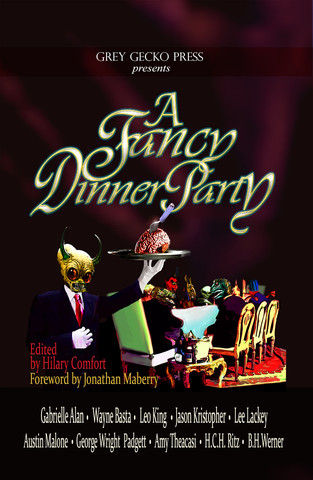 Title:A Fancy Dinner Party
Editor: Hilary Comfort
Publisher: Grey Gecko Press
Genre: Thriller/ Horror
Length: 184 pages
For nearly two years now, I have had the joy of being acquainted with a small, local publishing company called Grey Gecko Press. As a whole, they are fun and spunky, and I enjoy both hosting events for them and attending ones where they are present.
At one of the more recent signings, Jason Kristopher handed me a copy of A Fancy Dinner Party. I was warned not to read it too late at night – or when I was alone.
I took my time with it, limiting myself to only one or two stories per sitting. The anthology features ten different authors, a fantastic forward by Jonathan Maberry, all neatly packaged and edited by Hilary Comfort and the folks at Grey Gecko Press.
I did read it at night. But I did not read it alone!
These stories are a lot like 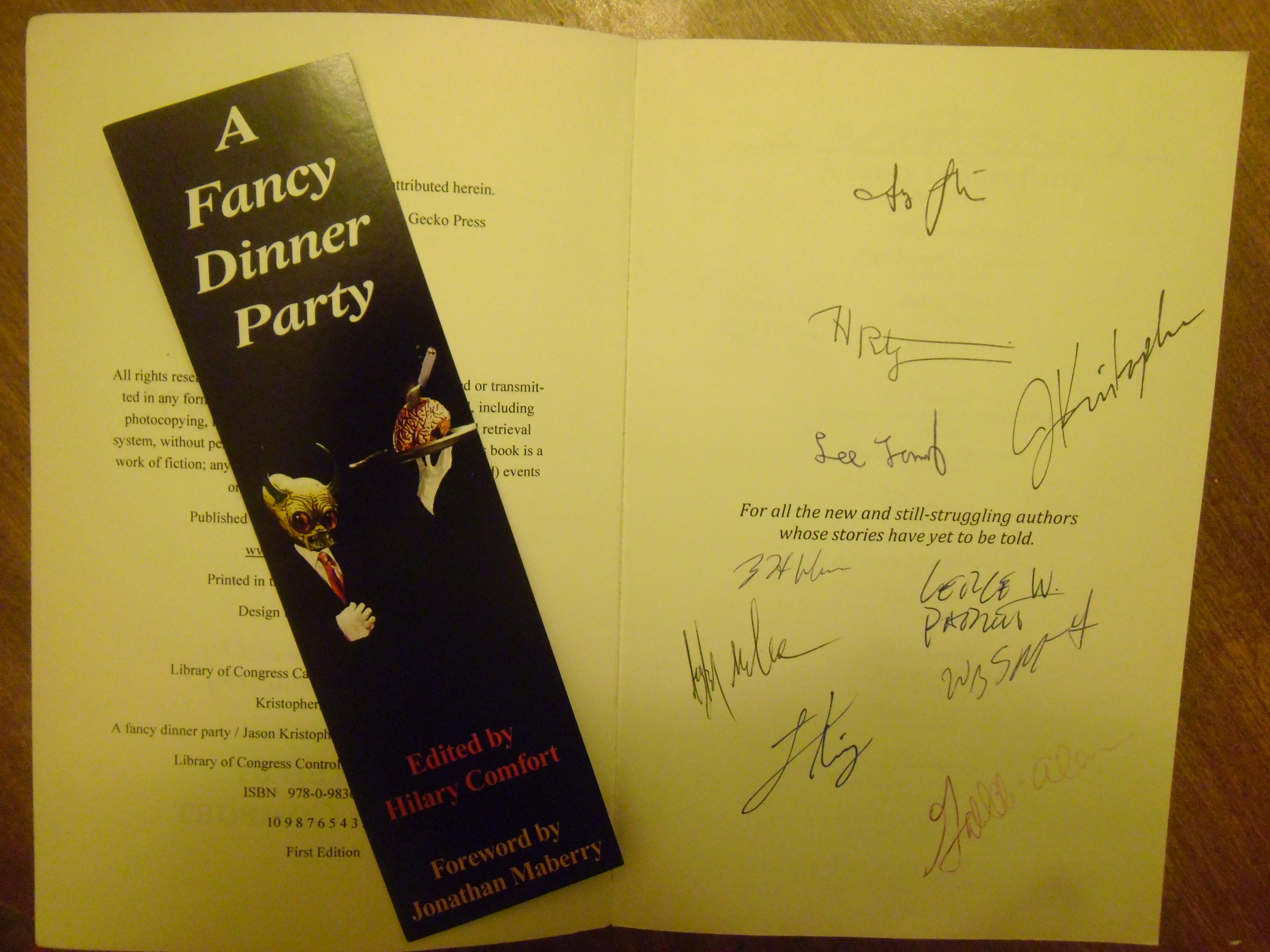 the group who wrote them, spunky and fun – even when they’re scaring the crap out of you. I enjoyed the anthology, I love that I have a copy signed by all the contributors and would highly recommend it to short story lovers…
and science fiction lovers… and readers of fantasy, and horror, and thrillers…
As the back jacket says, there’s even a bit of Americana and Japanese folklore. The book has so much to offer and is a prime example of Grey Gecko Press, yet again, putting their best foot forward. I especially liked the dedication at the front: “For all the new and still-struggling authors whose stories have yet to be told.”
With the chapters arranged like a menu and a forward urging us to “Sit back, tuck 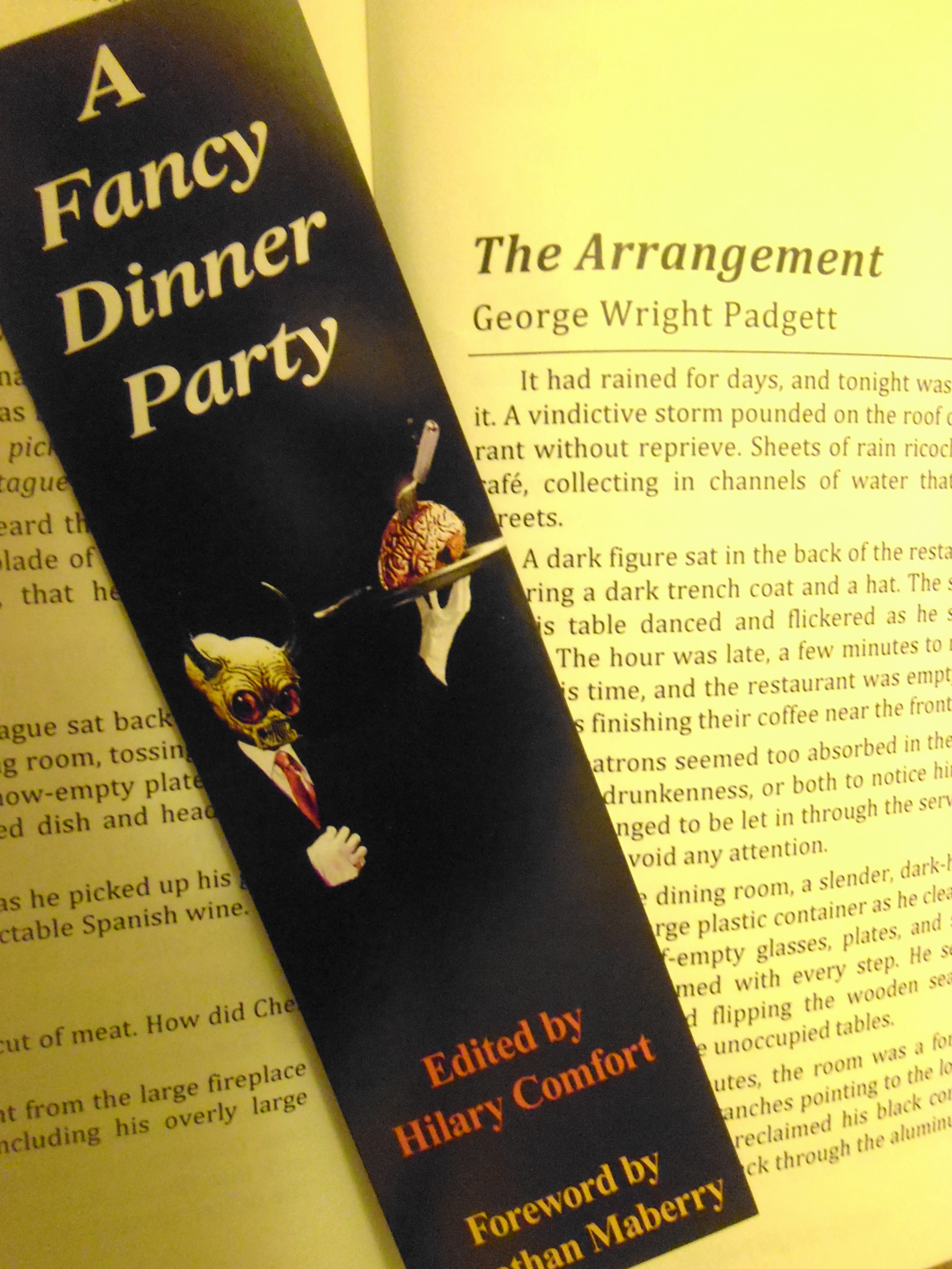 in your napkin […] and dig into this bizarre feat,” the book keeps the menu theme alive from start to finish. Well done.
As a reviewer of an anthology, I can’t just stop there and fail to mention one crucial point – my favorite course, of course!
Drum roll…
GGP managed to save the best for last: George Wright Padgett
I loved his story The Arrangement and it was truly the cherry on top of a very disturbing dessert!
The ebook of A Fancy Dinner Party is $2.99, well worth the download. Good luck reading alone.
Interview with Leo King
 Periodically, Anakalian Whims interviews authors and artists for the public. This blog having such a friendly relationship with Grey Gecko Press has allowed for more author interviews than I could have ever dreamed for, and here’s one more. Meet Leo King, author of the Sins of the Father
1. You have a 3.95 average rating on Goodreads for The Bourbon Street Ripper, sounds like people generally like it! (The first few pages creeped me out and I’m holding off until I can muster a non-scaredy cat reading mood out of myself to finish the book.) Tell us a little about your series Sins of the Father.
Sins of the Father is a genre-bending trilogy. While it’s thriller throughout, it starts as a a murder mystery and changes into what could almost be called urban fantasy. The voodoo culture undertones in the beginning become more prevalent as the three books go on.
2. What brought you to the murder/mystery/thriller genre? Is it merely what fit this story or is it your chosen genre?
My chosen genres are actually sci-fi, urban fantasy and epic fantasy. However, I’ve always wanted to write a trilogy that mutates genres in a seamless fashion. Most of this is because I want to show that it can be done. Put enough information in the story to inform the reader, and you can go from mystery to supernatural or fantasy to science fiction, etc. While it’s not recommended all the time (fans of one tend to favor it over the other), there are occasions when it can be very entertaining.
This is my only attempt at genre-bending. I will not do it again. I also will likely never write pure modern-day mystery. It’s not something I think I’d enjoy. I might try a hand at science-fiction mystery some time.
I love thrillers though, and will likely continue in the supernatural thriller and serial killer thriller genre in the future.
I think I kind of got away from your question. Sorry about that. The genres of Sins of the Father fit the story.
3. Who are your favorite books and authors? Ultimately whose writing career inspires you most?
American Gods by Neil Gaiman is my #1 favorite for modern authors. Otherwise, anything by Asimov for science fiction, Weiss and Hickman for fantasy, and Stephen King for thriller/horror. My favorite old-school novel is Lord of the Rings.
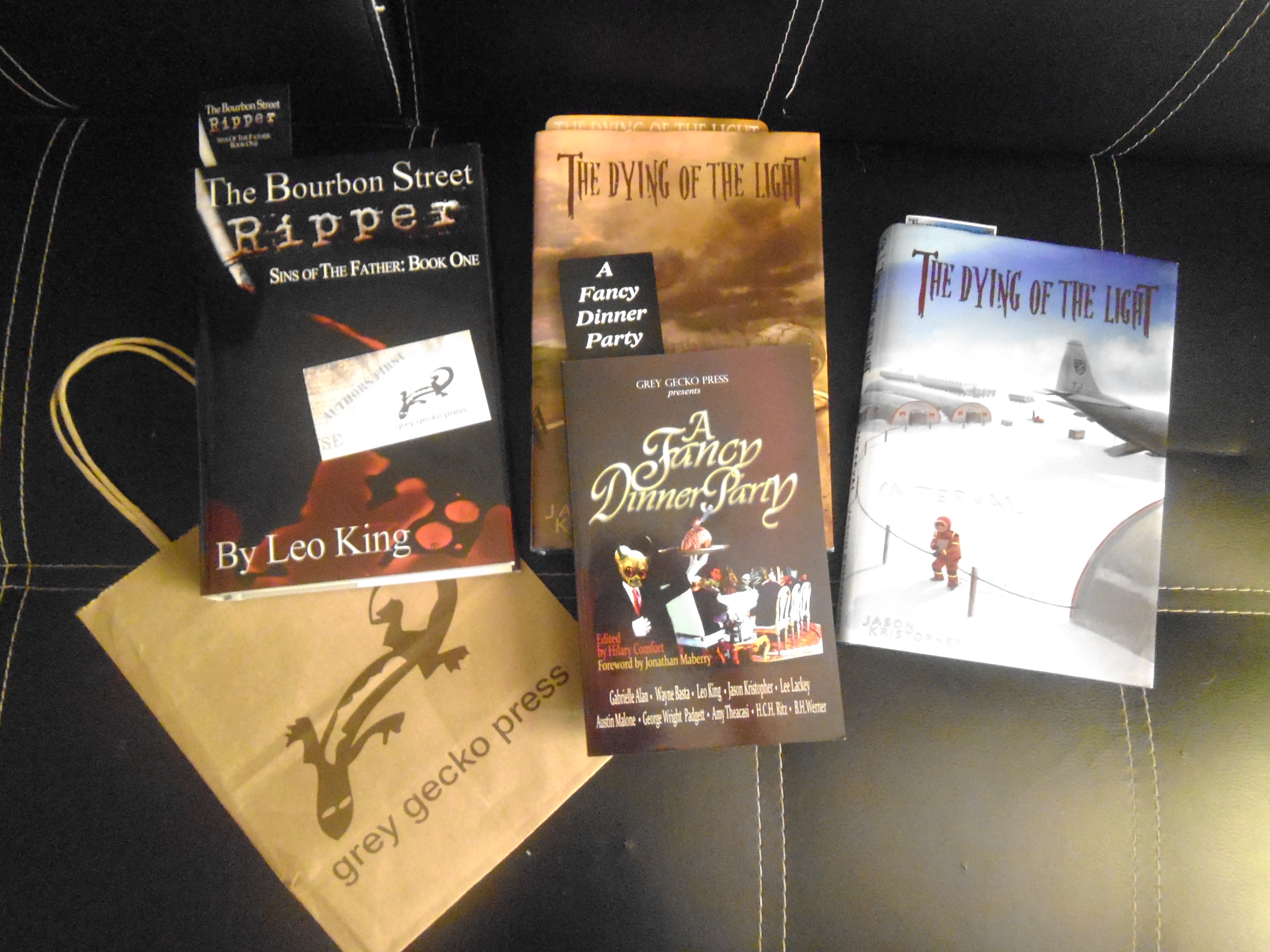 4. You’re published through Grey Gecko Press. How has that experience been for you?
I’ve enjoyed the freedom I get with GGP. They put the author’s desires first and foremost. I consider GGP a great starting place for any author.
5. Although you’re a Houston local, I see in your bio that you’re not a Houston native. How do you think your Louisiana roots and life experiences have affected your writing?
I grew up in New Orleans, the birth place of the modern romantic vampire (mostly thanks to Anne Rice). Because of that, I tend to blend romanticism with everything I write. I also try to give my locations and settings enough life for them to be considered a character themselves.
6. Your bio also says that you want your work to be controversial enough to make people think. What kind of thinking were you wanting to encourage with the Sins of the Father series? What kind of themes do you plan to pursue in future work?
If nothing else, I want to dispel stereotypes. Let me explain.
Every person, even the most deplorable, is still a person. Something made them that way. For example, some people in our society believe that anyone who is a terrorist is the epitome of evil and deserves no regard. But what drove that person to become that way? What hopelessness made them susceptible to their cause’s brain-washing? So many people do not ask those questions. They just brand and condemn. It disgusts me.
So I’ll create characters that the reader falls in love with, and then have them reveal something utterly horrible about themselves. Will my readers continue to love them? Will they condemn the actions instead of the person? Or will they suddenly hate the character and put the book down? What they do, and if they think before doing it, will say a lot about them.
I won’t apologize for anything I write, no matter how much it offends someone. Every human being has a story, and that story needs to be told.
7. You’re planning a Halloween release party for your next book. Ideally, what would that look like to you?
As this is my first launch party, I have no expectations. Something voodoo themed would be lovely.
8. Did you put any of your series to paper while listening to music? If so, what kind, which artists, what songs?
I write in silence.
9. Outside of your writing career what does your life look like? Do you have hobbies or interests that you’d like to share with your readership?
I am happily married to my wife of going on nine years. I work from home during the day and write at night. Sometimes I meet friends for coffee or beer, but never coffee and beer. That’s an important distinction!
My biggest out of office activity is my Writing Workshop. It’s a video workshop I started in 2012 and let stall out due to lack of equipment. I am thinking of setting up a Kickstarter campaign to get better equipment. It’s hard to teach writing techniques when you’re recording on an iPhone!
As for hobbies, I am an avid gamer. That’s both video games and role-playing games. I have a BS in Video Game Design that I’ve never used professionally, but I design game mods and develop indie games all the time. Yes, game development is a hobby for me. I love martial arts and am a sword collector.
10. If there were one thing you would want your fans/readers to know about you, what would it be?
Someone once expressed concern about my mental health because of some of the scenes in The Bourbon Street Ripper. I want to say that it’s just a book: I don’t endorse any of the horrible things my characters do!

Leo King, second from the left in the black shirt, interacting with fans at one of his book signings.
Interview with Jason Kristopher
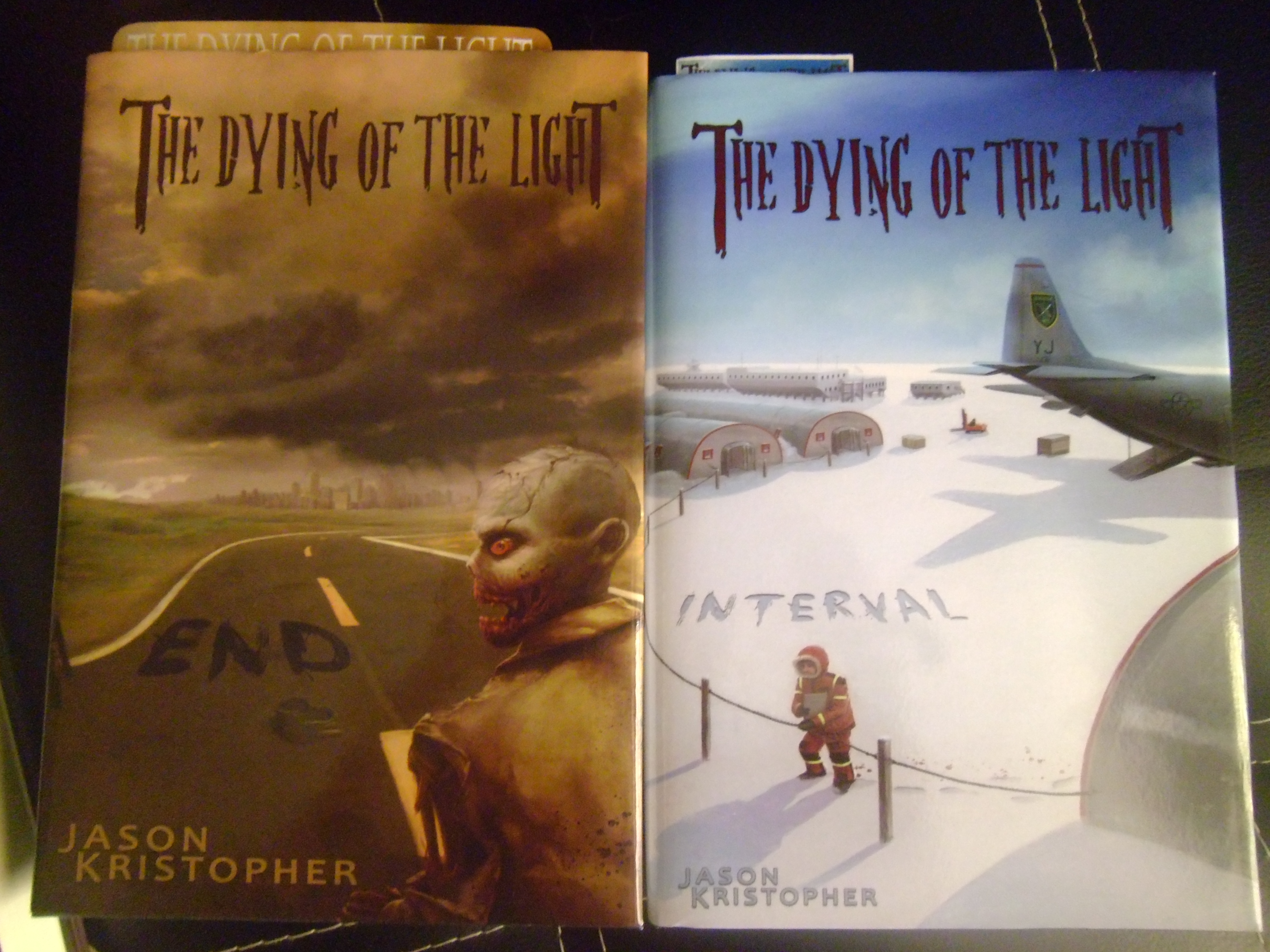 1. Your books (The Dying of the Light
First, a realistic and scientifically-vetted reason for zombies, as in it’s not just supernatural or science fiction ‘hand-waving.’ Second, and this is the key difference, the books aren’t about the zombies. Yes, they have zombies in them, and action and blood and guts and gore, but at its core, The Dying of the Light is a story about people. I always tell potential readers that it could’ve been anything that ended the world: aliens, earthquakes, global warming… none of that matters. This series is about the end of these people’s own personal worlds, and how they deal with what happens during and after, and more importantly, with each other. That’s the real story – the rest is just window-dressing.
2. What inspired you to write zombie novels? Did the characters come to you as products of the apocalypse, or did you drop them into that setting after their inception?
The idea for the story was a mash-up of two different dreams, actually. One about a lone zombie survivor on an island, the other about the end of the world (though I didn’t know at the time what had done it). My writer’s brain smashed them together, and suddenly, there was a zombie apocalypse trilogy. It makes me a bit nervous about the other connections my mind makes, actually…
3. Stephen King says people who don’t read don’t have the tools to write. Who are your favorite authors? Who inspires you to write? Who do you read to gain more writing energy?
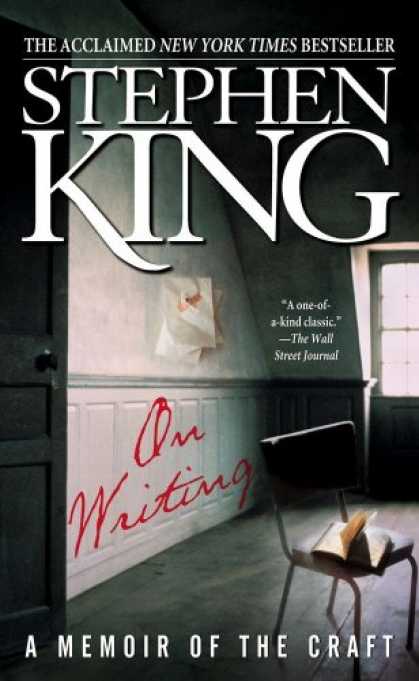 Would it be trite to say Stephen King? His book On Writing is the single best treatise on the craft of authorship that I’ve ever read. As for other fun favorites, I have a ton, but a few that come to mind: Isaac Asimov, Terry Brooks, Jim Butcher, Orson Scott Card, Arthur C. Clarke, Donaldson, Jordan, Koontz, Niven, Pratchett… see what I mean? For inspiration, I look at some of my friends, like George Wright Padgett (Spindown), who wrote one of my personal Top 5 sci-fi books. That is inspiring, to me. I like to re-read some books if I’m having trouble with a book I’m writing, too. For example, I’ll revisit The Hitchhiker’s Guide to the Galaxy series if I’m stumbling over dialogue – even though it’s English slang, Douglas Adams was a master of dialogue.
4. Do you have play lists of mood music you write to? If so, which artists/songs generally make the cut?
If I have music on, it’s generally instrumental – tuneful background noise, basically. The soundtrack to Lord of the Rings, or Last of the Mohicans, that sort of thing. If I’m struggling with a particular type of scene, I’ll find some music that fits that ambiance. For example, my “Car Chase” playlist has Guns N’ Roses, Project Pitchfork, Rihanna, and even Motley Crue. But usually, I like it quiet or very low music when I’m writing; it keeps me focused.
 5. You are not just an author, but the owner of a publishing company: Grey Gecko Press. Tell me a little about that. What made you decide to open such a venture and what are your goals for the company?
I’ve always been business-minded, and when I published my first book, I knew there would be business expenses involved. Originally, I never planned to publish anyone else’s work, but then a friend (author Wayne Basta) asked if I could help him, and Aristeia: Revolutionary Right became the second book published under the Grey Gecko imprint. I found I really enjoyed working with other authors to share great stories, even if they weren’t mine, and I had the ability to do it… so why not? From the beginning, the company has been about treating authors fairly, publishing great books, and doing things the right way, even if that bucks centuries of tradition.
As far as goals… well, I’ve long said that I’d like for Grey Gecko to be ‘the Google of publishing.’ Most people interpret that to mean I want to be rich, when that’s not at all my goal. I want Grey Gecko Press to be huge because it would mean that every author would have a chance at the same kind of success that only a few get now with traditional publishing. Every struggling writer, pounding away at their keyboard (or typewriter, I’m not judging) would know that at least one company would look at their work when it was done, regardless of their past publishing experience – because, at the end of the day, Grey Gecko isn’t about making money: it’s about publishing great books and putting authors first. As you can tell, I’m quite passionate about this endeavor.
6. You’re quite an entrepreneur. What other projects do you have up your sleeve?
I think it’d be great to have a Grey Gecko bookstore, for one thing. For another, we haven’t been able to focus on as much as I’d like with Grey Gecko is giving back to our community. I’ve got some ideas for creating local resources and ‘maker-spaces’ for writers of all types and kinds. When we’re ready, I’d like to take our business model into other fields, as well, including movies, film, and even music. So yeah, a few projects on the horizon!
7. How would you feel about having your books made into a television show or series of movies? Would you want to write your own screenplays? Who would be your ideal director?
One of the comments I have most about my books are that they’re very visual, very cinematic, and I agree! I think they’d make great movies/TV shows, mainly because that’s what I see in my head when I write them. I’m not sure about writing the screenplays myself, although I’d give it a try. There’s a lot about the behind-the-camera part of the film industry that I don’t know, so I’d at least listen to some experts… though naturally I’d want final say. I’d rather not have it made at all than made badly. I’m not sure of all the director’s names on The Walking Dead, but they do such a masterful job with a show that’s so similar in tone, that I’d likely pick one of them, given the choice.
 8. You’ve had booths at Comicpalooza and done numerous book signings with local bookstores. What were those experiences like for you? What are your favorite parts? What are your least favorite parts?
Despite what I may say on Sunday afternoon at a convention, I actually enjoy talking to people about our books. Helping people discover a new book they haven’t heard about, or seeing their excitement at the next volume in a series, or seeing the light of wonder shine in a child’s eyes as I hand them a copy of Greystone Valley is why I do what I do. As far as book signings go, I enjoy them for many of the same reasons; talking to people about my books and getting t hem excited about reading is a blast. What it really comes down to for me, though, is that I’m a storyteller at heart; however I can tell you a story, I’m going to do it. My least favorite part of all these things would be the setup, teardown, and logistics that go into planning them… mainly because I’m lazy! I’d love to show up with a cup of coffee and find everything set and ready to go, but that’s the price you pay for being your own boss, I guess!
9. What other published work have you been a part of? And what can we expect to see from you in the future?
Aside from The Dying of the Light, I’ve also published several short stories, some of which are based in my zombie series, some not. I also contributed one of my favorite short pieces, The Art of Steaming, to the horror anthology A Fancy Dinner Party, along with 9 other Grey Gecko Press authors, and it was also featured in the collection Penny Dreadfuls: Halloween Special. For future work… boy, have I got some ideas for you!
First, I’m finishing The Dying of the Light with the third book, Beginning, due out this winter. Then there’s Under a Cloud-covered Moon, the first in a series about an irascible, anti-hero detective who works for the Seattle Metahuman Crimes Unit, solving crimes by and against ‘metas’ – non-supernatural mutants who’ve been called ‘vampires’ and ‘werewolves’ for centuries by those who had no idea of their true nature. I’ve also got a middle-grade/YA story in mind about a Teddy Bear (because it’s a job, not a toy) named Freddy McPhane, as well as my epic fantasy series of 30 books (no joke), not to mention the 150+ other ideas I have written down. I’m going to be busy!
10. If there is one thing you would want your readers and fans to know about you, what would it be? If you had one request of your readers and fans, what would it be?
I want all my fans and readers to know that I love hearing from them! Whether it’s a quick note, or a detailed letter, I’m always excited to connect with my readers, which is best done through email at jason@jasonkristopher.com.
For a request, I’d request everyone who enjoys the books they read, especially indie books, to leave a review on Amazon, GoodReads, or elsewhere. Short of buying more books, a review is the best way to support indie authors and small press. That and telling all your friends, of course! To find out why reviews are so important, visit my blog: On the Importance of Reviews, or, It’s Just 21 Words!






 Anakalian Whims