Impromptu Post on Being Changed
There’s a little chain status going around on facebook that I recently participated in…
Completely off the top of my head, in about five minutes versus the fifteen offered, and in no particular order I wrote:
Soon after posting my version of the status update, conversation ensued. One of my friends posted his own list on my thread instead, Tanya Egan Gibson felt honored to be on the list (she is so beautifully humble and I just love her and her work, she tickles me), and a college buddy posted a query.
Andi, I’d love to hear more about your thoughts on how “Metamorphosis” was life-changing for you. I studied it, but would have never thought of that one, so I’d be interested to hear how it was, for someone unlike me. : )
I started to answer right there on facebook, but I thought it deserved a blog post instead.
 I read Metamorphosis first in… I’m not sure… 8th grade? I think it is best first experienced during puberty when you’re going through that everything creepy is wonderful phase. Young teens are always the ones who haunt the shelf where Edgar Allen Poe is; and for me it was Edgar Allen Poe, Franz Kafka, and Nathaniel Hawthorne. I identified greatly with Gregor, which if you read a Sparknotes’ character summary, try to think of a 13 year old geek who wouldn’t.
Gregor Samsa – A traveling salesman and the protagonist of the story. Gregor hates his job but keeps it because of the obligations he feels to pay off his father’s debt and care for his family. He has transformed into a large bug and spends the rest of his life in that state. Although hideous and unrecognizable to others, Gregor retains his some of his inner life and struggles to reconcile his lingering humanity with his physical condition. (-from Sparknotes)
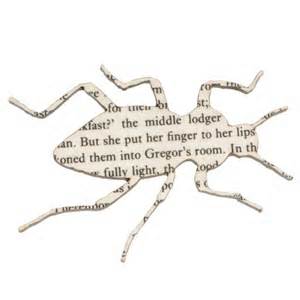 Obviously a teen is the protagonist of their own story, they hate their job (school) but keep going because of obligations (to their existence, their parents, and the government). Teens work their butts off seemingly for the sake of their family… chores, chores, more chores… honestly what 13 year old thinks they’re doing the dishes for themselves? And rarely do they actually think school is for themselves. I wanted to learn and I enjoy research, but ultimately I wanted to make sure my parents weren’t pissed off by my report card. Gregor is hideous and unrecognizable to others, and at thirteen who doesn’t feel gross and pimply – simultaneously invisible and on display to the world like a freak show. At thirteen you’re sub-human, neither child nor adult, and most of your life feels like it’s happening in your head.
Or, maybe that was just me.
To quote another post I wrote:
[…] I read The Metamorphosis over and over again, wrote a paper on it in high school and two more in college. I can’t count how many times I’ve read it, I just think its so wonderful. After reading The Castle and The Trial, however, I’m realizing that Kafka’s greatest skill is in writing the most frustrating scenarios a human being could be plopped into – alienation and bureaucracy. Whether it becoming a giant bug, living under mysterious and unfair authorities, or dying after a year long quest to discover what crime you have been accused of, Kafka has helplessness down to an art. I love Kafka!
I love him because his concepts are fascinating. He is the most wonderful creator of modern day myth that I’ve read. […]
(-from my review of The Trial)
When you read something that reminds you that you are not alone in your feelings, that even this great emaciated and pale world renown author could understand you, everything seems a little bit better. If a dude can turn into a giant cockroach, I can get through middle school – at least I’m not literally a disgusting bug.
I recommend that anyone re-read The Metamorphosis, but from the eyes of their 13 year old self. What do you think of it now? I remember feeling like my parents were repulsed by me. I remember feeling like every adult saw me as a liar and was distrusting of my existence. I remember feeling alone and wanting a friend. What do you remember?




 Anakalian Whims