Interview with S. Smith
 I’m excited to share with you all an interview with S. Smith, author of Seed Savers
1. This is quite a political statement, was that your intention?
Not so much. I think it was more about my love of good food. Seed Savers is a love story starring home-grown food. I love food—growing, harvesting, cooking, eating, and sharing it. And I think a lot of people these days maybe are missing out on that. I grew up on a small family farm and we always just ate what we grew, putting the fruit and veggies up for the winter and enjoying the goodness of how much better everything tasted than the “store kind.” Sure, politics obviously comes into the book, but it’s much more than that.
2. I read on your blog that Senate Bill S510, the Food Safety Modernization Act, inspired the story line. But what made you choose to tell the story through the eyes of children for children, instead of writing a piece more geared towards adults?
Actually, although I mention Senate Bill S510 as being the idea behind my story, I believe I wrote Seed Savers prior to hearing about it. I started writing Seed Savers in April of 2010, and most of the internet frenzy on the bill came out after that. I think a friend told me about the bill after reading a draft of my story—it’s hard for me to remember exactly. The inspiration for the book and the reason I wrote for children is covered in the blog titled “How It All Started”(May 2012).
3. There are many documentaries floating around about the habits of companies similarly described in the history of your futuristic world. Have you seen any of them? If so, which ones did you consider the most inspirational or informative? (I’d like to watch them.)
Here in Salem we enjoy the Salem Progressive Film Series, which is a “volunteer organization dedicated to educating and raising awareness of important current events.” They bring in great documentaries and speakers once a month. I have enjoyed going to many of these. I’ve watched movies on water, dirt, food, urban gardening, MONSANTO, etc. As mentioned in the “How It All Started” blog, Food, Inc. truly was a part of the inspiration for my book.
4. You must be a gardener! What are your favorite household ‘crops’? (Mine are lemon balm and rosemary – for the smell, of course.)
Oh my gosh. Well I do live right in the center of town, so I only have a very limited amount of space for my own little garden, but I do love growing tomatoes—I’ve been starting my own from seed for about the last four years—and yes, the fresh herbs are wonderful (cilantro, basil, sage, rosemary, thyme, parsely, dill, oregano….). I also have strawberries, raspberries, blueberries, and one boysenberry bush.
 5. The lupines are a symbol of safety for the children during their flee from oppression to knowledge and fruitfulness (both literally and figuratively). Why the lupine? Does it hold special significance for you?
Well, I think that’s covered in the book. Mt. St. Helens is sort of in our backyard here in Oregon, so we get a lot of coverage about whatever is going on up there. I either heard on t.v. or read somewhere that lupines were the first plant life to come back after the devastation of the volcanic eruption and I jotted it down to use in my book. I still have the scrap of paper on which I wrote it down.
6. Seed Savers is reminiscent of titles like The Giver and Invitation to the Game. Do you often read dystopian society literature? What are your favorites?
The Giver is one of my favorites. I also really love Fahrenheit 451 and The House of the Scorpion.
7. Your book is peppered with verses from the Bible as well as symbols regarding Mother Earth. Do you mind me asking about your religious beliefs? What’s your life’s mission statement? (This is something I find particularly fascinating about writers in general, how C.S. Lewis’ beliefs seeped into The Chronicles of Narnia, the infrastructure of Orson Scott Card’s science fiction and that of Mormonism, and so on…)
“To act justly, love mercy, and walk humbly…” 🙂 I am a Christian, but more importantly, I had to be true to my characters. I didn’t want flat characters, and children at that age often do go to church and have strong beliefs. My two favorite books, Peace Like a River and The Secret Life of Bees, both have spiritual themes running through them. And let’s not forget that Twilight begins with a quote from Genesis.
I certainly hope the book can be viewed for all of its layers and not dismissed on account of some Bible verses.
8. When can we expect Book Two in your series? Have you written the whole series and just timing their releases or are you writing as you go? (I’m dying for the next installment already!)
Thanks! Book two, Lily, will probably be out sometime in August. It is completed and in the editorial process right now. Treasure will be available on Kindle devices soon (in process right now). I have not written the entire series yet, but do have a brief outline. I am currently about one quarter of the way through the first draft of book three.
9. The kids do a lot of traveling as they run away from home to Canada, in the last third of the book. Do you enjoy travel? Have you been to Canada? What are your favorite things about both your hometown and your favorite place to visit?
Is this a spoiler? Yes, I enjoy traveling a lot, but as I get older, I dislike flying more and more. I have been to Canada, but only British Columbia, not Quebec.
Oregon has often been referred to as “the Eden at the end of the Oregon Trail,” and for good reason. It is very green here, and we have gorgeous lakes, rivers, and forests. I live in the Willamette Valley, so when I go to a place without mountains in the horizon, it’s a bit disconcerting.
My favorite place to visit is Logan Pass on the Continental Divide at Glacier National Park in Montana. Even though I live in a valley, I absolutely love standing on the top of high places and looking down. 🙂
10. Is there anything you’d like to share about yourself or your work to your readers and fans that hasn’t already been discussed?
I think Seed Savers is very timely in regard to topics such as the urban garden movement, food deserts, childhood obesity, school gardens, etc. The science teacher at my school (who also has a gardening class) was very much of a help and encouragement to me as I was writing the story. We like the idea of kids having a novel to read in science or gardening class for that literacy tie-in. In regard to my writing process, I don’t always know what my characters are going to do next. They often surprise me as much as they might surprise you (perhaps even more so!) 🙂
Thank you for interview!
On Writing, a Review (of King’s Craft)
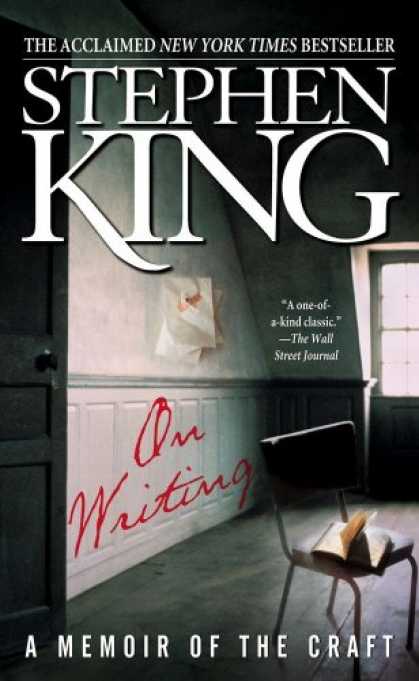 Title: On Writing: A Memoir of the Craft
Author: Stephen King
Paperback Publisher: Pocket Books
Genre: Non-fiction, Memoirs, Writing Guides
Length: 291 pages
My mother saw me reading Stephen King’s On Writing and scowled at me. “That man is so weird, I don’t know why you would want to read any of his crap.” Says the woman who may or may not have read one of his books. Admittedly, I don’t read much of his stuff. I couldn’t really get into Gunslinger, but I loved Low Men in Yellow Coats from Hearts in Atlantis. I have no desire to read most things published in the horror genre, but On Writing isn’t horror, its not even fiction, it’s an amazing memoir and guidebook to how The King’s mind really works.
On Writing is solid advice from a successful writer to anyone who has ever dreamed of being a storyteller. King is entertaining, down to earth, and extremely informative. He is passionate about his work, and despite many blunt criticisms about typical writing flaws, he offers sound wisdom to budding authors.
I found reading On Writing highly motivating. I’ve always been an avid reader, and I’ve always loved to journal and write tidbits of stories that come to me. But reading this really got me in a dedicated routine. I’d start my day off with a little advice from the master of fiction, write the recommended 2000 words for the day, and then pick up some handy little piece of fiction that took my fancy and read until my daughter woke up from her nap.
Since reading On Writing, I’ve got myself on a more solid path to finishing a complete draft of my novel than ever. King doesn’t offer any kind of magic fix for suddenly getting published; he just reminds you that you already have the tools to do the job. He gives you the confidence to press on and keep writing because you love it, not because someone told you to try to make some money at it once upon a time.
King encourages every writer to keep what he calls a writer’s toolbox. In that box he includes the Elements of Style by Strunk, but I think you’d be remiss not to include On Writing in that toolbox as well.



 Anakalian Whims