A Little Bit of Fad Reading
 Title: Divergent
Author: Veronica Roth
Publisher: Katherine Tegen Books (An Imprint of HarperCollins)
Length: 487 pages
So I finally took that leap onto the [fad] train.
When I worked full time in the bookstore, chatting with customers, recommending books in person, I would have read this as soon as it was a thing for the sole purpose of finding something on the shelves that was similar when we were out of stock. It was published in 2011, the year I left. That last year was also one spent handling more inventory and displays as the store’s SIM than handling people and their whims and desires in the book world. So though I was vaguely familiar with the title I totally missed the need to devour this title in a day and come back with a list of titles to hold over disappointed customers until we could get this one in their hands.
Somewhere along the road in my stay-at-home-mom life I discovered Hunger Games, and fell in love. Though part of a huge fad, Hunger Games was no Twilight Saga or Vampire Diaries series. Hunger Games was epic and beautiful and insanely well written.
So when I saw the preview for the movie Divergent, I thought, ‘What the heck? Let’s see if it will surprise me too.’
Color me surprised – again! I really liked this one. I read it in one day – nearly one sitting. It tends to be easy to do that with contemporary young adult novels, no matter how long they are.
I found Hunger Games more moving, but I was able to relate more to the main character of Divergent. I’m nervous to see how they portray her in the movie, the book version is a person I feel very in tune with. Katniss Everdeen is someone I admire and look up to as a literary character, but with whom I share very few similarities. Tris’s story feels as though Roth dropped my mind into her version of dystopia. Tris feels how I feel and tends to react in ways I am known to react. (So far anyway.) Many of her fears were my fears at 16, actually, I can’t think of one that is different.
For that, it was incredibly enjoyable and easy to get into, and despite this being completely entertaining fluff fiction, I consider the hours spent reading it time well spent.
I’m interested to see how the rest of the books go (it’s a series), as well as the movie adaptation in theaters this month. Although I’m a little nervous that it might be too easy to amp up the cheese factor for the big screen – but I guess I’ll have to take a flying leap onto that fad train as well or I’ll never find out.

Herodotus and Me
On Wednesday one of my book clubbers emailed me about my reading status. How far along was I in preparation for our discussion for Monday (now tomorrow).
We will be discussing The Histories by Herdotus.
When he emailed me I was only on Book 3 (out of 9), roughly 200 pages into the historian’s account (out of 953).
I sat down, promising myself I wouldn’t go to bed until I had complete Book 4…
I had to stop myself after completing Book 6.
It is not going to be difficult to finish this book by Monday. Now, Sunday afternoon, I’m to Book 9 and I didn’t read anything at all yesterday. You would expect Herodotus to be dry and boring, another clubber said it was like reading the bible. My best friend read the reblog of the North Africa post and said, “I WISH that sounded interesting to me.”
The fact that it doesn’t astounds me.
Ancient History fascinates me I’m riveted. Hooked. I want to know everything. So much that when I stopped to take a bath I took The Peloponnesian War by Thucydides
Wednesday and Thursday alone, I read through most of King Darius I’s reign. I learned a long forgotten word from some government or history class long passed – oligarchy – and contemplated the reality of governments.
I also did a bit of research on Parnassus and enjoyed pulling my Oxford English Dictionary down to inspect with my handy-dandy turtle magnifying class, and I felt quite studious. These are the things that bring me joy.

An Autistic History
 Title: Not Even Wrong
Author: Paul Collins
Publisher: Bloomsbury
Genre: Memoir/ Psychology
Length: 245 pages
I’ve journaled nearly twenty pages of commentary on this book. Now, having finished it, I’m not sure what I should share and what should be kept to myself.
Collins does a spectacular job sharing memoir with known history, diving into tales from the world and mixing it with tales from his personal world. The first few chapters are dedicated to his pursuit of Peter the Wild Boy and an existing desire to write a biography on the mysterious boy who was ‘rescued’ by King George. (Reference to the boy made in Notes and Queries, of course.) Collins later discovers his son is autistic.
The entire book is an ode to his son and his autism. An ode to their life, their relationship, the world of Autists.
Therefore a lot of information is shared regarding what that means. A lot of reflection on the gene pool it takes to cook up such a neurological anomaly that is an essential part of humanity as a whole. The trifecta being science, art, and math.
Collins writes on page 96:
Apparently we have been walking around with the genetic equivalent of a KICK ME sign:
my father: mechanical engineer
jennifer’s father: musician, math major
my brother: phd in computing
jennifer: painter
me
At this point, I remember taking my own personal inventory. My father is a civil engineer, not only that he was a musician and painter, and suffers from what I think is undiagnosed and extremely mild tourettes (also discussed in Collins’ book). My immediate cousins and family members on that side of the family are musicians and scientists. Some work in labs, some in an engineering field. Although I’ve been an English and History girl my whole life, much to my father’s chagrin, I was raised by and around extremely scientific minds. I think I get all the feelings and other eccentricities from my mother’s side. But in a parallel universe, had I somehow procreated with people I had dated in college rather than the love of my life whom I married – musicians, computer geeks, Synesthesiacs (also discussed in Collins’ book) – I think I was very close to wearing that KICK ME sign as well.
Looking at the world through the eyes of Collins’ research, I think many people have been close to wearing that sign. I think everyone should read through this book and see just how close. It’s enlightening. It’s scary. It’s beautiful.
There are so many amazing people through out history who have changed the face of humanity – the way we work – integral parts of society and science… and they were very likely autistic. Albert Einstein, Isaac Newton, Glenn Gould, Andy Warhol, Paul Erdos. These people are essential to who we are as a species today. These people have made our world more beautiful, even though they are very likely to be the same people described on page 109: “Imagine if you tried to pretend to understand people, but didn’t really. So you rehearse it all in your head: taking notes, analyzing every social action, trying to connect it all together.” I don’t have to imagine. I may not be a genius like Albert Einstein, I may not be as clever as Glenn Gould, and I’m certainly not nearly as eccentric as Andy Warhol – but I know all about rehearsing, taking notes, analyzing, and still feeling quite out of the loop. A little bit of understanding from the rest of the world goes a long way in my book – even though I’m not so good at understanding the rest of the world, I’m trying to be better about it.
“You know, it used to be that when I saw someone acting or talking strangely, or just being odd on the bus, I’d think to myself: What’s his problem? I still have that reaction. But now I stop, pause, and have a second thought: No, really, what is that man’s problem? There is a decades-long chain of events that created the person who are seeing.” – pg. 213
Paul Collins brings a little bit of humanity and the importance of curiosity and empathy into ALL his work. For that I adore him, and will always adore him, forever.
On that note, I want to check out the artwork of his wife. I love art. I love paintings. I am the CMO of an art company called Aoristos and I’m curious to see the style of art the spouse of my favorite author paints. If anyone knows and can provide reliable links – please do.
Literary Journal Monday
 Today, I picked up The Arizona Quarterly. It was Volume 37 from the Winter of 1981, Number 4. The ISBN is 004-1610. I chose this one for the first essay listed on the cover – one on Montaigne, Melville, and The Cannibals. It’s by one Gorman Beauchamp (what a name) and spells out what I now realize it is that keeps me coming back to Melville time and time again, even though I’m always slightly dissatisfied with his work.
“[…] being a work of intrinsic interest and inventiveness as fiction-autobiography-anthropology-travelogue […]”
Beauchamp identifies all my favorite subjects and genres, then attributes them to Melville. Ah, I see now.
This entire installment is dedicated to Melville – every essay. A poem by a Housman piqued my interest, briefly, but it wasn’t A.E., it was another Housman.
If I were to purchase this (roughly $5), I’d house it next to The Secret of Lost Things so the Melville cronies can bond… so it can be near something else that reminds me to tackle Melville with more zeal. After all, it is something to revisit once I have tackled Melville more thoroughly.
Until then, I’ve tucked it back on the shelf at Good Books in the Woods – with the rest of the A’s in the Literary Journal area in the back of the Gallery – to be revisited as long as it remains there while my child frolics in the rock garden out back.

The Big Book for Peace
A Weekly Low Down on Kids Books

This picture is from BookMine – the one I took at GBITW didn’t take.
Title: The Big Book for Peace
This is where I normally list the authors and illustrators of a book… there were so many involved with The Big Book for Peace that I opted to take a picture of the title page instead:
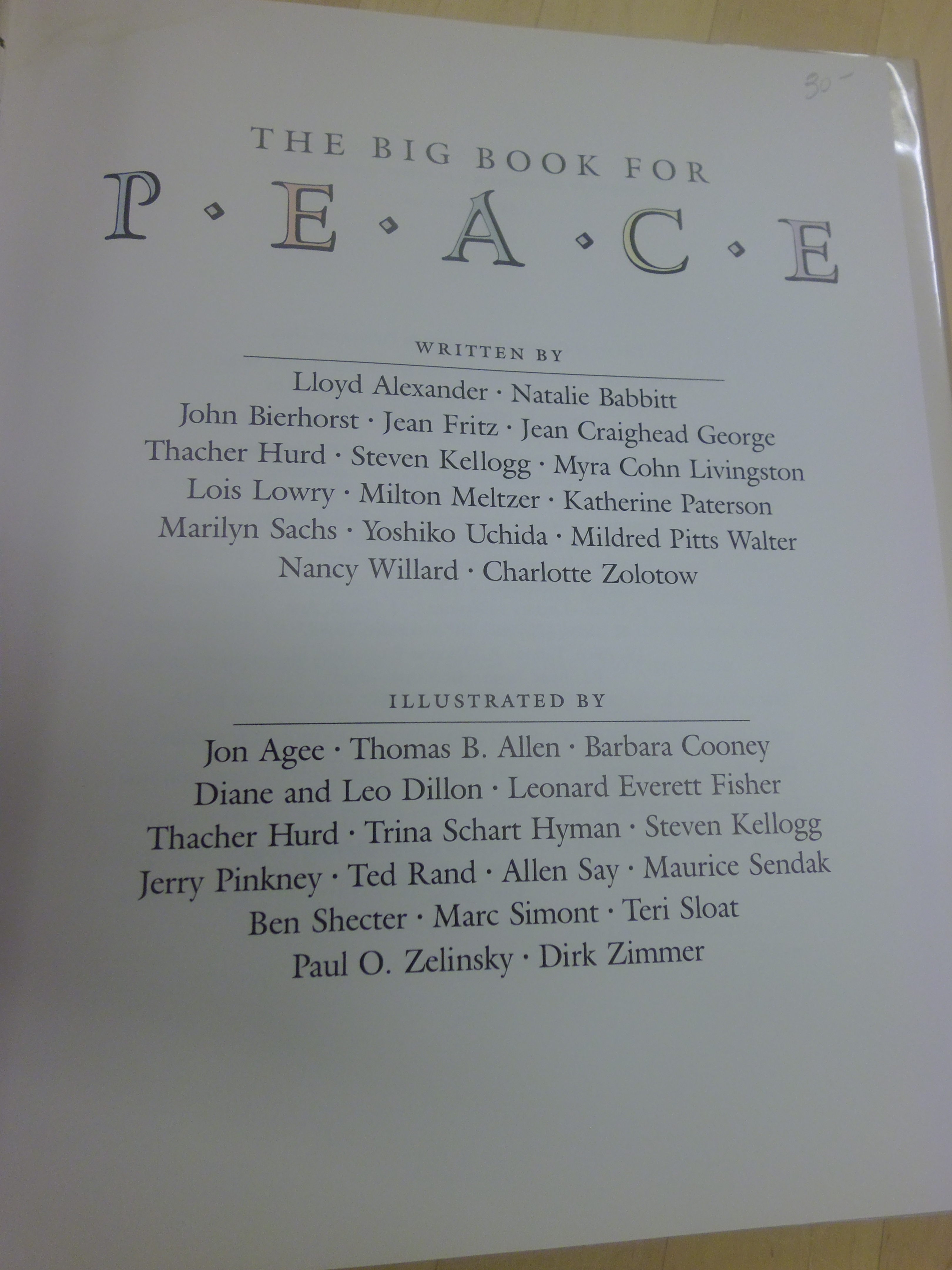
I’ve been eying this for awhile now. It’s been perched on display in the kid’s section at Good Books in the Woods for months now. Why has no one picked it up? Why is no one buying this. It’s in a nice slip cover, it’s been taken care of. There’s some slight water damage that – as a book collector – I see no problem with, it’s ever so slight and does not take away from the magic of the book. It’s a nice, clean copy. It’s only $12.
I know why I haven’t purchased it – I’m completely overloaded with books AND have NO money.
But that doesn’t mean I’m not going to read it until someone else does decide to take this treasure home.
So today, I sat down with the kiddo, in a bookstore, in another person’s home – and my home away from home – and read her the first story in the book.
 Filled with castles and kings as any good Lloyd Alexander story should be, The Two Brothers follows a tale of two men who split the kingdom their father left them in half. From the rubble of the fortress they grew up in, they build two separate castles. What begins as a sweet story between the kindest brothers ever evolves into a competition of who can build the better kingdom, each man filled with greed and a medieval ‘keeping up with the Jonses’ mentality.
So many times, the reader can see where each brother makes an unwise choice, continuing the bitterness. Until we arrive at this lovely illustration, which my camera has done little justice:
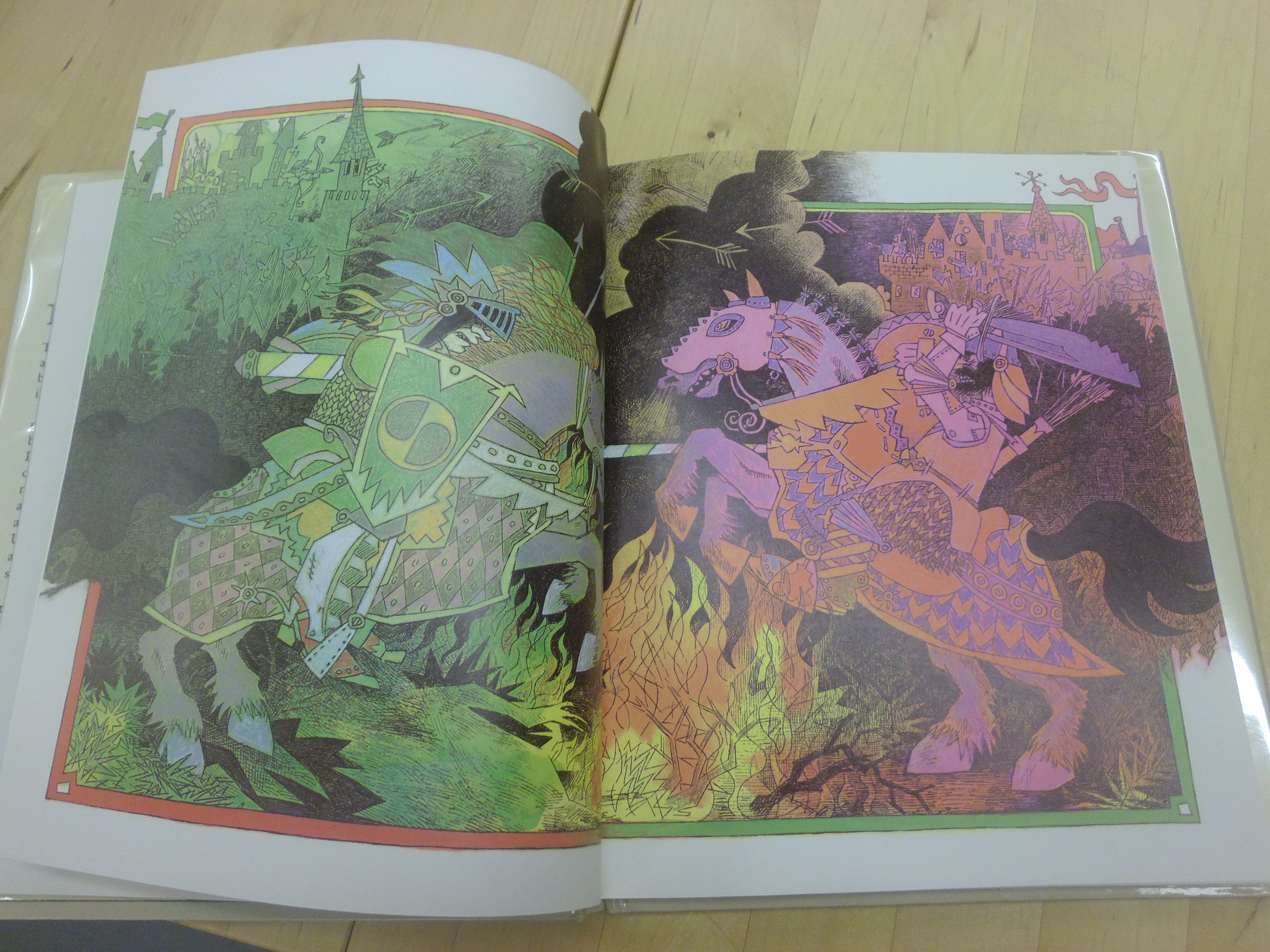
This story was kiddo approved (she’s three, but it is a nice tale for any age). I look forward to the next chapter of The Big Book of Peace.
In Response to Book Riot – A Bella Swan Post

Kristen Stewart, actress, as Bella Swan in the Twilight Saga movies
Many moons ago, I posted this.
Today, I read this.
Of course, I have something to say about it all… of course.
So here it goes:
Of course we envy Bella’s apathy. Of course we wish we could float through life allowing everyone else to make decisions for us. Of course. Why? Because it’s simple. It’s easy. You are not responsible for your actions if you’re merely a reactor, if you function by being completely nonfunctional – always being taken care of.
Ruminate on that thought. Embrace it. Now revisit Bella’s story…
What if Edward had become an abusive drunk? What if her friends were not so nice or trustworthy? What if all these fabulous adventures she just allowed to happen to her throughout the series, what if all this apathy, had come back to bite her in the butt? Being a helpless twat doesn’t sound so awesome anymore, does it?
Ultimately, we like Bella Swan because everything worked out for her. Her personality and choices are acceptable because there is a happy ending. Put the same traits on someone with a not-so-happy ending and we’d blame them, shake our finger at her blatant disregard for taking care of herself and heeding wise council.
I appreciate this Book Rioter’s post about changing thoughts and opinions on a character. I appreciate that she identifies with Bella Swan, that she envies her in some ways. That’s her right and the beauty of books – everyone gets a little something – take what you like and leave the rest.
 But me as a teenager, I think, would have found Bella just as repulsive a character as I found when I read it as a married adult. Mainly because she was disobedient, a poor student, and was relying on the love of her life to scoop her up. All things that a teenager probably *wants* to do, but as a teenager (more so than as an adult), I did not allow this line of thinking in myself because I saw time and time again in others how self-destructive it could be when life spun out into the wrong direction.
I was blessed enough to actually marry the boy I loved in high school – a lot of people I knew did – but I wasn’t counting on this. There is nothing wrong with being in love. There is no shame in the desire of your heart to ultimately be a wife and mother. I don’t knock that one bit. But please, please, prepare for another scenario.
Be the best student you can be. Train for something – learn a trade. Be capable of paying your own bills and keeping a roof over your own head. That is something that I didn’t get from Bella Swan, not in the slightest, not one bit. Bella Swan expected her fantastical boy to sweep her off her feet and had no secondary plans. This, ladies and gents, disturbs me, no matter how much I, too, may envy her apathy at times.
You don’t have to be a control freak to take control of your life and your future; and you don’t have to be apathetic to fall into the desires of your heart.
Literary Journal Mondays

Remember the zine movement? (No? Visit Snapdragon Zine Fair) Ah, the 90’s and early 2000’s. Except that’s not where it started. No, it began long ago, and still goes on, in Literary Journals.
 McSweeney’s Quarterly Concern comes to mind.
But do you remember Granta? (or Paris Review, or Soho Square, or The Quarterly, or countless others?)
My eyes tend to rest on Granta when I’m in a bookstore. Such colorful spines… printed by Penguin.
Today, #24 Inside Intelligence pops out at me… “Her Majesty’s Government does not want you to know about the life of Anthony Cavendish,” the cover reads. There’s a huge circular stamp in the bottom right corner: BANNED IN BRITAIN. How do you pass that up?
What follows is a spirited and creative journalistic effort to share news in the form of intelligent literature. Photographs and interviews you wouldn’t get in a newspaper, writing worthy of Pulitzers (and sometimes even written by Pulitzer winners). Just in Granta #24 alone, Philip Roth, Peter Carey, Tobias Wolff, Bruce Chatwin, and E.L. Doctorow all grace us with their presence.
The world of literary journals is a fascinating and amazing one that goes back centuries.
 Paul Collins wrote an essay called “121 Years of Solitude” for Bookmark Now about his own journeys through a literary journal called Notes and Queries: A Medium of Intercommunication for Literary Men – a weekly magazine from the Victorian era. Collins’ memoir-like essay of his time spent in the Portland, Oregon library is one I dive into regularly, envious of his access and ability to take time to develop a daily library routine. Bus rides downtown, coffee, grand staircases, Notes and Queries, the entire endeavor sounds heavenly to me.
I don’t have time in my life – or the ability, as a mom of a three year old – to replicate a similar endeavor right now. But, the idea of taking an extra 30 minutes to an hour each Monday to peruse a literary journal that graces the shelves of my existing Monday routine (Good Books in the Woods) sounds plausible.
So here’s to Literary Journal Mondays – may they be more consistent than my Weekly Low Down of Kids Books (which happens sporadically throughout most months instead).
Finally, Part Three

Yep, still talking about this.
I finished Committed last night just before bed. I let it settle in my mind. I avoided circular obsessive thoughts about it – circular, obsessive thoughts are usually how I handle most things from something someone said that day to mortgage payments to the last few sentences of whatever book I have just read (thank you, Codependent No More).
Amazing how I was able to sleep when I took some deep breaths and let it go. I’ll think about it tomorrow. I never tell myself I’ll think about it tomorrow. I always just think about it until tomorrow. This typically evolves into some kind of extreme emotion by morning – what Gilbert quotes the Gottman’s as calling “flooding.”
That being said, I don’t have any stunning perspective or revelation now that I have finished the book. I merely have some quotes that struck me as notable. So notable that I didn’t just underline them in the book like a maniac, I actually copied them down into my journal.
“My mother herself had probably given up long ago trying to draw tidy ultimate conclusions about her own existence, having abandoned (as so many of us must do, after a certain age) the luxuriously innocent fantasy that one is entitled to have unmixed feelings about one’s own life.” – pg. 201, Committed
Me of excessive and obsessive thought who feels passionately one way or another on almost EVERY topic found this relieving. Lately, I have felt passionately about opposing thoughts – as in I feel BOTH sides passionately and have felt that this means there is something wrong with me. Apparently what I have seen as the ultimate sin – a conflict of beliefs and ideas and feelings – are just the growing pains of adulthood.
“If there is one indignity I shall never endure gracefully, it is watching people mess around with my most cherished personal narratives about them.” – pg. 206, Committed
Yes! This enrages me! And that is ridiculous. Gilbert may profess to never endure it gracefully, but that is definitely an aspect of my character I want to learn to change. It was roughly around this point of my reading that Annie Lennox started singing “Fool on the Hill” with Paul McCartney in the front row of the audience on TV and I decided that there will be sins I can’t kick, feelings I can’t change, that I will take to my grave. But enduring other people being themselves, even if it is not how I view them, gracefully is something I would like to be able to do sometime. The thoughts and the song and Annie Lennox may be unrelated, but forever in my mind they will be synonymously seared into my brain… don’t be a fool, summon your grace.
There was also a bit about porcupines that intrigued me. It’s a blurb Gilbert writes about another author’s work, Deborah Luepnitz’s Schopenhauer’s Porcupines:
“[…] Arthur Schopenhauer told about the essential dilemma of modern human intimacy. Schopenhauer believed that humans, in their love relationships, were like porcupines out on a cold winter night. In order to keep from freezing, the animals huddle close together. But as soon as they are near enough to provide critical warmth, they get poked by each other’s quills. Reflexively, to stop the pain and irritation of too much closeness, the porcupines separate. But once they separate, they become cold again. The chill sends them back toward each other once more, only to be impaled all over again by each other’s quills. So they retreat again. And then approach again. Endlessly. ‘And the cycle repeats,’ Deborah wrote, ‘as they struggle to find a comfortable distance between entanglement and freezing.’ ” – pg. 223, Committed
I read that and immediately thought of heroine and addiction. No, I’m not a heroine addict. But I’ve seen them in action. And if I’m to be honest I have a tendency to feel like one in regards to the people I care about the most – all of whom I can count on fewer fingers than I have on one hand.
Gilbert’s book is lovely. I’m sorry I sharked her memoir and made it all about me. I hope if she ever stumbles across this blog, she will take it with a grain of salt and not see me as a pirate of some kind. I recommend reading this book, regardless of what you thought about the more famous Eat, Pray, Love.
If I’m to get one over all message from ALL of my reading this weekend/ week, it is this:
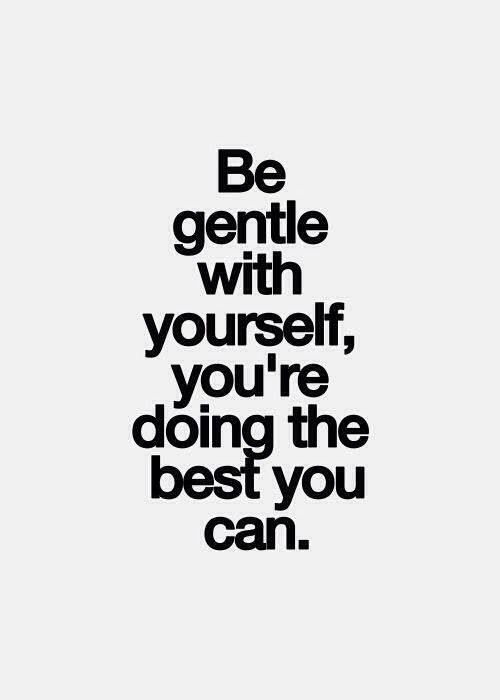
I really needed to get this message.
Committed – Part One
Title: Committed
Author: Elizabeth Gilbert
Genre: Non-fiction of some kind. In a bookstore it would go in the memoir section, I’m sure – but it’s so much more than that.
I’m aware that when one decides to follow a book reviewing blog, they don’t expect the posts to start turning into self-aware sob stories. However, I cannot fully digest a book without it becoming part of me and my psyche and putting a little bit of pressure on my world view and myself.
When I read Eat, Pray, Love a few years ago, you may or may not remember my indignation. I was so irritated. This woman was so flippant! How dare she walk out on her marriage and go gallivanting and call that spiritual growth! I loved Gilbert’s writing style, I loved her way with words, but all I could think was, “What a selfish whore.”
That was unfair. I see that.
I’m reading Committed now. A friend had told me Gilbert would redeem herself in my eyes in this book. I was skeptical. How could I ever see eye to eye with this woman?
But that’s the thing. I don’t see eye to eye with her. But now, I’m ok with that. Not because of this book, though, I’m sure that helps; but because of me. I’ve come to realize some things about myself in the very short time that it has been 2014.
I have a very intense moral code. So intense, it is probably filled with much higher expectations for life than is humanly obtainable. Stepping outside of this moral code in the past has left me trembling. It terrifies me, because, simply:
I fall short. It is impossible to live up to it.
I expect others to live up to it. If we all strive to live up to it then maybe we can have a chance in hell of making it.
We don’t.
I see this now.
Yes, that makes me a hypocrite, I suppose. Often.
Yes, that means that deep down I hate myself for not being able to live up to my beliefs. Even saying this is in contradiction with my beliefs… I believe the whole bible to be true and even the bible says that we all fall short of the glory of God. I believe in being a strong, independent, secure human. Both of those things are in contradiction with me hating myself for falling short.
You see, it’s not just me being unforgiving of others. I am completely unforgiving with myself too. Especially when what I perceive as truth, and what I believe is right, is the polar opposite of what I want.
I was taught that my wants were frivolous nuisances to be disregarded. Bury them. Pretend they’re not there. Doing what you *should* do is far more important than doing what you want. Wants are things that destroy people, families, cities, empires. Look at history – use your brain. Don’t feel, use logic.
Somewhere in that teaching, there’s a logical fallacy. Like Gilbert’s ice cream purchases correlating with drownings example – which made me laugh out loud. (Statistically where there are higher ice cream purchases, there are more drownings. Obviously, this does not mean that buying ice cream will increase your chance of drowning yourself, that would be a logical fallacy – yet, that’s exactly the kind of logic that has been ingrained in me.)
Now, 10 days away from 30, I feel a strong urge to fix this problem.
This is not something that can be fixed in 10 days.
Shockingly, despite my looming 10 day notice, I find myself a little at peace while reading Elizabeth Gilbert – author whose views I have previously found revolting – has spent page after page talking about forgiveness.
Things I have always been really cranky about – HOW does someone behave THAT way – she spells out. Instead of just saying, “It happens,” she takes great descriptive pains that only an eloquent writer could take to tell me how. To explain. Pages 108-110 left me in tears. Finally, I see why people have been so angered by my judgement. Finally, I see why I have no right to judge.
I was wrong. I’m sorry.
I’m not sure how this will effect my future decisions. But at least I can start to not hate myself, whatever they might be. Yay for mid-life crisis number two (and I’m not even mid-life yet, am I?).
I’m not finished reading yet, but I’m sure I will be soon. I have so much to say and think about this book and there will be a second post on it in the future.




 Anakalian Whims
Literary Journal Monday – Mapping My Mind
March 10, 2014 at 10:14 pm (In So Many Words, Reviews, The Whim) (ADD, ancient history, books, dystopia, dystopian society, fiction, Gone, good books in the woods, Hunger, Lang Leav, literary journals, London Review, love, Michael Grant, poetry, reading life, reviews, romance, series, social commentary, Tonight You're Mine, You Instead, young adult)
I am not ADD, but my mind is often many places at once. It goes and goes… it races… it is unstoppable.
I was craving a little bit of dystopian society literature after reading Herodotus. My brain spinning in a circular momentum about democracies, oligarchies, and dictatorships. Darius and then Xerxes tyrading around ancient lands building the Persian Empire. A thousand utopian and dystopian variations of all societies throughout history – a million possible outcomes for our modern world – twisting about in my mind. Conveniently, it was at this moment that a trailer for the movie Divergent came on and I thought, “It’s about time I read Veronica Roth.”
Cue discussion of autism I’ve been having on and off with people since reading Not Even Wrong written by Paul Collins. Collins is an amazing author and obscure historian. Still suffering from story hangovers from Divergent and the movie Tonight You’re Mine (all about instantaneous human connections) – I found myself thinking about my niece’s Gone series.
Set in a town in California, all the kids fifteen and under have been left in a supernatural bubble – all adults over puberty have vanished, leaving kids and babies to fend for themselves and create a new government. Not unlike Lord of the Flies, different factions have formed. One is under the leadership of Sam Temple, another under his half brother Caine (the biblical implications of Caine and Abel not to be lost on readers, of course). Sam and his new girlfriend, Astrid, are two of the oldest left behind. They have formed a parental union for the younger kids, caring for all the helpless, including Astrid’s autistic brother.
Like bumper pool – or pinball, if you missed out on the bumper pool phenomena – the synapses in my brain spark and twitch and leap bringing me back to Paul Collins/Not Even Wrong/ McSweeney’s Quarterly Concern. Then, I find myself thinking, “Goodness, it’s Literary Journal Monday.
London Magazine February/March 1981 Vol. 20 Nos. 11 &12
The Private Letters of Tennessee Williams and a piece on Gore Vidal catch my eye. I flip through the first few ads, the table of contents, then stop dead on a heading: FINAL REMINDER.
My thoughts have veered so far off track that I forget what I was reading altogether. I flip through the journal in my hand trying to grasp the reason I had sat down to look at this in the first place.
It’s March. St. Patty’s Day is coming up. Irish authors keep popping in and out of my mind. Ireland… Scotland… Tonight You’re Mine… music… poetry… Derek Mahon, an Irish poet’s name blinks at me from the page of the literary journal in my hand. Literary Journal Monday, of course. I read the poem “The Elephants” first. I love elephants. Then my eyes skip over to “April in Moscow” and I read “Spring burst into our houses…” It does, doesn’t it? Just bursts right in and none too soon. At the end of the poems there is an ad for the Poetry Society Bookshop at 21 Earls Court Square in London. I wonder if it is still there.
If they do still exist, I bet they have a copy of Lang Leav’s Love & Misadventure. I’m dying for a copy. Leav has been speaking to my soul lately. Misadventures stuck in the cogs of the mind of a woman turned 30.
A line from Grant’s book swings into full view of my mind’s eye:
There rarely is when a hug is really needed. It’s that moment Leav writes about…
The lack of selfishness between the characters at this point is refreshing in fiction and real life.
In a 2014 American Society of infantile adults who never learned to fend for themselves and work hard without constant praise, we are fascinated by literature and movies where children and teens are forced to grow up overnight and be adults.
It’s sad when the idea of fifteen-year-olds co-leading a community and making wise, unselfish decisions for themselves and each other sounds absurd and fictional. My associative mind leaps back to all the ancient history I’ve been studying, back to the likes of King Tut – pharaoh at age nine – dead by nineteen, married somewhere in between.
We believe in responsible marriages like the Romans, but we chase telepathic connections like the Greeks. What a very convoluted and contradictory way to live – the reality of a dystopian society is that every society is a dystopia – even a society of one. Our minds are everywhere and nowhere. Of course we are in conflict.
I suppose you Literary Journal Monday followers got a little more than you wanted. I bit off more than I could chew today. I attempted to map my own mind and identify all the associations and patterns, leaving myself somewhat exhausted from chasing whimsies.
At least I got to spend a few stolen moments in this room…
Permalink Leave a Comment