An Autistic History
 Title: Not Even Wrong

Author: Paul Collins
Publisher: Bloomsbury
Genre: Memoir/ Psychology
Length: 245 pages
I’ve journaled nearly twenty pages of commentary on this book. Now, having finished it, I’m not sure what I should share and what should be kept to myself.
Collins does a spectacular job sharing memoir with known history, diving into tales from the world and mixing it with tales from his personal world. The first few chapters are dedicated to his pursuit of Peter the Wild Boy and an existing desire to write a biography on the mysterious boy who was ‘rescued’ by King George. (Reference to the boy made in Notes and Queries, of course.) Collins later discovers his son is autistic.
The entire book is an ode to his son and his autism. An ode to their life, their relationship, the world of Autists.
Therefore a lot of information is shared regarding what that means. A lot of reflection on the gene pool it takes to cook up such a neurological anomaly that is an essential part of humanity as a whole. The trifecta being science, art, and math.
Collins writes on page 96:
Apparently we have been walking around with the genetic equivalent of a KICK ME sign:
my father: mechanical engineer
jennifer’s father: musician, math major
my brother: phd in computing
jennifer: painter
me
At this point, I remember taking my own personal inventory. My father is a civil engineer, not only that he was a musician and painter, and suffers from what I think is undiagnosed and extremely mild tourettes (also discussed in Collins’ book). My immediate cousins and family members on that side of the family are musicians and scientists. Some work in labs, some in an engineering field. Although I’ve been an English and History girl my whole life, much to my father’s chagrin, I was raised by and around extremely scientific minds. I think I get all the feelings and other eccentricities from my mother’s side. But in a parallel universe, had I somehow procreated with people I had dated in college rather than the love of my life whom I married – musicians, computer geeks, Synesthesiacs (also discussed in Collins’ book) – I think I was very close to wearing that KICK ME sign as well.
Looking at the world through the eyes of Collins’ research, I think many people have been close to wearing that sign. I think everyone should read through this book and see just how close. It’s enlightening. It’s scary. It’s beautiful.
There are so many amazing people through out history who have changed the face of humanity – the way we work – integral parts of society and science… and they were very likely autistic. Albert Einstein, Isaac Newton, Glenn Gould, Andy Warhol, Paul Erdos. These people are essential to who we are as a species today. These people have made our world more beautiful, even though they are very likely to be the same people described on page 109: “Imagine if you tried to pretend to understand people, but didn’t really. So you rehearse it all in your head: taking notes, analyzing every social action, trying to connect it all together.” I don’t have to imagine. I may not be a genius like Albert Einstein, I may not be as clever as Glenn Gould, and I’m certainly not nearly as eccentric as Andy Warhol – but I know all about rehearsing, taking notes, analyzing, and still feeling quite out of the loop. A little bit of understanding from the rest of the world goes a long way in my book – even though I’m not so good at understanding the rest of the world, I’m trying to be better about it.
“You know, it used to be that when I saw someone acting or talking strangely, or just being odd on the bus, I’d think to myself: What’s his problem? I still have that reaction. But now I stop, pause, and have a second thought: No, really, what is that man’s problem? There is a decades-long chain of events that created the person who are seeing.” – pg. 213
Paul Collins brings a little bit of humanity and the importance of curiosity and empathy into ALL his work. For that I adore him, and will always adore him, forever.
On that note, I want to check out the artwork of his wife. I love art. I love paintings. I am the CMO of an art company called Aoristos and I’m curious to see the style of art the spouse of my favorite author paints. If anyone knows and can provide reliable links – please do.
The Planets
 Title: The Planets
Author: Dava Sobel
I’m impressed with how accessible Dava Sobel has made Astronomy. As a New York Times journalist, she brings all the important information to the table. As a writer, she’s a story teller of the highest degree. Beautiful, fluid, and full of all the ancient romance of the stars, The Planets is full of history, poetry, and all the most relevant of scientific discoveries. Sobel’s work is not only a pleasurable read, but the dream-find for a homeschooling mom intent on classically educating her child.
With Sobel’s newspaper background, the book is very readable; a proficient sixth grader shouldn’t have a problem with it. I plan to use this for my child’s eleven year old Astronomy lessons, along with a middle grade level study of Ancient History, as Sobel has filled the book with quotes from or about many of the Greats. “Pythagoras believed the cosmic order obeyed the same mathematical rules and proportions as the tones on the musical scale,” (pg. 163.) introduces an entire chapter dedicated to man’s fascination with the planets and how that has been celebrated through the centuries through the art of music.
Always presented to me in school as a pitiable underdog, small and petite, Pluto was my favorite planet. Even more so when it was first threatened by the idea of being stripped of its planetary status, I became indignant, an uneducated supporter of allowing it keep its rank in the sky and in our textbooks. Like an older sibling protecting a small child, I felt like it was a personal attack to say Pluto wasn’t really a planet. I was angered that someone had decided to take back all I had been taught and strip this little planet of a description I thought it had earned. After reading Sobel’s explanation of Pluto’s discovery, history and status and then a chapter on Uranus, I think I may be sold on the reasons why Pluto title as the 9th planet is threatened and that Uranus is actually my new favorite. So heavily tied to the literary works of Shakespeare in name and attitude with such a unique history, my new knowledge of Uranus now pales my previous love for Pluto – a childish emotion of elementary proportions, tied to an association with the Disney dog.
I have other books by Sobel lurking around in my library, and I can’t wait to dive into those when I’ve exhausted this particular topic. I look forward to reading Longitude and see if she attacks the subject of geography with the same fervor as she did Astronomy.
Mid Week Thrifting
I used to haunt thrift stores the way I currently haunt bookstores. In late high school and early college, its where I picked up all my clothes. There was nothing better than a 50 cent blouse and some $2 jeans. Unfortuneately with the recession, thrift store clothing prices have increased to an amount that (unless its the world’s most awesome thrift store find) I can often find similar cheapy items for less at Wally World (sacriledge, I know). In theory I hate WalMart, but sometimes a tight budget makes the decision for me. But when my best friend says she wants to check out the newly reopened Goodwill Select in the Heights, I’m game.
Of course, I found dozens of things I wanted (there were piles of amateur paintings done by the same unknown person), but only came away with a few of the most inexpensive but longest lasting items money can buy: books. I acquired a few nice copies of things off Ayla’s Classical Education list that I didn’t already have… Sophocles and such because I will need them eventually and haven’t seen copies in this nice a condition for this cheap. It looks like someone dropped off an entire school library in mint condition. And two things that aren’t as easy to find (not difficult, just not typically parading themselves around in large quanities):
 Profiles in Science
Then, for me, I picked up The New Science of Strong Materials
For more on the exciting world of thrifting, follow Her Library Adventures, she too has a mid-week thrifting notice this week: http://herlibraryadventures.blogspot.com/2012/05/midweek-thrifting.html
Einstein: His Life and Universe by Walter Isaacson – A Review
 Title: Einstein: His Life and Universe
Author: Walter Isaacson
Publisher: Simon & Schuster
Genre: Non-fiction, Biography, Science
Length: 675 pgs.
Albert Einstein was a prick. Not the description you were expecting? Me neither. We always hear about how brilliant he was, how much he changed humanity and the world of science with his great theories. We always see images of his goofy, yet charmingly wild smile and hair. We don’t see him through the eyes of the family he abandoned.
Isaacson is thorough in his research and the language of his biography of Einstein is easy and accessible. He sheds a lot of light on physics formulas that I had a hard time grasping in my high school science classes. But he also sheds a lot of light on Einstein the not-so-family man.
Not only did he and his wife abandon their first child, a girl who history has nearly erased,
“[Hans Albert, Einstein’s son] had powerfully conflicted attitudes towards his father. That was no surprise. Einstein was intense and compelling and at times charismatic. He was also aloof and distracted and had distanced himself, physically and emotionally, from the boy, who was guarded by a doting mother who felt humiliated.”
Einstein eventually divorced his wife, but not before maintaining an emotional affair with his cousin Elsa. “Companionship without commitment suited him just fine,” Isaacson writes about how Einstein toyed with both women’s heartstrings by alternating his attentions between them. In the end Einstein and Elsa did marry, but not before a questionable letter was written by Elsa’s daughter to a friend that mentioned Einstein’s true love interest was the twenty year old daughter, not the mother.
Isaacson’s presentation of Einstein is a great book for high school science and history students. Anyone trying to understand the genius’s formulas should also understand the history surrounding their creation/discovery. His life is also one to discuss with your teen touchy topics of worldview and the importance of values; world changing discovery vs. the importance of family, political and religious affiliations and observations. Each family’s opinion of Einstein’s life will most likely be different, and its one that should be surveyed and critically analyzed.
Crack in the Edge of the World
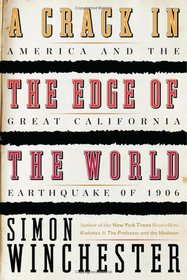
A Book Review
Simon Winchester never fails to fascinate and inform. When I picked up Crack in the Edge of the World, I was surprised to discover that the author I dearly remember for writing The Professor and the Madman (a history of the making of the Oxford English Dictionary) was also a geologist and highly knowledgeable in both language AND the science of rocks – what a foundation! This particular history on the great earthquake of San Fransisco met high expectations of Winchester’s talent compared to his previous work and I recommend this to anyone who likes history, science, or just plain good storytelling.
Intelligent Design: More Than a Bandwagon
A Review of Michael J. Behe’s Darwin’s Black Box
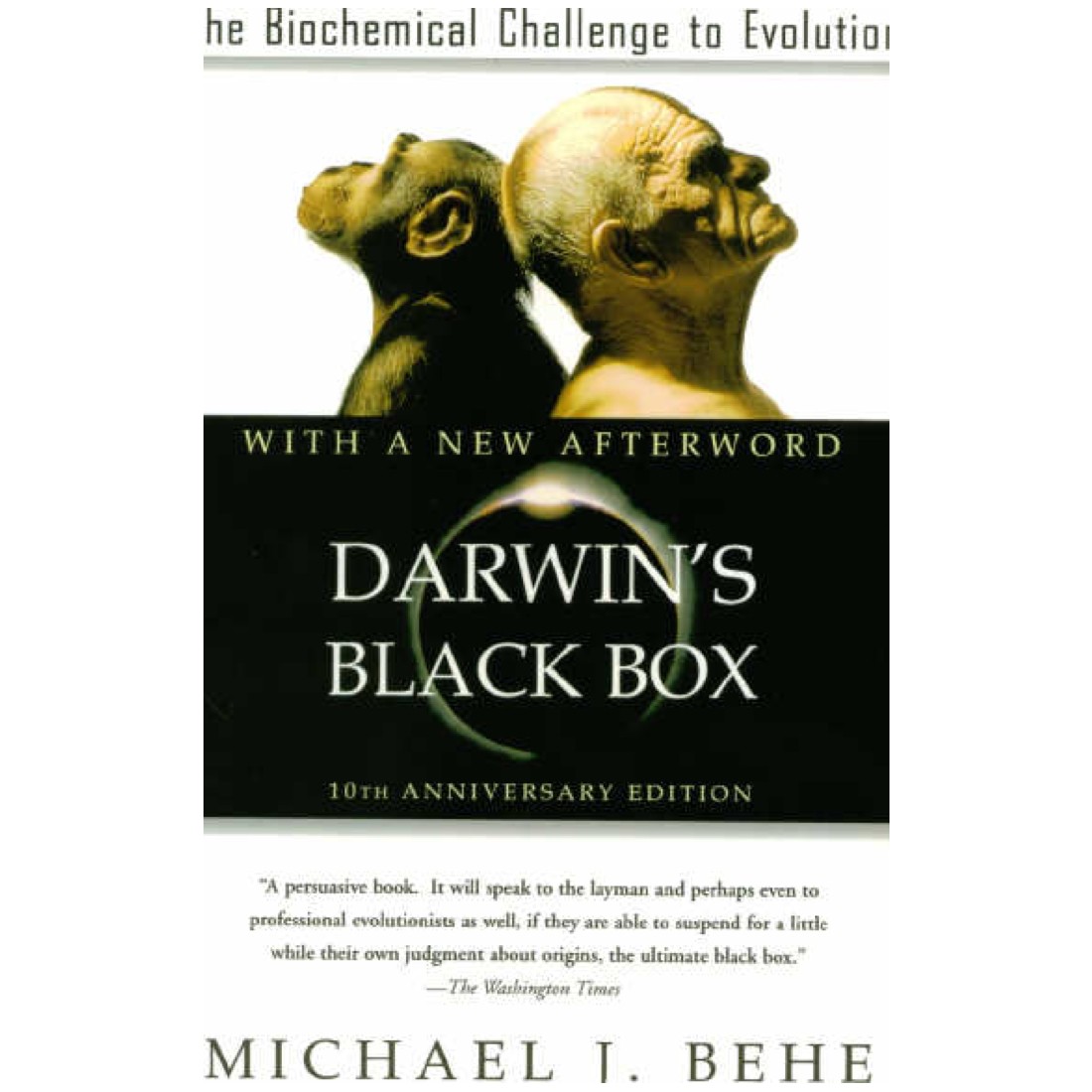 I thoroughly enjoyed Behe’s well-crafted and easy-to-understand argument against Darwinian “science.” I found Biology fascinating when I was in school, and this has sparked some of that forgotten love for studying things under the microscope. I would like more Darwinist groups to actually give this book the time it deserves rather than casting it aside because they think its a soap-box for Creationists. Behe clearly states that he is NOT a Creationist at the beginning of the book – put your pride aside and see what he has to say about his research before you judge his viewpoint.



 Anakalian Whims