Conspicuous Consumption by Thorstein Veblen – Lost in “Education”
 Veblen was a famous sociologist and economist in his day (roughly turn of the century, writing his most well-known essay in 1899). He even had his own movement! (Institutional Economics Movement). Whether someone agrees or disagrees with his theories and how the world should be, there is no doubt about the fact that his observations on how the world is, carries a stunning amount of accuracy.
Why did we never read this for school? The relevancy is uncanny. The way the times haven’t changed is disturbing. I am definitely adding this to my required reading list for when I home school my child.
This book in reality is a 100 page essay or so, not long in the slightest and should take the reader a mere hour or two to digest and properly process (depending on the reader). What I plan to have my child address when I require this to be read are the following questions (and I’d like to know what you guys think too, if you’ve read this):
How do Veblen’s ideas tie into Darwin’s evolutionary theories?
How do they interact with Marxism and Capitalism?
How are his ideas relevant today?
How are the leisure class and ownership related, according to Veblen? What are the roots of conventional ownership and of marriage? Consider contemporary phrases like “trophy wife.” (How does this affect gender roles?)
Veblen sees “emulation” as a key feature of social life in “predatory societies.” How do the patterns of emulation change as predatory societies change?
What fundamental criticism does Veblen make of standard economics?
I actually have quite a few more that I have borrowed from other sites, essay questions and discussions to be had are all noted in a journal I am keeping of projects and assignments to remember. My point in posting the blog today, however, is this:
How did something so famous, so moving and so relevant – something Penguin even published in their Great Ideas series – get neglected in my own education? Not just high school with basic history, social studies, and economics, but also in college when half my life was filled with economic theory and consumer behavior as I earned a Marketing degree? I am realizing more and more the importance of not just reading about movements and theories, not just getting summaries from textbooks, but reading the original documents! How can your education be complete without going back to what started the ideas in the first place? How can you presume to know anything about anything if all your information comes from a summary in a textbook and you’ve never even heard of the essay that initiated the need for that summary?
The Girl from the Fiction Department
A Portrait of Sonia Orwell by Hilary Spurling
 This was a lovely piece of literary history documenting not just the life of Sonia Orwell, a famous and well-known editor on her own as well as the second wife of George Orwell, but that of many of the literary giants she befriended. The book is short, easy, and a fascinating glimpse into the hearts of so many European authors and artists for anyone who enjoys well-written literature and the bohemian lifestyle in which many of them lived.
I was baffled and surprised by Sonia’s many love affairs, saddened and elated by Sonia and George’s short-lived union, and angered by the notion that other biographers have so readily misunderstood her. I found Sonia interesting and bold, yet I also found myself so relieved to have not lived her life. She truly must have been someone to behold, respect, and possibly hate at some moments – though I think I might have liked her most of the time.
I loved that Sonia’s biography was so linked to her role in Orwell’s writing the character of Julia in 1984, the girl from the fiction department. Its such a quick and concise biography that manages to branch out and cover personalities of so many of those of Orwell’s time, I believe if I were a high school English teacher I would either require the reading of The Girl from the Fiction Department directly after assigning 1984 (or at least offering it up as an extra credit assignment).
Oh Dear, Another Vonnegut…
A Review of Cat’s Cradle (kind of)
 My problem with Vonnegut is that his novels are too short. I was just finally becoming fascinated by the Bokonons and their rituals and the book ends. I want his tales Dickens style – with two or three hundred pages on Bokonon establishing his religion and living in the jungle, then I want another hundred pages on Newt, Angela, and Frank. Instead, I get a sentence here, a paragraph there, and finish the book unsatisfied. On top of that, I feel like a jerk for not appreciating Vonnegut the way the rest of society seems to. I have the appropriate shelf of my library dedicated to all his work, but I just can’t muster up the love. Like Salinger, he’s good, he’s even really good, but he’s not the best thing ever (though I am repeatedly told that he is). Perhaps the hype has ruined him for me.
Origins and Thoughts, and Original Thoughts
My thoughts on Irving Stone’s The Origin so far… (I’m on Book Ten)
 Irving Stone presents a very cheerful, almost carefree, narrative of Darwin’s life. Friendships are dwelt upon, discoveries are glorified, and opposition breezed over. Even the death of Charles and Emma’s third child is skipped over with a mere page and a half of detail.
Despite being an enjoyable novel, its astonishing how much humanity is lacking in the description – it has the feel of a 1950’s family sitcom, Leave It to Beaver meets the Darwin family in Victorian England.
I like Irving Stone’s version of things, however. It gives a detailed time line of publications and events. Its a good source to use as an introduction to the study of evolution: names, dates, and important essays, journals and other writings are handed to you chronologically on a silver platter so that you can jot them down and do additional research afterward.
The book is quite clever, actually, sidestepping every controversy and smiling noncommittally.
“They established a routine in which everyone fitted harmoniously,” (from book nine: the Whole Life) seems to be the theme of the book, rather than the development of the theory of evolution. It is full of lines like: “The Manuscript on Volcanic Islands moved along felicitously.” Even through his many illnesses and the death of his two daughters, Charles Darwin seems to have led a very charmed life.
I discussed all this with a member the physical JARS book club, and she pointed out something important that I failed to notice: this is exactly the way a man of the Victorian Age would want his biography written. The Victorian era was a time when the upper class mastered the art of smiling and pretending everything was fine, introducing what my friend described as “that very British attitude of ‘Get Over It and Move On.’ ”
Fantasy vs. Reality, Bella Swan Meet Emma Bovary
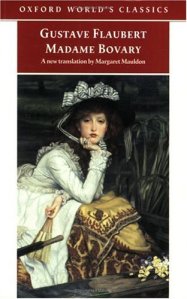 I just finished reading Madame Bovary by Gustav Flaubert, yet another piece of literature addressing the theme of fantasy versus reality. This piece of work should join the ranks of Cervantes’ Don Quixote and Austen’s Northanger Abbey as all the main characters read novel after novel and for some reason become all goofy stupid because of it. Don Quixote is quite funny, though annoying, in all his follies and delusions; Catherine visits the Abbey and acts quite the silly little girl. Emma Bovary on the other hand is a different kind of delusional altogether, she is not funny in her silliness, there is no part of her antics that bring any kind of nostalgic giggle to my heart. Emma Bovary has confused the fruitless passion of romance novels with what she wants for her life, and unfortunately for all involved, that kind of love is not realistic, long-lasting, or even truly desirable. There is so much more to love than what she sells herself short for.

Kristen Stewart, actress, as Bella Swan in the Twilight Saga movies
While reading Madame Bovary and coming to these conclusions, I couldn’t help but compare this theme to the realities of today – to the fad that is known as the Twilight Saga. Since I first read Stephenie Meyer’s books I have told people the story-line of the Twilight Saga is terribly frustrating because it sets unrealistic and pitiful standards on the beautiful thing that is love. Not to say the books are inherently bad, they were entertaining and held my attention until the end, but there are so many things young men and women should understand when sitting down to read these novels. Well, one thing specifically: Edward is not real. Jacob is not real. These boys do not exist, they will never exist. And truth be told, they don’t act like real men, and in the end, even if they did exist, you would be unsatisfied. Beware of expecting the wrong things and becoming the next Madame Bovary, wench of all wenches.
Below is a review of Twilight my sister Nikki Dawn Bratton wrote:
As a woman, I am captivated by the emotional suspense that Stephanie Meyer artfully crafts as this classic romance unfolds.
Classic, you say? Falling in love with a vampire? Yes, classic. As Bella Swan’s desperate desire builds and unravels, it is increasingly clear that the imminent danger in this novel is not so specifically falling in love with a “vampire”. If it were, then the plot would be too fictional to strike so much fear in my heart. It would be too fictional to draw in so many female fanatics ready to ride the thrilling emotional roller coaster.
No, vampires don’t make this story scary – it’s the classic romance driven by the understanding that love is some uncontrollable force that you “fall” into. A young reader being shaped and impacted by this novel will gain the following detrimental (and false) insights on life and love:
True love is uncontrollable. Like Romeo and Juliet, Edward and Bella are drawn to each other. For Bella the mystery behind Edward Cullen is so intriguing that she cannot help but be drawn to him. By the time she finds out who he really is, she states simply “It doesn’t matter” because she is already hooked.
Love is about risk; therefore, the greater your willingness to risk, the greater the love. Bella’s desire to be close to Edward supersedes all her inhibitions. The danger he presents becomes irrelevant to her.
A woman’s emotional attraction and sensual stimulation are the best tools she has for determining how much risk is right for her to take. This is the only determining factor in how much she should “love” a man who has caught her attention. Bella seeks no counsel from her family, her friends, or anyone else. Her response to Edward is purely and solely based on her own inward thoughts, desires, and emotions.
The understanding that it is right for a woman to give as much as she deems correct. Bella constantly reminds Edward that it is her choice and her desire to be with him despite the danger. To this end, Edward concedes.
The scariest thing about this book is that it is shaping the hearts of young readers because culture largely already agrees with the underlying elements of classic romance novels. When you break it all down, it’s another story of an ordinary girl who notices something extraordinary in a man and offers him her whole heart for the desperate desire to be something other than ordinary to him – regardless of the cost. There is nothing fictional about such a scenario. Just the happy ending that satisfies our feminine longings.
The problem with this is what those insights lead to:
Women being unprotected and willing to enter secret relationships when they are captivated by something they see as extraordinary.
In this “fictional” love story, Bella’s inside information and personal experiences with Edward, unknown to all others, play out thrillingly. However, real life rarely packs the same sort of thrills. Just as Bella’s life hangs on Edward’s ability to control his own temptations, so are the lives of so many young ladies. They secretly place their hearts in the hands of young men who are struggling with their own secret addictions and temptations.
Men taking advantage of young girls willing to give themselves away out of emotional desire.
Although Edward knows and states that he is not good for her, she insists on being with him regardless of what logic or self-preservation dictate. Although our fictional hero, Edward, is able to resist the temptations that he feels, this is often not the case in the real world.
Women who cannot be satisfied with a real man, full of all the human flaws, not crafted on the pages of a romance novel. With this picture of romance in her head, will any man every really be worthy of a woman’s life long devotion? Edward’s captivating smile and chiseled body are immortal. Edward’s emotional attraction to her is a mirror of her own feelings. The total package is not reproducible outside the pages of a fictional romance.
Therefore, your chief concern when analyzing the cultural impact of Twilight should not be teens intrigued by vampires. It’s the “love” story that will eat them alive.
In short, read Twilight and New Moon, Eclipse and Breaking Dawn to your hearts content. Inwardly swoon all you want, but please, please, please, read Flaubert’s Madame Bovary as soon as you do. Get acquainted with Emma Bovary and understand her weakness for all affairs and selfishness, and remember that is not a road you want to take. Real love, real passionate and blissful love is patient, kind, does not envy, does not boast, is not rude or self-seeking, is not easily angered and keeps no record of wrong. It’s also a daily choice and a lot of hard work. Do it right and you will see the fruits of your labors. Do not expect butterflies and tingles every time you look at the object of your affection, but don’t be so certain that they ever completely desist either.
I love my fantasies, but I know I cannot be so involved in them to find reality boring. Books are awesome, but real life is the ultimate treat.
Buy Madame Bovary from Amazon.com
(And for fun, because I love this guy… http://musingsofahighschoolvampire.wordpress.com/2009/06/13/musings-of-a-high-school-vampire-cursing/)
The Communist Manifesto by Karl Marx
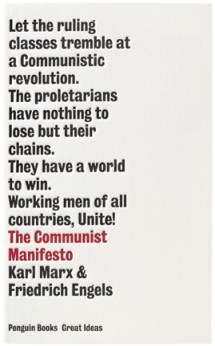 “The Communist Manifesto
For that reason, I think everyone should read this book and grasp a greater understanding of the world around them. At the risk of ‘igniting violent debate’ I’ll let it be known that I disagree with the concept. I am especially opposed to the idea of the abolition of a right to inheritance, as I would love to pass my library down to the future generations of my family. Perhaps some things should be a little more equal, but I like the individuality we have in being able to select what we purchase and accumulate. I enjoy the right to educate our own children, having the privilege to opt out of public education in order to give our children more – more knowledge, more quality time, more love.



 Anakalian Whims
Voice of Conscience by Behcet Kaya – A Review
April 28, 2012 at 10:10 pm (Reviews) (behcet kaya, books, culture, debut novel, reviews, social commentary, Turkey, turkish authors, world literature)
Author: Behcet Kaya
Publisher: AuthorHouse
Length: 414 pgs.
Described by multiple reviewers as a Shakespearean Tragedy, Kaya’s debut novel Voice of Conscience is a little bit Kite Runner and a little bit Bourne Identity, but still something all its own.
Best read in three days (because of its three parts set in Turkey, London, then California), Voice of Conscience follows the life of Ramzi Ozcomert Jr., from his childhood in Turkey and a culture of vengeance and family tradition – to love, marriage, and finally the return to his roots. In the spirit of Khaled Housseini (author of Kite Runner) and Manil Suri (author of The Death of Vishnu), Kaya dives into his own culture and gives us social commentary of a country often overlooked in literature. Addressing deep issues of the human condition througout love, loss, revenge, and guilt from the perspective of a Turkish author, I found the book rather enlightening and educational.
Prior to Kaya’s novel, the only books I had ever read involving Turkey were Middlesex by Jeffrey Euginedes (entire portions of the novel dedicated to the relationship between the Greeks and the Turks) and vampire hunting novels that often use Istanbul as a pitt stop within plot developments. I’ve encountered Orhan Pamuk over and over again, having worked in a bookstore running the literature section for years, but I never actually picked up any of his work, despite their accolades.
I read Part One set in Atamkoy, Turkey in 1962 curled up in my library with a cup of coffee, thinking this little tragedy was going to be more of a depressing, cozy read. Turns out, through Parts Two and Three, I had migrated to my Gazelle where I can work out and read simultaneously due to its low impact and breezy routine. I’m a mood reader, and the more the story progressed, the more Ramzi got closer and closer to going all mercenary ninja on his enemies, which gave me the desire to be on the move. By the time the book ended, in tradition of a perfect story arch, I was back in a cozy chair with my coffee and a beagle on my feet.
Overall, I appreciate Kaya’s novel and how much of himself he has poured into it. Its an excellent first novel, and I look forward to reading more of his work in the future. My only complaint is in some of the dialogue which occasionally seems to fall a bit flat and is often times too lengthy. (This coming from a girl who talks incessantly and tends to write how she speaks… could be the pot calling the kettle black!) But all in all, well done!
Additional articles to read:
http://www.prlog.org/11463686-behcet-kayas-voice-of-conscience.html
http://www.todayszaman.com/news-273884-international-readers-need-to-discover–turkish-literature–say-publishers.html
Permalink 3 Comments