Totalitarian Caste Systems in Dystopian Fantasy
A Guest Blog Post by: A.Z.K.R., author of Tales of Porcelain Thrones: Middle School Edition
Totalitarianism is a system of government that is headed by an absolute dictator who supports themselves with some kind of violent force. In a totalitarian country there is no freedom of the people. One example of totalitarianism can be found in Brandon Sanderson’s Mistborn. The Final Empire is headed by the Lord Ruler, who uses emotional manipulation against the populous. They are required to believe only what the Steel Ministry tells them and treat the Lord Ruler as god. The Final Empire is also a caste system. A caste system is a system of government in which people are divided into sections based on race and or job description. The Final Empire is not an exact Caste System sine the Garrison and a few merchants come from the Skaa population.
A better example of a Totalitarian Caste System is Suzanne Collins’s series Hunger Games. In Hunger Games President Snow represents the the absolute ruler and the Hunger Games themselves serve as the violent force. The caste system in Panam is much stricter than the one in the Final Empire. The people are confined to geographically separated districts that are each in charge of one resource that is distributed across the whole country, such as coal lumber, and technology. District Thirteen is the rebel district, their Mistborn counterparts would be the thieving crews. In both dystopian societies the government mostly ignored the rebels, avoiding conflict and keeping the peace. Up until the nineteen forties India was a real life example of a totalitarian caste system. The noblemen and Garrison plus the District two and the capital are equal to the Kshatriyas. Likewise the Chandles are similar to the thieving crews or district thirteen.
Totalitarian caste systems are terrible for everyone except the people on top. Even now as a democracy India is a miserable place still scarred by its past government. On the flip side, the opposite of a totalitarian caste system would be a world with no ruler or government system at all. You may note that in the United States religious freedom only goes as far as it can without infringing on other peoples’ rights. Or it was supposed to anyway. Both extremes are bad. People need guidance, not total dominance. Rules, not oppression.
The Hunger Games Series
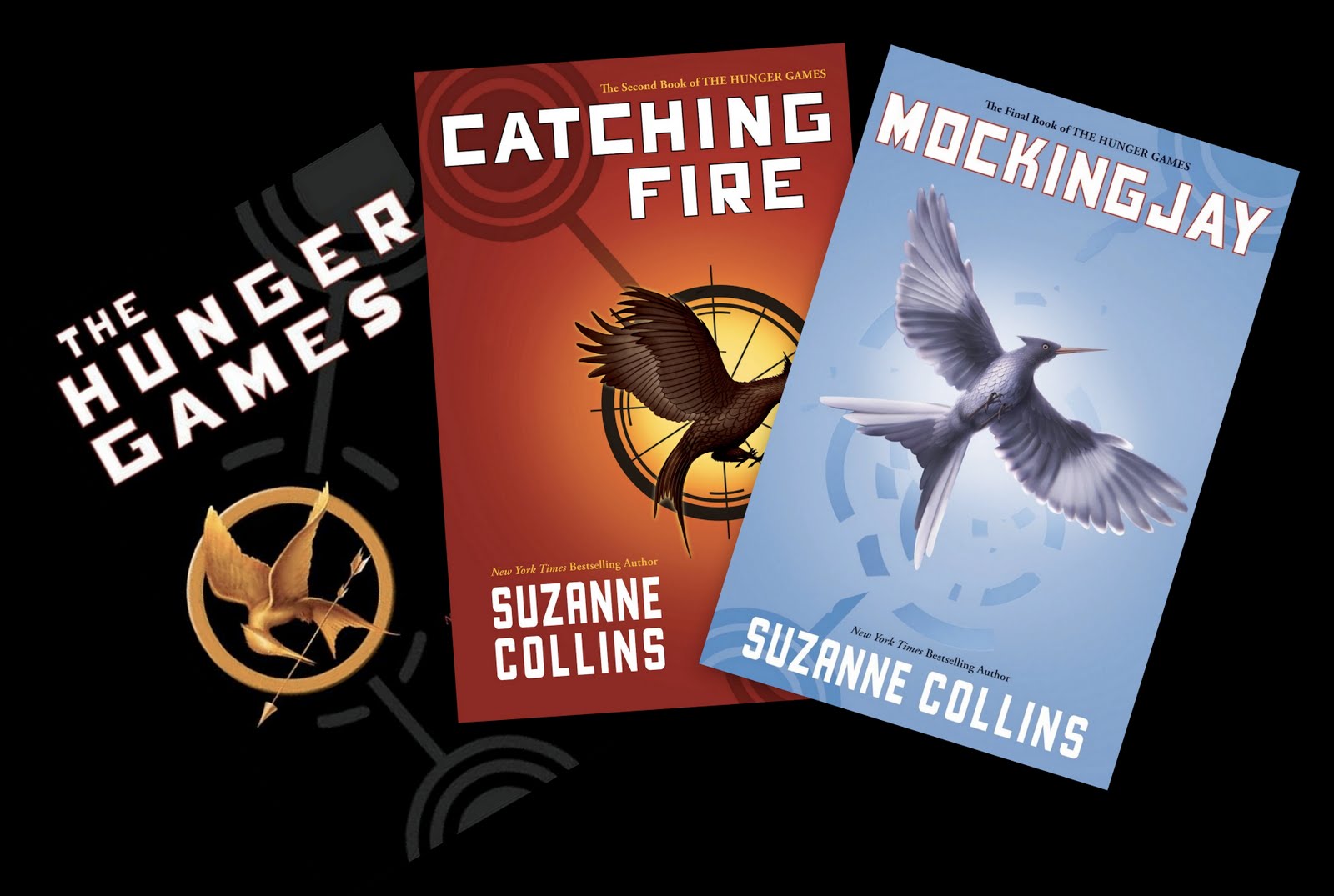 Title: The Hunger Games Trilogy

2. Catching Fire
3.Mockingjay
Author: Suzanne Collins
The Hunger Games movie came out on Netflix and my husband really wanted to watch it. But I have a rule in my house about watching movies before I read the books, which goes like this: I don’t. I did want to see the movie, but I feared the series a little bit. I didn’t want to read something out of obligation to curiosity and book pop culture and then feel let down like I had with Twilight.
I enjoyed Twilight, but I felt as though I had killed off more than a few brain cells by suffering through the commitment of all four books… but Twilight was a paranormal romance adventure… The Hunger Games is a dystopian society… there, there it is again “dystopian society” that little phrase that sucks me in every time!
 So this week began project Hunger Games. I wanted to at least get through a chunk of the first book before movie date night, and I did get through a bit, but I did not have the book completed when I watched the movie. I tell you what though, I went through the movie and all three books in three days and I’m blown away. It was pretty awesome considering what I was expecting. The series is more comparable to Harry Potter than Twilight, in my opinion.
When I finished Mockingjay, I closed the book with a shake and had to go take a shower to wash the invisible grime off my skin and bask in the happiness of the epilogue. It was perfect.
A lot of people say the third book wasn’t good. I admit I was thoroughly disheartened about halfway through, and the emotional disconnect of some of the primary characters lasted way too long. But it was appropriate. It made the end that much sweeter.
On to the highlight of the purpose of my post:
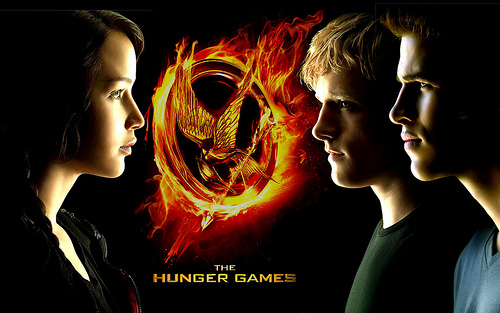 This is the most intelligently written young adult love triangle ever.
Love triangles in young adult novels are pretty much a staple plot line. Everyone has them. They are always melodramatic, fitting considering the angst of being a teenager. But Collins wrote a tip of an iceberg beauty that I will actually be proud to share with my daughter.
Why?
Love is presented very clearly as a choice. In a world that is completely out of Katniss Everdeen’s control, in times when her family’s safety is based on how she behaves towards others, in a time when the choices don’t seem to be hers at all but a manipulation tactic from the authorities in her life… who she loves and how she loves them is still her choice.
I’m so exhausted of whirlwind romances in young adult novels that are out of the teen’s control. They fell in love… they were destined… they were fated…. blah, blah, blah.
 I believe that everything happens for a reason, I do. I believe that God has a plan, I do. But I also believe that loving others and how we show them that is a choice every step of the way. What I like about Collins’ book is the importance one simple choice leads to another choice to another and another and steam rolls into larger choices. The whole book is about the importance of weighing consequences, realities, and feelings within the scales of logic, need, and want. Sure, events out of the characters’ control changes circumstances, but given new circumstances what is the new ‘right’ choice.
I love it.
If you haven’t read the books, I tried to write this in such a way so I would not overwhelm you with blatant spoilers. I hope you understand my meaning without clear cut examples. Maybe when the dust settles I’ll write a spoiler alert review.




 Anakalian Whims