A Life With Poetry
 Title: God’s Love
Author: Calvert Tynes
Genre: Poetry/ Religion
Let me premise by saying I don’t review a lot of poetry. I actually didn’t read a lot of poetry outside of what was required of me for school and pieces my friends wrote until my daughter was born. It was then, rocking a sleepy baby back and forth in a glider, that I really started to enjoy the genre in its full capacity. Kiddo and I spent a whole year reading Edna St. Vincent Millay and it was very comforting.
Calvert Tynes is not comforting. He’s raw, but not in a crass way or anything. Tynes’ poetry has very few soft rhythms, instead I imagine his work being best presented in person in a performance setting. There are a few kids at the Poetry Nights in Humble that could read some of these pieces and rock an audience’s socks off with them… I’m not so talented and my kid asked me to hush when I tried to read this to her. So though my kiddo didn’t much care for the book, she’s two and there are some things she just doesn’t have a say in right now, whether or not Calvert Tynes is a good poet is one of them.
God’s Love is indeed a testament to the love Tynes has found in Christ, but from where I’m sitting it reads more like a memoir than a spiritual guide. I’m probably biased in saying this, as I’ve never been a fan of things with pictures of Jesus on them… probably a narcissistic issue after the emotional damage of drawing the worst stick figure of Jesus ever on my leather bible when I was seven and getting in a lot of trouble over it; I wasn’t upset I was in trouble so much as I was upset that my mother couldn’t tell that my stick figure was my portrayal of Christ. But still, knowing what I know about the crucifixion it seems a little grotesque to immortalize the moment in graven images. For that reason, I was a little turned off by the front cover, although a lot of people I know would find it beautiful – it’s just me and I get that. Tynes may have turned me off with the cover, but he won me over with his poems.
I particularly liked I See You, Love and Theodora. Nope, I’m not going to print them here, you have to buy the book for that! But I will share my favorite quote from I See You, Love:
“If your love was land, then I am its sea,/because your love exemplifies/ the completion of me.”
Of course I adore the sappiest line in the whole book… of course.
I also adore how God is clearly a part of every aspect of Tynes life, but I think this book of poetry (if true) is as much about Tynes as it is about God. In my perfect book world, the front cover should reflect that in some way. The thing I’m finding I love about poetry, that you don’t always get with fiction, is how autobiographical a writer’s book of poems can be. Poetry is so personal. Especially touching are Tynes pieces on fatherhood and the stories he shares about his children, something I’m not sure I could have appreciated as much three years ago.
In God’s Love Tynes shares a full life with God, a full life with poetry, and well, a really full life. He has a lot to offer the world and I’m glad I have a little piece of that offering in my library.
Spoken Word and Live Poetry!
For those that used to frequent EB5 off Aldine Westfield, Half Price Books Humble is the new place to be every first Thursday of the Month at 7pm:




The Secret of Lost Things – A Review
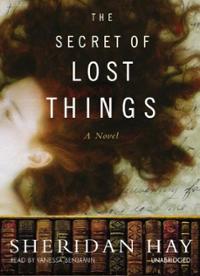 Title: The Secret of Lost Things
Author: Sheridan Hay
Publisher: Doubleday
Genre: Fiction
Length: 354 pages
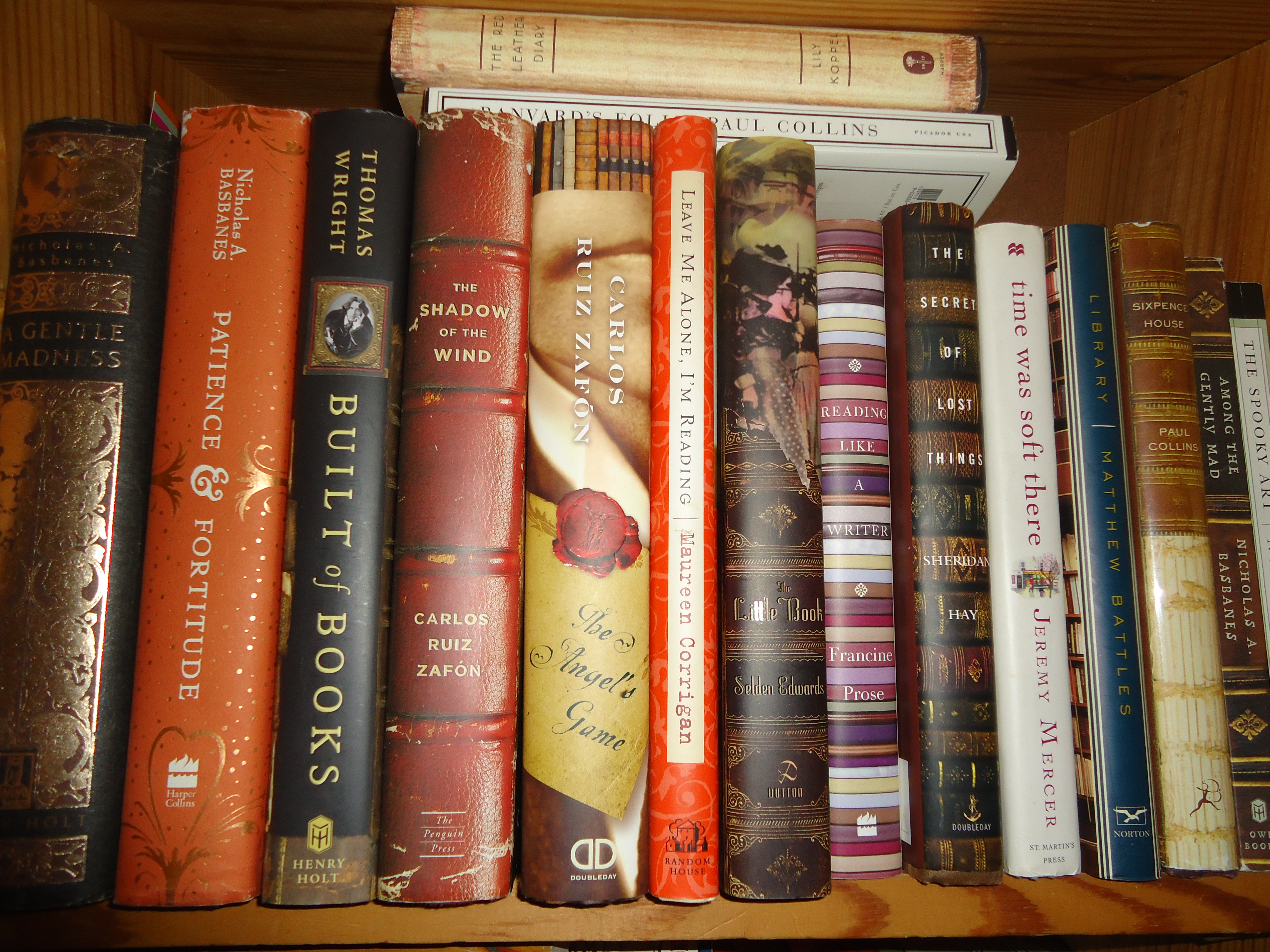
I have a shelf in my house dedicated to what I’d like to call “bookish books.” On this shelf are the likes of Carlos Ruiz Zafon’s Shadow of the Wind and first edition copies of Basbanes’ A Gentle Madness
 The Secret of Lost Things is a book written in the spirit of A.S. Byatt’s Possession, filled with dark library corners, clues in letters, and missing manuscripts. The difference is, most books of this nature romanticize secrets, portraying the keeping of them as a means to grow closer to others. Hay, on the other hand, presents a scenario closer to the truth: when all is said and done, these secrets cause heartbreak and drive people apart.
I find the character of Rosemary endearing. Instead of being a master secret keeper, like many heroines thrown in the this kind of novel, she is awful at it. Keeping a secret is her kryptonite, but not because she’s a chatty Cathy, just because it is not in her nature to be deceptive or to omit information from people she calls friends. It’s a refreshing take on an often visited theme.

” ‘Reality is as thin as paper, girl,’ said Pearl, shaking her head. ‘I thought that was one thing you did know, what with an imagination like yours – as thin as paper, and as easily torn.’ ” – pg. 137 of The Secret of Lost Things
I love reading these kinds of books because they always give me lists of things to tackle, information to seek out, as well as reminders of things I have already enjoyed. In this title alone, I am reminded of The Book of Imaginary Beings
After reading this novel I am also inspired to tackle more Melville titles. I have read Moby Dick twice now, but I have Typee, Omoo, and Mardi on the shelf, as well as a biography I have passed over far too many times to read other biographies first. It is virtually impossible to read Hay’s Secret of Lost Things and not want to immediately dive into a Melville
Exchanges like these are what really do it for me:
“We’re looking for something that’s lost,” he said. “A book that was lost.”
“Well, if it’s lost, and people don’t know it’s lost, what am I supposed to notice?”
“Here, read this book of letters. Just read and tell me when you find something interesting. It’s called research. The idea is that you don’t know what you’ll find until you find it,” he added irritated.
 At one point, the character Pearl gives Rosemary a copy of Ovid’s Metamorphosis, a title that repeatedly haunts me in everything I read. Seriously, will every author I love mention this title in every book that moves me until the end of time? I think so. I have a beautiful hardback waiting for me on my coffee table. It has been there for months. It will be there for months still, but I am one step closer to diving in than I was before I read Hay.
So yes, Sheridan Hay’s book is appropriately dubbed one of my bookish books. I have loved it, it shall join it’s literary cousins on my shelf. One day I will take the time to read it again; it is that good. In the mean time, I have research projects to tackle.
Aside from it’s bookish-ness, The Secret of Lost Things is exceptionally well written. I don’t read the backs of books before I read them. That’s especially rewarding when reading books like this where the sensation of experiencing a story the way you do a boat ride occurs… on waves of unexpected tales in motion with the lulls of the story you thought you would get. It’s beautiful and pleasant and especially appropriate in a novel where the author of Moby Dick stands in the forefront. What is equally lovely is that I had this sensation of being on a ship a mere ten pages before the narrator expresses the same sentiment about the setting of the bookshop.
What Rosemary likes about the Arcade is the same thing I first remember liking about Half Price Books when I was hired in 2007. On page 139 Rosemary says, “Well, the Arcade is like the ship to me. You know, people from everywhere, on a great adventure.” When I think of the Arcade, I imagine it to look and feel more like Good Books in the Woods of The Woodlands or The Recycled Bookstore in Denton than my Half Price Books location, but the sentiment is the same.
Note: People who enjoyed Kate Morton
Fizz & Peppers
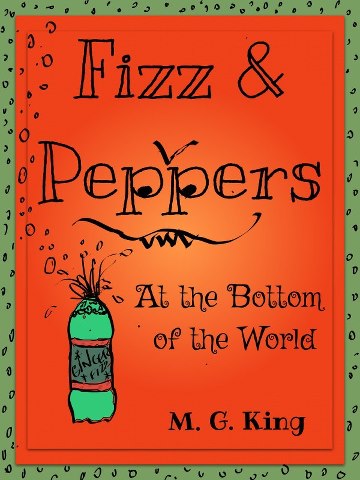
From the author of Librarian on the Roof comes Fizz & Peppers…
Out in E-book March 7th, 2013!
Purchase Fizz & Peppers
HPB Humble Book Club Meeting March 2013
Lords of Finance Discussion Part Three (to read parts one and two, start here)
 Title: Lords of Finance
Author: Liaquat Ahamed
Publisher: Penguin
Genre: Economics/ History
Length: 508 pages
When all was said and done, Lords of Finance was a pleasant (and very meaty) read. It was definitely nice wrapping up the completion of the book with a discussion at Half Price Books among customers turned friends. The discussion definitely went down well with some home made German Chocolate Pie brought by a member.
 We sat together with internet research and a handy dandy chart of all the key players in Ahamed’s book and brought up our favorite quotes as well as bits and pieces that piqued our interest.
I was especially intrigued by the dialogue between Senator Mayfield and Senator Brookhart on pages 316-317 regarding Texas wanting to pass a bill prohibiting gambling via the stock market. Apparently, there were a lot of hearings that went on “in an attempt to refine the distinction between investing and gambling.” Upon reading this I immediately wanted to hash out the distinction and research the laws with others. What a fascinating paper this would make for a young economics student to be assigned in order to both understand the inner workings of the stock market and to establish their own world view in terms of monetary ethics and morals. Honestly, have you ever wondered… What is the line between gambling and investing? Off hand, I’m not sure I have a steadfast answer to give. Do you?
At the meeting we talked about businesses that are publicly traded verses those that are not. We touched on Roosevelt and Hoover and what they had to deal with as presidents in comparison to what Obama is dealing with today, and over all what a relevant piece of history this book is. One of my favorite quotes came very late in the book on pages 438-439:
When, in August 1932, a reporter for the Saturday Evening Post asked John Maynard Keynes if there had ever been anything like this before, he replied, “Yes. It was called the Dark Ages, and it lasted four hundred years.”
That line from Keynes about the Great Depression had me smitten with him. When I got to the store, I immediately headed toward the economics section and picked out a book he wrote called The General Theory of Employment, Interest, and Money
It took us awhile to decide who would actually be purchasing the only title by Keynes in the store. Everyone, I think, likes to read titles mentioned in books they read and Ahamed mentioned Keynes work quite a bit. We are in agreement that the books (both Keynes’ and Ahamed’s) should be used as require reading for economics classes, both high school and college. As someone who actively participates in continuing education on a self-study basis, I am interested to see how the end of this book leads into World War II. So many financial agreements were made and unmade, I want to know in detail how things were handled during the war on a financial level. None of us in the group were financial historian buffs and were unable to answer our own questions, but discovering the answers in the future should be exciting.
As for our reading future as a group, we tossed around ideas for the next set of books. This isn’t quite set in stone just yet, but it’s looking like the HPB Humble Book Club reading schedule will look like this:
April: On Chesil Beach – Ian McEwan (we will probably also discuss Atonement)
May: The Heart is a Lonely Hunter – Carson McCullers
June: The Princess Bride – William Goldman (the online Half Price Books book club will also be discussing this book in June)
July: John Adams – David McCullough
August: The Color Purple – Alice Walker
Any changes to this tentative reading schedule will be made at the April meeting.
The Froggy Books
 Weekly Low Down on Kids Books
Title: The Froggy Books
Author: Jonathan London
Illustrator: Frank Remkiewicz
If I never have to read another one of these books that would be fine by me! BUT, that’s not going to happen as the kiddo so kindly nominated these as the must read series for the last two weeks running.
I picked up ten titles in the series at the library and have not had a break from them since. She saw frogs on the cover, so frogs we had to have, and we checked out everything available in the series.
They aren’t bad, they’re very toddler friendly actually, I’m just tired. Any time Froggy goes somewhere he has to flop, flop, flop. When he puts on his clothes it’s with a lot of zips, zats, and znats. There are bonks and clangs, lots of “Froooooooogggggy!” and “Whaaaaaat!” exchanges between Froggy and his parents. Then of course, there’s that defining moment in each story when Froggy “more red in the face than green” discovers he’s doing something ridiculous.
The kiddo loves them and I cannot sit down to read a Froggy book without reading at least three Froggy books. This week, on multiple occasions, Froggy has gone to school, learned to swim, gone to bed, played T-ball, eaten out, gone to Hawaii, played in a band (kiddo’s favorite), gotten dressed (my least favorite), had the best babysitter, and had a sleepover.
They don’t have to be read in any particular order, but if you happen to find them in order you will definitely benefit. London does a good job of bouncing previous lines from previous stories into a later book. For instance, if we had not read Froggy Learns to Swim I would not have understood why in Froggy Goes to School the characters start chanting ‘bubble bubble toot toot chicken airplane soldier’ and think that it has anything to do with swimming. I guess I missed out on that swimming lesson as a child. But thankfully, I’d been to Froggy’s swimming lessons, so it wasn’t too weird.
There’s a lot of Froggy books and I’m sure we shall read more of them in the future as we come across them. As I said, great toddler titles… for the toddler. Parents: you’ll be longing for the days when you were reading Eric Carle twenty times instead.

Liebster Blog Award!

The rules for the Liebster Award are very simple: You are required to thank the person who nominated you, answer the 11 question they have asked you, nominate 11 other people and ask them 11 questions in return. According to the guidelines the Liebster award should be sent to bloggers with less than 200 followers so that new bloggers can see how awesome they are!
So thanks to Socially Oxward for nominating Anakalian Whims. It’s exciting to be noticed!
And now to answer your questions…
1. Do you think you’ll still be blogging in ten years?
If wordpress and cyberspace continue to exist, yes. I hope wordpress does not go the way of xanga and myspace, but frankly it is probably inevitable. However, before I check out, hopefully I’ll be able to get Anakalian Whims in print even if it’s just for my personal book shelf.
2. Did you ever realize that a rake was the male version of a ho(e) in the past? A rake and a ho(e)? Do you think ho is spelled with or without the e….?
Ummm… yes. And I always spell it with an e.
3. What were you thinking when you posted your first blog entry?
That I’d like to become a professional reviewer one day. Getting paid to read… what’s better than that?
4. What is humanity’s biggest flaw?
Disbelief and/or distortion of the truth of Jesus Christ.
5. What’s your first memory?
I have a handful from when I was two. I’m not sure what order they occurred in, so I’m not sure which one is first. One is falling on concrete and scarring up the backs of my hands. I have several of hanging out with my Grandpa, before he died. I’m lucky to have those, he died when I was four, I believe.
6.Why is Shakespeare so relatable?
Because everything he ever wrote has been rewritten to suit modern day times and scenarios. Every generation has their version of most of his stories. Twelfth Night becomes Yentle and She’s the Man… Romeo and Juliet becomes every romantic tragedy ever… and so on. He wrote about basic human instinct. A chick dressed as a dude will inevitably fall for the guy she becomes best friends with because best friends are what solid relationships are based on. Teenagers who think they are in love but are forced to be apart will go all melodramatic on you. It’s the way of the world.
7. Favorite punctuation mark? Explain.
I would like to say the semi colon; it’s a beautiful piece of punctuation that is often neglected. However, if you view my writing tendencies you’ll find that if I am honest my favorite to use is the ellipses. I am also a proud defender of the Oxford comma.
8. Does it bother you when people look at you in public?
Depends on why they are looking.
9. What’s the best food ever? Ever.
My Grandmother’s squash casserole. It doesn’t get better than that… it just doesn’t.
10. Someone knocks on your door. Right now. Who do you want it to be?
If I tell you, I’d have to kill you.
11.How many questions is too many questions?
13, that’s when I get tired.
Now, for my nominations:
1.Melinda McGuire is a fab lady who has done book signings at the Half Price Books in Humble a few times. She’s fun to chat with, lovely to have as a headliner for an event, and edited an awesome anthology on quilting. She also writes novels and is from Texas.
2.Joel Robison Photography probably already has too many followers to qualify for a proper nomination, but I really love his work so I’m doing it anyway. If you’ve never seen it before, I suggest you go check it out.
3.Coffee Cups in Trees is actually my old college roomie. She doesn’t post often, but she’s clever and witty and maybe she’d be more diligent with her blog if she had more followers [ahem].
4.Thinking Through Christianity writers are good friends of mine. The blog is informative and makes you use your brain. Check it out.
5.M E Foley writes about living in England from an American perspective. It’s a bit of fun and worthy of being noticed.
6.Prose is a fellow book blog written by a guy whose opinion I enjoy and respect when it comes to reading material. Met him in an online book club and following his reading is a pleasure.
7.S. Smith is the author of the Seed Savers series. It’s a fantastic book series for young adults that more people should be aware of, so I’m using this blog award to pimp her stuff. It’s awesome. Look into it.
8.Reading, Writing, Publishing, A Blog… there you have it. The name of the blog is so self explanatory it’s ridiculous. This chick is awesome. If you are a reader, you should follow her.
Technically, I’m supposed to nominate 3 more people. But I’m tired, so I quit for now. Maybe I’ll add them later.
MY QUESTIONS TO YOU (I liked the ones given to me, so I’m reusing some of them):
1. What is your favorite thing about blogging?
2. What is the most interesting thing you learned from a book this year?
3. What were you thinking when you posted your first blog entry?
4. What is humanity’s biggest flaw?
5. What is your favorite book to love?
6. What is your favorite book to hate?
7. Favorite punctuation mark? Explain.
8. Does it bother you when people look at you in public?
9. What’s the best food ever? Ever.
10. Someone knocks on your door. Right now. Who do you want it to be?
11.What is the song that’s stuck in your ear right now?
Thanks for nominating me!

Guys! Look! Guys! Project Southsea nominated us for the Liebster Blog Award! We broke out of our robotiness enough to get really excited. And then Awkward Charm nominated us! What? Thanks, guys!

The rules for the Liebster Award are very simple: You are required to thank the person who nominated you, answer the 11 question they have asked you, nominate 11 other people and ask them 11 questions in return. According to the guidelines the Liebster award should be sent to bloggers with less than 200 followers so that new bloggers can see how awesome they are!
So thanks a lot Project Southsea! I (Kiersten) wanted to thank you, but Chewitt suggested we leave you a gift later on in our post. And thanks Awkward Charm! (Although, who knows, you might find a gift too!)
Our Answers to Project Southsea
1. What made you start blogging?
K: Uh, I had…
View original post 1,576 more words
Coloring Contest!
Everyone loves a good coloring contest. At least I did as a kid. I entered them all, every one I could get my hands on. I even won a few. That’s why I’m pleased to announce the Beckwith’s Rodeo Coloring Contest.







 Anakalian Whims
Eden’s Outcasts – A Review
March 10, 2013 at 9:18 pm (Reviews) (A Whisper in the Dark, American History, An Old Fashioned Girl, bill bryson, Bill Cosby, biography, books, Bronson Alcott, Civil War, debt, Dickens, Eden's Outcasts, education, fame, family relationships, feminism, Fruitlands, Goethe, history, homeschooling, jo march, John Matteson, Little Women, Louisa May Alcott, Love and Self-Love, mental illness, pulitzer prize winner, race relations, Ralph Waldo Emerson, reviews, social commentary, Thereau, transcendentalism)
Author: John Matteson
Genre: Biography/ History
Publisher: W.W. Norton & Company
Length: 497 pages
I knew I wanted to read this book the first time I saw it at Jill’s Books in The Woodlands a few years ago. I have loved Louisa May Alcott all my life and in the last few years I’ve really started to enjoy the art of the biography. My best friend bought it for me on the spot because she is one of those beautiful people who doesn’t think people should be denied their bookish desires. It wasn’t until March (a novelization of the younger years of Marmee and Mr. March) was chosen for the HPB Humble Book Club that I actually committed to sitting down with it in an attempt to understand Brooks’ portrayal of the patriarch.
*Notes about A Family in Debt*
So my review of the biography begins with Bronson Alcott’s astonishing ability to over zealously botch everything he touches. This trait of Bronson is made overwhelmingly clear around page 181. By this time in the biography, his utopian commune Fruitlands has failed, he has lost all his manuscripts, the house the family is living in was purchased with his wife’s inheritance, and he has completely disappointed me. At this point in his life Bronson refused to be employed and takes up an architectural endeavor on Emerson’s land, a building that would be nicknamed “Tumbledown Hall” and “The Ruin.” For a man portrayed as one so taken with education, he tackled projects with a whole lot of zeal and not nearly enough research. When he did research, others’ ideas were usually disregarded in order to implement his own innovative plans. To me, most his plans pretty much always sucked.
On the other hand, Louisa, his daughter, was exceptionally prudent. She had an intense crush on Ralph Waldo Emerson when she was young, which I find adorable, but never shared the love letters she wrote to him. Instead, when the crush was over, she burned them, but continued to look up to Emerson as a teacher. Emerson would be a part of Louisa May Alcott’s life from her birth until his death.
Bronson may have failed in many things during the first half of his life, but his efforts as a father are later a solid testament to home schooling. Matteson shares on page 182 that
Bronson Alcott, I believe, had some serious issues. Matteson has the grace to allow you to come to this conclusion on your own before he shares the fact that mental illness did indeed run in the family and that it is likely that both Bronson and Louisa May were manic depressive or bipolar, but that there is no way to know for sure.
Bronson’s worldview was both passionate and skewed. He established his house at Hillside (a few years before the well-known Orchard House) as an underground railroad station and fought viciously for equal political rights for African Americans. Then in contradiction to his own actions stated that blond hair, blue eyed people were closer to God and that black men should not be allowed to reproduce. How these beliefs reside in one human being baffles me. It reminds me of an observation Bill Bryson made in his book The Lost Continent, where when traveling the United States he identifies a curious contradiction in American culture and race relations. In the north, Yankees are known for their belief in equality and pretend to make no distinction between black and white in personal treatment and political issues, yet they live very segregated lives and rarely share the same neighborhood. However, in the deep south, there is a general assumption of hatred between the two groups, but they live side by side as neighbors.
Why such dichotomy? I find it all rather ridiculous. In Bronson’s case, he refused to use products made by slaves and destroyed his career on the principle that even black students had a place in his school. Kudos! But then he thinks something so crass as an idea that black men should be denied their God given right to have children. Absurd!
I find Bronson entirely too duplicitous. He insisted on a family commune but almost left his family to a more philosophic way of life. He was passionate about fatherhood, but made it very difficult for his children to feel worthy of his praise. He desired a Utopia, but in every action tore what could have been to the ground. His ease in living off hand outs from the labor of his friends while simultaneously declining anything done honestly through the labor of animals is confusing. It is no wonder to me that the father figure in Little Women is both absent and idolized. The fact that Bronson went to such great lengths to have a perfect transcendental family and then refused to accept work when it was offered because he had as “yet no clear call to any work beyond [him]self,” is irritating. The Alcotts were flooded with debt and Bronson had the means to fix it, but was too busy living in his head.
The greatest contradiction of all is that in the second half of his life he would rectify my horrible opinion of him…
*Notes about An Authoress*
The thing I love most about biographies is the same thing I love about “bookish” books – they provide lists, a more diverse reading experience. While reading Eden’s Outcasts, the biographer periodically offered reviews and insightful critiques to Alcott’s little known works. So while reading her biography, I was also led to read specific stories out of A Whisper in the Dark , like Love and Self-Love. It also led me to desire to seek out a piece called Hospital Sketches.
Matteson continues to offer literary criticism on many of Alcott’s publications and goes into a lengthy discussion of An Old Fashioned Girl . It is during this portion of the biography that Bronson has redeemed himself as a father in my eyes. At this point he was quietly living at Orchard House in between traveling and making his money. His ideals were far less irritating later in life than when he had a poor young family to support, because at this point Louisa’s fame had made the entire Alcott family debt free. This success and income is also what finally made Bronson a more supportive father who spent many of Louisa’s later years doting on her and praising her success.
This age old story of the parent-child relationship reminds me of a Bill Cosby sketch where he laments his parents as grandparents.
In the story An Old Fashioned Girl, Alcott actually praises her father by inferring that,
Matteson continues to say,
This is a much different sentiment than that during the aftermath of Bronson’s failed Fruitlands. Mostly proud father, but partly opportunist, Bronson wrote, “I am introduced as the father of Little Women, and I am riding in the chariot of glory wherever I go.” Bronson may have begun to be capable of providing for his wife and family, but only because Louisa made it possible with her fame.
As Matteson picks apart Alcott’s life and novels, he states:
Of her own fame, Alcott said: “I asked for bread and got a stone, – in the shape of a pedestal.”
*What it all Means to Me…*
All in all Matteson’s biography of Louisa May Alcott and her father is the most well-written and thorough biography I’ve ever had the pleasure of reading. I hung on every word.
All the detailed family relationships, the well thought out literary critiques, and little factoids like the fact that Louisa was the first Concord woman to register to vote, made the whole book a joy to read.
Above all, I am pleased that Matteson has finally put into words a truth that has been part of my own beliefs since childhood when I first read most of Alcott’s work. Without reading Matteson’s biography I may have never come to understand a piece of myself and where aspects of my own worldview were initially formed. It seems that my ideas regarding feminism may be largely attributed to what Louisa imparted to me through her novels, as our views are nearly identical.
Louisa’s ideas call for
Matteson also says that
Whether you want to be a doctor or stay home and bake pies, male or female – just do it well.
I could not agree more.
Permalink 2 Comments