Fever Dreams and Egyptian Myths

This sweet boy, so sympathetic and comforting.
I’m playing hooky from work. To be fair, I have what I’d like to call the plague. It’s not the plague, but the green crap I’ve been coughing up out of my chest, the high grade fever, and the over all attack on my body has made me contemplate the potential peace of kicking the bucket. Instead, unable to physically kick anything at all, I’m home wrapped in blankets when it’s easily 100 degrees outside.
Briefly, between fever dreams yesterday, I thought it would be amusing to read Chronicles of a Death Foretold by Gabriel Garcia Marquez and chronicle my own impending doom – but alas, I passed out about two seconds after the thought, slept for a few hours, and arose only to hack more crap out of my lungs, cry a little, and crawl back onto the futon… the bed was too high to climb.
As amusing as a post on Garcia’s work would be while I drink my calories in the form of honeyed tea and chicken broth, I have no desire to spend the energy it takes to walk across the room in search of it. Instead, I reached to my right where I had been cataloguing my ancient literature collection, prior to plague, and plucked up a thin little piece called Egyptian Myths by George Hart. It took me two days to read all 80 pages, because – you see – I’m dying. But I made it. And my laptop, conveniently in arm’s reach to my left, said “Hey, You have been USELESS for days. DO SOMETHING other than sleep and troll Facebook.” Did I actually hear the computer speak to me? It’s possible. After all, fever dreams.
All in all, I am surviving, and this little George Hart piece has helped me feel as though I didn’t entirely fry all my brain cells with my 2 day fever. I learned some things I didn’t know, refreshed some previous mythology tales I hadn’t heard in a while, and found a cool list of suggested further reading. It was a great addition to the Ancient History stuff I’ve been studying with my kiddo over the last many months, and it went hand in hand with the arrival of my Archaeology magazine subscription. If you can get your hands on one, it’s a great addition to any library.
Our Own Little Walden
This spring has been all about chasing sunshine, growing green things, and avoiding floodwaters. Since moving to Walden we’ve been attempting to create something closer to Thoreau’s version than the golf cart variety of Houston… But mostly we’ve been tackling our Classifications of Living Things, getting our kitchen garden going, learning to fish, and dipping our toes into the world of museum membership at the Houston Museum of Natural Science.
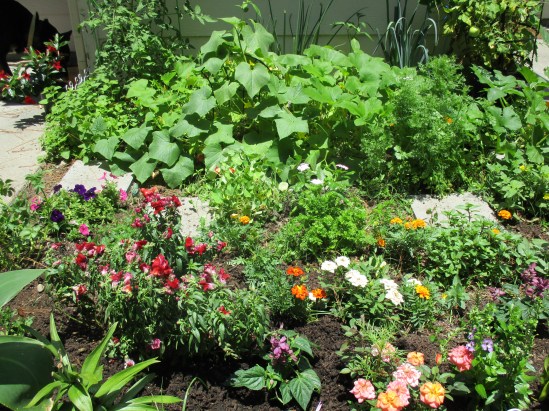
Kiddo helped me plant teeny tiny tomato plants, acorn squash seeds, cucumbers, and green onions. Marigolds galore, mints, parsley, basil, lemon balm. We’ve got lots of blooms for the butterflies and the hummingbirds, a variety of lilies, roses, and snapdragons. We’re in love with our little patch.
All this, but we’re not yet living the heaven of the picture book we just discovered this week: On Meadowville Street by Henry Cole; because, frankly, I want my backyard to look like this:
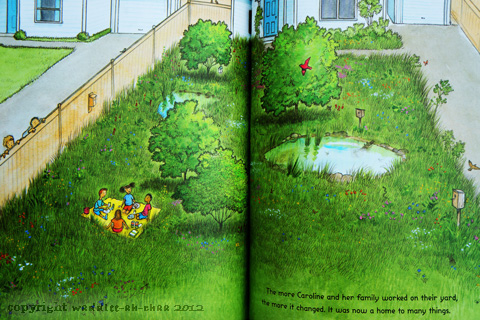
How cool would it be if everyone’s back yard looked a little bit more like this? Ponds, birds, trees, overgrown grass and wildflowers… yes, please.
We also fell in love a little with Bees, Snails, and Peacock Tails. Kiddo is pretty fascinated with bees, so even while surrounded by gorgeous butterflies around the world in the Cockrell Butterfly Center, she finds the bee hive and watches them the most.


So now that spring has passed and summer is upon us, we’ve burned up all the vacation days I possibly could trekking around, established our garden, and purchased a fishing license for my days off.
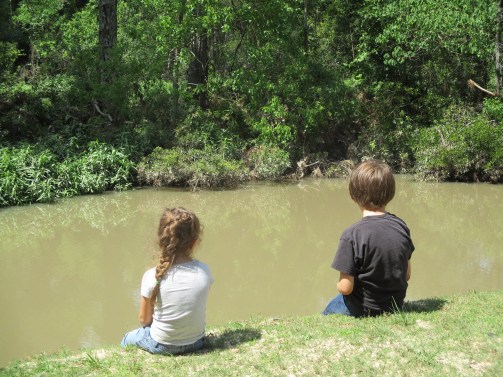
Fishing mostly looks like kiddo playing with a pole, naming earth worms, sinking our toes in mud, and me lounging lazily in the sun, but we pretend we care about catching things – sometimes.
Bowls of Happiness
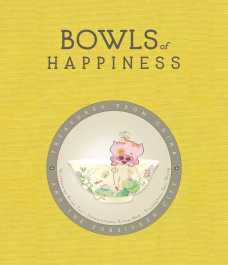 Title: Bowls of Happiness
Author: Brian Tse
Illustrator: Alice Mak
Translator: Ben Wang
Genre: Children’s Picture Books/ Education/ Cultural Studies
As the kiddo grows older, she’s becoming more apt to share her opinions on things. She’s at the phase where not only is she becoming more articulate, she’s realizing that people will listen to her when she is. She’s five, a just turned five, but five nevertheless.
That being so, I like keeping her in the habit of thinking about what she likes and dislikes about what we read. I enjoy having her reiterate what we’ve read, to know that she is listening and understanding.
“I like the way the flowers are pretty and I like the way Piggy sits in the flowers and sun. And the part where the birds sing. But when Piggy and the bats run away from the rain, that wasn’t really fun. When Piggy’s bowl was finished with the flowers and the bats, that looked really pretty. I like the yellow bowl, and the yellow bowl with Piggy on it. And I like the way there is a picture with flowers with no words. I like the yellow bowl with pictures of just flowers and leaves, it’s really pretty to me. I like the bowl with Piggy inside that is blue and branches and flowers and one bird. I like the white bowl with the pond and two birds. And I like the yellow bowl with flowers and blue kind of moons and patterns on it. I learned about love and Chinese and the way people love people and I learned ALL about bowls. I think all of it is cool. And at the end with the hand with the hole and the piggy nose is pretty cool to me, the one that comes from the other page.”
Then she proceeded to find all the capital I’s in the letter from Chiu Kwwong-chiu at the end. I’m pretty sure she likes the letter I as well.
All in all, I think this book was a huge success in our house. Mostly because stud ying Chinese culture has always been important to us (I grew up in a Kung Fu studio) and the color yellow is kiddo’s second favorite color. There’s a lot of yellow in Bowls of Happiness.
I don’t think we’ve ever read a book laid out in this fashion, this size, separated almost in a chapter-like manner. (Story book first, then a detailed nonfiction section that could have easily been published as a separate title.) We’ve definitely not encounter one on this subject. It’s lovely.
 Cultural and artistic studies are important for tiny people and teaching them about the artistry found in every day objects as well as museums is a key part of showing them the beauty of the world. I want my child to see beauty in her world, not through rose-colored lenses, but through intelligence and empathy.
Learning Dangerously
Title: The Year of Learning D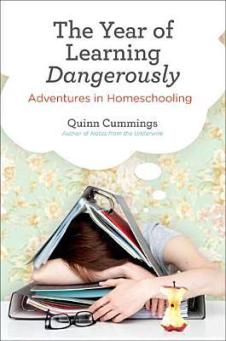 angerously
Author: Quinn Cummings
Genre: Parenting/ Education/ Humor
I found The Year of Learning Dangerously tucked on a clearance shelf at work as I was cleaning the last hour of my shift. I bought it that night on my way out the door, and spent the following day off reading it.
I laughed. I laughed so hard I couldn’t breath. I loved it, every page, every moment, every encounter Cummings had with fellow homeschool families as she tried to find “her tribe.”
I couldn’t sit and read silently, every few lines I had something to share with whoever happened to be sitting next to me. I laughed, they laughed, we laughed until we cried. We felt for Cummings, all her quirks make her endearing to me. Her anxieties and personal electro-magnetic field make her my spirit animal.
While I laughed and felt camaraderie with Cummings in all her panic attacks, all her self doubt, but ultimately in her absolute decision that this was the lifestyle for her – my husband, apparently, spent that time doubting our educational plans. Plans we’ve had in place since before kiddo was even born.
It’s interesting how everyone’s life experience can be so different despite living and breathing the same air and being part of the same bubble. I see the world for what it is and find more determination for our lifestyle choices. Others look at the exact same thing and come to a completely contradictory conclusion, and give up.
Whatever your life choices, whether you are a homeschool family or simply people who love to laugh – Quinn Cummings’s memoir is fantastic. I couldn’t put it down and my abs thank me for it.
On a kick for parenting humor, I picked up It Sucked And Then I Cried by Heather B. Armstrong. I’ll let you know how it goes, but so far her snark is outstanding.
Moby Dick
 We’ve all read Moby Dick – I think – unless you’re a very small child, like my child. As a classical homeschool Mom, I like to expose my kiddo to classic literature early, even before she’s redy to read it for herself. So, finds like Eric A. Kimmel’s picture book Moby Dick with paintings by artist Andrew Glass are gems.
My four year old had a lot to take in – the enormity of the whale, the importance of Ahab’s obsession, and why anyone would kill a sperm whale anyway. This picture book has a neat educational page in the back regarding Melville and the ship Essex and how that true event played a role in the cultivation of the original novel.
The illustrations are gorgeous… we love paint work,  as the kiddo considers herself a painter and has been mastering her technique since she was 15 months old. (I vote to always give kids real paints and actual canvases, if you can. It’s helped her to be much more adventurous in her artistic pursuits.
We can’t wait to read this one again and again, and hopefully, by the time she reads the novel, she’ll have these beautiful images so ingrained she’ll fall in love with Melville – despite the fact that it takes forever to even get to the whale.
An Education in Crabs
Not too long ago, I wrote an article for Money-Fax.com that featured this paragraph:
Hermit Crabs
Hermit crabs are fantastic little creatures. You might even have fond memories of fishing them out of the ocean yourself or keeping them in your elementary school classroom. Hermit crabs are popular, and with good reason. They are just about the least expensive terrarium dweller you can hold.
A small plastic container, a fish bowl, or an old tank you find at a garage sale – almost anything can serve as a hermit crab habitat. Fill the bottom with sand and rocks and place a tray of water and a few extra shells larger than the one the crab currently inhabits in the tank. Again, only $10 spent at your local Wal-Mart or pet store can set you up for life of the crab.
The crab itself will cost anywhere from $5 – $15 and their food will cost about $3 per can. While that may sound like a lot for a hermit crab, these cans last quite awhile. All in all, you could easily have a hermit crab join your family for an initial cost of $20 – $40, depending on what you choose to purchase. – http://money-fax.com/4-inexpensive-family-pet-ideas/
A few weeks ago, however, we went to the beach and caught ourselves a few hermit crabs with our four year old. Remembering my own article, I thought, we should keep these – it would be a fun starter pet and kiddo has already been begging for a new pet. (We have two dogs, but you know kids, they want tiny creatures to pester and nurture.)
So I headed up to the gift shop and bought a hermit crab kit. $25. It came with a free crab, but I told the lady at the counter that we had two downstairs under the dock.
“Oh, those are saltwater. They’ll die if you take them home and don’t have a saltwater aquarium. You should probably take the free one anyway and let those ones go. These are freshwater brought from Florida.”
“Oh, ok.”
Then, she informed me that it’s best to buy an extra one. They are community creatures.
“Sure, let’s do it. We’ll let the other two go and take these two home.”
So, I took the little plastic container downstairs, full of gravel, a shell, a sponge, and food – plus two tiny crabs.
We explained to kiddo that the others needed to be free and she had no problem with that, after all, we were taking these fun ones home and she understood that the others had come from the ocean and these two from a shop. She asked about extra shells, because we’ve read Eric Carle’s Hermit Crab book a thousand times.
We set the crabs up in the house when we got home from the beach that day and made plans to do some research and visit the pet store within the week. We knew the plastic container was too small for our comfort – but we thought we were just being those people who spoil their pets. I had no idea. No. Idea.
Nerd that I am, naturally, I bought a book. I was a little disappointed that it was a “for dummies” title,  because I’m a book snob and they seem so over marketed and written – well – for dummies. BUT, they are actually great starting points for any kind of research on anything. They are simplistic, concise, and give you the terms you need to dive deeper. Terms you wouldn’t know to look up otherwise. Like wikipedia, but more reliable, except the links aren’t necessarily up to date.
So it turns out, hermit crabs ARE community creatures. In the wild they live with hundreds of other crabs. It also turns out that the smallest container you want for these guys is a ten gallon tank for two small crabs. Cheap guru that I am, I could have gotten one from a garage sale, but I didn’t. I gave my sister our unused 20 gallon tank when we moved and my niece’s and nephews now have a tiny pet turtle. I went the lazy route and bought a brand new ten gallon at PetsMart. $30. (If you’re keeping track – remember my article peaked at a $40 expense to keep a crab alive. So far in this story we’re at $55 pre-tax.)
EVOLUTION OF A CRABITAT
I bought more gravel to cover the bottom of the tank. $10. I bought a crab shack because they need a place to hide. $8. A fake plant my daughter loved to make “it all so beautiful.” $4 (Actually, she paid for that one.) I was feeling pretty good about this terrarium. Really good.
Then, I served pinterest. I know. Pinterest!
It led me to a lot of websites, blogs, and hermit crab advocates. I discovered that I wasn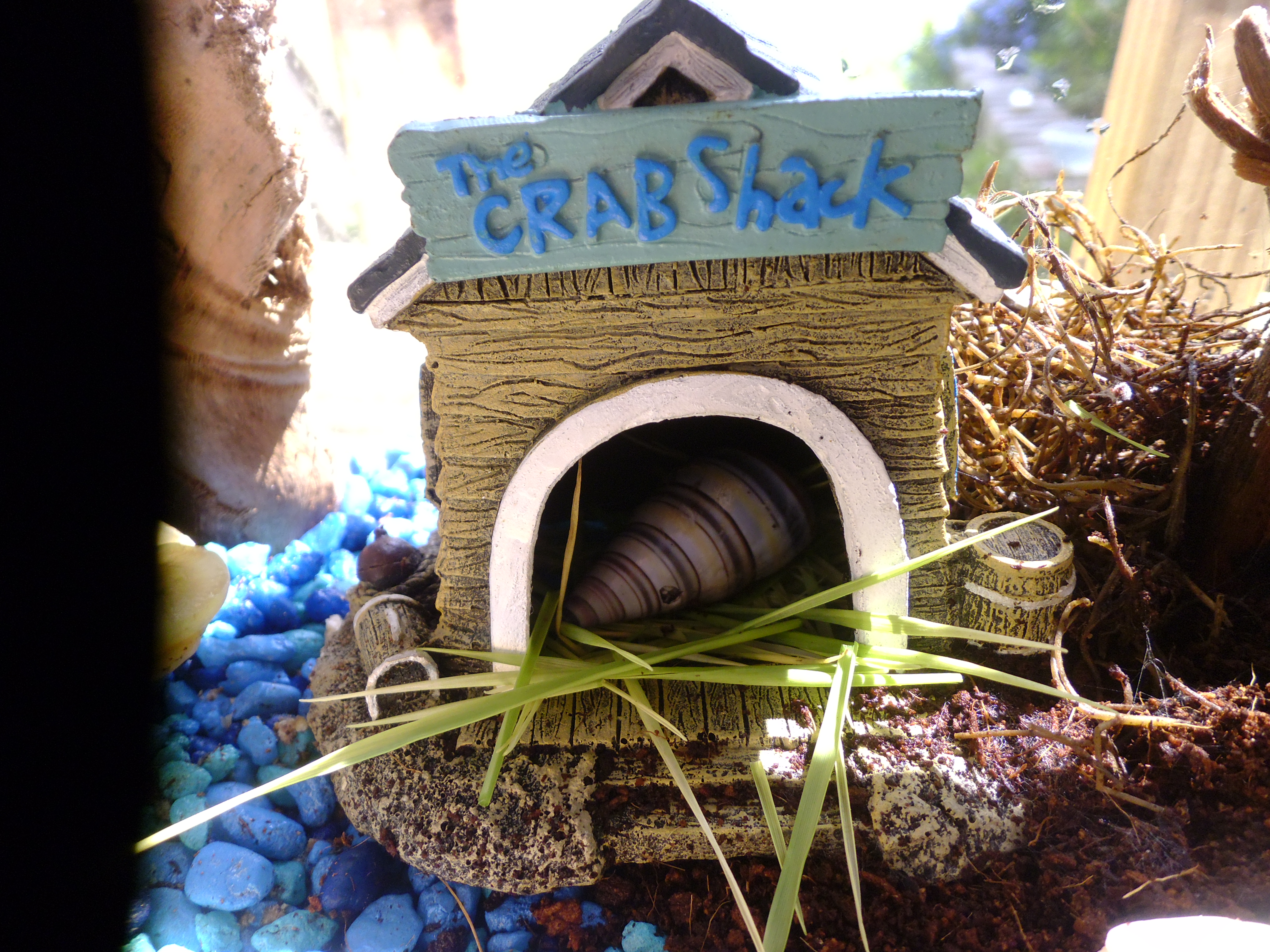 ‘t supposed to have gravel in the tank. They don’t like gravel. They like soil substrate. They like to bury themselves. Not just like, they NEED. Hermit crabs molt and to do so, you need 6 inches of soil for them to dive into. Also, they’re climbers. They want tree limbs. Also, each crab needs its own hiding place, so one crab shack won’t cut it. They want to live together but need their own bedrooms. Who knew?
Also, they need a fresh water pool and a salt water pool. So you need two kinds of water conditioners. And two kinds of pools. And a mister to keep their climate humid enough because they have evolved gills – they can’t breathe in dry air.
By this time, I lost track of itemizing – but one trip to PetCo later and I’d spent another $70 or so. While I was there, I also bought a wheat-germ plant that they had for sale for cats, but is actually good for crabs, which the workers didn’t know, I had just discovered this in all my internet surfing and wild book reading at the library.
I still need a heater, but I can’t afford one at the moment. We’re in Texas, so I set the tank outside if I think they’re getting too cold – but come winter, these guys are having another $50-$100 spent on them.
On the plus side: I think they’ll live. In captivity – because we con people into $25 habitats that slowly kill the crab – they live 3 months to 3 years. In the wild, they live up to 30 years. We’re shooting for a longer lifespan here. We’re also using this as an educational project… we’re building an ecosystem. Soon, we’ll add rolly pollies (they help keep the terrarium clean and co-habitate well with the hermies… again, who knew?)

(Additional notes: hermit crabs can eat from your kitchen and like a wide variety of things in their diet that include meat, vegetables, and fruits. We have begun a notebook compiling these lists. One of ours has already changed shells twice – because he’s indecisive, not because he’s growing so much – and apparently this is common so it’s good to have not just one or two shells but a wide variety of empties at their disposal.)
Fibonacci
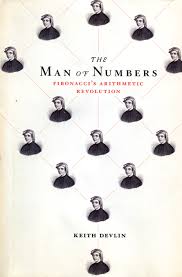 Title: The Man of Numbers
Author: Keith Devlin, PhD
Publisher: Walker & Company
Genre: Math History
Length: 183 pages
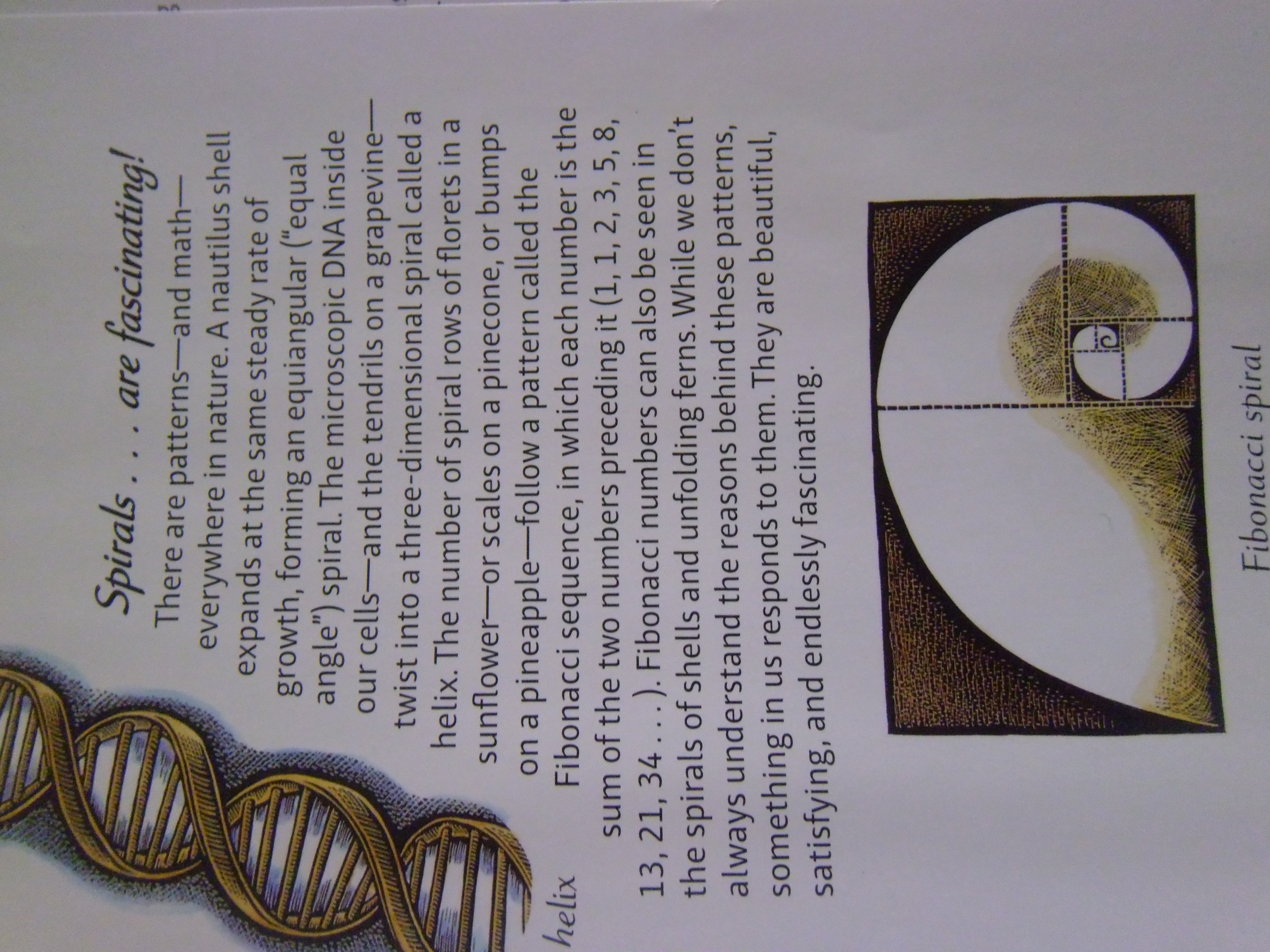
Swirl by Swirl – a child’s picture book – is where it started. We checked it out from the library once, then twice, and finally again and again. It’s about the Fibonacci sequence found in so many spirals in our natural world. We love it. Of course, it has a bit in the back about the Fibonacci sequence and the math involved, and that’s cool too, something to instill in young minds so that the re is familiarity with the topic before they begin Algebra in their tweens.
Of course, at some point I picked up The Pythagorean Theorem, and there Posamatier mentions Ptolemy and his great work The Algamest as well as Fibonacci’s Liber Abaci. Naturally, I requested these at my local library. “There’s a book about Fibonacci called The Man of Numbers that’s here if you want to read that while you wait for the others to come in,” she told me. Yes, yes, I would like to read that while I wait for the others.
I checked it out.
I ended up starting and finishing it, however, in one sitting while my kiddo made use of the sixty minute literacy computer session I allow her if she’s been good prior to coming to the library that day. It was good. Quick. Informative. And of course, just made me want Liber Abaci even more.
Devlin gives you all the necessary history in the concise nature of a mathematician. He even laments how most mathematicians are concerned about the math and the theorems and not necessarily who originally came up with them or their history, causing much of the history surrounding mathematical ideas to be lost or misconstrued. Who cares? It’s about the numbers.
I care. Historians care. We don’t care as much about the numbers as we do about the theory, the philosophy… we care about math’s heritage more than the practice of being all mathy. At least that’s how I feel. I’ll leave number crunching to my husband and daughter – I’ll just be able to tell them who came up with that particular way to crunch.
With all this caring comes the discovery that Fibonacci’s name wasn’t even Fibonacci. Devlin recounts the fact that the man’s name was Leonardo and he hailed from Pisa. Leonardo Pisano, as the people of that time and culture would say. But he referred to himself as fillies Boracic, “son of Bonacci.” Yet, his father’s name wasn’t Bonacci, so people assumed he meant that he was of the family Bonacci… the Bonacci family evolved and later historian Guillaume Libri coined the name Fibonacci. Hundreds of years later. Leonardo was renamed Fibonacci in 1838.
Fibonacci also referred himself as Leonardo Bigolli… a named once translated would be “Leonardo Blockhead.” Though, Devlin asserts, it’s doubtful that Fibonacci was calling himself a blockhead.
 That brings us to our latest picture book selection… Blockhead: the life of Fibonacci. This delightful picture book was written by Joseph D’Agnese and was illustrated by John O’Brien. Even though there’s a lot we don’t know about Fibonacci’s real life or how he came to discover his mathematical findings the way he did – it’s fun to imagine what his life was like and where he might have come up with his self-proclaimed nickname “Bigolli.”
For good measure, we re-read Swirl by Swirl afterward and are looking forward to memorizing a few things in the upcoming months.
The first is from Brahmagupta (quoted in Devlin’s book):
“A debt minus zero is a debt.
A fortune minus zero is a fortune.
Zero minus zero is a zero.
A debt subtracted from zero is a fortune.
A fortune subtracted from zero is a debt.
The product of zero multiplied by a debt or fortune is zero.”
The second are the first ten numbers in the Fibonacci sequence: 1, 1, 2, 3, 5, 8, 13, 21, 34, 55.
Swirl By Swirl

Title: Swirl By Swirl

Authors: Beth Krommes & Joyce Sidman
Genre: Picture Book / Educational
We actually read this one quite a bit ago, I was hoping to review it when I finally got around to purchasing it, but I can’t wait any longer. It’s too wonderful to keep under wraps any longer and it has been an inspiration to my kiddo who now draws swirls and “round ups” into all her artwork.
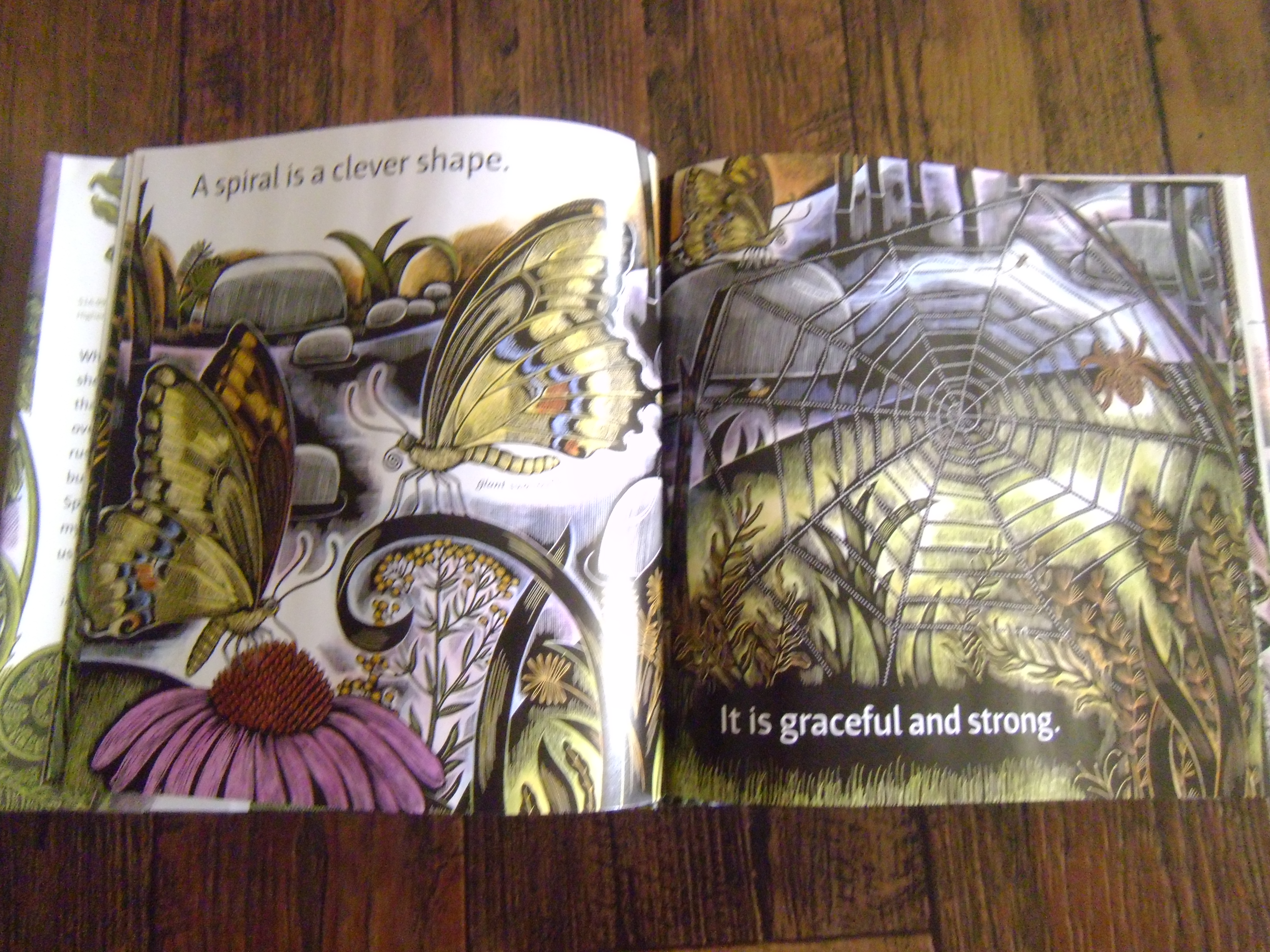
The book is all about finding math in nature. About how snails, flowers, and everything have mathematical patterns that create functional things we can see. It first page by page identifies all these things… spider webs, tendrils on foliage, the curls of animals’ tails, etc.
Then, it explains the how and why of it all.
Kiddo’s eye lit up at the end of the book every time (we had to read it over and over again before we turned it back into the library). My four year old’s mind was blown.
 I want to have this book on hand when she’s older as well, to revisit and enjoy the beautiful illustrations again and again through out her studies. It’s so lovely.

Abuse, Affairs, and Amateurs
Usually if I don’t finish a book, I don’t review it. If I don’t finish it, am I truly the most qualified person to throw opinions on it around to the public.
I’m not talking about books that you CAN’T finish because they are too awful. I’m talking about the ones that I start, I sorta enjoy, and then I simply abandon to read something else – or, I decide that even though it’s interesting, it’s not quite interesting eno ugh. Or, I just get bored with the topic halfway through.
I used to not be this way. I used to barrel through. I used to treat a book like a ship, me its Captain, and come hell or high water I would make it to its end – together. This practice became cause for some dark moods and much wasted reading time.
I picked up Wedlock when I took a sabbatical from my family (sort of) to work full time in the bookstore for a few months. I saw it on the shelf as I was running history and thought, this looks interesting, and I loved Georgiana, Duchess of Devonshire. I thought this one would be similar. And it was. But it wasn’t.
Although the life of Mary Eleanor Bowes is one for the history books, and she was an incredible closet botanist for her time, I found that reading about her life, unfortunately, felt more like reading about Kim Kardashian or Brittany Spears than, say, reading about Marie Curie. The heiress was often in the social limelight, easily wooed by absurd men, and seemed to spend her life being abused by the system. This is to no fault of the biographer, but to the fault of society and the fact that, although intellectuals will complain how enraptured we are as a modern society by celebrities and trashy magazines – the reality is that s ociety hasn’t changed all that much over the last few hundred years.
Moore’s book includes reports worthy of People magazine and Star. Elite gossip regarding who has married whom, how much money so-and-so is in debt, affairs, bastard children… If these things excite you, this book is for you. It just made me tired. It made me very tired, indeed.
So I gave it up. I was halfway through, and I pulled my bookmark and re-shelved it.
I’d love to do a full on study of her botany research. I’d love to visit museums dedicated to her pursuits outside of her abusive marriage. (Alas, I must be content to surfing the internet for now, visiting other bloggers’ reports) I wish I could see her experimental hothouses where she grew exotic plants. But it seems we are mostly to be doomed to read about her trials of being swayed by sociopaths and used for her money. That’s what makes sensational stories, after all, both now and then.
Most people will hear or read her story and say, “Aren’t we lucky that post suffrage, women now will not suffer like this!” But I don’t feel that way. Women will suffer like this as long as they behave like idiots, as long as they swoon over a seemingly kind word, as long as they can’t keep their panties up. I found myself feeling less sympathetic for Mary’s plight and more and more annoyed that she seemed to just dig her hole deeper and deeper. The simplest version of events, boiled down to all the ways she was victimized can be found here: http://historyandotherthoughts.blogspot.com/2013/03/mary-eleanor-bowes.html. Beating and torturing your wife is never ok. Treating any human the way Stoney treated Mary is completely unacceptable. I’m not saying that these things in her life were not awful. I’m just saying there is much she could have done to avoid additional pain, even in that era.
Although I agree with the commentator below in many ways, it pained me to see – centuries later – Mary’s missteps, all the things she could have done to avoid such a terrible life.
marmeladecatOctober 10, 2011 at 5:38 AMI have just finished reading Wendy Moore’s fantastic “Wedlock”, an account of Mary Eleanor Bowes’ life, in particular, her disastrous marriage to Stoney. What a woman, not only did she survive incredible domestic abuse and terror at the hands of her second husband, who tricked her into marrying him, but also had to suffer the heartbreak of losing her older children because of the dictates of the Georgian society of the time. Yet Mary Eleanor’s spirit was not crushed and eventually she managed to escape Stoney’s clutches and obtain just retribution for all his wrongdoings through the courts. The biography reads like a novel, I have never read a historical account so quickly. I can only recommend it.
I didn’t make it to the triumphs. I didn’t make it to the courts. I was still plodding through the terrible ache of lost children, another affair gone wrong with poor Mary not finding true love with her sexual partner yet again. Tip: Keep your dress on, dear. Don’t “fall in love” so quickly, and if you do, practice some propriety. Knowing that bastards very rarely stay with their mothers, why risk having them? I’m not talking about abortion, that to me is also unacceptable. I’m talking about keeping a marriage bed pure – even if you’ve fled from your psychotic husband, shacking up with someone else isn’t going to make everything right, it just makes it all a little bit worse.
Has anyone else studied the life of Mary Eleanor Bowes? What are your thoughts. What do you suppose she was like aside from the tabloids and history books? What would you say to her? What would you ask her?
I’m filing this one away with Anna Karenina.




 Anakalian Whims