Adventures in Freelancing
I was scouring the internet looking to see what Cosmo was all about. I’m a freelance writer, I should know these things. Also, I was submitting an article to them after receiving an ad for blog contributors. Of course, I had to consult my college room mate, that’s what gal pals are for, right? “I have no idea what I’m doing…” She read what I wrote, checked it for grammar, and helped me pick my already published content to include on my Cosmo tailored resume.
After I hit send I messaged her, “I did it. I sent it. That would be cool if they picked that up.”
“Agreed,” she responded, “Then I could finally learn YOUR 19 Top Secrets To A Hands-Free Female Orgasm.”
- Like the person you are having sex with – or don’t, sometimes that helps too.
“Both work with my husband,” she piped in.
2. Take a bath and shave your legs. This is an important step to remember when you are over 30 and have children. Or, you know, don’t – if you’re a dirty hippie, get off on the smell of human grease, and think hair friction will truly light your fire.
“Hair friction can help at times, yes. Continue…”
3. Despite all your favorite chick-flicks – don’t order Chinese food in advance. All that fried goodness, fried rice, and MSG will just make you feel gross. You will not have the appeal of a genetically blessed tiny acrobatic Asian after you order Chinese food. You will instead have sweet and sour sauce drippage down your right boob from where you almost lost the chop sticks. You will feel fat and bloaty after *so much* rice, and, to top it all off, you’ll smell like shrimp rolls and crab puffs.
4. Make sure all the children are asleep, or completely preoccupied. Nothing is worse than that ten minute quickie turning into, “But mommy, why can’t I come in? Mommy, I need another fruit pouch. Mommy…” Knock. Knock. Knock. “Mommy…”
“Basically,” my husband says as he reads over my shoulder, “You’re saying people should have sex with somebody.”
“Yes. Of course.”
5. Have sex with a human.
“Yes, hands free otherwise implies non-masturbatory. You’re welcome, Jonathan,” my Emily says to my husband.
“This article is not Cosmo material. You’re supposed to be talking about leading people in the direction of using hands-free toys. Like using a sub-wolfer. Or, rubbing your vagina against a fence post,” my husband continues to say.
I have no idea what he is saying to me right now. I don’t want to get off on a radio… I want to have sex with a person.
“Number six needs to be drive a shitty car with old shocks down a shitty road,” he tells me.
I’ve done that. That works. It was accidental of course.
6. Drive a poorly maintenanced junker.
“Does hands free include my hands? I’m just wondering what your requirements were for hands free,” my husband is way too into this.
7. Use someone else’s hands.
We can explore all our options later…
Life is Flat
I officially quit hosting the Half Price Books Humble Book Club tonight. I was there and no one else was. Again. So I’m giving it up. Along with giving it up, I gave up attempting to read The World Is Flat. I liked the first chapter – a lot, actually. And then I couldn’t get into the rest of the book. It’s old hat. It’s no longer interesting. Yet, it’s far too recent to feel like history to me. Friedman talks about things I remember, but the memory isn’t exciting. I was bored.
I used to be one of those people that could not stop reading a book I started. Now, I find I start a lot of books and only finish about half of them. I’m still reading more books than I did before, I’m just a little less masochistic when it comes to suffering through things I just don’t have time for. There are too many phenomenal books out there to suffer through ones that either don’t suit my mood at the time or are flat out BAD. Friedman’s was a little bit of the first part, not really the second part, but a whole lot of just plain boring.
I find I’m bored more often than I’ve ever been before. The world has always been so intriguing to me that boredom was not much of a problem. With a TBR pile taller than Goliath and a bucket list a mile long, how could I possibly ever get bored? Add a kid to the mix, and man, who has time for bored?
But lately, I’m bored.
I simultaneously find myself missing the noise and the quiet. I’m desperate for a research project alone in a proper library and also nostalgic for downtown dancing of my college years. I want the glorious silence of noisy strangers in a crowded room. Except I’m a terrible dancer, I hate crowds, and noise makes me twitchy. Yet without it, I find myself being that annoying chatty person that doesn’t know what to do with my hands.
You would think that all this internal angst would make for some great writing stints, but I’m not so sure that’s the case. And with my reading enjoyment being on the decline the way it is, it’s hard for creativity to come out when there’s not a lot of it going in.
I’ve been reading gardening books. Yes, gardening books. What the heck? Am I 85? Apparently.
31
I’m 31. I spent my birthday day sitting in a cold house wishing for sunshine. And reading Mary Karr’s The Liar’s Club. Actually, I kept putting down the book to write – in my journal, not my computer, as I didn’t have one. Actually, I had 3 computers and none of them would turn on. So I bought myself a new one finally – my publisher will be so proud – as I finally have a computer that even he will admit is worthy of being called technology. I am now an Apple Girl.
Hopefully, this new computer – and this extra year of wisdom and “old age” – will push me into being a more productive writer (both blogging and being a novelist has suffered at the hands of my poor entrance into the realm of gadgets).
At the Apple Store today the guy asked me if I wanted to sign into my i cloud or some such nonsense. He spoke some gobblygook that meant nothing to me about joining my computer files to my phone. I told him no thank you and finally had to wave my flip phone at him before he understood. I thought having my techie brother-in-law all but literally hold my hand through the entire computer purchasing experience was enough for them to know that I don’t normally do this. Apparently, it was not enough, they had to see the flip phone for themselves.
The most interesting thing about this gadgetry world was how I spent my pre-birthday evening. On the 21st, when my brother was turning 31 alone (Alone, as in without me, not necessarily actually alone. He is my favorite birthday partner.) somewhere in Austin, I was hanging out with a younger crowd. It was interesting to watch them play video games, the same games I watched people play when I was in my 20’s, but searching for cheat codes from cell phones instead of spirals and laptops. I wanted to read a book amidst the noise, but hadn’t brought one. At home there’s the noise of the four year old, but I find it distracting instead of soothing.
Noise from a four year old makes you feel oddly old. Noise from boys ten years your junior make you forget that you’ve just blown through ten years of your life and are not quite sure what happened to them. They’re gone, like sand.
Reading a memoir during your birthday week is an interesting task. It reminds you of all the things you’ve forgotten. Especially Mary Karr. She remembers with such clarity, and the things she does not she can at least describe the fog of the memory with such clarity that you’re amazed that she can remember that there was a memory lost there.
The Liar’s Club was described by newspapers as being “un-put down able.” I’m not finished reading the book because I find the opposite to be true. Although I love and adore every aspect of her writing, I find it easy to put down. Too easy. It’s so Texas. It’s so familiar. I’m still stuck in the 60’s and not much has changed between 1960’s mentalities in Texas and the ones I grew up with. It was the last book I should have tried reading during this week, but I couldn’t get the energy to finish the other books I had started.
I’m currently in the middle of reading The World is Flat. I was extremely excited about starting this book. It’s been on my shelf and recommendation list for years. I like economic philosophy a lot. I love history. I love fishing for “textbooks” for my daughter to use as she’s older and I build curriculums about of source books. She will not be forced to read this book. It’s so dull. I don’t know that I’m going to get all the way through it. It came so highly recommended! But there is a reason there are ten of them on the shelf of any given bookstore you visit and the copy I bought cost me 50 cents.
All this technology and aging, memoirs, and history that isn’t really history… it reminded me that I bought a kindle awhile back. I haven’t used it since I reviewed The Year of the Hydra. I find my kindle handle, but I still haven’t really fallen in love with it. In fact, I simply forget about it most of the time.
I’m not old. But I’m still trying to figure out if there are any “new tricks” in me. Therefore, I have committed myself to attempting to learn something new (other than the new POS system at the bookstore, which will simply be depressing if I admit how much it irritates me) this week: I’m going to attend a Magic game and see about that. I played Warlords in college for a bit, so maybe it won’t be so bad.
The Beekeeper’s Apprentice
 I have been hosting a book club at Half Price Books in Humble for over two years. In that time, I’ve managed to procure two consistent clubbers. One comes in person, one joins us by phone. We’ve had others briefly come and go – but Glenn, Thom, and I, we are the club.
Glenn chose The Beekeeper’s Apprentice to discuss in January. It was fast paced and lovely. Glenn had already read it before and was very excited to hear my thoughts. We’ve read 25 books together over the years and enjoy picking things out for each other. We disagree and argue a lot, but in a pleasant way. I’m 30 and he could be my father. Thom is older too, and as I read The Beekeeper’s Apprentice, I kept thinking how fun a parallel it was that Holmes and Watson took a young Mary Russell under their wing. I may be more well read than Glenn, but he has the perspective of age on many topics and discussions which have proven useful.
The day of the meeting, “Mary Russell” responded to a tweet I sent out into the twittersphere and offered to answer any questions we may have regarding the book. I hoped that another customer I had met during the week would arrive because she passionately hated the book, and Glenn and I both passionately loved the book. But Glenn didn’t know how much I loved the book, because we hadn’t spoken of it yet. We only see each other once a month for club.
I sat at the table in the bookstore waiting for his long lanky figure to come striding down the aisle, wearing his hat and carrying his books. His gate is that of a number of tall men, long and lumber-y. He always takes copious notes and wants to methodically go through each point, each thought, and each word that struck his fancy. I speed read through things and like to talk about themes and over all feelings of the story. Thom pipes in on speaker phone with all sorts of knowledge neither Glenn and I have. I look forward to our exchanges every month.
Glenn didn’t arrive.
I stayed and waited, but gave up and went home, thinking perhaps I missed an email or a phone call explaining his absence.
I hadn’t.
Glenn Ray passed away that evening.
Laurie R. King and Mary Russell will always be simultaneously loved and tainted by the fact that they were the last words shared between me and a man who I had started to believe was my friend.
The Fast and the Furiously in Love
It may sound ridiculous, but one of my favorite love stories of film is in The Fast and the Furious franchise. And it’s not pretty boy Paul Walker’s character Brian O’Connor and his little family-style romance with Mia. They actually annoy me a little. It’s Dom and Letty (Vin Diesel and Michelle Rodriguez) that make me swoon.
 “I know everything about you,” Dom says, leaning into Letty as she’s backed up to the side of her car.
And that’s the hottest thing, isn’t it? Being known and still being loved so completely.
Want a panty dropper, date scene at the movies? Leap out of a speeding car on a bridge into the abyss of open air to catch your love as she hurdles to her death – not knowing that either of you will be saved – just knowing you have to catch her. Oh yeah, and she doesn’t remember you, and she shot you in the shoulder earlier, but… you know her, and you love her, and you have a history…
Screw flowers and diamonds, Dom has grand romantic gestures on lock down.
Noooo, I’m not an adrenaline junkie. Not. At. All.
“How did you know that there would be a car there to break our fall?”
“I didn’t. Some things you just have to take on faith.”
Maybe that’s my problem. I swoon over movies like Fast 6. Literally, I swoon. Cars, racing, fight sequences, love that survives gun shot wounds and absences. Sheer will power and stubbornness. This is what romances me. These are the things that speak to my heart.
 And yes, I’d let go and fall to my death just to take a shot at the douche bag trying to sneak up on my lover. And for that, I find Han and Gisele utterly romantic as well. What can I say? I’m a sucker.
Other favorites in movie history:
UP: The old man and Ellie. The first 15 minutes of that movie make me bawl like a baby. I love it. I’m living it. A romance born of childhood dreams and companionship.
Persuasion: Based on Jane Austen’s book. Another story of will power and waiting. Add to that Emma and you have the friendship and affection I sought out when I started dating my husband.
 Tonight You’re Mine: This is probably one of the rare love stories I am into where the characters have not known each other half their lives. It’s epically reminiscent of my college years, minus being handcuffed to a super star, mind you. But the movie feels as much like home as 1327 does when I see it on screen.
I’m not a speed demon criminal by a long shot, but Dom and I have very similar values. The ultimate romance is always one with your best friend and playmate. Just like Dom and Letty, who met at 15. Things like Titanic – that whole whirlwind of meeting that day and then feigning passionate love forever – never quite do it for it. It rings false every time. I remember seeing Titanic for the first time in the theatres and thinking, “She went on and had babies with someone else, why is she pretending he was the love of her life? He’s just someone she screwed on a boat. What a slut.”
Tonight You’re Mine is the only whirlwind I can get behind… mostly because it was very Pride & Prejudice in nature, there was bickering before companionship, there was an established bond before love. That and there’s the mad rush of music.
My husband thinks I’m a little ridiculous. But if I had amnesia, I’d want there to be someone to fight for me. Someone to tell me where my scars came from. Someone to let me know it’s ok to be me, and that the me I was before was someone worth loving. And if there’s fast cars, a nostalgic house, stubborn wills, and music… all the better.
Blurbist
When I was a child I remember wanting to be three things when I grew up. Doing these three things was to help me become the number one thing I thought I should definitely be.
A Billionaire.
I wanted a plaque on my desk that read “Billionaire.” Or maybe it was “millionaire” and like Dr. Evil, the times have changed and a million dollars ain’t what it used to be.
My parents asked me what I would do to become such a wealthy human. At first I just answered that I’d be wealthy. But once I thought about it, I developed my dreams and discovered job descriptions.
1. NFL football star
Who knew little short girls couldn’t join the NFL? I didn’t find out until I was ten or eleven and I was crushed. Temporarily. I move on well.
2. An Author.
I always wanted to be an author. Since I learned that people were on the other end of the great stories I read. Since I knew that pens had ink and out of that ink flowed the written word, and that the written word came from brains… and that those brains were attached to people called Authors. I wanted to do that. It sounded so magical.
3. A Blurbist.
I am a multi-faceted dreamer. I also function in contingency plans. Even as a child, I was this way. It’s in my DNA. What if I don’t fulfill my life goal as an author? Or what if I do? Either way, I wanted to write blurbs for the backs of books. Not the summaries that entice you to read the book. I could fall back on that if I never made it, but really truly, how cool would it be to write the review blurbs?
So football stardom is clearly out of the picture. I’m not even good at football. Not even good at flag football. Didn’t even try powder puff or anything like that.
But hey, look at this:
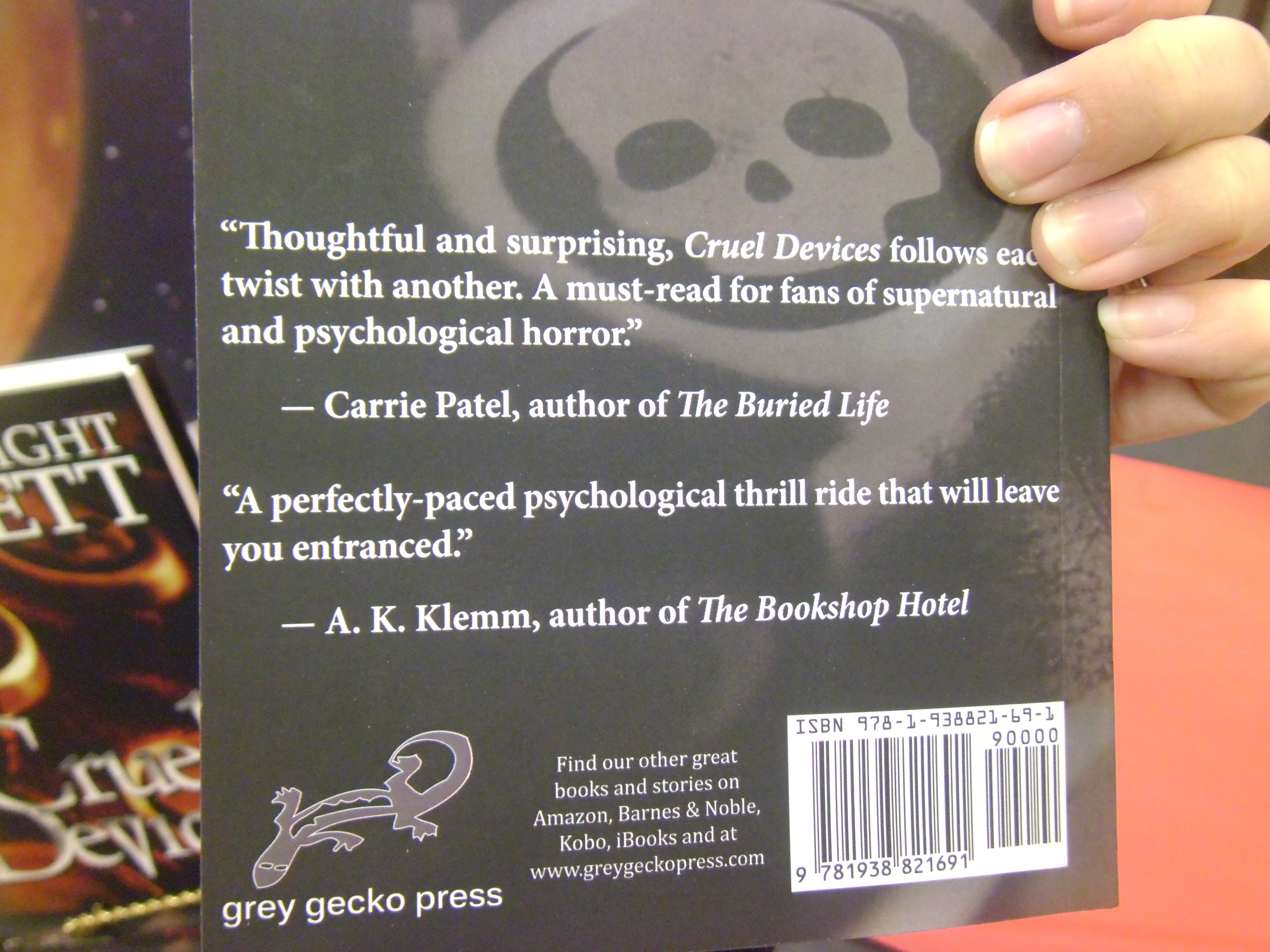
The Rural Life
 Title: The Rural Life
Author: Verlyn Klinkenborg
Genre: Memoir/ Essays
Length: 213 pages
I don’t remember when I acquired this book, but I do remember the moment I first picked it up. I can’t place the moment in time or identify my whereabouts, but I distinctly remember being drawn in by the off white matte finish and the rich colors of the font. I remember seeing the house and the tree in the circular image, thinking “I want to live there.”
More than ever, I want to live there. We are saving for land and to build our own house. It still feels like a pipe dream, but it is a pipe dream in action. We have little choice but to make some version of it obtainable. We’ve dreamed of 40 acres, our goal is 10. We’ll take just 2 if that’s all we can get. But in all this dreaming and planning and saving, there are a fair number of doubters in our midst. It’s ok, I doubt myself too. But I do know my own mind – no matter how much work it is and whether I can make it happen or not – I want the life Klinkenborg describes in his memoir.
L’Engle sold me on Crosswicks… land and a 200 year old house. Klinkenborg sold me on his gardens, the work of an amateur ‘farmer’ who isn’t a farmer at all but a man who lives as self-sufficiently as he can. He talks of pig farmers, of an Iowa homestead he grew up on, he talks of Texas, and all corners of rural America, and his little journal of country life is endearing.
On lunch breaks at work I’m plucking through a Popular Mechanics publication about how to build log cabins and small houses. Practicality by day and soul searching by night, I may know my own mind but I do like to be sure of things on a fundamental level beyond my desires.
I want to build something that lasts for years to come. I want to work with my hands and create. These are things I’ve always wanted, except before I mostly sketched pictures and wrote books. Before I was sloshing paint on a canvas and writing very poor poetry. I want to continue to slosh paint, write, and tinker with things that are pretty… mosaics are a dream of mine… but I want to build a house that will stand for 100 years. I want a green house where I can watch things grow and dig my fingers in the dirt, eat the vegetables that come out of it. I want to milk my own goat and drink fresh milk while I contemplate character development.
I want my child to have fields and forests to romp in, chores in a barn to do, and chickens to pester.
I want space and fresh air.
I was laughing at work the other day, “I’ve already lived in the city ghetto [Oak Cliff], worked downtown as a server [West End, Dallas]. I did the suburbia routine [enjoyed a number of different sorts of neighbors, had block parties and dinner parties, exchanged mail in the street when our mail-woman proved a useless turd in Spring, TX]. Now, I’m ready to be OUT.”
In short, I want a full resume of human experience, but I want to end on the cozy bits. So when I’m old and gray, would it be too much to ask to be living the rural life like Klinkengborg? I’ll definitely be looking for his other books in the future. I may need them if my dreams don’t come to the fruition I’d like them to.
Literacy and Education
Every day I read. And since having a child, every book I read is filtered through a mental checklist of sorts: Would this be useful to Kiddo? How would I feel about her reading this? What age is this appropriate for? How can we apply tools, principles, morals, themes, etc. that we learn from reading this to our lives?
Does this mean she’s the center of my universe and I do it all for her? No. I read for myself. It might not seem like it when I’m making lessons plans, blogging reviews with Amazon affiliate purchase links (every time YOU buy a book by clicking the link from my site, a portion of that money is used as much needed income – thank you), posting about bookstore events, etc. But I do so much of it for me it verges on selfishness. This is my vice, my hobby, my job, my world. I am a book fiend and somehow I have made that work for me on as many fronts as possible.
But even with all that self-serving book binging going on, determining how my reading material could mold the mind of my child – whether directly or indirectly – is a constant subplot to my life story.
If I weren’t homeschooling, would I have been interested in titles like Why School?
I laughed at myself several times this week. By the time I’m done raising my daughter I could have a PhD in education, going by my thirst for educational theory. However, it’s not even remotely close to what I desire to earn a PhD in. Is every parent required to study this hard? No. Is it necessary to do all this leg work to be a homeschool mom? Absolutely not. You are qualified to teach your child just by virtue of being their parent and longing to make a priority of their spiritual, educational, and physical growth, of viewing your parent-child relationship as something worthy of being tackled with excitement and care. But for those naturally driven to research and reading, for those who have undeniably lofty ideas regarding the swoon of academia, for those who possibly have an unhealthy love for pens and paper, stacks and shelves, mahogany and oak, for those people it’s a little hard not to fall “victim” to the pull of differing philosophies regarding your life choice to teach your child yourself. (God help me when it comes to instructing her on the laws of grammar as I’ve never quite mastered getting over run on sentences, they are my favorite grammatical mistake. Those, and sentence fragments, I suppose.)
 Why School? is a diminutive sized hardback with a picture of an old one room schoolhouse on the front. Behind the schoolhouse – identical to what I long to build on my future homestead, although much larger I’m sure – is a vast sky of blue inviting you to all the possibilities contemplation and the school of thought might have to offer you. The book begins with a tale about a janitor who had suffered some brain damaged, but chose to work at a community college to be around “where it happens” and to have access to materials he could study and/or take home to his daughter. It was a beautiful tale regarding academia and how it is viewed from different sets of eyes. Most people see it as a mandatory road map in life, one they can’t get out of. Some see it as a golden ticket to the land of opportunity. Few actually see it for what it is meant to be: a place to learn.
The author, Mike Rose, talks about many things regarding school and college and life. He discusses blue collar life vs. white collar life. He addresses a few political issues, some I agree with and some I don’t. But one thing is clear: he is passionate about learning. He is passionate about education. Rose’s goal is to make others aware of the importance of developing the mind and taking charge of what we put in it, whether it be tools and life skills or book facts.
“We live in a time of much talk about intelligence. Yet we operate with a fairly restricted notion of what that term means, one identified with the verbal and quantitative measures of the schoolhouse and the IQ test. As the culture of testing we live in helps define achievement and the goals of schooling, it also has an effect on the way we think about ability.” – pg. 73
I loved that part. I loved how he addressed the parts of the brain used by those who work with their hands. My husband works with his hands, he is a millwright. More than anything, I want to balance my child’s developmental education with things both her parents are passionate about. I want her to continue to love books, but I want to allow her to be passionate about building things (the girl is a master tower builder when it comes to legos and VHS tapes). So much creative energy is dismissed when people look at their mechanic or a machinist. People do not understand how even your diner waitress is the Queen of her domain, has mastered brain patterns you cannot fathom, and has an internal clock and rhythm you could not duplicate without years of practice and training. I understood this example Rose provided well, having waited tables just long enough to say I learned to do it the best I ever could and could not do it forever. (I was a good server, well-liked by most my customers, but I was no Wanda.)
 I read chapters of Rose’s book in between dives into Adolescent Literacy Research and Practice. Where Rose is quaint and inspiring, though thoughtful and well-spoken, Adolescent Lit. is all academic essays, lengthy work cited pages, references to studies and schools of thought. The book is written by public school educators for public school educators, but one would be remiss if they didn’t hear the constant hum of “Homeschooling is the answer” to nearly every issue they address. The writers would laugh, I think, as there is an entire section dedicated to how people tend to read things and find support for their own arguments and core beliefs even where there may be none.
Timothy and Cynthia Shanahan were the contributors I enjoyed reading the most. They talked in great detail about what literacy is truly about, what being able to write is for, and how important it is in the education process to not confuse its purpose. Literacy and developing good writing habits are at the core of understanding any subject – not just literature – but math, science, and history as well. Writing isn’t merely about communicating what you have learned, but a process of diving deeper into a subject and gleaning a more thorough understanding of it. Not just about memorizing facts and regurgitating, but thinking about what those facts mean to you and how that may or may not affect your world view. It is about engaging the brain and coming up with new thoughts about old concepts. It is about developing theories from research. It is about invention and progress. It isn’t just about basic comprehension, it’s about eventual enlightenment on any given subject.
Several essayists in the book discuss the issue of the misconception that writing is only for the literature major and how there is only one way to read. There is great detail on how the practices for reading a science text cannot be considered the same as those to read classic fiction. So many do not address this, which is why we have children in our schools reading their chemistry and physics homework, plodding their way through formulas, but they haven’t internalized it. They only barely understand, it’s passion-less math or vague theories… whereas teaching these same kids how to read their science text (and giving them more than just standard textbooks, but also journals produced by scientists and articles from the professional world) will bridge the gap between the information and the passion to do something with that information. Not everyone is Einstein, but we are not raising independent thinkers with a drive to feed their brains. We are raising frustrated honey bees who have been deprived of pollen, and by doing such a thing they become useless drones who produce nothing.
I say this screams “homeschool is the solution” to me because the essence of the discussion in the book is teach a child to read for each appropriate discipline and you give them the world. You teach them how to teach themselves. You teach them how to use their brains and be studious and good stewards of their minds. Not for the sake of a grade, not for an award or blessing, but for the act of embracing the knowledge itself. We are driven by standardized tests – and I get it, how else do you assess where a child is when you must maintain some semblance of order while still addressing the needs of 30 students at a time. How else do you sort them out and provide the best education possible? If you can, you teach them at home. Smaller classrooms, a personal relationship, true observing of where that child is developmentally and how you can aid them on the path to true literacy. In Texas a homeschool is considered a private school run out of the home. If there was nothing I liked about Texas (and I love Texas, but if I didn’t), this fact alone would keep me here as long as possible.
There’s also a thing called Unschooling that I’m finding more and more I lean to (I am combining classical education and unschooling education styles in my “private school” that is the Klemm home). Unschooling is child driven. You pursue their interests with a passion when they have them. You learn what you can while they are motivated to learn it. Every moment is a possible classroom moment. The other day we researched praying mantises after discovering one in the garden we were weeding. Kiddo was so excited and immediately went to her bug book and found a picture of one, thrilled to see something in the book that she had just seen in real life. Well that’s easy when they’re in pre-school, people like to say. Yes, it is. But it can continue to be that way as they get older.
“Reading classrooms at the secondary school level typically tend to minimize student choice (Guthrie & Davis, 2003). However, giving students opportunities to ‘self-rule’ and ‘self-determine’ can make learning more personally meaningful and intrinsically motivating (Deci & Ryan, 1985, Deci, Vallerand, Pelletier, 1991; Ryan & Powelson, 1991).” – pg. 286
What do you think?



 Anakalian Whims