Justice Gone
Justice and police dramas have been hot topics for what seems to be my entire life. From Law and Order being popular on television, to John Grisham being all the rage for most of my adolescence; and now, in my adulthood, police brutality and Blue Lives Matter is constantly on the news. So it’s not surprising that a crime novel about the judicial system and police murders would win awards.
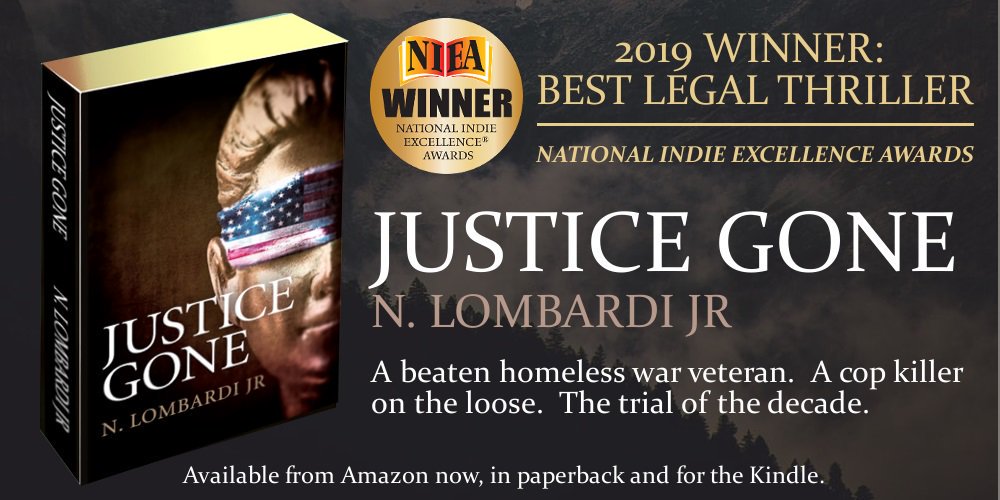
N. Lombardi Jr. is the author of Justice Gone, a courtroom thriller published on February 22, 2019 (which just so happens to be mine and George Washington’s birthday). After some googling, I discovered that Lombardi “has spent over half his life in Africa, Asia, and the Middle East, working as a groundwater geologist. Nick can speak five languages: Swahili, Thai, Lao, Chinese, and Khmer (Cambodian).” (Noveldelights.com)
Within mere months of publication, Justice Gone had already won three awards:
- National Indie Excellency Award
- American Fiction Awards
- Silver Medal Winner, Readers’ Favorite
And most recently added the New York City Big Book Award to its lengthy honors.
That’s pretty impressive. And reading the book, it’s obvious why Justice Gone has received so much attention. Lombardi has tackled the genre with the same fast-paced finesse that intrigued readers all over the world in 1989 with A Time to Kill.
The first in what will possibly be a series featuring the character Dr. Tessa Thorpe, Justice Gone reminded me a bit of Elizabeth George’s Inspector Lynley books, primarily regarding my stress level while reading. Books like this are emotionally intense, and must be tackled in the right mood for someone like me who has moved on from voraciously reading the bloody suspense of Nelson Demille (between the ages of 12 to 22) to cozy mysteries featuring crochet, coffee, and craft shops at the ripe old age of 35 (complete with fuzzy socks and glasses sliding down my nose).
Justice Gone would be excellent fodder for a feisty book club: homelessness issues, the criminal justice system, thoughts on PTSD, even addiction and recovery methods… there are so many rabbit trails of heated debates waiting to happen. Have the wine ready and let the rabid discussions begin!
Marshal Law Hits the Shelves
Marshal Law is live on Amazon as a paperback, an e-book, and for anyone with Kindle Unlimited… Check it out.

This is a fantasy novel…but it’s a little different. Tell us about that.
Marshal Law is a fantasy story, but it looks like a western. It takes place on a world with two suns, which makes most of the planet a dry desert. So it’s a magic story set in a frontier world.
How does magic work in this frontier world?
Strange stones can be found deep underground, and there are various ways to coax power out of them. Some use these stones to build powerful machines, but there are rumors of men using them to perform wondrous deeds.
What’s your favorite part of Marshal Law?
The characters. I love the setting, the picturesque western scene, the dual suns and endless deserts, but the characters who fill the story really stole my heart. Early on, our hero meets a scientist named Dawn who’s run away from the Republic. She’s a genius who can turn the villain’s machines around and make concoctions that do amazing things. Really fun character. Then they meet a boy named Raine who’s on the verge of a breakthrough. His whole life he’s believed he could revive the old magic, even though no one’s ever taken him seriously.
Tell us about your protagonist, Marshal.
He just wants to enjoy his quiet life with his wife and kids, but good stories never let anyone get away with that, do they? Marshal has to leave his family to fight the war, but he ends up playing the role of a father figure to the motley crew that gathers around him, holding them together while they battle to save the frontier.
Is Marshal Law the start of a series?
I’ve got three books planned. The sequel, “Desert Raine,” should be available in the spring. It’s coming along great. Marshal Law does a good job of setting the stage, so in the sequel our characters can further explore the magic and the machines and really push the boundaries of what they know about their world.
Sounds like Marshal Law is a story with a unique setting. Is it similar to any other books?
Anyone who likes Stephen King’s Dark Tower series should find themselves right at home. Same goes for Sanderson’s Alloy of Law. It’s fun to writing at a time when fantasy stories are finding new settings, because, even though there’s plenty of steampunk books with magic thrown in, I can feel like I’m writing something new and not always following another author’s trail.
Did you have to do any research to write about this new world where your story takes place?
A little. Most fantasy stories don’t require research since we just tend to make up whatever we want, but I really loved the idea of planet with twin suns. I did just enough research on binary star systems to make sure the idea would work. Apparently, two suns would probably make the planet a very dry place, so most of Marshal Law takes place in a desert environment. Only a few spots on the continent benefit from nicer weather. Grass and trees are a rarity enjoyed by the wealthy and elite, but Marshal’s revolution may change all that.
October Reads
We’ve had quite the month, here at the Whims House, and I’m pleased with our progress – both recreationally and educationally.

The Lost for Words Bookshop – Stephanie Butland
I will always pick up books about bookstores. This one was especially wonderful for me, as the main character made it impossible for me not to imagine one of my favorite humans in the world while reading it – even if they are definitely drastically human beings. Butland did a great job writing believable characters with all the fantastical coziness of the perfect bookstore and the sensational backdrop of an imperfect past. I enjoyed the unfolding of all the story layers.
Mere Christianity – C. S. Lewis
Kiddo has had a lot of tough questions lately regarding life, the universe, and everything. So–naturally–I consulted the best of the best: C. S. Lewis. He is my go-to for finding the words to explain all the hard questions and bible verses that I don’t know how to address.

Tepui: The Last Expedition – John Oehler
John Oehler has a new book out: Ex-Libris. I had already read Tepui, but I wanted to re-read it before I jumped into his newest novel because I read Tepui at a not-so-great time in life and failed to write a proper review for this author I love. I’ll be reading Ex-Libris before Thanksgiving. I highly recommend anything Oehler puts out, feel free to join me for an Ex-Libris read along.
The Romance of Tristan and Iseult – M. Joseph Bedier
Tristan and Iseult – Rosemary Sutcliff
As a homeschool mom, I find it important to go back to the classics as much as I can. So while I read Sutcliff’s version out loud to the kiddo, I made sure I read Bedier’s to myself. (Read my blog post here.)
The Sea of Monsters – Rick Riordan
It took us longer than expected to get through the first two Percy Jackson books, but don’t let that dissuade you from understanding how hooked we are. We’re just spread thin and don’t have as much time as we’d like to have. We’ll spend November reading Titan’s Curse.
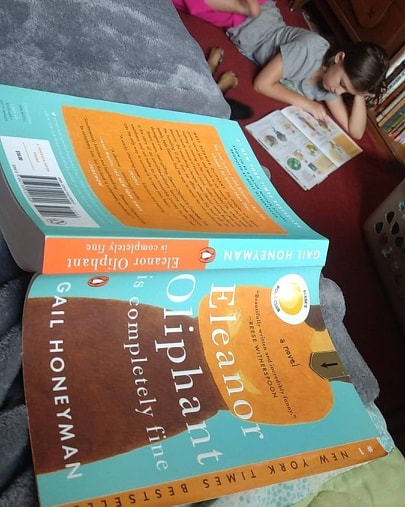
Eleanor Oliphant is Completely Fine – Gail Honeyman
I loved this book. I wasn’t expecting to love it, contemporary fiction pieces with Reese Witherspoon’s name stamped all over them aren’t typically the kind of books that call my name. Eleanor Oliphant, however, is a true gem, and I love her dearly–like an old friend.
Morningstar: Growing Up With Books – Ann Hood
Ann Hood books have been cropping up everywhere, for me. Until one day I glanced at a pile and realized I had a nice little collection of freebies and clearance purchases all by the same woman. It intrigued me, seeing this little pile, realizing I knew nothing about her. So I started with The Obituary Writer and began adding her books to my monthly TBR pile, with every intention of reading everything she has in publication by the end of 2020.
Gaspara Stampa Selected Poems
As a classical homeschool mom, we do things in chronological order through history, lining up our biographies, literature, historical fiction pieces, and science… then repeating the cycle. This is the third time we’ve read Gaspara poems sporadically and we finally finished our collection. We’ll start the book all over again in a few years, and maybe one day we’ll know a few of our favorites by heart.

The Bookshop on the Corner – Jenny Colgan
Sucker for a bookshop book! This one was pretty cute, and I’ll probably pick up more books of Colgan’s in the future.
The Ordinary Princess – M. M. Kaye
I loved re-reading this old favorite with my kiddo! We set up the diffusers with lovely fall combinations while we cozied up to the story of Princess Amy.
The Lion in the Living Room: How House Cats Tamed Us and Took Over the World – Abigail Tucker
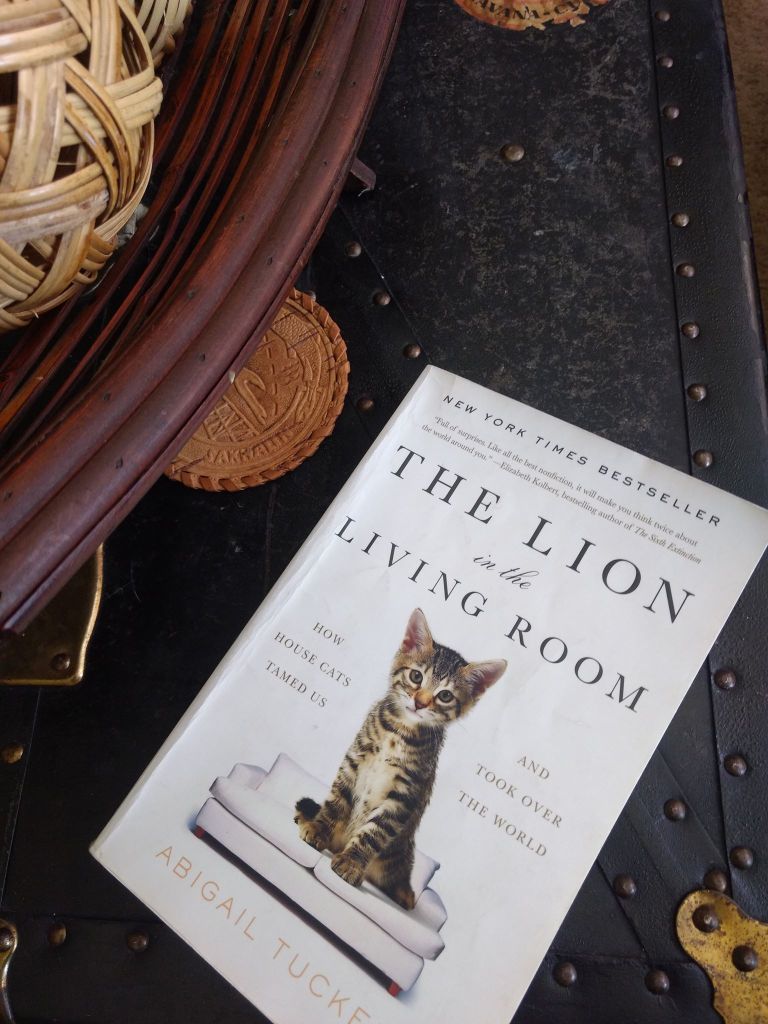
Abigail Tucker’s journalism is riveting! I don’t even like cats (I’m allergic) and this book kept me enthralled from beginning to end. I highly recommend this for any animal lover, especially if you find yourself wondering why there are so many feral cats creeping along your fence line.
The Story of Doctor Dolittle – Hugh Lofting
There’s a new movie coming out… I’m beside myself with glee and started introducing this glorious serious to the kiddo. We’re trying to read through at least six of the twelve before January.

The Black Count: Glory, Revolution, Betrayal and the Real Count of Monte Cristo – Tom Reiss
The Count of Monte Cristo – Alexandre Dumas
I read these two books as a pair. Education is a Lifetime Pursuit, which means that I try to make sure to study new topics (and re-study old topics) right along side my kiddo. I though it would take me longer to read these, and was preparing myself for a long winter session in the French Revolution. I hadn’t read Dumas since I was a kid, he’s a much speedier read as an adult; Reiss’s biography of Dumas’s father blew me away and I plan on using this for high school level required reading when kiddo gets to that point.

The House on Tradd Street – Karen White
This series is a new favorite. I binge read this book in a day after it lurking on my dresser top for years, a chapter from the end I ordered the next in the series. Can’t wait.
The Chronicles of the Awakening – Jeremiah Salyer
I purchased this off an acquaintance in an online Facebook group. I love supporting other authors and sharing work. This wasn’t my cup of tea though. It’s sort of meta-fantasy, and I know a LOT of people like that, but it has to be pretty mind blowing for me to get into that genre. I like my fantasy with more magic and dragons. I’m just not this author’s target audience, but others who read this blog might be…
Interview with Author Kristen Bickerstaff
Who is Kristen Bickerstaff?
Writing since she could pick up a pen, Kristen has always loved exploring the worlds and characters that live in her head. She loves writing (and reading) all forms of speculative fiction, from hard SF to urban fantasy. As a member of DFW Writer’s Workshop and Writer’s League of Texas, she’s a firm believer in taking part in her local writing community. Kristen also works with Rooted in Writing as an editor and marketing coach, and she loves helping other authors turn their writing dream into a reality.

I had the pleasure of reading Bickerstaff’s work in The Lost Legends anthology earlier this year and am excited to share an interview I had the opportunity to conduct via Facebook.
Prior to The Lost Legends anthology, what projects had you worked on or completed?
Lost Legends is the first anthology I’ve been a part of, but I also have another anthology coming out in early 2020 around pirate stories that I’m very excited about, called X Marks the Spot. Other than that, I’ve been working on my fantasy novels Embers on the Wind, which is about elemental magic workers called crafters, and Howl to the Stars, which I usually playfully call my “werewolves in space” book.
Lost Legends is a fantasy anthology and you’re known for writing speculative fiction, what draws you to read and write this genre? What is your favorite aspect of it?
I’ve always been one of those people that looks at something mundane as a subway or an overpass and asked “what would happen if someone with magic encountered this?” So that’s how I tend to see the world. Most of my story inspiration comes from odd things I see in real life. A door in someone’s front yard, a glowing necklace, a harvest moon. And I usually just take that a step further: what if the door opens to a place beyond our realm? What if only one person can see the door? Those are the questions I love to ask.
Ray Bradbury once said, “You can’t learn to write in college. It’s a very bad place for writers because the teachers always think they know more than you do—and they don’t. They have prejudices.” What do you think about this statement?
I agree and don’t agree with that statement. I feel like I learned some great things about craft, about the historical landscape before us, through my college writing classes. Honestly the plethora of genres and authors I read during college were so impactful for my formative years. But I was often looked down on for writing fantasy or encouraged to write something more… “literary.” I hope that’s changed since I’ve been at school (and as fantasy has become more mainstream). But I did feel stifled in school for sure, in terms of creativity.
What were your educational experiences like? Do you think these experiences have influenced the kind of writer you have become?

One of the best memories I have of my educational experience is my unfettered access to the library. So many books that I considered touchstones in my literary development, I read because a librarian looked at the book I was returning and then said “you might like this.” Beyond that, I had a couple teachers that really encouraged creative exploration as a child. My third grade teacher loved Shel Silverstein and Roald Dahl, and I remember her encouraging us to try writing in their styles to see how that felt. To this day, she’s still one of my favorite teachers. She encouraged us to think, to daydream, to wonder. I loved that.
Stephen King wrote in On Writing that writers should read a lot to keep their technical and creative tool box full. What are your favorite “tool box” books?
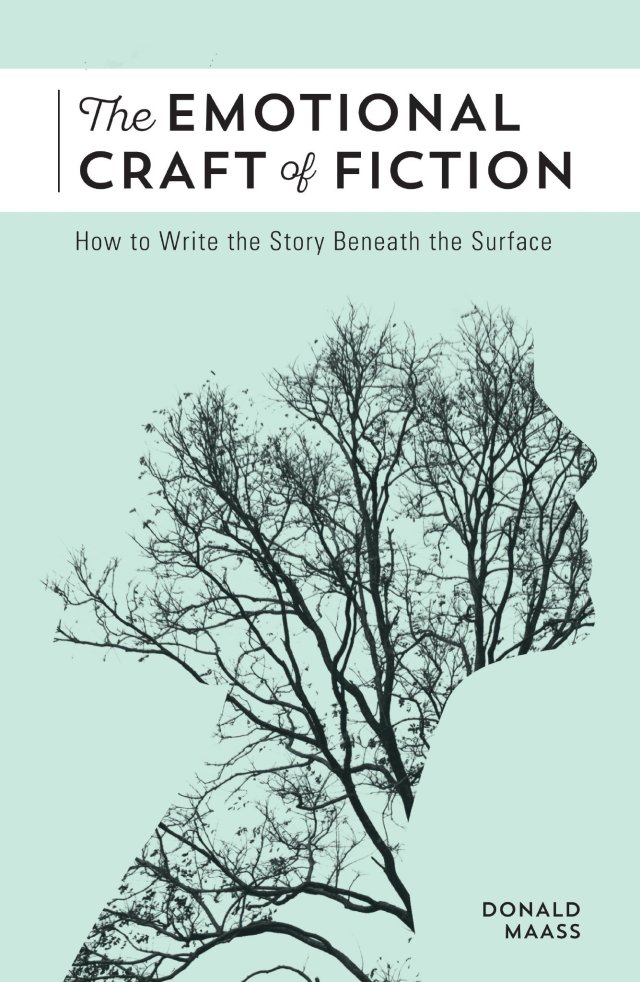
My favorite craft book right now is probably The Emotional Craft of Fiction by Donald Maas. When I went to the Superstars Writing Seminars this spring, he taught a hands-on workshop based on the book, and it really did change the way I write.
What have you read for sheer pleasure recently? What did you enjoy most about it?
I’ve been re-reading Anne Bishop’s The Others series recently, and it’s still such a fun read. It’s a really cool spin on the urban fantasy genre, where non-humans are the dominant species in the world, versus where they’re usually in hiding or downtrodden. I love the characterization throughout the series and the suspense she builds throughout.
What other means do you use to explore fictional worlds? Do you participate in larping, cosplay, pen and paper RPGs, or role playing video games?
No, I don’t participate in the above activities but I’m always really interested in different explorations of fictional worlds.
If you could interview any author (alive or dead) and pick their brain, who would it be? Did that particular author influence your work in any way?
Tough question. I’d love to ask Brandon Sanderson about how he developed the Cosmere universe, because I love the detail of his magic system. I’m doing a re-read of his works this year and it’s just so impressive. I’m a person who always asks “but how does this work” for fantasy elements, and he always has an answer.
Any conventions or events in your near future? Where can fans find you to have copies of their books signed?
Next conference I’m at is Superstars 2020. Then if everything works out, I’ll be going to DFWCon and Dragon Con later in the year.
[Note from Anakalian Whims to readers: If you haven’t been to Dragon Con, GO! I loved my experience in 2016. If you don’t know what Superstars is, visit this site: https://superstarswriting.com. I’ve been wanting to go for years and the timing just hasn’t been right. It’s on my list of to-dos.]
What are you working on now?
Right now I’m focusing on drafting Howl to the Stars and I’ve been really enjoying all the research behind it.
Follow Kristen on Goodreads and Twitter and stay tuned for her future ventures.
The Stretching of Our Days (And Dime)
I don’t remember exactly when it was I discovered Scribd, or how for that matter. I know I was trying to figure out Audible, my kid eats audiobooks for breakfast and we have a tendency to need more immediate access than we currently have with our library. Having the *time* to go to the library frequently enough is truly the issue… we just don’t have time. I say that un-ironically, as we have lounged about the house today for nearly eight hours, listening to music and audiobooks in between reading paperback books as well.
But we need those eight hours. We need the time to lounge and read the books. Yes, it’s a luxury many don’t have, but it’s a priority for we homeschoolers (kiddo) and introverts (me). There was co-op yesterday (The Atrium) and swim and music theory class this morning, a birthday party tomorrow. Eight hours to recharge and prepare–in the grand scheme of things–isn’t nearly enough.
Still, here we are, me wrapping up a book and mentally preparing a review, typing a post; kiddo, in her pajamas, playing play dough, listening to Wings of Fire Book Two on Scribd.
For years I lamented, “We have Netflix for television, why can’t we have a Netflix for books?” Lo and Behold! Scribd. It’s Netflix, for books, basically. And I’m smitten. We primarily use the audio function, as we have plenty of paper books lying about and don’t like to read on screens if we can help it. But audio… that allows us to close our eyes, do crochet, or build with legos or play dough. It’s also less expensive than Netflix, and when you share with your friends, you get free months.
Check out Scribd – the membership for readers! Use my link to sign up and you’ll get 60 days free: https://www.scribd.com/ga/7adrgu
Since finding Scribd, we’ve discovered all sorts of books we didn’t know we wanted, and were able to listen to books in our craft and downtime that we would have otherwise been too tired to get to, books the library doesn’t even have available. I was pleasantly surprised to discover my own published works available on Scribd! That excited me to no end.
So far I’ve listened to a vast range of John Piper, C. S. Lewis, Bernard Cornwell, Ann Hood… kiddo has indulged in Karen Cushman, Neil Gaiman, Laura Ingalls Wilder, and Beverly Cleary, and the 39 Clues series. Titles like Becoming by Michelle Obama and Educated by Tara Westover were available almost immediately. To my great delight, I was able to listen to The Immortal Life of Henrietta Lacks when the bookstore had completely run out of copies due to school’s required reading lists and I had missplaced my own copy. It’s been a wonderful year (or more) with Scribd in our lives and we look forward to more options as more people discover the app and more publishers add their inventory to the selection.
Tristan & Iseult
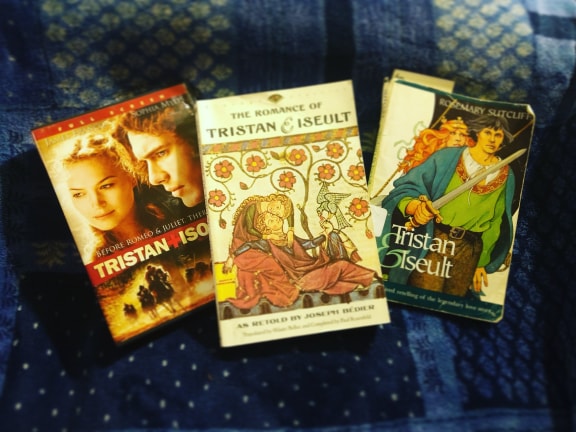
Tristan and Iseult, Tristan and Isolde, Drustan and Yseult… the variations of spellings are endless, but the way the names – and the story – roll of the tongue, largely stay the same.
I didn’t read the story growing up, but I gathered the main plot points throughout other literary references my whole life. The story was built slowly, for me, an allusion here, a quip there, until when I watched Legends of the Fall for the first time in college, I thought I understood the the gist of the movie’s genius: naming the wild heart that could not be tamed “Tristan” and subtly throwing in that his wife’s name was Isabel.

The movie is based on a book by Jim Harrison, that I later read and was not so smitten by, I even wrote a less than glowing review here. But in finally reading Tristan & Iseult both to myself and aloud to my daughter, I’m finding the desire to re-read Jim Harrison’s novella swelling in my literary soul.
The part that never sunk in through other literature, or the heavily influenced King Arthur, Guinevere, and Lancelot love-triangle–the part that left me briefly chuckling in a “Oh I see what they did there” –was that there are TWO Iseults. (And *spoiler* Tristan’s wife in Legends of the Fall is known as Isabel Two.) The story of Tristan and Iseult follows the tale of Tristan falling in love with Iseult the Fair, Queen of Cornwall, but marrying another Iseult, called Iseult of Whitehands. If you wanted to twist literature and try to be one of those people who got extra creative, telling authors what they were really trying to say and all that, you could say the wild-hearted Tristan had mommy issues and was Oedipally in love with the first Isabel. But that’s just too much…

The point is that literature is pervasive, ancient poems permeating society for generations; legends evolving and growing, but also maintaining. The stories of Tristan & Iseult, in all their incarnations, heavily influenced the King Arthur tales, the theme or forbidden love–no matter how ridiculous–ending in passionate death (Romeo and Juliet, anyone), continue for centuries. Bits and pieces dribbled in to make each new story more rich with nuance and the truths behind the human condition.

So, I found the most “original” version I could find (and still read in English) for myself, and the most kid friendly version for me to read out loud for my eight year old. Rosemary Sutcliff is my go-to when it comes to ancient or medieval tales brought to life for a young audience. Much to my pleasure, she had a Tristan & Iseult published in 1991. Kiddo gave the story 4 stars on Goodreads, “It was really amazing, but also dramatic, and all the love stuff isn’t what would really happen.”
We had many discussions on the difference between love and passion. “Love is patient, love is kind, love does not envy, it does not boast, it is not proud, love is not rude or self seeking. It is not easily angered, it keeps no record of wrong. Love does not delight in evil but rejoices in the truth…” A man who loves you will never encourage adultery. A woman who loves a man will not participate in adultery. Love does not delight in evil but rejoices in the truth. Cheating isn’t love, it is passion. Some romance can be romanticized too much. It’s not that the “love stuff isn’t what would really happen,” it’s that it would happen, it does happen, and that’s not love, that’s agonizing obsession.
I enjoy working through literature with her. When she’s in college, I’ll be interested to see what her much more informed reaction will be to Legends of the Fall. As soon as my library is out of storage, I plan to re-read a few things, and see if my own mind has been changed by the experience of reading the literature that came before.
Summer, September, Circe, and Sea Monsters
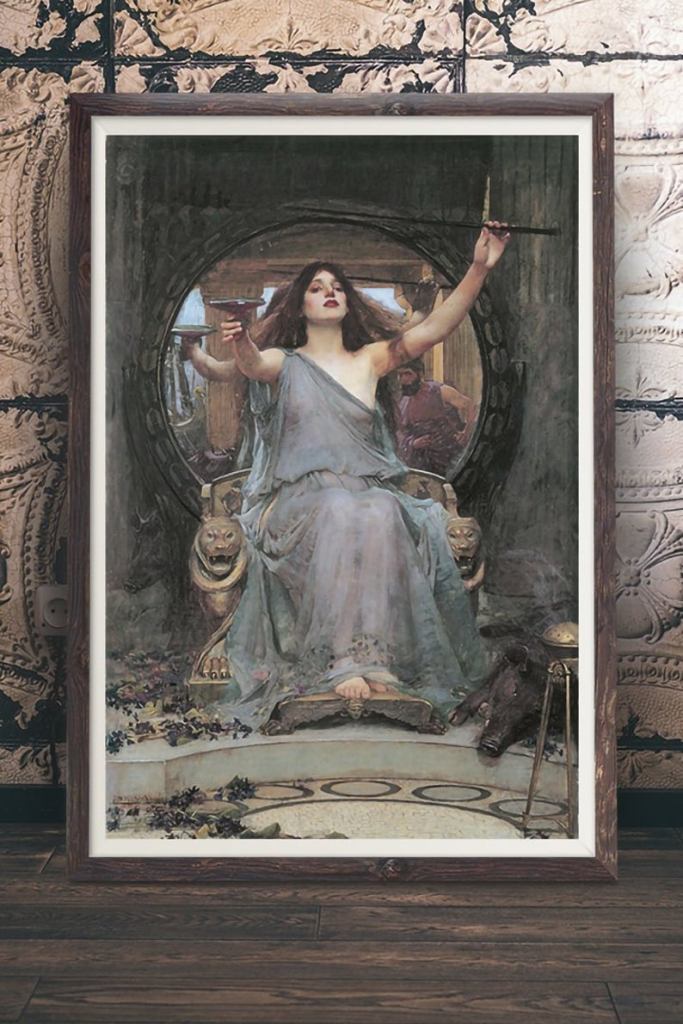
Title: Circe
Author: Madeline Miller
We spent a good chunk of our summer reading ancient history and mythology. The summer months of sunshine and blistering heat seem to be the best months for mentally spending time in the mediterranean, Egypt, and all the other places we think of when we imagine gods and goddesses.
I read Lightning Thief by Rick Riordan out loud to my nearly nine year old. Last time I’d done that she was maybe two or three. I picked up history books on Athens and Amazons faster than I could read them; I’m still finishing some of them up now. We recently started Sea of Monsters, the second in the Percy Jackson series, my daughter is smitten, I’m gloriously amused.

One historical novel that did stand out, though, was Circe by Madeline Miller. It started out sounding forcefully archaic, cold, like someone trying to hard to tap into a world of Homeric myth; but as I kept reading I found myself smitten by the sea-witch nymph–just as I believe Miller intended us to be. She starts out cold and heartless and grows warm with each mortal interaction.
It’s interesting to me how pervasive witches, goddesses, and nymphs are in modern day culture, despite having been born of myth thousands of years ago. We are enthralled with books like Deborah Harkness’s All Souls Trilogy, captivated by the Percy Jackson series, completely taken in by anything resembling immortality.
Is it our hearts longing for Heaven as Richardson says in Eternity in Our Hearts? So we invent ways that might allow us to stay? Or create reasons why it is better that we don’t? I know I find these stories most intriguing as I watch everything around us die for the oncoming winter.
I look forward to reading The Song of Achilles.
Interview with Author and Editor Adam D. Jones

Adam D. Jones is a high fantasy author and editor recently responsible for publishing The Lost Legends anthology. Longtime writer, historian, and musician, Lost Legends is his first book.
Who did the cover art? How did you find them?
The very talented Ryan Swindoll handled that. You can reach him at ryan.t.swindoll@gmail.com if you ever need a cover designed. He also took care of designing the insides, the font, the cool little decals, and everything makes it fun to hold a book. Talented guy. Having a great cover is half of the work.
As a writer, what made you decide to pursue editing an anthology for your publishing debut?
At various conferences and writing groups I’ve met talented fantasy writers and always thought it was a shame they weren’t published. I also needed a project to learn how self-publishing works before launching my own novels. It turned out to be a good move. I’ve learned the ropes, but also got some really good stories into the hands of readers.
You have two short stories included in Lost Legends, do you find short stories to be easier or more difficult to write than longer fictions?
Are you kidding? I spent more than years working on Idna’s Journals and it’s only three pages! I completed two novels in that time.

Lost Legends is a fantasy anthology, what draws you to read and write fantasy? What is your favorite aspect of the genre?
It’s fun. I could go on about the mythopoetic origins of the grown-up fairy tale, the foundational works like Phantasties, and how fantasy helps us understand the abstract truths by taking place in another world, but the best part is that it’s just more fun than any other genre. I want to read about monsters and magic. Who doesn’t?

Did you always love fantasy? What were your favorite books as a child?
The Gunslinger by Stephen King is incredible, and I read it every year. I read all of the books every year until the last one finally came out, and I was up until 4 a.m. finishing that one. I read these books when I was…a little too young for them.
I also devoured the Dragonlance stories and always wanted to write something as big and exciting as those.

Stephen King wrote in On Writing that writers should read a lot to keep their technical and creative tool box full. What are your favorite “tool box” books?
Stephen King’s The Wastelands is a perfect study in “how to write a fantasy book with multiple characters.” Rachel Neumieier’s The Floating Islands has great descriptions throughout, and I often open it to the beginning where she explains scenery and somehow it makes for an incredible opening. And many scenes in David Coe’s Children of Amarid are dogeared so I can remember his neat tricks for making things work.
You’re in a writing group. What does that look like? (What do your meetings consist of?) How has this helped you as a writer?
The Milford Method, a critique approach pioneered by Virgina Kidd, is used every meeting. I can’t recommend it enough.
It’s helpful that the group includes science writers, fiction writers, and songwriters, so we all learn a lot from each other.
Of your stories in the anthology, are there any you anticipate seeing spin off into other work?
I’ve been asked to write more about Idna’s Journals, but I prefer to keep it self-contained, leaving the audience to wonder. When I write short works, I try very hard to avoid the temptation of sequels and spurring on further works, because that often leads writers toward bad work. If you’ve only got a few pages, there’s no room for breadcrumbs and easter eggs that lead to the next story.
But there is a place for that sort of thing. Sarah Bale’s evocative story, Thundermoon Bride, will tie into other works she has coming, and I think that’s a good example of using a short story to hint at something bigger.
If The Lost Legends were to become a Netflix Original or Amazon Prime series, who would your ideal cast be for The Candlemaker?
Interesting story. The protagonist was female in the first draft of The Candlemaker. A real dainty woman who looked as threatening as a sofa cushion, making it easier for people to underestimate her. I pictured someone like Emilie de Ravin’s role in Once Upon a Time. I switched the character to a man because my other story in this collection already had a female protagonist, and it was more fun to write about an awkward guy trying to be cool around a woman who obviously knows more than him. Grant Gustin could pull it off.
Jones has another book coming out in November 2019, called Marshall Law, the first in a fantasy/steampunk series, where the discovery of old magic empowers a few survivors to take on the wicked machines of their oppressors. This new voice in fantasy is here to stay.




Our Secret Country
November 16, 2019 at 4:47 am (Education, Reviews) (allegory, books, c.s.lewis, children's books, Christianity, fantasy, homeschooling, Laura Miller, literary commentary, literary criticism, Narnia, neil gaiman, party planning, reviews, The Chronicles of Narnia, turkish delight)
“Most of us, I suppose, have a secret country but for most of us it is only an imaginary country. Edmund and Lucy were luckier than other people in that respect,” C. S. Lewis wrote in The Voyage of the Dawn Treader.
The thing is, the thing that C. S. Lewis as narrator doesn’t address, is that everyone who has ever read the Chronicles of Narnia series *does* have that country. We all visit some version of Narnia in our minds once we’ve been there once. And as it says in The Lion, the Witch, and the Wardrobe, “Once a king or queen of Narnia, always a king or queen of Narnia.”
So here I am, thirty-five, living in the magical world of Narnia as my daughter reads through the series for about the third or fourth time, but this time we’re reading it alongside our homeschool co-op. It is such a treat watching children enjoy the magic of Narnia, and furthermore bask in its magical glory with them.
The Chronicles of Narnia is a well known allegory of the Christian faith set in a fantasy world. Good and evil are clearly define, deadly sins and how they creep into our psyche, how unchecked they fester and change who we are. The stories enthrall children and adults alike, who have a thirst for the eternal, who long for the otherworldly aspect of our universe, the spiritual war that goes on every day unseen to the naked eye, but experienced in living color when you step through the Professor’s “Spare Oom where eternal summer reigns around the bright city of War Drobe.”
We’ve been reading the books together and discussing them book club style with children ranging from 7 to 13 and moms from 27 to 50. At the close of book two, we took a Narnia party break, complete with homemade snowflakes (the kids got to learn about hexagonal snowflake patterns and how to recreate them with computer paper and a pair of scissors), try Turkish delights for the first time (and marvel at why Edmund would basically sell his soul for such an awful dessert), and pose in costume under a welcoming Narnia sign and the iconic lamppost (artistic cardboard craftsmanship compliments of my impressive fiancé, kiddo spray painted it black herself).
Of course, in my typical fashion, I had to read “grown up” books in addition to re-reading the original stories. Because C. S. Lewis made such an imprint on society, there are more literary criticism books about Narnia than there are Narnia books. Most of them written by Christians. However, I found one written by a non-Christian which greatly intrigued me.
The Magician’s Book is an in-depth critical analysis of the Chronicles of Narnia. As much memoir in content as literary analysis, Miller chronicles her own relationship with Narnia and includes insightful conversational commentary by other big name writers of many faiths (Neil Gaiman being one of my favorites). I enjoyed her perspective a great deal and though I was saddened that Aslan the lion did not aid in her understanding the nature of Christ, that she did not come to understand God’s love through Lewis’s fantastical depiction of it.
Still, reading Miller’s work led me down a rabbit trail I’m happy to tumble through, and I’ve already lined up all sorts of other books regarding C. S. Lewis and Narnia to read during the rest of our Narnia journey. Join us. We start Horse and His Boy next and are reading The World According to Narnia by Jonathan Rogers as we go. We plan to finish all seven Narnia books by the end of the school year.
Permalink Leave a Comment