A Life With Anne
When I was a child I adored the Anne of Green Gables series. I still do. But the height of me reading through the series was between the ages of 7 and 10, when I knew I could read all eight books in the 19 hour drive from Houston to Denver. I was an avid and precocious reader back then. Now I’m just avid. So color me surprised when I tried to introduce my oldest daughter to Anne during her elementary school years and the book fell flat for her. What we discovered, now that she is totally smitten with the series, is that she didn’t understand the appeal in a character who just sounded exactly like herself. For real, people have commented on how much my kid reminds them of Anne her whole life, but this year is the first year my darling girl has truly delighted in it.
I, apparently, had introduced my dear girl to Anne too soon which was mistake number one regarding my favorite auburn haired heroine (and my life for that matter, despite her being called my mini-me all the time, she is not–in fact–very much like me at all). Mistake number two was assuming everyone else I knew was thoroughly acquainted with her. So when we decided to choose Anne of Avonlea as our first San Salvatore Book Club pick, we were shocked to learn that these women we love and admire had actually never read Anne of Green Gables (some, not all, had watched the Megan Fellows series).
Naturally, I began to approach it as I do teaching. Having been raised on Anne’s beloved Miss Stacy being presented as the ideal teacher (which grew into a love of most things Charlotte Mason as I researched homeschool options), my notes always either begin or end with these questions: What did you notice? What did you wonder? What did you discover? What, if anything, did you find good, true, or beautiful about this book? Are there any other stories you’ve heard or know or read that are echoed in this story?
This post, specifically, is on the first two books and the things I noticed reading the Anne books as a woman in my forties instead of as a girl with a wild imagination.
I love how L. M. Montgomery begins both books with an exotic character. In the first, Anne is the exotic, and in the second Mr. Harrison is our foreign, otherworldly character. He is from elsewhere, new to the neighborhood, and comes with an unruly parrot named Ginger, who reminded me of my Uncle’s macaw, Chicken. Just as Anne asked to called Marilla her aunt in the first book, the opening sequences of Anne of Avonlea includes Mr. Harrison mistakenly calling Marilla Anne’s aunt. In Green Gables, Marilla shuts it down as a falsehood, and in Avonlea, Anne does the same. Harrison and Anne’s exchange regarding the cow invasion mirrors Anne’s first meeting with Rachel Lynde. In the first book, Anne is the outsider throwing a temper tantrum, in the second Anne is established as a true citizen of Avonlea as she suffers a newcomer’s temper tantrum. Montgomery’s alluding to her previous work is beautifully done.
As an adult, I also delighted in Harrison’s stab at Anne’s reading “yellow-jacket” novels. As a child I could visualize the novels perfectly because I grew up haunting antique stores and their book corners. Often, as a child, books were not worth my notice unless they were old, dusty, and had a faint smell of vanilla and moth balls (bonus points if there was a lingering odor of pipe tobacco). As a retired bookseller, this portion hit a bit differently and I laughed out loud. Yellow-jacket (“yellowback”) novels were “railway novels.” They were the equivalent of NY Times Bestselling thrillers or romances perched in a kiosk at an airport terminal (I’d say “today” but I really don’t fly much and I don’t know if people buy airport books these days). They were sensational fiction, much like dime novels, brightly colored (usually yellow) with ads on the back to cover the costs of the printing. Often they were simply cheaper reprints of already popular books. They were in direct competition with the “penny dreadfuls” G. K. Chesterton discusses in his essay A Defense of Penny Dreadfuls. Dracula was one such publication.
I also noticed, diving into the series as an adult, how much the Anne series had saturated the corners of my brain. In my late twenties I wrote two books in what is called The Bookshop Hotel series (book three was written just after I turned thirty, books four and five are still sitting unpublished on my computer). I wrote them under duress and my brain was completely fried, grasping at straws. One of my character’s names is Maud Montgomery. A few years ago I was asked by a reader if I had done that on purpose. I can firmly say, no, I did not. But reading now, I see how my mind had pulled something from a dark corner, something it had known and forgotten, and ran with it. L. M. Montgomery (Lucy Maud), called Maud by her friends, was a deeply religious person who functioned as a caretaker for her mentally ill husband. I can see in hindsight why my mind pulled this name out of the abyss during that time, as I thought I was the caretaker to a mentally unstable alcoholic husband myself. (Turns out, I was wrong, I was actually just a narcissist’s favorite toy. Thank God, that part of my life has passed.) The thread that holds so many of these episodic adventures in Avonlea is often the nuggets of wisdom and religious belief that seep through the pages, the empathy and compassion, the search for the divine, the delight in creation and whimsy.
Another strange moment for me was when I read in Anne of Avonlea:
“I think an old, deserted house is such a sad sight,” said Anne dreamily. “It always seems to me to be thinking about its past and mourning for its old-time joys.”
Leave it to my exhausted brain to also personify a house in my Bookshop series. What we read in childhood truly shapes the way we think.
I was amused to discover how much my parenting seemed to mimic Marilla’s and startled to get to know Miss Stacy as an adult reader. I have been homeschooling my children from the beginning. Public school was never going to be an option for us for many reasons, but as I was reading about Anne’s favorite teacher, whom I had read about hundreds of times in second and third grades, I realized that she embodies all my favorite elements of classical British educators during the turn of the century. More specifically, she has so many qualities Charlotte Mason hailed as correct.
Charlotte Mason lived from 1842-1923 and was known as a turn of the century educational reformer. She established the House of Education in Ambleside in the late 1800’s, which focused on teaching classically but with the added emphasis that “children are born persons.” She wrote a Home Education series I have read several times. When I was using Classical Conversations as a co-op opportunity for my oldest, people often told me I was too “Charlotte Mason.” (Classical Conversations is a nationwide neo-classical homeschool organization based out of North Carolina. There are things I love about their curriculum and things I could do without.) When we tried to connect with Charlotte Mason homeschoolers, die-hard AmblesideOnline families, we were often told we were “too neo-classical.” I now see the truth: we were never Classical Conversations people, nor were we Charlotte Mason followers… my aim has always been Miss Stacy. We are Miss Stacy homeschoolers! We do nature studies, literature based learning, Euclidean geometry. I still use McGuffey’s Readers and Susan Wise Bauer material, while adhering to a lot of AmblesideOnline’s schedules. We have always narrated, as advised by Cindy Rollins and Karen Glass. But in all these details, what I chose to use and what I have discarded, I have shaped my entire homeschool culture off a picture in my mind of the perfect educator–Miss Stacy!– and I wasn’t even aware I was doing it.
My daughter and I read Anne of the Island together, and we will resume the rest of the series soon, but took a break to focus on Homer’s Iliad. I am looking forward to seeing how Anne of Windy Poplars measures up to my memories of it being the best in the whole series, and what other things I notice and wonder, as someone who has been noticing and wondering for a much longer time than when I read it last. I’m excited to see what my real life Anne-girl thinks of her literary counterpart as she reads each book hereafter for the first time as well.
(As an Amazon Associate I earn from qualifying purchases.)
From Books… Adventure
A Romp Through John Oehler’s latest: Ex Libris
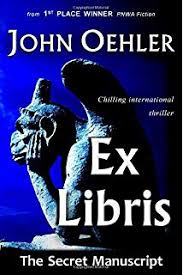
I’ve been reading John Oehler’s books for years now. My first introduction to his books was Aphrodesia in August of 2013. I remember being naively surprised by how much a book could make me blush. After I met in the author in person at a Half Price Books event I had coordinated, I promised myself I’d read every book he ever wrote. Oehler is endearing, kind, and fun to be around, something you don’t necessarily expect out of someone who writes the kind of thrillers that win him awards.
Oehler writes adventures for people who want to travel, his books are rich with globetrotting and exotic locations. For someone who rarely leaves my armchair, that’s a big part of my reading experience desires, and for this reason, Papyrus is probably my favorite of his work.
His books are also full of lavish descriptions compacted into succinct sentences like this one from Ex-Libris:
“The confessional felt like an upright coffin. Beyond the grate, a balding priest with a hooked nose stared straight ahead, his wrinkled face more stern than compassionate.”
Just released in September, Ex-Libris is Oehler’s latest novel to date and one Amazon reviewer has already praised it for its “dangerous characters with just a taste of whimsy.”
The book does indeed have a full cast of badasses with their own personal dynamics. Paulette and Martine have my favorite dialogues, clever Doctor Who style companions to our hero, Dan.
If you liked Ludlum’s Bourne Identity, you’ll appreciate Oehler’s fight sequences, political intrigue, and consistent tension.
Some reviewers compare Ex-Libris to Dan Brown’s popular Da Vinci Code series. I have never read Brown’s books, and I would have preferred to read more antiquarian bibliophile geeking out and theological analysis theories— where other reviewers thought there was already too much of this. It just goes to show, you can’t please everyone, even when you’re a stellar genre writer.
Have Child, Plant a Tree, Write a Book
“Then it came to me: Zola had said: ‘To have a child, to plant a tree, to write a book.’ That, he said, was a full life!” – Betty Smith
 What I love about being a book reviewer is the constant discovery of new things. Picking up books I may have never had the opportunity to read, and learning from those books – not how to write better necessarily, but – what kind of writer I want to be.
Book reviewing has also required me to read things more closely, not just the way I would for school, but in a more personal way as well. It’s not just about finding the literary value, it’s not just about liking or not liking, it becomes more and more important to be able to people and my readers why I loved a book. What moved me to passion? What is so relevant about this story to my own life? In doing that, it makes me dig deeper into myself, deeper into my library, and deeper into the art of research.
I’ve slacked off the last few weeks about publishing a literary journal post, but I haven’t stopped reading the literary journals. I meant to write this yesterday, it’s been dancing around in my head the last few weeks as I’ve alternated between picking my way through McSweeney’s issue 18 and researching to see if anything was written about Betty Smith. I’ve been scouring the internet for evidence of things written about A Tree Grows in Brooklyn, or perhaps a long buried article or story she may have had published before infamy. I didn’t know a lot about her, so it’s been an educational endeavor.
I started with what was available in the back of the Harper Perennial Modern Classics edition that I read the book from. The little extras this edition provides are wonderful, including the first piece Smith ever published: a bit of prose called “Winter” when she was 8 years old and still in grade school, under the name Elizabeth Wehner.
I enjoyed reading the article from This Week that she wrote called “Fall in Love With Life.” It’s a beautiful glimpse into her mind and life and what led her to know that she had had a full and marvelous life. It was refreshing to read, after feeling like a failure on most days, knowing I’ve had a child, planted a tree, and written book, changed my outlook on my life at 30.
Of course, the research continued and in my searching I found this: http://web.njit.edu/~cjohnson/tree/context/context.htm
I also found this and am pretty disappointed that I can’t find a copy of “On Discovering Thomas Hardy” anywhere: http://www2.lib.unc.edu/mss/inv/s/Smith,Betty.html
If anyone knows of any publications or articles written on or by Betty Smith, please share. I’d like to discover them too.

The Colorado Kid / Haven
 Title: The Colorado Kid

First Edition Release Date: October, 2005
Author: Stephen King
Synopsis taken from stephenking.com:
Vince Teague and Dave Bowie are the sole operators of The Weekly Islander, a small Maine newspaper. Stephanie McCann has been working for them as an intern. When Stephanie asks if they’ve ever come across a real unexplained mystery in the fifty years they’d been publishing the paper, they tell her the story of The Colorado Kid.
I have to be honest, I picked up this book because I have developed an unhealthy obsession for the tv show Haven.
Which, despite being drastically different stories, I like both King’s original story and the tv show spin off, a lot.
There are a lot of complaints on the internet about the show having nothing to do with the book. I wonder what King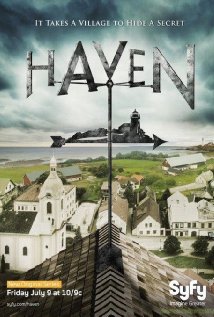 thinks, actually, because even though there were some definite creative licensees taken, I think the writers of the show have tried to honor the original creator.
In the book, Vince and Dave are not brothers – in the show they are. I’m not sure why that particular route was taken for the show, I don’t think it would have made a big difference to keep their original relationship. I do, however, like their characters’ dynamic in the show. And I adore the actors who play them.
The book focuses on the intern, Stephanie, who is asking Vince and Dave questions regarding the biggest mystery in Hammock Beach. In Haven, Audrey Parker (FBI) has come to town to investigate a different murder. Absurdly different, until you dive deeper into the show where you find that Audrey’s entire reason for being in Haven (or Hammock Beach, as it is called in the novel) has everything to do with the 1980’s mystery of The Colorado Kid.
If you have the patience to really get into the show, you’ll find that the show and the book have this main common thread:
In 1980 an unidentified body is found on a beach in Maine, wearing gray slacks, and a white shirt. No one seems to know who he is, or how he got to be there, but he is dubbed The Colorado Kid.
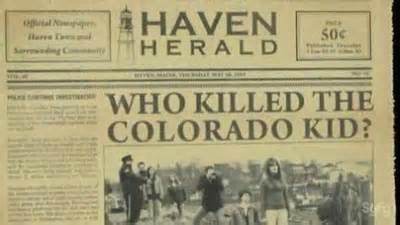
King’s book allows this mystery to mostly go unsolved, as Dave Sturm wrote in 2009:
“[…] King has written a meditation on stories by telling one that heads to a letdown, because the central mystery — SPOILER: How did the body of a Coloradan end up dead on a Maine beach just hours after he disappeared from Colorado???: END SPOILER — is left a mystery at the end.
King has violated a central tenet inherent in Hard Case Crime. The story has no plausible resolution.”
by Dave Sturm
Rambles.NET
8 August 2009
The point of the book is the beauty of things that are mysterious, how one answer unveils another question – at least that’s what I got out of it. The book also leaves itself wide open to becoming a set of mysteries that must be solve to explain the existence and death of this strange man on a beach, which the tv show honors.
So, in Haven, every answer Audrey Parker uncovers in the show leads to another series of questions. The show has one magical quality – it’s entire existence is someone’s creative answer to King’s unsolved mystery. By the fourth season, you may start to catch my drift. I am still patiently waiting for season five to get uploaded to Netflix.
In short, I adore the show and I loved the book. I read the first 137 pages of the book during my one hour lunch break. I read the rest of the book as soon as I completed my work. One thing that I missed doing, however, was read King’s afterward. I was in a hurry to get home, but couldn’t go without finishing the story – but putting all my thoughts in review here I wish I had taken the extra moments to read what he had to say about his own work.

Storybound
 Title: Storybound
Author: Marissa Burt
Publisher: Harper Collins Childrens
Genre: Middle Grade/ Young Adult/ Fantasy
Length: 406 pages
Phenomenal premise! It hooked me (and the kiddo) from the cover. It’s a delightful mix of Chronicles of Narnia meets Harry Potter.
Just look at that cover – it imbues pure magic.
Yet, it took me far too long to read it. Mind you, a lot of it was out loud to the toddler, but even so I felt a little disconnected.
I think Storybound is genius in concept, and I even think it is well written. A girl from the World of Readers (yes, our world) gets WRITTEN IN to the World of Story – where kids are trained on how to be heroes and ladies, archetypes are studied, there’s a class on Villainy, and the Talekeepers are basically the government. And the Muses? A mystical group of entities from the past that have been eradicated.
Absolutely genius!
I think, however, I finally found a modern young adult book that is truly meant for young adults and didn’t manage to grasp the adult audience as the fad of young adult books has done so far. That’s perfectly fine… it’s a fantastic book, and I intend to hunt down the sequel (Story’s End) and read it as well. I also intend to own these sometime and have them available for my daughter to re-discover when she can read on her own.
But I will wait to find them used. I don’t feel the need to rush to Barnes & Noble and purchase fresh new copies NOW.
As a reviewer I find this sort of situation the most difficult… you know the one: I LOVE the book, but I’m not IN LOVE with the book. I feel as though I have failed the author in some way, like I didn’t give it a proper chance. Maybe if I read it over here I’ll get the butterflies while I read, maybe if I change the music, maybe if I set the mood just right it will work the way I expected it to. I’ve done this with boyfriends in the past – “he was perfect, but I just didn’t have that connection…” That’s how I feel about Storybound, it’s perfect, but we just… didn’t… have that… connection.
So here is one I recommend, and encourage you to read; but my passion isn’t stirred and I may have to be reminded to add it to my friend and customer-renowned lists.
Adults that do fall in love with this will probably be ones who are die hard fans of the TV Show Once Upon A Time – a show I wanted to love, but didn’t.
Kids who should get their hands on this should also have The Chronicles of Narnia, Harry Potter, Above World (by Jenn Reese), The Land of Stories (by Chris Colfer), and The Castle in the Attic books (by Elizabeth Winthrop).
The Ravenous Beast
 Title: The Ravenous Beast
Author: Niamh Sharkey
Publisher: Walker Books
Genre: Board Book
I originally bought The Ravenous Beast for the color scheme (its cover is purple, turquoise, and an orangy- yellow) and illustrations. And the fact that Ayla fell in love with it in the bookstore. That was a while back, and now our once new board book is chaffed, worn, and has a cracked spine. Sharkey’s book has become one of her favorites. It gets read at the table during lunch (my favorite time to read it), at night before bed from time to time, and every once in a while I read it at Half Price Books’ story time while the kids chow down on crackers.
If you make sure to do all the different voices and include the exclamation marks while reading, the book is always well received by children, despite the slightly disturbing end where The Ravenous Beast eats ALL the other characters. I suppose the disturbing factor is lost on kids anyway because they all think its the funniest thing ever. Truth be told, it is rather funny. The whale is my personal favorite, but Ayla prefers the cat and the crocodile.
Sharkey is a well-known and accomplished children’s illustrator, not only does she write and illustrate popular children’s books like The Ravenous Beast, she is the Children’s Laureate of Ireland and is now collaborating with Brown Bag Films and Disney to create a show based on her book I’m A Happy Hugglewug. Learn more about her and all her ventures on her blog: http://niamhsharkey.blogspot.com
Diana Gabaldon Interviews with Anakalian Whims!
 Diana Gabaldon
1. You’ve made it clear that you don’t like your books catalogued as romance (completely understandable – and I agree that they are so much more than that!). What genre would you prefer them to be classified?
Well, so far, I’ve seen them classified and sold (with evident success) as: <deep breath> Literature, Fiction, Historical Fiction, Historical NON-Fiction (really), Science Fiction, Fantasy, Mystery, Romance, Military History (really; the Military History Book Club has carried several of my titles), Gay and Lesbian Fiction, and…Horror. (No, really. A BREATH OF SNOW AND ASHES beat both George RR Martin and Stephen King for a Quill Award a few years back. Very gratifying. <g>)
On the whole, I’d just like to see them classified as “Fiction.” If you call them anything related to a specific genre, you’re just asking for half the people who encounter them to shrug and go, “Enh…I don’t really read that kind of book.” No point in alienating an audience a priori, I mean.
2. The Outlander Series has been a best-selling series for twenty years. Is this what you imagined for yourself? Did you ever think Jamie and Claire’s story would reach this level of fame?
Well, no. I wrote OUTLANDER for practice, in order to learn how to write a novel. I didn’t intend even to tell anyone I was writing it, let alone try to get it published. But you know, Things Happen. <g>
3. There is a lot of detailed history in your novels. Do you enjoy doing the necessary research involved when writing these books? Outside of your research for these novels do you read a lot of history?
I love doing research. I chose to write a historical novel for practice because I was a research professor (though in the sciences), and knew my way around a library. I figured it was easier to look things up than to make them up—and if I turned out to have no imagination, I could steal things from the historical record. <g> (This works really well, btw.)
I enjoy history in general, but am a dilettante reader; I just pick up books I’ve read good reviews of or hear well-spoken of, in just about any period. Reading for pleasure is a whole different animal than doing research—the latter is kind of guerrilla warfare, as opposed to a nice stroll through the scenic landscape.
4. I read that a Dr. Who episode inspired the setting for your books. I’ve been a Dr. Who fan since childhood, so I’ve got to ask: Which actor plays your favorite Doctor?
Oo, hard to choose! I suppose David Tennant wins by a bit—though I _really_ liked Chris Eccleston in his single season, and who doesn’t like Tom Baker? Matt Smith’s very enjoyable so far, but I’ve only seen his first season, as yet.
5. I am completely fascinated by the Geillis Duncan/ Gillian Edgars character. What was your inspiration for including this character in the story?
Oh, a real Scottish witch <g> named Geillis Duncan. See—“steal things from the historical record,” above.
6. I read on your website bio that you hold degrees in various sciences and were actually a college professor. Did you enjoy teaching? Any favorite anecdotes from that life?
I loved teaching; it’s the only thing I miss about academia (and thus I enjoy teaching workshops at writers conferences and the like). Anecdotes…well, there was the class I taught in Philadelphia some years ago. I was teaching a class in Human Anatomy and Physiology, to nursing students from Temple University. One of my favorite students was a black guy in his mid-thirties—all the students were a big older than the usual run of college students; these were mostly people returning to school for a nursing degree—who had a colorful background, but looked rather like the owner of a successful bar: slightly overweight, balding, glasses, conservatively but casually dressed, very outgoing and genial. His name was…well, I’ll call him Wally.
Now, all my students took the same curriculum of nursing classes, so they’d often come in talking about what had happened in the class before mine, which was something like applied techniques—a lab class where they learned to take each other’s blood pressure, draw blood, do CPR, and practice various bedside techniques. This particular month, they’d been doing bedside procedures, with a life-size dummy, demonstrating that they knew how to change a bed, check vitals, check the patient’s general well-being, take care of any personal issues, and do it all while addressing the “patient” in a kind, respectful, informative way.
On this one occasion, they came in very excited, having had an important exam in that class—they _had_ to pass that class, or they’d be thrown out of the nursing program and have to re-apply and start over. And at the end of the influx came Wally, flushed and wild-eyed, in a Complete State.
“What on earth happened?” I asked, whereupon he waved his arms and shook his fist at the heavens.
“I ran with gangs! I been in jail twice! I’ve been shot, I’ve been stabbed! I been married twice and I got three kids, I got out of the gangs, I come back to school—and now I’m about to be kicked out of school and RUIN MY LIFE…because I FORGOT TO WIPE A GODDAMN DUMMY’S ASS!!!”
7. How did your teaching career and background in science affect your approach to writing fiction?
It didn’t. At least, not in any direct or describable way. There are certain parallels between science and art, but part of that is just the way the world _is_, and part of it is just the way my mind works.
8. Do you have any nonfiction publications (other than The Outlandish Companion) in the works? (If so, I can’t wait to read them!)
Not other than a handful of scientific papers. <g> Now, in the fullness of time, I will have THE OUTLANDISH COMPANION, Part II, and am also working on a book about writing, called THE CANNIBAL’S ART. Neither of those will be out ‘til after I finish WRITTEN IN MY OWN HEART’S BLOOD, though.
9. I read that your 8th Outlander book will come out sometime next year. You also have another series, Lord John, which has become popular. You’ve become quite prolific! Do you have any advice for aspiring authors?
It’s the same advice for _any_ writer, no matter what their level of experience:
Gabaldon’s Three Rules for Becoming a Writer:
- Read. Read a lot, read everything. This is where you find out what you like and what you don’t like (and it’s a total waste of time to try to write something you don’t like just because you think it might sell—it won’t, believe me)—and also where you begin to learn the craft of writing. You read two books in the same genre, for instance, and think, “I like this one a lot, that one, not quite so much. Why is that?” Well, the first one has better characters; they seem realer. Oh? And why is that? Mmmm….I think it’s the way they talk. These people sound like people really sound, and the other one’s kind of wooden. OK. How did the writer do that? ‘Cuz everything a writer does is right there on the page; there’s no way to hide your techniques. <g> If you look carefully and read with attention, you’ll start to see things—for instance, that good dialogue usually consists of short sentences and brief paragraphs, while bad dialogue tends to drone on and have convoluted sentences. Or that good dialogue never tells you stuff that the characters already know—whereas a bad writer will often use dialogue as a way of info-dumping on the reader. That kind of thing.
- Write. Unfortunately, this is the only way of actually learning to write. You can read all the books you want, and take classes in creative writing, and they may be useful—but nothing will actually teach you to write, except the act of putting words on the page.
- And the last rule is the most important: DON’T STOP!!
10. I truly appreciate you taking time to interview with me. (Feels kind of like I won the lottery!) Do you have anything you would like readers to know about you and your novels that I haven’t already covered?
Let me see…Oh! We (me, my agent, and Random House <g>) are releasing a series of novellas—originally written for various anthologies—as individual e-books. These are for the benefit of readers who either didn’t see the original anthologies, or who perhaps don’t want to experiment with a collection of unknown-to-them writers just to get one story by a favorite author.
Anthologies usually only keep the reprint rights for a year or two, and once those expire…I can do anything I like with the stories. So. Those stories are beginning to come back to me, and as they do, we’ll make them available individually.
Right now, you can get “The Custom of the Army” as a separate e-novella, for any common e-reader format (i.e., Kindle, Nook, etc.), _in the US and Canada_, and you’ll be able to get “A Leaf on the Wind of All Hallows” (this is the story of Roger MacKenzie’s parents, Jerry and Dolly, during WWII, wherein you learn what _really_ happened to his father) as an e-novella in October.
Because there are different rights in different geographical territories, often I get the international rights to something back well after I get the US rights back. And there are sometimes differences between the print rights and the e-rights. What THIS means is that while UK/Australia/NewZealand fans can’t (yet) get the e-novellas—BUT they’ll be able to get a print collection in October that includes not only “Custom” and “Leaf”—but also “Lord John and the Plague of Zombies” and “The Space Between” (a long novella involving Marsali’s younger sister Joan, Young Ian’s elder brother Michael, the Comte St. Germain (no, of course he isn’t dead; don’t be silly), Mother Hildegarde (and Bouton) and…Master Raymond. (NB: “The Space Between” will be available for the US and Canada in both print and e-book form in February 2013, when the anthology for which it was written comes out—the anthology is titled THE MAD SCIENTIST’S GUIDE TO WORLD DOMINATION, edited by John Joseph Adams. <g>)

Archie Rocks Acoustic, Totally Rocked Half Price Books
 Booking musicians to serenade customers at a bookstore has been pretty fun so far. Sure, it has ups and downs… a great musician, a no show musician, a nice musician, a quirky musician… but tonight it was all UP! Archie Parks had the tips flowing, the book buying happening, and customers tapping their toes while they shopped LP’s, and applauding from the DVD aisles. A couple came to find me to ask if he had cd’s for sale and why not. So after the show, I took some time to pour over the calendar with him and conduct an interview for my blog.
Who are your biggest influences?
Bush, Gavin Rossdale, Cobain. That dude from Seether, I can’t think of his name right now, but I’d know it when I see it. 90’s Grunge music mostly, you know STP. I could go all day… Pearl Jam, Smashing Pumpkins, Shoe.
When did you start playing and why?
Jr. High. My Dad had a guitar and a friend had a drum set. Started writing our own songs because if we messed up nobody knew. And then it snowballed. So I guess the answer is boredom.
Where else are booked to play?
I’m trying to set up a show at Bohemeos. It’s real chill there.
What made you decide playing in a bookstore would be right for you?
It’s chill. My new style is perfect for a chilling bookstore.
Since we’re in a bookstore, who are your favorite authors?
Asimov, he’s the shit. Herbert, I love science fiction, obviously. I heard a new Dark Tower came out, Stephen King, but not Stephen King, I like his alter ego Bachman. But Asimov is number one. I love robots, man. And those dudes that came out with new Dune books, they weren’t Herbert, but they were still pretty sweet. And I’m into Eastern Philosophy. But it’s fucking lame. I’m into it, but not to be a hipster.
Do you read much? Does your reading affect your lyric writing?
No, I don’t read much. It doesn’t affect my writing. What does is school, I’m taking Creative Works.
What messages do you wish to convey through your music?
My number one theme is love. I sing about it all the time because I love the ladies. But my goal is to help people find the right path for them. That’s why I like Eastern Philosophy and I’m not a hipster. Help people find themselves, and feel stuff.
When do you think you’ll have cds or downloadable songs ready for sale?
I have enough material for a seven track album. But I’m leery, I need moral support because I don’t want to rip people off just selling me and a guitar. I have higher standards. I don’t want to put my name on crap.
At which point, I had to tell him that I thought the idea of a cd with just him on a guitar wouldn’t be a rip off at all, it would actually be quite lovely. He’s very humble, but not in a self degrading well. He was genuinely pleased and surprised that customers were interested in buying his music if it was available.
Interview With Author Tanya Egan Gibson

Tanya Egan Gibson, photo from article: http://www.marinij.com/lifestyles/ci_12499312
I read How to Buy a Love of Reading
- Fitzgerald is obviously a heavy influence for you, who else were among your first literary loves?
Kurt Vonnegut, for sure, in high school. Slaughterhouse-Five changed the way I thought about what a novel “should be.” C.S. Lewis in elementary school. I loved the Narnia books. I wanted a wardrobe. Oh, and between that, all of Conan Doyle’s Sherlock Holmes tales. I had a serious crush on Holmes—the more eccentricity the better.
I should probably clarify, too, that it took me a really long time to appreciate Fitzgerald. I didn’t like The Great Gatsby in high school or in college. It wasn’t until I was assigned to teach it at a high school in California that I saw it differently. One of my students asked, “So why is Daisy such a bee-atch?” Which snapped me out of concentrating on the book’s famous symbolism (The Green Light! The Eyes of Doctor T.J. Eckleburg!) and refocused me on the people (characters) and their desperation to be loved.
- My favorite part of HTBALOR is how raw Hunter comes across, how much his character development rings true. That’s rare for a female author to write a male character so well. Is he the character you identify with most? Or did you fall in love with him a little? (Admittedly, I did a little of both.)
As a lifetime watcher of shows like Beverly Hills 90210 (the original one) and its successors, I always found the rich-kid-who-lives-alone-in-a-posh-hotel-or-other-parentless-situation to be a cool trope. (Yeah, we can call it a stereotype, but the literary ring of “trope” sounds much more forgiving.) I’m fascinated by stereotypes because it seems to me that people (real people, not just characters) often end up becoming them of their own volition, giving up on some of their most interesting dimensions for the safety/security/ease of neatly defining themselves.
The rich-kid-who-lives-alone is nearly always a misunderstood “bad boy” who (when we meet him at, say, the beginning of a CW television series) is engaging in self-destructive behavior and has a mean streak. Usually, as the series progresses, the character cleans up his act (usually for the love of a good girl) and he learns to become a responsible person (with, perhaps, a couple of dips into recidivism when the ratings need a boost) and discovers his inner poet/artist/recycling advocate/vegan.
So, when I wrote Hunter, I kept wondering what such a character would be like the other way around: What if the character was originally a responsible, mature-beyond-his-years person who knew who he was? What if living alone with too much money and little supervision hadn’t turned him into a spoiled, self-destructive brat? What if he liked to cook and knew how to clean and didn’t act or feel embarrassed about being a book geek? What would it take for that character to end up turning himself into the self-destructive-kid-with-a-mean-streak stereotype? Looks. And being looked at.
I suppose that’s a long preface and I still haven’t answered your question—sorry! What fascinates me about Hunter is that being so highly visible (an overnight hottie who never meant to be a hottie) deprives him of being himself. He wants to be kind and gentle and loving and loved. At his core these—and privacy—are what he most values. But these aren’t qualities valued in an appearance-obsessed community or expected of him as the community’s golden child.
So many of the good things Hunter does for other people are quiet, under-the-radar, private. Yet he’s constantly getting the message from his parents and peers—and even his college application essay prompts–that nothing matters if people can’t see it. (Thank you, reality TV society.) So he kind of splits himself into public-Hunter and private-Hunter. And in so doing, unravels.
Which, finally, brings me to answering your question: Yeah, I probably understand Hunter the best out of my characters because he’s desperate to reshape his world into something lovely and full of love—and also made to feel embarrassed about such inclinations. Like private-Hunter, I’m hopelessly thin-skinned and I get crushes on authors (even dead ones) and I daydream about them being kind. I’m very self-conscious, an introvert who pretends to be an extrovert because I really like people and like to talk with them—even though they often scare me. I write about love and loveliness; I believe there is much love and loveliness in life waiting to be discovered. (I’ve been called a Pollyanna. To my face.) But I’m no longer embarrassed by it.
- It’s clear you have a love/hate obsession-like relationship with meta-fiction. It’s also clear how beautifully you write the layers of a book, like a rose in bloom or an onion being peeled. When you are writing, do you find that meta-fiction lends itself to these unfolding layers or does it work against it?
Yup, I wrote a novel that makes fun of meta-fiction while taking the form of meta-fiction. So yeah, I do both love and hate it. Oh, and thank you for the compliment. Back to the love-hate relationship: It’s complicated. Self-consciousness tends to get in the way of emotion. (Have you ever watched a play where one of the actors is supposed to say something like, “I swoon for you!” but is too embarrassed to go all the way with it, his self-consciousness turning it hollow?)
Meta-, of course, is about consciousness of self. But it also invites the reader backstage, saying, “Slip in behind the curtain. It’s okay, there’s room. Check out that actor’s insincerity!” Maybe this affords the reader the opportunity to observe up-close that the actor is shaking, and gives him or her clues to the emotion behind the hollow “I swoon for you.” Maybe the real story isn’t the play on the stage, but rather the story of why that actor is too terrified/nervous/exhausted/ill to embody the emotion of that line. So the question is whether it’s worth sacrificing the outer story (the story being played out onstage with the supposedly swoon-worthy damsel) to this inner story.
For me, the answer is sometimes, and only if I’m sure that the main narrative (swoon-worthy damsel) is ultimately deepened, emotionally, by that meta- jolt. When you go meta-, you’re sacrificing the readers’ waking dream—plucking them out of a world and then asking them to willingly reenter it. That’s a lot to ask.
The short answer to your question: I cut way more meta-material than I ever use.
- One of the characters, Bree McEnroy, writes a meta-novel. Do you have a favorite book from another author that fits this genre? If so, what is it and when did you first discover it?
Waterland, by Graham Swift, is one of my favorite books ever. I discovered it in graduate school, where my love-hate relationship with postmodernism and all things meta- broke down into way more hate than love. Waterland was assigned in a British Literature course I did, in fact, love–a respite from talking about literary theorists with difficult French names.
The novel is about a history teacher who is supposed to be teaching his students about the French Revolution. But who, because he’s sort of losing it, starts telling his students about his own personal history instead. Among other things, the book calls into question the difference (if any) between story and history.
- Your book references several fictional characters as authors and includes excerpts from their work. Do you have full manuscripts of these books lurking away somewhere? Like J.K.Rawling’s Tales of Beedle the Bard and Quidditch Through the Ages, do you have plans to publish these?
No full manuscripts exist of Between Scylla and Alta Vista or Unwritten. I promise. I did write small excerpts of them for my website, though, where a few pages of each of these books “exist” on a virtual bookshelf. In “Hunter’s journal” (on my website)—the story he wants to write about a girl and boy going on a ski trip in fact existed as a large flashback in an earlier draft of HTBALOR. (It was originally the story of how Hunter and Carley, the protagonist of HTBALOR, met. Later, it was replaced by a shorter flashback near the end of the book where they bond over an incident on the Long Island Sound.)
- As a writer, I dread asking this question (I have no idea if I will finish my own novel this year or this decade), but as a fan I am dying to know: when can we expect another book?
HTBALOR was published eight or nine years after I started writing it. I’m hoping the novel I’m currently writing (the working title is LANDS) won’t take quite that long. Like HTBALOR, it contains a meta- element, and getting all the layers of it to line up (while at the same time making each layer emotionally true to itself) is, as I indicated above, kind of tricky. Plus, I’m balancing writing with taking care of my two wonderful children, ages 7 and almost-4. One nice thing about LANDS: it takes place at a fictional theme park, so my children love coming along on amusement park research trips and think the pictures in my shelf full of amusement park research books are very cool.
- The cover art of the Dutton hardback edition, also featured on your website, is the reason I picked up your book. As a writer and art fanatic with a Bachelors in Marketing, I can’t help but wonder: Were you involved in picking out this art, or was it all Dutton? If so, what was your level of involvement?
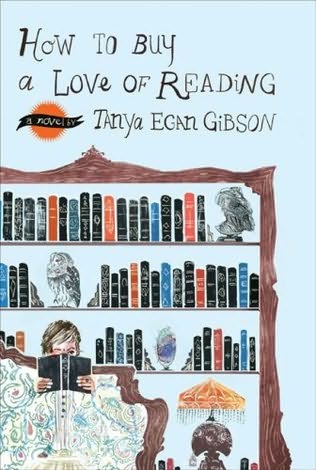 Dutton chose the cover design and illustration, which were done by an artist named Ben Gibson (no relation). I think it’s beautiful, and I was particularly happy about the way the girl’s body. The spine of the book kind of becomes her spine, but the rest of her body seems to blend into/disappear into the couch. Weight is overly important in the fictional community of HTBALOR—the protagonist, according to the personal trainer hired by her mother, is 57 pounds overweight—and this rendering of Carley honors the conclusion of the book, in which the reader is never told what “size” she ends up.
- Does the cover art for this book represent your own art tastes? Who is your favorite artist? (Or what is your favorite piece?)
I’m kind of a Philistine when it comes to art. Not a three-dogs-playing-poker or velvet-Elvis glow-in-the-dark wall art Philistine—but still pretty unknowledgeable. (I did, at least, learn something from doing research for Bree’s never-to-be-completed book about art patronage.) I’m particularly fond of my seven-year-old daughter’s pastel rendering of two orange Amazon rainforest frogs and my three-year-old son’s multi-colored blob paintings that he insists are either trucks, dinosaurs, or me.
- Carley and Hunter are both only children. Did you have siblings growing up?
My brother wasn’t born until I was ten or eleven and we were raised in different households—after my parents divorced, my father remarried, so we’re half-sibs who were kind of each raised as only children. While it’s wonderful to have a sibling as an adult (my brother is very cool), I definitely wondered, as a child, what it would be like to have someone there to do things with. My daughter likes to tell people that my husband and I had her little brother “so I’ll always have someone to play with.” Which is not exactly untrue.
- What is one thing you want your readers and fans to know about you?
I love reading and writing so much, and feel unbelievably fortunate to have a book out there in the world. I love to write emails to authors when I enjoy their books, and when I receive emails/Facebook messages/Tweets from readers who connected emotionally with HTBALOR, it makes my day. Reading, for me, is all about connection, and when people take the time to tell me that my novel made them feel something, I’m thrilled beyond words.
Please follow Tanya Egan Gibson on Twitter @tanyaegangibson.
Follow this link to purchase How to Buy a Love of Reading



 Anakalian Whims