Homeschooling a 2 Year Old
Looks like this…

I read Magic Tree House #3 Mummies in the Morning and its companion research guide Mummies and Pyramids while she looked at lots of pictures. The books with pictures were The Kingfisher Atlas of the Ancient World, a Reader’s Digest What Life Was Like, a coffee table book called The Pyramids and Sphinx, and a hardback I plan to use as a textbook when we do this again called Life in the Ancient World

Then we learned that P is for Pyramid. After several pictures, lots of blue lines, a few attempts to write some letters, she can at least say the word and identify the drawing – mostly – sometimes she says triangle or boat instead. I think she sees triangles and thinks of the sails on a crude drawing of a sailboat.
Anyway, that quickly turned into this:
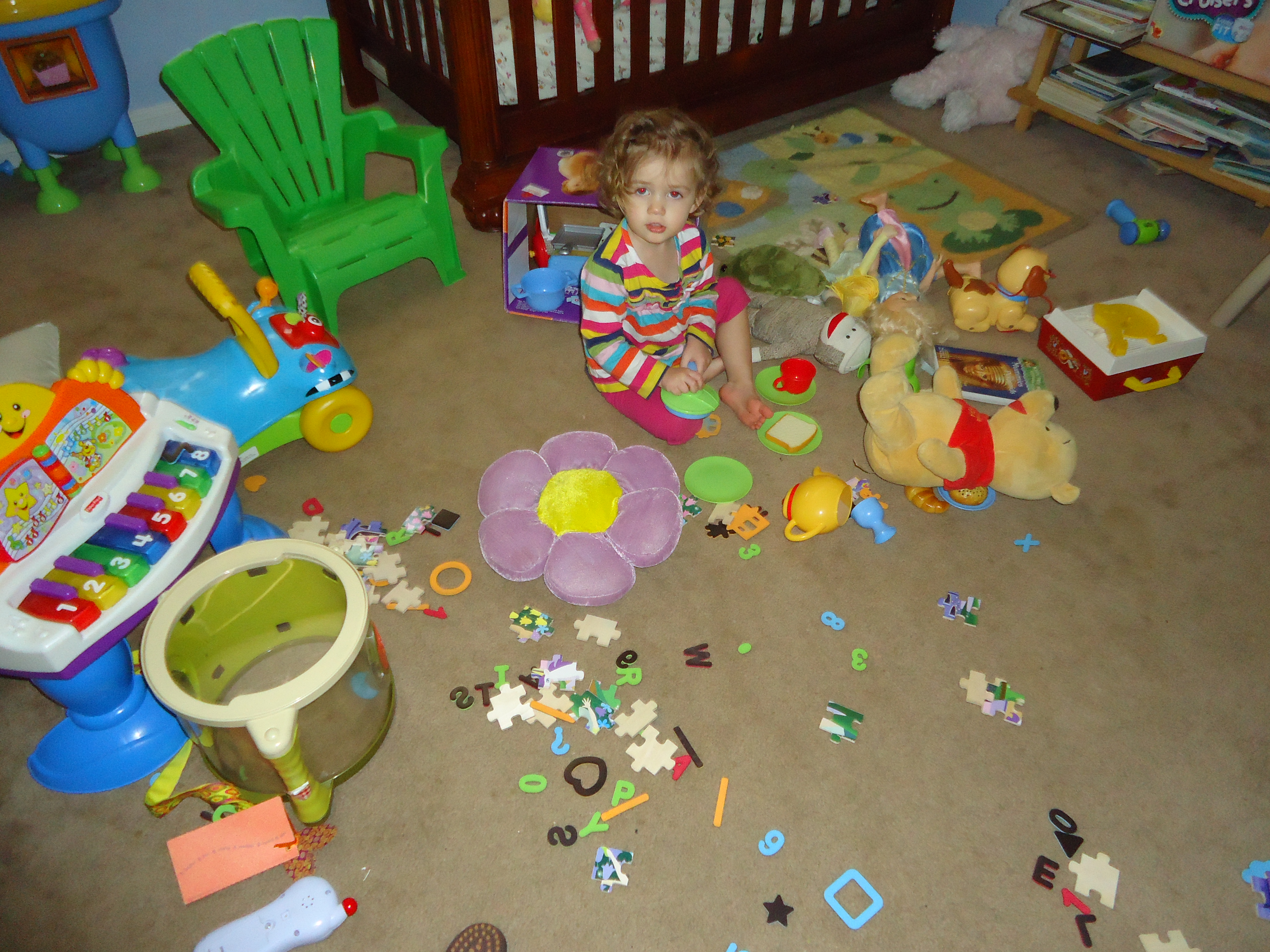
And that’s what homeschooling a two year old looks like.
Magic Tree House Adventures – Knights!
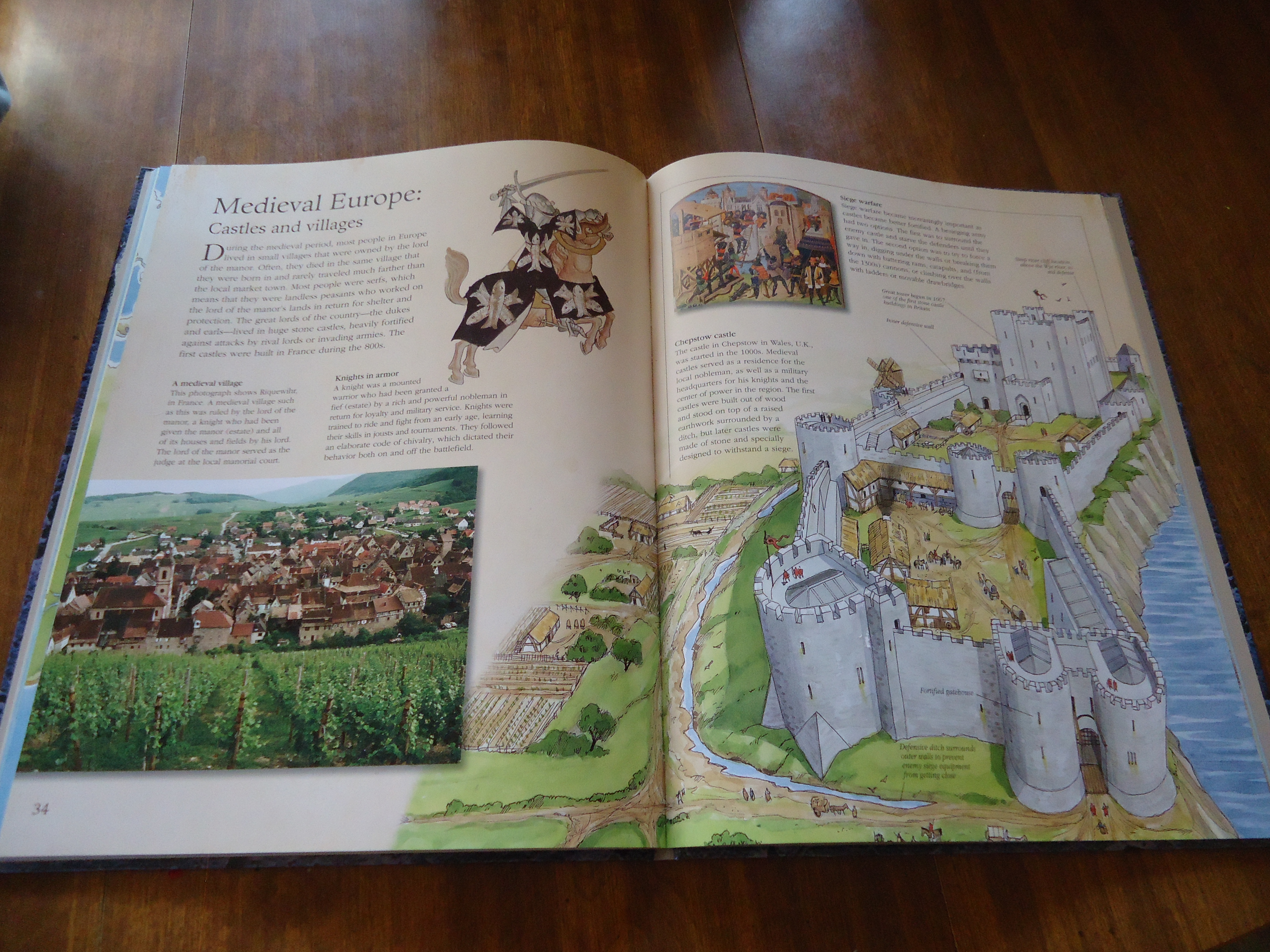
The Kingfisher Atlas of the Medieval World
(… Castles! And Medieval Times!)
 Today we read up on everything Knights and Castles
“A Feudal System has four parts! From top to bottom it goes: King, Barons, Knights and Serfs!” Sadly, I’ve already forgotten the tune to which we were singing/chanting this bit of information, maybe one day it will come to me again, or maybe we’ll find a new tune. Either way, munchkin was climbing in and out of the laundry basket this morning singing, “King! Baron! Knight! Serf!” so I win.
 It was at this point that I decided: in addition to reading through this pairing and prepping kiddo’s future education (when she’s old enough to tackle these projects properly with crafts, writing assignments, and vocabulary tests), I’m going to blog our prepping routines… separate from the Weekly Low Down on Kids Books installments. I know I will find it handy for when we repeat this reading exercise in a few years, but maybe someone else can find it handy now.
I can’t wait to take the kiddo to Medieval Times. I’ve always enjoyed the place and once she is old enough to go, I think it would be a great way to end an educational adventure. As she’s only two and today’s reading was somewhat (though not completely) impromptu, I took her to the closet thing to a castle we have readily available.
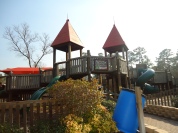
The Spring Community Playground, part of Liberty Park looks like a giant, wooden castle to me. It has several keeps, a palisade, horses to ride, and all sorts of castle/fortress styled fixtures. According to the park’s website:
This playground was built by the Spring community for the betterment of the Spring community ultimately for the enjoyment by our children with community donations and community volunteer labor. It was built in 5 DAYS from January 29th to February 2nd 2003 with over 900 community volunteers. A large majority of the volunteers were parents, grandparents and friends of students from Hirsch, Smith and Jenkins Elementary Schools. We also had volunteers from Austin, San Antonio, Dallas, Houston, Kingwood, Conroe, Laredo, and Mexico.
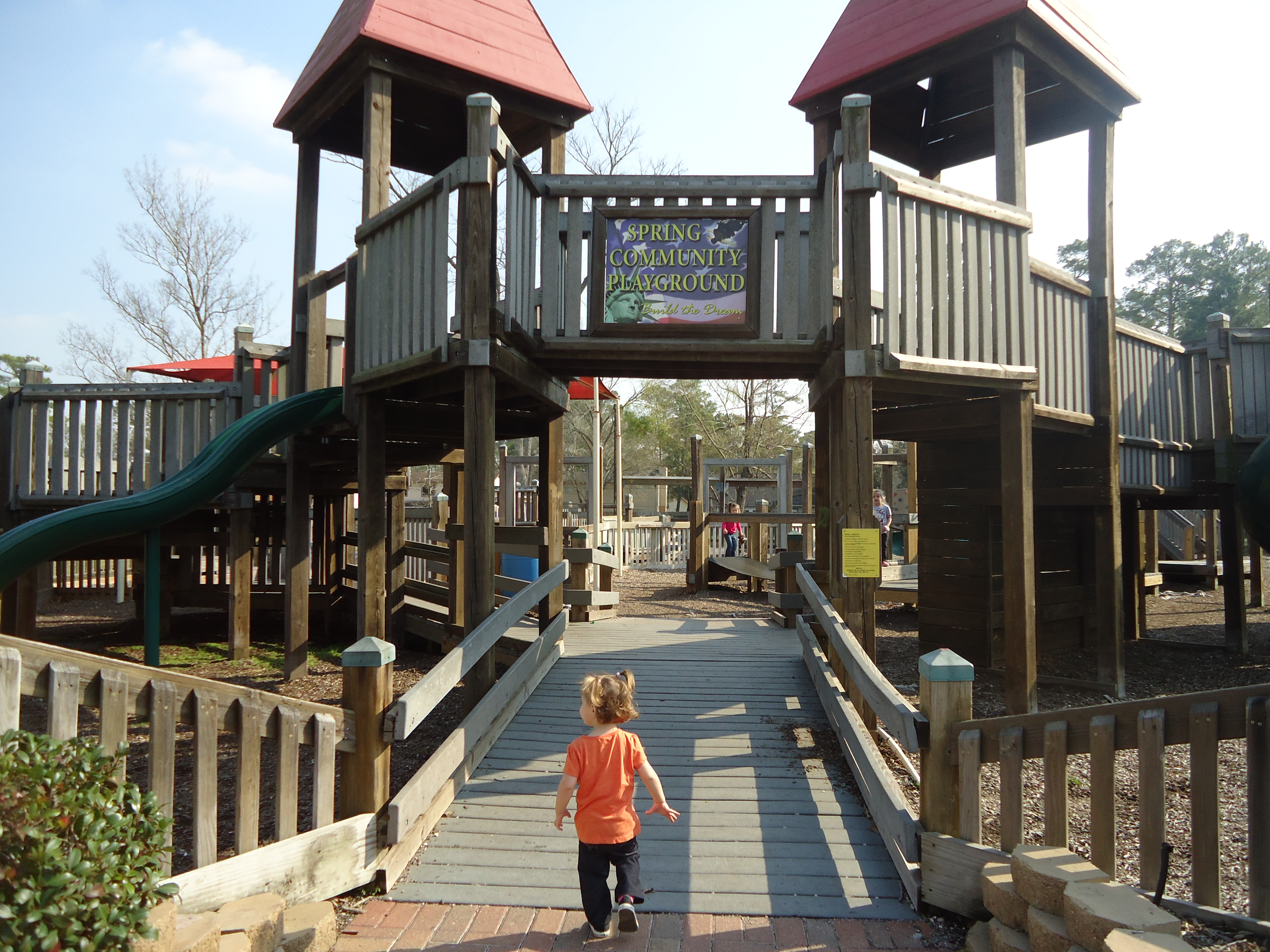
Obviously, there’s a huge difference between this and an actual castle! But it’s fun to walk the park and read the engraved pieces of wood that tell who donated what. I want the kiddo to grow up with a strong sense of community… our neighborhood is our manor, and all that.
When she’s older, we’ll be able to spread the study over the course of a week and add more books and activities. For instance, on day two we could read The Time Warp Trio
This unit would also be a great opportunity to spend the week going through one Sir Cumference book a day for the start of math lessons.
For lunch, I’ll take the opportunity to serve “feast foods.” I found an entire web page dedicated to recipes of the day, and I love to eat to match our educational themes. Plus, I want my daughter to know her way around the kitchen before she goes off to college, unlike me. So as she gets older, we’ll be making all our meals in the kitchen together – themed or not.
I would definitely try to work in her first horseback lesson during this week if she hadn’t started them already, after all knights, caballeros, Ritters, and chevaliers, are all just soldiers on horseback, as the MTH Research Guide will tell you.
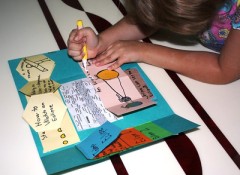
Click image to visit a lapbooking tutorial website.
For the most part, though, we will spend our days reading, making lap books, journaling what we’ve learned, playing dress up, and gearing all our artistic energy at the topic. Homeschool Mom and Blogger of My 2 Small Boys has images of her kids’ notebooks on Knights and Castles here: http://my2smallboys.blogspot.com/2012/01/middle-ages-knights-and-castles.html.
When the weekend roles around, if the study lands in the summer, perhaps we will go to the beach and build sandcastles; If in the fall, maybe we’ll head out to the Texas Ren Fest.
Knights and Castles Library List
Saint George and the Dragon (a great precursor to have on hand for Spenser’s The Faerie Queen, we’ve already read it quite a few times)
Castle Diary by Richard Platt
The Knight at Dawn by Mary Pope Osborne
Knight by Christopher Gravett
Knight ~ A Noble Guide for Young Squires
100 Things You Should Know About Knights and Castles by Jane Walker
If You Lived in the Days of Knights by Ann McGovern
Castle: Medieval Days and Knights by Kyle Olmon
Knights in Shining Armo by Gail Gibbons
Knights and Castles by Seymour Simon
The Usborne Book of Castles by Lesley Sims and Jane Chisolm
What If You Met a Knight? By Jan Adkins
Imagine You’re a Knight by Meg Clibbon
Take Care, Good Knight by Shelley Moore Thomas
The Knight and the Dragon by Tomie DePaola
In the Castle by Anna Milbourne
The Castle That Jack Built by Lesley Sims
The Tournament by Heather Amery
Some more ideas: http://www.angelfire.com/dc/childsplay/castleunit.htm
Weekly Low Down on Kids Books – Dinosaurs!
 I read Magic Tree House #1: Dinosaurs Before Dark
We had to stop a few times to draw a rhinoceros onto our ‘R’ page, check out whales and their sizes in relation to dinosaurs in our encyclopedia, and to correct behavior as she climbed in my living room window sill that is about three and half feet off the ground. We even had a brief whistling lesson after reading how the wind was whistling around the tree house. Overall, she enjoyed it, so we moved onto the Research Guide
 Mary Pope Osborne and her husband Will Osborne joined forces and started writing nonfiction companion books to the fictional Magic Tree House adventures. When I first discovered this, I started purchasing them in pairs, vowing to use them as fun assignments while home schooling. I’d like for kiddo to grow up in the habit of reading a nonfiction title that somehow relates to every fiction title that she devours, expanding both her facts and her imagination. What better way than to start with research guides to her first chapter books?
Why am I reading these to her so early? Frankly, it’s quite hilarious to watch a two year old run circles in your living room chanting, “Fossils! Minerals! Dinosaurs!” at the top of her lungs, while her dog (who happens to be the biggest one we own) lays in the center rolling his eyes.
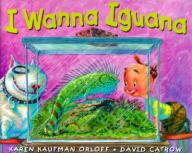 Chapter three of the research guide Dinosaurs talks about iguanas and how Gideon Mantell though the dinosaur teeth he and his wife found were giant iguana teeth. Of course, we had to stop to re-read I Wanna Iguana
All in all, we had a good ‘school day’ this morning, something we have been working on being more diligent about now that kiddo is two and it has actually managed to get too cold to venture out as much.
When We’re Not Reading – Pow Wow Adventures!
Today we went to Trader’s Village where we attended the 23rd Annual Texas Championship Native American Pow Wow. Singing, dancing, bright colors, people, and corn in a cup… what more could a girl want?

So many people were gathered to honor Native American Indian culture today, and to dance for a $15,000 prize. The young man featured above picture was dressed to the nines and dancing his heart out when the drums were going. The entire competition was pretty awesome.
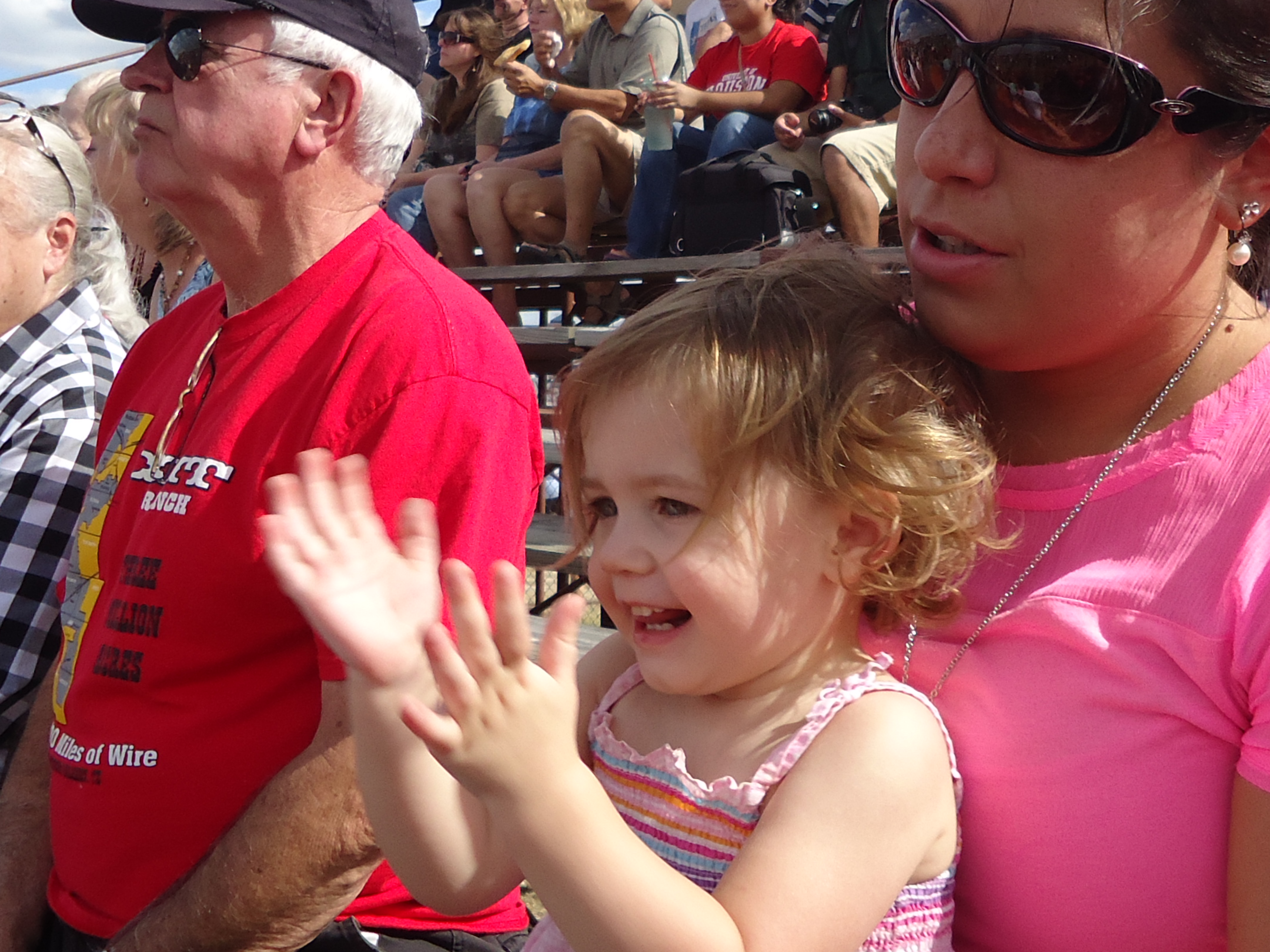
There were a few times Kiddo was moving and grooving and clapping to the beat. And every time we took a break from sitting in the stands, we were able to get pictures with some of the friendly competitors.

Books are wonderful sources for information, but when it comes down to it I want Kiddo to go out into the world and experience first hand what she reads about in books. In honor of our adventure today, we’re reading Pocahontas: Princess of the River Tribes

I definitely plan to take her to this event every year, as it is only $3 to park and free to attend.
When We’re Not Reading – It’s Texas, It’s Friday, What do you think?
Growing up in Texas, one thing is supposed to be as gold as the Gospel, and that’s what’s happening on Friday Night at high schools all over the state. I was surrounded by this my whole life, but managed to only attend one game, and pretty much missed the whole extravaganza. I never participated in the Homecoming business, never went to a dance, got one of those mums the south is famous for from a friend, but was just never into it. Several times I showed up for a game, sang the national anthem with the choir, and then high tailed it out of there. It wasn’t that I didn’t want to stay – I was just so damn busy.
I don’t want the kiddo to miss it. Well, she can miss it if she wants, but I want her to at least have a chance to choose to not miss it. But I also plan to home school. So where does home school and good old fashion Texas High School Football have a chance to collide? In Andi-land, that’s where. Also in many school districts where they allow home school students to try out for teams and be a part of the school’s organizations.
So… There’s a high school right down the road from our house, it’s Friday Night, my husband was out for the evening, and I found out there was a home game. What do you think I decided to do?
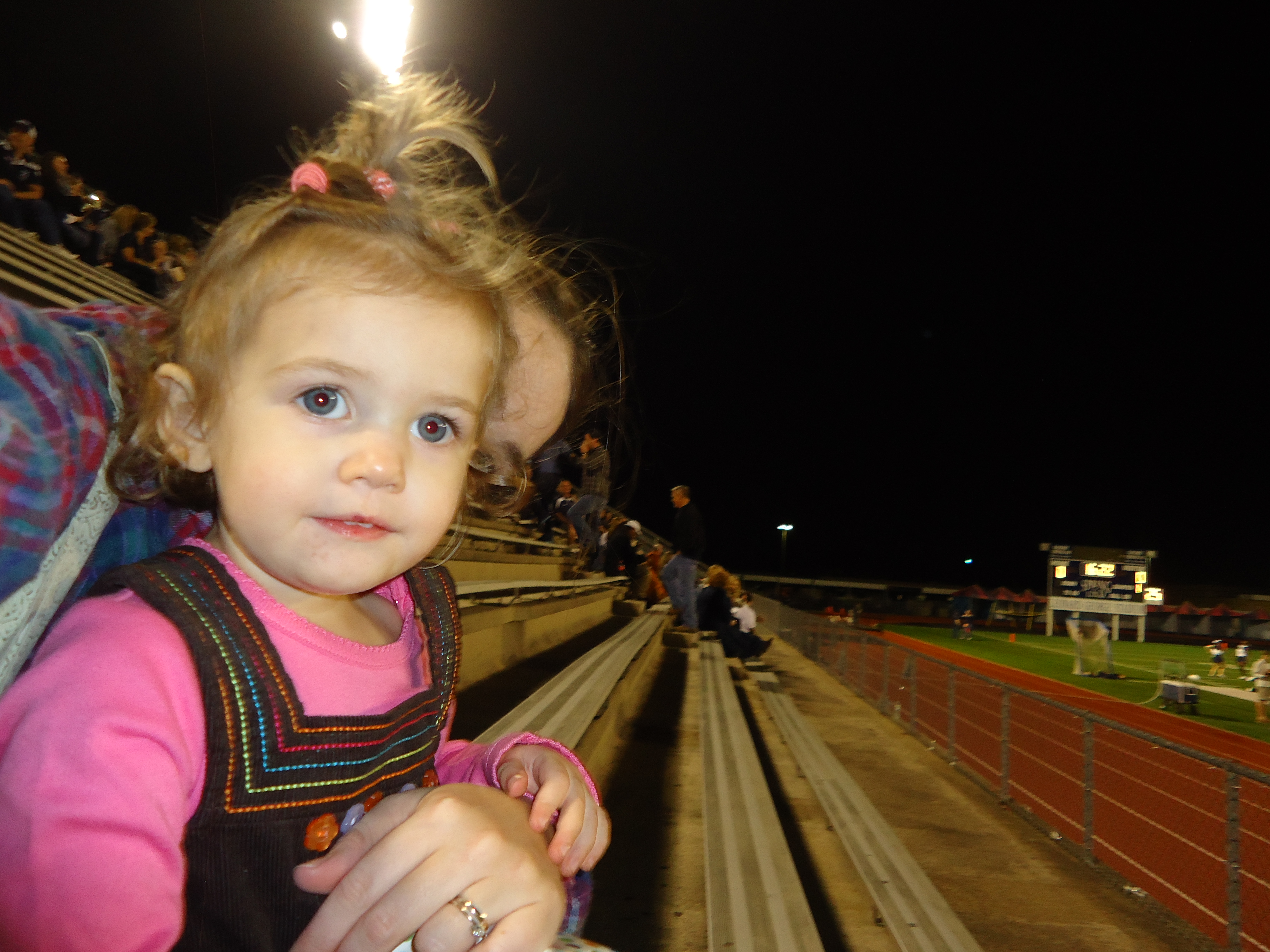

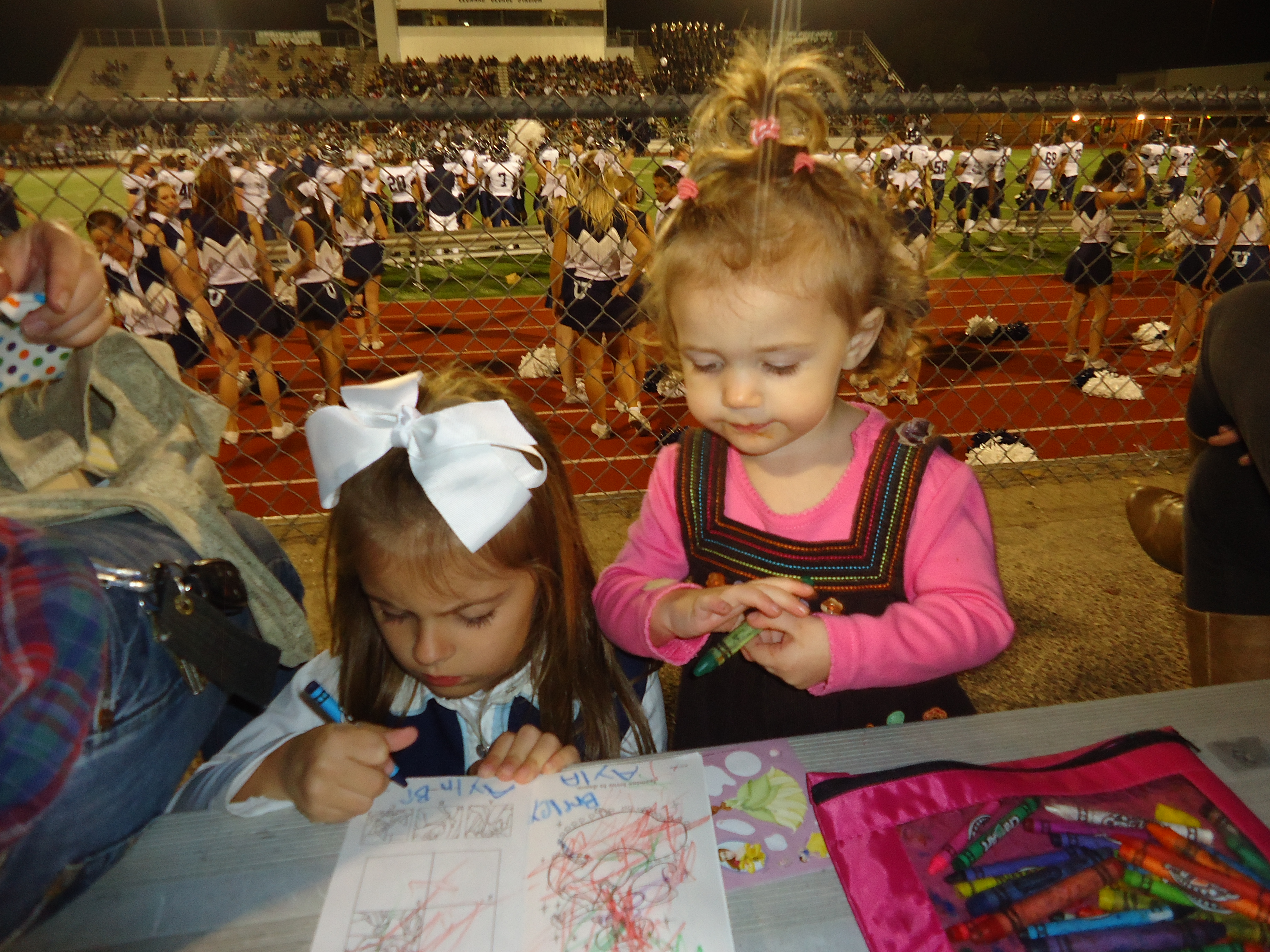
General Admission Ticket: $7.00
Chili Cheese Nachos: $3.50
Watching Your 2 Yr. Old at Her First Football Game Ever: Priceless
(Actually, she stood in awe of the cheerleaders and then opted to color princesses while I tried to watch the game.)
A Plethora of Poets
At Half Price Books Humble Poetry Night 11/01/12
Poetry readings are exciting, and often times, unique experiences. Different poets bring a different vibe to each event. But even more interesting is when the night is full of young poets, teenaged poets, High School poets.
These kids are bold, honest, and in some cases fearless in the way they expose their vulnerability in the most expressive form of art. There are the shy, quiet poets sharing grief; the in your face exuberant poetess forcing you to feel every joy and sorrow; and there are simply down right honestly funny poets that are bound to make the next great comedians.
The group last night were students from the Humble High School Poetry Club and their parents and friends. I hope next time we’ll see some representation from other schools as well. Everyone and anyone is invited to join the fun.
All around, it was a great night and I can’t wait for December’s meeting!

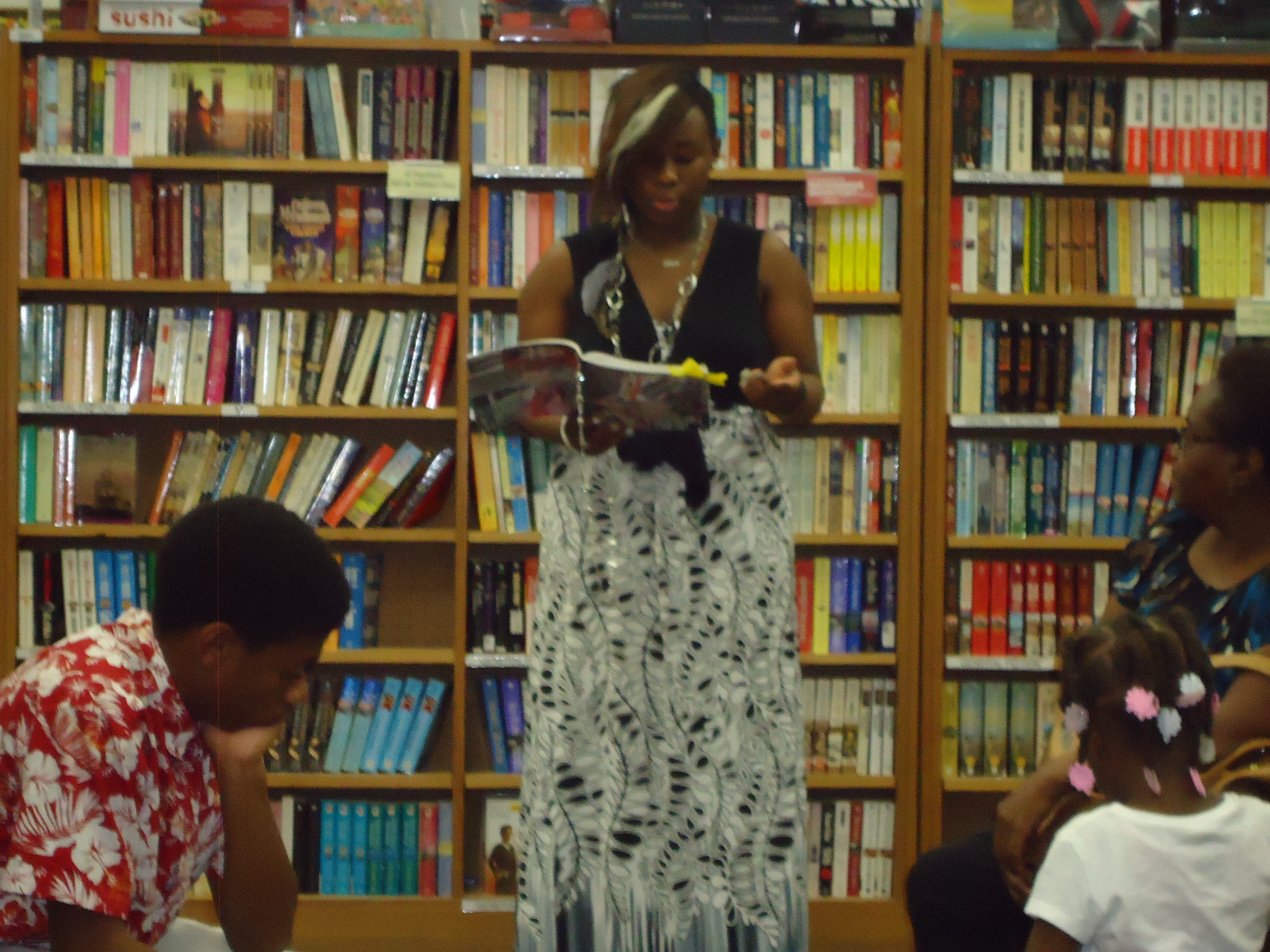

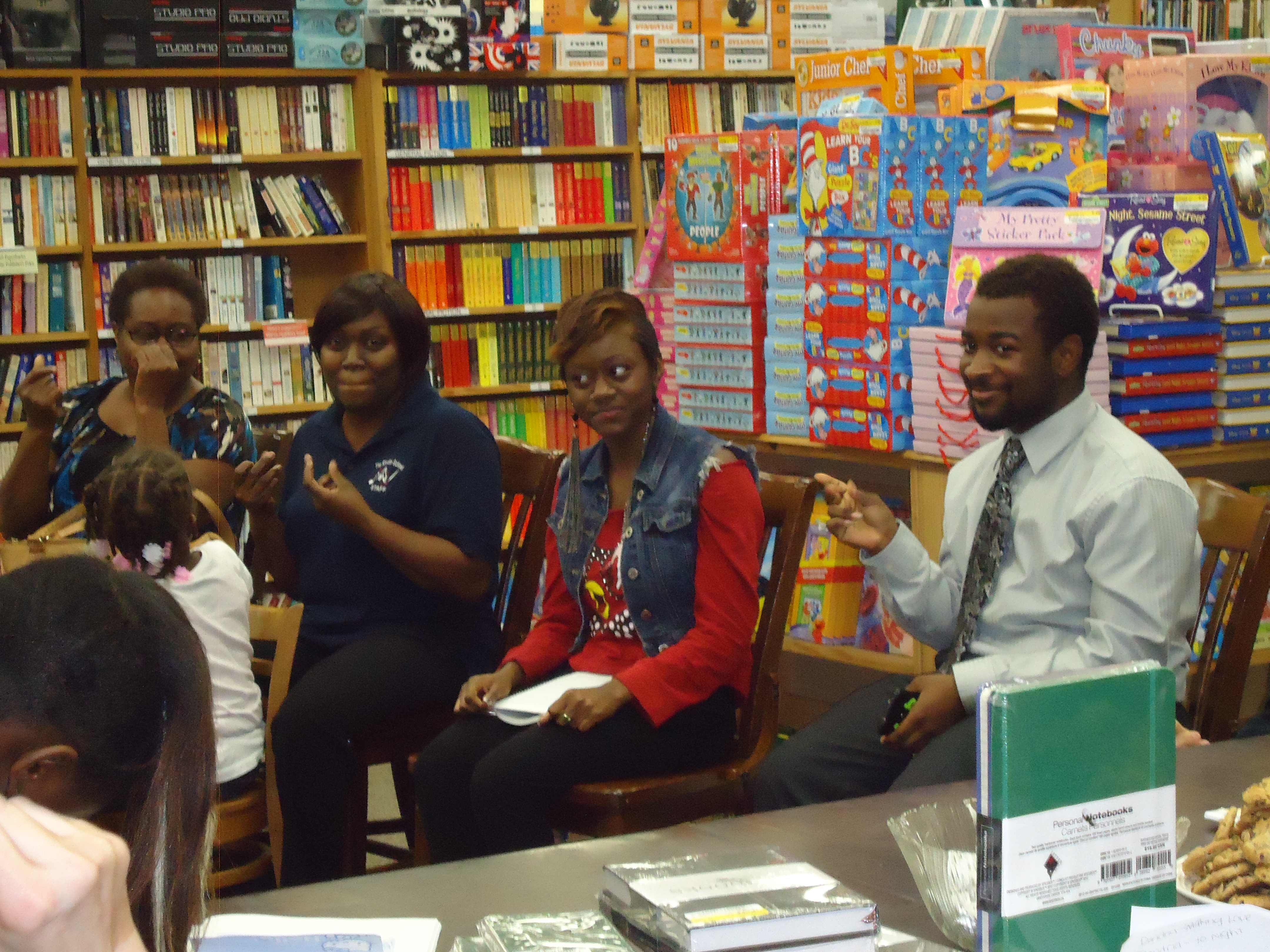

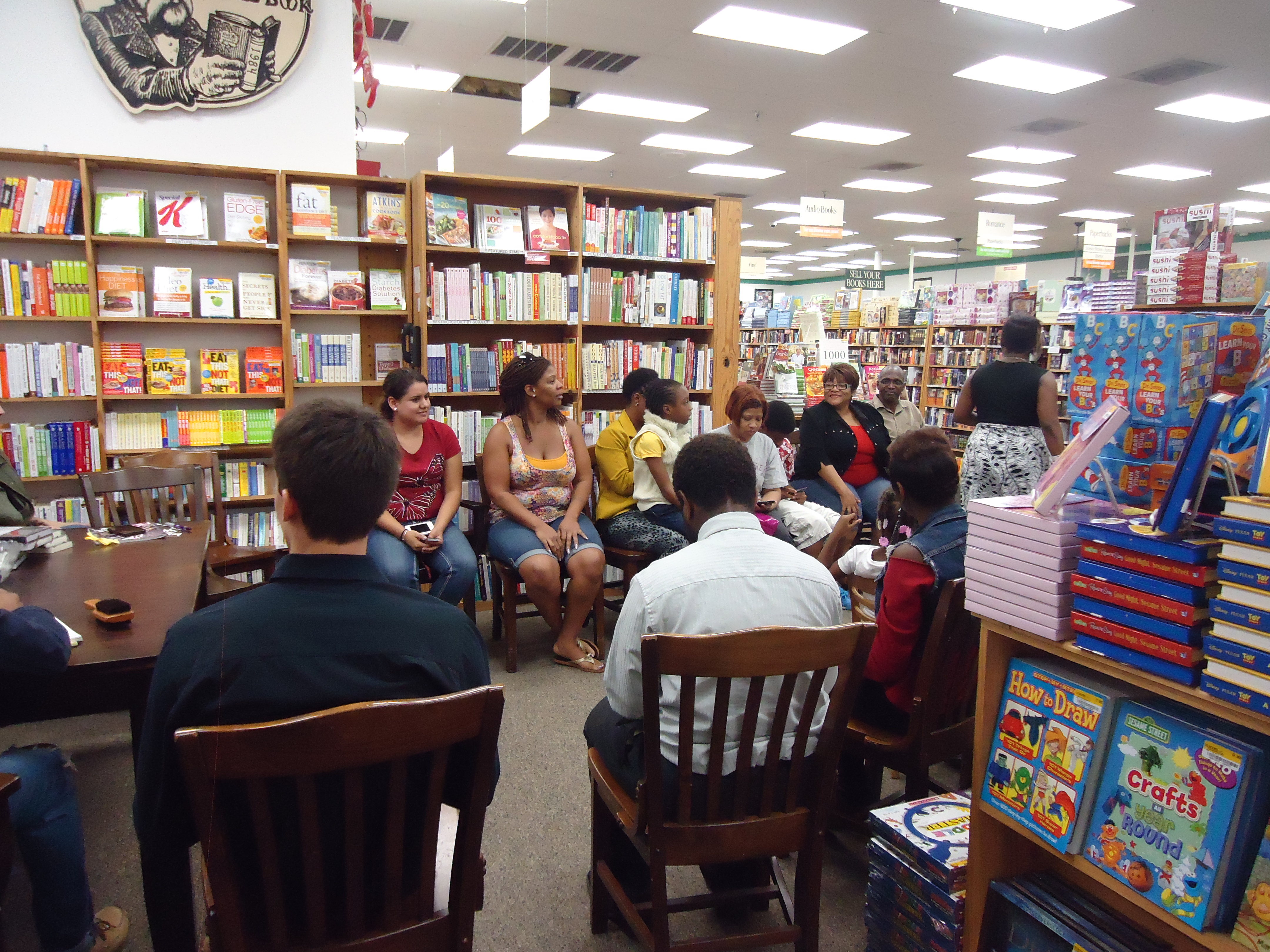
HPB Poetry Nights are held the first Thursday of the month, 7 pm – 9 pm. Read your favorite poet or recite some of your own work. Hang out and chat with other students of poetry and maybe learn something new. Snacks are served.
Great Journeys – Marco Polo
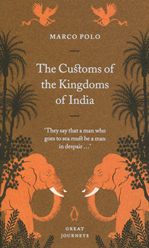 Title: The Customs of the Kingdoms of India
Author: Marco Polo
Publisher: Penguin Books
Length: 86 pages
Inspired by the Great Ideas series, Penguin Books printed a Great Journeys companion series as well. From Herodotus to George Orwell, the series chronicles twenty of the most famous and intriguing adventurers in history. Third in this series is Marco Polo’s journey to South Asia, where he discusses the culture, the economy, the industry, religious practices and more.
I picked this book up for two simples facts: 1. I am collecting all of Penguin Books Great Ideas publications and 2. There are elephants on the front cover. I adore elephants. They are powerful, dignified, trustworthy, humorous, and endearing. Marco Polo’s The Customs of the Kingdoms of India has little do with elephants. 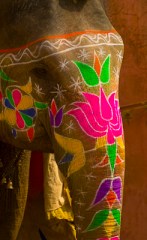 Actually, I’m pretty sure it has absolutely nothing to do with elephants. Of course, that’s not the point, elephants are broadly recognized as a symbol of India/ South Asia, so naturally they would be an image of choice for the front cover of an Indian travel book.
Marco Polo does not go into great detail about how the elephants are used as means of transportation, status symbols, work beasts, and more. He mentions them in passing, but says in the places he visits, they are not indigenous to the area but imported from other islands. He does, however, discuss the art of physiognomy, which immediately made me think of the science fiction piece by Jeffrey Ford called The Physiognomy
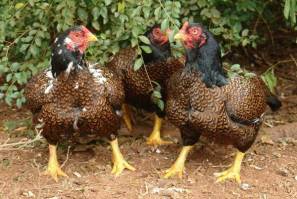
Did Marco Polo’s “prettiest hens” look like these?
Apparently, in South Asia, hens represent prosperity, and today you can buy ‘prosperity hens,’ little talismans similar to a rabbit’s foot. Of course, Marco Polo again does not go into detail regarding this, he merely mentions their beauty and moves on. Marco Polo’s writing is that of traveling merchant. He chronicles quick and simple descriptions that would be useful for a businessman, but avoids the great detail of a philosopher or anthropologist. The things that strike his fancy for elaboration are the rituals that would intrigue a vendor, rather than those that would fascinate a theology student. Where he does talk about religion, it seems to be in a political and historically informative way to help you understand a province as a whole, moving quickly to the supplies they live on because of their past. Like a professional trader, he wishes to dwell on the rice, the wheat, and the growth of cotton. Respect for various people groups and villages he encounters is highly dependant on how much they function on industry and marketplaces.
I don’t believe Marco Polo to be much of a writer, and I think his accounts would have benefited from being written while on his voyage. But according to historians, he dictated these adventures of sailing the Indian Ocean later to a fellow inmate in prison. This practice of dictation could have played a role in his style of often informing his reader “I will tell you how” and “I will describe to you,” as well as “let me tell you why” and so on; repetitive and unnecessary phrases that, quite frankly, annoyed me.
Still, this concise 86 page piece is interesting, and a great addition to any young scholar’s library. It would be a wonderful supplement to a world geography study on South Asia for a middle grade student and could open up a lot of dialogue between teachers and students regarding history, religious practices, other cultures, world economies, and more.
Emma, my introduction to the Viking era
 Title: Emma: The Twice-Crowned Queen
Author: Isabella Strachan
Publisher: Peter Owen Publishers
Length: 192 pgs.
First of all, let me premise this by informing you that like the Catherines/Katherines of Henry VIII’s time, the name Elgiva/Emma runs rampant during the Viking age of England. For instance, the subject of this biography was born Emma but the English chose to call her by the Latin equivalent: Elgiva. Emma was the second wife of the widowed Ethelred, whose first wife’s name was Elgiva. When Ethelred (king of England under the Saxons) dies and his land then conquered by the Danes (while King Swegn ruled), a Dane named Canute (Cnut) came to power. Emma becomes his wife as well, but guess what? He already has a ‘wife’ named… any takers? anyone? anyone? Yep, Elgiva. This makes for some interesting reading, but Strachan eases the issue by always referring to Emma as only Emma and providing a handy-dandy cast list in the front of the book.
When I first heard of Emma, I expected a woman who was cunning and manipulative. Someone with political the intrigue of a Cleopatra or Elizabeth I. I thought I’d be reading about a woman with a deep political agenda, always out-playing others in a real-life chess match. Instead I found a woman who seems to me to have been more adaptive, reactive, a survivor constantly caught between a rock and a hard place. The Twice-Crowned Queen is less of a political master mind and more of a drowning victim always bobbing up to the surface of the water just moments before death.
She was young when she became the bargaining chip in an arranged marriage to King Ethelred. It was a political ploy of others that ensured the Normans and Vikings were kept at bay during a time of imminent war, as both her father and half-brother were Dukes of Normandy with close, friendly ties to the Vikings. After Ethelred dies and England taken over by the Danes, Canute is chosen to be the new King. The problem with this arrangement is that the Church and Cabinet wanted Emma to remain the Queen. It remained good political sense, but Canute already had a wife. Canute had a handfast wife, referred to as Elgiva of Northampton. From what I gather from Strachan, a handfast wife was the Medieval equivalent of a ‘Common-law wife.’ Handfast wives had all the political and societal rights of a true spouse, but were not recognized by the church. Later William the Conqueror’s own mother would turn out to be a Handfast Wife, which was why he was a Duke of Normandy but still got called William the Bastard.
Either way, there was a lot of drama surrounding Emma’s marriage to Canute. He seems to have been completely in love with Elgiva of Northampton and despite promising that Emma would be his only Queen and her children heir to the throne, Elgiva was the only one granted regency rights over her own lands and it was her son Harold that took the throne upon Canute’s death. Emma was again just a political pawn to keep the peace, and in keeping the peace was forced to send her own children (from Ethelred) away to grow up abandoned by their mother while fighting tooth and nail to keep her children by Canute in the running for the throne. There is a poem called Samiramis that I’d like to get my hands on, written by the Normans of the time, that tells their account of the entire incident.
What I initially saw as an intense woman ensuring each of her children had a chance to rule (as her son Harthacnut from Canute and her oldest son Edward from Ethelred both eventually become King, while her daughter was the Queen of Germany), after the biography I feel that most of this was just chance and circumstance. Harthacnut was indeed fought for to be King, but his half-brother Edward the Confessor became King despite his mother. Edward actually stripped Emma of all her political rights as soon as he gained the throne. One of the clenchers for me having been interested in studying her was that she was William the Conqueror’s great-aunt, but he did not seem to have much of a tie to her, he merely showed a bit of respect for his cousins.
I am glad I read the book. Although I am disillusioned about her character, I think she’s still mighty impressive and wonder why she was left out of my education. Reading this biography made me intensely interested in reading additional history on William the Conqueror and his mother Arlette (Herleva). Lady Godiva also makes a cameo appearance, which piqued my interest as well as a man named Olaf Haraldsson. As I always say, the more you read, the more you discover you need to read.
This book would make a great addition to a well-read 11-12 year old’s Medieval history curriculum. It is short, sweet, and informative of not just Emma but a huge piece of history that made the English monarchy what it later became. And I loved it.
When We’re Not Reading – Fall Begins
 Thursdays at the Museum of Fine Arts in Houston is free. I love taking the kiddo to see the ever-changing exhibits there, and this time we spent a lot of time watching the six-minute long digitally animated Tree changing through the seasons and blowing in the imaginary wind. The exhibit is called “Mike Kelley” and was made by artist Jennifer Steinkamp. It is absolutely lovely, and I highly recommend taking time out of your busy schedule to go sit and experience its luminous, fake leaves.
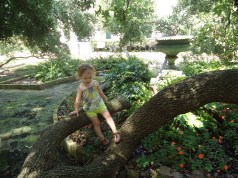 Another fantastic and *free* thing to do in Houston when the weather is nice is to visit Sam Houston Park/ Heritage Square. The real life trees you can see are simple amazing, fun to romp and climb, and just a wonderful place to have an outdoor picnic. You can also go visit the Heritage Society Museum for no charge, the entrance is in the courtyard. We didn’t stay long, however, because kiddo nearly killed a display and cost the city some priceless treasures. We’ll try that museum when she’s a bit older.
I grew up visiting Sam Houston Park during the Christmas season, when the Heritage Society houses are lit and apple cider, coffee, and hot cocoa is served in the courtyard. Choirs sing in gazebos, courtyards, along the paths, and on balconies (I participated every year until I graduated), and it’s just a pleasant way to spent a cold evening. So I can’t wait to take kiddo to experience a park she already enjoys in its most festive capacity.
 The same day we had our freebie adventures downtown, I finished up my day at Half Price Books in Humble at the first ever Poetry Night. There were only three of us present, but we had a wonderful time eating chocolate chip cookies and discussing the work of Edna St. Vincent Millay, Sylvia Plath, and Emily Dickinson. It sounds melancholy and macabre, but I assure you it was quite pleasant. I spent Friday afternoon talking the program up to teachers at Humble High School, so hopefully we’ll have a bit of a crowd next time. Keep in mind, it’s the first Thursday of the month all semester, and its a great (and totally free) way to spend an evening.
Now its Saturday and we’ve got Corn Chowder cooking in the crock pot, in anticipation of a cold front, and home-made whip cream (flavored with Amarula) cooling in the fridge waiting for an Almond Cake with a Peach-Berry topping. Kiddo is playing dress up in the library as I type this post. I love my life.





 Anakalian Whims
The Price of Excellence
February 20, 2013 at 4:20 am (Education, Reviews) (Appleton, Bel Kaufman, books, college, education, May Sarton, novel, professors, reviews, social commentary, students, teachers, The Small Room, universities, Up the Down Staircase)
I have a love/hate relationship with education. Or should I say formal education.
I love to read, I thoroughly enjoy research. But most my teachers over the years would tell you I was a horrible student, if they even remember me. My work was typically mediocre, often done at the last minute. The ones that do remember me probably remember a fairly obstinate and argumentative irritant, not really someone you want filling out your back row.
Yet, I find myself longing for the chance to go back and get a frivolous Master’s degree. I watch movies only to be wooed by the montages of students in glorious libraries. I fall in league with nerds like Rory Gilmore and Felicity Porter and lean toward books like May Sarton’s The Small Room .
.
Rather than an emotional feminist vs. anti-feminist story one would expect from the setting, The Small Room is about exploring the many nuances of excellence in education… and the price of obtaining it for both teachers and students.
Frankly, education is such a moving and sensitive topic. Who isn’t brought to tears by Dead Poet’s Society? Who doesn’t stand and applaud Mr. Holland’s Opus or The Emperor’s Club ? Who doesn’t watch Finding Forrester on repeat?
Then on the counter balance… Who doesn’t laugh their butt off reading Kaufman’s Up the Down Staircase and acknowledge how utterly familiar it sounds?
While reading, I imagined Appleton to be a smaller version of Wellesley.
May Sarton’s The Small Room is delightful and truthful. Without full on hating on education altogether, it takes into careful consideration the heavy weight being a teacher or a student can be on a human being and their relationships.
I have a 1976 Norton Library edition (featured above) and I fell in love with the book immediately. Long before I picked it up to read it, Sarton’s novel was part of my personal collection. I remember being so struck by the green leafy cover, the musty smell, and the promise of imaginary academia while holding the book in the used bookstore. The novel has lived up to the promise of its cover (and its smell!) and I think any alumni or teacher would appreciate the ethical discussions within its pages as Sarton and her characters attempt to define the price of excellence.
Permalink 1 Comment