Ghosts, Suffragettes, and Skirts, Oh My!
Although Rebecca Kent (also known as Kate Kingsbury or Doreen Roberts) is not English, her Bellehaven Finishing School is, as are all the household staff and students. Well to do Edwardian Brits send their daughters to the care of Meredith Llewellyn, a widowed headmistress who sees ghosts! Not just any ghosts, though, of course only ones that have been killed off before their time!
A sort of “Ghostwhisperer” (tv show starring Jennifer Love Hewitt portraying a woman who talks to ghosts and coerces them to go to the light) for lovers of period pieces and proper society and pesky suffragettes, Kent’s cozy mysteries are just the right medicine to hunker down with while recovering from a Spring cold, hayfever, and all those other things that come with the changing weather.
I’ve finished reading High Marks for Murder, am currently reading Finished Off, and cannot wait to begin Murder Has No Class. Although the series was cut off by the publishers trying to pinch pennies in this recession, the author has wrapped up some loose ends for us here on her website: http://www.doreenrobertshight.com/id4.html.
Portrait of a James Novel
Henry James’ The Portrait of a Lady is quite possibly one of the most depressing novels of all time. Although there are numerous sentences throughout the book that I would deem some of my favorite quotes, the book as a whole put me in a sad, sad state, and not a deep whimsical sadness like that of Bronte’s Wuthering Heights, just sad. Isabel Archer gets used terribly ill, poor Caspar Goodwood will never have peace, the rotten Osmond gets to keep his prize, and the manipulative Madame Merle (whom I do feel a bit sorry for, but only a bit) gets to runaway to America and leave her consequences behind her. The “incredible twist” towards the end of the book did not seem like a twist at all, but rather was much expected.
Not So Legendary
A Review of Legends of the Fall, a novella by Jim Harrison
I only read The Legends of the Fall novella of this book, not the other short stories and novellas. That being said, I was disappointed with this short piece. After growing up watching the sweeping epic film, the novella felt too quick, there were no moments to pause on the beautiful despair of it all. Although they are almost exactly the same (aside from the fact that Tristan and Susannah were actually married in the book and there was a lot of time spent on Susannah’s mental instability) I feel as though the film makers did well with the screenplay and turned mere 80 pages into something amazing. Obviously, kudos to Jim Harrison for his awesome original storyline – but when it comes down to it – I’ll hypocritically watch the movie on repeat before I re-read the book.
Story of High Adventure
Kidnappings, betrayal, damsels in distress, and rogues to make you swoon fill this high adventure tale of intrigue as we are unwittingly introduced to the ancestors of the illusive scarlet pimpernel.
In Baroness Orczy’s old familiar style of classic romantic suspense, The Laughing Cavalier follows a Pride and Prejudice sort of story as the Holland native Gilda is kidnapped by a man she initially loathes named Diogenes. In that regards, the book is as lovely as expected, its only downfall coming towards the end of the book when Orczy awkwardly and only momentarily switches tenses for a few chapters.
After reading this, one cannot wait to read the next installment of the Pimpernel series: The First Sir Percy.
Love in the Time of Cholera, an essay of love
(written based on notes from a book club meeting with Lauren Davis of http://lollygabber.wordpress.com/)
Love in the Time of Cholera
Much like Flaubert’s Madame Bovary, Florentino Ariza is in love with soap operas and romance novels, so much so all his letters to Daza when they are young read just like one. He is so involved with the idea of romance after Fermina’s rejection of him he makes a pass time writing love letters for other couples. Ariza is all youthful passion and intensity saying, “Age has no reality except in the physical world. The essence of a human being is resistant to the passage of time. Our inner lives are eternal, which is to say that our spirits remain as youthful and vigorous as when we were in full bloom. Think of love as a state of grace, not the means to anything, but the alpha and omega. An end in itself.” Needless to say, he’s all swoon and flowery words as he makes his way into the bed of over six hundred women in the course of his life while pretending to be faithful to only Fermina. None of the women know about the others and each is told that she is his first and only, perpetuating Ariza’s illusion of himself that he is a heart sick and loyal love puppy in need of nurturing.
In the mean time, Fermina Daza has married a very clinical man, its no mistake that Garcia has written this character to be a doctor by profession, who is overly concerned with appearances. Dr. Juvenal Urbino loves classic literature, does not listen to “popular” music like Ariza, but music he imagines gives him the right to look condescendingly on other’s tastes. Fermina takes part in this illusion of high society that her husband has chosen, most likely having married him for it in the first place as they have very little in common. She prefers all the opposite things, helping the reader understand why she was captivated by Ariza in the first place – he wrote to her beautiful letters, like the love stories she was enraptured by. Ariza learned to play the violin when they were young and played her beautiful music, “popular” quixotic pieces from the street.
Garret Wilson writes in his review: “[…]Fermina was trying to fool the world, Florentino was consumed with fooling himself. Fermina Daza’s claim that Florentino Ariza was not in love with her, that he was merely infatuated with some ethereal concept of the woman perfect for him, is certainly not baseless.” (http://www.garretwilson.com/books/lovetimecholera.html)
However, I also believe that the idea that the Urbino’s fifty one year long marriage not having a true element of love to it is also not unfounded. Their relationship was based purely on an act of will, as if willing themselves to love would be enough, as though creating an illusion of a happy marriage would trick not just the world but themselves that their marriage was a happy one. It becomes all too obvious that their relationship could not stand on its own two feet when after his death Fermina’s idea of his character is blown totally out of the water and she believes him to have had an affair with their family friend just because someone insinuates it. A woman with a true and solid relationship based in honest love could not go fifty one years and still not know if her husband ever loved her. Dr. Joyce Brothers says, “The best proof of love is trust.” Clearly, neither of them really loved the other.
Love is a choice, but it is also a passionate driving force. This book makes it quite obvious that two people must have more than just passion and more than an act of will, there must be balance. In 1 Corinthians chapter 13, it states, “Love is patient, love is kind, love does not envy. It does not boast and it is not proud; it’s not rude or self seeking. Love is not easily angered and it keeps no record of wrong, it does not delight in evil but rejoices in the truth. It always protects, always trusts, always hopes, and always perseveres. Love never fails.” Needless to say, sometimes it takes a lot of work and a lot of persistence to love someone and in this both Urbino and Ariza had it half right. But there is also something to be said for the poetry of love, and in this Ariza went so far it seemed insincere, and Urbino neglected it altogether. When it came to having the whole package, all three of these characters seemed to have gotten it so wrong, treating love like the plague that swept through the nation: either something of great force that snuck up on them, or an ailment that they’d have to spend a long time living with.
The Book Thief by Zusak
 This is a fascinating piece of young adult World War II fiction. Although written for a young audience, as an adult I found the story just as riveting. I thoroughly enjoyed Zusak’s use of literary devices as he describes the life of a young German girl in Nazi Germany as she learns to read and write, adjusts to a new family and neighborhood, and grows into an adult – all under the reign of Hitler. The Book Thief addresses the topic of humanity, love, and death and dying in a whole new way with Death as a narrator and a Jew in Nazi Germany hiding in the basement. I would definitely utilize as a supplement to a 12 year old’s World War II studies and I think it is also a great book for Books-on-Books collectors like myself!
To Buy, Please Click
The Angel’s Game by Carlos Ruiz Zafon
 Ruiz revisits the world of the Cemetery of Forgotten Books first introduced in Shadow of the Wind and presents us with a strangely philosophical mystery of life, death, love, and literature. Uniquely captivating from start to finish, the story unravels in such a way that in the end, like the narrator, I was still wondering who exactly had died and who had survived. I highly recommend The Angel’s Game (and The Shadow of the Wind) to any book lover.
Rosalind Miles’ Guenevere
Guenevere, Queen of the Summer Country:
The First of the Guenevere Novels by Rosalind Miles
 Though racier than I would have liked, Rosalind Miles portrays the Arthurian Romance of Guenevere, Arthur, and Lancelot exactly how I should think someone going for historical and religious accuracy should. Miles captures the thoughts and rituals of the pagans well and interweaves the young Christian societies the way they must have seemed to the Druids of the time. This first chapter of Guenevere’s life shows the gradual change from pagan feminism to the changing views of the times that brought women to more submissive roles, as she is caught between a husband trying to be a Christian King and an upbringing where royalty was passed down through the female line with sexual freedoms to boot. Can’t wait to read the second and third parts.
A Russian Study
Have I invited my fellow bloggers and blog-readers to my Russian study?
http://www.shelfari.com/groups/32350/discussions/182887/A-Russian-Study
Welcome to the Russian Study! We hope that everyone interested in Russia, its culture and history, and its literature, will enjoy perusing through and adding to this discussion. Feel free to add your own books to the list or read along with the ones already here below…
* Crime and Punishment – Dosoyevsky (fiction)
* Anna Karenina – Tolstoy (fiction)
* War and Peace – Tolstoy (fiction)
* The Magical Chorus: A History of Russian Culture from Tolstoy to Solzheinitsyn – Volkov (literary criticism, history)
* The Axe and the Icon – Billington (history)
* The Vision Unfulfilled – Thompson (history)
* Fathers and Sons – Turgenev (fiction)
* The Captain’s Daughter & Other Stories – Pushkin (fiction)
* One Day in the Life of Ivan Denisovich – Solzhenitsyn’s (fiction)
* Sofia Petrovna – Lydia Chukovskaya (fiction)
* I think some Robert Alexander historical fiction titles would do well at the end. One is called Rasputin’s Daughter, but he has many.
I have already completed Crime and Punishment, below is my official review:
Good book, well written, yet I could have gone my whole life without having read it and not felt like I missed out much. The final confession felt like the final moment in Moby Dick when the whale actually shows – all I could think was: “its about time.” Its on Bauer’s list of books to read before you die, which I plan to use as curriculum for my kid when I home school, but I’m not sure that I’ll make them read this, unless they are utterly captivated by it and want to – especially with Tolstoy next on the list. I was hoping to be more captivated myself.
Forget About It
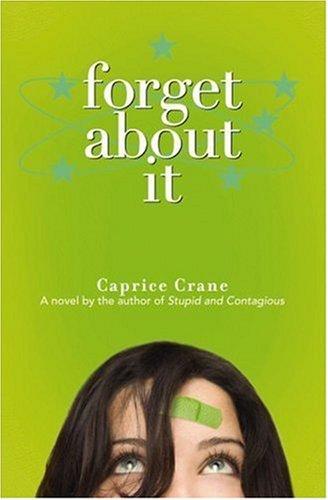 I just finished reading Caprice Crane’s Forget About It, a little romantic comedy about a girl with the worst life ever and to top it all off, gets hit by a car while on her bicycle and decides to suffer from fake amnesia to give her life a new starting point. Although it’s set in New York and has a bit of You’ve Got Mail quirkiness, it feels so familiar and southern. Probably because I’m southern and if it feels homey and familiar it must be southern! Which is just a fault of my own, not a fault of the writer’s. Not quite as hilarious as her debut Stupid and Contagious, but quite funny nonetheless, it was a much needed break from the doom I’ve been feeling while reading Dostoyevsky’s Crime and Punishment. I sped through it in a delightful day off and still had time to get my chores done. Caprice Crane truly is the best at romantic comedy (a genre I am not too fond of unless the characters are in long flowing dresses and top hats) as she actually does keep me in stitches and does make me believe the happy couple should indeed have a happy ending. Jane Austen would be proud despite all its contemporary pop culture because Crane, like herself, is a master of the absurd and a breath of fresh air.


 Anakalian Whims