A Little Bit of Fad Reading
 Title: Divergent

Author: Veronica Roth
Publisher: Katherine Tegen Books (An Imprint of HarperCollins)
Length: 487 pages
So I finally took that leap onto the [fad] train.
When I worked full time in the bookstore, chatting with customers, recommending books in person, I would have read this as soon as it was a thing for the sole purpose of finding something on the shelves that was similar when we were out of stock. It was published in 2011, the year I left. That last year was also one spent handling more inventory and displays as the store’s SIM than handling people and their whims and desires in the book world. So though I was vaguely familiar with the title I totally missed the need to devour this title in a day and come back with a list of titles to hold over disappointed customers until we could get this one in their hands.
Somewhere along the road in my stay-at-home-mom life I discovered Hunger Games, and fell in love. Though part of a huge fad, Hunger Games was no Twilight Saga or Vampire Diaries series. Hunger Games was epic and beautiful and insanely well written.
So when I saw the preview for the movie Divergent, I thought, ‘What the heck? Let’s see if it will surprise me too.’
Color me surprised – again! I really liked this one. I read it in one day – nearly one sitting. It tends to be easy to do that with contemporary young adult novels, no matter how long they are.
I found Hunger Games more moving, but I was able to relate more to the main character of Divergent. I’m nervous to see how they portray her in the movie, the book version is a person I feel very in tune with. Katniss Everdeen is someone I admire and look up to as a literary character, but with whom I share very few similarities. Tris’s story feels as though Roth dropped my mind into her version of dystopia. Tris feels how I feel and tends to react in ways I am known to react. (So far anyway.) Many of her fears were my fears at 16, actually, I can’t think of one that is different.
For that, it was incredibly enjoyable and easy to get into, and despite this being completely entertaining fluff fiction, I consider the hours spent reading it time well spent.
I’m interested to see how the rest of the books go (it’s a series), as well as the movie adaptation in theaters this month. Although I’m a little nervous that it might be too easy to amp up the cheese factor for the big screen – but I guess I’ll have to take a flying leap onto that fad train as well or I’ll never find out.

Little Tiny Novels
 Title: The Newton Letter
Author: John Banville
Publisher: David R. Godine
Genre: Fiction
Length: 81 pages
After publishing my novella (roughly 130 pages long), my editor and I decided to make the sequel to my novella much longer. The publisher wants a full length novel, but in our attempt for length we started to believe that length would equate higher quality.
Reading through drafts we found that for the sake of propelling the story and actually achieving the higher quality work we were looking for, large chunks of filler might have to be scrapped. So I set out to read some great short work, to make myself feel better about not being Kate Morton. And though I am no where near ever going to have the talent of John Banville, Panlo De Santis, John Steinbeck, or William Kennedy, there’s something to be said about reading these and knowing that a finished product is all about quality over quantity.
“When your story is ready for rewrite, cut it to the bone. Get rid of every ounce of excess fat. This is going to hurt; revising a story down to the bare essentials is always a little like murdering children, but it must be done.” – Stephen King, “The Horror Writer Market and the Ten Bears,” November 1973 WD
John Banville makes me crazy jealous. I want his brain in my brain ever so briefly… just long enough to write something amazing. Because everything he touches is amazing. Even just an 80 page bit of story written before I was born reads like his full length prize winners.
The lesson in this for me (because almost every book I read teaches me something) is that while doing these edits for the second edition of my novella, I also need to edit in some breaks between paragraphs. Visually there are some things that don’t flow. I can thank my first edition readers for pointing this out. Even if I pout a little bit, I am so grateful for all the criticism on my first work. I’m pouting that I wasn’t more diligent about catching these things before you read it, not that you caught these things. Anything any reader of mine tells me is something I truly do ponder in great detail.
“The worst advice? ‘Don’t listen to the critics.’ I think that you really ought to listen to the critics, because sometimes they’re telling you something is broken that you can fix.” – Stephen King
I want even my first work to be better. I want my second work to be even better than the first. Whether I achieve the length of a traditional novel or not, I hope the second book achieves the complete story arch of a traditional novel. Hopefully, one day, when I’m old and gray, I can write something I’m happy with. It won’t be John Banville, because I’m not him, but in the meantime I can adore him a lot and work a lot harder.
Like Calligraphy
 Title: Voltaire’s Calligrapher
Author: Pablo De Santis
Publisher: Harper
Genre: Fiction
Length: 149 pages
You know it’s been a rough week when you’ve managed to 1. worry your best friends 2. drive your husband batty 3. inadvertently offend your readers 4. write not one, but two overly pouty blog posts and 5. manage to take a whole week to read 149 pages.
Especially when those 149 pages are so delicious.
Not just delicious, witty and divine.
De Santis doesn’t just write about calligraphy and a master calligrapher. He manages to make his words sound like calligraphy. And his story is woven with the same sly craftiness as runaway ink.
Normally, I would recommend someone read this in one sitting over a cup of the best dark coffee blend they have. I didn’t do that. I spent a week sucking down a chapter at a time – and his chapters are only a page to three at best.
There are castles and print shops, automatons, and poisonous fish… dark corners and forbidden candlelight… Oh my! What terrifying fun! You won’t regret diving into the adventure.
Papyrus – truly a thriller
 Title: Papyrus
Author: John Oehler
Genre: Suspense, Historical Fiction
Length: 326 pages
I’ve wanted to read this book since the second I saw its cover. Mainly because John Oehler wrote it and I really enjoy his writing. I read and reviewed Aphrodesia awhile back and I swear I blushed for a month, so I knew Oehler’s writing was phenomenal. Add my obsession for all things Egyptian, and I was completely sold.
Many times this level of anticipation won’t work out well for a reader. There’s too much pressure on the book. How could it possibly live up?
Papyrus took my expectations in stride and out did itself.
Historical fiction all the way, there are still two different timelines – the ancient past (the 18th Dynasty of Egypt) and the not so ancient past (1977, during the war between Eritrea and Ethiopa). I enjoyed the banter and flirtation between these timelines and the story. It was woven together well and never missed a beat or left the reader feeling out of sorts with the rhythm of the tale.
In 1977, Oehler’s Rika Teferi is both a scholar and a warrior of Eritrea. This was an attribute so enticing for my black belt and book nerdy self that I spent two hours in a local Starbucks devouring this book instead of watching the Broncos beat the Patriots on Sunday. I loved her for her strength, her beauty, and ultimately for her intelligence.
Dive into ancient Egypt and Queen Tiye is completely riveting, especially since most my academic studies have focused on Hatshepsut and Nefertiti. It was refreshing to have Akhenaten’s mother be the focus, as I don’t think she is as common a fictional pursuit as other Eqyptian Queens. (The only one I can think of off the top of my head is Pauline Gedge’s The Twelfth Transforming – also stellar writing, but I was apparently so disappointed with the story it seems I have given that title away.) I do not own any nonfiction work devoted primarily to Tiye either, but Oehler’s version of her offered a pretty tempting reason to go find some.
As always Oehler handles the story arch with such grace and ease – I am jealous. He writes stories where things happen. Not just anything, but powerful and exciting things. Foreign countries, different times, bombs, planes, diplomats, ancient manuscripts, tombs, revolutionaries, romance…! His books are award winners with good reason and he is one of Houston’s best kept secrets. It is amazing to me that this was Oehler’s first novel.

The Secret Keeper and Storytellers
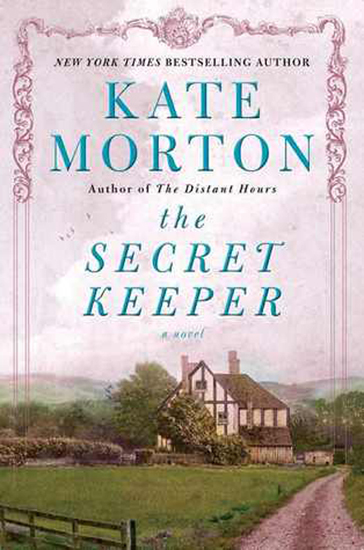 Title:The Secret Keeper
Author: Kate Morton
Publisher: Atria Books
Genre: Fiction/ Historical Fiction
Length: 484 pages
I broke my Kate Morton rule. I read TWO Kate Morton novels in a 12 month period. And it was wonderful.
Forget my previously mentioned warnings to space out her books as long as it takes her to write them. This was a perfect winter read, she sucked me in – as always – and I found myself thinking it was her best piece since The Forgotten Garden. Don’t I say that every time?
I don’t just love Kate Morton as a reader, I find her inspiring as a writer. When everyone else is diving into NaNoWrMo – something I signed up for, but just really don’t get – I dive into Kate Morton and find that’s the push I need to get my own stories out of my head. (Same goes for Stephen King, that man really pushes my buttons and moves me to write.)
Semi side note: Is it just me or is NaNoWrMo distracting as all get out. I write 2k words a day on average – granted, not all usable, obviously – but every time I open an email for NaNoWrMo I find myself reading and sifting through a bunch of stuff and not getting ANY writing done at all. It’s fake motivation for me. It’s a complete and utter distraction. Like going to a pep rally. I’m more excited for a football game when I’m at the football game, but if you push me through the noise of a pep rally I just don’t feel like going anymore. SO counter productive.
You really want to be motivated to write? Read a good book. Read a really good book. Find someone who just moves you and you can’t help but think – I want to do that. Not exactly that, mind you, I want to write my own stuff. But I want to get a story out that moves people the way I’ve just been moved. Or excites people the way I’ve just been excited. The best motivation for a storyteller, I think, is to hear/read a good story.
Kate Morton’s stories are always good. No, not good, GREAT. She weaves through time with the skill of a T.A.R.D.I.S. and the hearts of a TimeLord. She is always a master of her chosen histories and reveals stories with an onion layer effect that always makes me giddy. The best moment of every one of her books is the, “I knew it!” moment. I love that she feeds you all the details but somehow leaves you thinking she might just surprise you – even though you don’t want to be surprised because you need to be right about this one detail that has dropped bread crumbs all over the story but hasn’t outright made itself obvious.

Click to read another blogger’s review.
Even more than that, though, is Morton’s uncanny ability in every novel to write a character that feels so overly familiar to me. Or, if not familiar, someone I want to be familiar. The Secret Keeper had a lot of familiar faces from my real world.
Impromptu Post on Being Changed
There’s a little chain status going around on facebook that I recently participated in…
Completely off the top of my head, in about five minutes versus the fifteen offered, and in no particular order I wrote:
Soon after posting my version of the status update, conversation ensued. One of my friends posted his own list on my thread instead, Tanya Egan Gibson felt honored to be on the list (she is so beautifully humble and I just love her and her work, she tickles me), and a college buddy posted a query.
Andi, I’d love to hear more about your thoughts on how “Metamorphosis” was life-changing for you. I studied it, but would have never thought of that one, so I’d be interested to hear how it was, for someone unlike me. : )
I started to answer right there on facebook, but I thought it deserved a blog post instead.
 I read Metamorphosis first in… I’m not sure… 8th grade? I think it is best first experienced during puberty when you’re going through that everything creepy is wonderful phase. Young teens are always the ones who haunt the shelf where Edgar Allen Poe is; and for me it was Edgar Allen Poe, Franz Kafka, and Nathaniel Hawthorne. I identified greatly with Gregor, which if you read a Sparknotes’ character summary, try to think of a 13 year old geek who wouldn’t.
Gregor Samsa – A traveling salesman and the protagonist of the story. Gregor hates his job but keeps it because of the obligations he feels to pay off his father’s debt and care for his family. He has transformed into a large bug and spends the rest of his life in that state. Although hideous and unrecognizable to others, Gregor retains his some of his inner life and struggles to reconcile his lingering humanity with his physical condition. (-from Sparknotes)
 Obviously a teen is the protagonist of their own story, they hate their job (school) but keep going because of obligations (to their existence, their parents, and the government). Teens work their butts off seemingly for the sake of their family… chores, chores, more chores… honestly what 13 year old thinks they’re doing the dishes for themselves? And rarely do they actually think school is for themselves. I wanted to learn and I enjoy research, but ultimately I wanted to make sure my parents weren’t pissed off by my report card. Gregor is hideous and unrecognizable to others, and at thirteen who doesn’t feel gross and pimply – simultaneously invisible and on display to the world like a freak show. At thirteen you’re sub-human, neither child nor adult, and most of your life feels like it’s happening in your head.
Or, maybe that was just me.
To quote another post I wrote:
[…] I read The Metamorphosis over and over again, wrote a paper on it in high school and two more in college. I can’t count how many times I’ve read it, I just think its so wonderful. After reading The Castle and The Trial, however, I’m realizing that Kafka’s greatest skill is in writing the most frustrating scenarios a human being could be plopped into – alienation and bureaucracy. Whether it becoming a giant bug, living under mysterious and unfair authorities, or dying after a year long quest to discover what crime you have been accused of, Kafka has helplessness down to an art. I love Kafka!
I love him because his concepts are fascinating. He is the most wonderful creator of modern day myth that I’ve read. […]
(-from my review of The Trial)
When you read something that reminds you that you are not alone in your feelings, that even this great emaciated and pale world renown author could understand you, everything seems a little bit better. If a dude can turn into a giant cockroach, I can get through middle school – at least I’m not literally a disgusting bug.
I recommend that anyone re-read The Metamorphosis, but from the eyes of their 13 year old self. What do you think of it now? I remember feeling like my parents were repulsed by me. I remember feeling like every adult saw me as a liar and was distrusting of my existence. I remember feeling alone and wanting a friend. What do you remember?
My Favorite White Whale
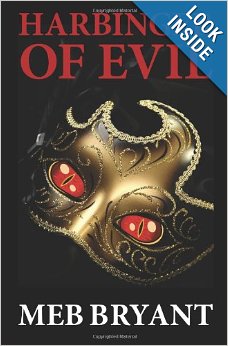 Title: Harbinger of Evil
Author: Meb Bryant
Genre: Crime Fiction/ Mystery
Length: 248 pages
I met Meb Bryant at her book signing at Half Price Books Humble in October. She’s a lovely lady, sweet, professional, wonderful conversationalist. She left with me a signed copy of her book to review for my blog.
I feel terrible that somehow the book ended up in my manager’s stash cube in the warehouse at the store (how completely unprofessional of me). Yes, a little bit terrible because I feel like I should have gotten a review ready for the author sooner – but mostly selfishly terrible because I denied myself this reading experience for two whole months! Words of wisdom, don’t do that… read Meb Bryant’s work NOW.
Between Dutton sending me Elizabeth George’s latest work, a very full Halloween month of book signings, and the general mood of my year – I’ve read a lot of crime fiction this year. A lot more than usual, anyway, I think. Bryant’s crime work is the best of 2013 – no exaggeration – and I’ve read some really good ones. John Oehler is excellent, Elizabeth George always nails character development, Pamela Triolo has a grip on a genre all her own (healthcare mysteries with a registered nurse solving the mysteries), but Meb Bryant blew me away.
I adore Richard Mobey, aka Mobey Dick, he’s my favorite white whale. I thoroughly enjoyed getting to know him, watching him build relationships with the other characters in the novel, witnessing his snotty banter, and finally experiencing him unravel the mystery and put all the puzzle pieces together.
I love the back drop of the novel, there’s no exaggeration with the tagline: New York Crime Meets New Orleans Voodoo. In all my reading history, this is my favorite ‘voodoo’ piece. I can’t think of a better novel set in the French Quarter.
If I had my way Detective Richard Mobey would have a series longer than Inspector Lynley’s, but I have a feeling I won’t be getting my way.
The Sparrow
 Title: The Sparrow
Author: Mary Doria Russell
Publisher: Ballantine Books
Genre: Literature/ Philosophical Fiction
Length: 431 pages
In 1996, 2019 must have seemed so far away. Now, in 2013, while reading Mary Doria Russell’s The Sparrow I am struck with the oddity of dates in science fiction novels and the disadvantage of time. Then again, Russell’s novel isn’t science fiction so much as philosophy and a study of human nature and peoples’ thoughts on God.
It is like 1984 that way, a study of the world as it is and always will be, not just one particular society. And like 1984, The Sparrow is timeless.
More than God and philosophy and all those huge thoughts I’m supposed to have about the book – you know, the ones you discuss in Book Club and during literature courses in college – I was stunned by the humanity of it all.
Quotes about relationships like,
“The antagonism he sensed but could not understand. And finally, ending at the beginning, the almost physical jolt of meeting her. Not just an appreciation of her beauty or a plain glandular reaction but a sense of… knowing her already, somehow.”
Russell’s work is full of those moments. Those gut reactions, nuances, and descriptions of sensations everyone has had at some point in their life – or if they haven’t, they will. Those epic feelings of “knowing,” the ones people adore having in movie-like surrealism, but are completely caught off guard and unprepared when they happen.
Russell has written something uniquely philosophical and thought provoking, but amidst aliens and Christian theology, atheism, Judaism… in space travel and anthropology, I was caught off guard by the sensation of understanding these characters so completely that I felt like they were my own. If not my own, a part of me… or maybe, just me.
I am riveted by the emotional anorexic. I am captivated by the seduction of doing God’s purpose. I am amazed by their choices.
More than that, I wish I could write something like this – something so thoughtful. But I suppose the reality of my life is that I am stubborn and obedient, curious and creative, but not thoughtful. No, I am not that.
I seem to be lacking the thoughtfulness and critical thinking skills, the ability to really pursue enlightenment. Instead, I find myself caught up in the safety and the dogma, and more than anything in the whole book, the innocent friendship between Sofia and DW – that was my favorite part. How simple of me to read something so profound and I just want to bask in a cozy friendship.
A Homeschool Mom Meets Seed Savers

Click to follow the tour and visit the next blog.
The thing about homeschooling – the awesome thing – is that plans are made, expectations logged, and as a parent you do a lot of letting go of both of those things as your child sort of takes over.
I personally planned on going full force into the alphabet and phonics, drill numbers and be sure my three year old was the smartest on the block. At age two she already knew all the states on the U.S. map south of the Mason Dixon line.
Kiddo, God, and the universe, had other plans. And I like them.
With the help of S. Smith’s Seed Savers series, some extreme budgeting issues (I’ve been the poorest person I know for the last twelve months), and Merriweather’s fabulous foraging site (see the links on the right), we’ve pretty much spent our ‘school days’ in the woods.
It all started many, many moons ago (as I like to say to my kiddo when telling stories)… somehow I was lucky enough to receive a copy of Seed Savers: Treasure from S. Smith by mail. I remember reading some of it out loud, but then giving up and devouring it all alone. I gave up because I wanted to read it faster, I wanted it all to myself, not because Kiddo was anything but cooperative.
 What resulted is a long standing admiration for S. Smith, requests for her to participate in Earth Day 2013 (which she graciously accepted from 3000 miles away) and taking Kiddo to said Earth Day celebration. Before Seed Savers, I was already on a mission to be more self-sufficient and have my own garden, but Seed Savers really solidified that need in my heart. Instead of *wanting* to do it, I got my butt in gear and did it. This shift in my mentality eased over into the preferences of my daughter.
She loved the Earth Day celebration. She got to plant seeds with volunteers from the Mercer Arboretum. She got to watch me raffle off S. Smith’s first two books (Treasure & Lily), and it was all over – these Fall plans I had noted during my pregnancy were half out the window. Without hearing the entire Seed Savers story, Kiddo fell in love with seeds. S. Smith’s words are so powerful they radiate into every aspect of our house just by sitting on the shelf.
We have seen and read The Lorax more times than I can count. On her third birthday her great-grandmother gave her spending money and she spent it at Good Books in the Woods on two Cat in the Hat Learning Library books. One is on Rainforests and the other on Seed Planting.
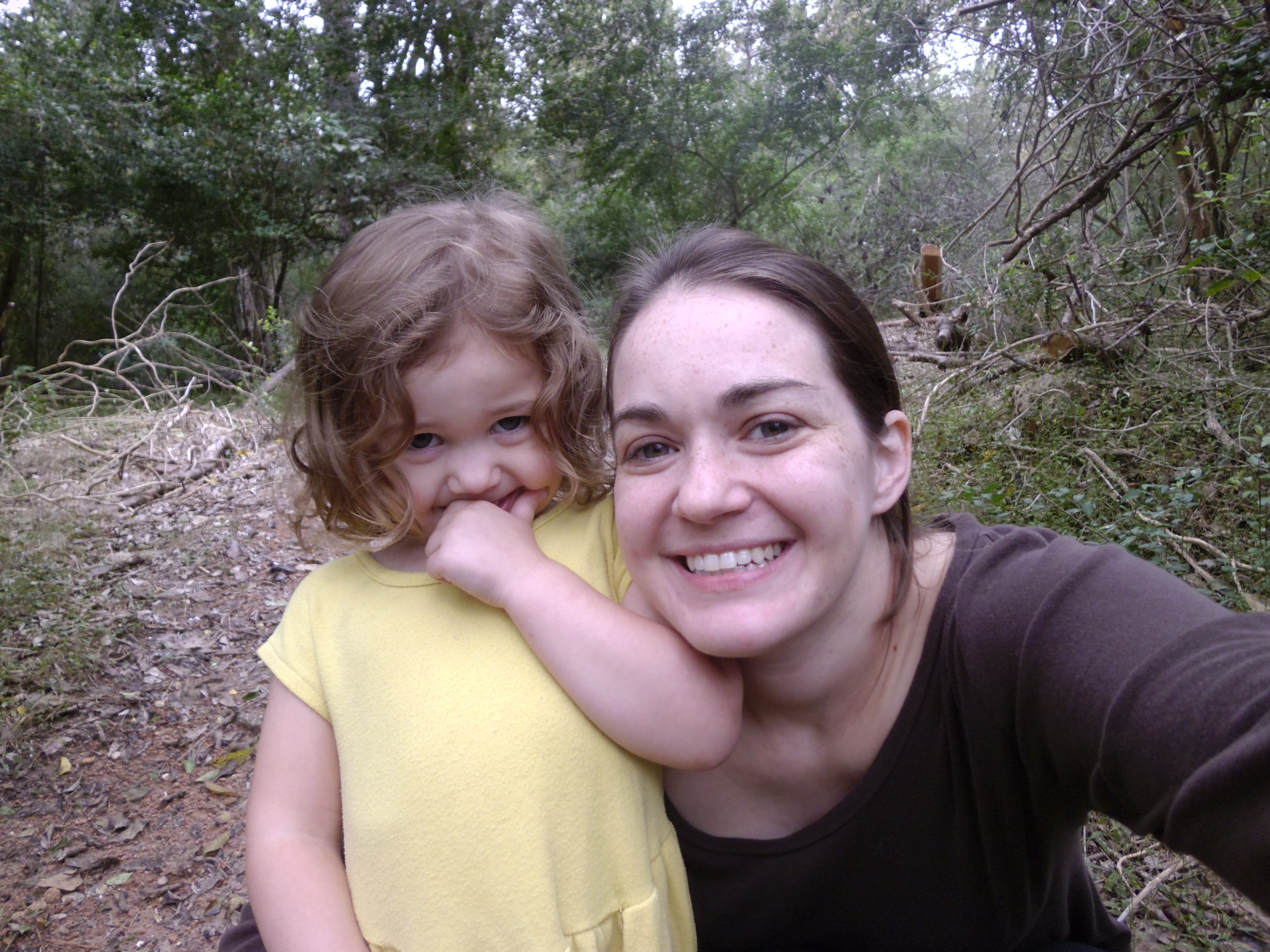 We spend our days looking for birds on the trails, foraging for produce, growing our own bell peppers and okra, and now reading Heirloom as we tromp through the woods.
However, you don’t have to be a mom, a conservative, a homeschooler, a toddler, or a hippie to enjoy the Seed Savers Series. Seed Savers, including the latest – Heirloom – is full of courageous characters, a rich adventure, and exciting philosophical food for thought.
What started out as a really unique young adult dystopian society concept on Smith’s part, has evolved into something more than we initially bargained for. The story is more complex than I anticipated. The effect on our lives has more reach. Smith has matured as a writer along with the growth of her characters. I’m a little disappointed that the stories will, at some point, come to an end…
If you don’t believe me, find out for yourself.
Purchase the Seed Savers Series from Amazon
Visit the Author’s Website: http://authorssmith.com
Go Like Her on Facebook: http://facebook.com/AuthorSSmith
Follow S. Smith on Twitter: http://twitter.com/AuthorSSmith
Lost in Morton
 Title: The Distant Hours
Author: Kate Morton
Publisher: Washington Square Press
Length: 562 pages
Kate Morton writes my favorite general fiction sub-genre. Did you grow up reading Jane Eyre, Wuthering Heights, and the Mysteries of Udolpho? Just before your reading level allowed the immersion into those worlds were you held captive by The Secret Garden, gothic ghost stories, and possibly some Anne Shirley who was a hopeless book-nerd and romantic? Kate Morton writes these tales, all grown up and contemporary. And they put me out of commission from line one until completion.
I have loved every story I’ve read by Morton. They are each one incredible and amazing, riveting and beautiful.
The Distant Hours was no different.
Except I figured it out far too soon.
I spread a lot of work out by authors to keep this from happening. I have a rule about Morton, that I must give at least a 12 month break between books (which works out well because she takes just the right amount of time to write them and makes this not only possible but necessary). This rule also keeps my husband sane, as I get completely lost in Morton and am completely gone from this world until her stories have ended; and even when they end, I have a nostalgic resignation that is hard to kick.
Morton’s layers are deep and onion-like, piece after piece of the puzzle is laid out for you over the course of the book. Always leading up to the moment when you are presented with the facts of the matter, revealed to you with a shudder of lovely understanding of everything all at once.
But I figured out The Distant Hours too soon, I think around the the two hundred page mark or so rather than the typical five hundred mark. Of course, I still had to read every word after my realization to be sure I was correct. I half expected her to shake me up a bit, and she tried! But in the end, I was right!
I still LOVED this book. It is highly recommended to any gothic loving book fiend, or even World War II reader… if you love castles, are a British bibliophile, or just plain love a good story about people. I recommend ALL Kate Morton books. If I could write half as well, I’d consider myself a success!
I just also had to note that this being the third book I’ve read by her, I felt like I figured her out. Still, looking forward to The Secret Keeper.




 Anakalian Whims