Hello GGP and the Zombie Apocalypse
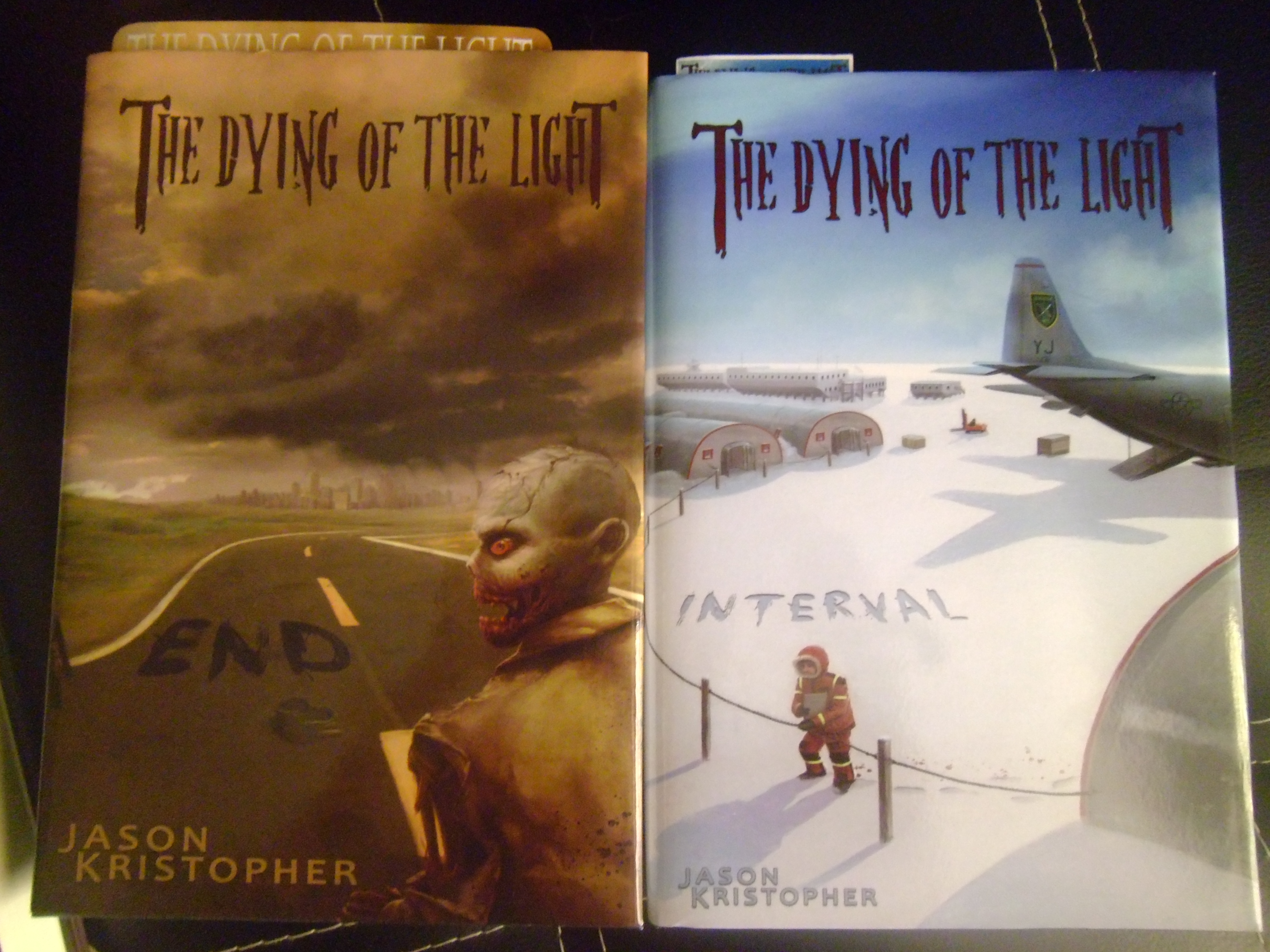 Title:The Dying of the Light: End
Author: Jason Kristopher
Publisher: Grey Gecko Press
Genre: Thriller
Length: 417 pages
Last year I worked the Half Price Books booth at Comicpalooza. It was amazing and fun and I met some of the best people in the world – geeks like me who had gathered from all over the world to bask in their geeky-ness.
I’m in a little bummed out that I am not there this year, but it doesn’t mean that I won’t be back in the future. What it does mean, however, is that I am spending my weekend re-creating at home what I am missing at the G.R. Brown Convention center right now.
Last year, I was so lucky to come across Grey Gecko Press, a local publishing company who had pulled out all the stops for their authors. The booth was gorgeous, had professional banners for all the authors, hardback and paperback books on display. It didn’t look indie at all. Penguin and Tor would have been impressed, I think.
Of course, I asked them to come be a part of Half Price Books events in the Humble area. My floor space is your floor space, I basically said, and I have not regretted it one bit.
It is because of them that I have had the pleasure of reading Spindown by George Wright Padgett, a book that I thought was pretty brilliant. So brilliant, I connected him with the artist of the art company I work with, Gershom Reese Wetzel, when he said he was ready to publish his own science fiction title. We got a review copy to Padgett, and the rest is history. Padgett was the perfect person to write an editorial review for us. It’s a fascinating sub-genre they share.
Now, finally, one year later, I’m digging my teeth into Jason Kristopher’s work – The Dying of the Light series.
I don’t generally read or watch a lot of zombie material. When everyone was on that craze, I was not. But I do love a good zombie story. Usually when in the mood I go on a Resident Evil binge. One of my all time favorite movies (top twenty anyway) is 28 Days Later, the first time I saw it I was impressed by the cinematography and the choice in music made me cry it was so lovely.
I chuckled and snickered all the way through reading Pride & Prejudice & Zombies and just recently I was introduced to the movie Warm Bodies and absolutely loved it.
So even though the zombie craze isn’t entirely my thing – I’m not ignorant of the genre and I do enjoy it. I existed in the house when my husband was watching The Walking Dead, he watched too many episodes without me to follow the whole show, but now reading The Dying of the Light I feel like I got the better end of the stick.
Kristopher’s work is both an easy breezy read as well as an involved and intricate apocalypse novel. Current events are tied into the possibilities – which is always the best way to build a dystopian or apocalyptic world, in my opinion. The characters are real, the main one appropriately both strong and sappy. (Without a little bit of nostalgia and romance, what in God’s name would anyone want to save?)
Of course, that’s always the best part of an end of the world story – it’s why millions have fallen in love with Doctor Who. Any fight to the death for a whole world must involve a story of humanity and what it means to be human. Jason Kristopher pulls this off well, without overwhelming the casual reader with too much intensity.
After reading several books lately that involve a lot of plodding and lengthy prologues (from biographies to novels), Jason Kristopher’s opening sentence “I didn’t see Rebecca die the second time” was just the clincher I needed to jump into a refreshingly fast paced story.
I’m looking forward to Interval, the next book in the series.

May the Fourth Be With You
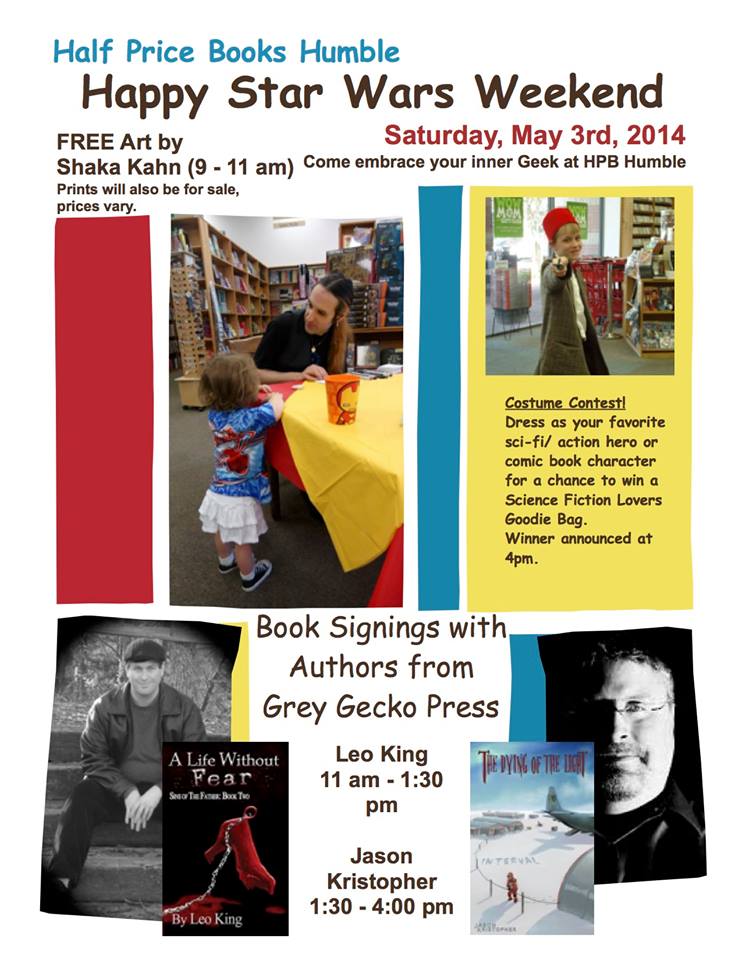
Today is Intergalactic Star Wars Day. Which means yesterday (Saturday), retailers everywhere were celebrating National Free Comic Book Day.
Half Price Books was no exception. After all, the company sells anything printed or recorded that is not home-made.
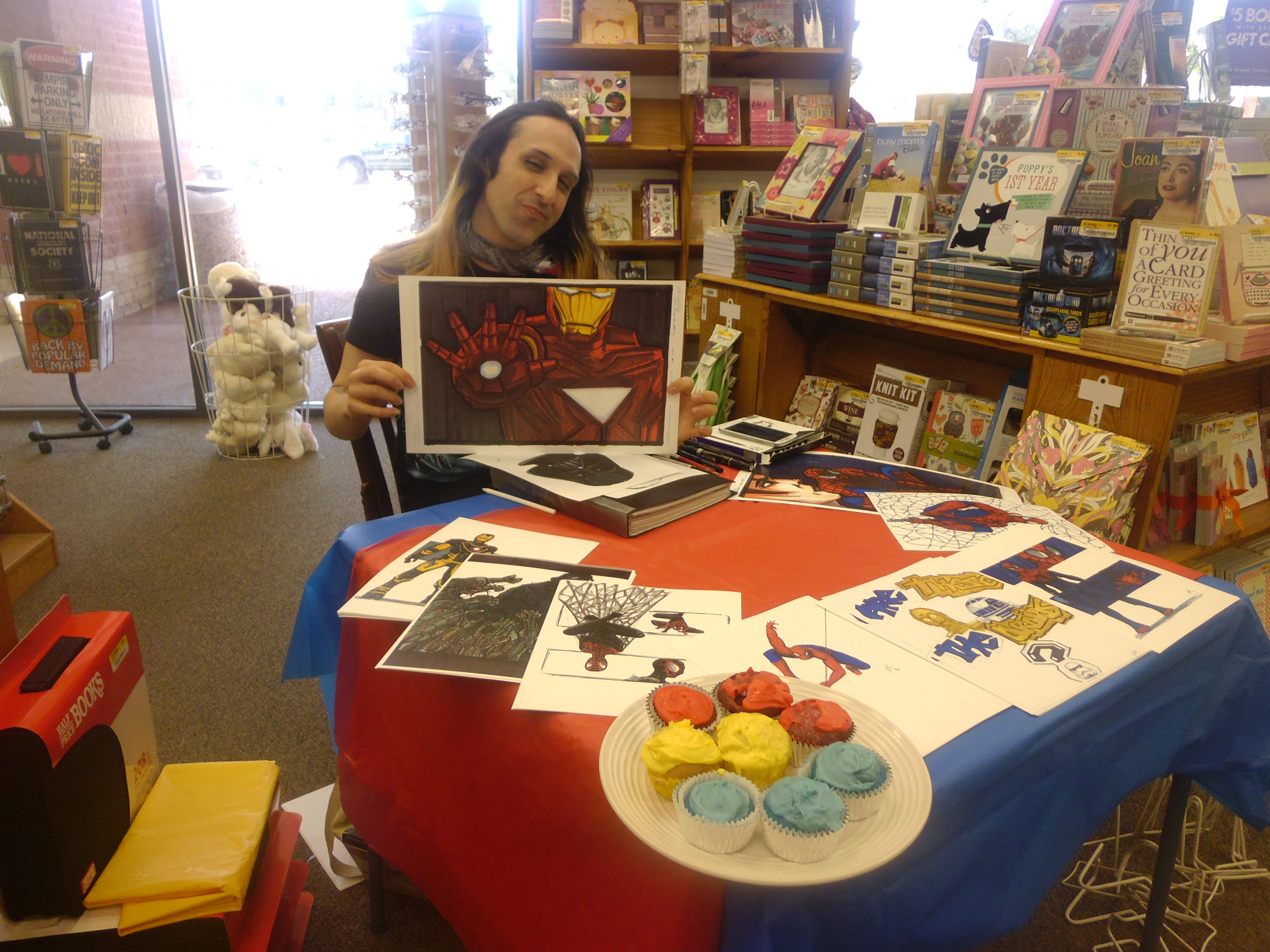
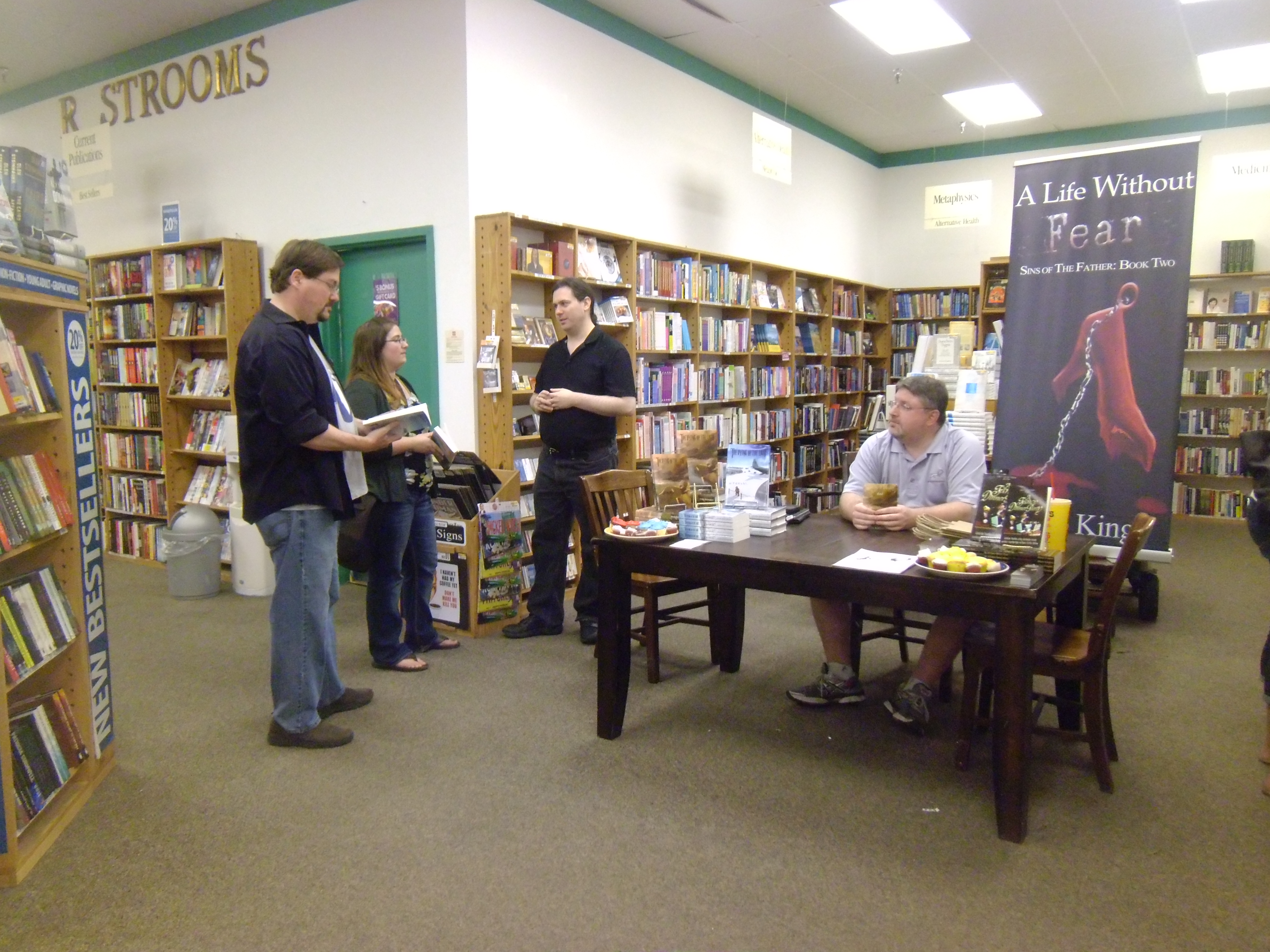
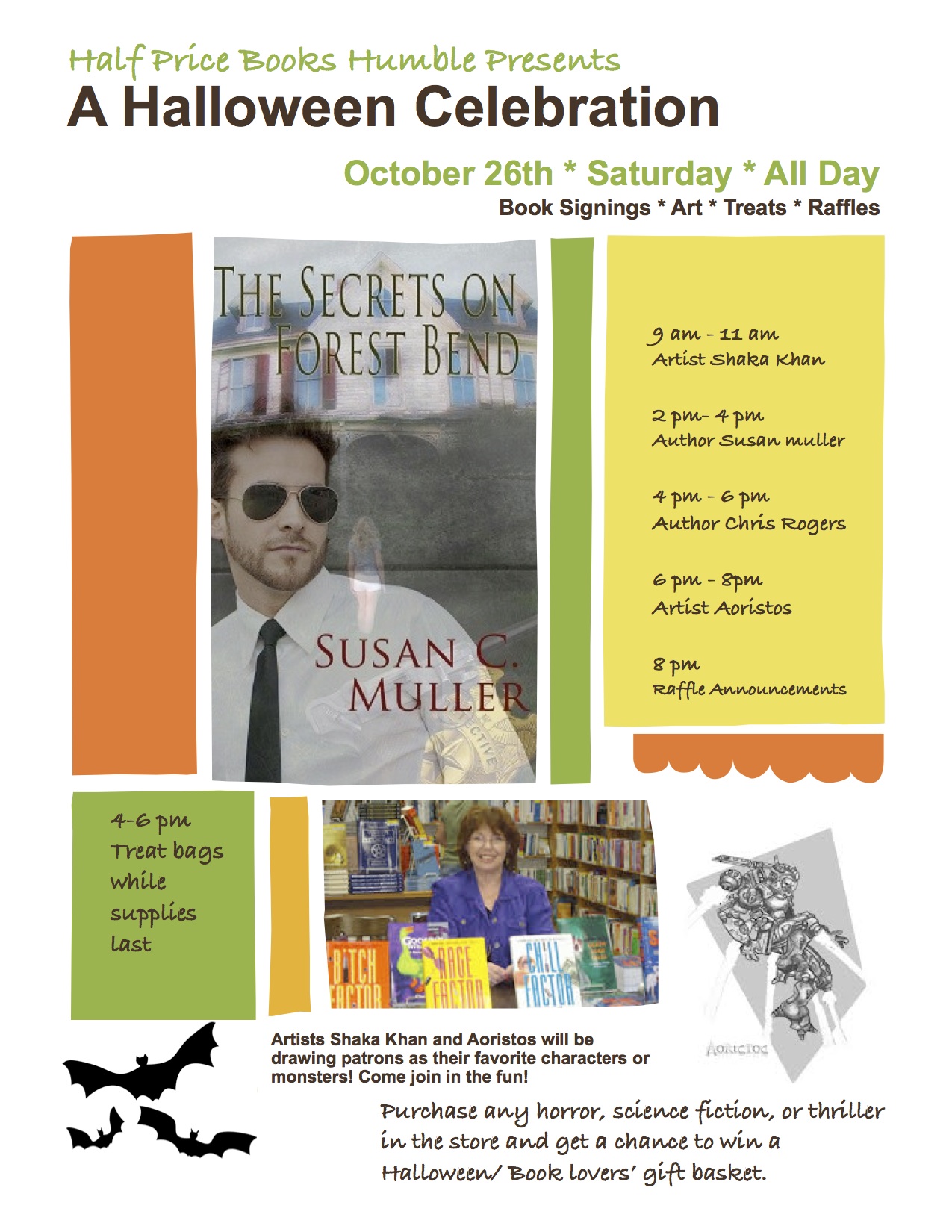
The Humble store celebrated with Art by Shaka, Book Signings with phenomenal sci-fi authors, and comic book colored cupcakes.




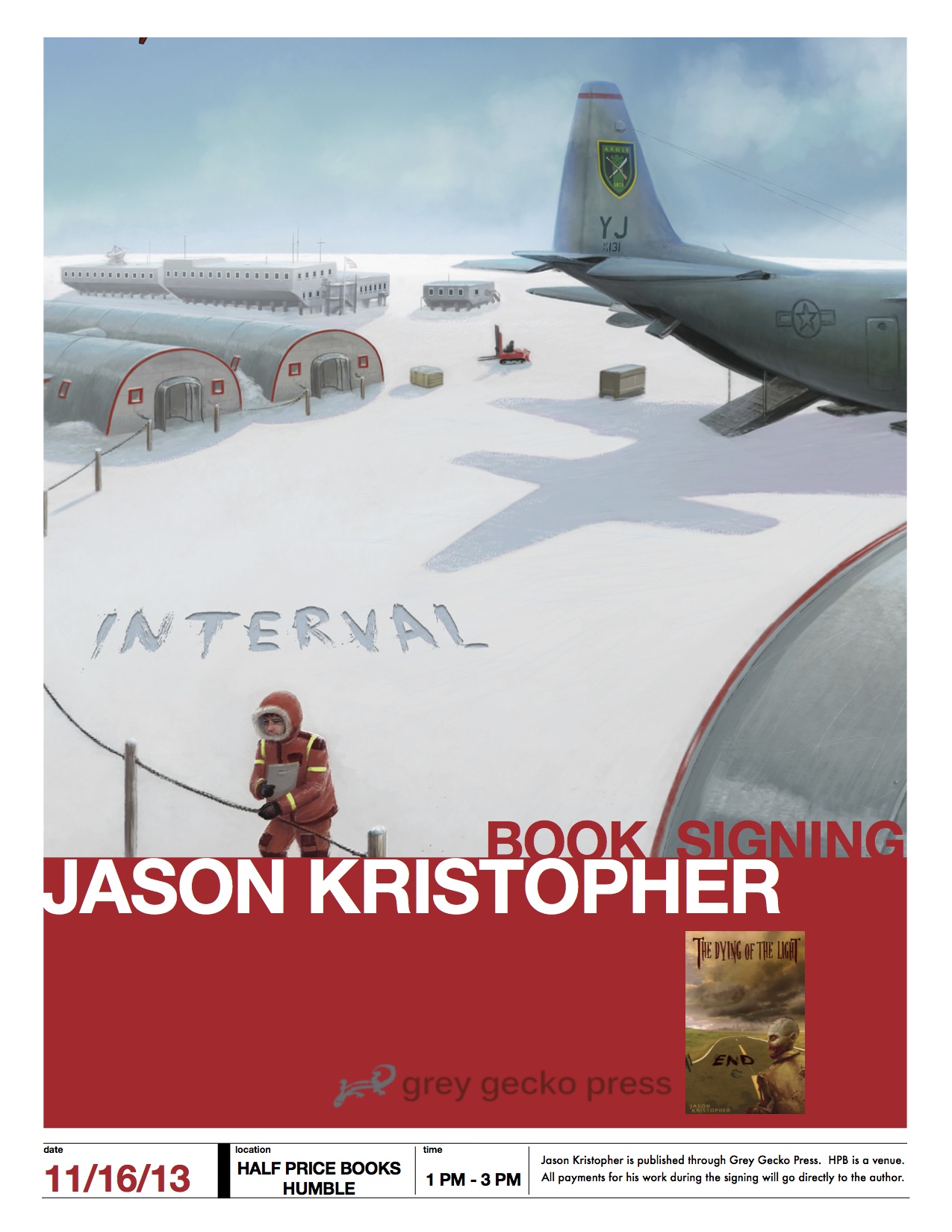
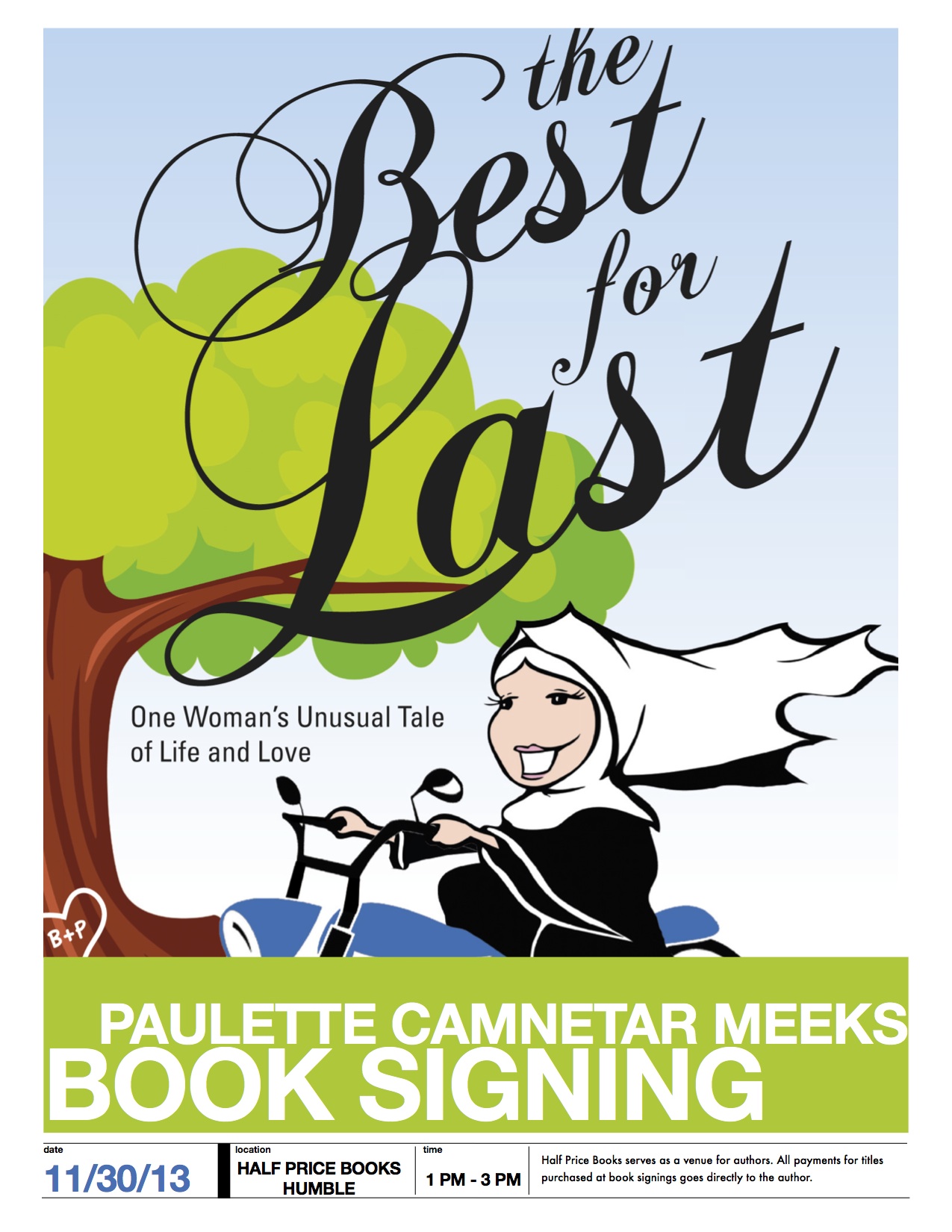
October 2013 Events
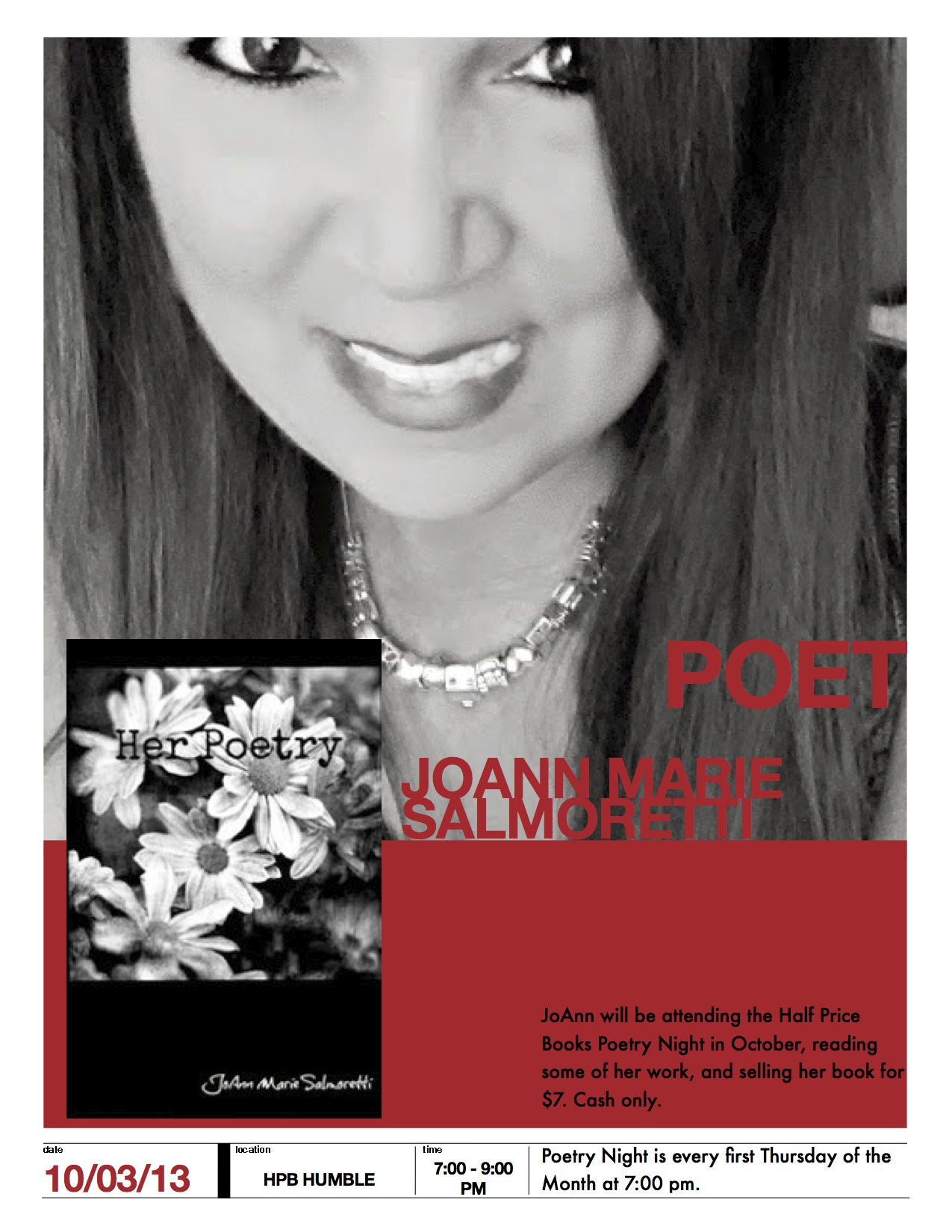
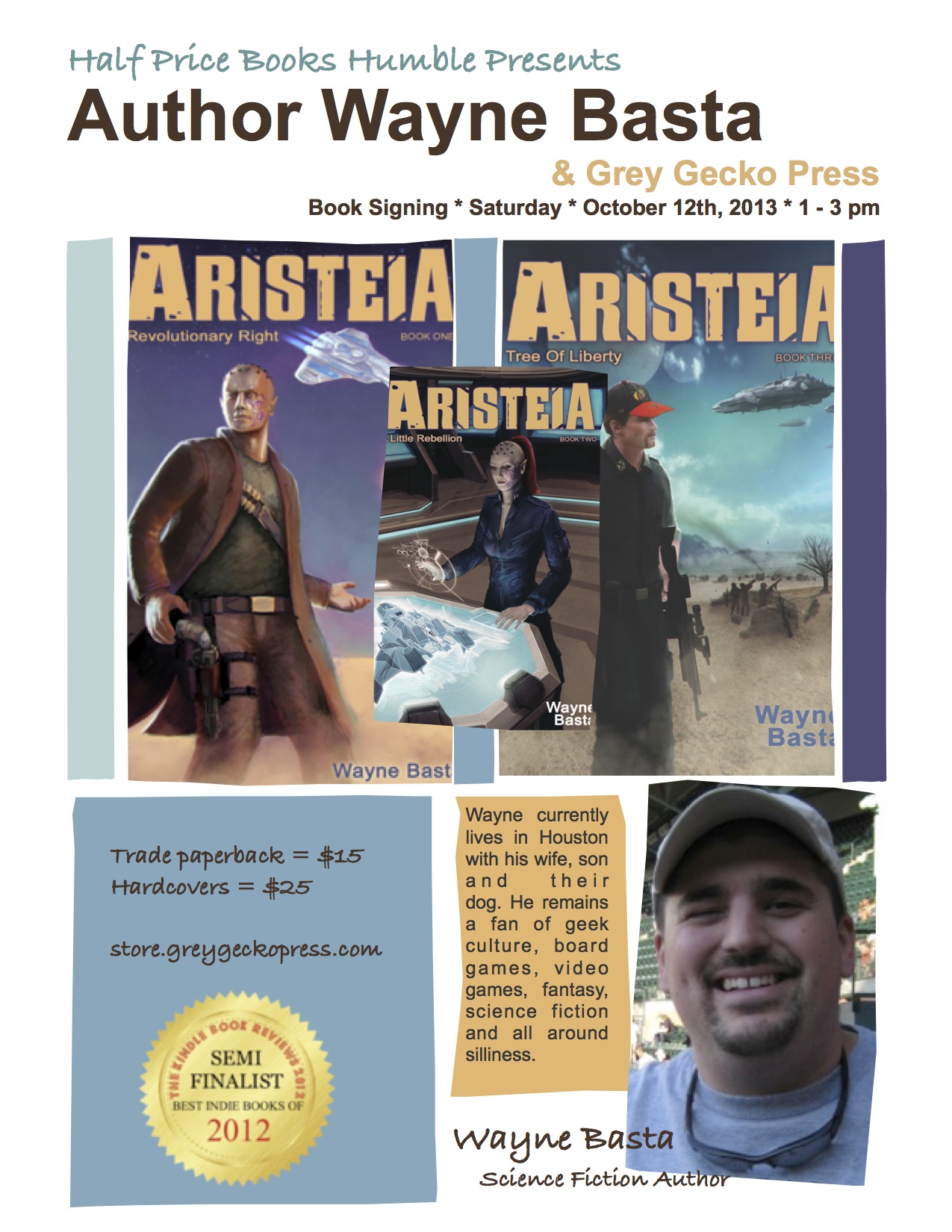


ALSO, Don’t forget to check the Good Books in the Woods Event Page… That place has some nifty stuff going on this month too. http://www.goodbooksinthewoods.com/news/
Interview with Science Fiction Author George Wright Padgett
 George Wright Padgett is the author of the science fiction title Spindown
1. Describe your book and its inception. What was your muse, so to speak?
I tend to question things about the world and our place in it. When I started writing Spindown I wanted to explore the age-old topic of nature vs. nurture – Are we born who we are to become, or are we only the byproducts of our experiences? And what does it mean to be free? Believe it or not, I leaned heavily on Golding’s The Lord of the Flies as a study of characters reacting individually and as a tribe with and against each other. I freely admit that the Draad flashlight is a version of the conch shell of authority that is found on the island in his book.
My writing style is that I tend to reverse engineer my stories. I start with the question and then work my way backwards filling in the holes until there’s a logic for why things are as they are.
For example, I decided to start with characters that were blank canvases that I could expose to extreme situations and watch how they reacted to each other and solve problems.
For it to work I had to answer to myself why would these people would not have any emotional experiences and yet be full grown adults? The solution was make them have lives that were severely isolated – keeping them from each other as much as possible and when they were forced to interact with each other they would be drugged into a stupor.
Then the question arises how or who would do this – So by reverse engineering I realized that it must be an ore corporation behind it and to save money from sending people to Jupiter to mine, they use harvested clones to do the labor. That’s just one example of how as I would walk through one door and answer a question, there’d be another waiting behind it. When all of the doors were opened (save the final one) the story was over.
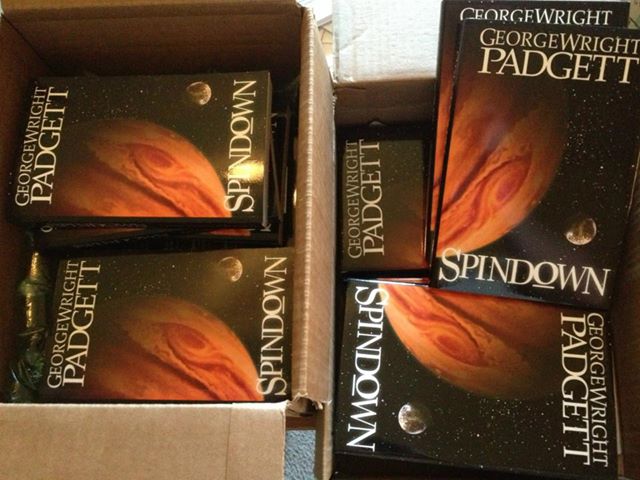
2. Your book has ‘classic science fiction’ all over it. What authors do you read and do you consider them heavy influences on your writing?
I’ve read a tremendous amount from the classic authors Asimov, Clarke, etc. (as a matter of fact, I recently finished Foundation again).
One thing that I’ve always appreciated about those writers is the level of authenticity in their stories. I spent many months building and rebuilding on paper the vast mining compound on Ganymede before I wrote a single word. It required a stupid amount of discipline to resist the urge to dive right in, but my deferred gratification paid off. When it came time to write the story, all that I had to do was to ‘activate’ the characters to run and follow them as if I were an imbedded reporter.
I didn’t set out to write a modern story in the classic sci-fi style; in fact I am humbled to have Spindown even compared to those great works. All that I can attest the results to be my exposure to their styles must have seeped through into my story. I feel like the character in The Amazing Colossal Man who accidentally wanders into a plutonium blast in the desert. The radiation transforms him due to his exposure to it, not through anything that he did. I was exposed to the radiation of many great storytellers.
3. Just like when I read, when I write I find myself enjoying some characters more than others – regardless of their role in the story. Did you have a favorite in Spindown? Who was it? Why?
Wow. It’s too difficult for me to pick just one – so I won’t. (I’ll do my best to avoid spoilers for the uninitiated.) I enjoyed watching Prall 4167 develop throughout the piece. Here’s a guy that is used to being in control, and is faced with his entire world being turned inside out. Readers undoubtedly cast him as a villain, but when you clinically review what he does and why he does things, he sort of makes sense. He’s the most practical one of the escaped clones and never displays a shred of self-doubt. Don’t misunderstand, what he does/allows is reprehensible to say the least, but he doesn’t see himself that way- he is only about one thing: Survival of Prall 4167. Can you blame him? His Machiavellian approach to situations intrigued me to the point that when it was time to assign the characters their suffix numbers, I gave him 4167 (my birthdate of 4/1/67).
Another part that was fun to write was the interactions between Martin and Buck. By the time we meet up with them again, they have been companions for a very long time. They remind me of an old married couple; they bicker with each other, but there’s no mistaking the love that has developed between them over the years.
Ah… then there’s Fowler and Sholve. I enjoyed how Fowler usually has his plans backfire on him or not go exactly how he thought things would work out. Often Sholve has to bail him out in some way. In all, they end up making a good team, with her problem-solving skills and his physical strength. One of my favorite exchanges between them is when they have opposing views on if they should ‘contaminate’ the Setter character with the knowledge of what is actually happening to clones on Marius 516. They come at the situation with polar opposite philosophies, forcing the reader to pick a side- Do we let him go on, and live blindly? Or do we confront him with the truth allowing him to decide for himself what to do?

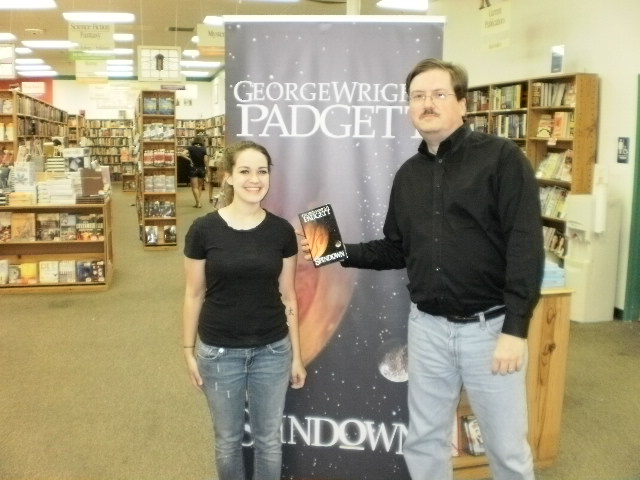
George and Grey Gecko Press at Half Price Books Humble
4. Did you learn anything from writing your book? What was it?
My inability to spell and use proper grammar is far worse than I could have ever imagined (even with spellcheck)
5. Exactly how much research was needed to pull off this level of scientific expertise? What was that process like?
As I mentioned before, I probably spent way too much time on this. I found that my compulsiveness seems to require a ridiculous amount of backstory and detail for whatever I’m working on. An example of this is how an early draft of Spindown had the clones speak a hyper-restrictive tongue called Chone. I developed the entire language removing any ‘hot words’ from their vocabulary. The result would have made Orwell’s writers of NewSpeak blush it was so limiting. It took a month of refining over and over. It was beautiful- and every bit of it ended up on the ‘cutting room floor’. While readers likely will notice the absence of the personal pronoun of ‘us/we’ from the first half of the book, that is the only thing that remained! It became too cumbersome for the clones to speak – a month totally wasted! I also know more about Ganymede than any non-Nasa personnel is allowed.
My habit is to completely immerse myself in the research and the world building of the story. This is fine, but a good writer has to edit out the artifacts that do not advance the story – sorry, Chone language.
Click to visit Grey Gecko Press
6.How did you come across Grey Gecko Press? How has that relationship been for you?
I encountered the owner, Jason Aydelotte at a social gathering of other Houston area writers. He’s the author of the acclaimed Dying of the Light Zombie series. He had just self-published his first novel in the trilogy and his enthusiasm about publishing was contagious. He told the people at the table that he was considering helping others learn how to do what he had done for their stories. Over time, his help and advice transformed into GGP. He left his day job to start Grey Gecko Press for authors who wanted to ‘storm the castle’ of traditional publishing with him. I was fortunate (and maybe crazy enough) to be counted among them. That was ten-thousand books ago. Since then, everyone there has been remarkable. Without Grey Gecko, there would be no Spindown because I likely would not have finished it. Jason’s team was the mid-wife to my book.
7. If Spindown were to be made into a movie, who would you want to tackle it? (JJ Abrams? Joss Whedon? Steven Moffat? Some unknown?)
Sid and Marty Krofft (Google it, kids).
Seriously, I am flattered that so many readers have said that they’d like to see Spindown on the big screen. I love movies, especially sci-fi, and my writing has been influenced by dozens of classic flicks, but at the end of the day, I’m just a storyteller, not a movie producer. It’s fun to think of, but what do I know about any of that? I’d welcome it if someone felt they bring something to the story, but I’ll leave it to the experts.
8. Other than writing, what are your hobbies and talents?
I play jazz piano (under a different stage name), I do graphic design, and am neck-deep in writing the songs and script for a full-length musical.
9. Do you listen to music while you write? If so, what were some of the musical influences you had while writing Spindown?
Music is a very important part of my life, so much a part of it that songs/genres that I listen to when not writing easily distract me when I’m ‘working’. I do this kind of Pavlovian conditioning thing in which there are some classical and ambient selections that I ONLY listen to when writing. It helps to trigger my brain into knowing that ‘It’s time to write’ when this music is played:
Philip Glass – Symphony No. 9, Low Symphony, Heroes Symphony
The soundtrack to ‘Monster’s Ball’
Brian Eno – Music for Airports
Anything from the band Pauseland
and a minimalist band from Austin called ‘Stars of the Lid’
Listen to Philip Glass/No.9 and read any of the chase scenes from Spindown. You’ll find that they match up perfectly.
10. If there was just one thing you would want your readers/ fans to know about you, what would it be?
I’m a big dork. Really I am (my wife and kids will attest to the fact). I don’t allow myself to take my self too seriously, and I will do anything for a laugh (anything). I still feel and view myself as the 4th grader version of myself. Sure, I get to drive a car, I can order wine in a restaurant, and do ‘big people’ stuff like that, but after you pull back all the layers, I am still just as silly, needy, and unreservedly amazed with the universe as I was way back then. And for better or worse, if I haven’t grown up by now, I think that I’m probably stuck this way – and I’m okay with that.

Click to Visit George’s Facebook Page
Spindown
 Title: Spindown
Author: George Wright Padgett
Publisher: Grey Gecko Press
Genre: Science Fiction
Length: 372 pages
There are books you read and love but cringe when someone suggests they make it a movie. What if they screw with the magic? What if they ruin it? But there are some books that as you read, before you even finish the book, just BEG you to become a movie one day. That’s Spindown.
Visually striking, the novel drops you right into the action from the first page, dripping with images of a future on the largest moon of Jupiter where clones are created to function their entire existence as slaves on a mining outpost. The writing style reminds me of Robert A. Heinlein (author of The Moon is a Harsh Mistress) and Gershom Reese Wetzel (author of Teres, which is unfortunately not available for the public yet); and the story reminds me of some of the more futuristic sides of Doctor Who (episodes like The Rebel Flesh, and such).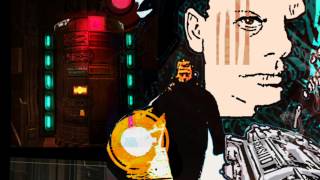
Always a sucker for dystopian societies, I love the premise and the journey these characters have from mindless machine-like worker bees to passionate beings with more than a vague idea of what is means to be “dormant dead” and no Hemlo to suppress emotions.
 I had the pleasure of meeting George Wright Padgett at Comicpalooza this year. His publisher, Grey Gecko Press, had a booth there. In all the hoopla la and excitement, he had a personality that stood out in a crowd and after gathering some information on his book, I was able to set up signings with him at Half Price Books.
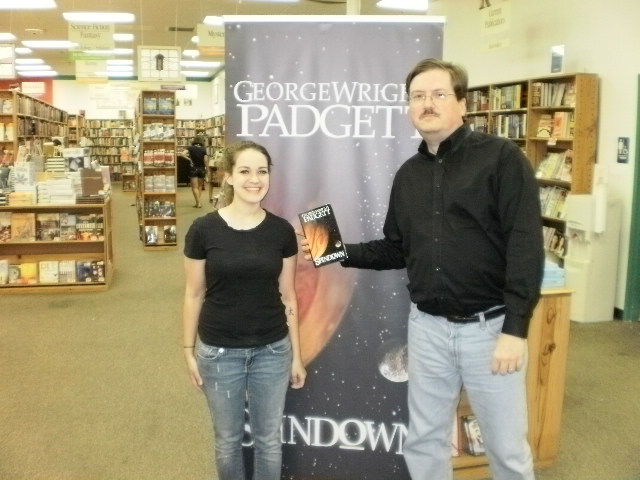
The signing at the Humble location was a blast. Grey Gecko Press brought a banner to put up in the store which looked pretty stellar, the book trailer was running on a flat screen in the background, and we had cupcakes from The Martin Epicurean. Pulling off fun events in a bookstore has just as much to do with planning and organization as personality and conversation with the author themselves. Padgett is quite entertaining and could be an event in himself with or without the book!
 Here is a little anecdote he shared on facebook from Comicpalooza:
So this past weekend at the convention, I was approached by a guy who said his name was Tom Padgett and that his son’s name was Tommy Padgett. He told me that he saw the banner (pictured) that bore his last name, and was thrilled to see another ‘Padgett’ as the author. I don’t know if he (or Tommy) even cares for the sci-fi genre, but he bought a book simply on the sir name.So here’s my strategy for my next three projects: Each novel will be released under a different pseudonym in hopes of securing higher sales from the consumers that buy books based on their own last names. Be sure to tell your friends, family, and co-workers to be on the lookout for new books from ‘George Smith’, ‘George Davis’, and ‘George Johnson’. We’re gonna sell millions now that we’ve got this figured out!







 Anakalian Whims