The Dark is Rising Sequence: Book One
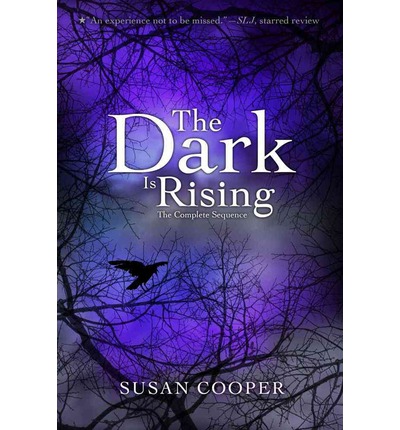
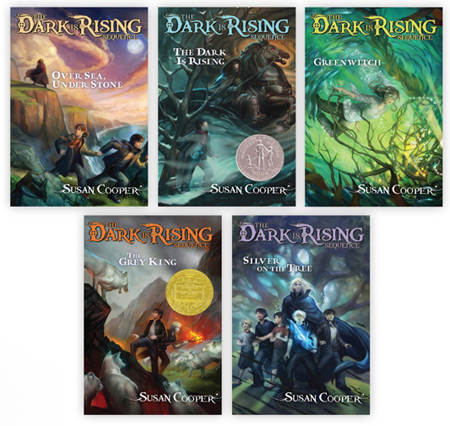
 The Dark is Rising Sequence started in 1965 (probably much sooner if you were to talk to the author) with the publication of Over Sea, Under Stone under the name Susan Cooper Grant. In 1973, The Dark is Rising would come out, followed by Greenwitch in ’74, The Grey King in ’75, and finally Silver on the Tree in 1977. The Dark is Rising was a Newberry Honor book (runner up to the Newberry Medal) and The Grey King actually won the Newberry Medal.
The books have stared back at me from shelves my entire life, but I didn’t actually pick them up to read until this year – my 29th year – for a Young Adult book club at Half Price Books (Humble).
Having finished Over Sea, Under Stone I can officially tell you that I’m hooked. Not only will I finish reading the series, I will be releasing my reviews of each book in a serial here on my blog and I am adding all the books to my daughter’s homeschool curriculum, with some help from a website I stumbled across: http://www.andrews.edu/~closserb/courses_211_review_studyguide.html
Title: Over Sea, Under Stone
Author: Susan Cooper
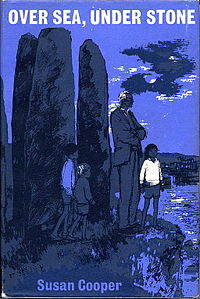
I am reading from this edition.
Genre: Young Adult/ Fantasy/ Mystery
Length: 236 (book one) out of 1082 pages (whole series)
You might wonder why a fantasy series has become a mandatory reading assignment for my daughter. If you follow my blog at all, you might have an idea. Over Sea, Under Stone is just screaming to be part of a King Arthur unit. Pendragon’s name is dropped countless times; myths, legends, fairy tales, and the search for the grail make up all the major plot points; and, it’s full of research and adventure. What better to inspire a ten year old into the exciting world of a lifetime in literature?
The following I took straight from the aforementioned site I stumbled upon re-posted here in case the link ever fails):
A writer must be able to do or manage the skills of writing fiction:
Plot–What sort of story line has Susan Cooper devised? What happens? Is it a satisfying story line? Does it seem appropriate for the story?
 Conflict–What is the conflict of the story? What is at stake if the central characters fail in their quest? Who are the opponents in the story? How do they complicate the plot?
Characters–Who are the main characters in the story? What does Cooper tell you about each one of them? How does each character differ from the others? How does Cooper compare Simon, Jane, and Barney? What is each child’s personality and why is this personality important to the story? Why does Cooper choose children as the heroes and heroine of the story? Why not Great Uncle Merry?
Setting–Where does the story happen? What is the country side like? How is this appropriate to the story? Could Cooper set the story anywhere else and still make it work as effectively as it does now?
Symbols–What objects in the story take on symbolic meaning? In what way is the grail a symbol? Rufus the dog? The manuscript? Each of the characters? The rising tide or the boats? The fact that the grail is found in a cave? The standing stones?
Theme–Considering all of the elements mentioned above, what is Cooper’s point (this gets us into the third form of knowledge; see below)?
 A writer must know about the Arthurian tradition in general and the grail tradition particular:
The grail is an object of great significance and importance. What did you notice in the stories you read? How does Cooper convey this concept in her story?
The grail can be found only by the most perfect of knights. What qualities do Percival, Galahad, and Bors de Gannis have? Does this suggest a reason why Cooper decided to send children rather than adults on the quest?
Grail knights always demonstrate their perfection by undergoing severe temptations. What temptations do Percival, Galahad, and Bors face? What temptations to Simon, Jane, and Barney face?
In the grail stories the heroes live by strict codes of ethics. Describe the grail knights’ value system. What rules do Simon, Jane, and Barney live by?
Grail knights always have a spiritual mentor. Who functions in this role in each story?
How do boats or other symbols like the wind, the number three, or color help to make the stories’ points?
Grail stories often center on illusion and false realities. What illusions do the three grail knights face? How does Cooper suggest that reality is not what the children believe it to be?
Grail stories fundamentally center around the quest for perfection and the test of one’s character. How does the quest test each grail knight or each child in Cooper’s story? What does each child learn from the experience?
Grail stories often involve magical, mysterious, or mystical places like castles or dark forests. Where in Cooper’s story do you notice elements of mystery?
Grail stories ultimately change how the central character views life. What is the effect of the search for the grail on each of the three grail knights? On the three children in Cooper’s story?
A writer must have a message, theme, point, or lesson to communicate.
What is Cooper message? What is she trying to say about the human experience?
In what ways might the children’s experience parallel our own experiences? What do we learn about ourselves from their experience?
What quests do we have to face? How might/should we go about accomplishing these quests? What do we learn from the children’s experiences which might guide our quests?
I love how this enjoyable fiction lends itself so readily to the study of storytelling, the King Arthur tales, the development of legends in general, religious history, as well as the kiddo’s general history lessons as we sort out documented history from legendary fictions developed over time.
Greek Mythology… with children
(Weekly Low Down on Kids Books)
 Unfortunately this awesome image is not from a book. I think it’s from a video game.
The kiddo and I have been reading Percy Jackson & The Olympians: The Lightning Thief by Rick Riordan. Is she a little young to catch everything, of course, she’s not yet three. Is she following the story? Better than you might imagine. I highly recommend that parents read kids stories that are far outside the child’s reading level. By doing this they are exposed to mature language styles sooner, learn new vocabulary words, and in the case of Rick Riordan, appreciate Disney movies like Hercules that much more.
We’re not finished reading Percy Jackson, so this review isn’t about that. This review is about picture books we’ve been reading during the day in preparation for our before bed time romps with Riordan’s Olympians.
 Title: Gods and Goddesses from Greek Myths
Publisher: McGraw Hill Childrens/ Peter Bendrick Books/ Octopus Publishing Group
Retold by: Pat Rosner
Illustrated by: Olwyn Whelan
ISBN: 1-57768-508-3
Typically I provide links and images to the book, where you can find and purchase it, etc. But it seems that Gods and Goddesses lives an off the grid book life. It seems to be extremely difficult to find online and I was in the middle of typing here that I could not find it when I got the idea to check hpbmarketplace.com. I purchased it from a Half Price Books a few years ago, but sure enough the marketplace wins again! As you browse through the prices, you’ll see some are quite expensive. I only paid about $5 for this at the store, I wonder if it is currently out of print. Mine is in mint condition.
The illustrations are delightful, the retold myths thorough but easy to grasp. It’s not kiddo’s favorite book, but I can tell it has helped her grasp what is happening in the Percy Jackson books. Sometimes she just flips through the Greek style pictures while listening to me read Riordan’s work.
If I were in McKinney, TX right now I’d purchase the Fantastic Creatures from Greek Mythology as well, because I like these so much and I think Olwyn Whelan is a genius illustrator. Everything she touches, I think, would be great homeschooling resources.
Other resources we enjoy:

Crouching Tiger, Hidden Dragon Kings
The Weekly Low Down on Kids Books/ Adventures in The Magic Tree House
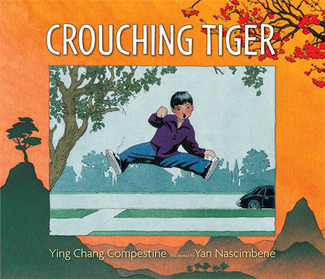 Title: Crouching Tiger
Author: Ying Chang Compestine
Illustrator: Yan Nascimbene
This book was an unexpected treasure from the public library. Kiddo picked this book out herself and I was really excited about it once I was in the middle of reading it.
As a third degree black belt who grew up around a lot of Chinese culture, I love finding unique children’s stories like these. It teaches etiquette, respect for your elders, culture appreciation, diligence, perfection through practice, and each page also has a diagram of a Tai Chi stance.
This was an excellent book to jolt us into our week on Ancient China.
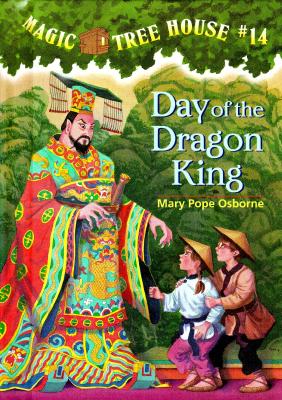 Title: Day of the Dragon King
Author: Mary Pope Osborne
Publisher: Scholastic
Although we don’t have a research guide for this topic, we’ve been perusing all things Ancient China while reading this book this week. There are pages from Life in the Ancient World
 Although we didn’t do anything crafty with this week’s topic, we did enjoy some stir fry for dinner and kiddo got to practice eating with her toddler chopsticks.
The kiddo’s chopsticks are an orange elephant, but the concept is pretty much the same. These things are so handy and I think they are a great way to give your tiny person an ounce of how other countries live.
Polar Bears Aren’t Really White…
…And other fun facts you learn with your two year old while reading Magic Tree House…
So onward with The Magic Tree House Adventures. We read Ghost Town at Sundown
Then, we moved onto Polar Bears Past Bedtime


Kiddo really loves looking at the pictures of all the animals. From identifying the baby bears to asking me what “those things are on him” hanging off the lion (his testicles), we’ve had a full two weeks learning about different kinds of predators and their environment. She finds Africa vs. the Arctic fascinating and is now able to identify the two places on the map.
Yay for little tiny humans being enormous sponges for knowledge!
Finder’s Keepers
 THE WEEKLY LOW DOWN ON KIDS BOOKS
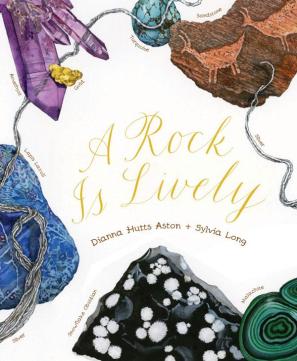
Title: A Rock is Lively
Author & Illustrator: Dianna Hutts Aston and Sylvia Long
Genre: Non-fiction Picture Books/ Children’s
As a child, I collected rocks. I think many children do this… bright, shiny objects with a splash of color are enticing. Small pebbles from river sides are exciting and make you feel like a million bucks when they are so tiny in your own tiny hands. I had a rock tumbler and every little piece of nothing could be made magical. On family vacations I used my pocket money to buy gems and stones native to the area we were visiting. With my sister and cousins, we would go on exploratory rock hunts together. I remember hearing shouts of: Finder’s Keepers!
I have also always adored books, and as an adult I try to find the most awesome of children’s books to share with my daughter. Last week at the library, while I browsed the children’s section of Baldwin Boettcher, I stumbled across A Rock is Lively
Except I will have to return this particular book and go buy a copy.
A Rock is Lively is an excellent introduction to geology – for all ages. My daughter will be three in October and she was riveted by all the colorful detail of gold, amethyst, peridot, and gypsum. The page about how rocks are mixed up and the description of how calcite, sodalite, pyrite, and lazurite becomes Lapis Lazuli excited her. She enjoyed telling me about all the colors she was seeing as I told her what the rocks were called.
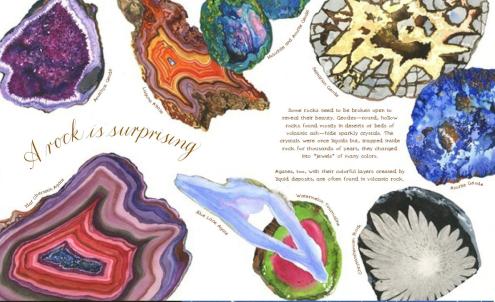
Over and over again this week she has brought me the book, “What’s that?” she’ll say as she points to hematite… “What’s that?” she asks as she opens up the two page spread on obsidian. “What’s that?” she wants to know about the geodes…
A Rock is Lively is a must have. We will definitely be finding our own copy to own as well as the other books in the series: An Egg is Quiet, A Seed is Sleepy, and A Butterfly is Patient.


Homeschooling Agendas
 Title: Lessons Learned
Author: Andrea Schwartz
Genre: Homeschooling, Education, Christianity
I have mixed feelings about this book. On one hand everything she said I agree with. On the other hand, the way she said it often made me cringe and think of severely right-winged “Jesus-freaks.” The DC Talk fan in me thinks Andrea Schwartz shouldn’t and wouldn’t mind being called that. The fellow Christian in me tells me it’s a little unfair to call her that when I agree with her points and conclusions. The public-school educated child wants to scratch my eyes out and scream, “Really!? Did you have to use the phrase God-hater that way?”
Homeschooling for many is merely an educational choice… the public school system is broken and parents no longer feel comfortable counting on the state to properly equip their child with the realities of the world. Children are being herded from class to class like cattle. Fine teachers are being stretched too thin and don’t have the time, energy, or resources to give each student the educational nurturing they deserve. Everything has become about teaching a test, obeying dress codes, and keeping everyone happy and supposedly safe, rather than about creating an environment of true scholarship.
For others, and possibly what it is misguidedly known for… it’s for freaks who don’t get along with the rest of society. Potential crazies, kids that don’t groom properly, weirdos… I hope that stigma can be put to rest as I found just as many people who fit this description in public school as I did outside of it. If your parents are socially awkward you will probably have a lot of socially awkward tendencies whether you spend 8 hours a day with them or without them. I went to public school my whole life and I will totally admit to being a little bit strange. I live inside my head a lot, and there are plenty of social cues that I completely miss. Some kids I’ve seen were far more socially awkward under the pressures of a school environment where they are forced to try to fit in with a thousand people their own age, when in the real world they get along better in a more diverse setting where they are not expected to be like everyone else.
Then, there’s the other group, the Religious group… For many parents, choosing to homeschool your child is a calling from God. We have been given this precious child to train up in the ways they should go and we want to ensure that we do that the best we can every step of the way. Submitting them to 8 hours of frustration, government indoctrination, and poor education is not high on the list of things we believe God wants for our children.
In our household, we’re one and three. Yes, I believe passionately about being good stewards of our minds. I desire to eagerly pursue all the most riveting aspects of educating my daughter that I can. I am completely caught up in the idea of combining a classical styled education with a tiny twinge of unschooling so that my kid gets the most thorough and engaging education available… custom tailored to her little brain and the way it works. I want to give her the education I didn’t get. I want her start out ahead in life, prepared for anything! But I also believe this passion for education was given to me by God. I believe that it is God who calls us to be good stewards of our minds. I believe that having the freedom to not be politically correct in our studies and studying from the Bible throughout our day will only prepare her more, provide her with a firmer foundation.
Andrea Schwartz comes off as believing God first and education second. I believe that to be an honorable and good philosophy. But I believe that by putting God first, your education will be enhanced, not placed on the back burner as some would suppose. How fascinating will it be to read the Bible, Augustine’s Confessions, and Homer during our Ancient History studies… I can’t wait.
Jessie Wise and Susan Wise Bauer explain this all best in The Well Trained Mind:
“People of faith have influenced history at every turn. Until the student is willing to examine honestly and soberly the claims of relivion in the history of mankind, this study will be incomplete.
In the effort to offend none, the public schools have managed to offend practically everyone – either by leaving religion and ethics out of curricula altogether or by teaching them in a way that satisfies neither believers nor skeptics. In sympathy, we’ll say that the public schools are in an impossible situation. They are legally bound to avoid the appearance of promoting one religion over another. And in a mixed classroom, how can you take one religion seriously without antagonizing those who don’t share it? […]
When you’re instructing your own child, you have two tasks with regard to religion: to teach your own convictions with honesty and diligence, and to study the ways in which other faiths have changed the human landscape.”
Susan Wise Bauer and her mother then spell out very elegantly how to do this: including religious works in the study of primary sources, researching the beliefs of all the major faiths, seek out biographies of those who have changed others’ belief systems, and keep a watchful eye for any logical fallacies, chronological snobbery, and so on.
I am a huge Susan Wise Bauer fan, her books are what I am using to map my own child’s education. I recommend Susan Wise Bauer for any homeschooling parent of any religion.
As for Andrea Schwartz… her stuff is really great if you are a Christian parent who homeschools or is thinking of homeschooling. I have a huge problem with her description of her son’s experiences in community college, they seem unusually extreme. But then again, I live in Texas and they are in California, a lot changes culturally from state to state. Regardless of the fact that her complaints about public school differ from my own, Schwartz reminds you to stay the course and remember the number one goal of making a disciple of your child, a well-educated disciple, but a disciple none-the-less. We are not just teaching our children their math, science, and history. We are not just teaching our children the pleasure of research and reading. We are not just teaching our children how to learn. We are teaching our children how to live, how to walk wisely, and how to make logical choices while still keeping the faith.
Space… the final frontier
We tackled our next Magic Tree House adventure this week… the one on Space!

When we read through the research guide on Space, she kept wanted to talk about Galileo. She really liked the picture of him and finds pleasure in saying his name. Not exactly sure what fascinates her about the man, but I’m glad she took an interest in Astronomy this week.
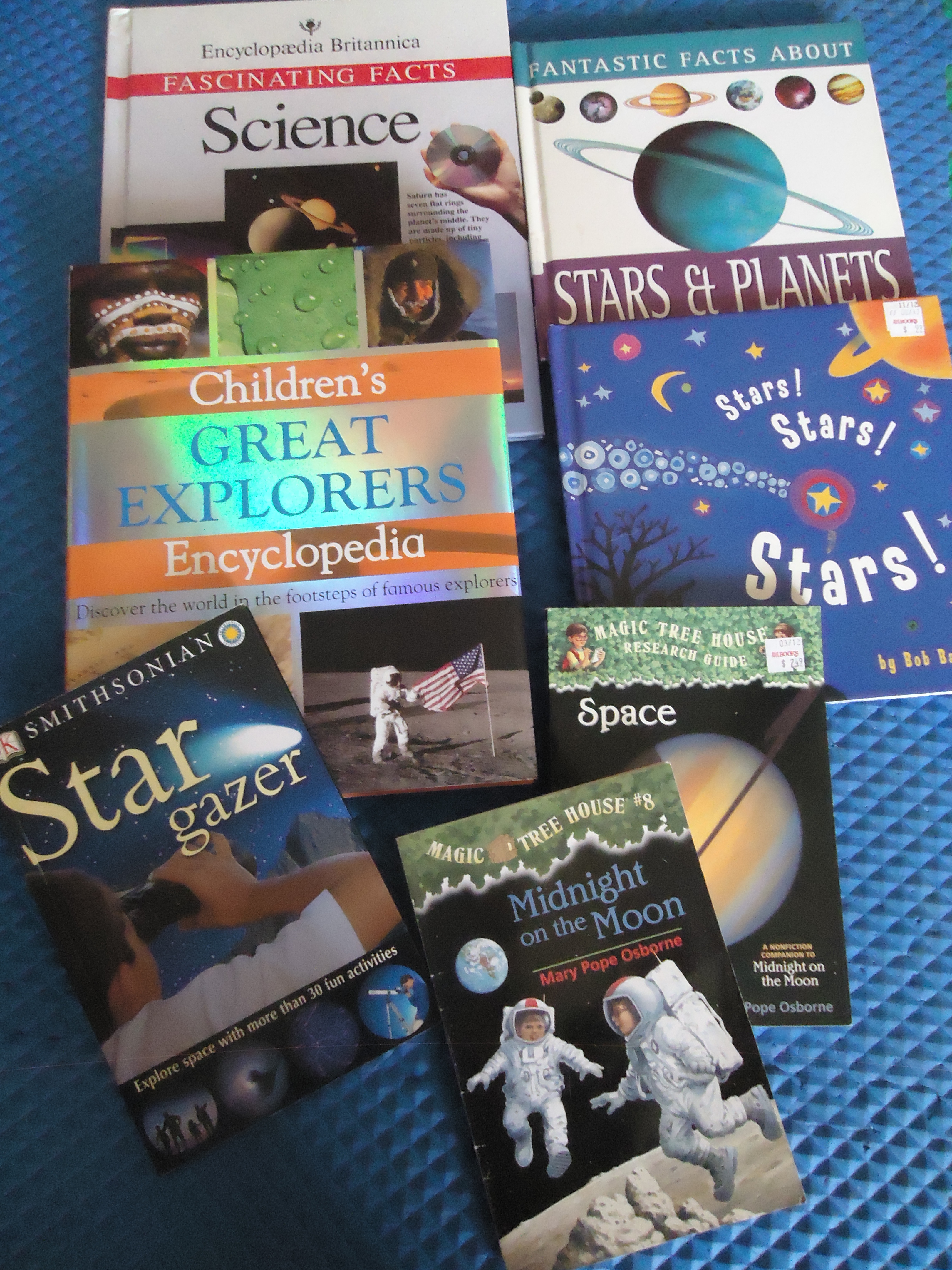
Stars, Stars, Stars! is a great book to start a kid out on the wonders of space.

After the unit, show the kids this video of a Space Station Astronaut doing a water demonstration from space! The kiddo was really amazed: http://io9.com/watch-what-happens-when-you-wring-out-a-washcloth-in-sp-476159356
Falling in love with History…
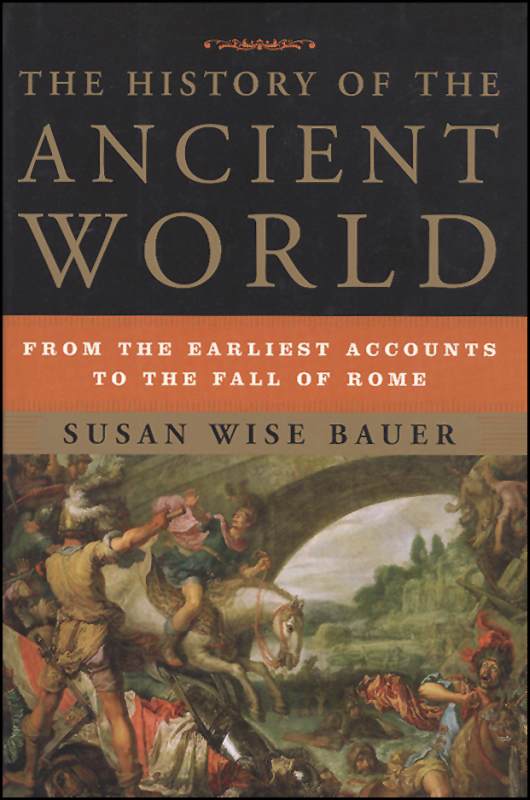 Title: The History of the Ancient World
Author: Susan Wise Bauer
Publisher: Norton
Genre: History
Length: 868 pages
I enjoyed history in school, but only when it was taught by certain teachers. I distinctly remember thoroughly loving Coach Masters, my World History teacher in high school. In hindsight, I’m not sure if it was because he was so awesome, or because it was the first time someone actually presented me with history I could be passionate about – not just enjoy in passing. Masters made you dive in with all you had and really learn it; it wasn’t just dates and factoids, it was people, their dreams, their loves, and their wars.
As an adult, reading history has become a little more specific. I tend to read a lot of Ancient and Medieval history most, they are kind of my go to topics. There is so much that was skipped over in school and it is so riveting! So naturally, when I decided to homeschool my daughter I started collecting the Susan Wise Bauer history books – they are fascinating overviews of history as well as wonderful teaching tools.
Reading Susan Wise Bauer reminds me of that history class with Coach Masters. She gets personal.
It took me a full year to read The History of the Ancient World, mostly because I made a promise to do at a snail’s pace. I plan to use it as a loose textbook for kiddo’s high school years and I wanted to make sure that you could pause, go read other things, and come back to it. Is it reasonable to assign this for a year in addition to x number of other books? Yes, oh, well then lovely.
The book is wonderful and impressive. Bauer makes history accessible and easy to understand in a world filled with dull and extensive flow charts that will make even the most knowledgeable scholars heads spin.
My absolute favorite is a lengthy footnote on the Borg (from Star Trek) and how similar the mentality of the Borg was to a tribe of people sweeping the land in the very earliest parts of history. ‘See?’ she practically says, ‘It’s good to be a sci-fi nerd.’
My only lament – and this may simply be a first edition issue – is that toward the end I began to find typos (I think). There’s an amputed that should be amputated. I honestly thought maybe it was a variance of the word I had never seen used and had to look it up. There’s a died that should have been die. These two things tripped me up for a second, but I found it a little refreshing. Having just written a book myself it was good to know that someone I esteem so highly also makes errors when writing her books.
But then there was the bit that tripped me up a LOT. During the aftermath of Alexander the Great’s death there are two spellings for what I’m 99% positive is supposed to be one person. Welcome to the great Cassander vs. Cassender dilemma…
The first time I saw this, I thought: Is there one person or two? Am I really ignorant with poor reading comprehension and these are two distinct people? There’s no way I can be the only person to find the longest running series of typos ever… But for pages on end Bauer switched from Cassander to Cassender.
If it is a typo, I get it. In my novella I couldn’t keep my fingers from typing Lilly Hollow to save my life, when the name of my imaginary town is Lily Hollow. It drove me absolutely crazy going through and fixing them all. If there is a typo found in my novella post publication, I would bet money that it will be in the form of an extra L.
With Cassander and Cassender there are soooooo many times that it is written as both. Part of me is still convinced that there is a strong possibility that I am just that dumb. I will be seeking out a second edition just to figure it out. The ancient world is full of mystery and excitement and long winded Chinese dynasties and Egyptians going crazy with who they marry and who they kill, but the acting king(s) of Macedonia post Alexander the Great is the guy(s?) that throws me for a loop.
All in all, though, I STILL think this is a must have in any historian’s or homeschooler’s library. It was worth every penny and I think that this one – for once – is one I actually paid full price for at Barnes & Noble. Bauer will remind you that there is so much to discover and be passionate about in history, because there’s just so much of it in general… you may even fall in love.
Discovering the Ice Age
Magic Tree House Adventures in my library with my toddler. I can’t wait to take her to the Natural Science and History museum! I think it’s about time for her first trip.
She is completely enthralled with Jack and Annie now, and begs for the next story as soon as we’ve finished the last. For parents just coming in for these blog posts, it helps to have some kind of tactile activity and/or lots of related picture books available while toddlers listen to chapter books.

She was really into the bits about the Woolly Mammoths. We learned from Mary Pope Osborne’s research guide that there were different kinds of mammoths: Columbian Mammoths were the biggest, Woolly Mammoths the second largest, and there were smaller ones called Pygmy Mammoths. Of course, a two-year old sees these different mammoths and calls them Daddy Mammoth, Mommy Mammoth, and Baby Mammoth. It’s ok, we still have time to figure it all out.

My child is enamored by sharp teeth and weapons. She also likes maps and any time a location is discussed in a history book she wants to know where it is in relation to Texas and Virginia. Texas because that’s where she’s from, and Virginia because that’s where Pocahontas met John Smith. This was the topic of conversation when the Giant Beavers of North America were discussed during our Ice Age study.
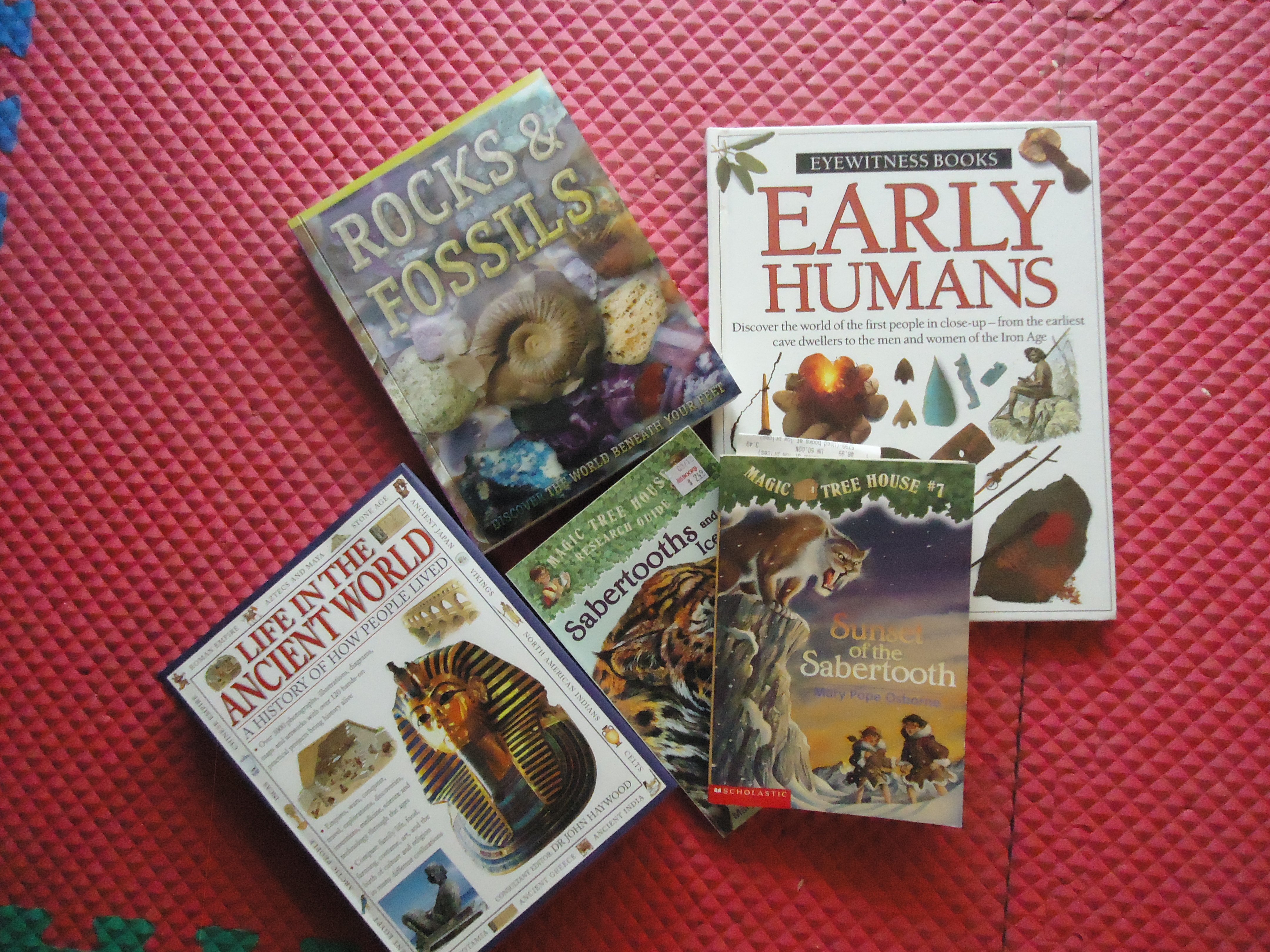
We prefer the Life in the Ancient World book over the Early Humans book. It has a lot more detail, it WILL be used as our first official History textbook and I already have the lesson plans blocked out. There are projects scattered throughout, both crafty and educational, and I think it is a must have homeschooling tool – especially for those pursuing a classical route. Rocks and Fossils is a really awesome book for an older child. I think around ages 8-11 this is going to be a household favorite.





 Anakalian Whims