Passion Without Boundaries
Re-experiencing the Brontë Sisters, Part Two
I am re-reading Wuthering Heights, and doing a slow study of the Bronte Sisters. I have decided to give myself no deadline and maintain personal permission to read whatever I please between my studies. (Part One to this little blog series I am attempting may be found here.) I learned long ago, when it comes to a blog series, not to force myself into a formulaic mold or dictate a strict schedule or I would set myself up to fail. I love my readers and want to respect their time and curiosity, but also, I write for me as a thinking process and this blog has been (over the years) a way to grow as a writer, a way to grow as an author, a way to grow as a human, and sometimes a way to pay an electricity bill. It hasn’t done that last bit in a long, long time, as I went un-monetized for nearly a decade, but once upon a time I did rely on my blog to keep on the lights.
Although I hadn’t picked up Wuthering Heights to read in quite some time, I had several copies in various editions on my personal shelves, none of which were the copy I read out of in high school or my early twenties. I have a tendency to donate things I’m not reading and acquire different copies with different editorial essays than the other editions, because I happen to enjoy reading essays. Even bad ones with bad takes I will find entertaining sometimes. This time I am reading out of The World’s Popular Classics Art-type Edition. They were inexpensive hardbacks made in the 1940s and 1950s, printed in New York, and mine has a little burgundy spine. I plucked it out of a library sale for $2. It used to belong to one Carolyn Coppock. She left her bookplate on the front endpapers. It opens with a 1930 Editor’s Introduction that discusses its uniqueness in literature, describing “the peculiar quality of its power.” (pg 7)
As an older adult, I am having a much harder time getting into Wuthering Heights. As a child and teen the intrigue for me was: Will this be a Human Redemption story? Or a Kill the Monster story? And it is, in fact, neither. (Or both?) Well, not in the expected way, at least. I remember loving it because it was neither and it managed to surprise me. I didn’t see the cautionary tale coming and I didn’t recognize the redemption arc for the secondary characters. As a child, I wanted the redemption story, the knowledge that everyone can be saved tucked neatly in my back pocket. As a teenager I was more of a cynic and wanted the monster vanquished and judgments doled out. As a forty-one year old, I’m just too tired for all these people. I don’t want anything to do with any of them… I don’t want to save them or slay them. I want to walk away, close the book, and read something else. For that reason, I have been camped out re-reading Wuthering Heights for nearly a month, when normally it would take me a few hours. I keep putting it down in annoyance rather than feeling the rush of curiosity I had when I read it for the first time. I keep ping-ponging away from the characters to see what others have to say about them in essays. An easy task because the author herself didn’t give us personal access to them, but told us the story through the gossip of several first person narrators, with varying levels of reliability. This writing tactic is equal parts annoying and clever.
“Not Nature, but Fate, seem to take the pen from the writer, and write for her,” H.W. Garrod states. Pinning down a “review” or even a “literary criticism” of Wuthering Heights that feels true and accurate is a struggle because the entire work feels feral, but it’s obviously a controlled feral, so you know there is a purpose if only you can step away from the roller coaster ride long enough to look at it clearly. The characters seem to fight against the pen itself, wriggling and writhing under the documentation of their actions. Perhaps that is why everyone focuses on the madness of the Brontës, even Currer Bell (the brother) touches upon Emily’s taste for the grotesque and praises Sidney Dobell for recognizing his sister’s ability to look into the human psyche, her desire to see things that are criminal as not necessarily rooted in evil. The sisters not only attacked “societal norms” (as so many critics say) but also seemed to have a complicated relationship with the literary tradition, flirting with it while attempting to disregard it. “Neither Emily nor Anne was learned; they had no thought of filling their pitchers at the well-spring of other minds; they always wrote from the impulse of Nature, the dictates of intuition, and from such stores of observation as their limited experience had enabled them to amass.” (pg 20)
The Editor’s Preface is also written by Currer Bell. There he discusses the wildness of the moors and the story. He warns the reader of the “perverted passion and passionate perversity.” He goes on to explain that “the single link that connects Heathcliff with humanity is his rudely confessed regard for Hareton Earnshaw–the young man whom he has ruined; and then his half-implied esteem for Nelly Dean. These solitary trains omitted, we should say he was child neither of Lascar nor gipsy, but a man’s shape animated by demon life–a Ghoul–an Afreet.” (pg 25) Indeed, the work itself is “swarming with ghosts and goblins!” despite no goblins or ghosts in the traditional sense being present, but simply grotesque carvings in the architecture, bitter swirls of wind, and intrusions in dreamscapes. In typical Gothic fashion, there is “atmospheric tumult” and hints at the black arts, while the moors (symbolizing hell, the wilderness, the damned, the otherworldly) intermingle with the depictions of the characters’ souls.
I tossed the book in a bag and abandoned it for a week or so while I laid out Geometry lessons in my mind. One of the hazards and joys of being a homeschool mom is having many ideas crashing around in your head at once. I love continuing my education by educating my children and was willing to abandon Wuthering Heights completely as something “been there, done that” in my life, but was spurred on by the atrocities of the new movie trailer, featuring Margot Robbie and various other actors, sticking their fingers in each other’s and their own mouths, I had to revisit this “greatest love story ever told.” (The algorithm has me all wrong on this point, because I keep seeing these ads on the internet and I do not want to be seeing these ads on the internet.) I needed to understand where the disconnect lay between the story I thought I read and the one being advertised, because to me Wuthering Heights is as much a love story as Romeo & Juliet. Making that comparison it how I figured out why so many people have conflicting reactions to Wuthering Heights.
I suppose it is time for me to clarify. My hot take on Romeo & Juliet is that it is equal parts cautionary tale and satire. Romeo & Juliet, I think Shakespeare is telling us, is what happens when two teenagers deep dive into feelings without restraint or wisdom: everybody dies.
Wuthering Heights reads the same way for me. Unbridled passions, “love” without boundaries, destroys everyone around you and leaves destruction in your wake. The only hope of redemption is for the future generations after you’re dead because your passions gave way to chaos. Wuthering Heights remains, for me, a cautionary tale. It’s not a romance at all, as good, truth, and beauty was never part of the Heathcliff and Catherine equation. Instead, Heathcliff and Catherine embody toxic power struggle dynamics, passion for the sake of passion, and the two being in remotely the same vicinity of each other makes everyone worse.
We see Catherine’s passion being set up for sinful rage in the first hundred pages as Catherine “never had the power to conceal her passion, it always set her whole complexion in a blaze.” (pg 96) It reminds me of Susanna Kaysen’s observations in Girl, Interrupted: “Crazy isn’t being broken or swallowing a dark secret. It’s you or me amplified. If you ever told a lie and enjoyed it. If you ever wished you could be a child forever.” Catherine seems to enjoy her manic episodes and passionate rages and reminds me of my toddler who screamed at me mercilessly the other day because she wanted to wear her shirt on backwards. The character has bought the lie that feeling of any kind is what makes us alive, even if what we’re feeling and how we’re choosing to show that feeling to others, is leading us down the road to death.
Then we have Heathcliff, neither man nor monster, but for sure a monstrous man. “Heathcliff to me is a sort of sprite of the bergs, a cousin to Mary Shelly’s monster, a creature of the northern mists, a gnome,” Philip Larkin wrote to Monica Jones in 1955. Mary Shelly’s Monster was created. Beowulf’s Grendel simply was, Heathcliff, we could argue was both born monstrous and created to be more monstrous (“total depravity of man” theology plus abuse and ill treatment he received). Heathcliff is where the monster metaphor meets the psychological truth of human nature. Having re-read Count of Monte Cristo last year with my oldest daughter, I now see a lot of the similarities in the revenge stories. Both go away and return better educated and financially stable, but that education and financial gain combined with their anger becomes weaponized and ruthless. On page 130 on my edition, Heathcliff is described as “not a rough-diamond–a pearl-containing oyster of a rustic: he’s a fierce, pitiless, wolfish man.” As humans we want so badly for education and money to refine character, but character is refined by Jesus Christ, not worldly gains.
What makes the book worth reading is the redemption of the next generation. Despite Heathcliff’s abuse, the cycle was broken, generational curses do not have to exist. Human beings are free to choose the gift of peace. I’m not done re-reading the book, but I am seeing the light at the end of the tunnel while recalling what I do remember of each character’s ending.
(As an Amazon affiliate I earn from qualifying purchases.)
“Emptiness and boredom: what an understatement. What I felt was complete desolation. Desolation, despair, and depression.
Isn’t there some other way to look at this? After all, angst of these dimensions is a luxury item. You need to be well fed, clothes, and housed to have time for this much self-pity.”
― Susanna Kaysen, Girl, Interrupted
Education is a Lifetime Pursuit
“Education is a lifetime pursuit.” I tell my daughter this constantly. It is our household motto, so much so, I would not doubt if I had already posted something with the same title before. I even hope that my readers already have read this phrase.
I am a homeschool mother. I am, in the deepest parts of my soul, a teacher. I always have been, and have been overzealous about it since I discovered the classical model. What I have loved about the classical model most is the ease in which I can continue my own education while I educate my daughter. She memorizes facts and dates in the grammar stage and not only do we supplement with rich literature to help her remember, but I get to pluck out related reading material for myself. Individually, I learn and teach the classical model… as a household, we are constantly involved in “unit studies” that are structured chronologically throughout history.
While she was memorizing history sentences about Christopher Columbus, the Pilgrims, and eventually the colonists dumping tea into the Boston Harbor, I was reading Changes in the Land: Indians, Colonists, and the Ecology of New England by William Cronon.
First published in 1983, Changes in the Land is the earliest book I know of written directly about environmental history, not part of a political movement. Everything I’ve read published prior to this book are either beautiful transcendentalist nature essays (Emerson, Thoreau, Bronson Alcott, etc.), geological science books (Lyell, Stenson, etc.), or solely activist tree-hugger type stuff. In fact, I think it paved the way for books like the one I read recently (and thoroughly enjoyed) while she learned about the gold rush called Hard Road West: History and Geology along the Gold Rush Trail, whose author also crossed genres by highlighting the land, and all the things that make it what it is and the men who mar it, as the main character in the book’s story.
The biggest thing the two books have in common, for me, is at the end of each I thought, “This must be required reading for high school students.” After all, how do you learn history of a place without comprehending the blood, sweat, and tears, that was shed on it and ALL the reasons why, not the just the wars, but trails cut, deforestation, farms, dustbowls, mining… and not just focus on what it did to the people, but what it did to the land and how all that affects us today. Books like these are a beautiful marriage of history, social science, science, and more.
I love finding these gems as I sort through piles and piles of potential reading material, planning out lengthy lists of things to shape my kiddo’s mind. I love that my mind is also being shaped. I love that I am 35 and never done studying. I love that, in addition to growing my relationship with Jesus Christ and my daughter, education is my lifetime pursuit.
Our Own Little Walden
This spring has been all about chasing sunshine, growing green things, and avoiding floodwaters. Since moving to Walden we’ve been attempting to create something closer to Thoreau’s version than the golf cart variety of Houston… But mostly we’ve been tackling our Classifications of Living Things, getting our kitchen garden going, learning to fish, and dipping our toes into the world of museum membership at the Houston Museum of Natural Science.
Kiddo helped me plant teeny tiny tomato plants, acorn squash seeds, cucumbers, and green onions. Marigolds galore, mints, parsley, basil, lemon balm. We’ve got lots of blooms for the butterflies and the hummingbirds, a variety of lilies, roses, and snapdragons. We’re in love with our little patch.

All this, but we’re not yet living the heaven of the picture book we just discovered this week: On Meadowville Street by Henry Cole; because, frankly, I want my backyard to look like this:

How cool would it be if everyone’s back yard looked a little bit more like this? Ponds, birds, trees, overgrown grass and wildflowers… yes, please.
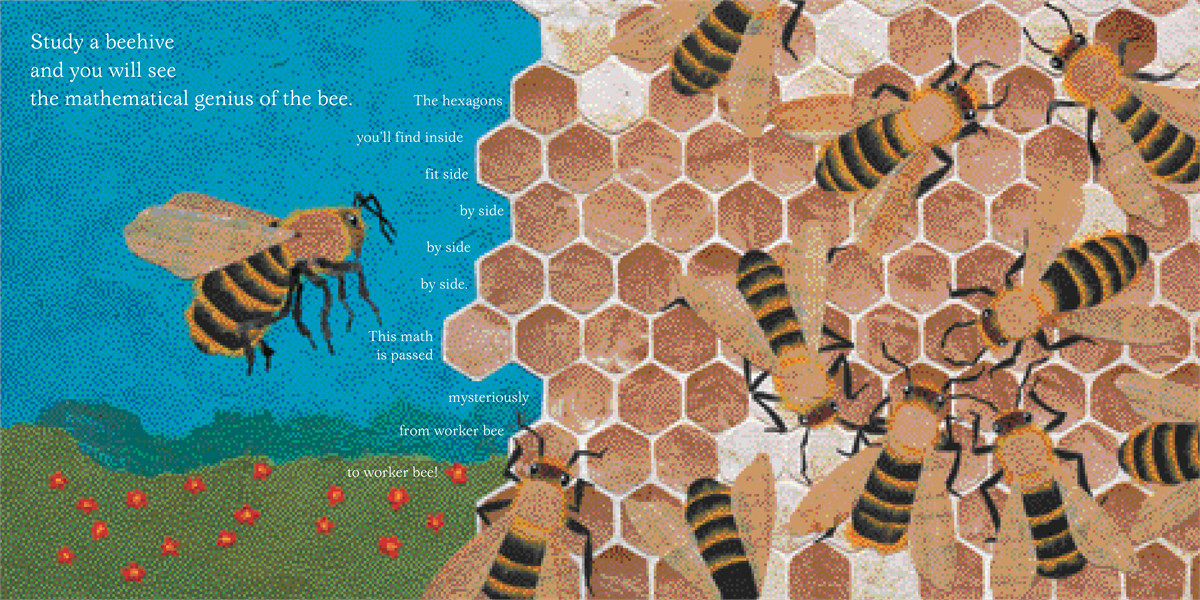
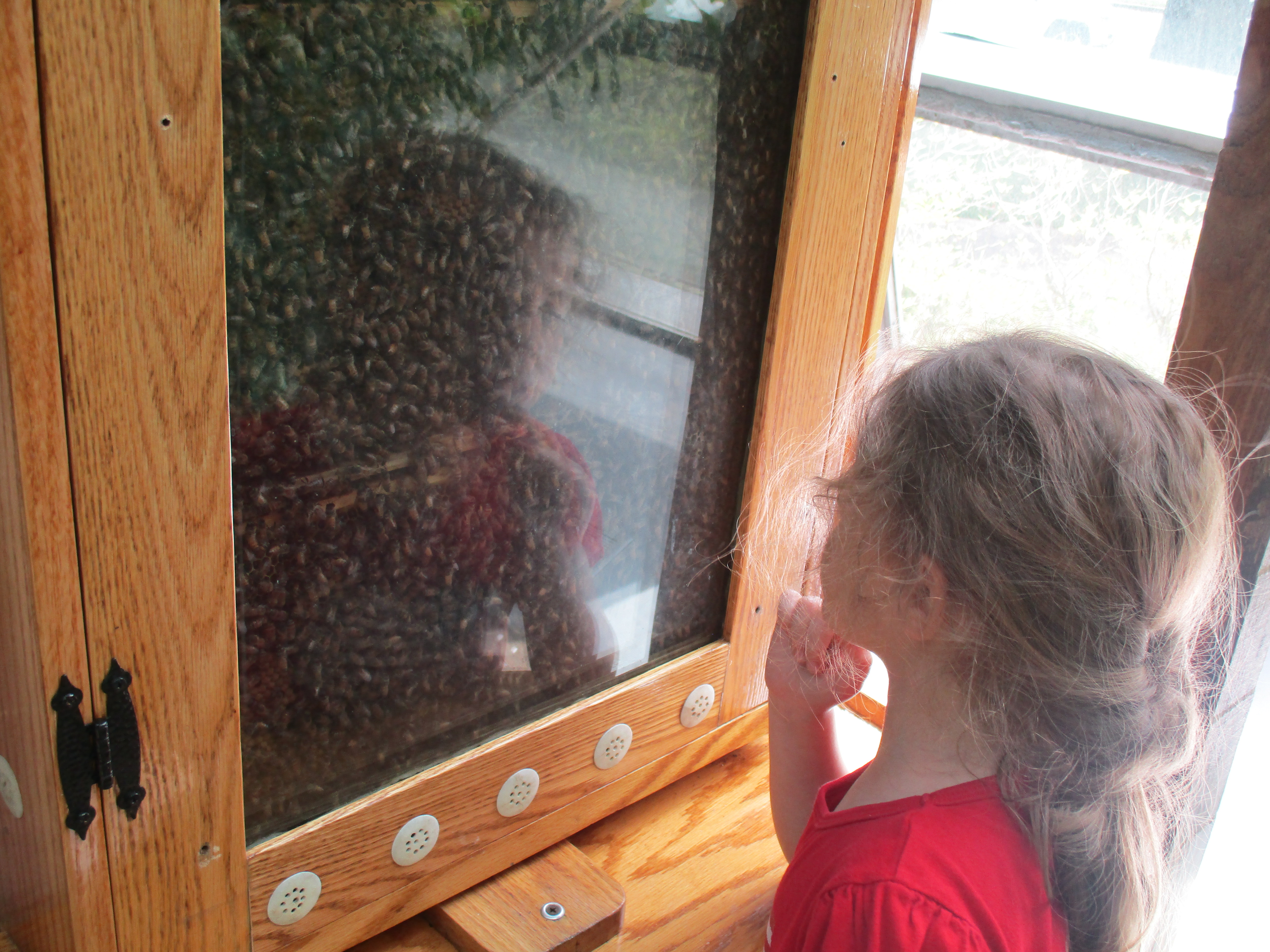
We also fell in love a little with Bees, Snails, and Peacock Tails. Kiddo is pretty fascinated with bees, so even while surrounded by gorgeous butterflies around the world in the Cockrell Butterfly Center, she finds the bee hive and watches them the most.
So now that spring has passed and summer is upon us, we’ve burned up all the vacation days I possibly could trekking around, established our garden, and purchased a fishing license for my days off.
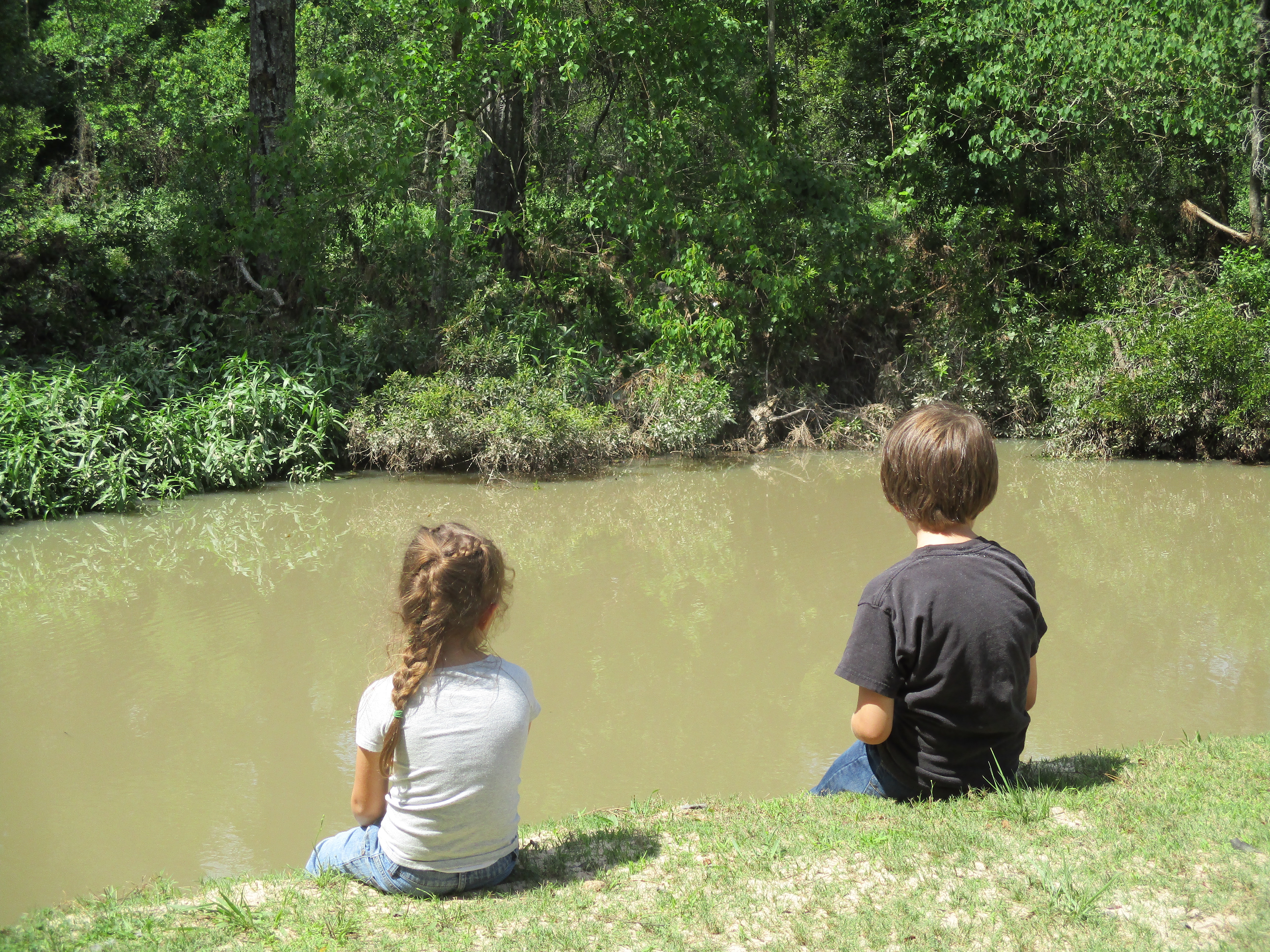
Fishing mostly looks like kiddo playing with a pole, naming earth worms, sinking our toes in mud, and me lounging lazily in the sun, but we pretend we care about catching things – sometimes.
Wild
I wrote this review for work months ago , and it was posted on our website for a time, I think. I suppose it’s about time I share it with my own audience.
Title: Wild
Author: Cheryl Strayed
Wild, by Cheryl Strayed. It is what it sounds like: a memoir about an out of control woman who strays. It could very easily be placed in the same category of Eat, Pray, Love, by my Christian counterparts especially, but somehow I can’t lump the two together. As a writer, Cheryl has more Bill Bryson (author of A Walk in the Woods) qualities than Elizabeth Gilbert ones.
Cheryl is lost, inappropriate, cheats on her wonderful husband, divorces, does heroine, has almost a complete disregard for herself while simultaneously worshipping her own wants. It should not make for a good read. But somehow it does.
Cheryl doesn’t relish in these moments. She doesn’t glorify them or justify them, she just tells her life how it was, and how she discovered that being comfortable in your own skin, alone, in the wilderness, can be just the provision a lost soul needs. She doesn’t abandon a marriage for a grand tour and love affair with an air of flippant disregard- instead she tells a story of how when you have a huge hole in your heart you drown yourself and everyone around you.
Though the Pacific Crest Trail is long and grueling, Cheryl’s book about her trek is not. She is down to earth, shockingly honest, clever and witty about her past ignorances, and leaves you feeling a sense of hope for not just yourself, but for everyone who struggle.
Spike and Spanish
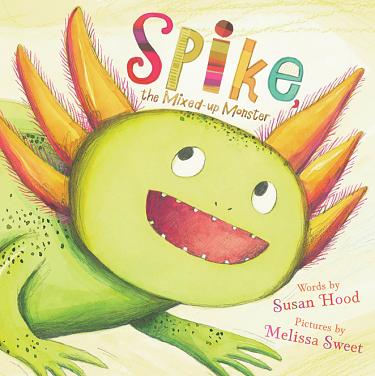 Title: Spike, The Mixed-Up Monster
Author: Susan Hood
Illustrator: Melissa Sweet
Genre: Picture Book
Ay, caramba!, we just read this before bed this evening and we love it! First off, I’m a sucker for an axolotl. I discovered them about two years ago when an avid reddit surfer sent me some images they had found. Strange but cute creatures are kind of our thing, and an axolotl definitely fits the bill.
I remember thinking there should be a picture book about them. I love kids picture books featuring the odd ducks of the planet and offer educational value at the end of the story. I have tons of them lined up in my head that I haven’t written yet. My favorite thing about Hood’s book is that she incorporates Spanish words through out the story and the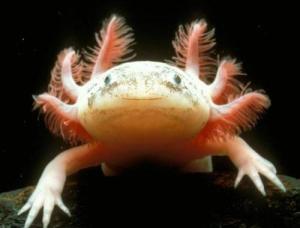 last few pages include research about the creatures who made an appearance. There’s so much educational value to this book and I can’t wait to own a copy. (We read from a library book.)
Referred to as a water-monster by the Aztecs, I was introduced to these tiny creatures as Mexican Walking Fish. Either way, they are super cute, come in all different colors, and if ever there was an animal worthy of a picture book it would be this one.
I absolutely adore Melissa Sweet’s illustrations. They are bright and spunky and the kiddo was riveted by each and every page. Sweet captured the essence of the story with care and finesse and I look forward to seeing more of her illustrations on picture books in the future.

Springtime Means Seed Time
We are kind of in love with our librarians at this “new” library branch. We loved our librarians at the old house, don’t get me wrong, but these ones have definitely weaseled their way into our hearts. Case and point – there’s this adorable seasonal bin one of the children’s librarians puts together, and of course, we find the *best* things there.
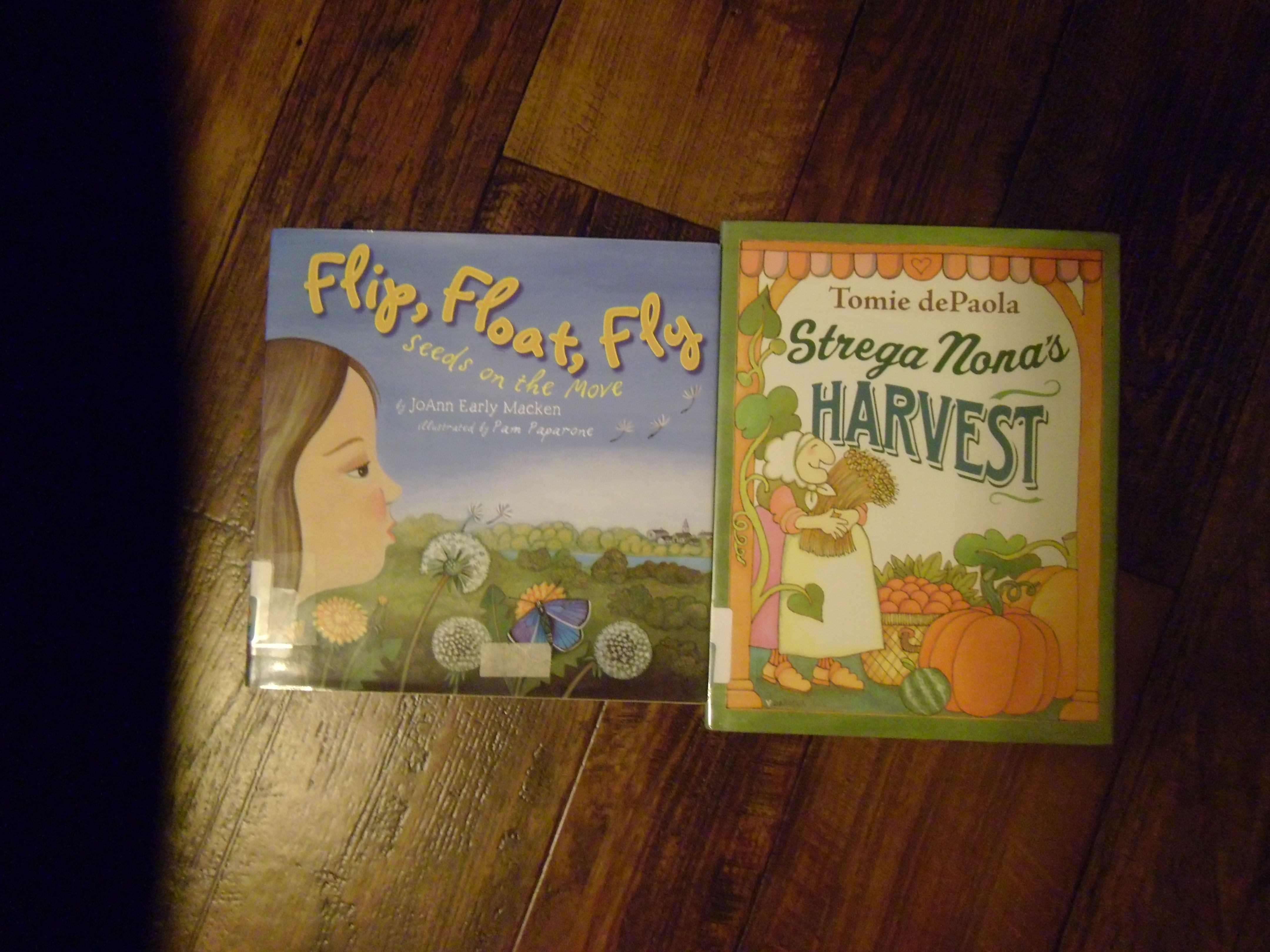 This week, it was Flip, Float, Fly
Of course, when we’re not reading and planting ourselves… we’re out and about playing in creeks and inspecting the forest.

Pheromones
Title: Bombardier Beetles and Fever Trees
Author: William Agosta
Publisher: Helix Books * Addison-Welsey Publishing Company
Genre: Science/ Nature
Length: 224 pages
It started because I realized I had used the word “pheromone” one too many times during every day discussions that week. It seemed from a biological standpoint my nose – and my whole body really – was on high alert. I could smell EVERYTHING. Which happens more often than I’d like. And not normal smells like the fast food restaurants when you drive by or someone’s overbearing perfume. It’s not even the homeless guy that comes into work from time to time. He’s odorous, don’t get me wrong, but those aren’t the smells I tend to notice.
I smell clean skin a lot. And not the soap that was used, just skin. I tend to pick up on not the typical overly sweaty man on a jog, but the very subtle clammy sort of sweat that someone gets when they are thinking too hard or are wearing the shirt they slept in. I can smell my daughter’s little curls – not the shampoo, not the preschooler desperately needs a bath smell, but HER smell. Obviously, I have a word and a basic gist of why humans respond to these smells (whether they are aware of them or not), but I wanted to know more.
The library has NOTHING on people. So beetles it was.
And Agosta is fascinating. I love this book and plan to purchase it for kiddo to read for a biology course when she’s older. It’s smooth reading, has a lot of information, and has taught me something new about a subject I was already interested in (nudibranchs) that I wasn’t aware was going to be included in this title. Agosta goes over caterpillars and butterflies, discusses spiders and their silk, and even talks about plants, opium, and medicinal remedies.
Definitely loved every word and page and am now moving onto Wyatt’s Pheromones and Animal Behavior. Pipe in if you’re interested in a discussion.
Maple & Willow
Title: Maple & Willow Together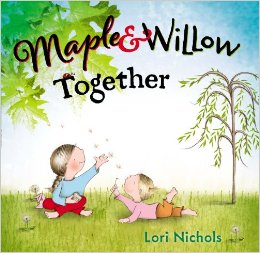
Author/Illustrator: Lori Nichols
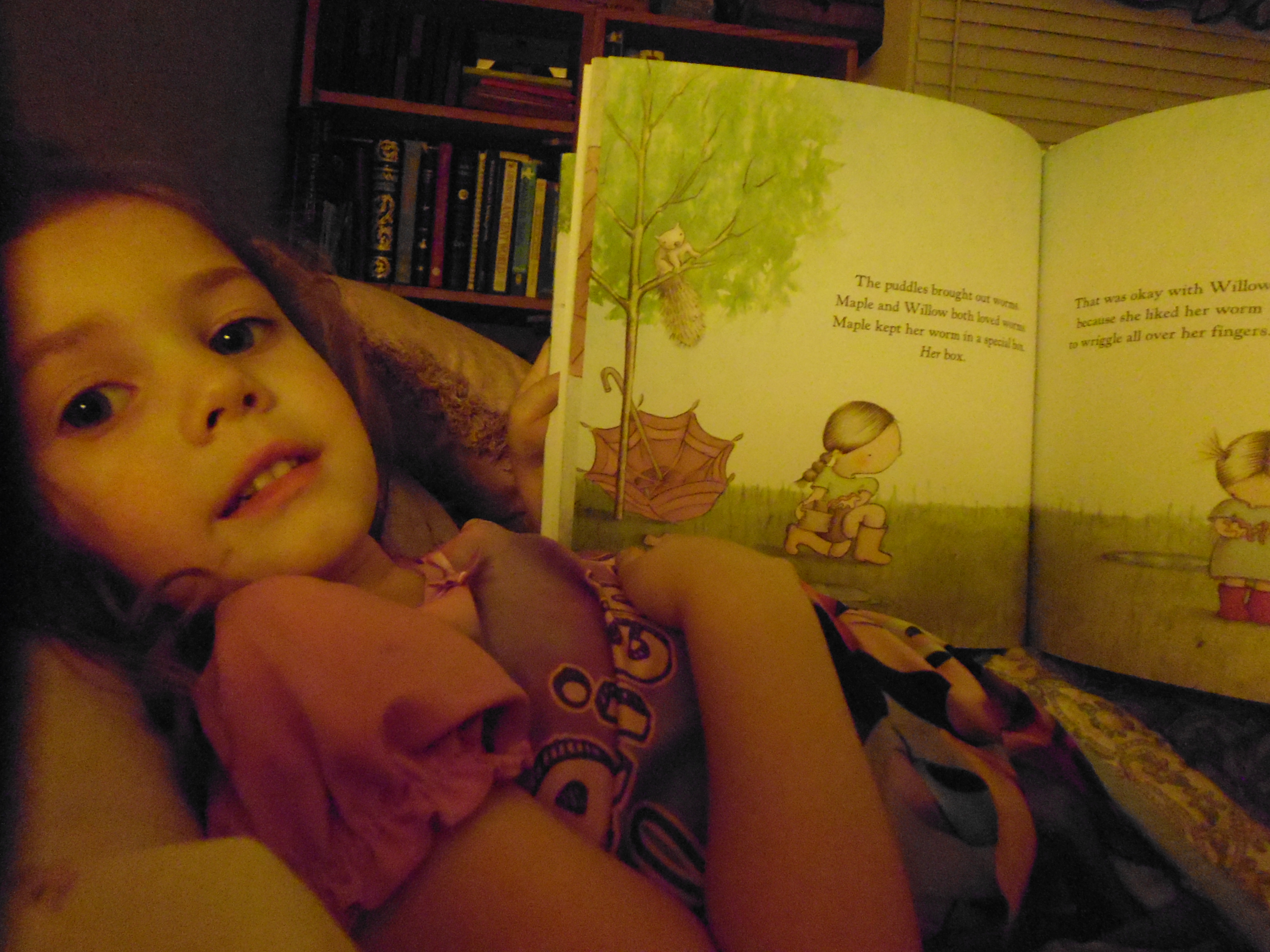
I would have gotten this review up earlier in the week except every time I pick it up to look at it the kiddo stops me and says, “Oh Mommy, read it again, it’s so beautiful.”
So we’ve read this on repeat all week and have yet to put a line down about it anywhere.
We love that the girls are named after trees. We love that they spend 90% of the story outside. We love that they are sweet, sweet, but realistic sisters.
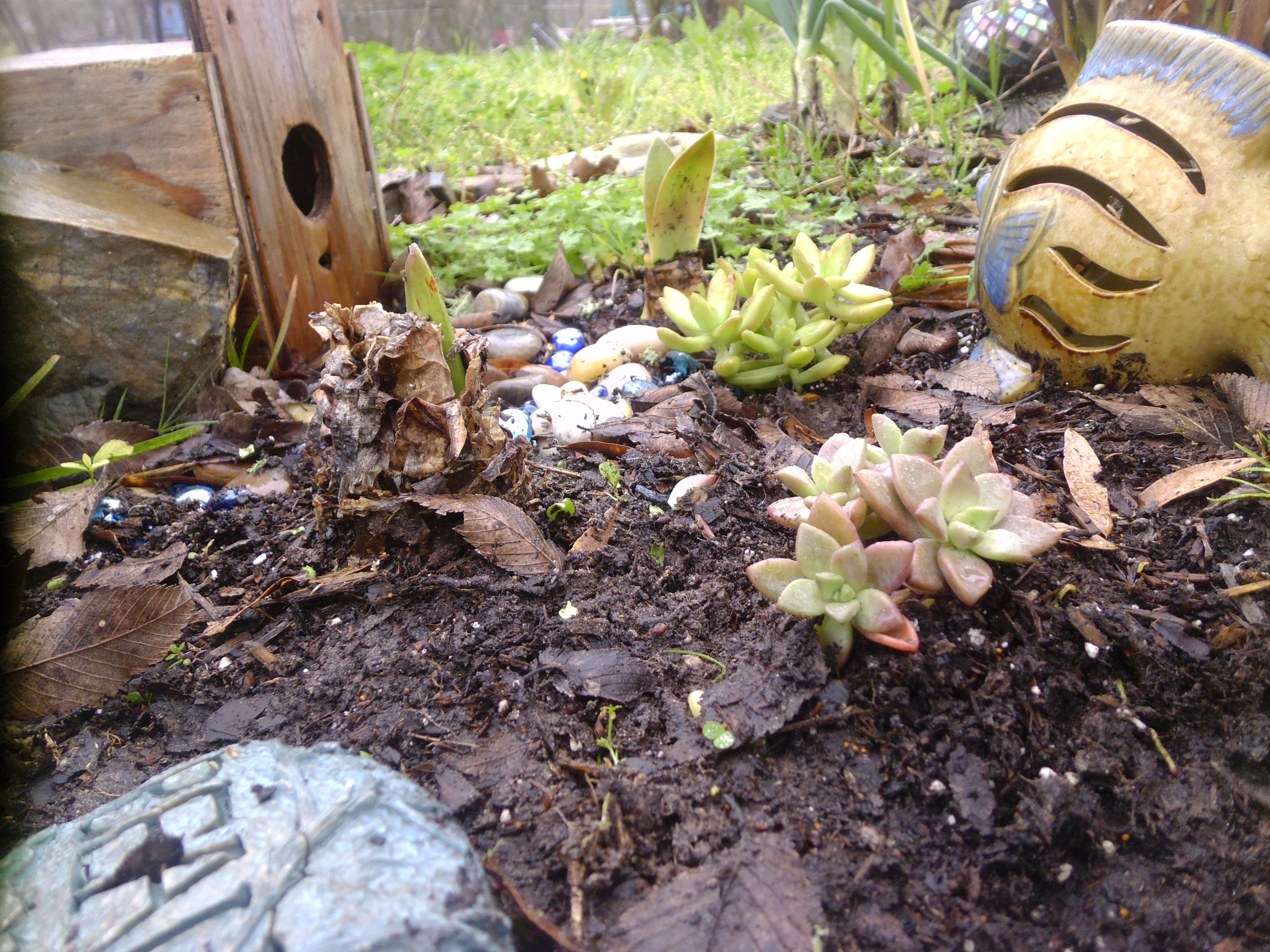
The girls play outside making fairy gardens and blowing dandelions – something we do a lot of. Collecting worms is also a household specialty; kiddo once delivered earth worms to my sister’s kitchen table and insisted they have lunch along with her and her cousins. My sister was none too thrilled about this and sent kiddo and the worms back outside where they belonged.
We love how familiar the girls’ lifestyle is, how much these aspects of their lives are in fact the best parts of childhood. We love… well, we simply love everything about them. Kiddo has asked that I buy this one for our collection, as we picked this up at the library. We will do just that as soon as I find it. We’ll purchase the other books in the series as well.
Swirl By Swirl

Title: Swirl By Swirl
Authors: Beth Krommes & Joyce Sidman
Genre: Picture Book / Educational
We actually read this one quite a bit ago, I was hoping to review it when I finally got around to purchasing it, but I can’t wait any longer. It’s too wonderful to keep under wraps any longer and it has been an inspiration to my kiddo who now draws swirls and “round ups” into all her artwork.
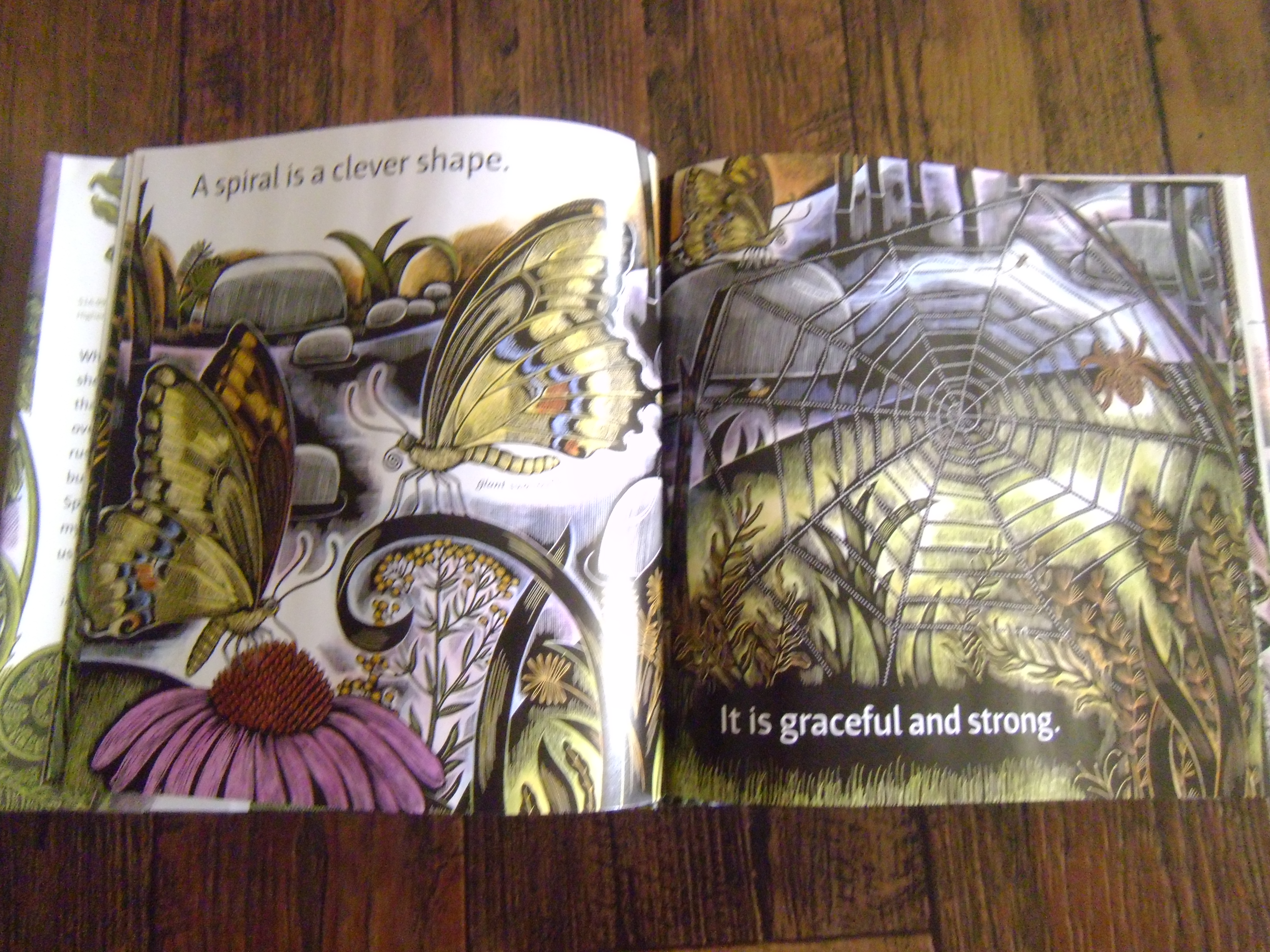
The book is all about finding math in nature. About how snails, flowers, and everything have mathematical patterns that create functional things we can see. It first page by page identifies all these things… spider webs, tendrils on foliage, the curls of animals’ tails, etc.
Then, it explains the how and why of it all.
Kiddo’s eye lit up at the end of the book every time (we had to read it over and over again before we turned it back into the library). My four year old’s mind was blown.
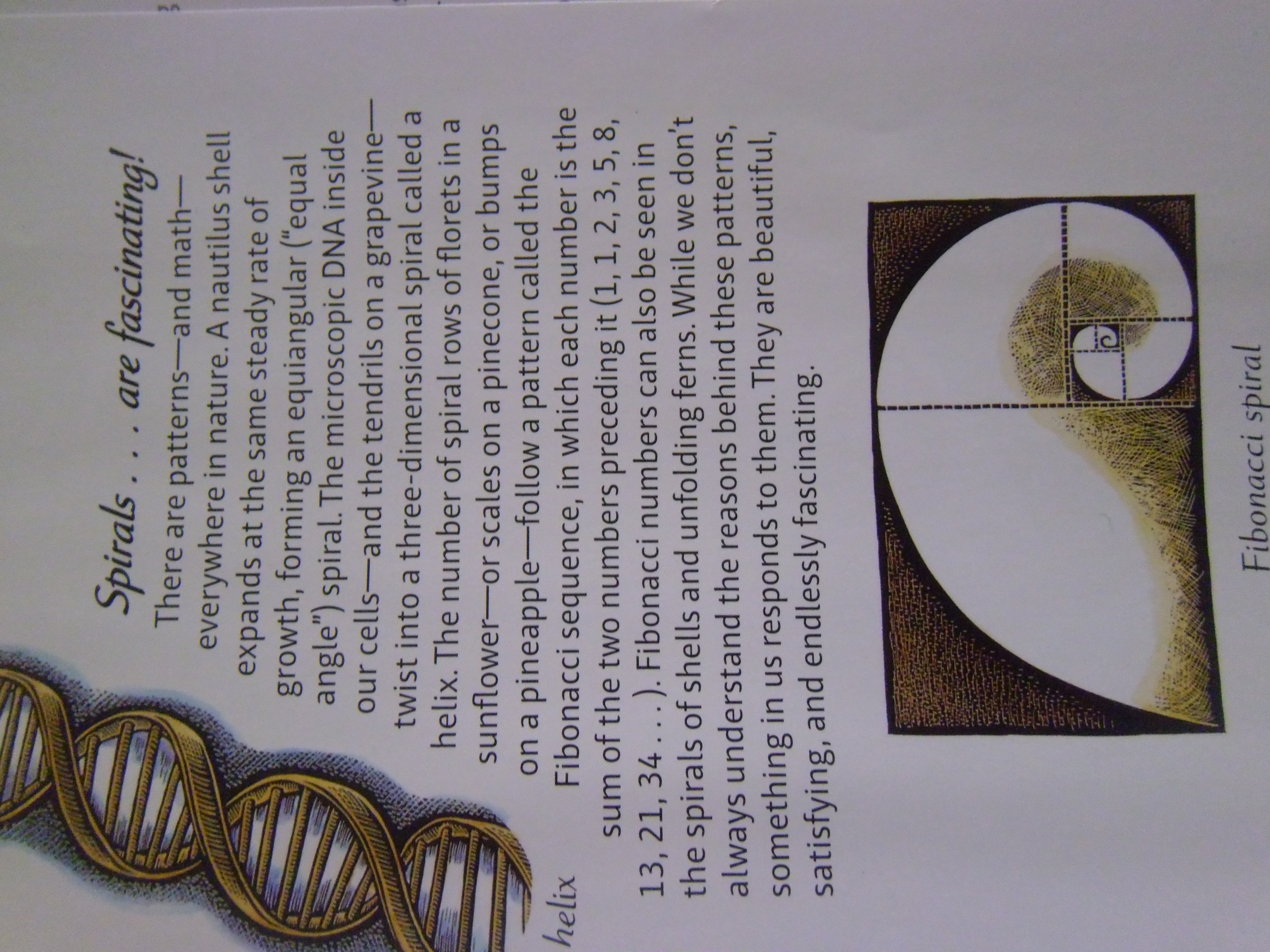 I want to have this book on hand when she’s older as well, to revisit and enjoy the beautiful illustrations again and again through out her studies. It’s so lovely.

Hello Wilderness, We’ve Missed You
Since moving away from our beloved Timberlane Estates, we’ve been in dire need for nature. Especially with this winter we just had – harsher than I remember winter being – wet, muddy, colder sooner, and nowhere cozy to defrost. Temporary living arrangements have caused us to leave the comfort of having a nearly 1000 square foot library just down the hall from our beds. We also don’t have a fireplace here. It’s been a long time since I lived without a fireplace. But the change is good, it’s helped us redefine necessities, discover the beauty of new public libraries we hadn’t yet visited, save m oney for the land and dream home we want, and teach our daughter lessons she might have otherwise missed.
We’ve also discovered the Lake Houston Wilderness State Park. We went from 100+ acres of trails and exploration that we knew like the back of our hands to not having anything most of the winter, to Lo! And Behold! 4700+ acres of trails and wilderness closer than we could have ever imagined. Ask and ye shall receive. Take a ride down the highway and pay attention to those marvelous brown signs!
It costs $3 per adult to get in, kids under 13 and senior citizens are free. OR (and this is what we’ve done) it’s $25 for a year pass for an adult and three adult guests; basically, a family pass.
We’ve been back about every other day since we’ve discovered it. We walk, tromp, and read. We snack and picnic, we play in the creek, we stare at the trees. We read all the sign posts and discover new plants we’ve never heard of. We soak up vitamin D and work our muscles.
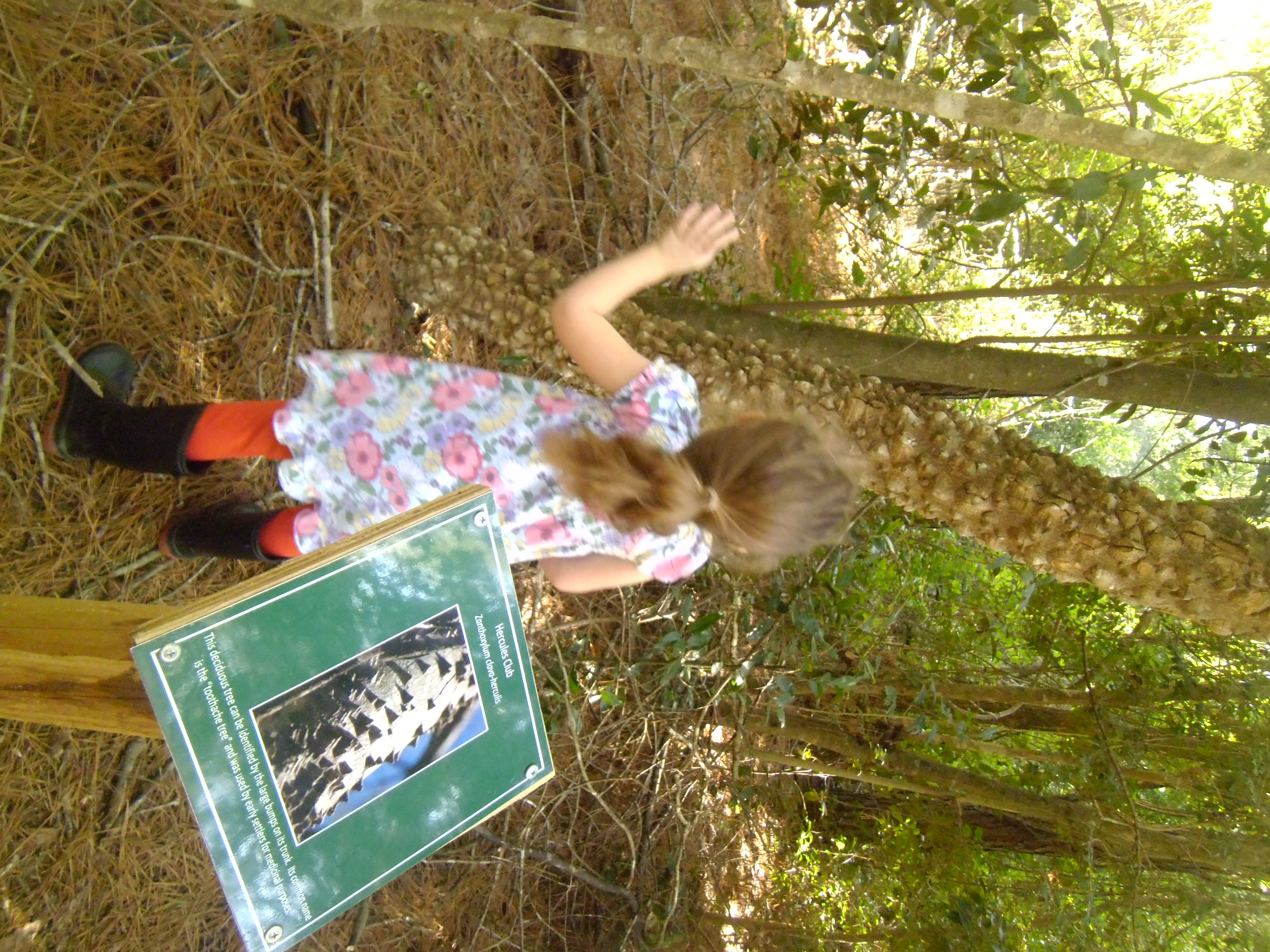
To the left you’ll see a Hercules’ Club. We were pretty excited about this discovery and did a mini-research project on it when we got home.
In all this much needed tromping and new library resources at my fingertips, I stumbled across a Guide to Wild Foods and Useful Plants



 Anakalian Whims