Education is a Lifetime Pursuit
“Education is a lifetime pursuit.” I tell my daughter this constantly. It is our household motto, so much so, I would not doubt if I had already posted something with the same title before. I even hope that my readers already have read this phrase.
I am a homeschool mother. I am, in the deepest parts of my soul, a teacher. I always have been, and have been overzealous about it since I discovered the classical model. What I have loved about the classical model most is the ease in which I can continue my own education while I educate my daughter. She memorizes facts and dates in the grammar stage and not only do we supplement with rich literature to help her remember, but I get to pluck out related reading material for myself. Individually, I learn and teach the classical model… as a household, we are constantly involved in “unit studies” that are structured chronologically throughout history.
While she was memorizing history sentences about Christopher Columbus, the Pilgrims, and eventually the colonists dumping tea into the Boston Harbor, I was reading Changes in the Land: Indians, Colonists, and the Ecology of New England by William Cronon.
First published in 1983, Changes in the Land is the earliest book I know of written directly about environmental history, not part of a political movement. Everything I’ve read published prior to this book are either beautiful transcendentalist nature essays (Emerson, Thoreau, Bronson Alcott, etc.), geological science books (Lyell, Stenson, etc.), or solely activist tree-hugger type stuff. In fact, I think it paved the way for books like the one I read recently (and thoroughly enjoyed) while she learned about the gold rush called Hard Road West: History and Geology along the Gold Rush Trail, whose author also crossed genres by highlighting the land, and all the things that make it what it is and the men who mar it, as the main character in the book’s story.
The biggest thing the two books have in common, for me, is at the end of each I thought, “This must be required reading for high school students.” After all, how do you learn history of a place without comprehending the blood, sweat, and tears, that was shed on it and ALL the reasons why, not the just the wars, but trails cut, deforestation, farms, dustbowls, mining… and not just focus on what it did to the people, but what it did to the land and how all that affects us today. Books like these are a beautiful marriage of history, social science, science, and more.
I love finding these gems as I sort through piles and piles of potential reading material, planning out lengthy lists of things to shape my kiddo’s mind. I love that my mind is also being shaped. I love that I am 35 and never done studying. I love that, in addition to growing my relationship with Jesus Christ and my daughter, education is my lifetime pursuit.
A Talking Dick Head
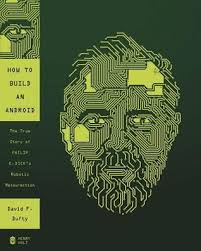 Title: How to Build An Android, the true story of Philip K. Dick’s Robotic Restoration
Author: David F. Dufty
Publisher: Henry Holt & Company
Genre: Technology
Length: 272 pages
Yesterday afternoon I messaged my friend after returning from running errands which involved the bookstore, lunch with my daughter, Hobby Lobby, and of course – the library.
“So I know you’re at work, but did you know that in 2005 some scientists made an android that looked just like Philip K. Dick and one of them LEFT HIS HEAD ON A PLANE! The robotic Philip K. Dick head has never been found. Some super nerd freak has his head somewhere. (And I’m jealous.)” I said.
“We must search for this robo head.”
We certainly do not plan to go searching for Philip K. Dick’s robotic head that has been missing for a decade. The police have not found it and ended their search a long time ago. The creators aren’t even looking for it anymore. It was never insured, so there was nothing fraudulent about the circumstances. But someone, somewhere, in a very A Gentle Madness style, is hoarding Dick’s head in their basement – probably in Washington State… or Orange County… or well, anywhere the airline could go.
Dufty’s recount of the building of the android and his version of events at Comic Con and other such places is a fun, light, entertaining read that I read in two sittings. It’s fascinating that so many intelligent people were involved in such a large scale plan that ended in something Philip K. Dick would probably determine predestined and foreseen. They made an android of the author who wrote Do Androids Dream of Electric Sheep? then lost its head. It’s a funny bit of irony, no?
The book isn’t just about building an android though, and isn’t as mechanical as you’d think. It’s got a lot of commentary about Dick, his life, his themes, his work, and, of course, what makes a human human and an android a mere android. If you appreciate robotics or are a Philip K. Dick fan, I recommend checking this one out sometime.
One Woman Everything
Title: One-Woman Farm

Author: Jenna Woginrich
Genre: Memoir / Farming
Length: 207 pages
I’m in research mode. I’m elbow deep in tree and herb encyclopedias. I’ve been reading every homesteading and nature memoir I can get my hands on. I’m scouring the fields, ditches, and woods for new specimens of plant life to identify, and I just helped my mother-in-law build a compost bin.
One-Woman Farm was one of the recent memoir selections, and it was a breeze to get through. Daily journal entries, basically, of farm life through out the year, the author’s quest for a Fell pony, and to learn to play the fiddle.
I enjoyed reading Woginrich’s book mostly because I want to homestead… but I don’t want what she has. She’s too far north. I want more plants and fewer animals. I want the freedom to get up and travel when the inevitable wonderlust kicks in. I don’t want to be a one-woman farm, I simply want to do EVERYTHING, and also not quite that much. But it was nice to live a year in her shoes for a bit, and I would like to select baby chicks and hold a baby goat. I would love to have fresh milk in the mornings…
The book is full of sweet illustrations as well, which made it spunky. Her talk of pigs felt more in depth with a pencil sketch of a pig sharing the page. Faux paperclips in the margins, like a well-worn guide book to life. Typed recipes and quotes added a richer flow to her sparse text.
Now on to the next… I’m reading The Last Great Walk by Wayne Curtis and The Quarter-Acre Farm by Spring Warren.
Finder’s Keepers
 THE WEEKLY LOW DOWN ON KIDS BOOKS
Title: A Rock is Lively
Author & Illustrator: Dianna Hutts Aston and Sylvia Long
Genre: Non-fiction Picture Books/ Children’s
As a child, I collected rocks. I think many children do this… bright, shiny objects with a splash of color are enticing. Small pebbles from river sides are exciting and make you feel like a million bucks when they are so tiny in your own tiny hands. I had a rock tumbler and every little piece of nothing could be made magical. On family vacations I used my pocket money to buy gems and stones native to the area we were visiting. With my sister and cousins, we would go on exploratory rock hunts together. I remember hearing shouts of: Finder’s Keepers!
I have also always adored books, and as an adult I try to find the most awesome of children’s books to share with my daughter. Last week at the library, while I browsed the children’s section of Baldwin Boettcher, I stumbled across A Rock is Lively
Except I will have to return this particular book and go buy a copy.
A Rock is Lively is an excellent introduction to geology – for all ages. My daughter will be three in October and she was riveted by all the colorful detail of gold, amethyst, peridot, and gypsum. The page about how rocks are mixed up and the description of how calcite, sodalite, pyrite, and lazurite becomes Lapis Lazuli excited her. She enjoyed telling me about all the colors she was seeing as I told her what the rocks were called.

Over and over again this week she has brought me the book, “What’s that?” she’ll say as she points to hematite… “What’s that?” she asks as she opens up the two page spread on obsidian. “What’s that?” she wants to know about the geodes…
A Rock is Lively is a must have. We will definitely be finding our own copy to own as well as the other books in the series: An Egg is Quiet, A Seed is Sleepy, and A Butterfly is Patient.
Magic Tree House Adventures – Knights!
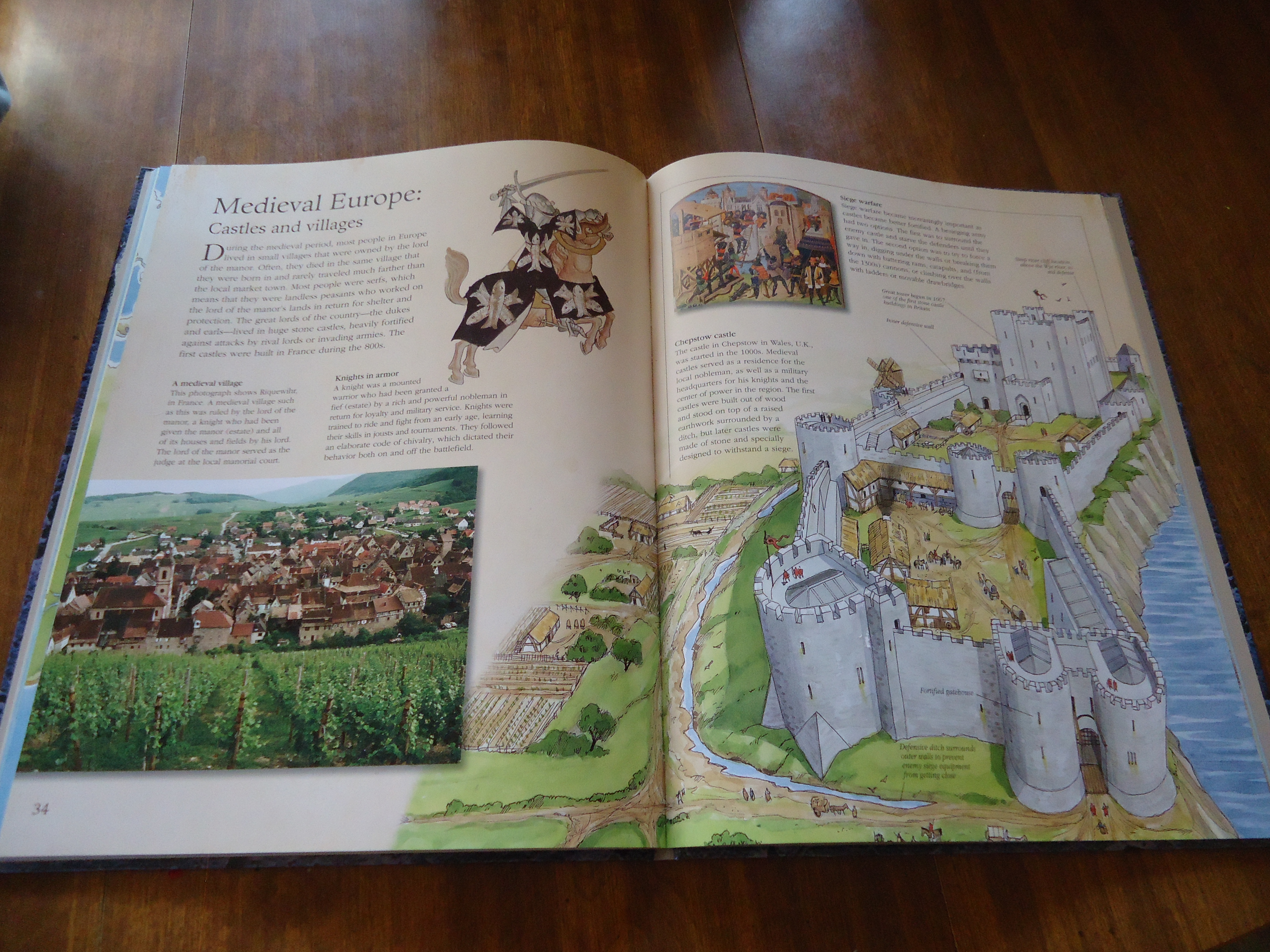
The Kingfisher Atlas of the Medieval World
(… Castles! And Medieval Times!)
 Today we read up on everything Knights and Castles
“A Feudal System has four parts! From top to bottom it goes: King, Barons, Knights and Serfs!” Sadly, I’ve already forgotten the tune to which we were singing/chanting this bit of information, maybe one day it will come to me again, or maybe we’ll find a new tune. Either way, munchkin was climbing in and out of the laundry basket this morning singing, “King! Baron! Knight! Serf!” so I win.
 It was at this point that I decided: in addition to reading through this pairing and prepping kiddo’s future education (when she’s old enough to tackle these projects properly with crafts, writing assignments, and vocabulary tests), I’m going to blog our prepping routines… separate from the Weekly Low Down on Kids Books installments. I know I will find it handy for when we repeat this reading exercise in a few years, but maybe someone else can find it handy now.
I can’t wait to take the kiddo to Medieval Times. I’ve always enjoyed the place and once she is old enough to go, I think it would be a great way to end an educational adventure. As she’s only two and today’s reading was somewhat (though not completely) impromptu, I took her to the closet thing to a castle we have readily available.
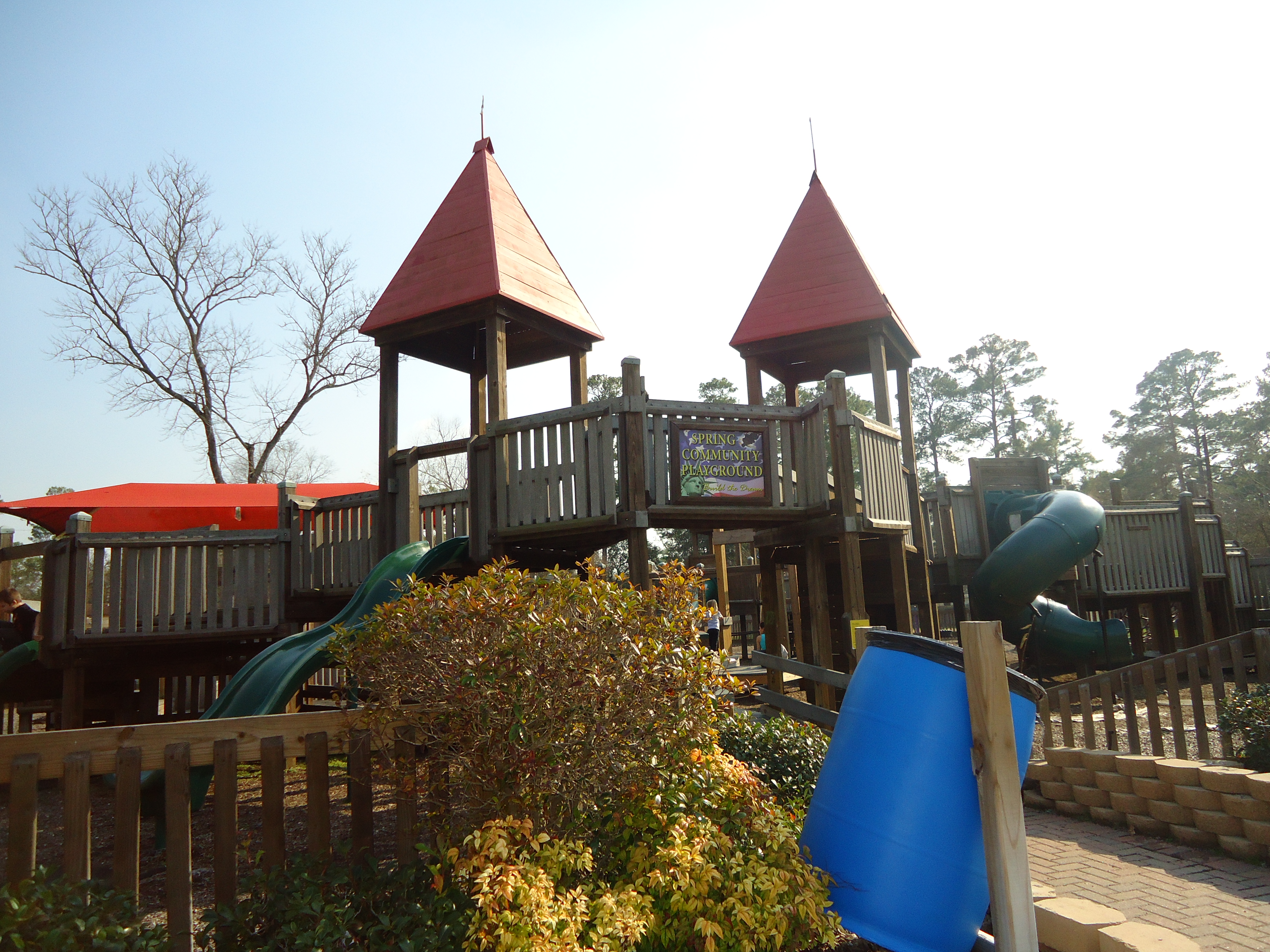
The Spring Community Playground, part of Liberty Park looks like a giant, wooden castle to me. It has several keeps, a palisade, horses to ride, and all sorts of castle/fortress styled fixtures. According to the park’s website:
This playground was built by the Spring community for the betterment of the Spring community ultimately for the enjoyment by our children with community donations and community volunteer labor. It was built in 5 DAYS from January 29th to February 2nd 2003 with over 900 community volunteers. A large majority of the volunteers were parents, grandparents and friends of students from Hirsch, Smith and Jenkins Elementary Schools. We also had volunteers from Austin, San Antonio, Dallas, Houston, Kingwood, Conroe, Laredo, and Mexico.
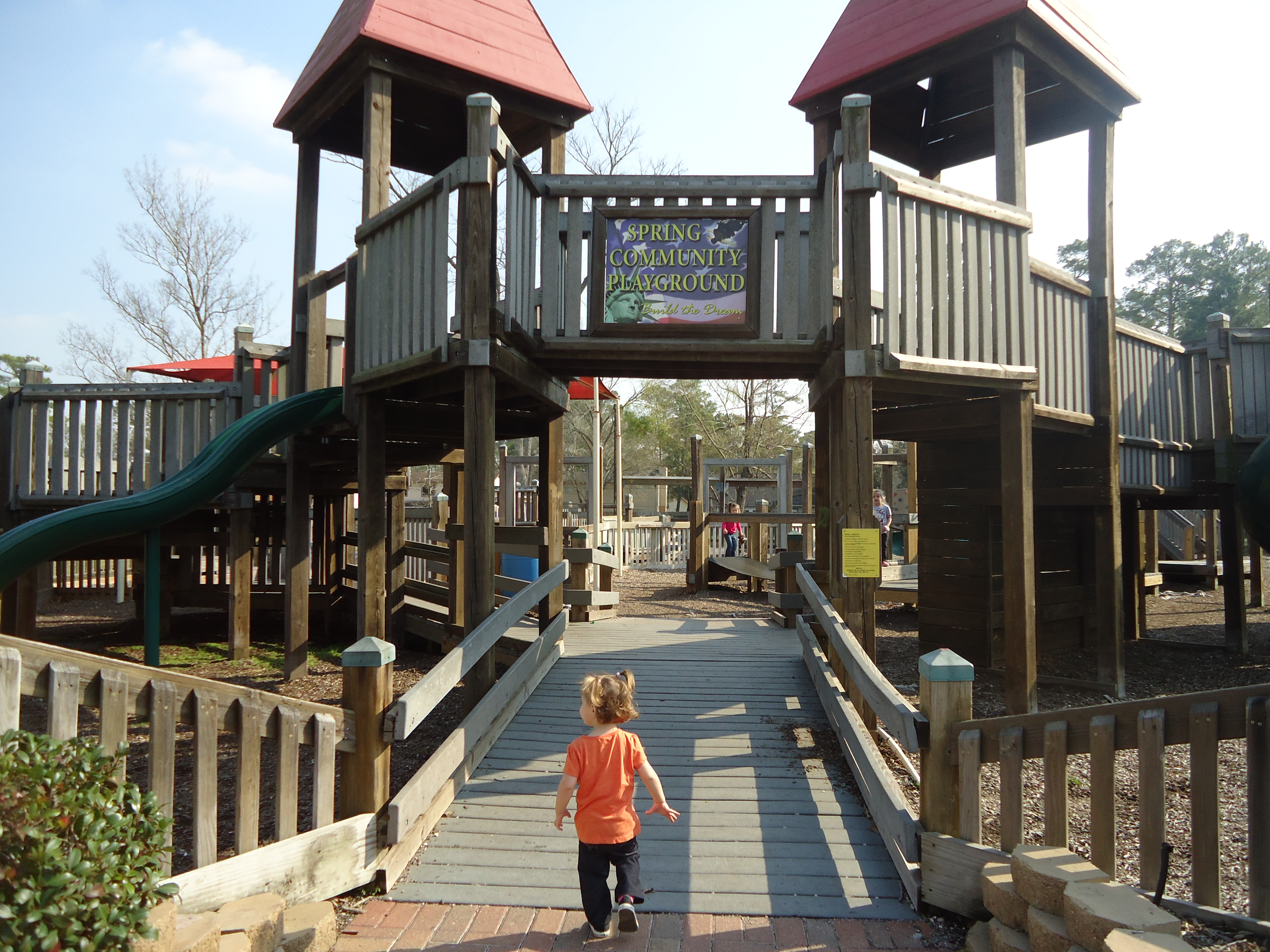
Obviously, there’s a huge difference between this and an actual castle! But it’s fun to walk the park and read the engraved pieces of wood that tell who donated what. I want the kiddo to grow up with a strong sense of community… our neighborhood is our manor, and all that.
When she’s older, we’ll be able to spread the study over the course of a week and add more books and activities. For instance, on day two we could read The Time Warp Trio
This unit would also be a great opportunity to spend the week going through one Sir Cumference book a day for the start of math lessons.
For lunch, I’ll take the opportunity to serve “feast foods.” I found an entire web page dedicated to recipes of the day, and I love to eat to match our educational themes. Plus, I want my daughter to know her way around the kitchen before she goes off to college, unlike me. So as she gets older, we’ll be making all our meals in the kitchen together – themed or not.
I would definitely try to work in her first horseback lesson during this week if she hadn’t started them already, after all knights, caballeros, Ritters, and chevaliers, are all just soldiers on horseback, as the MTH Research Guide will tell you.
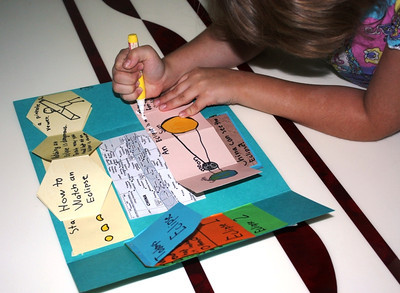
Click image to visit a lapbooking tutorial website.
For the most part, though, we will spend our days reading, making lap books, journaling what we’ve learned, playing dress up, and gearing all our artistic energy at the topic. Homeschool Mom and Blogger of My 2 Small Boys has images of her kids’ notebooks on Knights and Castles here: http://my2smallboys.blogspot.com/2012/01/middle-ages-knights-and-castles.html.
When the weekend roles around, if the study lands in the summer, perhaps we will go to the beach and build sandcastles; If in the fall, maybe we’ll head out to the Texas Ren Fest.
Knights and Castles Library List
Saint George and the Dragon (a great precursor to have on hand for Spenser’s The Faerie Queen, we’ve already read it quite a few times)
Castle Diary by Richard Platt
The Knight at Dawn by Mary Pope Osborne
Knight by Christopher Gravett
Knight ~ A Noble Guide for Young Squires
100 Things You Should Know About Knights and Castles by Jane Walker
If You Lived in the Days of Knights by Ann McGovern
Castle: Medieval Days and Knights by Kyle Olmon
Knights in Shining Armo by Gail Gibbons
Knights and Castles by Seymour Simon
The Usborne Book of Castles by Lesley Sims and Jane Chisolm
What If You Met a Knight? By Jan Adkins
Imagine You’re a Knight by Meg Clibbon
Take Care, Good Knight by Shelley Moore Thomas
The Knight and the Dragon by Tomie DePaola
In the Castle by Anna Milbourne
The Castle That Jack Built by Lesley Sims
The Tournament by Heather Amery
Some more ideas: http://www.angelfire.com/dc/childsplay/castleunit.htm
Weekly Low Down on Kids Books – Dinosaurs!
 I read Magic Tree House #1: Dinosaurs Before Dark
We had to stop a few times to draw a rhinoceros onto our ‘R’ page, check out whales and their sizes in relation to dinosaurs in our encyclopedia, and to correct behavior as she climbed in my living room window sill that is about three and half feet off the ground. We even had a brief whistling lesson after reading how the wind was whistling around the tree house. Overall, she enjoyed it, so we moved onto the Research Guide
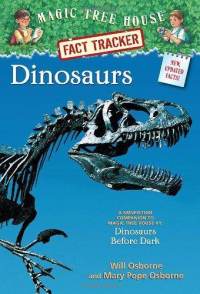 Mary Pope Osborne and her husband Will Osborne joined forces and started writing nonfiction companion books to the fictional Magic Tree House adventures. When I first discovered this, I started purchasing them in pairs, vowing to use them as fun assignments while home schooling. I’d like for kiddo to grow up in the habit of reading a nonfiction title that somehow relates to every fiction title that she devours, expanding both her facts and her imagination. What better way than to start with research guides to her first chapter books?
Why am I reading these to her so early? Frankly, it’s quite hilarious to watch a two year old run circles in your living room chanting, “Fossils! Minerals! Dinosaurs!” at the top of her lungs, while her dog (who happens to be the biggest one we own) lays in the center rolling his eyes.
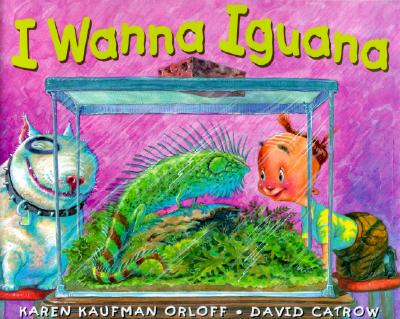 Chapter three of the research guide Dinosaurs talks about iguanas and how Gideon Mantell though the dinosaur teeth he and his wife found were giant iguana teeth. Of course, we had to stop to re-read I Wanna Iguana
All in all, we had a good ‘school day’ this morning, something we have been working on being more diligent about now that kiddo is two and it has actually managed to get too cold to venture out as much.
City of Fallen Angels and Lilith Lore
Lilith in Atrology, click to read more
*Spoilers*
I sat down with City of Fallen Angels over a week ago, but just finished it this morning. The first half was hard for me to get into, having the melodrama equivalent of The Twilight Saga’s New Moon
I have many interests, and though I tend to purchase books sporadically, when reading through my TBR’s I’d like to think that I do it with a little finesse, with purpose. Years ago, I did a brief research day on Lilith, spawned from a conversation I had with someone completely convinced that Adam from Genesis had two wives. I was startled that someone would think this and wanted to get to the root of it all, and spent my astonishment reading through websites, encyclopedias, and other reference material. I have days like this, spent on a particular topic, often. Mostly I end up purchasing things to read later. Who would have thought that Cassandra Clare’s Mortal Instruments
So I plucked The Book of Lilith
The most confusing thing about Lilith (that Koltuv sorts out for the reader well) is all the contradictions embodied in her. She is supposed to be the first wife of Adam, equal to him being brought up from the dust like him, rather than a submissive form pulled from his bones. Yet, she is also a she-demon, according to many as powerful as God, equal but opposite. Some say she is God’s concubine, some say she is Lucifer’s current wife, but still Adam’s ex. She is often linked or married to the King of the Demons known as Samael. Sometimes Samael is thought to be equal to Lucifer, and sometimes he is thought to be Lucifer’s version of Adam, his own creation. All the mythology overlaps making Lilith a strange, cloudy line between humanity and Satan, but always the opposite of Truth, Goodness, and Steadfastness in every way. These characters are full of secrets and lies, evil, and are ever changing according to the story tellers grasp and manipulation. One would expect nothing less from those who are supposed to counter balance God.

Lilith in History, click to view a concise but informative website
The most consistent version of Lilith is that she is a succubus for men, and “for women she is the dark shadow of the Self that is married to the devil” (Koltuv). Like Cassandra Clare’s character in City of Fallen Angels, she is a baby killer and is known as the goddess of dead children, Clare uses this concept as a cult inadvertently kill their offspring via demon blood while trying to please her.
So tied to feminism and the uterus, people also believe that she is ever linked to women in the form of the curse of our menstrual cycle. Tethered to our raging hormones, sexuality, and PMS. This line of thinking eventually made possible the transition of Lilith of evil she-demon to a goddess and Feminist icon/idol. It is amazing that this mythical creature has managed to be so many things (even a screeching night owl and a Leviathan)! Some of the discrepancies can be attributed to the idea of there being two Liliths: a Grandmother Lilith (married to Samael) and a Maiden Lilith (married to a dark prince of demons, Ashmodai).
I find it all rather fascinating. Throughout history people have linked Lilith to hundreds of stories, and though I don’t belive any of them as fact (I personally plop her right in there with Zeus, Athena, and Buffy the Vampire Slayer), I find the use of her in fiction pretty riveting.
Crack in the Edge of the World
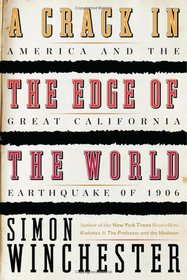
A Book Review
Simon Winchester never fails to fascinate and inform. When I picked up Crack in the Edge of the World, I was surprised to discover that the author I dearly remember for writing The Professor and the Madman (a history of the making of the Oxford English Dictionary) was also a geologist and highly knowledgeable in both language AND the science of rocks – what a foundation! This particular history on the great earthquake of San Fransisco met high expectations of Winchester’s talent compared to his previous work and I recommend this to anyone who likes history, science, or just plain good storytelling.
A Russian Study
Have I invited my fellow bloggers and blog-readers to my Russian study?
http://www.shelfari.com/groups/32350/discussions/182887/A-Russian-Study
Welcome to the Russian Study! We hope that everyone interested in Russia, its culture and history, and its literature, will enjoy perusing through and adding to this discussion. Feel free to add your own books to the list or read along with the ones already here below…
* Crime and Punishment – Dosoyevsky (fiction)
* Anna Karenina – Tolstoy (fiction)
* War and Peace – Tolstoy (fiction)
* The Magical Chorus: A History of Russian Culture from Tolstoy to Solzheinitsyn – Volkov (literary criticism, history)
* The Axe and the Icon – Billington (history)
* The Vision Unfulfilled – Thompson (history)
* Fathers and Sons – Turgenev (fiction)
* The Captain’s Daughter & Other Stories – Pushkin (fiction)
* One Day in the Life of Ivan Denisovich – Solzhenitsyn’s (fiction)
* Sofia Petrovna – Lydia Chukovskaya (fiction)
* I think some Robert Alexander historical fiction titles would do well at the end. One is called Rasputin’s Daughter, but he has many.
I have already completed Crime and Punishment, below is my official review:
Good book, well written, yet I could have gone my whole life without having read it and not felt like I missed out much. The final confession felt like the final moment in Moby Dick when the whale actually shows – all I could think was: “its about time.” Its on Bauer’s list of books to read before you die, which I plan to use as curriculum for my kid when I home school, but I’m not sure that I’ll make them read this, unless they are utterly captivated by it and want to – especially with Tolstoy next on the list. I was hoping to be more captivated myself.




 Anakalian Whims