Wild and Free

Once a year or so I choose an audiobook to listen to that is NOT for my children. I have an auditory processing disorder, which makes listening hard; but as a firm believer in working brain muscles, building skills, and asking for as few accommodations in life as possible, I work on my listening through audiobooks. It takes me months to listen to a book that I could otherwise read in an hour or two. (I read, according to my husband, extraordinarily fast.)
My audiobook choice the last few months has been Ainsley Arment’s The Call of the Wild and Free: Reclaiming Wonder in Your Child’s Education. I chose this one, frankly, because it was available on Spotify and as a homeschool mom for the last decade (and a homeschool aunt for the last two), I have tried to read anything and everything published on and within the homeschool community since my early twenties. It’s important to me to understand a lot of ideas to really feel comfortable choosing direction for our family. Although I firmly land in the Classical /Charlotte Mason corner of the homeschool realm, I have read a great deal on all the corners. I like that Ainsley Arment has as well. She has done her research, she has put in the hours, she is a fantastic source of information.
I needed the affirmation this week as I was recommending groups to new homeschool moms and realized I had been blocked from the one I was trying to recommend! I also, apparently, had accidentally been complicit to stirring a pot in another, by sharing it with people. You see, I classically educate my kids via the Charlotte Mason method, but I don’t limit myself to one particular curriculum or another. I refer to Ambleside Online, I look for ideas on The Charlotte Mason Cottage Curriculum, I utilize the free resources on the Well Educated Heart/Libraries of Hope website. I meet my kids where they are with resources I can afford. Many times I choose my own living books altogether, ones not mentioned on anyone’s published curriculum. For this, I’m not a part of any group. For this, I’m often evicted from certain communities for not doing the same thing the others are doing. If you don’t use Ambleside Online exactly as listed, I feel you are shunned by the AO purists. When I was using Classical Conversations resources as I saw fit, I was constantly admonished for not “trusting the process.” Veering my own direction as I meet the needs of my children is not leaving the path of God’s design, as I’m quite certain God does not have a hard rule on studying a specific topic in September verses February, or a requirement to do school for 8 months rather than year round, or that everyone has to been on the same exact topic at the same time in order to be part of a community. For this, I found Arment’s book a life giving relief after being a maverick black sheep in most homeschool communities. I show up for my kids to have people, I’m in the online groups for the exchange of ideas. I determined this week, I should probably just stay off the internet unless I’m blogging because my ideas are too fluid for those who write their own curricula.
The humor in this mentality amongst homeschool groups is that: aren’t we all bucking the system already? Why would those staying out of a system that doesn’t work for them choose to be a lemming in another system. Sharing ideas and curricula you’ve made is wonderful. I have some I’ve made as well; but when I share it, I share it knowing that it will (and should) be tweaked by the family using it. Why? Because each family unit is unique, each student is unique. I’m sharing what worked for me in case it works for you. I love reading through what works for others to see if it will work for me. The idea that our homes must all be identical is insane to me.
So without realizing it, I have embodied what Arment describes as “wild and free” for years, despite being methodical and extremely diligent. Being wild doesn’t mean abandoning guidelines, rules, or structure. It often comes with embracing rhythms rather than strict schedules. It comes with studying high school level Chemistry as an 8th grader, outside sprawled in the grass, but regularly sitting at the table for Algebra I. It means knowing that STEM can absolutely be prepped for through nature study. I actually had to defend that online earlier this week… the idea that a student can be fully prepped to engage in college level science due to their extensive nature studies was something I thought was common sense. Look at Isaac Newton, for example. People actually think you cannot study fractals and Fibonacci swirls, chemistry, physics, trigonometry, and calculus, without sitting in a classroom at a desk. I find this baffling. Nature philosophy is how every scientist from the beginning of time got their start, why does modern society discredit it so quickly?
If you are a parent doubting your ability to walk the homeschool path through graduation with you child, I urge you to read Arment’s book. Also try Julie Bogart’s The Brave Learner, Charlotte Mason’s Home Education series, and Law’s and Lygren’s How to Teach Nature Journaling or Anna Comstock’s Handbook of Nature Study. If you’ve been on the homeschool path awhile and don’t seem to “fit” anywhere, read The Call of the Wild and Free and know that it is ok. Your kids are learning, you probably do have friends, it just doesn’t feel like it sometimes when people get pigeon-holed into “you must do it this way or the highway” mentalities.
To anyone reading this, I do not subscribe to the practice of gatekeeping knowledge. My toxic trait is: the second someone tries to do so, I absolutely think less of them. After reading Arment’s book, I think quite highly of her.
Getting to Know Charlotte
A Homeschool Life…
When I was first sold on homeschooling, I was smitten with the classical model. I learned later that most “classical” models being advertised in the United States are actually “neo-classical” in practice. They have taken an essay written by Dorothy L. Sayers on the Trivium and pigeon-holed it into something it wasn’t exactly meant to be. The neo-classical model sort of married the United States educational “ideal” and pushes intense academia early, limits the elementary school years to a lot of memorization (the grammar stage), and taken to the extreme (like anything taken to an extreme), steals joy from students and teachers alike.
If you have followed my blog for the last fifteen years, you might remember me “homeschooling” my toddler. (FYI, pre-school is just parenting, not homeschooling. It’s literally PRE school.) Pressured by a narcissistic ex who demanded that my then three year old be able to read already (it’s not developmentally appropriate to force formal reading lessons on children under six), be able to copy out poems (it’s not developmentally appropriate to force small children to write, look up x-rays of their hand bones), and wanted her to be trained as some government super spy assassin (I am a third degree black belt in Kung Fu, but some people have watched too many movies and have no sense of reality and I used to be married to “some people”). Homeschool regret #1: giving into the pressure of my ex to do formal reading lessons because she was bright and could do it and I was hyperlexic and was reading at age three despite knowing that educational studies have long stated that formal lessons shouldn’t begin until six. Homeschool regret #2: ever handing her a worksheet in kindergarten, which wasn’t often, but still…
The things I am proud of, however, is that despite all this pressure, we always focused on living books above all else and I encouraged verbal narrations for years. I do not regret the neo-classical homeschool co-ops we joined (and left), they held an important role in our lives at the time and I met some cherished and beloved friends there even if I was regularly told: you’re not very classical, you’re too Charlotte Mason. The first time I heard that, I started doing some research…
I learned that Charlotte Mason was very classical, and what calls itself classical these days just isn’t. Honestly, it doesn’t really matter, what matters is that I still very much subscribe to both tactics of education and as my oldest is now in highschool and I have three more children with one creeping up on kindergarten (FYI: kindergarten is also PRE- school), I’ve been doing even more reading and research and want to share my favorite resources… the ones I don’t regret.
First: if you’re new to homeschooling or not loving your current homeschool rhythm, this is my favorite link to send parents: The Five Flavors of Homeschooling. I like to share this link so much, I have gotten restricted on Facebook as a potential scammer, despite not having violated the group rules in any of the places I posted it. Knowing your “flavor” can save you a lot of money on homeschool pursuits, and I definitely feel like (having been a single homeschool mom who wasn’t receiving child support that was owed) Charlotte Mason and Unit Studies are the easiest to accomplish for FREE.
Which brings me to my next two resources: Ambleside Online (not an online school) and Well Educated Heart, two curricula that are totally FREE. Ambleside Online is named “online” so as to not confuse it with the Christian private school based on Charlotte Mason’s philosophy still operating in the UK. It’s a full “scope and sequence” and any time you can’t find a title for free or a price you can afford, you can usually access it on Project Gutenberg or substitute it with something suitable. The focus is having the students read real books and source documents, narrating those books, and embracing the idea that Education is the Science of Relations by making connections to things they have studied and the world around them. Well Educated Heart is very similar, but clusters the material into something like unit studies, despite Charlotte Mason discouraging unit studies (because she wanted the children to make the connection, not have the teacher present the ideas already connected). Well Educated Heart offers their curricula for free and the feature I like most is that the audio files are also available on their site for… wait for it… FREE.
But wait, what is narration? That brings me to my third resource that I like to send people: Episode 7 of Cindy Rollins’s podcast The New Mason Jar. I had already read Karen Glass’s book Know and Tell (as well as Charlotte Mason’s original Home Education series) when I stumbled across the podcast episode and I think the podcast is a more approachable way for people to access the road to narration because (Gasp!) a lot of people don’t want to read the books (it actually drives me nuts, but I kind of get it: people are busy, especially mothers). The beauty of pursuing the art of narration isn’t just in the brain development aspect (which is phenomenal), it’s also the price tag… narration is… you guessed it… FREE. No fancy writing programs, no workbooks checking reading comprehension, no drama. A verbal narration costs nothing but the work of a brain muscle and a listening ear plus time. As the students get older a composition book and pen will do the trick. Charlotte Mason educations are truly thorough and affordable. I still teach essay writing, Charlotte Mason purists say they don’t, but a narration is basically an expository essay written beautifully. I still don’t use curricula to teach essay writing, we use narrations and read a lot of well written essays (and sermons) and writing memoirs. My oldest loved Zen in the Art of Writing by Bradbury (after reading Fahrenheit 451) and Zinsser’s On Writing Well. Her seventh grade year also included Annie Dillard’s Pilgrim at Tinker Creek and Writing Life. I think the inspiration of her favorite authors talking about their writing lives was the most effective writing tutor I could have ever received.
Other things I’m pleased I did, but will definitely do more of with the younger ones:
- Fairy Tales: read all the fairy tales
- Music: classical music, folk songs, sea shanties, hymns… studying music throughout history and enjoying it in passing has done nothing but enrich our lives and our studies. My oldest plays the tin whistle, piano, clarinet, violin, and pretty much any instrument she can get her hands on. She also enjoyed two years of choir.
- Scripture Memory Box
- Poetry: we added a memory box just for poetry and the kids are loving it. Instead of being set up the way it is for the scripture memory box as described in the YouTube video I linked, it only has month tabs and we read a poem every day that month. This is in addition to the poetry we study for language arts.
- Picture Study: I want to be more intentional about this in the future, but currently we just decorate our home with real art. Paintings we find at Goodwill or garage sales plus a few John William Waterhouse prints I have always loved.
- Classical Conversations songs: they’re neo-classical, they’re expensive, but my goodness if you can find the CDs used somewhere or splurge on their overpriced app, the kids love and remember their awful songs! The Timeline song has been an atrocious gift that keeps on giving and I’m so happy it was and is a part of our lives.
This semester (Fall 2025), the oldest and I have been reading Charlotte Mason’s Ourselves. One of the fun things about homeschooling in the teen years is that as they grow and reason and read for themselves they really start to see the light regarding the choices you have made as a parent and educator over the years. Ourselves isn’t her favorite book, she didn’t catch right off the bat that Mason was alluding to Prudentius–She hasn’t read Prudentius. I’m 41 and have only read some of his work and The Fight for Mansoul just happened to be one of them because I’m a ‘buy all the Latin texts I can afford’ junkie.–But she is having thoughtful conversations with me about it and understands the value of it having been assigned. She can describe the Trivium and how it is needed when learning something new… you always start with the grammar stage (memorizing new facts, acquiring basic knowledge on a subject), move to a logic and dialectic stage (when you can understand and reason through the ideas presented in the subject at hand), and finally rest in a state of rhetoric (being able to express the ideas persuasively), and that these stages will be repeated throughout your whole life as you pursue new things to learn because education is a lifetime pursuit. It’s exciting to be here, even though she’s only in 9th grade, only fifteen years old, even though she wanted to start college courses several years ago and won’t be actually starting one until next semester, it is so exciting to be here and the teen years are absolutely my favorite… and I think Charlotte Mason (and more importantly God) has had a lot to do with that.
(As an Amazon affiliate I earn from qualifying purchases.)
Pamphlet disguised as a “book”
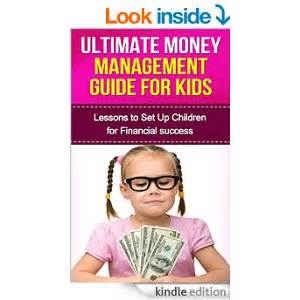 Title: Ultimate Money Management Guide for Kids (I have specifically NOT included the link here, because I am not promoting the purchase of this “book.”)
Author: Gregory O.
*TAKE NOTE* Length: 17 pages
It’s my fault, really. I never noticed the page length section on the Amazon.com site. I especially didn’t notice that ebooks state a page length equivalent in that section. In fact, I’m so blind, I had to LOOK for it after someone told me it was there. Somehow my eyes have always skipped over it. Amazon places it there, clear as day. I just never saw it.
I will never miss it again. I will always look now.
Ultimate Money Management Guide for Kids is little more than a pamphlet, and is far from “ultimate” or a “guide.” After all, it is only SEVENTEEN pages long.
It takes about ten to twenty minutes to read (depending on your reading rate – took me roughly 8 minutes total, a good 2 minutes of that was spent trying to figure out where the rest of the book was), and though there are five chapters, they are each short enough to be included in a brochure. The kind you see at seminars or conventions. Instead of being an ultimate guide, I’d consider it a solid introduction to themes you would like to teach.
There are few steps or how-to lists, mostly just conjecture and opinion. Good opinions, mind you, but I wouldn’t feel comfortable promoting this as a personal finance or parenting guide of any kind. Instead it’s a nice conversation starter.
Free ebooks of this title were being passed around several homeschool sites a few weeks back. I consider this an appropriate way to acquire this book. But the kindle format sells on Amazon for $2.99 and I can’t help but wonder how many people have been disappointed by the lack of substance and length for their money. Not many because the reviews on Amazon are mostly positive. This surprises me.
In addition to it’s lack of length, there were a few editing hiccups that I urge the author to review. As a writer, I understand all too well the frequency of errant typos (my own first edition has many of them), but in a document that could be considered little more than a lengthy blog post, I’m surprised the errors slipped through. I’m sure typos appear in my blog as well. There might be some in this very post because I rarely go through an edit – I’m not an editor. But I’m also not charging you to read this, so I feel in that regard I have a right to be a little lazy about punctuation placement and grammar choices. When I start charging $2.99 for you to read my blog, I promise to edit better. Then again, I’d never do that.
Early in the introduction of the title, the author writes, “Empowering children with good financial education will ensure that they are better prepared for life and all matter finance. It is the responsibility of parents to teach their children about money.” Indeed. But he spent little time explaining how one should do so.
Gregory O. has some great ideas and on many points I agree with him. The book as a whole would make a marvelous opening speech for a seminar on teaching parents to teach their children about money matters, but it doesn’t stand well alone. I wish O. would have developed the topic more before releasing it as a “book” for sale at $2.99. (I know, I keep repeating this information, but it just hasn’t stopped baffling me. $2.99 for 17 pages! What?) Lower the price to 99 cents or keep it free and I have little to fuss about, because it serves as a positive starting point for parents to encourage economic intelligence in their children. It simply falls short of what else is being produced in the industry on the same topic.
I’ll take my 8 minutes back, please.
Censorship vs. Guidance… oh and that other thing called Hoarding
 As I clean out my library, I find myself selecting what to discard mostly based on my daughter’s mind rather than my own. I read Sarah Dunant once, it was interesting, I don’t recall it blowing me away. Looking at the titles I have, I find myself wanting to keep hardbacks and the Sarah Dunant copies I have are clean, pretty, and one is a hardback. If I purchased them, which I doubt, it was most likely out of a clearance pile somewhere. At most I imagine I spent 50 cents or a dollar.
But that is not why I find myself stacking them in the donate to the library pile. Instead, it is because I find myself thinking – “Is this necessary? Does she need this? Even if it wasn’t necessary, is it important?” There are scenes in which I’d rather not my child’s brain be muddled with unless it belongs to something epic or beautiful. Sexual content, murderous content, without a larger than life literary lesson or great impact on the worldview seems so wasteful.
 I sit here with William Kennedy’s Ironweed. It is a Pulitzer prize winner. It is the copy I was handed in high school by a teacher who found I had read everything else on the required reading list and then some. It’s brilliant, I don’t contest that. But I remember being appalled and annoyed by it. I remember thinking, “Reading this is not going to make me a better person in any way – AND I’m not particularly enjoying it either.” The book hoarder in me kept it because it was something I read in high school for class. I kept it because it was a Pulitzer prize winner. I kept it under the assumption that maybe I missed something and it was important.
The mother in me finds myself putting it in the library donate pile. If she wants to read it later, she can check it out at the library – but I only want to keep things in my house that I can either recommend or things that I, myself, haven’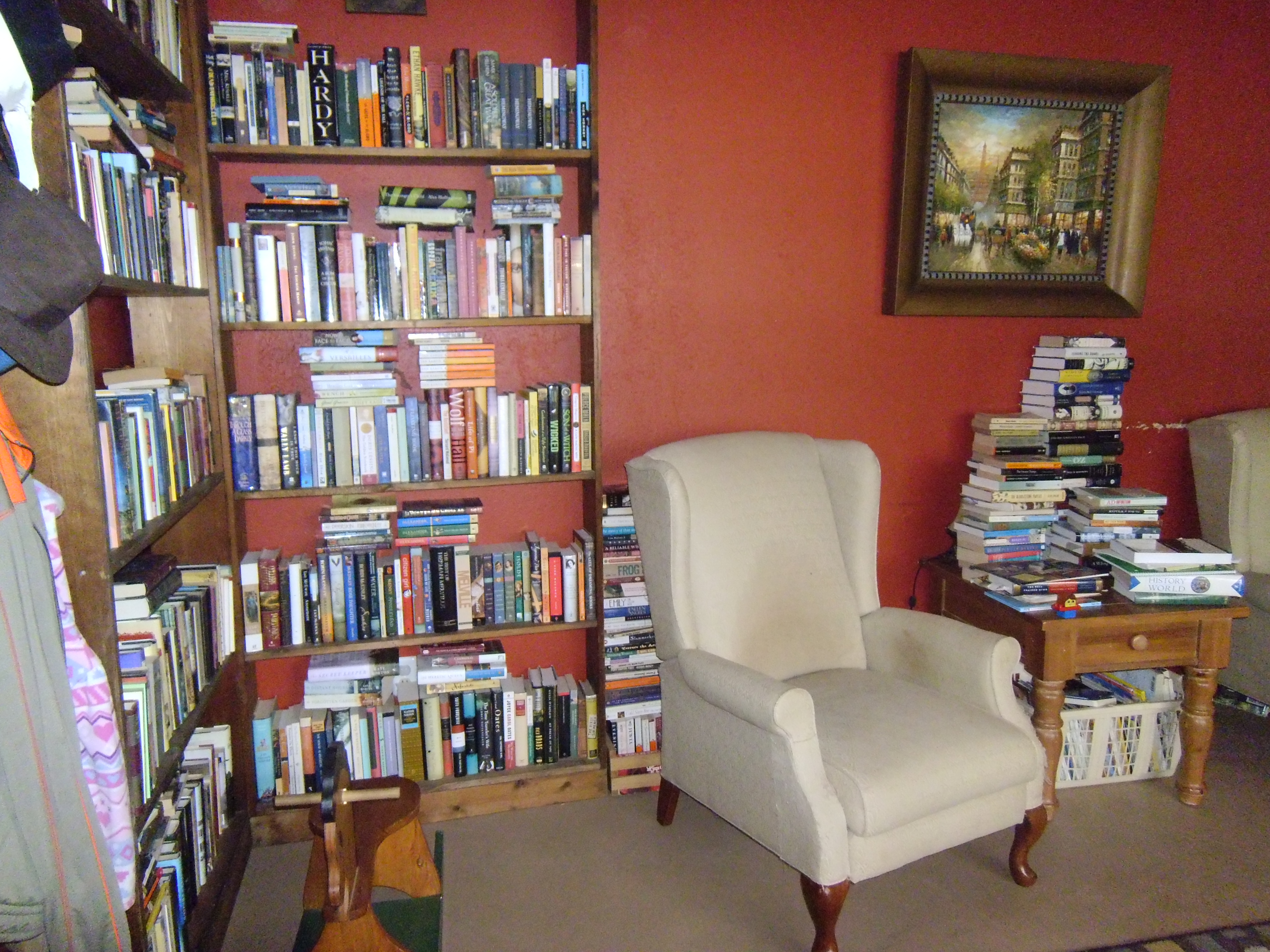 t read yet either. If I’m going to push crass, horrible people in horrible circumstances onto my daughter, I’ll give her Steinbeck – not Kennedy. If she needs to read about prostitution, I’d rather give her Moll Flanders and Les Miserables than Slammerskin. Not to be a chronological snob, I’m just as quick to recommend Girl, Interrupted as a cautionary tale against promiscuity or The Glass Castle and A Tree Grows in Brooklyn concerning the woes and hardships of being low on the socio-economic bean pole.
Most of what is going in the bags are things I find myself with multiple copies of for some inexplicable reason. James Herriot’s books seem to breed in my house, much like plastic bags from the grocery store do in your pantry. I swear I only brought home one, but there are three copies of All Things Wise and Wonderful. Even more perplexing is the fact that I have yet to read anything he wrote.
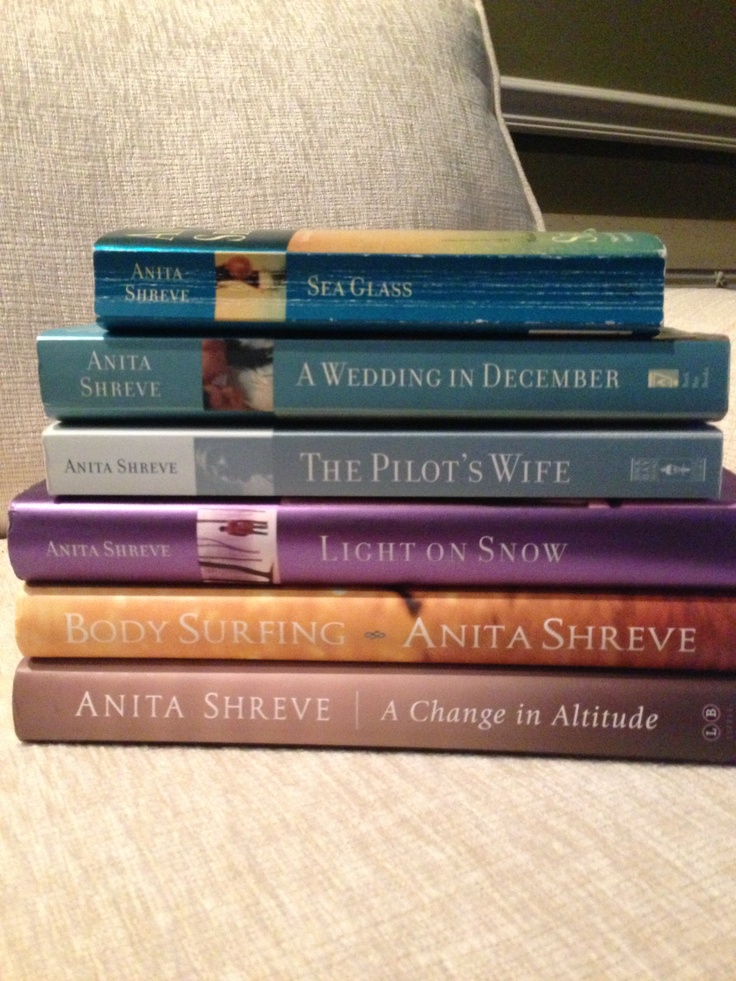 There are piles of Anita Shreve books. I’ve also never read an Anita Shreve title. I find the covers used to market her work exceptionally dull. When I shelved fiction at the bookstore, I cringed whenever I opened a box to find them peering up at me. Yet, I have copies of these books in my own home. They never sell, they are in abundance at the library, I find myself walking home with freebies from various places often. Again, thinking, ‘what if I become terminally ill and somehow run out of reading material.’
Book hoarder recovery 101: If you aren’t going to read it healthy, don’t anticipate reading it when ill. Also, someone will probably be willing to go to the library for you should the need arise.
This is hard for me. Then, of course, I think – is Anita Shreve important or a past time? And if she’s a past time, that is fine, but do I need so many past times lurking in my space? There comes a point when you are surrounded by so many options, you can no longer choose. It is too overwhelming and you find yourself at a hole in the wall public library that has fewer options than your own house, just to narrow the selection field. Maybe one day I’ll read Anita Shreve. Maybe I’ll love her. Maybe she’s amazing. But for now, she’s going in the donate bag.
Yet, I have hardbacks of John Grisham I can’t bring myself to let go. My twelve year old self still riveted by such drama. I could argue that it is because many of them are first edition hardbacks, but then there are my paperback coffee house and tea house mysteries that stay on the ready for a good bubble bath or morning on the back porch. Can’t let those go – yet.
How do you sort your keepers from your donates?
Life Lessons in Paint
Homeschool ing is a little more than having a lot of books at your disposal. Not much more, mind you, because books can answer all life’s questions – but still there’s a little bit more.
Our version of more involves a lot of art supplies. I wait for great sales, sometimes I even buy used canvases for next to nothing at Goodwill and garage sales and whitewash them, I’ve even been known to pull canvases out of trash cans. I’m that mom. One way or another I want to get art supplies into my daughter’s hands, and not the “kid” version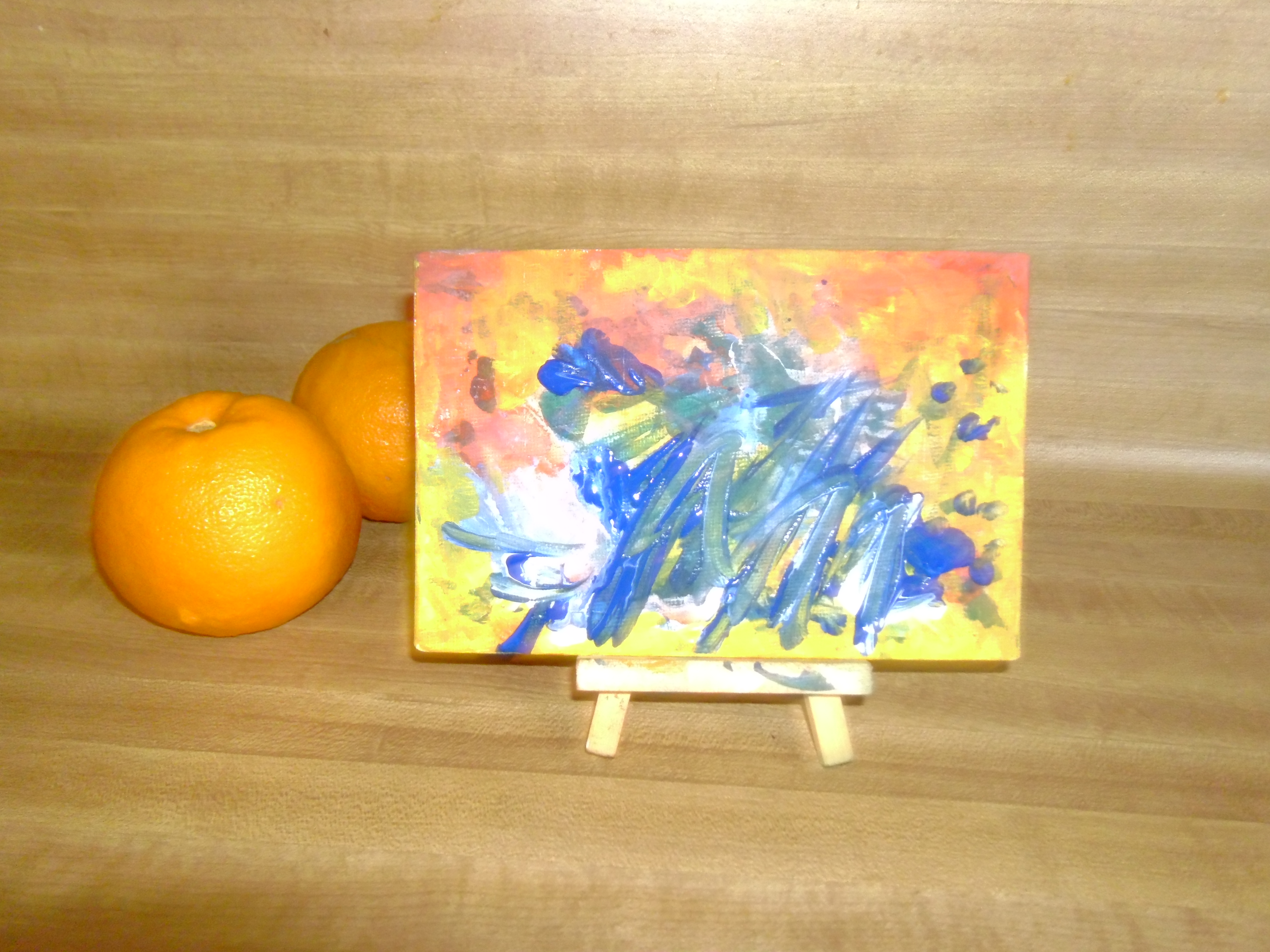 s – I want her to have real paint, real brushes, and real canvases to work with.
At Christmas we requested that in lieu of toys and other items that will end up donated when she outgrows them or trashed when they are obliterated from use, to gift her art supplies instead. We’re not depriving her for the sake of enrichment, I assure you. I believe free play is essential and important. The girl gets tons of toys on her birthday and throughout the year and has mountains of them. Does she need mountains of them? No. Will we use the art supplies? Oh yes.
Thus began our friends and family slowly jumping on board with how we handle our week, our budget, and our holiday requests. As my daughter started to produce piece after piece (some not shown as they were gifted away prior to me thinking out documenting them)…

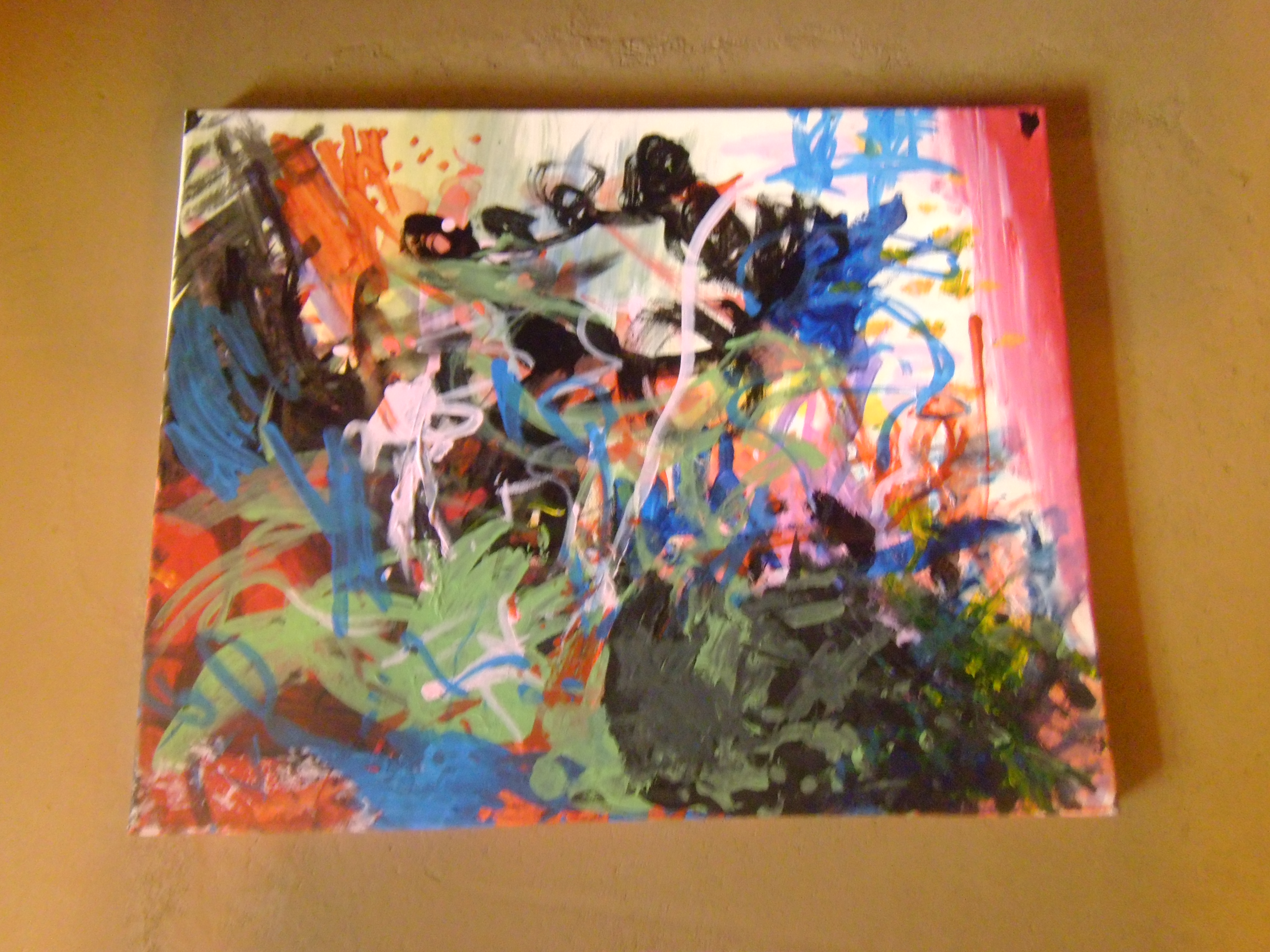
She chooses her own colors, even mixes them if she has to and decides which brush she wants to use at any given moment. 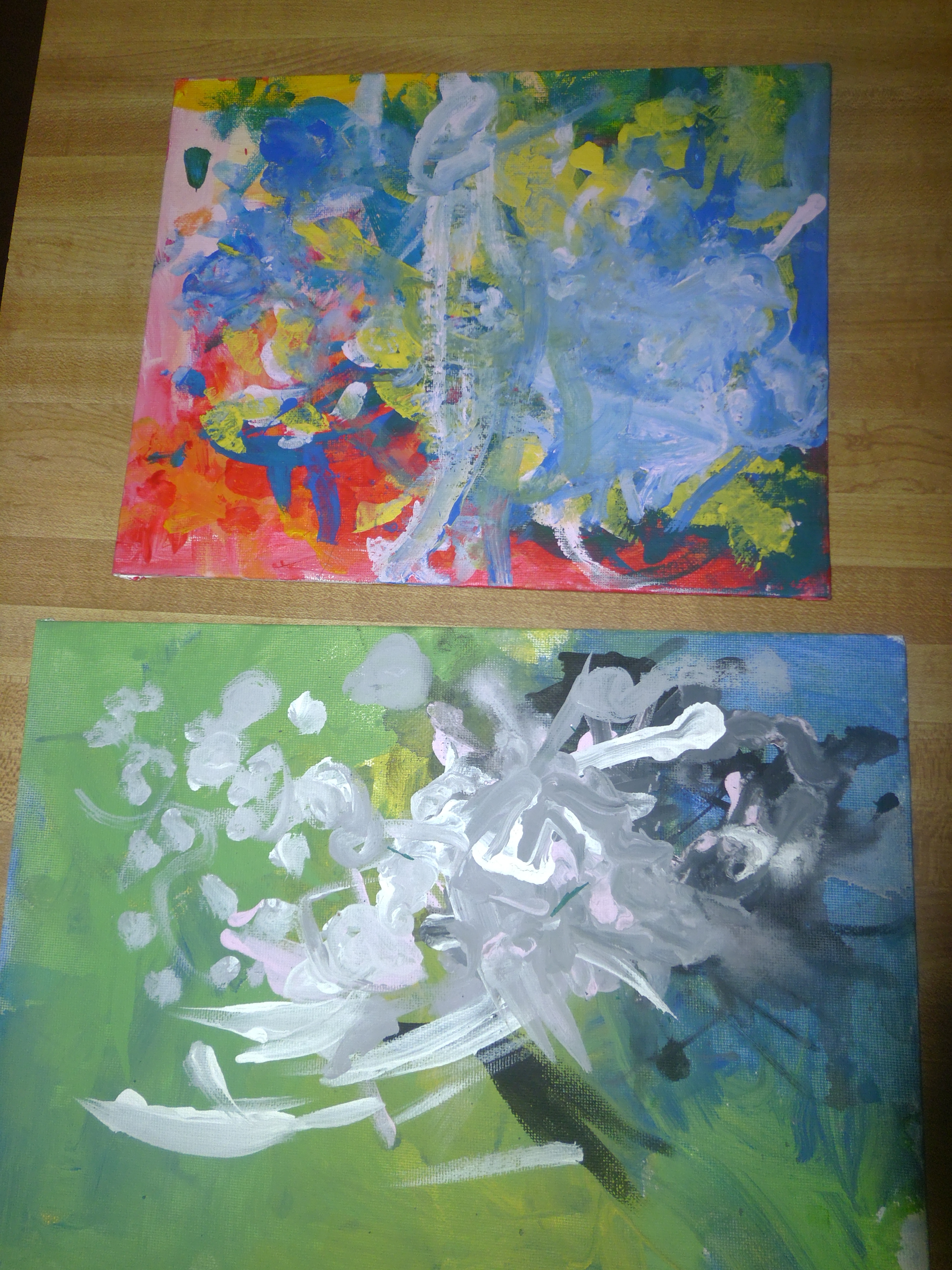 Each piece is entirely her own and we even discuss what she wants to name each one.
Pursuing art in this fashion is a daily exercise in understanding the scientific side of color (what it takes to make a color), as in the beginning we started only with primary colors, though we have been gifted additional ones. She is learning about texture, movement, and how to convey emotion.
In addition to that, she understands saving and budgeting for things she wants. How to prioritize certain desires: sometimes she uses birthday money for books, sometimes for toys, and sometimes for her own art supplies. (Even more often, she opts to put it in the piggy bank or fund an extra trip to Chick-fila.)
It also brings the books we study to life.
Since birth, I have made a point to introduce her to as many of the Getting to Know the World’s Artists
We read through The Metropolitan Museum of Art’s “Monet’s Impressions: Words and Pictures by Claude Monet” all the time. She seems to like the Impressionists a lot.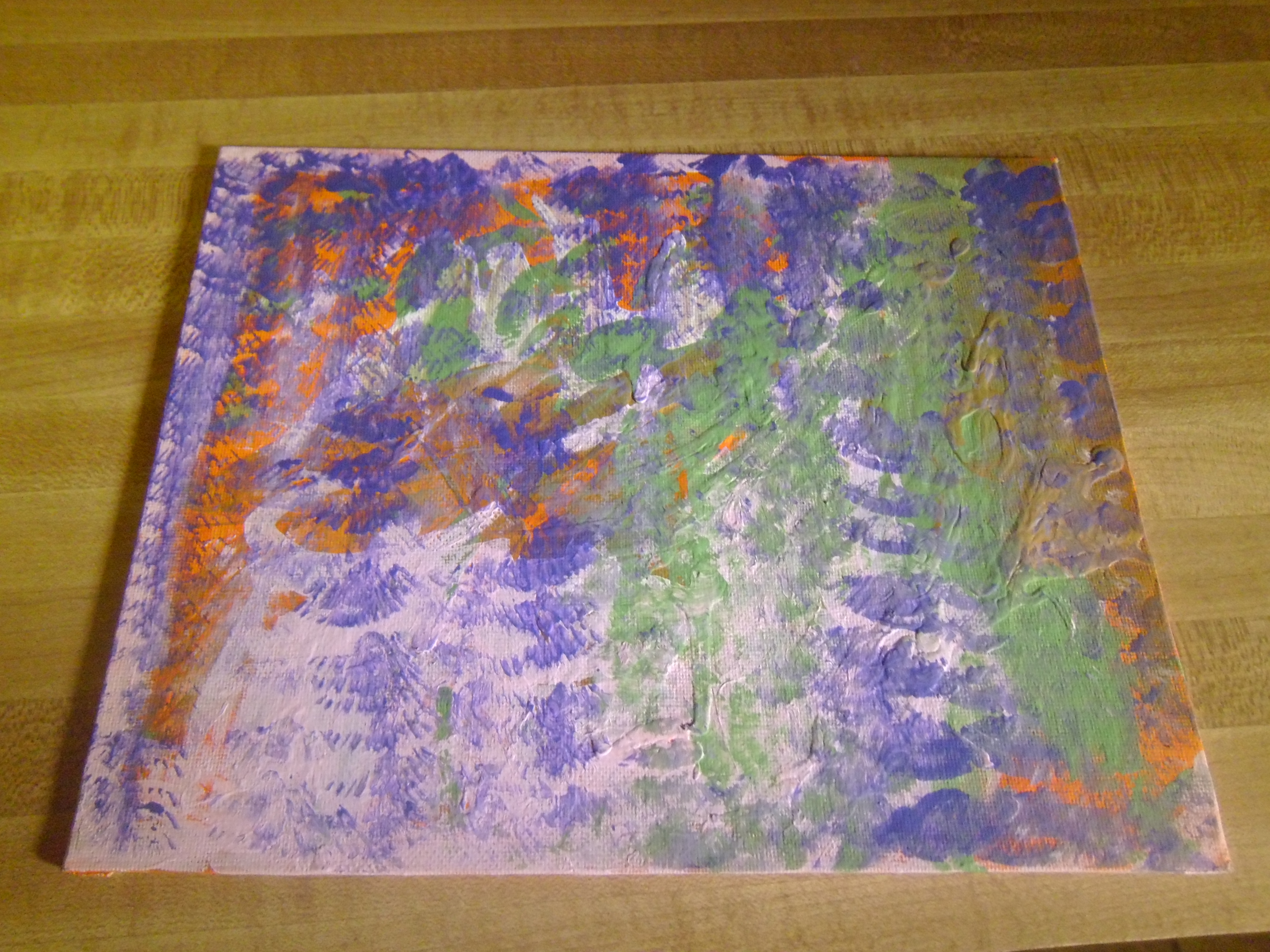
Which kick started our trips to the lake, taking paints and canvases to paint outdoors like they discuss in one of our favorite art books:
Picture This!

We also have a book on Frida, called “Frida Maria: A Story of the Old Southwest” by Deborah Nourse Lattimore, because all art forms are welcome in our house, as well as every bit of history we can find.
Which is why we also picked up a copy of “Leonardo: Beautiful Dreamer” by Robert Byrd at the library. We’ve been reading a few pages of that every day and I could not be more pleased with a picture book.
More than anything in this adventure through motherhood and homeschooling, I’m realizing that so much of ‘homeschooling’ has very little to do with what I know or what I can teach – it’s about granting access to where the knowledge is. It’s about handing her the tools and giving her the freedom to figure it out, to learn, and discover. So many times people argue that homeschooling stunts children to only learn what their parents know, when in reality it is quite the opposite. When they have so much free time, under a little nudge here and some pointers there, children are much more likely to learn to learn for themselves. A parent’s job, a teacher’s job, is to provide the tools for them to do that.
I didn’t think these things from the get go. I merely picked up books that caught my attention. I got her the art supplies initially because I had taken art in high school and my sister has always had natural talent with a sketchbook. I wanted my kid to get these things in her hands sooner rather than later because I had a lot of anxiety regarding art supplies – I was afraid to be freely creative because I feared being wasteful with something considered semi-precious. But over the last year and a half of actively putting these supplies in my kid’s hands, I have shaped a philosophy.
Here is a canvas, here is a paintbrush, here are some paints, here are a few books that show you the glorious nature of art throughout history – suddenly, you have a child who is beginning to understand history, humanity, science, and the world at large. Imagine the implications when I give her the tools to language and math. The sky is the limit and the list of people who learned to think through information on their own become the inspiration: Einstein, Curie, Alcott, Da Vinci…

Bouquet of Color
Revisiting…

Title: I Love Dirt!
(52 Activities to help you and your kids discover the wonders of nature)
Today, we went for a much needed walk in the woods. When the weather is nice, we’re out there five days a week. When the weather is too hot to be nice, we’re out there four days a week. When the weather is obnoxiously freezing cold, wet, and completely unnatural to a born and bred Texan, we hide indoors and rock back and forth holding our hot coffee and teas. Well, not quite, but close. We actually sit by the window and watch the birds eat bits of things we’ve left in the yard, name the squirrels that live in the trees out back, and read stories by the fire burning in the fireplace.
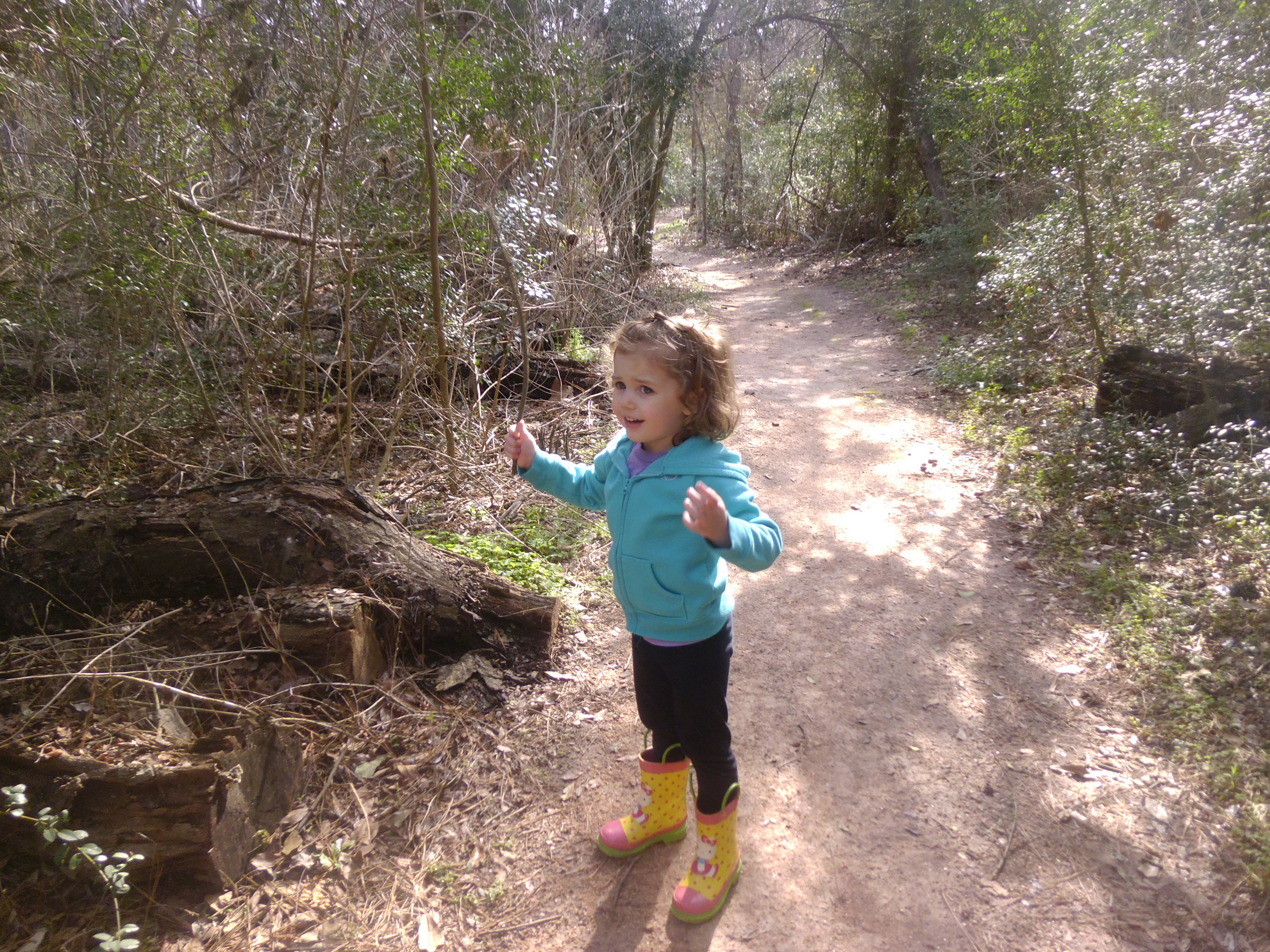
Today, the sun was out for a bit. It wasn’t quite so cold. We needed the woods and we needed it bad. There was cheering involved.
So, we loaded up our trustee going out bag and went for a trek. Tucked inside was our copy of I Love Dirt and as soon as we hit the trails we read from chapter two: Bouquet of Color.
Bouquet of Color is an exercise in finding flowers and identifying how many colors we can see. It’s a purely natural I Spy game.
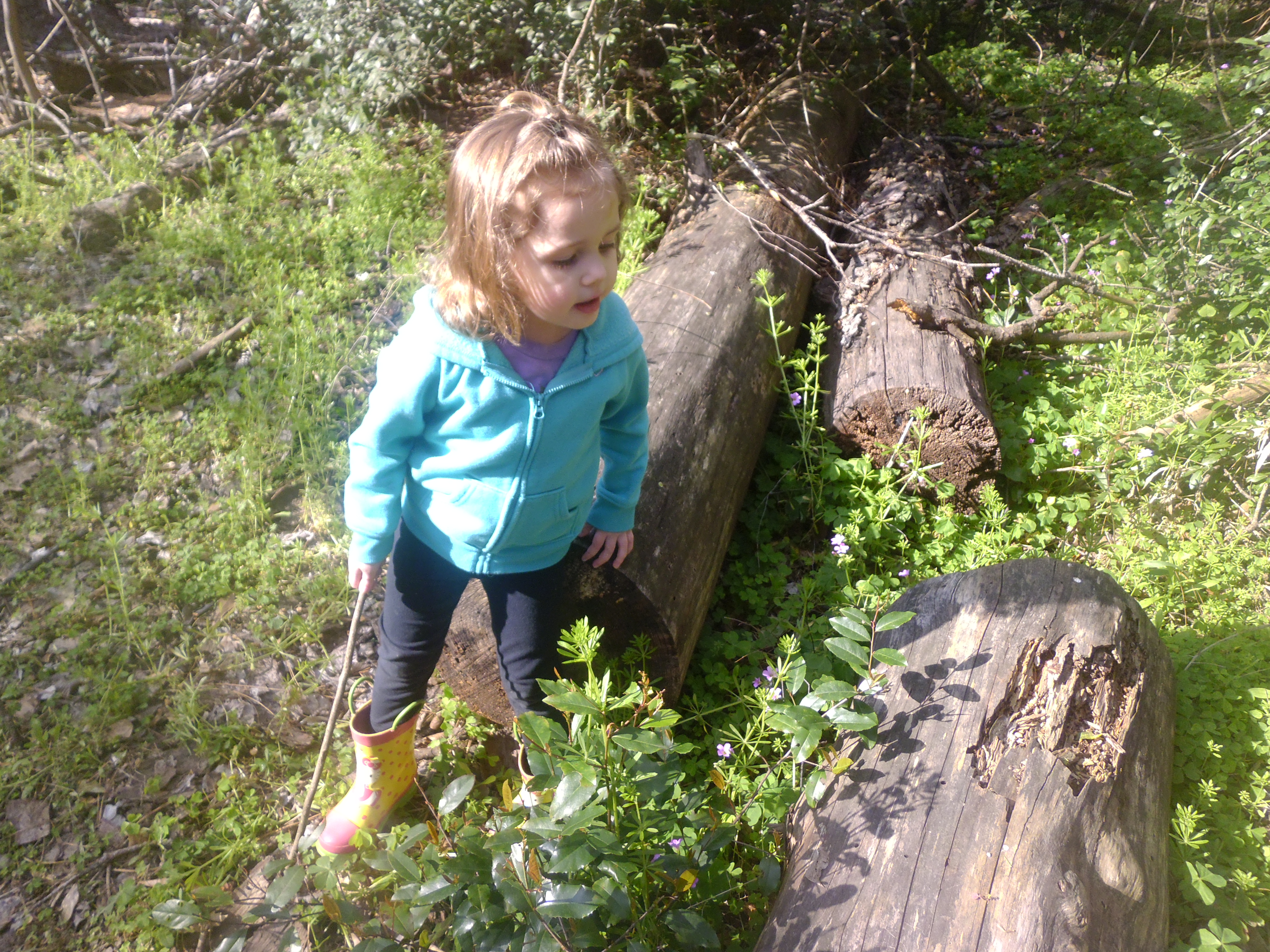 We discovered more flowers we would call purple than I would have supposed. Lots of purple field pansies, baby blue eyes (that look more purple than blue), and even some butterfly peas. We saw a lot of pointed phlox, but that is categorically considered a ‘red’ wildflower… so maybe we’re a little colorblind because they looked pinkish purple to us.
Of course, there was a lot of yellow in the form of dandelions, but not as many as I would have guessed. We found a lot of dewberry patches sporting their telling white blooms, and took note of where they were so we could come forage berries come summer. Yet, tt seemed Kiddo was still shouting “I see purple!” more than any other phrase.
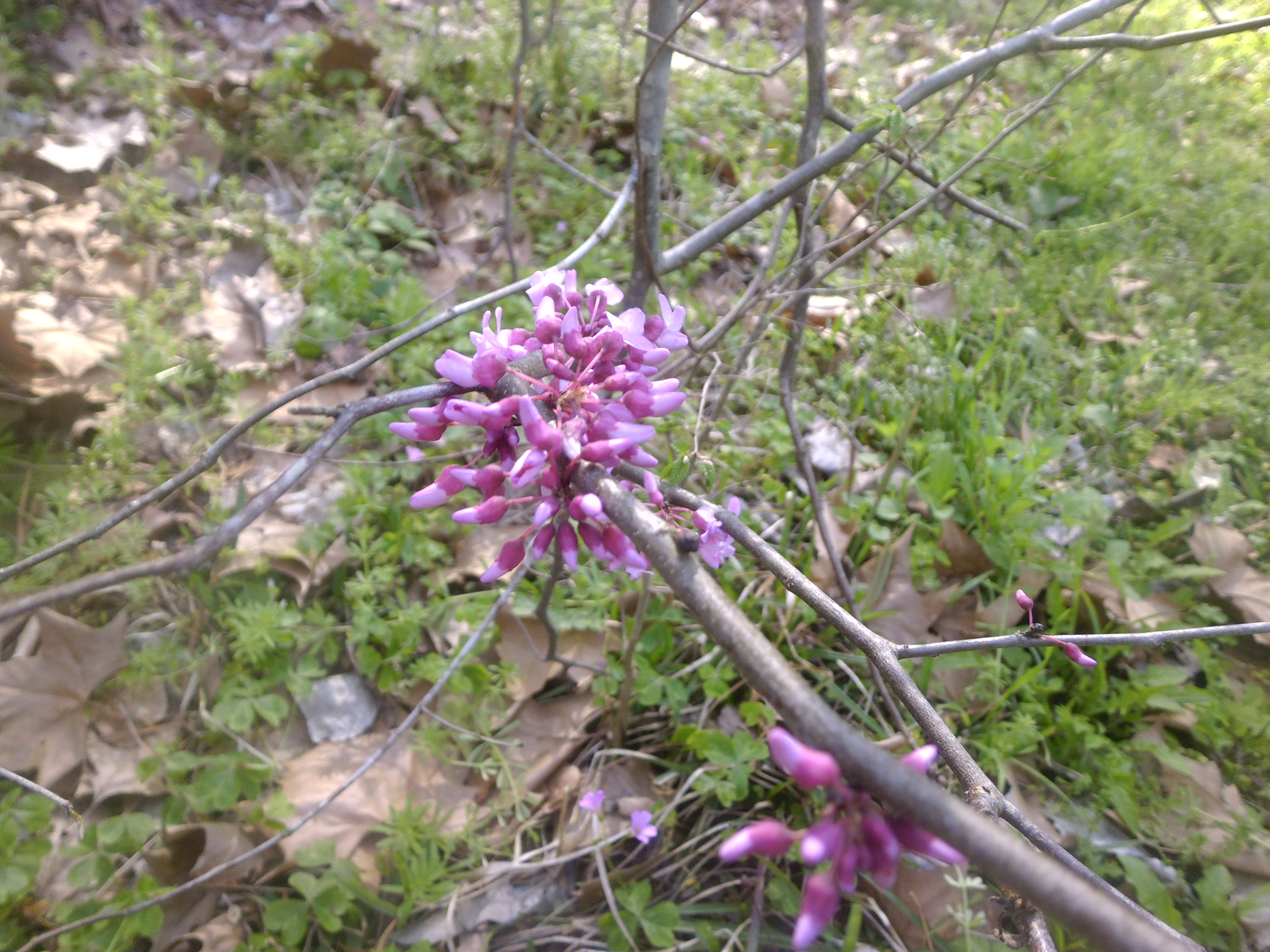
 We were pretty excited about the blossoms on this tree. See what they look like up close. Anyone know what it is?
Click this photo to find out…
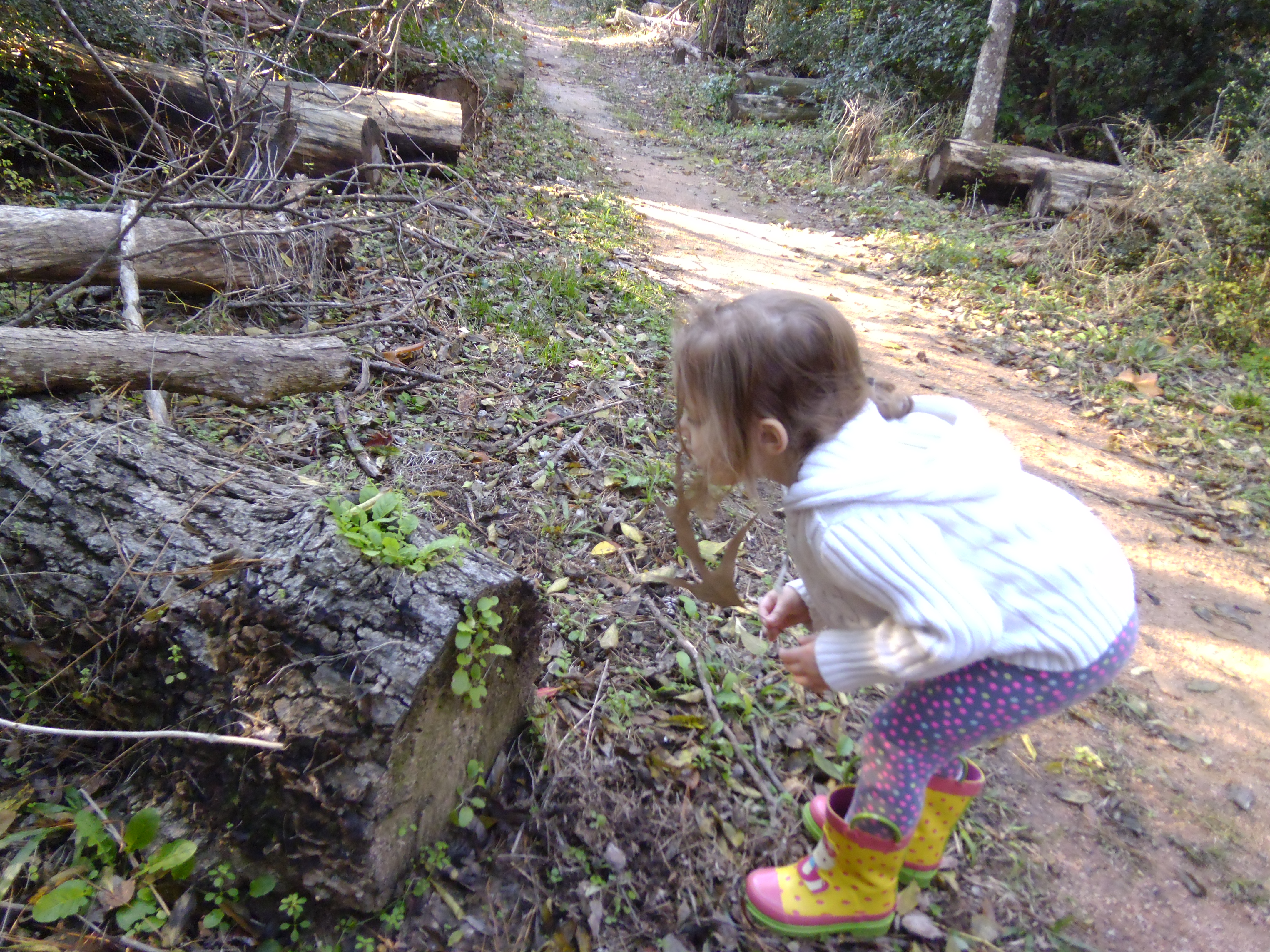
Sometimes on the trail we get distracted from whatever task is at hand and just enjoy ourselves. Here she said, “I want to put the sun in my mouth!” I couldn’t resist snapping that picture.

An Autistic History
 Title: Not Even Wrong
Author: Paul Collins
Publisher: Bloomsbury
Genre: Memoir/ Psychology
Length: 245 pages
I’ve journaled nearly twenty pages of commentary on this book. Now, having finished it, I’m not sure what I should share and what should be kept to myself.
Collins does a spectacular job sharing memoir with known history, diving into tales from the world and mixing it with tales from his personal world. The first few chapters are dedicated to his pursuit of Peter the Wild Boy and an existing desire to write a biography on the mysterious boy who was ‘rescued’ by King George. (Reference to the boy made in Notes and Queries, of course.) Collins later discovers his son is autistic.
The entire book is an ode to his son and his autism. An ode to their life, their relationship, the world of Autists.
Therefore a lot of information is shared regarding what that means. A lot of reflection on the gene pool it takes to cook up such a neurological anomaly that is an essential part of humanity as a whole. The trifecta being science, art, and math.
Collins writes on page 96:
Apparently we have been walking around with the genetic equivalent of a KICK ME sign:
my father: mechanical engineer
jennifer’s father: musician, math major
my brother: phd in computing
jennifer: painter
me
At this point, I remember taking my own personal inventory. My father is a civil engineer, not only that he was a musician and painter, and suffers from what I think is undiagnosed and extremely mild tourettes (also discussed in Collins’ book). My immediate cousins and family members on that side of the family are musicians and scientists. Some work in labs, some in an engineering field. Although I’ve been an English and History girl my whole life, much to my father’s chagrin, I was raised by and around extremely scientific minds. I think I get all the feelings and other eccentricities from my mother’s side. But in a parallel universe, had I somehow procreated with people I had dated in college rather than the love of my life whom I married – musicians, computer geeks, Synesthesiacs (also discussed in Collins’ book) – I think I was very close to wearing that KICK ME sign as well.
Looking at the world through the eyes of Collins’ research, I think many people have been close to wearing that sign. I think everyone should read through this book and see just how close. It’s enlightening. It’s scary. It’s beautiful.
There are so many amazing people through out history who have changed the face of humanity – the way we work – integral parts of society and science… and they were very likely autistic. Albert Einstein, Isaac Newton, Glenn Gould, Andy Warhol, Paul Erdos. These people are essential to who we are as a species today. These people have made our world more beautiful, even though they are very likely to be the same people described on page 109: “Imagine if you tried to pretend to understand people, but didn’t really. So you rehearse it all in your head: taking notes, analyzing every social action, trying to connect it all together.” I don’t have to imagine. I may not be a genius like Albert Einstein, I may not be as clever as Glenn Gould, and I’m certainly not nearly as eccentric as Andy Warhol – but I know all about rehearsing, taking notes, analyzing, and still feeling quite out of the loop. A little bit of understanding from the rest of the world goes a long way in my book – even though I’m not so good at understanding the rest of the world, I’m trying to be better about it.
“You know, it used to be that when I saw someone acting or talking strangely, or just being odd on the bus, I’d think to myself: What’s his problem? I still have that reaction. But now I stop, pause, and have a second thought: No, really, what is that man’s problem? There is a decades-long chain of events that created the person who are seeing.” – pg. 213
Paul Collins brings a little bit of humanity and the importance of curiosity and empathy into ALL his work. For that I adore him, and will always adore him, forever.
On that note, I want to check out the artwork of his wife. I love art. I love paintings. I am the CMO of an art company called Aoristos and I’m curious to see the style of art the spouse of my favorite author paints. If anyone knows and can provide reliable links – please do.
I Love Dirt!
Title: I Love Dirt!
Author: Jennifer Ward
Foreword: Richard Louv, author of Last Child in the Woods
Illustratator: Susie Ghahremani
I popped in at Half Price Books after a long season off from scheduling book signings. Tucked low in my employee cube was a book – this book – with a post it note on it from my boss.
“Andi – I thought you might like because of the woods you live by!”
I did like it, immediately. And bought it with my Christmas money.
The book starts with a riveting foreword about the nature of nature in the United States and how much we have strayed from the outdoors. Interestingly enough, the more we stray from outdoor life, the more children struggle with obesity, ADD and ADHD, as well as depression.
And the more kids spend outdoors?
“A 2005 study by the California Department of Education found that students in schools with nature immersion programs performed 27 percent better in science testing than kids in traditional class settings. Similarly, children who attended outdoor classrooms showed substantially improved test scores, particularly in science. Such research consistently confirms what our great-grandparents instinctively knew to be true, and what we know in our bones and nerves to be right: free-play in natural settings is good for a child’s mental and physical health. The American Academy of Pediatrics agrees, stating in 2007 that free and unstructured play is healthy and essential for children.”
 I’m in love with this book. I already do a lot of nature activities with my child – foraging for starters. We play outside at the public park, we walk nature trails, we run, we jump, do cartwheels in the grass, hunt insects and lizards, sword fight with sticks, and sing our ABCs at the tops of our lungs by the creek. As Ward states in her introduction, “There is nothing more joyful and inspiring to watch than children discovering the world around them.”
All of the activities in this book are pretty much cost free. The only one I found that requires any kind of purchase is the bird feeding one, and that’s only if you want to do it big and don’t have spare groceries in your house. The activities are simple, like sprinkling orange peels in your yard or covering pine cones with peanut butter and bird seed to bird watch from inside when it is too cold to be outside.
The book is broken up seasonally, so you can hop in and do something no matter when you pick up the book. Each activity has a prompt or a concept to get your child thinking about the activity and world itself.

Gothic Picture Books
While picking out picture books, I’m slowly but surely learning that the things that grab my attention may or may not grab Ayla’s, and even if they do grab Ayla’s sometimes maybe I shouldn’t be reading them to her quite yet.
 The Spider and the Fly
Then, there’s books that are simple, like Nosy Rosie
 How do you decide what to hand them when? On one side, I don’t want to be Phoebe’s grandmother on Friends who turned off all the movies before the unhappy ending and the character didn’t know that Bambi’s mother got shot or that Old Yeller died at the end until her thirties. But neither do I want to be the creepy mother raising her child to disturbing things like “A is for Amy who fell down the stairs,” even though as a teen and adult I find them quite funny.
So again I ask you, how do you decide what to hand them and when? I suppose the age old dilemma for every parent is based in the fear of warping their child, and when it comes to books I have an even bigger problem because its not just about what my child can handle, its the message I give her when I make the decision. I don’t believe in censorship, but I greatly believe in reading guidance.
What are some of your favorite ‘gothic’ picture books? When did you decide to share them with your kids? Or did you let them seek them out themselves?
The Enrichment of Eric Carle (at Half Price)
Today is Wednesday. Wednesday has a new ring to it now that I’m hosting story time every week at 10:30 am on behalf of Half Price Books in the Humble location’s Half Pint section.
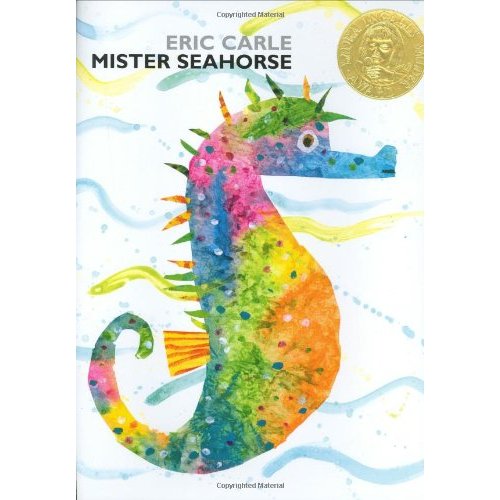 It was a quiet crowd today, only three children munching on the provided snack, listening to Duckie Duck by Kate Toms and Mister Seahorse by Eric Carle, to name a few. It is always a pleasure seeing the younger crowd fall in love with books and enjoy a calming sit down with the work of our favorite authors, but today I found myself doing what I used to love best about working in a bookstore again – I was educating.
Kids and parents alike enjoy someone guiding them in their discoveries, just as when I am shopping, I too love for retailers to point out their favorites, clerks to tell me what they’ve been reading lately. Today as I read Mister Seahorse, I got to share the fact that Eric Carle has a museum in Massachusetts, a fact few families seem to know down here in Texas, but almost all respond with wide eyes and dropped jaws. ‘That sounds amazing!’ I often hear people saying. I agree, and I plan to take my daughter there one day on a vacation.
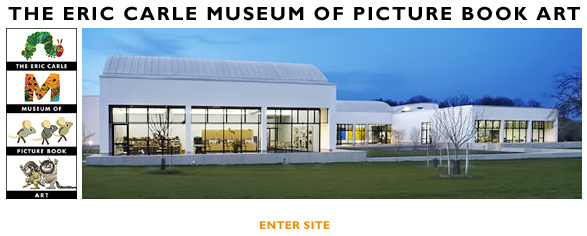
The beauty of The Eric Carle Museum, which feeds my desire to take my child there, aside from the art itself, is their mission:
The mission of The Eric Carle Museum of Picture Book Art is to inspire, especially in children and their families, an appreciation for and an understanding of the art of the picture book. In fulfilling our mission, we aspire to build bridges to an appreciation of art of every kind and to provide an enriching, dynamic, and supportive context for the development of literacy. We deliver this mission by collecting, presenting and celebrating the art of the picture book from around the world and by providing interactive experiences and programs that are engaging and educational.
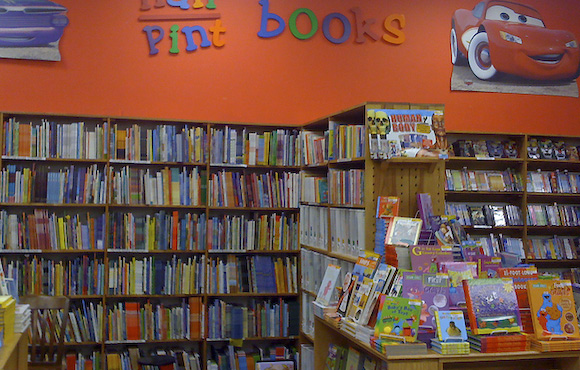
Humble HPB Half Pint Section
That same mission, building a bridge of art appreciation and developing literacy, is how I choose my child’s books in the first place. It’s not enough to have an amazing story but boring art, it’s also not enough to have amazing illustrations and a terrible story. The building blocks for enriching a child’s mind are in a smooth marriage of those two things and Eric Carle has always seemed to manage that joining.
I hope, by choosing books to read and presenting them to children each week as part of my Event Coordinating duties, Half Price Books can be a venue for which I can share these kinds of books with new minds, and this mission with other parents – at half the price.





 Anakalian Whims