Committed – Part One
 Title: Committed

Author: Elizabeth Gilbert
Genre: Non-fiction of some kind. In a bookstore it would go in the memoir section, I’m sure – but it’s so much more than that.
I’m aware that when one decides to follow a book reviewing blog, they don’t expect the posts to start turning into self-aware sob stories. However, I cannot fully digest a book without it becoming part of me and my psyche and putting a little bit of pressure on my world view and myself.
When I read Eat, Pray, Love a few years ago, you may or may not remember my indignation. I was so irritated. This woman was so flippant! How dare she walk out on her marriage and go gallivanting and call that spiritual growth! I loved Gilbert’s writing style, I loved her way with words, but all I could think was, “What a selfish whore.”
That was unfair. I see that.
I’m reading Committed now. A friend had told me Gilbert would redeem herself in my eyes in this book. I was skeptical. How could I ever see eye to eye with this woman?
But that’s the thing. I don’t see eye to eye with her. But now, I’m ok with that. Not because of this book, though, I’m sure that helps; but because of me. I’ve come to realize some things about myself in the very short time that it has been 2014.
I have a very intense moral code. So intense, it is probably filled with much higher expectations for life than is humanly obtainable. Stepping outside of this moral code in the past has left me trembling. It terrifies me, because, simply:
I fall short. It is impossible to live up to it.
I expect others to live up to it. If we all strive to live up to it then maybe we can have a chance in hell of making it.
We don’t.
I see this now.
Yes, that makes me a hypocrite, I suppose. Often.
Yes, that means that deep down I hate myself for not being able to live up to my beliefs. Even saying this is in contradiction with my beliefs… I believe the whole bible to be true and even the bible says that we all fall short of the glory of God. I believe in being a strong, independent, secure human. Both of those things are in contradiction with me hating myself for falling short.
You see, it’s not just me being unforgiving of others. I am completely unforgiving with myself too. Especially when what I perceive as truth, and what I believe is right, is the polar opposite of what I want.
I was taught that my wants were frivolous nuisances to be disregarded. Bury them. Pretend they’re not there. Doing what you *should* do is far more important than doing what you want. Wants are things that destroy people, families, cities, empires. Look at history – use your brain. Don’t feel, use logic.
Somewhere in that teaching, there’s a logical fallacy. Like Gilbert’s ice cream purchases correlating with drownings example – which made me laugh out loud. (Statistically where there are higher ice cream purchases, there are more drownings. Obviously, this does not mean that buying ice cream will increase your chance of drowning yourself, that would be a logical fallacy – yet, that’s exactly the kind of logic that has been ingrained in me.)
Now, 10 days away from 30, I feel a strong urge to fix this problem.
This is not something that can be fixed in 10 days.
Shockingly, despite my looming 10 day notice, I find myself a little at peace while reading Elizabeth Gilbert – author whose views I have previously found revolting – has spent page after page talking about forgiveness.
Things I have always been really cranky about – HOW does someone behave THAT way – she spells out. Instead of just saying, “It happens,” she takes great descriptive pains that only an eloquent writer could take to tell me how. To explain. Pages 108-110 left me in tears. Finally, I see why people have been so angered by my judgement. Finally, I see why I have no right to judge.
I was wrong. I’m sorry.
I’m not sure how this will effect my future decisions. But at least I can start to not hate myself, whatever they might be. Yay for mid-life crisis number two (and I’m not even mid-life yet, am I?).
I’m not finished reading yet, but I’m sure I will be soon. I have so much to say and think about this book and there will be a second post on it in the future.
Stuck in Love
A Movie Review for the Bookish at Heart
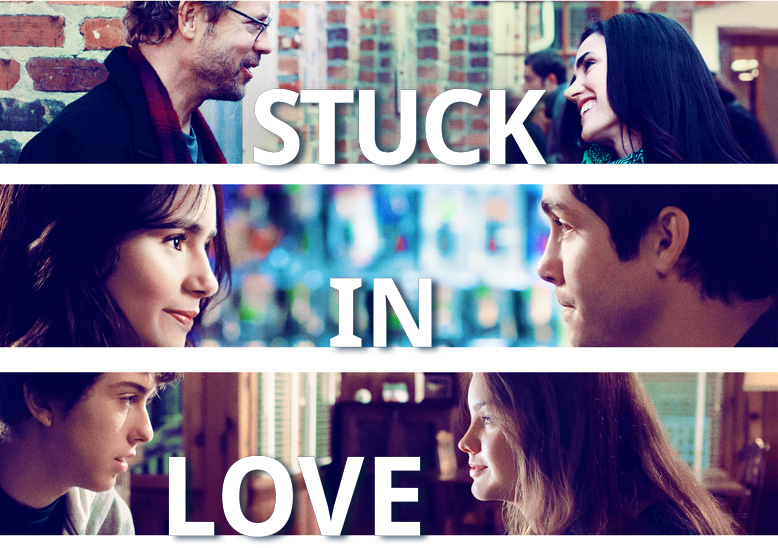 I was watching Stuck in Love, and probably about halfway through it, when my husband walked in and said, “You enjoying your book movie?”
It took me a minute. This movie was about a man who spends three years of his life waiting for his wife to return to him – even though they are divorced and she has married someone else. This movie is about the third year and how he handles the emotional struggles of his two nearly adult children. And yes, I realized after my husband posed the question, this movie is about four writers – lots of book lovers – and has many literary references.
 Greg Kinnear’s character has won two Penn Faulkner Awards. His oldest daughter is 19 and has just published her first novel through Scribner. His younger son, also having been groomed to write his whole life, is a poet and short story writer obsessed with Stephen King. Jennifer Connelly (the ex-wife) can be found reading Joan Didion in bed. Books are tossed around the set like old friends and are active characters in the movie as well, perched on shelves and end tables, strewn across laps at the beach.
I had not noticed until my husband pointed it out. I had not noticed because it was so familiar. I had not noticed because I live with these stacks of souls trapped in bindings all over my house. Sitting at the kitchen table, watching the sun come up with my coffee, I look out at my table… just here, in the kitchen of all places, I have 10 books, a journal, and a day planner, piled around me. You’d think this was a proper writing desk except for the bowl of orange slices and blueberries, my daughter’s play dough bucket, a United States place mat, and a container of markers.
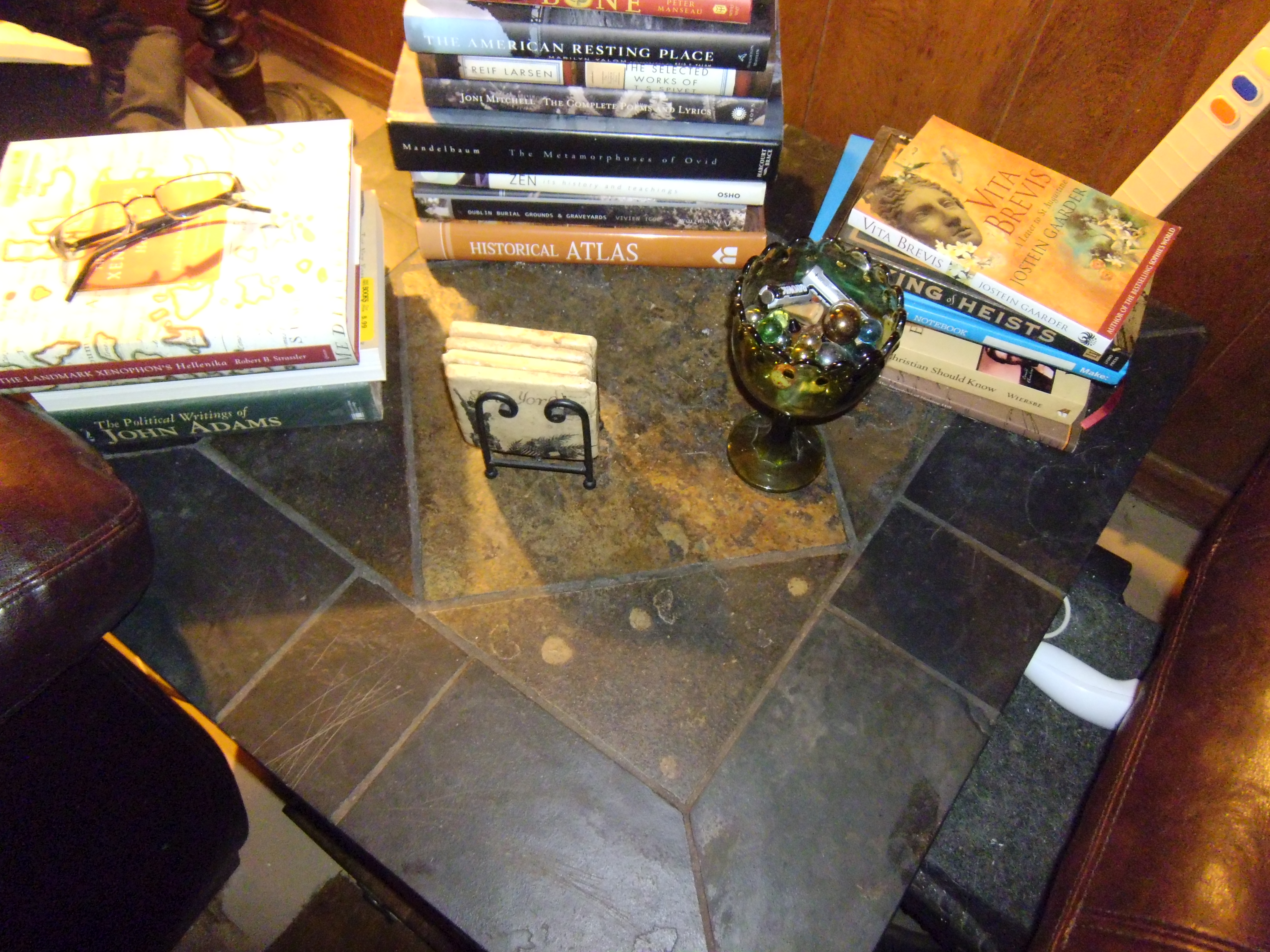 Granted the houses in Stuck in Love are much nicer than my own. Slightly bigger and the bookshelves are proper built-ins made of mahogany or some-such beautiful woodwork. The end tables were no doubt not retrieved from a neighbor’s discard pile. Yes, that black stone tile end table pictured here on the right came out of the trash. There’s absolutely nothing wrong with it and I could care less that it doesn’t match anything else in my house – I shall pile books on it. (Even though I’m supposed to keep all my books in the library and not let them trickle into the rest of the house. Keeping them out of other rooms requires a lot of daily maintenance.)
The people in Stuck in Love aren’t just richer than me, they’re probably much braver than me also. The daughter actually takes creative writing classes in school – whereas I took the safe route and studied marketing. They do what they feel – which results in a lot of really bad decisions. But one thing we do have in common, which I found really refreshing in a secular story, is have a permanence view of marriage. (You don’t find a lot of anyone who shares this worldview, not even among Christians: http://www.sermonaudio.com/sermoninfo.asp?SID=11309913170).
I found a lot of online critics who gave this movie a ‘rotten tomatoes’ rating (the soundtrack, however, gets glowing reviews from everyone). I am not with them (except for the soundtrack lovers). I found it marvelous. It’s a beautiful story about genuine people with a lot of bookish bits. I gave it 5 stars on my Netflix account. I will re-watch it. I will probably compile a list of the character’s books at some point and add them to things to move up my TBR pile (the patriarch can be seen reading Jeffrey Ford as well, but I didn’t catch the title).
 Not just for the book lists, the movie is filled with little quotable quotes, little tidbits for book-nerds and writers. Maybe that’s why I like it so much. That and I love that the dad teaches his kids to journal, that he allows them the privacy to write. I love that writing and reading are treated as means to live by, ways to learn, and how to pinpoint your emotions about your reality.
Something so obvious, that I didn’t catch at first glance and my husband did at a brief glimpse, this is a movie for book people.
A Tidbit from Miss Golightly
I was made for yellow tea sets, books about books and the people who read and write them, brown branches, painted bookshelves, brightly colored rugs and papasan chairs, and rooms filled with sunlight. The afternoon hours of today in Dallas, TX are sublime. – Jennifer Joy Golightly

The Secret Keeper and Storytellers
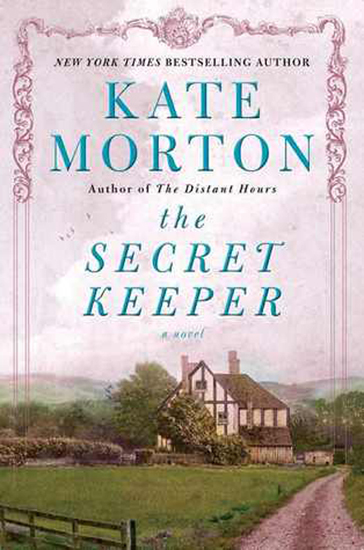 Title:The Secret Keeper
Author: Kate Morton
Publisher: Atria Books
Genre: Fiction/ Historical Fiction
Length: 484 pages
I broke my Kate Morton rule. I read TWO Kate Morton novels in a 12 month period. And it was wonderful.
Forget my previously mentioned warnings to space out her books as long as it takes her to write them. This was a perfect winter read, she sucked me in – as always – and I found myself thinking it was her best piece since The Forgotten Garden. Don’t I say that every time?
I don’t just love Kate Morton as a reader, I find her inspiring as a writer. When everyone else is diving into NaNoWrMo – something I signed up for, but just really don’t get – I dive into Kate Morton and find that’s the push I need to get my own stories out of my head. (Same goes for Stephen King, that man really pushes my buttons and moves me to write.)
Semi side note: Is it just me or is NaNoWrMo distracting as all get out. I write 2k words a day on average – granted, not all usable, obviously – but every time I open an email for NaNoWrMo I find myself reading and sifting through a bunch of stuff and not getting ANY writing done at all. It’s fake motivation for me. It’s a complete and utter distraction. Like going to a pep rally. I’m more excited for a football game when I’m at the football game, but if you push me through the noise of a pep rally I just don’t feel like going anymore. SO counter productive.
You really want to be motivated to write? Read a good book. Read a really good book. Find someone who just moves you and you can’t help but think – I want to do that. Not exactly that, mind you, I want to write my own stuff. But I want to get a story out that moves people the way I’ve just been moved. Or excites people the way I’ve just been excited. The best motivation for a storyteller, I think, is to hear/read a good story.
Kate Morton’s stories are always good. No, not good, GREAT. She weaves through time with the skill of a T.A.R.D.I.S. and the hearts of a TimeLord. She is always a master of her chosen histories and reveals stories with an onion layer effect that always makes me giddy. The best moment of every one of her books is the, “I knew it!” moment. I love that she feeds you all the details but somehow leaves you thinking she might just surprise you – even though you don’t want to be surprised because you need to be right about this one detail that has dropped bread crumbs all over the story but hasn’t outright made itself obvious.

Click to read another blogger’s review.
Even more than that, though, is Morton’s uncanny ability in every novel to write a character that feels so overly familiar to me. Or, if not familiar, someone I want to be familiar. The Secret Keeper had a lot of familiar faces from my real world.
I Am… Therefore I Read…
Someone once told me I was the “most fascinating dichotomy” he’d ever met. I remember feeling bashful by this statement, not quite understanding what that meant, but nevertheless naked. It’s been an echo in my head for nearly a decade, and I can’t even remember his name. But I have a tendency to mull over echoes and since then I think I’ve pieced together a bit of what he must have noticed.
It’s something that I will always relate back to my heart – both physically and spiritually.
Physically, I have an arrhythmia. It is something that shouldn’t affect me as much as it does except that I identify with it so completely. It doesn’t hurt anymore, but I remember the pain and panic it inflicted in my childhood. It almost always startles me, but I know how to correct it. It is the ever present reality that my heart does not beat in rhythm with anyone else’s and most likely never will. It is the feeling of constantly having to search for a rhythm so much harder than everyone else, whether that be when singing, when running, or when cycling. I do not have an internal clock. I do not keep time or pace. I have to find a pace in others and struggle to match it. This is not a complaint, this is reality. This is what it feels like to be inside my ribcage. The only person who might understand this best (although she obviously won’t remember), is my daughter. For 40 weeks she lived inside that ribcage. Her heartbeat was steady and sure, completely healthy, and mine was obviously off. It was literally breath taking – as in I had to stop to catch my breath – because my heart was off kilter and it was instinctively trrying to match her steady, beautiful rhythm.
Spiritually – To my psyche, this minor detail of my life seems to bleed into everything. I was the girl in the top choirs who could not keep time. I remember my dance partner with his hands on my hip (forceful, not sexually) helping me sway… left… right… left… right… and when I got out of sync the gentle double tap and jerk and the whisper in my ear, “Left!” I am never in tune with the people around me.
I am good at calming myself down and remaining calm when necessary, but am completely startled and thrown off by surprises. I can pass dead bodies in the street after a car accident, see a decapitation, work in a bar, and deal with psychos in downtown ghettos more easily than I can choose something to eat off a menu of a restaurant I was not expecting to visit. I can seamlessly function in chaos, but a surprise from a friend, even if pleasant, can throw my whole day. I am adventurous but rarely impromptu. I am impulsive and simultaneously reserved. I am a sanguine melancholy.
I am often the one at the funeral unable to shed tears, put in charge of something practical. Yet, I’m also the one years later still nostalgic over the deceased when everyone else seems to have ‘gotten over it.’ I am excitable, and therefore perceived as sensitive; but was rarely in relationships prior to my marriage because those romantically interested in me thought I had no heart. I run hot and cold. I either like you instantly, or dismiss you altogether.
I find myself curling up with books most often, I think, because like singing and running and cycling and Kung Fu – there is a rhythm. There is a rhythm of words, a pattern. There is a goal – to understand the author, to live the story, to learn something new, to get to your destination (the far off place in the pages of the book if it is a good one, or simply to the last page if it is a bad one). Again, as I read, I hear the echo of that long lost person… I understand characters so well, and have little understanding of people.
My father in law saw my books once and said, “So you read to escape.” I was mildly offended. No, I thought, I read to accomplish. I read to learn. I read because reading is important. But last night, I realized, in a lot of ways he is right. I read because I have control over the circumstances in which I dive into information. I read to settle my nerves. I read to avoid decisions. I read because in theory it should be easier to be let down by a character than by a person. I read because sharing the friends I meet in books is up to me, I am somewhat in control of the chaos. I read because I can take a few days to figure out what a character means before I am faced with that character again – it’s easy, leave him/her on the nightstand until I’m ready again. You can’t do that with real people. There’s no time. You have to have feelings or not have them immediately, and to master in what degree. You have to decide what everything means immediately. And you have to react accordingly.
Scarlet O’Hara doesn’t care if I think she’s a bitch. It doesn’t matter that I am in love with Captain Wentworth and Howard Roarke, and neither one is saddened, happy, or jealous. Holden Caulfield is unaffected by my disdain for him and what I say about him or to him will not cause him to stumble – or grow. And I can get to know all of them as quickly or slowly as I like. Jay Gatsby is not going anywhere, I can soak up every nuance from now until eternity and not miss a beat.
Not missing a beat is important to someone who misses them all the time.
A Tidbit from Miss Golightly
Bliss for Booknerds

Photograph by JJ Golightly
This gray San Francisco morning features a cappuccino, a Spanish manchego mushroom tart w/toasted sesame seeds and chives, and Coffee with Oscar Wilde. Bliss!
— at Four Barrel Coffee.

Books I Read in 2012

Book Love Art
Every year I post a list of the books I read. It helps me wrap my brain around the year that has passed and put in my mind what I’d like the next year to look like, and it gives people an idea as to what books were reviewed and discussed when. Kids picture books are not included on this list this year as we read so many (usually a minimum of 7-10 new titles a week) the list would have become ridiculous, young adult/teen titles are included.
1. How to Buy a Love of Reading – Tanya Egan Gibson (January)
2. Mysterious Affairs at Styles – Agatha Christie (January)
3. House of Mirth – Edith Wharton (January)
4. The Great Gatsby- F. Scott Fitzgerald (January)
5. Murder on the Links – Agatha Christie (January)
6. Swan Thieves – Elizabeth Kostova (January)
7. Human Happiness – Blaise Pascal (January)
8. Holiday Grind – Cleo Coyle (January)
9. Inhale – Kendall Grey (February)
10. Poirot Investigates – Agatha Christie (February)
11. Tales from the Jazz Age – F. Scott Fitzgerald (February)
12. Murder of Roger Ackroyd – Agatha Christie (March)
13. Roast Mortem – Cleo Coyle (March)
14. The Big Four – Agatha Christie (March)
15. Stonehenge – Aubrey Burl (March)
16. House at Riverton – Kate Morton (March)
17. The Mystery of the Blue Train – Agatha Christie (March)
18. The Name of the Rose – Umberto Eco (April)
19. The Key to the Name of the Rose (April)
20. Peril at End House – Agatha Christie (April)
21. Water for Elephants – Sara Gruen (April)
22. Birds of Selborne – Gilbert White (April)
23. Dragonfly in Amber – Diana Gabaldon (April)
24. Voice of Conscience – Behcet Kaya (April)
25. Lord Edgeware Dies – Agatha Christie (April)
26. Napoleon’s Wars – Charles Esdaile (May)
27. The Trial – Franz Kafka (May)
28. Seed Savers: Treasure – S. Smith (June)
29. The Map of Time – Felix J. Palma (June)
30. Of Mice and Men – John Steinbeck (June)
31. Three Act Tragedy – Agatha Christie (June)
32. The Planets – Dava Sobel (June)
33. The Stranger – Albert Camus (June)
34. Clockwork Angel – Cassandra Clare (July)
35. City of Bones – Cassandra Clare (July)
36. City of Ashes – Cassandra Clare (July)
37. City of Glass – Cassandra Clare (July)
38. The Naked Olympics – Tony Perrottet (July)
39. Clockwork Prince – Cassandra Clare (July)
40. For Women Only – London Tracy (July)
41. City of Fallen Angels – Cassandra Clare (July)
42. The Book of Lilith – Koltuv (July)
43. Ruling Planets – Renstrom (July)
44. Working Days – John Steinbeck (August)
45. Animal Farm – George Orwell (August)
46. Through a Glass Darkly – Karleen Koen (August)
47. Number the Stars – Lois Lowry (August)
48. City of Lost Souls – Cassandra Clare (September)
49. Invisible Man – Ralph Ellison (September)
50. The Bookaholic’s Guide to Book Blogs (September)
51. The Symposium – Plato (September)
52. Emma The Twice-Crowned Queen – Isabella Strachon (September)
53. The Lost Continent – Bill Bryson (September)
54. The Customs of the Kingdoms of India – Marco Polo (October)
55. Parnassus on Wheels – Christopher Morley (October)
56. Possession – A.S. Byatt (November)
57. So Many Books, So Little Time – Sara Nelson (November)
58. Rich Fabric Anthology – Melinda McGuire (November)
59. Flatland – Edwin A. Abbott (November)
60. Unrecounted – Sebald & Tripp (November)
61. The Lit Report – Sarah N. Harvey (November)
62. Pippi Longstocking – Astrid Lindgren (November)
63. The Magician’s Elephant -Kate DiCamillo (November)
64. Kenny & the Dragon – Tony DiTerlizzi (November)
65. Seed Savers: Lily – S. Smith (November)
66. Collected Poems of Edna St. Vincent Millay (All Year)
67. The Old Curiosity Shop – Charles Dickens (December)
68. Julie & Julia – Julie Powell (December)
69. Gone – Michael Grant (December)
**. All Our Worldly Goods – Irene Nemirovsky (did not finish)
70. A Homemade Life – Molly Wizenberg (December)
71. The Case for Astrology – John Anthony West (July -December)
72. Franny and Zooey – J.D. Salinger (December)
73. Les Miserables – Victor Hugo (All Year)
74. An Exact Replica of a Figment of My Imagination – Elizabeth McCracken (December)
Visit Books I Read in 2011.
Click to purchase from Amazon.com.

*This post is subject to change until December 31st, 2012.*




 Anakalian Whims
Literary Journal Monday – Mapping My Mind
March 10, 2014 at 10:14 pm (In So Many Words, Reviews, The Whim) (ADD, ancient history, books, dystopia, dystopian society, fiction, Gone, good books in the woods, Hunger, Lang Leav, literary journals, London Review, love, Michael Grant, poetry, reading life, reviews, romance, series, social commentary, Tonight You're Mine, You Instead, young adult)
I am not ADD, but my mind is often many places at once. It goes and goes… it races… it is unstoppable.
I was craving a little bit of dystopian society literature after reading Herodotus. My brain spinning in a circular momentum about democracies, oligarchies, and dictatorships. Darius and then Xerxes tyrading around ancient lands building the Persian Empire. A thousand utopian and dystopian variations of all societies throughout history – a million possible outcomes for our modern world – twisting about in my mind. Conveniently, it was at this moment that a trailer for the movie Divergent came on and I thought, “It’s about time I read Veronica Roth.”
Cue discussion of autism I’ve been having on and off with people since reading Not Even Wrong written by Paul Collins. Collins is an amazing author and obscure historian. Still suffering from story hangovers from Divergent and the movie Tonight You’re Mine (all about instantaneous human connections) – I found myself thinking about my niece’s Gone series.
Set in a town in California, all the kids fifteen and under have been left in a supernatural bubble – all adults over puberty have vanished, leaving kids and babies to fend for themselves and create a new government. Not unlike Lord of the Flies, different factions have formed. One is under the leadership of Sam Temple, another under his half brother Caine (the biblical implications of Caine and Abel not to be lost on readers, of course). Sam and his new girlfriend, Astrid, are two of the oldest left behind. They have formed a parental union for the younger kids, caring for all the helpless, including Astrid’s autistic brother.
Like bumper pool – or pinball, if you missed out on the bumper pool phenomena – the synapses in my brain spark and twitch and leap bringing me back to Paul Collins/Not Even Wrong/ McSweeney’s Quarterly Concern. Then, I find myself thinking, “Goodness, it’s Literary Journal Monday.
London Magazine February/March 1981 Vol. 20 Nos. 11 &12
The Private Letters of Tennessee Williams and a piece on Gore Vidal catch my eye. I flip through the first few ads, the table of contents, then stop dead on a heading: FINAL REMINDER.
My thoughts have veered so far off track that I forget what I was reading altogether. I flip through the journal in my hand trying to grasp the reason I had sat down to look at this in the first place.
It’s March. St. Patty’s Day is coming up. Irish authors keep popping in and out of my mind. Ireland… Scotland… Tonight You’re Mine… music… poetry… Derek Mahon, an Irish poet’s name blinks at me from the page of the literary journal in my hand. Literary Journal Monday, of course. I read the poem “The Elephants” first. I love elephants. Then my eyes skip over to “April in Moscow” and I read “Spring burst into our houses…” It does, doesn’t it? Just bursts right in and none too soon. At the end of the poems there is an ad for the Poetry Society Bookshop at 21 Earls Court Square in London. I wonder if it is still there.
If they do still exist, I bet they have a copy of Lang Leav’s Love & Misadventure. I’m dying for a copy. Leav has been speaking to my soul lately. Misadventures stuck in the cogs of the mind of a woman turned 30.
A line from Grant’s book swings into full view of my mind’s eye:
There rarely is when a hug is really needed. It’s that moment Leav writes about…
The lack of selfishness between the characters at this point is refreshing in fiction and real life.
In a 2014 American Society of infantile adults who never learned to fend for themselves and work hard without constant praise, we are fascinated by literature and movies where children and teens are forced to grow up overnight and be adults.
It’s sad when the idea of fifteen-year-olds co-leading a community and making wise, unselfish decisions for themselves and each other sounds absurd and fictional. My associative mind leaps back to all the ancient history I’ve been studying, back to the likes of King Tut – pharaoh at age nine – dead by nineteen, married somewhere in between.
We believe in responsible marriages like the Romans, but we chase telepathic connections like the Greeks. What a very convoluted and contradictory way to live – the reality of a dystopian society is that every society is a dystopia – even a society of one. Our minds are everywhere and nowhere. Of course we are in conflict.
I suppose you Literary Journal Monday followers got a little more than you wanted. I bit off more than I could chew today. I attempted to map my own mind and identify all the associations and patterns, leaving myself somewhat exhausted from chasing whimsies.
At least I got to spend a few stolen moments in this room…
Permalink Leave a Comment