Weekly Low Down on Kids Books 6/26/12
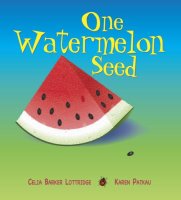 One Watermelon Seed
 One Watermelon Seed reminded me of another recent favorite:Seed Savers: Treasure
A Weekend With Murderers
Its been an interesting, though depressing weekend of books, while I was away from the computer. Since my modem had burned up and we were patiently waiting for a new one, I decided to sit down and have as much as a reading marathon as possible with a toddler in my midst. So between a whole lot of picture and board books, I was on a mission to tick some loitering TBRs off my end table…
…Starting with Native Son
So I set it aside, but moved onto to the worst choice ever: Albert Camus’ The Stranger
All these “helpless” humans killing other humans. I got really irritated, more than a little sad, and switched over to some nonfiction where I polished the weekend off with a whole lot of Astrology and Astronomy books for a little research project. As someone who personally knows someone in prison for two accounts of attempted murder, I just have a hard time buying into the helpless unintentional killings, unless we’re talking self defense or the mentally disabled (like in Of Mice and Men).
What have you been reading?
The Planets
 Title: The Planets
Author: Dava Sobel
I’m impressed with how accessible Dava Sobel has made Astronomy. As a New York Times journalist, she brings all the important information to the table. As a writer, she’s a story teller of the highest degree. Beautiful, fluid, and full of all the ancient romance of the stars, The Planets is full of history, poetry, and all the most relevant of scientific discoveries. Sobel’s work is not only a pleasurable read, but the dream-find for a homeschooling mom intent on classically educating her child.
With Sobel’s newspaper background, the book is very readable; a proficient sixth grader shouldn’t have a problem with it. I plan to use this for my child’s eleven year old Astronomy lessons, along with a middle grade level study of Ancient History, as Sobel has filled the book with quotes from or about many of the Greats. “Pythagoras believed the cosmic order obeyed the same mathematical rules and proportions as the tones on the musical scale,” (pg. 163.) introduces an entire chapter dedicated to man’s fascination with the planets and how that has been celebrated through the centuries through the art of music.
Always presented to me in school as a pitiable underdog, small and petite, Pluto was my favorite planet. Even more so when it was first threatened by the idea of being stripped of its planetary status, I became indignant, an uneducated supporter of allowing it keep its rank in the sky and in our textbooks. Like an older sibling protecting a small child, I felt like it was a personal attack to say Pluto wasn’t really a planet. I was angered that someone had decided to take back all I had been taught and strip this little planet of a description I thought it had earned. After reading Sobel’s explanation of Pluto’s discovery, history and status and then a chapter on Uranus, I think I may be sold on the reasons why Pluto title as the 9th planet is threatened and that Uranus is actually my new favorite. So heavily tied to the literary works of Shakespeare in name and attitude with such a unique history, my new knowledge of Uranus now pales my previous love for Pluto – a childish emotion of elementary proportions, tied to an association with the Disney dog.
I have other books by Sobel lurking around in my library, and I can’t wait to dive into those when I’ve exhausted this particular topic. I look forward to reading Longitude and see if she attacks the subject of geography with the same fervor as she did Astronomy.
A Piece of Steinbeck

Click on the Book Cover to visit the National Steinbeck Center website.
Title: Of Mice and Men
Author: John Steinbeck
Publisher: Penguin
Length: 103 pages
A friend asked me if Of Mice and Men was a good representation of Steinbeck’s work. Not having read it, but being a die hard fan of East of Eden
Of Mice and Men was written as an experiment, so says the inside jacket of my beautiful Penguin Centennial Edition. Steinbeck himself called it, “a kind of playable novel, written in novel form but so scened and set that it can be played as it stands.” Its true, it is a playable novel. And as complete as a lone standing novella, it could also be a brief chapter in a full length Steinbeck saga that I’ve grown to expect.
My favorites by Steinbeck are long sweeping story lines of depression, written with perfection, where Of Mice and Men is a short stint featuring a relationship between two men as one struggles with the lines between gentility and brute force. When I think of Steinbeck, its for his onion layers of generational secrets, sins, and passions. If given this in hand written form, not knowing what it was from, I think I would guess Steinbeck, but ask where the rest of the book is, thinking this was a bit of back story to something much more epic. I wouldn’t call this a short representation of his work though, its so unique and different. It feels more like a small little corner of his brain, a little tiny piece of the puzzle that makes up Steinbeck’s genius.
For starters, there’s much more dialogue than I usually see in Steinbeck’s pieces, true to the form of a play. There are far less propelling descriptions that push you along a timeline, instead of equating my reading experience to a landscape often seen in those large European antiquarian homes and museums, I feel like I’m looking at one scene or portrait on an average sized canvas. I wasn’t left with a deep sense of having been, step for step, in the same place the characters had walked, like I did with East of Eden. I closed the book saddened at Lennie’s plight, but did not feel the overwhelming gush of reality being poured upon me by a starving man seeking nourishment from the breast milk of a woman who had just delivered a stillborn baby in a barn.
Steinbeck succeeded in his play-novel experiment, and its quite good – I feel like I’m watching a play. But I don’t feel like I’m nose deep in story, reluctant to come up for air even to eat, or drink, or use the restroom; which is usually the case when I read Steinbeck. Who do I recommend Of Mice and Men for? Anyone attempting to guide their reading habits from one genre to another. If you usually read novels and want to try plays, pick this up as a stepping stone. If you are a theatre buff, actor, or director who usually reads plays or screenplays and are in the mood to get your literature on, Of Mice and Men would be a good starting point. It would be a great crossover piece for younger literature students as they are led from one unit to the next, and I think I may use it as such for my daughter, an afternoon project. Although, I wouldn’t spend more time than a afternoon on it, and I will probably never read it myself again.
Weekly Low Down on Kids Books 6/13/12
 Oh my goodness have we been reading! And reading… and reading… and reading some more. The goal for the summer reading program at the public library is 500 minutes. That’s a lot of picture and board books. Yet, one week in and we’ve already reached 250 minutes, so not too shabby. Out of all the many, many, many books we’ve read, here are the top three for the week.
Top pick by Ayla (so much so, I had to re-check it out because she refused to allow it to go back in the library bag to be returned, which also means I’m going to have to find a copy to keep because this book WILL be returned to the library next week):Snog the Frog
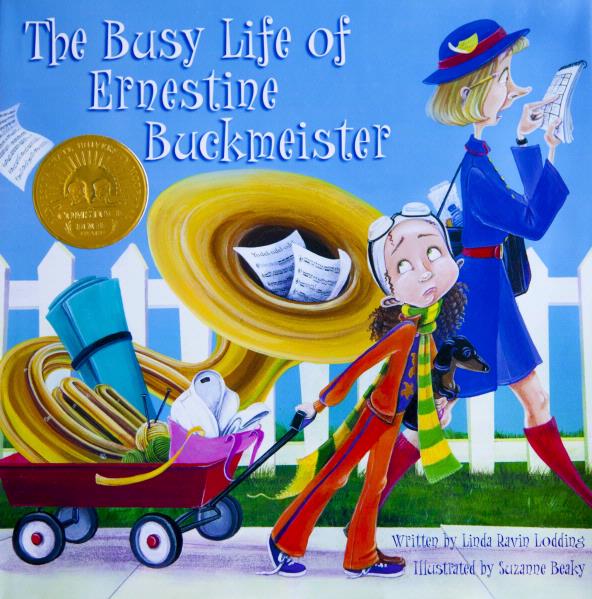
I however, thought The Busy Life of Ernestine Buckmeister
Once Upon a Time, The End
The Secret Adventures of H.G. Wells
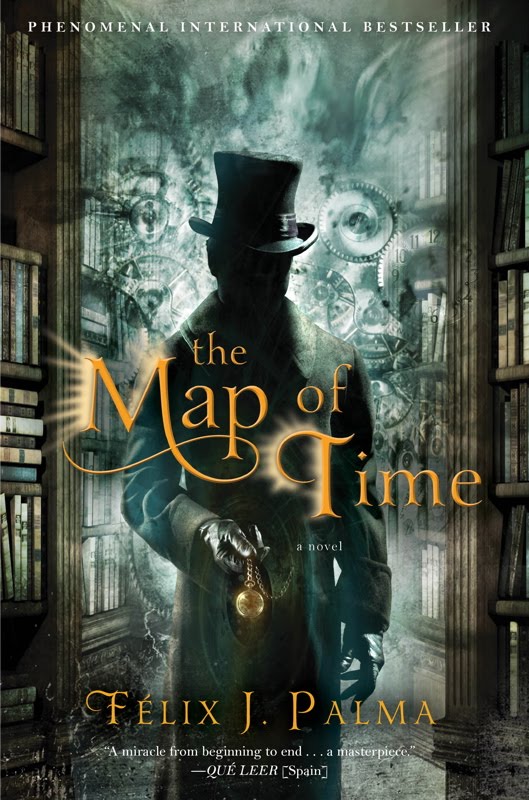 Title: The Map of Time
Author: Felix J. Palma
Publisher: Atria Books
Length: 611 pages
It may have taken me longer than I first supposed to finish Felix J. Palma’s The Map of Time. Yes, there may have been days between reading that I had not expected, because the marketing was so astonishingly gripping. But any distaste I had for this book while I was reading it was purely psychological. It had to have been, because Palma’s writing is brilliant.
My psychological beefs? Let’s see if I can express them.
#1 The premise described in the jacket isnt even remotely a familiar story line until the last 60 pages of the book. Good thing I don’t usually read dust jackets, I just dive in, but I have friends who do who were reading this book roughly around the same time as myself, so on this occasion I went against instinct and read the synopsis. While reading the novel, I felt a bit duped by the summary, anxiously waiting for a time traveling book thief that didn’t arrive until over 500 pages in. The front cover is applicable to all three story lines, but the inner art work is directly related to the end, so the anticipation literally killed my reading mojo. I wish the advertising had been a little more straight forward, except I love the advertising and it clearly worked, therefore on that count, I have not a single suggestion.
#2 The book is really 3 books. At least in my mind it is. Its 3 separate but interconnected stories, overlapping characters and puzzle pieces and the theme of time travel, though not actual time travel. In my perfect world, this book would have been a series of novellas (which I inevitably would have begged to have in one complete volume as an omnibus – see… psychological issues!). Instead of being broken up in generic Part One, Part Twos, etc, I would have mentally prepared the reader for the disconnected yet interconnected adventure with titles. Example: Instead of being called The Map of Time, call the book The Secret Adventures of H.G. Wells. Part One, would be “Book One: The Murder of Jack the Ripper”, or something of the sort. “Book Two: Captain Shackleton’s Love Story” and “Book Three: The Time Lord and the Book Thief.” Perhaps Book Three could keep the original title “The Map of Time” it wouldn’t really matter. I just want to go in with the understanding that these are separate but connected adventures, rather than flailing about wondering if the next paragraph has any relevancy – which it does!
#3 There’s a word mis-used at one point where I believe ‘ancestor’ should have been utilized instead of ‘descendant.’ But that’s really trivial, and no one cares. (It also could have been me getting my time loops all mixed up.)
The story itself, I wouldn’t change a lick, because it’s marvelous. It’s the present structure that I clearly have issue with. Feeling as though the story was disconcertingly disconnected (when in reality as a series I would find it beautifully interconnected) made me set it aside in irritation one too many times. With the internal structure slightly altered with silly titles, I suddenly feel better about the whole thing. I would have found both jacket and description equally fitting and not misleading at all.
Moral of the story (my story, not Palma’s story)… this book is bloody brilliant and I’m keeping it, despite having kicked and internally screamed several times while reading it. Don’t be put off by your own expectations.
Weekly Low Down on Kids Books – 6/05/12

There’s nothing better than coming home from an outing (story and play time at the library) to a tired, snuggly kiddo. Ayla and I hunkered down in the bean bag while reading through our haul from the library and Felicity napped. First on the roster: Bats at the Beach
As we closed the book, reading the last line: “Shh – now sleep. The moon’s out of reach. The night was just perfect for bats at the beach,” Ayla’s little eyes began to blink shut. She lazily pointed to the bag of library books and we made it half way through the first page of the next title before she started to pass out completely. After Bats at the Ballgame, I had no intention of hunting down Brian Lies other work any time soon, my nephew loved it, but I wasn’t sure our house was ready for those titles yet. After Bats at the Beach, though, I can’t wait to find a copy of Bats at the Library.
Summer Reading Kick Off Party!
Every June Half Price Books hosts a party to kick off their summer reading program. At the store in Humble, we’ve made it a habit of inviting local Fireman Ricky Meehan out for the fun. He reads to the kids while we pass out snacks and brochures, and talks to them about being a fireman and shows off his gear. Last year he read Curious George and the Fireman, this year we laid out some fireman titles but got requests for favorites from the likes of Dr. Seuss and Shel Silverstein.
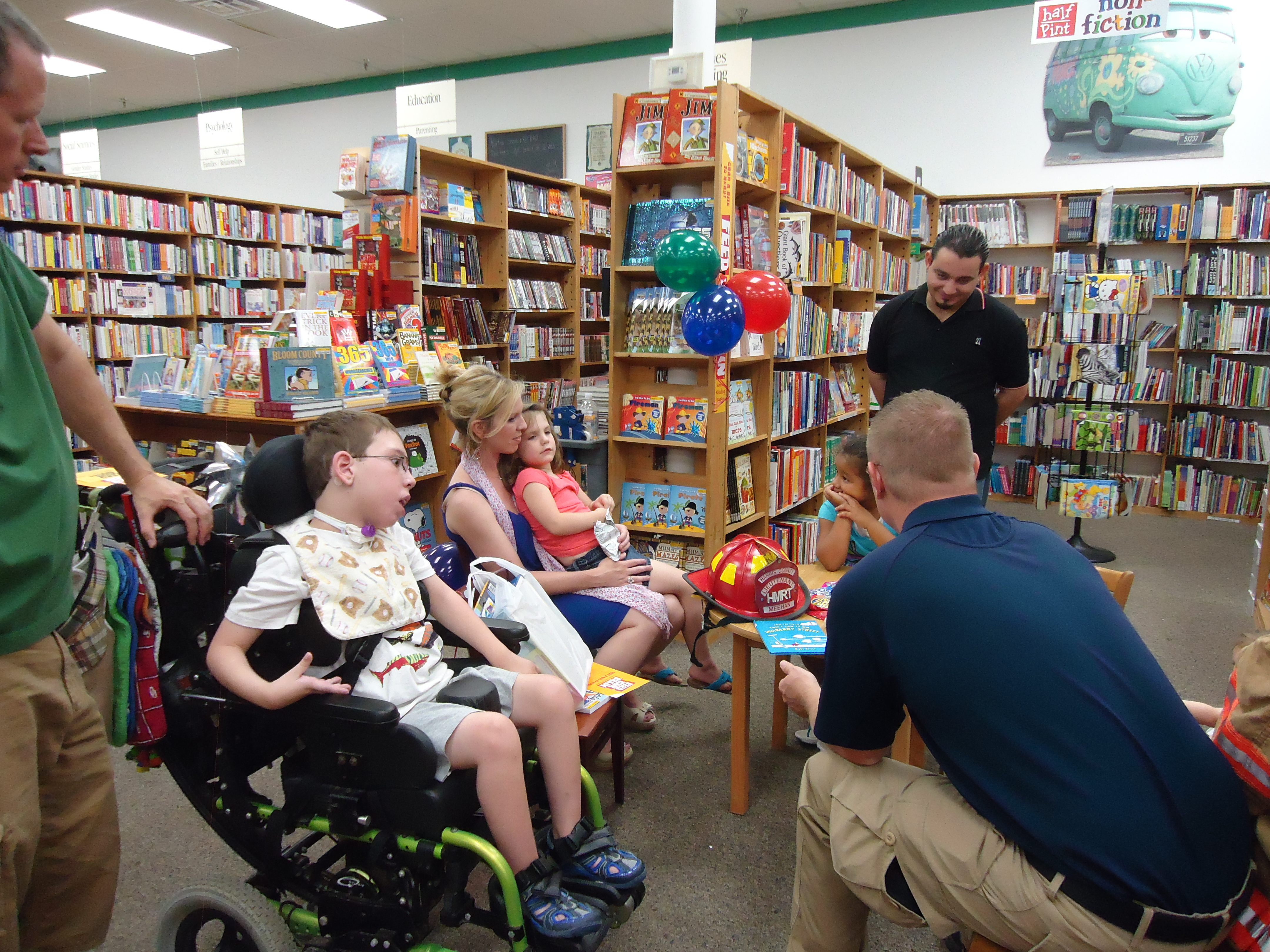 He read for nearly a full hour, kids came up and rotated out using the chairs. We maybe had about twenty smaller ones over all, but there were lots of tweens and teens that hung back, browsing the young adult section while munching on their snacks, pocketing the brochures so they could log their time and get the coupons too. HPB’s summer reading program is designed for kids 14 and under. If your child is too little read like mine, no worries, you can read to them and it still counts!
The Humble location will continue to do Wednesday morning story time at 10:30 am on a weekly basis throughout the summer. We wont have a fireman handy, but children’s authors have been known to do book signings on those days. Just last week we had local author Temara Moore read “Bloop! Bloop! Goes the Poop” later this month we’ll be visited by M.G. King, author of Librarian on the Roof.
A few of my personal favorites to keep an eye out for this summer:
Mary Pope Osborne’s Magic Tree House

Kids got to check out the gear and learn about how it protects our fireman from injury.
Every kid should spend a summer with old school greats like The Hardy Boys, The Boxcar Children, and Nancy Drew. When they are exhausted on those fabulous mysteries, most kids can handle Sherlock Holmes
Invitation to the Game
A great series for older kids to get into is Frank Beddor’s The Looking Glass Wars
Whatever you pick, if you’re 14 and under you should log your minutes and cash them in! More information can be found at the links below.
http://freebies.about.com/od/familyfreestuff/p/half-price-book-summer-reading.htm
Bookish Aromas

Scentsy Man available at https://akklemm.scentsy.us/Scentsy/Buy/Collection/374
A Post Devoted to Scentsy
As some of you may know, I am not just a book fiend, I am a Scentsy Consultant as well. Something I love doing as I prep to read is clean the house, make my coffee, and, yes, put the appropriate scent in my Scentsy warmer. Through some of my posts and reviews you’ll see mention of a perfect Scent pairing for particular books, smells to help set the mood. For the record, I’d like to share some of my all time favorite mood setters here:
Weathered Leather
Always enhances the library mood, reminding your nose of all the leather bound books and leather covered winged back chairs your library should have, even if it doesn’t now. The scent also has a backdrop of Oak, adding to every book lovers nose for the perfect library. Its especially wonderful while reading a historical piece, or a good old fashioned classic, something that you’d easily find in a leather bound anyway. You can find it under the Scentsy Man collection, but I would definitely not limit this to men.
Duke
Also found in the Scentsy Man collection, I didn’t like this scent much until it hit the warmer. Cardamom, mahogany, and amber, it makes for the best of library scents, musky and sexy, and all that reminds me of books. I got this scent for my husband’s man cave, but this week I am convinced that I must steal it because I’ve been doing all my reading in here since we started warming it. Went perfectly while reading Cosette of Les Miserables.

Spring and Summer Collection available at https://akklemm.scentsy.us/Scentsy/Buy/Collection/371
Just Breathe
Wonderfully fresh with euclyptus and lemony goodness, its great for summer and those breezy summer novels. Kick back, lay back, enjoy the spa vacation life and a good book. This is the kind of scent that early Saturday mornings, when my face is freshly washed, I can open the windows let the summer breeze in and let the scent intermingle with the freshly cut grass.
Pixie
A little bit Spring and Summer, a little bit wood nymph. Its got both mandarin and teakwood as part of its unique blend, and allows me to dive into the greatest of fairy tales. Its become a personal favorite that I don’t just warm in the library, but all over the house. It also makes a fantastic bedroom scent.
Honey Pear Cider and Comfort & Joy
These are both out of season Fall/Winter or Holiday scents. I love them each, and would love if they would bring these back year round. Honey Pear Cider would make a fabulous Cafe scent and always go wonderfully when I have Hazlenut Latte and Sticky Cinnamon Bun warming in other rooms of the house. Comfort & Joy is described as spicy, familiar woods marry with surprising white florals, pure citrus, and just a nibble of gingerbread and I absolutely love it. This is also a scent that smells incredibly clean and I stocked up at the end of the Fall/Winter season so that I would have it through the summer.


 Anakalian Whims
Seed Savers – a series to be treasured
June 8, 2012 at 1:00 am (Education, Reviews) (books, Christian fiction, dystopian society, fiction, gardening, homeschooling, kids books, reviews, S. Smith, Seed Savers, self-sufficient living, series, social commentary, Treasure, young adult)
Author S. Smith has written the latest and greatest of young adult dystopian society novels. In the spirit of the previously mentioned Lowry novel and and Monica Hughes’ Invitation to the Game , Smith has given us solid middle grade tale featuring a new (and somewhat real) futuristic threat – illegal gardening. It’s yet another great pre-cursor to students preparing to read Orwell’s 1984
 . Educators everywhere should be aware of this rising star in children’s literature.
The detailed history of how this society came to be is part of its unique twist. Most dystopian society stories don’t spend a lot time telling you how it got this way, just that it did and people didn’t notice, the path somewhat alluded to but not specific. Smith helps point out the steps leading up to this future with factoids that suspciously resemble things that are happening in both the farmlands and corporate America. From living organism patents made legal in the 1980’s to genetically engineered seedlings, Smith spells out just exactly how this future (though a little outlandish in a society newly obsessed with being eco-friendly in its marketing) could quite possibly go from where it is now to the kind of United States described in the book (corporations and the government in bed with each other making trouble for the little people – Banks, anyone?… in combination with the idea that a government can make a plant illegal – marijuana comes to mind). Yet, she does this effortlessly, without killing the flow of the story.
I personally love social commentary presented through the art of fiction. (You like this too? Check out this site: http://www.jstor.org/discover/10.2307/371512?uid=3739920&uid=2129&uid=2&uid=70&uid=4&uid=3739256&sid=56242603693). I find it compelling and quite frankly the best way to address particular situations that when written about in a nonfiction format becomes an irate rant. I love the way it personalizes events and characters in a book so quickly, in a way that the average story cannot do. Get under the skin of an art fanatic… make it impossible for art to be appreciated, collected, loved (if you’re not a reader, check out the movie Equilibrium, then again, if you’re not a reader what’s up with you reading my blog? What brought you here? Leave me a comment.) Tug at the heartstrings of a gardener… attack the very core of their being by telling them in this reality, they can’t have one.
Needless to say, I loved it. S. Smith, you are brilliant, my dear, and I can’t wait to read the rest of the series. This one is going on loan to my nieces and nephews, is getting short listed on my very long list of required reading for my daughter who will one day be homeschooled. It will be the fun fiction to parallel our botany classes that week, the friendly reminder of why she will be taught to tend her own garden, and perhaps raise a chicken.
Buy Your Copy of Seed Savers Today!
Visit the author’s website here: http://authorssmith.com/
Want to start your own garden (before its too late!), check out Mel Bartholomew’s Square Foot Gardening tutorial: http://www.youtube.com/watch?v=N5Lu-7FIj_g
Also for fun, check out this blog: http://www.thisgardenisillegal.com/
Permalink 10 Comments