Meeting S. Smith – Earth Day Every Day Part Three
I couldn’t have had a more perfect day. It all started with an amar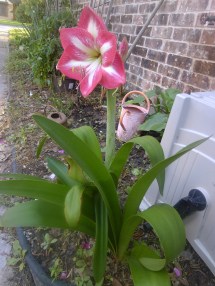 yllis bloom opening and an email. S. Smith had arrived in Houston and was looking to hang out before her first Half Price Books signing tomorrow.
Today I finally had the pleasure of meeting S. Smith, the author of the Seed Savers series. I never thought this day would actually come, as I am a book reviewer in Texas and she is a young adult fiction writer from Oregon. But lo and behold! She had a reason to come down south and booked a Texas Earth Day tour starting with Houston.
I was delighted that she wanted to go for a walk in the woods by our house. It was a joy picking along the trails, chatting, with my daughter and her husband in tow. We talked about the difference in the woods of Texas from where she lives in the Northwest.
Below, kiddo, Sandy, and her husband stopped for a rest on a fallen log.
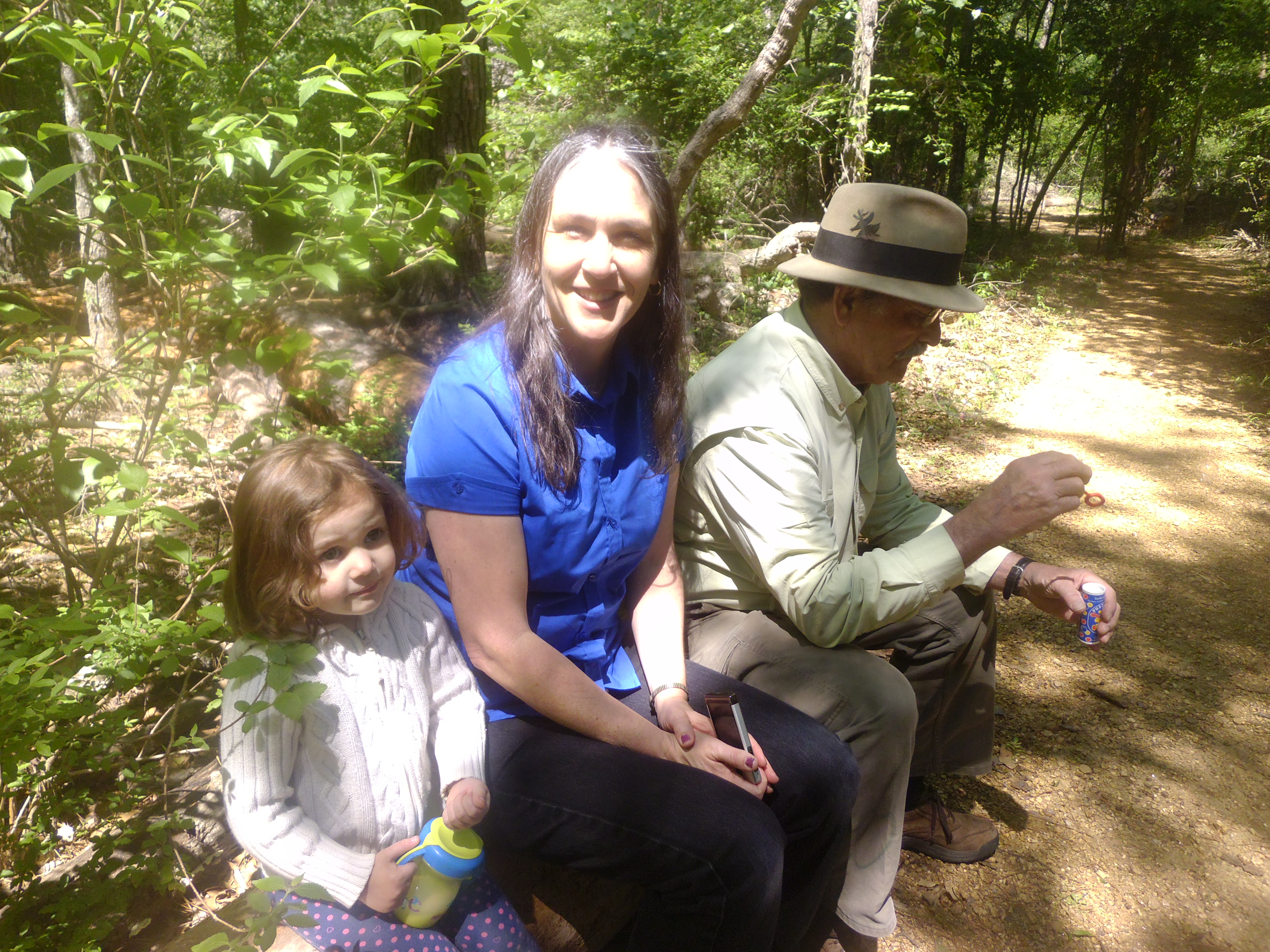
Sandy will be at the Half Price Books in Clear Lake tomorrow from 1-4 pm, Good Books in the Woods on Friday evening, Half Price Books Humble on Saturday from 1-3 pm, and the Montrose HPB store that evening from 6-9 pm. Her books are works of fiction for young adults about a dystopian society where growing your own fruits and vegetables is illegal, a fitting discussion topic for an Earth Day celebration.
Literary Journal Monday – Earth Day, Every Day Part Two
 It’s April, it’s spring time, it’s RAINING! To bring May flowers, of course. So, I jumped head first into an April 1968 edition of Blackwood’s Magazine, more specifically, Roy Neal Williams’ Mushroom Weather.
I’ve never heard of Roy Neal Williams before today, but I definitely can say I’ll remember him. His memoir about his grandmother and their adventures foraging in the woods for mushrooms with his german shepherd mix, Shep, is right up my alley. His prose is nice and playful, easy to get right in step with the spring time atmosphere he is describing from his childhood.

The time spent in the woods and the property with his grandmother is looked back upon so fondly. I hope that my daughter remembers her time with me in the woods as well. And I like his grandmother,
“She stopped and looked at the flowers. All was quiet. There was only the sound of the water as it rushed along its way, cutting round stones and making miniature waterfalls from a flat rock or a fallen limb. An occasional bird would chime in and, in the distance, we could hear Shep yelp now and then.”
He explains how they collected mushrooms, morel mushrooms, and then took them home and soaked them in preparation to eat the next day. As he slept that night he would dream of the delicious dish that awaited him the following day.
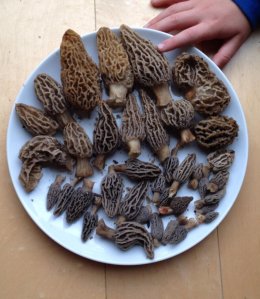
The forager in me couldn’t help but come home and search the web for images of these tasty treats. Below is a picture of morel mushrooms that serves as a link to the Morel Mushroom Hunting Club. How exciting – and odd – is that?
Earth Day Every Day 2014 – Part One
Spring time… the sun is out, the animals are about, it’s time for spring cleaning and for our family to start hitting the trails every day again. It also means April is here, and so my environmental awareness is in high gear. Earth Day and Arbor Day means Earth Day events at the bookstores and local libraries. It also means I start seeing my favorite color (green) plastered all over displays, and books with pretty leafy covers come out of the woodwork. Thus begins the Earth Day reading highlight reel.
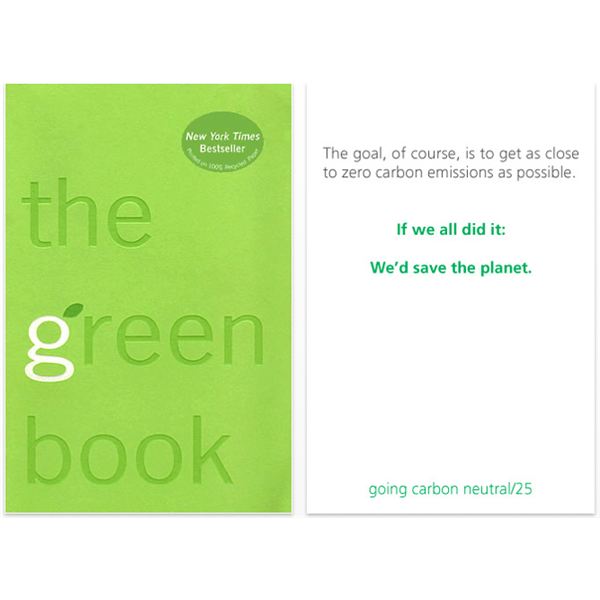 Title: The Green Book

Authors: Elizabeth Rogers and Thomas M. Kostigen
Publisher: Three Rivers Press
Genre: Nature – Environmental Conservation & Protection
Length: 201 pages
This is a handy little book that is easy to read and full of celebrity pep talks for going green. The writers have pointed out a lot of easy to remember ways to readjust your existing lifestyle to recycle more and waste less. I liked it.
It was published in 2007, so some of the information feels a little outdated. It also gets a little repetitive for those who have the ability to apply one concept to multiple aspects of their life, but it’s a good little book nonetheless.
My favorite tidbit from this book – being a cyclist – is this:
“Try to recycle your old bicycle tires and inner tubes instead of throwing them away. You’ll prevent about two pounds of rubber from being landfilled and may help provide materials for a new handbag, a pair of hiking boots, or even a bike path itself. If one in fourteen American cyclists were to recycle his or her bicycle tires each year, the rubber saved could pave the current route of the Tour de France.”
Worth checking out from the library or downloading to an e-reader. The only time I could see wanting a physical copy would be for your child’s library – and even the authors think you should buy these books used.
 This photograph is a Joel Robison piece. I love all his work, it has been awhile since I’ve shared it, though. However, some of his earthy pieces seem extremely appropriate this time of year as we’re reminded to enjoy our world and treat it kindly. Click the image to visit his blog.
Freelance Writing
 I wish this blog was a post about me receiving one of those… see Daphne, above, a royal portable from 1930. Green, no less.
It’s not.
But it is pretty exciting.
I’m pursuing supplementing my income with freelance writing jobs. So far, I have been hired on by Money-Fax.com and I’m enjoying it quite a bit. Money-Fax has me writing about Kid & Family Budgeting, which is pretty perfect because I’m a homeschool mom chronically on an author budget. (That’s code for mommy who lives off nothing.)
Here are links to my published articles, so far:
The Economics of Cloth Diapers
How to Entertain Your Child for Free This Summer
How Much Does it Really Cost to Homeschool
The more traffic my articles get, the more people will want to have me write them – naturally. So, please, if you have someone in your life any of these articles would interest, share them.
There are more to come. Keep checking Money-Fax.com for budget friendly pets and ways to celebrate Easter. Browse through their site for other helpful articles as well. They are an education service geared toward helping the public learn to improve the state of their finances.
Follies Past – A Review
 Title: Follies Past
Author: Melanie Kerr
Publisher: Petticoat Press
Genre: Historical fiction/ Classic spin-off
Length: 272 pages
“Follies Past” should be the name of the file folder for every other Jane Austen spin off, because this book blows them all out of the water.
This is by far the best Austen spin off I’ve had the pleasure of reading. Most Pride & Prejudice sequels or prequels read like fan fiction, but Kerr has managed to construct a novel that reads like one of Austen’s own making. It could very well have been a long lost manuscript of Jane’s, documenting the characters of Pride & Prejudice before they encounter the Bennets.
I was so happy reading this, I’ve always longed to get a bit more of Georgiana’s story. Kerr does an excellent job of taking the small tidbits of information we know about characters and giving them a full and lush back story without straying from our vision of them.
I think Caroline Bingley was truly brought to life as well. I both hate her more and less – how is that possible? Through Darcy’s eyes: “He ought to have known that a lady who is too sparkling and clever is also cunning and insolent and not to be trusted.”
Much is learned from Darcy’s perspective without the act of spelling everything out, something other books have done in diary form turning Darcy into an effeminate sap. Instead, from Kerr, Darcy expresses himself naturally and in his own fashion: “Gibbon’s History is worth an entire library of your sentimental drivel. The depth and breadth of his scholarship paints a picture of the Empire that may never be surpassed. How can you compare such an achievement to your works of vapid sentiment.”
Kerr has stayed true to the characters, true to the time, and yet wielded a rich and elaborate story. It’s beautiful and brilliant, and I cannot imagine an Austen fan who would not love it.
My one criticism is this: I ADORE the front cover of this book – but my first and continuous reaction is that it is not a cover that belongs on *this* book. It’s a fun and awesome piece of art, I’d even hang it on my wall I like it so much, but it doesn’t truly portray what is within the pages.
Below, Miss Golightly is caught on film inspecting Kerr’s book. She had the same reaction I did to the cover, “Oh I love that cover! Wait, her writing sounds like it could be Jane Austen! That’s incredible. I’m a little confused by the cover now.”

Five stars for the story. Five stars for the cover art. But only three stars for matching the cover art to the story.
Bones of My Bones
Below is a very small piece out of a decently long series that is not yet published, but still lurking about on my computer. The story is from ages ago, an angsty sci-fi piece I started writing when I was 14. Things change and flesh themselves out when they see the light of day – or the eyes of others. So periodically I like to post excerpts of things still in progress.
If you like this and you haven’t yet purchased my book, The Bookshop Hotel, please do. Again – This is not from that book, but it is a sample of my writing.
She often wondered what her bones would look like after death. Bones tell tales. Bones are the memory book of all our scars, all our aches and pains, all our wounds. An autopsy would show her broken ribs, her smashed fingers, conditioned arms and legs… but would it also show the bruising on the inside? All the times her heart nearly burst and beat her sternum in anger and sadness from the inside?
They say that if old lovers can be friends they either were never in love or they still are. She wondered if that could be true, and if it was true then which was the case now? What would be worse? Thinking none of it was real before, or thinking there was still something there that neither one could acknowledge? Worse yet: if old feelings could bubble to the surface at any moment and disrupt the fabric of her current reality.
Then again, what defines lover? The problem with the world is that they apply emotional concepts to physical acts. By doing so, does that make the emotions with non-physical acts irrelevant? You can love someone and be loved by someone, you can be in love with someone, and never cross the line into the realm of ‘lovers.’ Lover implies physical contact, lover implies intercourse, lover implies bones of my bones and flesh of my flesh sort of contact.
It either takes serious emotional bonding or a vivid imagination to feel like you’re one flesh with someone you’ve never touched. To feel their absence like a stab in the gut. To feel their loss like a loss of your own limb. What if she just had the most vivid of imaginations? What if none of it had ever been real?
After death, would they see that too? Would her delusions be written on her bones? In her muscle mass… in her muscle memory. The heart having expanded too much, too quickly. Would they see that?
Copyright A.K. Klemm
The Colorado Kid / Haven
 Title: The Colorado Kid
First Edition Release Date: October, 2005
Author: Stephen King
Synopsis taken from stephenking.com:
Vince Teague and Dave Bowie are the sole operators of The Weekly Islander, a small Maine newspaper. Stephanie McCann has been working for them as an intern. When Stephanie asks if they’ve ever come across a real unexplained mystery in the fifty years they’d been publishing the paper, they tell her the story of The Colorado Kid.
I have to be honest, I picked up this book because I have developed an unhealthy obsession for the tv show Haven.
Which, despite being drastically different stories, I like both King’s original story and the tv show spin off, a lot.
There are a lot of complaints on the internet about the show having nothing to do with the book. I wonder what King thinks, actually, because even though there were some definite creative licensees taken, I think the writers of the show have tried to honor the original creator.
In the book, Vince and Dave are not brothers – in the show they are. I’m not sure why that particular route was taken for the show, I don’t think it would have made a big difference to keep their original relationship. I do, however, like their characters’ dynamic in the show. And I adore the actors who play them.
The book focuses on the intern, Stephanie, who is asking Vince and Dave questions regarding the biggest mystery in Hammock Beach. In Haven, Audrey Parker (FBI) has come to town to investigate a different murder. Absurdly different, until you dive deeper into the show where you find that Audrey’s entire reason for being in Haven (or Hammock Beach, as it is called in the novel) has everything to do with the 1980’s mystery of The Colorado Kid.
If you have the patience to really get into the show, you’ll find that the show and the book have this main common thread:
In 1980 an unidentified body is found on a beach in Maine, wearing gray slacks, and a white shirt. No one seems to know who he is, or how he got to be there, but he is dubbed The Colorado Kid.

King’s book allows this mystery to mostly go unsolved, as Dave Sturm wrote in 2009:
“[…] King has written a meditation on stories by telling one that heads to a letdown, because the central mystery — SPOILER: How did the body of a Coloradan end up dead on a Maine beach just hours after he disappeared from Colorado???: END SPOILER — is left a mystery at the end.
King has violated a central tenet inherent in Hard Case Crime. The story has no plausible resolution.”
by Dave Sturm
Rambles.NET
8 August 2009
The point of the book is the beauty of things that are mysterious, how one answer unveils another question – at least that’s what I got out of it. The book also leaves itself wide open to becoming a set of mysteries that must be solve to explain the existence and death of this strange man on a beach, which the tv show honors.
So, in Haven, every answer Audrey Parker uncovers in the show leads to another series of questions. The show has one magical quality – it’s entire existence is someone’s creative answer to King’s unsolved mystery. By the fourth season, you may start to catch my drift. I am still patiently waiting for season five to get uploaded to Netflix.
In short, I adore the show and I loved the book. I read the first 137 pages of the book during my one hour lunch break. I read the rest of the book as soon as I completed my work. One thing that I missed doing, however, was read King’s afterward. I was in a hurry to get home, but couldn’t go without finishing the story – but putting all my thoughts in review here I wish I had taken the extra moments to read what he had to say about his own work.

Anthropology of Reading
 Anthropology
[an-thruh-pol-uh-jee]
noun
1. the science that deals with the origins, physical and cultural development, biological characteristics, and social customs and beliefs of humankind.
2. the study of human beings’ similarity to and divergence from other animals.
3. the science of humans and their works.
4. Also called philosophical anthropology. the study of the nature and essence of humankind.
Origin:
1585–95; anthropo- + -logy
Reading
[ree-ding]
noun
1. the action or practice of a person who reads.
2. Speech. the oral interpretation of written language.
3. the interpretation given in the performance of a dramatic part, musical composition, etc.: an interesting reading of Beethoven’s 5th Symphony.
4. the extent to which a person has read; literary knowledge: a man of wide reading.
5. matter read or for reading: a novel that makes good reading.
This is a challenging post, in that I could talk for days and days, possibly write a whole website dedicated to the topic, so I’m going to do my best to remain concise and not chase too many rabbits.
The blogger of So Many Books wrote a post about the Anthropology of Read, which I reblogged (click the link and it will take you there). Follow that post even further and the blogger wrote another on Auden’s Eden Meme. Combining these two posts into one thought, this is my anthropological response concerning my reading habits.
“Though the pleasure which works of art give us must not be confused with other pleasures that we enjoy, it is related to all of them simply by being our pleasure and not someone else’s. All the judgments, aesthetic or moral, that we pass, however objective we try to make them, are in part a rationalization and in part a corrective discipline of our subjective wishes. So long as a man writes poetry or fiction, his dreams of Eden are his own business, but the moment he starts writing literary criticism, honesty demands that he describe it to his readers, so that they may be in the position to judge his judgments.” – from Auden’s “Reading”
So following Auden’s checklist, here is my Eden:
Landscape
Mountains that butt up against a beach, with open fields in between. I like oceans that beat against cliffs, good soil to plant, large trees to climb, and somehow still manage to lay in the sand whenever I want. Take about 10 acres of the Rocky Mountains and stick them in the Florida Keys. If you manage to surround it all with Texas landscape that would be even better. Clearly, it’s a dream world.
Climate
70 year round, I’ll take an occasional hot summer in the 90’s to 100’s. After all, I’m a born and raised Texan.
Ethnic Origin of Inhabitants
I’m a big fan of melting pots.
Language
“English will be the official language but all languages are encouraged (even Elvish and Klingon) and everyone should know more than one.” That’s a direct quote from the So Many Books response to Auden. I see no need to alter that statement in any way.
Weights and Measures
I’m not concerned with this. I’ll let someone who cares decide.
Religion
I’m a Christian hippie. I’ll take Jesus with a side of dirt & trees.
Size of Capital
Small indeed. Close, personal friends. If I want a break from this closeness, I’ll take a vacation out of Eden.
Form of Government
In very small governments, I’m ok with elected monarchies with limited terms. I like to call a spade a spade, and in my research I never see true democracy at work, it’s always bastardized into an oligarchy or some other nonsense.
Sources of Natural Power
Wind, water, solar… the idea that anything was ever anything but amazes me. Wind turbines, watermills, solar panels, this makes sense to me.
Economic Activities
Farming, arts and humanities. Science would remain of the Chitty Chitty Bang Bang variety. I think science is cool, but a lack of tech would be such a nice reprieve from the rest of the world.
Means of Transport
Bicycles, boats, hiking and swimming. Of course, from the mountains to the beach and over some landscape… that requires at least one community zipline. Also, I love horses and would definitely encourage horseback riding.
Architecture
Self-sustained, energy efficient estates. Design – To each their own. Although, I see a lot of bungalows, Victorian estates, farmhouses, and hobbit holes.
Domestic Furniture and Equipment
Again, to each their own, but made by hand is a marvelous thing. In the kitchen, all I need is an oven, a French press, and a coffee bean grinder. If someone slipped me a bread machine, though, I wouldn’t complain.
Formal Dress
Simplicity makes me happy. But again, to each their own. If someone likes frills, I have no desire to stop them. There would probably be an abundance of denim and cotton in my Eden though.
Sources of Public Information
Newspapers, journals, and gatherings over food at a meeting house. My population is quite small, remember?
Public Statues
This would be up to the people. I see gnomes and literary-like shrines in public gardens.
Public Entertainment
Choirs, street theatre, and public readings of important books. Book clubs and bands… I come from a Baptist background, so weekly potlucks are sort of a must.
If this is my Eden… If this is end result of my reading… if 30 years of a life devouring books has brought me to this, where did I begin? How did I evolve?
Anthropology… archeology… the two go a bit hand in hand to me. I would like to go back to school and get a Baccalaureate in Anthropology & Archeology. I love that niche of history and science. I always thought the Indiana Joneses of the world were the most amazing. Amelia Peabody… As a child I was riveted by adventures, but was still very much a typical girl – no, correction, a typical tomboy with girlish tendencies.
I read an awful lot of Nancy Drew. I liked historical things like Little Women and Gentle Annie. Jo March, of course, my favorite of the sisters; Gentle Annie was a civil war nurse running out into the battlefield in the face of danger. I was, and still am, fascinated by doers.
Hatshepsut, Nefertiti, and Cleopatra intrigue me, but I have a literary foundation in all things Jane Austen – the fierce butting heads with the feminine.
My reading is much like my real life – a black belt, with hair usually down to her butt, who loves to get her toes done. I look for brave warriors who want to bask in the sun with some flowers. I desire the intelligence to drive to take care of people, protect them both in battle and emotionally by serving them foodstuffs and coffee. Because this is who I am, this is what I look for in my reading – in fiction, in history, in science, in all of it. I try to find people in all the thousands of years of literature, who are (as Anne Shirley would say) kindred spirits.
Log Off and Smell the Lattes
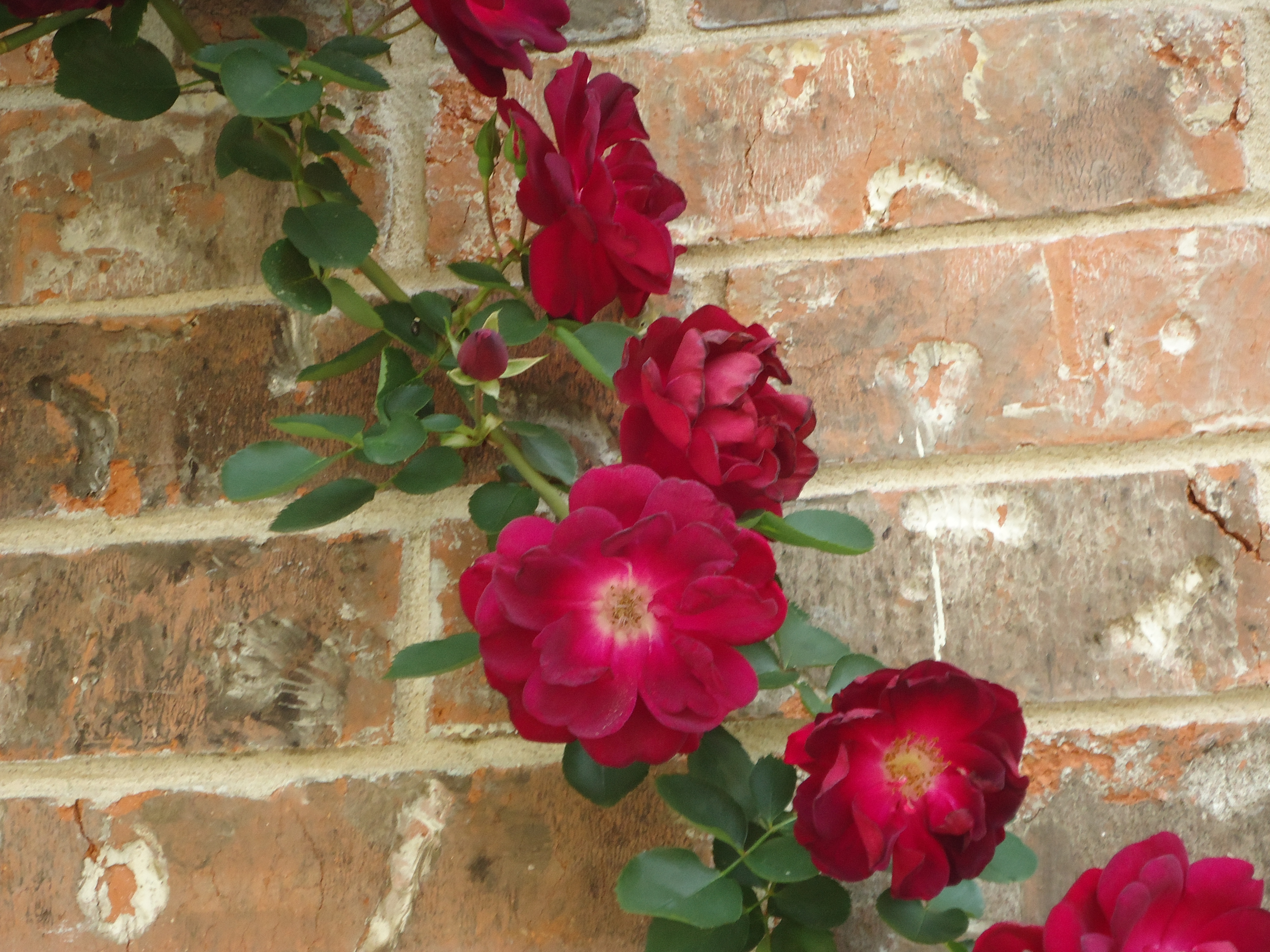 The phrase used to be ‘stop and smell the roses,’ I don’t know that it’s an entirely accurate turn of phrase anymore.
I am a busy lady with lots of activities, but mostly I’m busy on the internet. I have my personal accounts, and most things started out as hobbies, but somewhere along the way all my hobbies turned into jobs – and most these jobs include manning facebook, twitter, pinterest, and a whole host of other social media. Not just for me and my writing career, but for my art company, bookstores, and, well, everyone.
Because I do all this from an actual computer, because I don’t have what I call a ‘fancy’ phone or any kind of ‘spectacular device’ (smartphone, ipads, and whatever other twenty-first century gadgets the world has at their fingertips these days), when I go on vacation, or even a business trip, I get a true break from everything.
I had a book signing in Dallas this past weekend. Which means from the time I got into my car to drive the four hour trek to the time I pulled back into my driveway 72 hours later, I was on internet silence. No facebook to log into. I didn’t have a chance to or even a reminder to tweet anything. My blog became an afterthought; and everything of the cyberspace variety went 100% on the back burner so that I could spend all my time with the real world – or ink and paper when I didn’t want to look beyond my nose.
And guess what?
It was marvelous.
Click the photo to see all the pictures from the HPB Preston Village book signing.
My afternoon at my signing was completely focused on my customers, my business partner, and the beautiful friends that came to visit and support me. I’ve seen many authors sit behind author tables and have no clue how to interact. Instead they spend precious moments when they could be chatting with fans, typing on smartphones or figuring out how to take credit cards. Being able to accept credit cards sure does make things simple for people – but my tech-free weekend kept all transactions cash only, and I have to say, it was nice.
Afterward, a group of us went off to a new restaurant in the Bishop Arts District of Dallas called Smoke. I highly recommend eating there for anyone who hasn’t tried it. The food was excellent, the service was great, and the place had a pretty stellar vibe. (By the way, the creme brule is to die for – and the best part is the candied ginger. ) Part of that vibe, I must say, was enhanced by the fact that we spent little to no time on our phones!
 Instead, we discussed future events for Aoristos and myself, as well as books (both published and not yet published). To the right, my lovely friend Miss Golightly is taking a brief gander at the Follies Past by Melanie Ker while we wait for our dinner. (I’m still reading, but there will be a review posted soon! Austen fans, stay tuned!)
Time and time again I have gone to dinner with the far less considerate only to sit at a table and watch people facebook and text all their friends who aren’t present. It’s something I’ve never appreciated. So, although having a smart phone would make many of my events have a more solid online presence, I am not inclined to purchase one until I absolutely have to. I’m less interested in an online presence and more interested in being present. The online part can happen before and after, in my opinion.
After being stuffed to the gills with the most amazing barbecue I’ve had in a long time, I finished the day at my aunt and uncle’s house. It’s practically a bed and breakfast it is so cozy and relaxing. Homemade lattes were made, there was some time in the garden, and then afterward the kiddo and I slept here…

Clearly, this is after I mussed up the pillows. 
FYI, there’s a manlier room down the hall…
It was the best sleep I’ve had in a good long while. Probably helpful that my eyes hadn’t spent any evening time looking at a computer screen. (Not to mention, I was physically exhausted.)
Bright and early, and well rested, the next morning… I stepped out of my room to something that is nothing short of heaven to my soul:
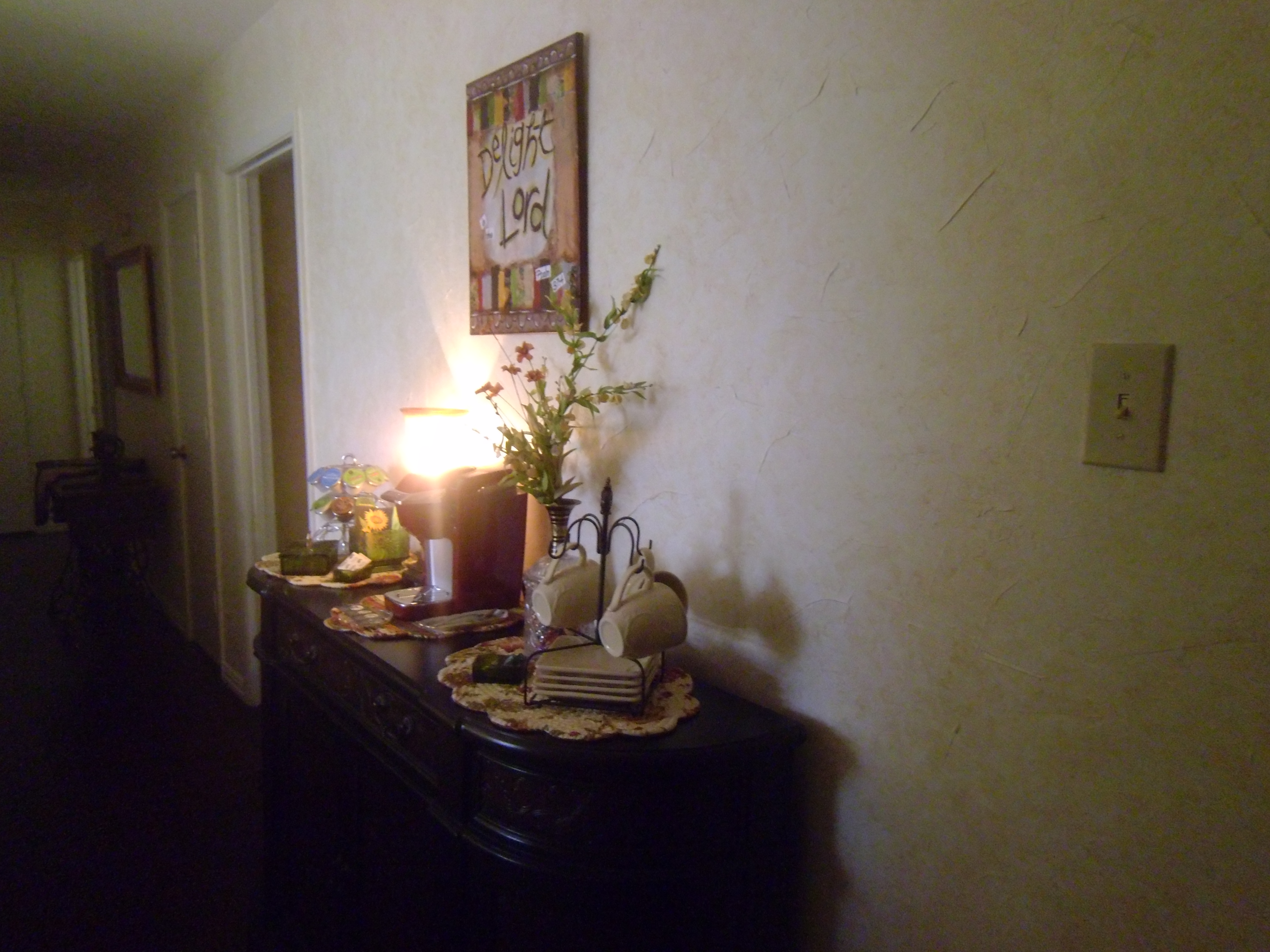 Yes, that’s a coffee bar right outside the guest bedroom. Complete with bottled water for the Keurig, International Delight creamers (in hazelnut and french vanilla), sugar packets, and real mugs!
After helping myself to coffee, I took my journal and Melanie Kerr’s book and headed to the room one door down…
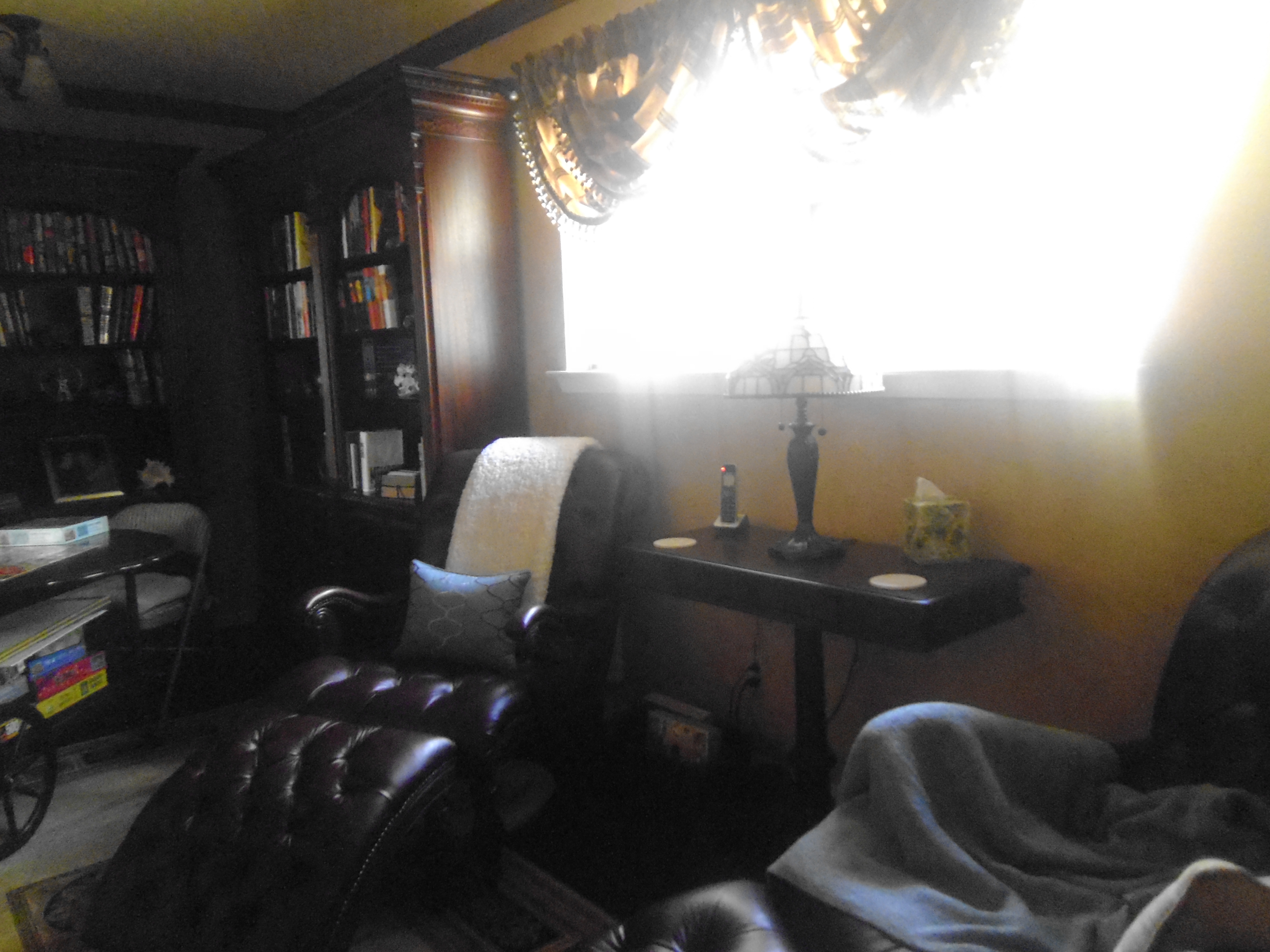
It was a beautiful morning. I did what I do every morning, sans computer screen blinking at me. That lack of a computer screen makes all the difference. And although computers are useful, and I adore my jobs and the freedom I have to raise my daughter while working mostly from home; once in awhile I need to remember that just because I’m sitting, doesn’t mean I need to be sitting with technology.
Log off… smell the lattes… breathe, relax, enjoy.



 Anakalian Whims
People Aren’t Who They Say They Are
April 12, 2014 at 1:42 am (Reviews) (A Tree Grows in Brooklyn, Betty Smith, books, Francie Nolan, Johnny Nolan, liars, literary criticism, people, reviews, social commentary)
The most offhand statement, the smallest turn of phrase, a random word, can completely start my mind reeling for hours, days even.
A friend said to me, about nothing and no one in particular, “People aren’t who they say they are,” and I couldn’t stop thinking about it. As much as I try to let things roll off my back, I internalize and mull over everything and this statement today relates so well to a piece of fiction I started long ago. In addition to that, about a dozen short story ideas popped into my head from the one phrase.
The thought that won’t leave me, though, is not that people lie, it’s that people don’t think they’re lying. People aren’t who they say they are, but they are only capable of telling you who they think they are.
I can only tell the truth as I see it. I can only tell you what’s in my head, not what you perceive of my actions. Isn’t this why people read novels? In third person omniscient you get everyone’s version of the truth – and how very different it can look.
The Ugly Duckling kept telling everyone he was a duck, but in reality he was a swan. He wasn’t who he said he was, but he was saying who he thought he was.
Along this line of thought, many novels and their characters come to mind: The Great Gatsby, The Fountainhead, the Harry Potter series, The Poisonwood Bible, and many, many more. But currently, what is most fresh in my mind is A Tree Grows in Brooklyn.
Francie’s father, Johnny is a talented, sweet, and incredibly handsome, alcoholic. He dreams and wastes away while his wife takes care of the family. He knows he’s a drunk, he thinks he’s useless and has nothing to offer, and his wife comes to a point where she believes this as well. Afterall, he has let her down over and over again with his failures. The only thing he seems to manage is to sing well and entertain his neighbors and friends.
Though he’s not conventionally a good man of the house, and is an awful care giver when it comes to providing food and rent money, but when it comes down to the children’s emotional needs he is there where his wife is not.
Francie’s mother admittedly doesn’t love Francie as much as she loves the son, Neeley. Francie’s mother sends the children to get their inoculations alone – the young kids were terrified and had no loving support from their mom. But she loves them best, right? She cares for them, keeps a roof over their head, and keeps them fed.
Clearly, both parents love their children the best they know how, that much is evident in the novel, but both parents are also not who they say they are – but they say exactly what they think they are.
Johnny meant what he said when he told Katie he would love her forever, that she was the one for him. He didn’t realize when he said it that he wouldn’t know what to do with himself once he became a father of two at age 20. He didn’t know what he was made of yet, or what he wasn’t made of.
A man like Johnny is a great babysitter, the best man to have on a family vacation, a little girl’s knight in shining armor. He will walk her to school, help her get into the school of her choice, because he’s a dreamer and by God he will teach his daughter that her dreams are relevant and important.
Johnny thinks he’s the worst father. He is dejected by his inability to hold down a job other than one as a singer/waiter, singing and bringing food and drinks for tips. He’s Caractacus Potts (Dick Van Dyke) in “Chitty Chitty Bang Bang” had the man never managed to invent something and find Truly Scrumptious. [Completely random side note: Did you know “Chitty Chitty Bang Bang” was based on an Ian Fleming story (the author of the James Bond novels)?] An airheaded dreamer, but ultimately a good person with a big heart.
In Francie’s eyes, Johnny isn’t who he says he is – or even who other people say he is – but everyone says who they think he is, including himself.
Maybe if Johnny hadn’t started to believe that he had to be so ashamed, he wouldn’t have had so much to be ashamed of. Maybe if he’d let go of some of those bad thoughts and acted on the dreamy happy ones, life would have been better for everyone. The character of Johnny Nolan is a complete disappointment to everyone. I haven’t finished the book, yet. I’m not sure how it all turns out, but I do know one thing: Johnny may be a disappointment, but he isn’t useless no matter how much he thinks and says it. He isn’t who he says is his, but he definitely says what he thinks he is.
Obviously, that’s probably a reverse scenario than what is typical of that statement. Most people present themselves as better than what they are, I think. But unless you’ve been utterly broken, it’s highly likely that you think you’re better at things – at life – then others will believe or know.
Maybe it’s because they don’t see every aspect of your life, maybe it’s because you’ve had to shield yourself from truths that hurt too much, maybe you’re a little delusional, but I believe less and less that the majority of humanity is blatantly lying with purpose. The people I have met who do, are manipulative and underhanded and typically have large groups of people fooled, but these people are few.
Then again, maybe I see the world through rose colored lenses. Maybe Johnny Nolan is a useless piece of crap of a human, and I just only see the good in fictional characters. Sort of a difficult idea to embrace from such a self-proclaimed skeptic. And maybe this is the worst piece of literary criticism and character analysis ever to come out of someone who pretends to understand literature so well. But as we know, people aren’t who they say they are.
Permalink 2 Comments