The Atchafalaya Basin
One of the beauties of homeschooling is the ability to pick up and take school into the world. We love field trips. I realized recently that I always refer to them as field trips and not vacations, because each change of scenery for us offers a new learning experience, and we never stop working on math and spelling.

So when we had the opportunity to venture out into the swamplands of Louisiana, we packed up our school work and went.
Although our family’s main homeschooling style relies on the Classical model by choice, by nature after growing up in the GT program of public schools, I’m a Unit Study girl. So when headed to the Atchafalaya we watched a National Geographic youtube documentary on the basin and loaded up on picture books.

Jim Arnosky is a long time children’s book favorite of mine. He is the author of the Crinkleroot character, possibly my favorite children’s character of all time, and truly my go-to when looking for any sort of nature themed studies. I was pleased to discover I already owned copies of All About Turtles and All About Alligators, perfect for swamplands. We picked these up years ago and I just love the whole series. They’re perfect for little nature lovers to peruse in their free time when they are excited about a particular animal or another, or for building unit studies on a particular ecosystem like we did when we went to the swamp.
The One Small Square series by Donald M. Silver and Patricia J. Wynne is another favorite. Instead of individual species and their place in the world, this series starts with the ecosystem and defines what is in it. From the cypress knees and ferns to the bacteria and fungi, Swamp talks about all the different layers of life that make up each square inch of swamplands, including diagrams of life at a cellular level… “A carpet of sphagnum moss covers this floating peat island. The moss’s tangled leaves have special hollow cells that soak up and hold water…” Swamp also covers mangrove swamps and the differences between the two.
Homeschooling is such a blessing and it was so exciting to not just read about the environment, but go and––literally––put our hands in it. I am thankful to God every day for the adventure of educating my kiddo.


Mysteries of History Part Three: Roanoke
The world is full of things we’ll never know and one thing I do know is that the more I learn, the more I realize I don’t know.
As a child, the story of Roanoke was glossed over in history classes. It maybe earned itself a whole paragraph in a textbook… The colonists disappeared, most likely they were either slaughtered or absorbed by Native tribes. End of story. Now let’s talk about Jamestown and Pocahontas.
Wait, what?! That’s it!?

Jane Yolen’s picture book Roanoke addresses all the theories and just how big a mystery it actually is quite nicely, which I appreciate for my kid. At least she’s been given a bigger bit of bait than I had at that age. As a lifetime sucker for anything written by Jean Fritz, we’re also reading The Lost Colony together, it’s longer and one usually tackled by slightly older kids whereas Yolen’s picture book can be read in one sitting.
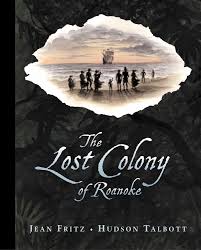
As far as information and writing style go, I prefer Jean Fritz––every time––and especially this time. Jean Fritz is my go to for all kids and young adult history books. We have a pretty extensive Fritz collection and still aren’t close to owning all the author’s work. I was so pleased to add The Lost Colony to our library, which in addition to beautiful illustrations, included all the most recent theories (as of 2001) and a summarization of Lee Miller’s Roanoke: Solving the Mystery of the Lost Colony.
I read Lee Miller’s book and found it completely enthralling. As a homeschool family, we pick up and take our studies pretty much everywhere, and the week of Roanoke we had the luxury of spending on the Atchafalaya Basin. The only thing that could have been more perfect would have been if we had been in the Virginia and North Carolina swamps and beaches instead of the Louisiana ones––but the ambiance for the unraveling of a sixteenth century crime was perfect.

The book truly had me on the edge of my seat, due largely because of content. The writing style, which annoyed many reviewers on Goodreads, was superfluous at times, but I got the sense that it was the genuine excitement of the author jumping full swing into storytelling mode. I find the premise she suggested not only possible, but plausible based on her presentation of evidence. It’s a great book to read to get a big picture view of both sides of the pond when it comes to early American history. Too many books seem to focus on the colonies or Europe, but rarely truly show what is happening on both sides of the globe at the same time during the era.
Miller brings everything back to Elizabeth I’s Spymaster, so naturally I had to find out if her claims could be substantiated. Up next, my findings in Stephen Budiansky’s Her Majesty’s Sypmaster: Elizabeth I, Sir Francis Walsingham, and the Birth of Modern Espionage.
Mysteries of History, Part Two: The Americas
From what I can tell from Felipe Fernández-Armesto’s Goodreads biography and résumé, the man is half journalist and half historian. Perhaps, that’s why I enjoyed his writing. He’s perhaps a better journalist than any writing for the papers these days (always pointing out his own biases rather than writing opinion pieces as fact) and keeps his research assignments to the point instead of meandering in and out of his feelings (which I’ve noticed modern-day scholars doing a lot of lately). I could be wrong about him as a whole, he has a rather lengthy list of books and I have only read two of them. But what I have read, I have loved.
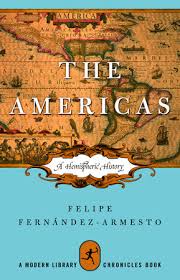
The Americas: A Hemispheric History has an average star rating of 3.25 on Goodreads. I gave it 5 stars. Most of the complaints seem to be that he’s not a specialist in his field and wrote too general a book––which I found incredible that he took so much history and covered it so well in two hundred pages––or, that he used words and language people didn’t understand (apparently, if you’re a journalist, you’re doomed to two syllable words forever?). The book did tackle a very broad scope of history and condensed it to a cozy mystery length, but the fact that he did it without missing major broad strokes, still telling the stories of the North and South Americas without skipping things your average high school student should know about this hemisphere but rarely does… I found it impressive.
By no stretch of the imagination is The Americas an end all be all. It is a jumping off point for people who love to learn. It’s a book that identifies all the major players textbooks are required to mention, and a few they fail to, during the times of exploration and conquest. He poses a few philosophical questions about viewpoints so you know when there is a conflict of perspective so you can go forth and research from there. There are many things Fernández-Armesto says that I don’t entirely agree with, but I liked that he made his biases clear and actually referred to them as biases. I would much rather read differing viewpoints and discuss topics outside of an echo chamber than not, but I also greatly appreciate when people are able to step back and say, this is my bias rather than infer that anything coming from their mouth (or pen) is a universal truth simply because that’s how they feel.
For instance, for a historian, Fernández-Armesto seemed to articulate a very laid back view of how all history is just a matter of perspective, not fact. This made for great storytelling, as he presents all sides of a situation, but as a Christian and self-taught scholar, I do believe in the existence of universal truths. I believe modern society as a misguided view on which things are universal truths/ facts and which are not due to the hot button phrase “my truth.” I tell my kiddo, having empathy for someone’s perspective, understanding where they are coming from and how they got the ideas they have, does not make their ideas correct. Those who do not know history are doomed to repeat it, and those who do are doomed to watch everyone else repeat it, but I’d still rather go through the world with my eyes wide opened. I still want to go through the world with an ear that hears.
Maybe that’s why I find Fernández-Armesto’s writing style approachable and easy, when others have not. He doesn’t say all the politically correct things. He doesn’t perpetuate the required narrative, but shares the facts he has collected along with his own ideas (and is very clear about what are ideas). I pick his books up when I’m starting an in-depth study as an armchair book to whet my appetite for the topic. I’d recommend this particular one as a pre-requisite title before diving into source documents. I ordered a couple books he cited as I was reading, and even more as I read his bibliographical essay at the end of the book. I love that style of works cited. Is it a professional format used by scholars? No. Is it fantastic for a people in their homes wanting to know what books the author read to come to the conclusions he did? Yes. And honestly, how often do you get a chance to read someone’s bibliography for pleasure?
I’m excited, as always, to know more today than I did yesterday… and more tomorrow than today. I’m excited, as always, to find out all the things I don’t know, and learn them––only, of course, to find I don’t know even more things. I think this is why I “eat history for breakfast,” as a friend of mine once said, because I’m a detective always on the hunt for information, so I can understand the world God made a little better.
Mysteries of History, Part One
One of the misconceptions of homeschooling is that one or both parents are doing ALL the teaching. Sometimes that’s true. But most of what homeschooling is about is the power and ability for the parent to pick and choose resources (including other teachers/tutors). As much as I love teaching history, this year history instruction became a duty I chose to share with another mom in our homeschooling group. The beauty of the heaviest portion of the kiddo’s history lessons being taught by someone else on a specific day is that it leaves me more time to read additional books that cover the same topics the kids are studying. The downside is, we’ve changed gears a little and are studying a different time frame than I initially planned. The good is outweighing the bad.
At home, we had cycled back through the American Revolution and I was pumping up to spend most of our spring semester on the Civil War. As we started the Fall semester, however, our “Early American History” course reset our timeline back to the Vikings and we kickstarted the year with Eric the Red and Norse Mythology to lay a foundation for the earliest known explorers and their encounters with the early Native Americans.
One of the fun things about studying history, is studying also the evolution of history, science, and mythology while you’re at it. We got to watch some neat documentaries on Norse Explorers and how for a long time people didn’t believe that Leif Ericson had ever actually touched North American soil, but archeology has a way of uncovering truth… and sometimes additional mysteries. As students of history, our job is to remember that education is a lifetime pursuit and keep digging (sometimes literally) for answers.
During the first half of this semester we also studied the Spanish explorers. Naturally, we covered Amerigo Vescpucci (I read Felipe Fernández-Armesto‘s biography earlier this year and loved it) and Columbus, of course. Kiddo did a presentation on Vasco Nuñez de Balboa after reading multiple books about explorers and conquest. While she was preparing her speech (my husband helped her wrap her horseback riding helmet in foil so we could add a plume and make it conquistador armor for visual aid upon her head), I read up on Cabeza de Vaca.
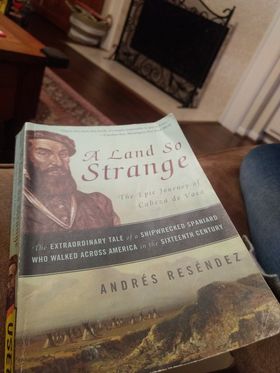
A Land So Strange: The Epic Journey of Cabeza de Vaca has been on my shelf for awhile now. I knew I wanted to read it, I just wasn’t sure when. I’d read his journals before, and when reading Reséndez’s chronicle of the journey, I realized I actually had two copies of the source document. The copies of Cabeza de Vaca’s journals I have are at least different publishers, so I don’t feel entirely ridiculous. I do enjoy perusing annotations and notes in addition to devouring primary sources.
Álvar Núñez Cabeza de Vaca (and yes, his family name was Cow’s Head, due to a his ancestor placing a cow skull in a strategic place during a battle against the Moors) is considered the first historian of Texas by some. A journey to explore Florida quickly became a survival story full of starvation, slavery, building Native American relations, and faith healings.
I gave Reséndez’s book four stars on Goodreads when I logged it as read. It’s fascinating stuff, but I did find it a tad too easy to set down. It’s definitely an account worth having on any armchair historian’s shelf, though, and I will definitely hold onto my copy.
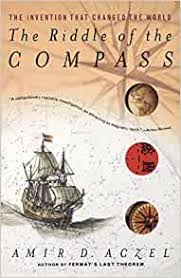
After that I jumped into The Riddle of the Compass: The Invention that Changed the World. I put Amir D. Aczel’s work on par with Dava Sobel’s and would happily hand this amusing piece of scientific history in the hands of any upper middle to early high school student. It reads a bit like a memoir of discovery as Aczel traipses around Europe trying to uncover who actually invented the compass and reveals some “truths” to be delightful legends and fabrication. Realistically, I wouldn’t call this book scholarly, and it has some poor reviews where people have lamented that fact, but I did find it great fun and would have gladly participated in this research adventure pre-publication. I secretly just want to chat up old Italian men in dank out of the way libraries. Reliving Aczel’s research trip would be a fabulous vacation, because, after all, our education is a lifetime pursuit and also our favorite past-time.
Do Fish Spend Wisely?

Title: Save Money and Spend Wisely During and After the Economic Crisis
Author: Dana Wise
It’s been awhile since I regularly read books sent to me by the author or publisher in exchange for an honest review. It used to be my favorite past-time, and lately my number one priority has been homeschooling.
Honestly, I agreed to read this book because I’m a sucker for cute marketing and the author sent the request titled “Do Fish Spend Wisely?” with this jpeg:

I also enjoy supporting small businesses, which include the small presses within the publishing industry. This book is from a publishing house called Ready Set Agile! based out of Slovakia and I’m interested to see how they grow. I always try to support American businesses first, but that ideology does not limit me (thankfully) to supporting American businesses only. My true passion is for small businesses and the global market of today gives us an opportunity to support small businesses in other countries as well.
The author sent me the request because I used to review financial books for a consultant website and I have posted excerpts from most those reviews on Amazon and Goodreads. I have an outdated degree in marketing and management and took more accounting courses in college than some accounting majors, but most of what I learned was from my parents and how they ran their household, helping run a small business for nearly a decade, and life experience. I am not the target audience.
The target audience for this book would be someone who knows next to nothing about making wise financial choices. The advice is good and valid advice, but nothing you wouldn’t find in existing financial guides. It isn’t “pandemic” specific, but definitely has decent tips for surviving any recession.
It’s short and to the point, reading more like a series of blog posts, which is typically how the general public acquires information these days, so I understand why it would be helpful that it is written this way. It would be an appropriate graduation gift for that high school senior you don’t know very well and aren’t sure what they like or need. Every eighteen year old needs to go out into the world with some handy money tips.






 Anakalian Whims