Thanksgiving 2020

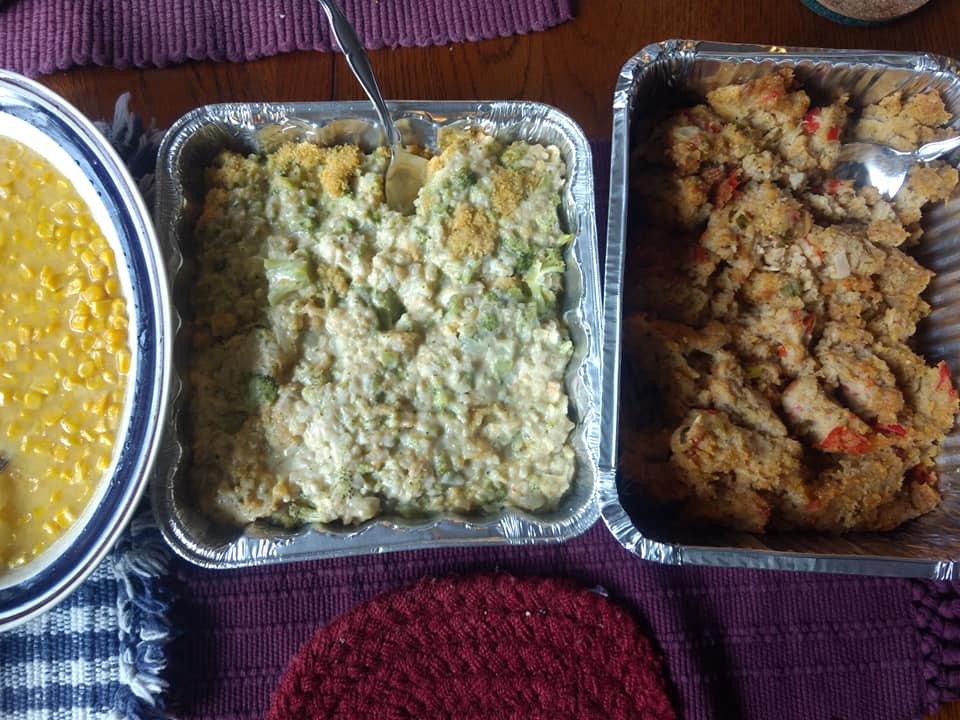
Thanksgiving is my favorite holiday. Pretty much always has been, because, well… FOOD. I love the food. I love the deep fried turkey, I love the dressing (which I call stuffing even though it’s never stuffed in anything because you don’t stuff that which you deep fry), my cranberry sauce (which is apparently somewhat unique and more of a salsa or relish, a blend of: wholeberry cranberry, cranberry sauce, orange marmalade, apple cider vinegar, chopped onion, chopped cilantro, chopped jalapeño, and a sprinkle of orange peel). For dessert, I prefer my marble pumpkin cheesecake over pumpkin pie, some years I’ve made Pumpkin Rolls — another bite of perfection. And I’ve always loved that above all, Thanksgiving is about being thankful to God for what we already have and the burden of gifts are not involved.

This year, our history studies coincided perfectly with the holiday: We studied William Bradford, the Mayflower, and the Pilgrims.
William Bradford: Pilgrim Boy by Bradford Smith is a gentle middle grade chapter book that tells the story of the Puritan governor William Bradford. From his childhood with his grandfather, through his schooling, to Holland, and across the sea to lead a new colony to religious freedom. Understanding his story helps flesh out understanding for King James, the King James Bible, British politics, and early America. Without knowing William Bradford, do you really know what the Pilgrims were thankful for?
During the weeks I read this aloud, Kiddo was reading a book called Pilgrim Stories by Margaret Pumphrey, published by Beautiful Feet. We caught one error in the book, at the beginning the writers seem to be confused about Mary Tudor and Mary Stuart. We revisited our Rhyming History of Britain and memorized a few stanzas to ensure Kiddo didn’t remember the wrong information. It helped to clarify how James VI of Scotland became James I of England. Memorizing rhymes is one of our favorite activities (so much so that we spent November 5th celebrating Guy Fawkes Day memorizing the infamous poem… Remember, remember the fifth of November, the Gunpowder Treason and Plot…).
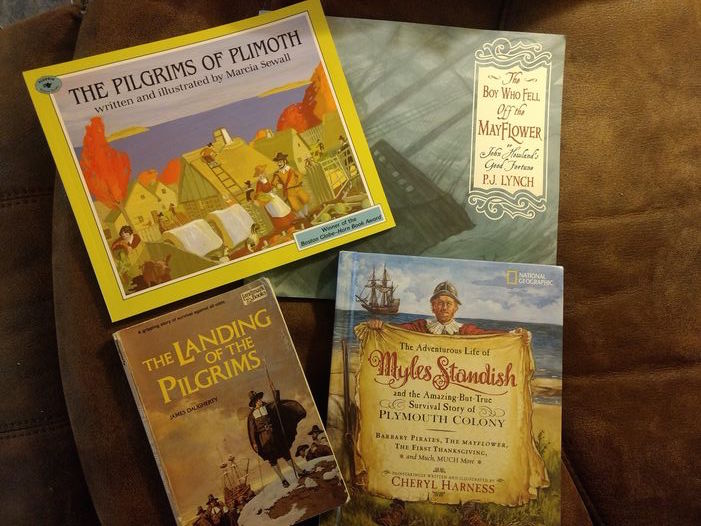
I read The Landing of the Pilgrims as a child, I really love the old Landmark Books and make a point of collecting them, and this was another one I made Kiddo read on her own this time. I find at this age when I can assign independent reading, instead of me reading out loud less, we just cover twice as many books per topic.
My husband read The Adventures of Myles Standish out loud and we both marveled over the beauty of the timeline across the bottom of Harness’s lovely biography (so much so, we started stocking up on other biographies in the same series for the future).
P.J. Lynch’s The Boy Who Fell Off the Mayflower might be one of my all time favorite Thanksgiving books. The illustrations are simply beyond gorgeous and take my breath away. Lewis Buzbee talks about children’s picture books in The Yellow-Lighted Bookshop and how they’re meant to be read over and over again, by children and adults alike… this is one of those books, a perfect work of art I am pleased to own and revisit. I paid full price for it (something I rarely do, as the majority of my books are bought used), and have no regrets.
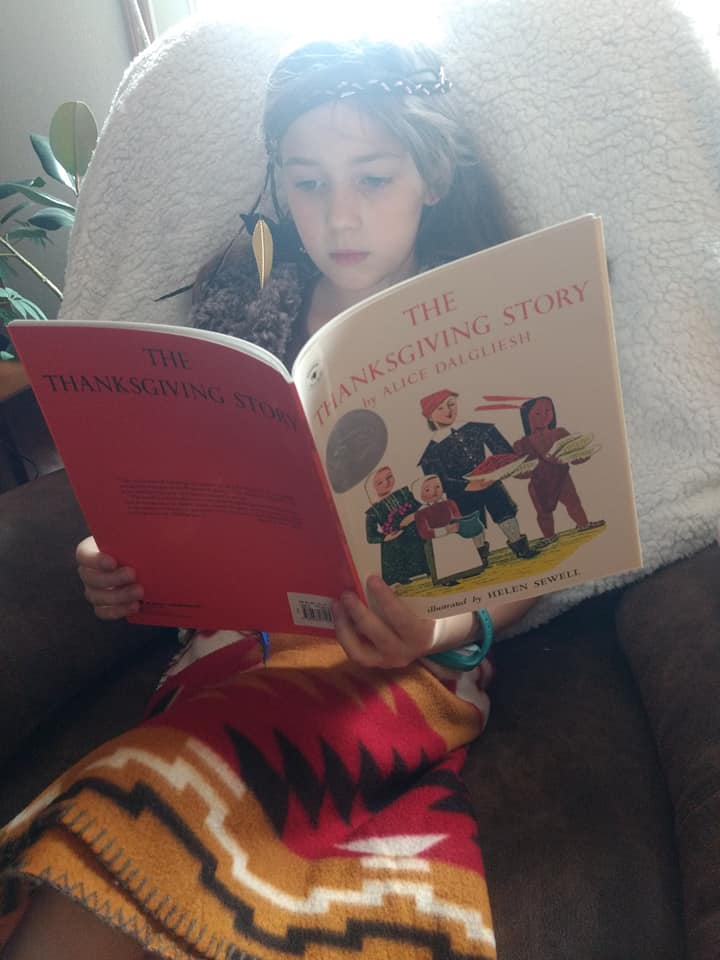
Thanksgiving Day, Kiddo insisted on dressing like a Wampanoag child. She was very disappointed that not a single article of clothing her dress up basket included authentic Wampanoag attire. Instead she’s wrapped in a touristy Navajo blanket sent to us for our donations to some reservation school or another. (My mother spent much of her childhood near the Navajo and they are the one tribe we feel a familial attachment to despite a lack of native blood. I grew up singing bible school songs in Navajo, as she was taught.) I know some in the world would consider this cultural appropriation at the worst or at best possibly roll their eyes at us, but we study these things and she dresses up out of the highest level of respect, empathy, and intrigue. This is childhood, children learn through stories and play.
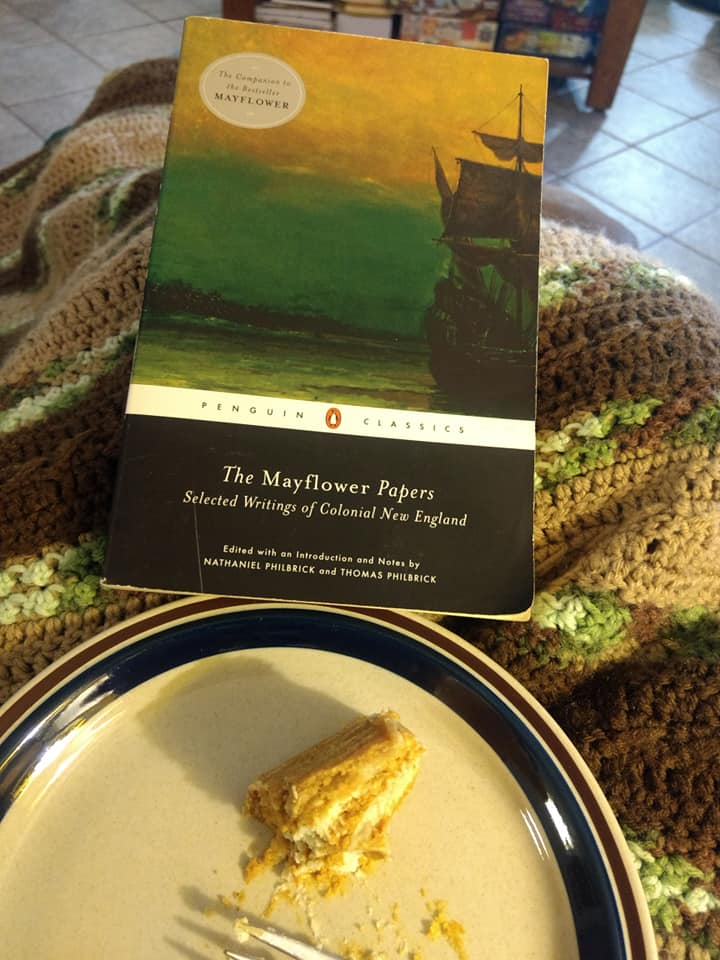
By afternoon, she’d shed half her costume and settled into the life of Squanto while I read the Mayflower Papers over dessert.

Education is a lifetime pursuit and I’m thankful for the opportunity to share my love of learning through the discipleship of homeschooling.
Jamestown
We spent the month of October studying Jamestown, Pocahontas, and John Smith. We also read a few things on Galileo, since he was making discoveries and writing books around the same time and we enjoy getting a whole big picture of the world perspective when we study any place or time period.
So, for a big, big, big picture perspective, I read Her Majesty’s Spymaster by Stephen Budiansky first, to take me from all the mysteries surrounding Roanoke through British and Spanish politics, espionage, and intrigue, and into the reign of King James.
From there, I tackled Love and Hate in Jamestown by David A. Price. I loved this book. I think Price thinks very highly of John Smith and it shows, but I also think the author tackled the subject like a true historian: with a lot of source documents and an appreciation for the fact that all human beings typically have virtues as well as character flaws. Too many tend to portray people as all good or all bad, depending on their political leanings, personal preferences, and limited knowledge/ understanding of humanity.
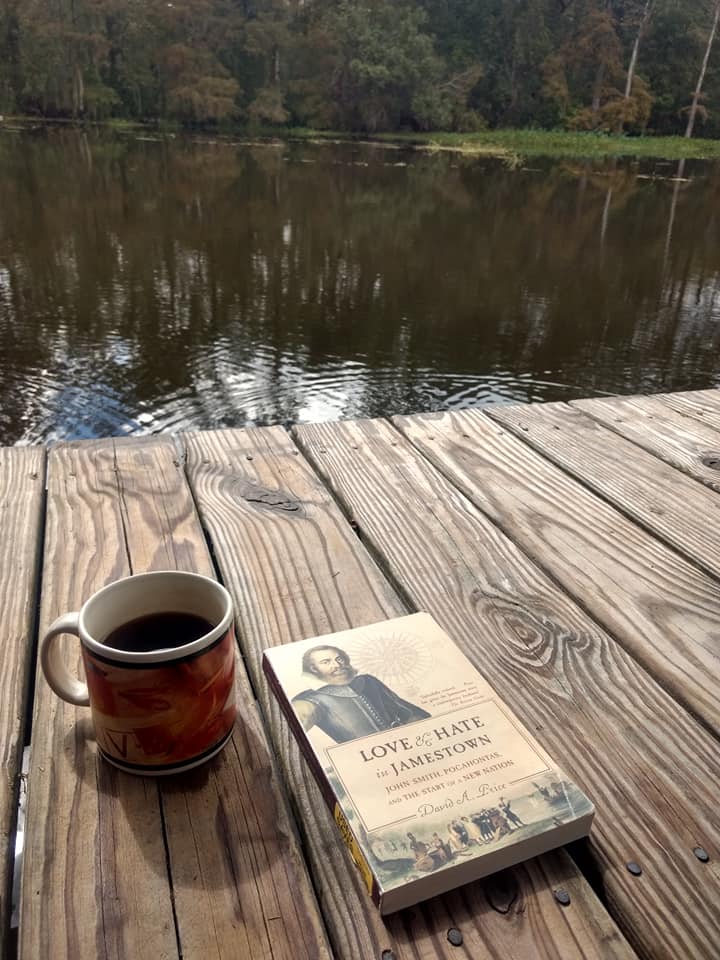
I couldn’t put Price’s book down and I’m honestly astounded there are less than five star reviews on Goodreads because I just adored this account so much. It is well-balanced, thoroughly researched, and presented in a riveting manner. I think Price treated each historical figure with respect and honesty.
After this, naturally, we binge read everything we could get our hands on about Pocahontas. From D’Aulaire’s beautiful (though, apparently now controversial?) picture book, to Linwood Custalow’s “True Story” of Pocahontas, which to me reads like a propaganda piece about how all natives are saints and all white men were terrible… Obviously, these sorts of narratives (especially when poorly written) don’t sit well with me. I would love to read a Native American who is also a historian tackling this subject. I was disappointed in Custalow’s ranting, but am sure (because history is always documented by the “winners”) that some part of the truth lies in the middle and I’m dying to know which parts are the truths.
That desire for truth and clarity led me to Helen C. Rountree‘s The Powhatan Indians of Virginia, which is brilliant! I highly recommend her work for anyone looking for an authoritative voice on the natives of Virginia. Her research is so thorough and respectful she was made an honorary member of the Nansemond and Upper Mattaponi tribes. I appreciate that she is well-educated, articulate, and has the stamp of approval to share cultural context that allows us to understand what was going on between the lines of the source documents we’re accustomed to reading, like John Smith’s own book.
And like a flash, we moved onto William Bradford in time for Thanksgiving…
The Atchafalaya Basin
One of the beauties of homeschooling is the ability to pick up and take school into the world. We love field trips. I realized recently that I always refer to them as field trips and not vacations, because each change of scenery for us offers a new learning experience, and we never stop working on math and spelling.

So when we had the opportunity to venture out into the swamplands of Louisiana, we packed up our school work and went.
Although our family’s main homeschooling style relies on the Classical model by choice, by nature after growing up in the GT program of public schools, I’m a Unit Study girl. So when headed to the Atchafalaya we watched a National Geographic youtube documentary on the basin and loaded up on picture books.

Jim Arnosky is a long time children’s book favorite of mine. He is the author of the Crinkleroot character, possibly my favorite children’s character of all time, and truly my go-to when looking for any sort of nature themed studies. I was pleased to discover I already owned copies of All About Turtles and All About Alligators, perfect for swamplands. We picked these up years ago and I just love the whole series. They’re perfect for little nature lovers to peruse in their free time when they are excited about a particular animal or another, or for building unit studies on a particular ecosystem like we did when we went to the swamp.
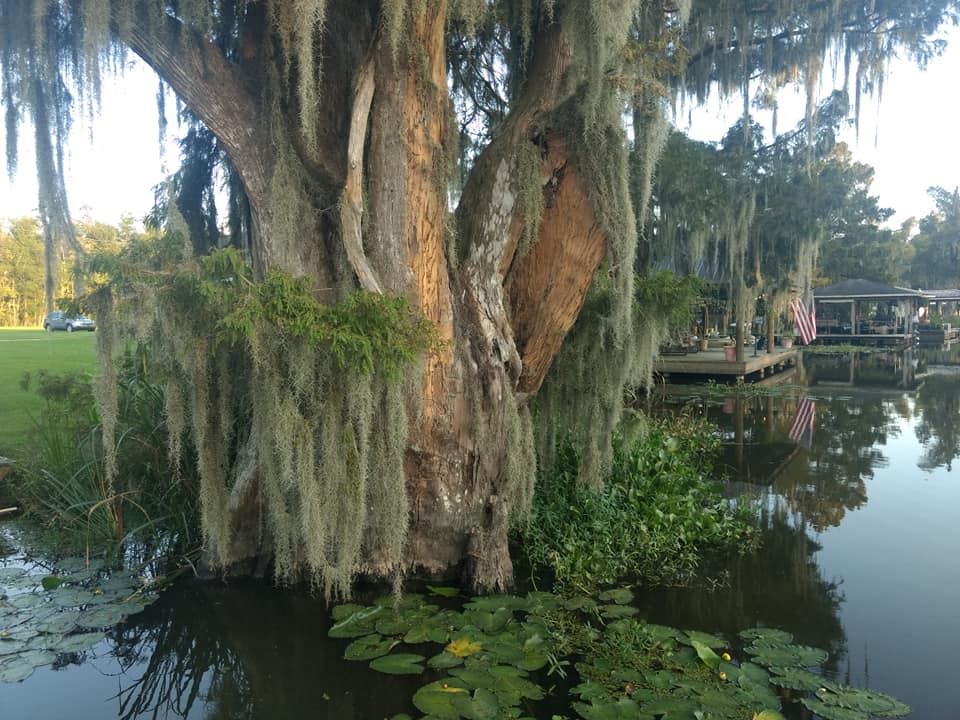
The One Small Square series by Donald M. Silver and Patricia J. Wynne is another favorite. Instead of individual species and their place in the world, this series starts with the ecosystem and defines what is in it. From the cypress knees and ferns to the bacteria and fungi, Swamp talks about all the different layers of life that make up each square inch of swamplands, including diagrams of life at a cellular level… “A carpet of sphagnum moss covers this floating peat island. The moss’s tangled leaves have special hollow cells that soak up and hold water…” Swamp also covers mangrove swamps and the differences between the two.
Homeschooling is such a blessing and it was so exciting to not just read about the environment, but go and––literally––put our hands in it. I am thankful to God every day for the adventure of educating my kiddo.


Mysteries of History Part Three: Roanoke
The world is full of things we’ll never know and one thing I do know is that the more I learn, the more I realize I don’t know.
As a child, the story of Roanoke was glossed over in history classes. It maybe earned itself a whole paragraph in a textbook… The colonists disappeared, most likely they were either slaughtered or absorbed by Native tribes. End of story. Now let’s talk about Jamestown and Pocahontas.
Wait, what?! That’s it!?

Jane Yolen’s picture book Roanoke addresses all the theories and just how big a mystery it actually is quite nicely, which I appreciate for my kid. At least she’s been given a bigger bit of bait than I had at that age. As a lifetime sucker for anything written by Jean Fritz, we’re also reading The Lost Colony together, it’s longer and one usually tackled by slightly older kids whereas Yolen’s picture book can be read in one sitting.
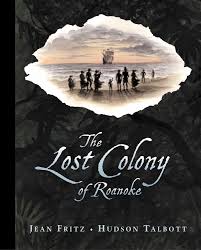
As far as information and writing style go, I prefer Jean Fritz––every time––and especially this time. Jean Fritz is my go to for all kids and young adult history books. We have a pretty extensive Fritz collection and still aren’t close to owning all the author’s work. I was so pleased to add The Lost Colony to our library, which in addition to beautiful illustrations, included all the most recent theories (as of 2001) and a summarization of Lee Miller’s Roanoke: Solving the Mystery of the Lost Colony.
I read Lee Miller’s book and found it completely enthralling. As a homeschool family, we pick up and take our studies pretty much everywhere, and the week of Roanoke we had the luxury of spending on the Atchafalaya Basin. The only thing that could have been more perfect would have been if we had been in the Virginia and North Carolina swamps and beaches instead of the Louisiana ones––but the ambiance for the unraveling of a sixteenth century crime was perfect.

The book truly had me on the edge of my seat, due largely because of content. The writing style, which annoyed many reviewers on Goodreads, was superfluous at times, but I got the sense that it was the genuine excitement of the author jumping full swing into storytelling mode. I find the premise she suggested not only possible, but plausible based on her presentation of evidence. It’s a great book to read to get a big picture view of both sides of the pond when it comes to early American history. Too many books seem to focus on the colonies or Europe, but rarely truly show what is happening on both sides of the globe at the same time during the era.
Miller brings everything back to Elizabeth I’s Spymaster, so naturally I had to find out if her claims could be substantiated. Up next, my findings in Stephen Budiansky’s Her Majesty’s Sypmaster: Elizabeth I, Sir Francis Walsingham, and the Birth of Modern Espionage.
Mysteries of History, Part Two: The Americas
From what I can tell from Felipe Fernández-Armesto’s Goodreads biography and résumé, the man is half journalist and half historian. Perhaps, that’s why I enjoyed his writing. He’s perhaps a better journalist than any writing for the papers these days (always pointing out his own biases rather than writing opinion pieces as fact) and keeps his research assignments to the point instead of meandering in and out of his feelings (which I’ve noticed modern-day scholars doing a lot of lately). I could be wrong about him as a whole, he has a rather lengthy list of books and I have only read two of them. But what I have read, I have loved.
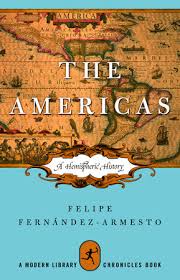
The Americas: A Hemispheric History has an average star rating of 3.25 on Goodreads. I gave it 5 stars. Most of the complaints seem to be that he’s not a specialist in his field and wrote too general a book––which I found incredible that he took so much history and covered it so well in two hundred pages––or, that he used words and language people didn’t understand (apparently, if you’re a journalist, you’re doomed to two syllable words forever?). The book did tackle a very broad scope of history and condensed it to a cozy mystery length, but the fact that he did it without missing major broad strokes, still telling the stories of the North and South Americas without skipping things your average high school student should know about this hemisphere but rarely does… I found it impressive.
By no stretch of the imagination is The Americas an end all be all. It is a jumping off point for people who love to learn. It’s a book that identifies all the major players textbooks are required to mention, and a few they fail to, during the times of exploration and conquest. He poses a few philosophical questions about viewpoints so you know when there is a conflict of perspective so you can go forth and research from there. There are many things Fernández-Armesto says that I don’t entirely agree with, but I liked that he made his biases clear and actually referred to them as biases. I would much rather read differing viewpoints and discuss topics outside of an echo chamber than not, but I also greatly appreciate when people are able to step back and say, this is my bias rather than infer that anything coming from their mouth (or pen) is a universal truth simply because that’s how they feel.
For instance, for a historian, Fernández-Armesto seemed to articulate a very laid back view of how all history is just a matter of perspective, not fact. This made for great storytelling, as he presents all sides of a situation, but as a Christian and self-taught scholar, I do believe in the existence of universal truths. I believe modern society as a misguided view on which things are universal truths/ facts and which are not due to the hot button phrase “my truth.” I tell my kiddo, having empathy for someone’s perspective, understanding where they are coming from and how they got the ideas they have, does not make their ideas correct. Those who do not know history are doomed to repeat it, and those who do are doomed to watch everyone else repeat it, but I’d still rather go through the world with my eyes wide opened. I still want to go through the world with an ear that hears.
Maybe that’s why I find Fernández-Armesto’s writing style approachable and easy, when others have not. He doesn’t say all the politically correct things. He doesn’t perpetuate the required narrative, but shares the facts he has collected along with his own ideas (and is very clear about what are ideas). I pick his books up when I’m starting an in-depth study as an armchair book to whet my appetite for the topic. I’d recommend this particular one as a pre-requisite title before diving into source documents. I ordered a couple books he cited as I was reading, and even more as I read his bibliographical essay at the end of the book. I love that style of works cited. Is it a professional format used by scholars? No. Is it fantastic for a people in their homes wanting to know what books the author read to come to the conclusions he did? Yes. And honestly, how often do you get a chance to read someone’s bibliography for pleasure?
I’m excited, as always, to know more today than I did yesterday… and more tomorrow than today. I’m excited, as always, to find out all the things I don’t know, and learn them––only, of course, to find I don’t know even more things. I think this is why I “eat history for breakfast,” as a friend of mine once said, because I’m a detective always on the hunt for information, so I can understand the world God made a little better.
Mysteries of History, Part One
One of the misconceptions of homeschooling is that one or both parents are doing ALL the teaching. Sometimes that’s true. But most of what homeschooling is about is the power and ability for the parent to pick and choose resources (including other teachers/tutors). As much as I love teaching history, this year history instruction became a duty I chose to share with another mom in our homeschooling group. The beauty of the heaviest portion of the kiddo’s history lessons being taught by someone else on a specific day is that it leaves me more time to read additional books that cover the same topics the kids are studying. The downside is, we’ve changed gears a little and are studying a different time frame than I initially planned. The good is outweighing the bad.
At home, we had cycled back through the American Revolution and I was pumping up to spend most of our spring semester on the Civil War. As we started the Fall semester, however, our “Early American History” course reset our timeline back to the Vikings and we kickstarted the year with Eric the Red and Norse Mythology to lay a foundation for the earliest known explorers and their encounters with the early Native Americans.
One of the fun things about studying history, is studying also the evolution of history, science, and mythology while you’re at it. We got to watch some neat documentaries on Norse Explorers and how for a long time people didn’t believe that Leif Ericson had ever actually touched North American soil, but archeology has a way of uncovering truth… and sometimes additional mysteries. As students of history, our job is to remember that education is a lifetime pursuit and keep digging (sometimes literally) for answers.
During the first half of this semester we also studied the Spanish explorers. Naturally, we covered Amerigo Vescpucci (I read Felipe Fernández-Armesto‘s biography earlier this year and loved it) and Columbus, of course. Kiddo did a presentation on Vasco Nuñez de Balboa after reading multiple books about explorers and conquest. While she was preparing her speech (my husband helped her wrap her horseback riding helmet in foil so we could add a plume and make it conquistador armor for visual aid upon her head), I read up on Cabeza de Vaca.
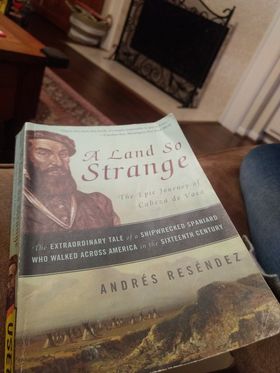
A Land So Strange: The Epic Journey of Cabeza de Vaca has been on my shelf for awhile now. I knew I wanted to read it, I just wasn’t sure when. I’d read his journals before, and when reading Reséndez’s chronicle of the journey, I realized I actually had two copies of the source document. The copies of Cabeza de Vaca’s journals I have are at least different publishers, so I don’t feel entirely ridiculous. I do enjoy perusing annotations and notes in addition to devouring primary sources.
Álvar Núñez Cabeza de Vaca (and yes, his family name was Cow’s Head, due to a his ancestor placing a cow skull in a strategic place during a battle against the Moors) is considered the first historian of Texas by some. A journey to explore Florida quickly became a survival story full of starvation, slavery, building Native American relations, and faith healings.
I gave Reséndez’s book four stars on Goodreads when I logged it as read. It’s fascinating stuff, but I did find it a tad too easy to set down. It’s definitely an account worth having on any armchair historian’s shelf, though, and I will definitely hold onto my copy.
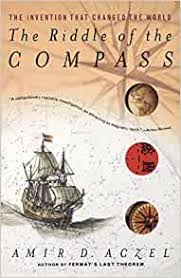
After that I jumped into The Riddle of the Compass: The Invention that Changed the World. I put Amir D. Aczel’s work on par with Dava Sobel’s and would happily hand this amusing piece of scientific history in the hands of any upper middle to early high school student. It reads a bit like a memoir of discovery as Aczel traipses around Europe trying to uncover who actually invented the compass and reveals some “truths” to be delightful legends and fabrication. Realistically, I wouldn’t call this book scholarly, and it has some poor reviews where people have lamented that fact, but I did find it great fun and would have gladly participated in this research adventure pre-publication. I secretly just want to chat up old Italian men in dank out of the way libraries. Reliving Aczel’s research trip would be a fabulous vacation, because, after all, our education is a lifetime pursuit and also our favorite past-time.
Do Fish Spend Wisely?

Title: Save Money and Spend Wisely During and After the Economic Crisis
Author: Dana Wise
It’s been awhile since I regularly read books sent to me by the author or publisher in exchange for an honest review. It used to be my favorite past-time, and lately my number one priority has been homeschooling.
Honestly, I agreed to read this book because I’m a sucker for cute marketing and the author sent the request titled “Do Fish Spend Wisely?” with this jpeg:

I also enjoy supporting small businesses, which include the small presses within the publishing industry. This book is from a publishing house called Ready Set Agile! based out of Slovakia and I’m interested to see how they grow. I always try to support American businesses first, but that ideology does not limit me (thankfully) to supporting American businesses only. My true passion is for small businesses and the global market of today gives us an opportunity to support small businesses in other countries as well.
The author sent me the request because I used to review financial books for a consultant website and I have posted excerpts from most those reviews on Amazon and Goodreads. I have an outdated degree in marketing and management and took more accounting courses in college than some accounting majors, but most of what I learned was from my parents and how they ran their household, helping run a small business for nearly a decade, and life experience. I am not the target audience.
The target audience for this book would be someone who knows next to nothing about making wise financial choices. The advice is good and valid advice, but nothing you wouldn’t find in existing financial guides. It isn’t “pandemic” specific, but definitely has decent tips for surviving any recession.
It’s short and to the point, reading more like a series of blog posts, which is typically how the general public acquires information these days, so I understand why it would be helpful that it is written this way. It would be an appropriate graduation gift for that high school senior you don’t know very well and aren’t sure what they like or need. Every eighteen year old needs to go out into the world with some handy money tips.
Winter with Dogs (and Cats)
With the arrival of Disney+ came the magic of Willem Dafoe as the infamous Leonhard Seppala, musher who put in the most miles during the Serum Run of Nome, Alaska. As a homeschool parent I have the luxury to put aside some school books to build educational unit studies on a whim. We spent weeks on sled dogs and illnesses, tundra and survivalism in harsh weather.
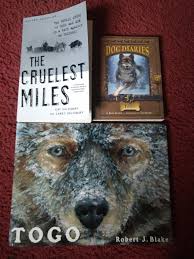
Kiddo read the Dog Diaries book featuring Togo. I read The Cruelest Miles by Gay and Laney Salisbury (phenomenal) as well as a novel called Dead Run by Michael Caruss (pretty good). We watched the movie together. We became smitten with a beautiful picture book by Robert J. Blake.
All the while our own dog was dying. We said goodbye to him as we ended our dogsled reading binge. Our best boy who was the greatest protector we’ve ever had. Named after Tahmoh Penikett’s character Karl C. Agathon on the Battlestar Galactica, Helo, our Siberian husky-pit bull-German Shepherd lived up to his name. Handsome, loving, and always ready to defend us from any threat, I’ve never had a better dog.

“Any man can make friends with any dog but it takes a long time and mutual trust and mutual forbearance and mutual appreciation to make a partnership. Not every dog is fit to be partner with a man; nor every man, I think, fit to be partner with a dog.” – Archdeacon Hudson Stuck
Helo was my greatest partner in getting my kiddo from age one to nine. I trained him to stay with her, he trailed her as she played in the yard and on playgrounds. He slept in the threshold of our doors, guarding us from the outside world as we dreamed. He loved his ball. He could never have been a sled dog like Balto and Togo, he neither had the build or the heart for it, too barrel chested for his smaller legs to support for long distances (he had a hard time keeping up with his mother who despite being much smaller could outrun him in speed and duration), but he was perfect for the job he was given: preserve and protect us from all threats.
Through all this studying of harsh winters, learning about famous dogs, and burying ours (he was nine)… we had the warmest winter I can remember in a long time and many, many cats…
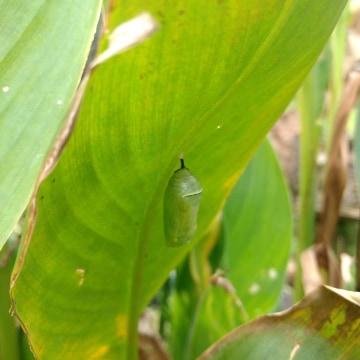
Well, caterpillars.
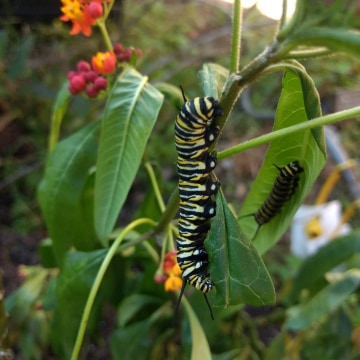
Living in the lower coastal plains region of Texas means we have some tropical tendencies sweeping up from the Gulf of Mexico. It also means Monarch butterflies! We’ve raised quite a few in our pollinator garden, have ordered books, and plan to study them more in depth as we observe them more regularly through various seasons. The photos below are all from this winter.

Fly, Fly Again

Title: Fly, Fly Again
Authors: Katie Jaffe & Jennifer Lawson
Illustrator: Tammie Lyon
Genre: Children’s Storybook/ Picture Book
First and foremost, kiddo and I were blown away that Buzz Aldrin–THE BUZZ ALDRIN–wrote the foreword for this picture book. How cool is that? (My father, an engineer alum of the same university as Aldrin, was pretty impressed as well. Frequently, he reads my kiddo picture books and comments about how children’s publishing has “come a long way.”)
Reminiscent of The Questioneers series (of which we have every title!) by Andrea Beaty and David Roberts, Jaffe and Lawson’s new book encourages critical thinking skills, creative wonder, and diligence to pursue dreams.
Kiddo loved the story, she’s nine, and still enjoys the magic of a children’s storybook even though she’s also reading chapter books now. She’s heard me quote “Try, Try Again” her whole life and learned to read on McGuffey’s which includes the poem in its reading exercises, so there was a genuine snicker when Hawk raised his feather and included the play on words, “If at first you don’t succeed, fly, fly again!”
“It is a great book, no one can doubt that. The airplane design [in the illustrations] is amazing. But you still can’t put that many people and pets into a wagon WITH a motor,” Kiddo told me. She is now monologuing design flaws, propellor safety, and superior ways to attempt this project. I think the book has done exactly its job: spiked STEM thinking.
Fly, Fly Again is a new favorite we plan to read often.
Top 10 of 2019

Top Ten – 2019
- Hard Road West: History and Geology Along the Gold Rush Trail – Keith Heyer Meldahl
- The Black Count: Glory, Revolution, Betrayal, and the Real Count of Monte Cristo – Tom Reiss
- The Lion in the Living Room: How House Cats Tamed Us and Took Over the World – Abigail Tucker
- Eleanor Oliphant is Completely Fine – Gail Honeyman
- The Fairies of Nutfolk Wood – Barb Bentler Ullman
- The Forest for the Trees – Betsy Lerner
- Warriors of the Storm & The Flame Bearer – Bernard Cornwell
- The Woman Who Would Be King: Hatshepsut’s Rise to Power in Ancient Egypt – Kara Cooney
- Alloy of Law – Brandon Sanderson
- George Washington’s Secret Six: The Spy Ring That Saved the American Revolution – Brian Kilmeade
First off, I read over 120 books this year. The numbers between 120 and 130 get hazy, because I read a lot out loud to my kid and try not to include picture books in the numbers, but we still occasionally review picture books on Goodreads. Combined, my daughter and I are also halfway through a dozen books or so (some read alouds, some audiobooks, some books that I’m actually just reading to myself). Out of the 120 these are the books I chose for my top ten. They’re sort of in order, but don’t hold me to it. My ranking system may be moody at best. Everything in the top ten list, however, I will read again, and never give up my copy (or will purchase new copies if I do), if I can help it.
Hard Road West is a history and geology book. For a geologist to make me laugh while reading, and want to make plans to re-read the book again and again, that’s not just something, but something worthy of a Number One spot.
The Black Count is a riveting depiction of an era and author everyone should read, especially in the racially charged climate which we currently reside. It shows that there are always racist turds and always kind people that get along, regardless of policies and customs. It gives an in depth study of Dumas and why and how he wrote the sort of stories that intrigue us hundreds of years later. Rich in content and writing style, I’m putting this on my kid’s high school reading list.
The Lion in the Living Room is a spunky account of felines. Thorough, scientific, and enjoyable, this journalistic presentation of the most common house pet and city pest is completely engrossing.
Eleanor Oliphant is Completely Fine surprised me. I’m not known for picking up “new” books, contemporary New York Times bestsellers, while they’re still considered somewhat current. Reese Witherspoon Book Club Pick (as cute as I think the actress is) would usually be a turn off for me. Typically I wait to read these sorts of things until I nab them in clearance years after the excitement has died down. Usually I read them and think, that was nice, and set it aside. Water for Elephants is a prime example: Enjoyable, but I’d probably only read it again if I was stuck in a waiting room, without reading material, and it happened to be left behind by someone else. Gruen is actually excellent waiting room material. But Eleanor Oliphant captivated me from the first page. As someone who is known to have some Asperger markers and has suffered from PTSD, I found myself reading Eleanor’s internal monologues (in the beginning, much less later in the book) and thinking, YES! Eleanor is definitely a distinct character, all her own, who also manages to be extremely relatable. I was surprised I loved the book so much. I am still surprised it has resonated with me for months. I’m even more surprised it has made it to my annual top ten list.
The Fairies of Nutfolk Wood completely captivated my daughter and I. It doesn’t have nearly as much fairy wonderland as you’d expect from the marketing, dealing more with life issues of the little girl who can see Nutfolk Wood, but it was exactly what we needed when we needed it. We purchased and enjoyed the sequel as well, and I would love to read more by this fairly obscure children’s author.
The Forest for the Trees is possibly one of the most motivational writing books I’ve ever read, aside from On Writing by Stephen King. I loved reading Lerner’s experience with authors from her unique perch as an editor. Her whole career actually fascinated me, and motivated me to get more word counts per day, and clean up my manuscripts in a timely fashion. That being said, I’m still a typical writer and I missed my own self imposed deadline this Christmas. Pushing for February and praying for my publishing house in all they deal with!
Warrior of the Storm and The Flame Bearer are Bernard Cornwell books I read this year. It’s unfair to give them their own lines as they belong to the Saxon Tales series (my favorite) and will push everything off the list always! My love for this series knows no bounds and I can’t wait to finish the series and start over from the beginning. I wrote Nancy & Uhtred as a love of the series letter to Bernard Cornwell and my dream is still for him to one day read my little novelette, because his books truly move me.
The Woman Who Would Be King is a speculative biography on Hatshepsut. I’m fascinated by Hatshepsut and have read two or three biographies on her this year. I’ve read biographies on her in the past as well. I’m completely convinced it was she who pulled Moses from the river and I have a life long mission to read everything scholarly ever written on or about the woman.
Alloy of Law is just down right fun. Can we all just come out and say it together? Brandon Sanderson is amazing, his books are amazing, and he’s the best fantasy writer currently writing fantasy. And he’s so diligent, he actually puts out books regularly. Mistborn is possibly my favorite adult fantasy series of all time. I know, those are dangerous words when Tolkien’s Lord of the Rings captured my heart for decades, but Sanderson’s working is not to be taken lightly or dismissed. His books will become longstanding classics. I did prefer the original series to what I’ve read of this second trilogy, but I think that’s just a matter of personal preference, not writing or storytelling ability.
George Washington’s Secret Six is the story that inspired the tv show Turn. I love American Revolutionary history. Our nation’s foundation is pretty intense and Kilmeade is a great storyteller to armchair (or backyard hammock) historians. His work can be easily passed to upper middle school and high school students, and I’d like to read them all.
Honorable Mentions (or the books that would be included in a top 20 list, in no particular order):
Grayson – Lynne Cox
The Lost for Words Bookshop – Stephanie Butland
The Last Duel: A True Story of Crime, Scandal, and Trial by Combat in Medieval France – Eric Jager
The Magician’s Book: A Skeptic’s Adventures in Narnia – Laura Miller
Keeping Your Kids on God’s Side: 40 Conversations to Help Them Build a Lasting Faith – Natasha Crain
Leviathan Wakes – James S.A. Corey
Trouble is a Friend of Mine – Stephanie Tromley
Founder, Fighter, Saxon, Queen: Aethelflaed, Lady of the Mercians – Margaret C. Jones
Matilda Bone – Karen Cushman
Byzantium: the Early Centuries – John Julius Norwich


 Anakalian Whims