Weekly Low Down on Kids Books 8/08/12
 Story time at Half Price Books Humble has been quiet, has been loud, has been vacant, has been crowded. Today, it was just right. We had 9 children, all bright eyed and ready for me to read to them.
I always find it refreshing to be around other people who read, even if they are little people. So it was with great joy that I discovered Hooray for You! A Celebration of You-ness
This one is definitely a must-have, and I look forward to finding more of Richmond’s treasures tucked away on the shelves of Half Price Books. According to her website, her books are available through Barnes & Noble as well as most other book retailers.

Political Statements in Art
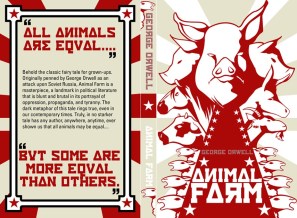 Title: Animal Farm
Author: George Orwell (real name: Eric Blair)
Length: 80 pages
“Political Statements in Art” sounds a little scary, intimidating. I grow weary of political statements. But I am a reader, and among the list of most amazing authors of all time, though, great activists can be found. Ayn Rand
Although I had a general understanding of the novella, and the statement it was going to make, I was surprised when the animals all had real names. Silly, I know, I just hadn’t expected that. Not that I expected them to be called pig, horse, or dog, it was just one of those things I hadn’t thought to think about prior to reading the book. Of course, I should have anticipated nothing less from Orwell, after all, the man was a genius. In good literary form, Napoleon represents a villain, Boxer is strong, Snowball is the opposite of Napoleon, Squealer is the epitome of propaganda, and Mr. Jones is a typical neighbor you might love to hate – the human. It is allegory at its finest.
Yet, I pretty much hated it. How did this happen? I adore Orwell! I do, I really do. I just could not get into the anthropomorphism. When I read animals personified to represent people, I find I don’t want them to be JUST like people. I want my fuzzy mole to be a fuzzy mole who talks (Wind in the Willows), I want my mice to still live under floor boards and not have day jobs, even if they cook and clean (TumTum and Nutmeg), and so on. Obviously, Orwell’s intent was for us to see ourselves as we are, “The creatures outside looked from pig to man, and from man to pig, and from pig to man again; but already it was impossible to say which was which,” along with the dangers of communism and totalitarianism.
But who wants to be reminded of that?
Just kidding. Truly, I see the merits of Animal Farm, and at another time I just may enjoy it. But today, right now, this moment… I did not. Still, I love Orwell. I (usually) love to read his work, and (always) aspire to be more like him. In Why I Write, he said:
“From a very early age, perhaps the age of five or six, I knew that when I grew up I should be a writer. Between the ages of about seventeen and twenty-four I tried to abandon this idea, but I did so with the consciousness that I was outraging my true nature and that sooner or later I should have to settle down and write books.”
Nothing speaks to me more. I have been journaling, writing stories, and using the written word as my own catharsis my whole life, since before I could do much more than copy letters. Perhaps I will never be the caliber of writer I’d like, but always and forever I shall write. So because I write, also shall I read.
Work Like Steinbeck… Journaling My Novels
 When I first started reading Working Days
Although I find the East of Eden Letters to be more intriguing, a representation of a more beautiful life; Working Days is more inspirational. Working Days takes you step by step through the trials of being a diligent writer, of actively being purposeful, of learning a routine. The act of learning dedication to the craft was refreshing and encouraging, Working Days reminded me “See, even Steinbeck had to work for it.” Where as East of Eden Letters just seemed like a magical dream, the routine having already been discovered and maintained properly.
Although I would never dream to compare my work to Steinbeck’s, I found pleasure and familiarity from his entry:
“This must be a good book. It simply must. I haven’t any choice. It must be far and away the best thing I have ever attempted – slow but sure, piling detail on detail until a picture and experience emerge. Until the whole throbbing thing emerges.”
Is that not what we writers say to ourselves every day?

This picture features about half my journal collection.
Although I have always kept journals, both personal and story related, more often than not a mixture of the two; reading Working Days has put me in a new mindset. My first novel is in a place where I feel comfortable with putting an absolute deadline in motion. Sure, I’ve said this before, but I mean it more now than I have in the past. I’ve written about 1500 to 3000 words a day my whole life, on various different stories, some for my novel, many for writing warm ups. AJ and Ivy’s Bookshop Hotel, link found on the right, is one of my many writing warm-ups. The problem with many of my warm-ups is that I find them easy and cozy and their stories have no direction so sometimes I opt to linger there rather than get real work done.
So now I have a plan.
From now until December 12th, my deadline of choice, I am going to write one journal entry page per one page of work dedicated to completing my debut novel. Parts One and Two of my novel are currently in the editing process, and Part Three will be complete in time for this deadline. Copies will then be made and submitted to a selection of friends and family to read over. This time next year, I plan to be published. This time next year, I plan to be making a new plan to complete my next novel, many are half written in one of those journals you see on display to the left of the screen. Smashwords, here I come. Dutton, look out, I want you.
A Grimm World
The new season of Grimm starts August 13, 2012; roughly two weeks until round two! Because of this, my husband, who just fell in love with the show via Hulu, has been making me watch season one. I say “making me” as though it is this incredible chore, but in reality, it is a relaxing date-night type activity for us once the kiddo has gone to bed.
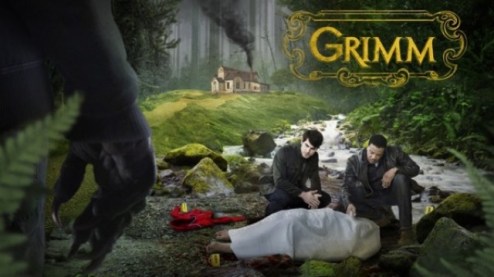
The NBC original series portrays the Brothers Grimm as magnificent demon hunters, and the main character their detective descendant. As a Grimm, Nick sees demons for what they are and can catch the bad guys of urban legend with his handy dandy Grimm family heirlooms as well as the help of the police department. It’s CSI meets Van Helsing
So, as we wait for 9pm (kiddo’s bed time) to hit every evening, I have decided to start reading my copy of Grimm’s Fairy Tales
 The stories are mostly terrible. In theory I love mythology and folklore, but what I’m discovering more and more is that I adore lengthy retellings rather than the original short stories. Yet, I’m a serious advocate for source documents. Just as I don’t want to watch the TV show Grimm without reading the original stories – I definitely would be appalled at myself for reading a fancy retelling in the form of a novel without reading the original collection of tales. As in most things, I believe in the principle of it.
I found The Little Farmer to be especially awful. What a deceitful and greedy group of people! And the fact that this horrible little man becomes the sole proprietor of the town and all the riches therein is quite appalling. I enjoy stories with a solid moral, a bigger picture, lessons for life about the merits of goodness. Instead, The Little Farmer breeds selfishness and sociopathic characteristics. The Life Lesson being: the cheaters that are most cunning rule the roost. Of course, this is a valid truth in most societies, but in my perfect story I want there to be inspiration to persevere under the pressure to keep up with the Joneses (or just kill them off if you can’t), and do something great in your life. The Little Farmer may walk off a wealthy man, but he has no friends and he has not lived a fulfilling life. Be proud of hard work, rather than trickery.
 I am not a fan of people getting rewarded for bad deeds or laziness. Just as I cannot get my novel published until I finish writing it (blaming my main character Dani for being elusive and moody when I’m trying to get her life organized), the princess shouldn’t get a Frog Prince to marry when she hasn’t been anything but mean to him.
There are, however, wise stories in the Brothers Grimm, not just the “only people who share are the people who don’t have anything” kind (a real-life adage from my own father). The Nail is the very story which proves one of my old martial arts instructors’ words correct: slow makes fast; or, as the Grimms tell us: Make Haste Slowly. Stories like these, though the horse suffered much for the sake of the warning tale, is what keeps me reading and what reminds me that the kiddo will benefit from growing up with the stories as well.
I am a Child of Neptune
 One of my goals for this year was to branch out in my reading. For a long time I have told people “I’ll read pretty much anything,” but in reality I remained a skeptical reader. A thought would pop in my head along the lines, “I wonder how much truth there is to…?” but did not bother to do the necessary research because my prior education was telling me “Don’t waste time, after all it is all crap.” Case and point: Astrology.
I believe 100% in Jesus Christ and that He, is my Lord and Savior. If one song could most consistently speak the words of my heart over and over again throughout my life it would be Rich Mullins’ Creed. But in addition to that, I believe that there are elements of truth in many things, after all God created this world, so naturally there would be signs of Him in things, right? Astrology as use for divination and as a religion is not what I’m interested in as I know where my faith lies. However, God created the Heavens and the Earth and the people in it, so I am naturally curious to research and see if there is any truth in the thing I raised to believe was crap. Could the stars and the planets and the birth of a person all line up together to have influence over our existence? Could God use this as a beautiful master piece of art and design to create a balanced puzzle? Who knows, but I aim to look into it. In doing so, I’m reading books I would have never read before.
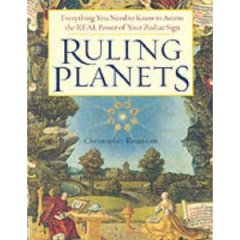 Ruling Planets
I always felt like the description of a Pisces kind of matched me, and kind of didn’t. I speculated on whether it would make a difference if I had been born closer to my due date (a month later), and some of those attributes matched, and didn’t. I wanted to put together a research plan – how much of the things you see of yourself in those descriptions are the stars and how much of those things are rooted in how you were nurtured due to the time of the year you were born. Maybe a Pisces loves being in the water because a February baby is just the perfect age to introduce to the swimming pool come summer. Do these similarities change for babies born in Australia vs. the United States? I thought it could be an interesting project, even if it were never fruitful or came to any kind of conclusion. I wanted to approach these concepts with the calculating mind of a marketing researcher pinpointing the best demographic for a product. Is there anything more than coincidence to Astrology and why have people been fascinated with it for thousands of years?
In Ruling Planets, I got a taste for the parts of Astrology that made the ancients fall in love with the stars and the planets and their relationships at large. Instead of a Pisces, I discovered that I am a Child of Neptune and Jupiter, under Capricorn. I’ve never read anything, not even psychology survey results or personality test conclusions that sounded so like myself as the pages about the Children of Neptune/Jupiter and then the more specific pages regarding Capricorn under Neptune and Jupiter. Myers Briggs has nothing on Renstrom’s Ruling Planets.
So where does that put me now? I don’t want to be a mystical nut-job. And it doesn’t shake my faith in Jesus Christ in the slightest. I just find all this pretty interesting and the desire to read more and pin point my thoughts on all of this is more intense than ever. Get yourself a copy of the book, read it, and share your thoughts with me. I’d love to discuss.
Weekly Low Down on Kids Books 7/25/12
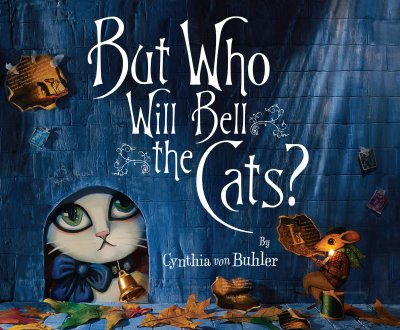 Title: But Who Will Bell the Cats?
Author: Cynthia Von Buhler
Publisher: Houghton Mifflin
In 2009, I distinctly remember coming across an ad for this book (maybe from my days of stalking shelfari for hours on end). I sat clicking though the website (click book cover and it will take you there) thinking it was so cool and eerie. Finally, this year – this month actually – I had the pleasure of reading But Who Will Bell the Cats? to my kiddo. It is so wonderful.
Based on an Aesop’s Fable, But Who Will Bell the Cats? follows the adventures of a mouse and bat as they try to get bells around the necks of the royal princess’s eight cats. If they could hear the cats approaching, there would be more freedoms and amenities available to them around the palace, they would no longer be confined to the cellar in fear.
The story is a lovely twist on a classic dilemma with beautiful and riveting images not limited by your typical 2D art. Von Buhler has made real sets for paper dolls and photographed them, making the art fascinating, unique, and a little bit intense:
In addition to having written this story, I was also the painter, sculptor, interior decorator, mason, gardener, and plumber of the sets. The rooms were built by hand from wood. The stone walls were formed from plaster. The floors are handmade from inlaid wood, mother-of-pearl, and plaster. The characters were painted in oils on gessoed paper, then cut out and placed in the sets. I photographed the scenes with a Nikon D300.
– Cynthia Von Buhler
(Browse through each part of the castle/book and how it was made: http://butwhowillbellthecats.blogspot.com/2008/06/portraits.html)
We love it, and it is a great story to read right before nap time (due to the length on each page, you really need a settled kiddo to hold their attention if they are under two). For older kids, the website offers all sorts of activities and games to tie into the book, including printable paper dolls, like the ones used to make the book! Visit: http://butwhowillbellthecats.com/lookinside.html

Title: The Wishing Star
Author: M. Christina Butler
Illustrator: Frank Endersby
Publisher: Little Tiger Press
Today at the story time at Half Price Books in Humble, a little girl picked this title out for me to read. We all enjoyed it so much, her mother bought it before leaving the store.
Endersby’s art work is so lovely and eye-catching. Reminiscent of the Rainbow Fish
Together, they created magic.
City of Fallen Angels and Lilith Lore
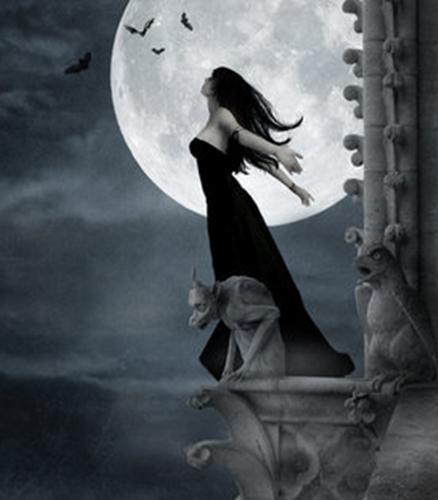
Lilith in Atrology, click to read more
*Spoilers*
I sat down with City of Fallen Angels over a week ago, but just finished it this morning. The first half was hard for me to get into, having the melodrama equivalent of The Twilight Saga’s New Moon
I have many interests, and though I tend to purchase books sporadically, when reading through my TBR’s I’d like to think that I do it with a little finesse, with purpose. Years ago, I did a brief research day on Lilith, spawned from a conversation I had with someone completely convinced that Adam from Genesis had two wives. I was startled that someone would think this and wanted to get to the root of it all, and spent my astonishment reading through websites, encyclopedias, and other reference material. I have days like this, spent on a particular topic, often. Mostly I end up purchasing things to read later. Who would have thought that Cassandra Clare’s Mortal Instruments
So I plucked The Book of Lilith
The most confusing thing about Lilith (that Koltuv sorts out for the reader well) is all the contradictions embodied in her. She is supposed to be the first wife of Adam, equal to him being brought up from the dust like him, rather than a submissive form pulled from his bones. Yet, she is also a she-demon, according to many as powerful as God, equal but opposite. Some say she is God’s concubine, some say she is Lucifer’s current wife, but still Adam’s ex. She is often linked or married to the King of the Demons known as Samael. Sometimes Samael is thought to be equal to Lucifer, and sometimes he is thought to be Lucifer’s version of Adam, his own creation. All the mythology overlaps making Lilith a strange, cloudy line between humanity and Satan, but always the opposite of Truth, Goodness, and Steadfastness in every way. These characters are full of secrets and lies, evil, and are ever changing according to the story tellers grasp and manipulation. One would expect nothing less from those who are supposed to counter balance God.

Lilith in History, click to view a concise but informative website
The most consistent version of Lilith is that she is a succubus for men, and “for women she is the dark shadow of the Self that is married to the devil” (Koltuv). Like Cassandra Clare’s character in City of Fallen Angels, she is a baby killer and is known as the goddess of dead children, Clare uses this concept as a cult inadvertently kill their offspring via demon blood while trying to please her.
So tied to feminism and the uterus, people also believe that she is ever linked to women in the form of the curse of our menstrual cycle. Tethered to our raging hormones, sexuality, and PMS. This line of thinking eventually made possible the transition of Lilith of evil she-demon to a goddess and Feminist icon/idol. It is amazing that this mythical creature has managed to be so many things (even a screeching night owl and a Leviathan)! Some of the discrepancies can be attributed to the idea of there being two Liliths: a Grandmother Lilith (married to Samael) and a Maiden Lilith (married to a dark prince of demons, Ashmodai).
I find it all rather fascinating. Throughout history people have linked Lilith to hundreds of stories, and though I don’t belive any of them as fact (I personally plop her right in there with Zeus, Athena, and Buffy the Vampire Slayer), I find the use of her in fiction pretty riveting.
For Women Only – A Review
 Title: For Women Only
Author: London Tracy
Publisher: New Hope Books
Genre: Self-Help, Health, Homeopathic
Length: 85 pages
I have to admit when I first saw the cover, a bit of dread came over me. A self-help title on depression. Give me memoirs about manic depressive women and I’m riveted, self-help, not so much. But it was 80-some-odd pages, no biggie, easy cheesy. I was tempted to procrastinate, the author didn’t expect me to post a review immediately after all, just within 3 weeks as per my Review Policy. I am SO GLAD I didn’t put this book off!
For Women Only: A Novel Approach to Depression in Women is short, sweet, wonderfully concise and to the point. London Tracy tells you what you need to know and who to talk to to get more information. Having had bouts of depression and fatigue myself, I appreciated that Tracy wrote this book specifically for the person suffering from the problems being addressed. While suffering from depression, one isn’t very likely to commit themselves to a lengthy and overly wordy explanation of how to deal with their issues. They want an answer. They want that answer now. A listless person can only handle reading chapters a page and a half long in an 85 page book. Tracy’s work is perfect.
Even if you don’t think you suffer from depression, this report is worth 30-45 minutes of your time. It is very informative and may prepare you for issues you might not otherwise know might be coming up in your future. I called my sister twice to share factoids and lists with her that I came across while reading, just little things that every woman should be made aware.
This is a quick women’s health guide for ladies from their 20’s on through menopause. When I open a Kung Fu studio (hopefully, one day, in my perfect dream world) there will be a member’s library, where resources and reference material both on health and martial arts will be available for students to browse. I plan to keep this book in that library. It could help someone in a major way one day.
Marius
Click to visit Kate’s Library
My Thoughts on Part 3 of Les Miserables
I had a hard time getting into part 3, as I tend to be impatient in my reading constantly wondering about relevance. But of course, Hugo makes everything worth while and without fail Marius is just as intriguing as his predecessors: Fantine and Cosette.
I love how Hugo builds a story out of lengthy character developments and social commentary. There’s no story, just life, but in that it is one of the most fascinating stories ever told. I think that is why I always find the climactic plot points so startling and wonderful – I don’t expect them. Hugo waits until you’ve settled into not being impatient, gotten cozy with the daily ins and outs of a particular character’s existence, and then shatters your world with a life altering event for them. The whole thing is beautiful, and depressing, and wonderful. .. think East of Eden, but instead of a sunny dust bowl, you’ve got the dank, cold of Paris. Why am I so drawn to this kind of literature?
I am 710 pages into this novel with only 550 pages to go, the overwhelming intimidation behind me, now I’m just eager to see what happens to all these people I have come to love (and hate). I am so glad I joined a readalong to encourage me through this novel, but I have found that the group really hasn’t served the purpose I previously expected. I hoped to read posts and have discussions, following the thoughts of others in a classroom like manner as I plodded through this masterpiece. Instead, I impatiently wait for other bloggers to share their reading experiences, only to find they haven’t read or at least haven’t posted about what they’ve read.
So instead, I sit here cherishing Fantine, Cosette, Jean Valjean, and Marius alone. Instead, I find that few others are sharing my desire to throw the Thenardier’s off a cliff by the mere fact that they are not presently posting the desire. God, I hope I am not the only one feeling murderess passions toward these useless pieces of crap who keeps “a pipe in his mouth, and was smoking. There was no more bread in the den, but there was tobacco.” People who do nothing for themselves, but scrape by off the hard work and sympathies of others, breaking their own windows to appear even more poor to a wealthier man who might give them money.
Misery loves company, and as I am reading Les Miserables – I want company to lament in the utter awfulness of these people who do everything they can to bring the good ones down to their level. The good ones being those equally destitute, equally at odds with the world, but doing their best to make a life and stay as happy as can be imagined.
Have you read Les Miserables? Care to join me? We will be all ready to see this at the end of the year: http://www.grantland.com/blog/hollywood-prospectus/post/_/id/50396/the-les-miserables-trailer-a-million-theater-geeks-just-fainted
Read my next post on Les Miserables.
A Rainy Day With the Olympics
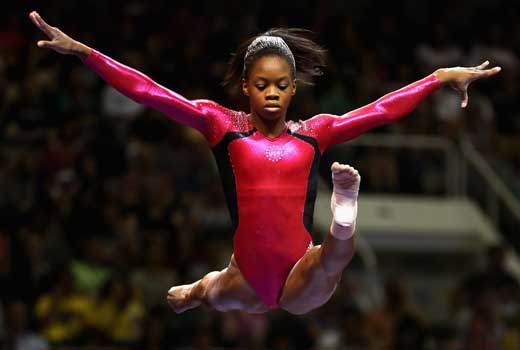
Gabby Douglas, Winner of the U.S. Olympic Team Trials 2012
Bright and early this morning, I went to my best friend’s house to watch the Olympic Trials (old news, we were watching what we missed of the Women’s Gymnastics Team Trials on the DVR). It had been pouring down rain most the night and well into the morning, keeping my sweet baby asleep much longer than usual. So by the time I was heading over for some Olympic goodness, kiddo still cozy in her pajamas, the streets were quite flooded. It was a delightful morning, sipping coffee, hanging out, watching the best athletes in the country do their thing. It set me up for my whole day.
First, while watching Gabby Douglas rock day two and Sarah Finnegan do that fancy beam skill she shares with Terin Humphrey (Click to see the awesome beam skill I’m talking about: Sarah, Terin), I heard a commentator say something that got me pretty curious about Olympic rules and regulations I wasn’t familiar with already. They were talking about how young Sarah was. Young? I thought. Dominque Moceanu was young. This girl is normal… right? Nope, not anymore.
Dominique Moceanu was the youngest to win nationals at 13. She was allowed to compete because she would turn 15 during the Olympic year, which means she was actually 14 during the summer Olympics when the Magnificent Seven awed the world. That was 1996. In 1997 the rules were changed. Instead of gymnasts being required to turn 15 in the Olympic year, the eminent “they” that makes important Olympic rules added an extra year to that requirement, and now girls must be 16 (or turning 16). So Dominique Moceanu will remain the youngest for quite sometime, because it will be impossible for any equally talented 13-year-old to even have the same chances to prove themselves. In addition to that, there are rumors that the age may be increased to 18! I, personally, am not a fan of these rules. Yes, our children should be protected, but I think there is a higher risk of injury for training that intensely after an athlete has peaked. No, I was never an Olympian, but I am very familiar with peaking as an athlete and then things going downhill from there, no matter how hard you train.
Of course, I discovered all this and formed all these opinions today during kiddo’s nap time, while also polishing off my assigned reading for the day:
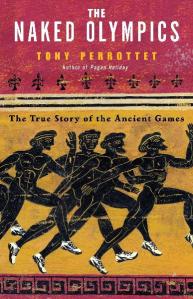 Title: The Naked Olympics
Author: Tony Perrottet
Publisher: Random House
Genre: Sports, Ancient History
Length: 214 pages
Perrottet takes an already fascinating subject and presents it in the form of riveting history. I was surprised how much detail had been discovered regarding the ancient games, and was impressed at how well Perrottet presents it step by step, without leaving anything out. There were so many things included in the games back then, beauty contests, poetry readings; it wasn’t just for athletes, it was an all out ancient world pagan party honoring Zeus and Eros. A lot of this information (though it makes perfect sense and fits right in with what I already knew about the times) was new to me.
I was fascinated by how often names I knew popped up in the commentary… Plato, Socrates, Herodotus… I didn’t expect them at the Olympic games! I also was ignorant of the role the Nazi’s played in our modern view of today’s Olympics, and the lighting of the torch. An interesting tidbit about the Nazis being so fascinated with Sparta kept popping up, along with tales that put shivers up my spine.
Regardless of the Olympic Games origins and history, and how much of it goes against my personal world view and moral standing, I still find the Olympics wonderful. Should you purposely breed Olympians? No. But if someone has the drive and talent and has a passion for it, competing in the Olympics is a beautiful dream and an awesome thing to behold.
Perrottet has done a great job portraying the Olympics for what they are, presenting a well-rounded quick study of the origins of an event which everyone is already familiar. As I plan to educate kiddo classically, I think this would make a fun optional read during the summer games when she hits her teens. I see us doing what we did today, eating tomato, avocado, honey mustard, parmesan cheese sandwiches on toasted wheat, sipping coffee, watching the trials, and doing some research. It could be a fun study/ study break from regular school assignments.



 Anakalian Whims