Kim, World Traveler
 Meet today’s Guest Blogger: Kim Ogonosky. She’s a reader, a writer, has the most *amazing* singing voice, and loves to travel…
I firmly believe that people who love to read are natural born travelers.
There is no scientific data to back this up; it is my [completely biased] personal opinion based on firsthand experience. Simply put, I love to read, and I love to travel.
Of course the word “travel” does not necessarily need to be understood strictly as the physical act of traveling. For avid readers who get metaphorically lost in literature, are they not, in a sense, traveling as well?
You bet they are, and I can attest to this. I traveled to Pemberley with Elizabeth Bennet where I fell hopelessly in love with Mr. Darcy. I partied with the wild, over-indulgent upper crust of society at Jay Gatsby’s mansion on Long Island’s West Egg. I’ve been to post-apocalyptic worlds and dystopian societies. I’ve traveled halfway around the world and broken the barrier of time. I’ve laughed, I’ve cried, and I’ve thrown things across the room in outrage.
And if anyone dares tell me this is not a form of travel, I assure you they have never gotten lost in a book!
Aside from traveling through books, I also love to physically travel. Never one to sit still, I am always looking for the next adventure. I once said my life’s goal is to visit every single country before I die. I have 13 under my belt, which means I have approximately 183 to go. Hey, a girl can dream!
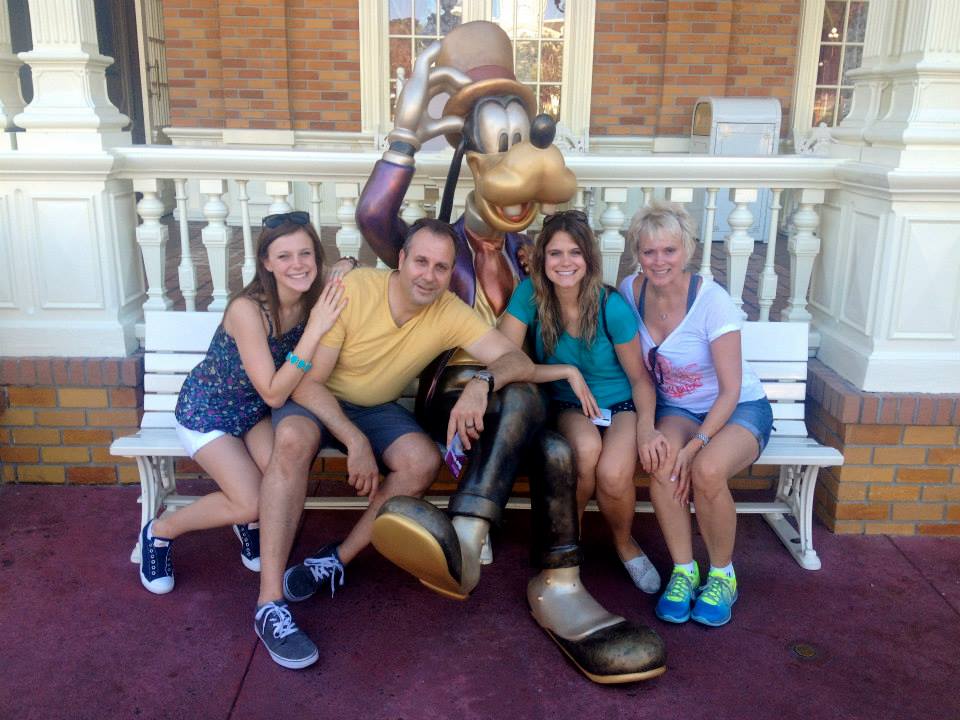
My favorite place in the world is Florence. My favorite family vacation has been to Disney World. And I definitely recommend taking your significant other to the Caribbean for a vacation that looks like it came straight from your computer’s screensaver. But the most influential trip I have ever taken was to Tanzania.
In graduate school I was given the opportunity to travel to Dodoma, Tanzania to help film a documentary about a nongovernmental organization called BRAC. Another student and I were sent there to highlight their Empowerment and Livelihood for Adolescent girls program. I had never picked up a video camera before in my life, and I only knew a few choice phrases in Swahili, but off I went with just one other person, malaria pills in tow!
Side note: I have never taken any sort of illegal substance, but I’m pretty posit
ive if I did, the effects would be similar to that of taking malaria pills. That stuff is no joke.
When I got back from Africa, I remember people asking me if I had “fun.” Yes, it was the most influential experience of my life thus far, but I would choose other adjectives to describe it: Eye-opening, humbling, transformative, educational, challenging, and emotional all come to mind.
The pinnacle moment of the trip came when the Internet at our hotel went out, and I almost had a nervous breakdown.
My Family
Now, in my defense, the reason I had the nervous breakdown was because I wanted to contact my loved ones, not because I wanted to update my Facebook profile, so it was coming from a well-intentioned place.
However, we had just spent the day in the nearby villages interviewing these incredible young girls who had faced more hardships in their lives than the majority of us could ever imagine. Many didn’t have shoes. Most didn’t have clean water. And a startling number were in danger of not finishing their educations. Yet they came together to sing, dance, play, learn about how to start their own businesses, and support one another through strong female friendships.
And here I was at my hotel, with a pool, a nice restaurant, and plenty of clean water, crying about the Internet going out.
Needless to say, I was dealt with a healthy dose of perspective in that moment.
So yes, my trip to Africa was the most eye-opening, humbling, transformative, educational, challenging, and emotional experience of my life. And I wouldn’t trade it for the world. I learned so much from these brave young women, and I was inspired to immerse myself in similar travel situations again. Not because it was “fun,” but because I learned so much about the world, about humanity, and about myself.
Sounds a little like reading a really good book, doesn’t it? And here we are, coming full circle!
I recently stumbled upon what I consider to be the opportunity of a lifetime. An up-and-coming travel website called Jauntaroo is hiring a “Chief World Explorer” who will travel the world for a year, while blogging and filming webisodes about their experiences. Moreover, this person is encouraged to participate in “Voluntourism” activities while traveling. Sign me up!
Yes, the competition is stiff, but if I’ve learned anything from my books it’s that you must go after your dreams. Or simply put, if you don’t shoot, you don’t score!
I went for it and submitted a video application for this position, which can be found at www.bestjobaroundtheworld.com/submissions/view/12992. It is only a minute long, so should you decide to watch, it will not take up a lot of time. After having read this and watched the video you feel I would be well suited for the job, I would be incredibly grateful if you “liked” my video. You don’t have to fill out any forms, and you can do it once every 24 hours if it tickles your fancy! This would be an incredible experience, and I would love to be given the chance to travel the world and take others with me on the journey- through the fun, the relaxing, the challenging, the emotional, and the meaningful times.
Thank you for taking the time to hear my story. I wish all of you safe, exciting, and meaningful travels, be it in the metaphorical or the physical sense. Life would be so less interesting without them.



My Rundy

(This is supposed to be a review of My Antonia, HPB Humble book club selection for September’s discussion. But it’s not.)
With every book I read, I miss my high school English teacher more and more. I’m nostalgic by nature, so this should not be misconstrued as any overly dramatic longing. I only regret the times I was too exhausted to stay awake in class. I want to hear him talk about something I’m currently reading that wasn’t part of the curriculum ten to fifteen years ago. I feel desperate to hear his literary thoughts.
I miss Mr. Rundell – casually referred to in the classroom as Rundy – I miss conversations we never had. Which is ridiculous. Who misses their high school English teacher so much?
Sadly, it’s because somewhere in my seventeen year old brain, I was convinced that when I was a grown up, Mr. Rundell might be my friend – join my book clubs – hang out. I always thought that if he hadn’t been the teacher and I hadn’t been the student we would have been friends. I think everyone thought that about him. He was so cool, but super nerdy. He made being a little bit geek look fun.
At seventeen I was also convinced that I would never marry or have children. I thought this because the love of my life had me pretty convinced we were never going to be anything other than platonic. Now, we’ve been married for seven years and have a daughter. The point? What I thought at seventeen turned out to be pretty irrelevant. And the love of my life finally did fall in line with all of my heart’s desires. So why can’t my old English teacher?
I want to hit him up on facebook like I do my old college professors. Discuss random things that pop in my head as they come up organically. Why shouldn’t I? I’m still paying for the degree that’s sitting in my closet with a dog chew tear in the corner of what was probably meant to look like very expensive paper.
Selfishly, and a bit stalker-like, every few years I start googling him to see if I can hunt him down. Last time I was dying to discuss East of Eden (we read Grapes of Wrath for school) with him over a whiskey. Now, it’s Willa Cather’s My Antonia.
I watched the new Gatsby movie with a friend the other night and all I could think was, “I would have loved to see this movie for the first time with Rundy.” Even if it meant I had to sit in an uncomfortable plastic chair bolted to a crappy desk to do so.
People shape our lives in ways we do not expect. I was always a reader, I always loved literature. He did not ignite something in me that wouldn’t have already been there. But the man knew how to balance that fine line between teacher and friend. Teenagers really need to feel like someone is on their side sometimes, and Rundy had being on our side down pat. There was a rapport that made us desire his classroom and approval alongside a pure, true teacher student ambiance.
I knew he was one of my favorite teachers then and there, but I never expected to actually wonder what he was up to or hear half his lectures in my head when I re-read old classics. I especially didn’t think that I would feel the absence of his lectures when reading a title I didn’t even know about at age seventeen.
So this is not so much a review as an ode to my favorite English teacher of all time. The tall, lanky, hunched-over-geek that sat on the bottom of his spine as he leaned awkwardly into the stool beside the podium. The guy who had us write essays on Pink Floyd and Army of Darkness. The man who arched his eyebrows at my best friend and me when I told him we were just friends and said, “Sure.” I think he was the first person to get me wondering if I had a shot with the boy who swept me off my feet and became my husband.
This is an ode to the guy that made us think.
As for Cather’s work, I nearly died at a quote on page 187 by Lena: “[…] I don’t want a husband. Men are all right for friends, but as soon as you marry them, they turn into cranky old fathers, even the wild ones. They begin to tell you what’s sensible and what’s foolish, and want you to stick at home all the time. I prefer to be foolish when I feel like it, and be accountable to nobody.”
I laughed and laughed at this. Oh, Lena, how I thought that too! But that post is for another day.
The Forgotten Garden
Being mentioned isn’t enough… my ego requires me to re-blog this.

I’ve come a little late to the Kate Morton party, as with most of the best selling authors in my collection. While I have seen her books around for years, I am naturally suspicious of anything that lands itself on the New York Times best sellers list until I receive a solid recommendation from my own personal bookie. It’s not that I think I’m better than everybody else who buys books (although that much should be apparent by this point) it’s just that I want to make sure I am purchasing a best selling book of Sloane Crosley caliber, rather than seeing Fifty Shades of Grey for the first time and taking it home because at first glance (which is all I usually give a book before settling down one night to read it and discovering it is actually fancy pornography) it appears to be quixotic.
My bookie, Andi Kay, is Queen of the Listies and well acquainted with how my reading brain functions. Essentially this means I let her slash…
View original post 298 more words
Down the Rabbit Hole at the Dallas Arboretum
This would have made a most appropriate “When We’re Not Reading” segment on my own blog, had I been there. But alas, I miss out on much.
The Dallas Arboretum is listed as one of the top ten places in the country to visit in the spring. Because of the way Texas seasons fall this means February-April are prime Arboretum visiting months; however, in the summer time, they must rely on displays and events to bring out families in the unrelenting heat. Last year they featured the beautiful blown glass sculptures of Dale Chihuly, scattered throughout the pools and rising from the midst of some their most popular areas of the gardens. It was broad scale, I assume well funded, and terribly impressive.
This year the summer draw is the Alice’s Adventures in Wonderland Flower Village. Since we like flowers and we like Alice in Wonderland and WHO DOESN’T jump at the opportunity to take three children under the age of three out in 100+ degree temperatures my sisters and my best friend and I decided to take our…
View original post 284 more words
The Loneliness of the Gifted and Genius

NOTE: I use the words “gifted” and “genius” in the place of “extremely sensitive” and “so extremely sensitive that there are not too many of them in this world.” I believe these definitions work better than the results of IQ tests because there is much more to these people than their intellectual overexcitability.
“It is strange to be known so universally and yet to be so lonely.”
– Albert Einstein
Being born into the one percent of the population that is extremely sensitive not only comes with many great advantages, but also many challenging difficulties.
One of the most challenging difficulties experienced by gifted individuals and geniuses is loneliness.

[ Russell Crowe as John Forbes Nash in “A Beautiful Mind” ]
Psychologist Kazimierz Dabrowski identified five areas of “overexcitabilities” in gifted individuals. We experience both the “bright side” and the “dark side” of these overexcitabilities:
Overexcitability | Bright Side | Dark Side |
| Psychomotor | • Extremely… |
View original post 736 more words
The Vikings Take Over Our Library
 As everyone else heads back to school, I looked over the last month and realized we really did treat the hottest months of the year like a summer vacation this year… mostly lolling around the house between events, taking extra naps after our dance parties in the living room, and mostly hiding our pasty skin from the hot, Texas sun. So I tackled cleaning out the closets, while everyone else was out buying school supplies, and organized our life the way it has always been organized in my brain… in unit studies. Of course, that got me in the mood to really tackle “school time” with more vigor and this last week or so we jumped back into the swing of things with Ancient Greece and Rome and then The Vikings and the Celts.
Viking Ships at Sunrise by Mary Pope Osborne was next in our Magic Tree House Adventures. We have not acquired the Viking research guide yet, but I believe there is one. We also re-read DK’s Eye Wonder Viking book, we had read it once before while perusing the exciting world of piracy, and a little repetition is good for a kiddo.
 But the really exciting book for this particular unit study was The Hero Beowulf.
Eric A. Kimmel’s retelling of Beowulf is a pretty neat picture book add on for little people. It’s illustrated by Leonard Everett Fisher and is complete with an author’s note about the original poem in the back. Beowulf, after all, isn’t just a monster myth, it’s the “oldest surviving epic poem in English literature,” all the way from the sixth century, to your hands now.
I can’t reiterate enough how much the classical education style appeals to me by teaching so much history through the other subjects… or rather teaching all the other subjects by tackling history so thoroughly. I love that there are so many resources, like Kimmel’s picture book, to make the tales and the culture more real and the epic poem more accessible when the time comes to tackle the original work; because in classical education everything repeats at a higher level over and over again.
After reading The Hero Beowulf, kiddo ran to grab other books with Viking ships on them and said, “Look mommy, more Beowulfs!” So she doesn’t entirely get it yet, but hey, she’s two.
Aphrodesia
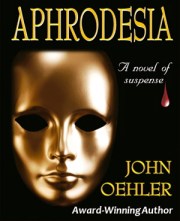 Title:Aphrodesia

Author: John Oehler
Genre: Mystery
Length: 342 pages
I should not have been surprised with a title like Aphrodesia, but ironically, I was. I had half a mind to add Erotica to the genre line, but I wasn’t quite sure if the shoe fit. Oehler’s book is definitely erotic, but there’s a story and a purpose to his rated R material, so I found myself drawn in by things that would normally repulse me. If that’s not good writing, I don’t know what is.
Oehler has managed to capture the world of perfuming in a pretty intense way. I’ve never read anything like it, and highly doubt I’ll ever find or read anything like it again. It’s truly unique.
I’ve read foodie books, coffeehouse style with baked goods, travel books with exotic cooking recipes… nothing has tickled my nose so that I could smell the story so well. It would not surprise me to discover that the author develops fragrances in his spare time as well. His descriptions are gritty, a little dirty, and down right accurate; which, for me, made the whole reading experience a little disconcerting.
If you follow my blog and have previously read Mary Reason Theriot or Kendall Grey, this might be right up your alley. Although Oehler isn’t really comparable to either one of those authors – he’s in a sub genre of all his own making. I don’t quite know what to do with him. I’m simultaneously reminded of the old classic, The Monk, written in 1796 by a guy smitten with the writings of Marquis de Sade, and Elizabeth George with her mysterious detective dramas. Needless to say, I’d like to read something else Oehler has written and see what his non-erotic mysteries read like… or if he writes non-erotically. (This is where that nasty habit of not reading the backs of books or other reviews or blurbs on books comes to bite me in the butt, I know little about an author or their work, until I’ve read most their work. But that keeps life interesting AND keeps me reading, right?)
John Oehler will be signing books at Half Price Books Humble Saturday August 24th and then at the HPB North Oaks the following Saturday. Join the event page here: https://www.facebook.com/events/505154219566449/ for all the details and come out and pick up a copy of his book in person. Probably best done before you read the work, as I anticipate not being able to look him in the face after being made to blush on nearly every page for the first 100 pages of his book. We’ll see how that works out tomorrow. P.S. I’m a little bit of a literary prude, and I’m ok with that. Despite my prudishness… I like this book.
Also, sometimes I include this, often I forget but today I think it is relevant: I had Frank Sinatra playing and Ace warming (Scentsy product).
Coffee… Starbucks… God… Gospel… What?
 Title:The Gospel According to Starbucks
Author: Leonard Sweet
Publisher: WaterBrook Press
Genre: Christian Living
Length: 210 pages
So reading this I realize why I rarely read Christian Living books. I pretty much disagree with most of them. Sometimes they are blatantly wrong, sometimes their nuances are misleading. Sure, I think it’s good to pick one up every now and then, but mostly I’d rather read The Bible, theology, or philosophy, rather than suffer through a water downed less than truthful version of God.
The story of the copy I have of this book is an interesting one, to me. My college room mate’s little sister had it first and her tiny little handwriting (that looks freakishly like my old roomie’s) is peppered throughout. That’s my favorite part about used books – the notes.
Mostly she’s witty… funny little quips from having actually worked at Starbucks creep onto the pages. Cutely reprimanding customers for their silly choice in drink, which I cutely got indignant over because some of those drinks are things I order, seep onto the pages and make my lip curl up. But sometimes she writes something spot on that is exactly what I’m thinking and embodies my entire personal view of this book:
“You can be grateful and enjoy the ‘experience’ but don’t place your walk’s ‘value’ on whether or not you had some ultimate experience.” – Hannah’s note on pg. 51
Indeed. At one point I scribbled a response that said, “Church becomes an entertainment fiasco… the Baptist equivalent of a Vegas Headliner.” Because the Gospel of Starbucks is experience, and Sweet implies over and over that we should be focused on our experience with God. Human beings are kind of crazy and moody… I don’t want my walk with God to be based on my personal experience and how I’m feeling that day. Instead, I’m sorry, but I think we should be focused on GOD… not how we feel so much. Feelings are fleeting. God is steady.
Don’t get me wrong, there’s some good stuff in here. I’d give it a 3 stars “I like it,” but I like it with a shrug. I think I mostly like it for the fun little notes in the margins that Sweet inspired out of previous readers. I like the coffee talk and the Picasso quotes. I like that Sweet encourages people to “live with a Grande passion,” I think living with passion is important. It’s the nuances that get me every time with a book I sort of don’t care for… all those tiny little nuances that leave an after taste. Kind of like Starbucks. I like Starbucks, I do. But everything just kind of tastes like Starbucks after awhile and I’m always eager to find that hole in the wall mom and pop coffee shop that stayed true to the basics. That goes for church too… teach me the word of God, end of story.
The best thing about Sweet’s gospel? It compliments my morning coffee. As it was a hand-me-down title, however, I plan to hand it down to someone else. It’s worth reading, but not a keeper.
A link to Hannah’s blog can be found in my right hand margin: Musings From the Tardis.
My old Roomie writes Coffee Cups in Trees.
But something to take a look at that is a much better view of the world and is quick and to the point is here: http://www.thinkingthroughchristianity.com/2013/08/let-there-be-coffee.html



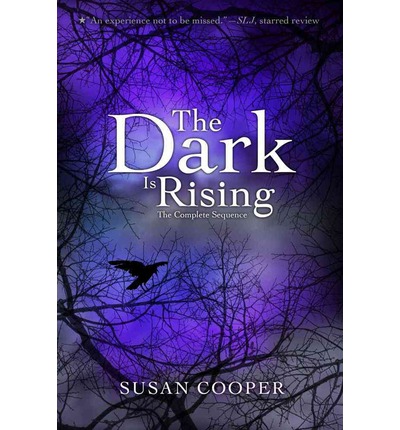
The Dark is Rising Sequence: Book One
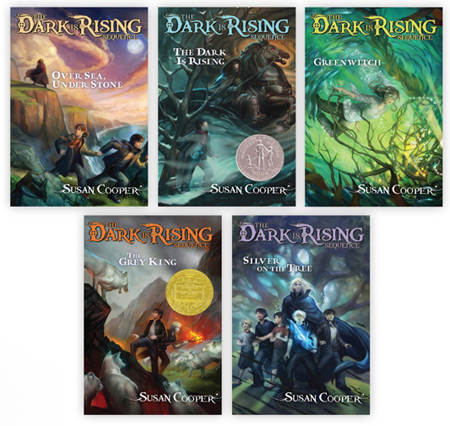
 The Dark is Rising Sequence started in 1965 (probably much sooner if you were to talk to the author) with the publication of Over Sea, Under Stone under the name Susan Cooper Grant. In 1973, The Dark is Rising would come out, followed by Greenwitch in ’74, The Grey King in ’75, and finally Silver on the Tree in 1977. The Dark is Rising was a Newberry Honor book (runner up to the Newberry Medal) and The Grey King actually won the Newberry Medal.
The books have stared back at me from shelves my entire life, but I didn’t actually pick them up to read until this year – my 29th year – for a Young Adult book club at Half Price Books (Humble).
Having finished Over Sea, Under Stone I can officially tell you that I’m hooked. Not only will I finish reading the series, I will be releasing my reviews of each book in a serial here on my blog and I am adding all the books to my daughter’s homeschool curriculum, with some help from a website I stumbled across: http://www.andrews.edu/~closserb/courses_211_review_studyguide.html
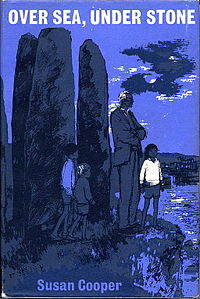
Title: Over Sea, Under Stone
Author: Susan Cooper
I am reading from this edition.
Genre: Young Adult/ Fantasy/ Mystery
Length: 236 (book one) out of 1082 pages (whole series)
You might wonder why a fantasy series has become a mandatory reading assignment for my daughter. If you follow my blog at all, you might have an idea. Over Sea, Under Stone is just screaming to be part of a King Arthur unit. Pendragon’s name is dropped countless times; myths, legends, fairy tales, and the search for the grail make up all the major plot points; and, it’s full of research and adventure. What better to inspire a ten year old into the exciting world of a lifetime in literature?
The following I took straight from the aforementioned site I stumbled upon re-posted here in case the link ever fails):
A writer must be able to do or manage the skills of writing fiction:
Plot–What sort of story line has Susan Cooper devised? What happens? Is it a satisfying story line? Does it seem appropriate for the story?
 Conflict–What is the conflict of the story? What is at stake if the central characters fail in their quest? Who are the opponents in the story? How do they complicate the plot?
Characters–Who are the main characters in the story? What does Cooper tell you about each one of them? How does each character differ from the others? How does Cooper compare Simon, Jane, and Barney? What is each child’s personality and why is this personality important to the story? Why does Cooper choose children as the heroes and heroine of the story? Why not Great Uncle Merry?
Setting–Where does the story happen? What is the country side like? How is this appropriate to the story? Could Cooper set the story anywhere else and still make it work as effectively as it does now?
Symbols–What objects in the story take on symbolic meaning? In what way is the grail a symbol? Rufus the dog? The manuscript? Each of the characters? The rising tide or the boats? The fact that the grail is found in a cave? The standing stones?
Theme–Considering all of the elements mentioned above, what is Cooper’s point (this gets us into the third form of knowledge; see below)?
 A writer must know about the Arthurian tradition in general and the grail tradition particular:
The grail is an object of great significance and importance. What did you notice in the stories you read? How does Cooper convey this concept in her story?
The grail can be found only by the most perfect of knights. What qualities do Percival, Galahad, and Bors de Gannis have? Does this suggest a reason why Cooper decided to send children rather than adults on the quest?
Grail knights always demonstrate their perfection by undergoing severe temptations. What temptations do Percival, Galahad, and Bors face? What temptations to Simon, Jane, and Barney face?
In the grail stories the heroes live by strict codes of ethics. Describe the grail knights’ value system. What rules do Simon, Jane, and Barney live by?
Grail knights always have a spiritual mentor. Who functions in this role in each story?
How do boats or other symbols like the wind, the number three, or color help to make the stories’ points?
Grail stories often center on illusion and false realities. What illusions do the three grail knights face? How does Cooper suggest that reality is not what the children believe it to be?
Grail stories fundamentally center around the quest for perfection and the test of one’s character. How does the quest test each grail knight or each child in Cooper’s story? What does each child learn from the experience?
Grail stories often involve magical, mysterious, or mystical places like castles or dark forests. Where in Cooper’s story do you notice elements of mystery?
Grail stories ultimately change how the central character views life. What is the effect of the search for the grail on each of the three grail knights? On the three children in Cooper’s story?
A writer must have a message, theme, point, or lesson to communicate.
What is Cooper message? What is she trying to say about the human experience?
In what ways might the children’s experience parallel our own experiences? What do we learn about ourselves from their experience?
What quests do we have to face? How might/should we go about accomplishing these quests? What do we learn from the children’s experiences which might guide our quests?
I love how this enjoyable fiction lends itself so readily to the study of storytelling, the King Arthur tales, the development of legends in general, religious history, as well as the kiddo’s general history lessons as we sort out documented history from legendary fictions developed over time.






 Anakalian Whims