Look! I’m a Guest Blogger!

With a name like Andi Kay and a grandmother not in the least bit shy about her Alabama roots, it should be no surprise that I come from a long line of back woods southern names like Lona Mae, Veramer, and Nova Jane (all said with the longest imaginable drawl ever).
I’ve lived in Texas my whole life, my Dad was born in Lousiana, nearly all my ancestry on my Dad’s side is rooted in a Hicksville anywhere south of the Mason Dixon line. I have cousins who still use the term ‘Yankee’ (and not in reference to a sports team), aunts with award winning casseroles, all my in-laws carry guns, my husband is a redneck millwright, and there is constant debate over whether LaWanda or Betty Sue have the best iced tea. So it should also be no surprise why I find southern literature endearing.
As a ten year…
View original post 498 more words
Brain Trivia Night at Half Price Books Humble
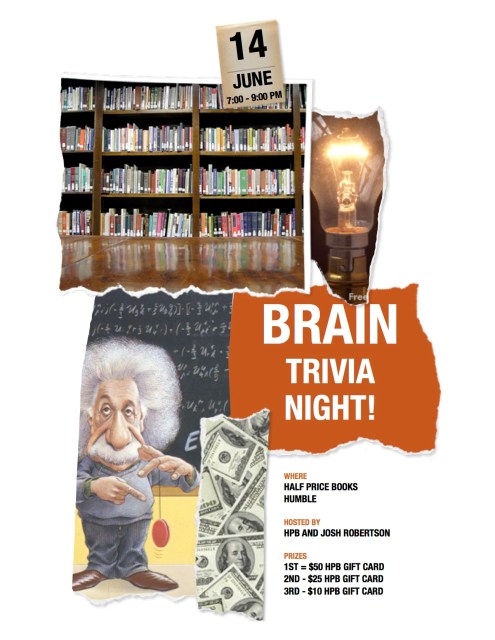 Brain Trivia Night Does your brain bulge from a profusion of facts? Does your family call you a “Know-it-all”? Well, come on down to our HPB Humble store for Brain Trivia Night on Thursday, June 14 from 7 to 9 pm. First Prize winner receives a $50 HPB Gift Card, Second Prize is a $25 HPB Gift Card, and Third Prize is a $10 HPB Gift Card. It pays to be a “Know-it-all.”
The Secret Adventures of H.G. Wells
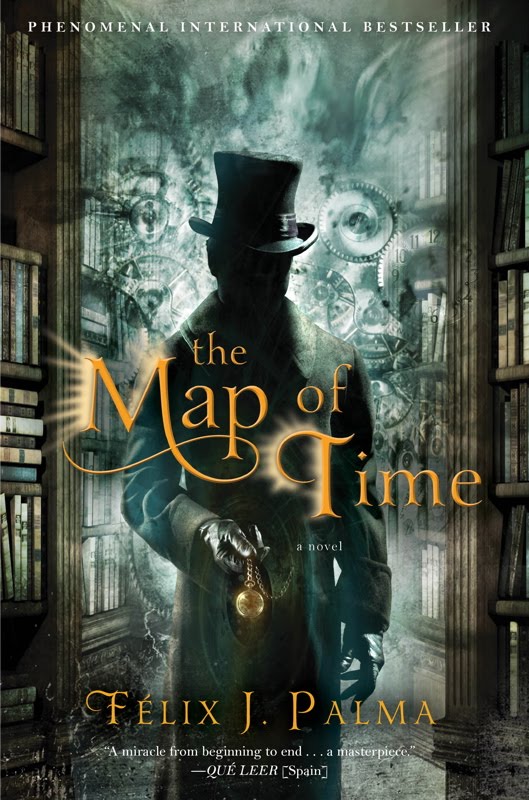 Title: The Map of Time
Author: Felix J. Palma
Publisher: Atria Books
Length: 611 pages
It may have taken me longer than I first supposed to finish Felix J. Palma’s The Map of Time. Yes, there may have been days between reading that I had not expected, because the marketing was so astonishingly gripping. But any distaste I had for this book while I was reading it was purely psychological. It had to have been, because Palma’s writing is brilliant.
My psychological beefs? Let’s see if I can express them.
#1 The premise described in the jacket isnt even remotely a familiar story line until the last 60 pages of the book. Good thing I don’t usually read dust jackets, I just dive in, but I have friends who do who were reading this book roughly around the same time as myself, so on this occasion I went against instinct and read the synopsis. While reading the novel, I felt a bit duped by the summary, anxiously waiting for a time traveling book thief that didn’t arrive until over 500 pages in. The front cover is applicable to all three story lines, but the inner art work is directly related to the end, so the anticipation literally killed my reading mojo. I wish the advertising had been a little more straight forward, except I love the advertising and it clearly worked, therefore on that count, I have not a single suggestion.
#2 The book is really 3 books. At least in my mind it is. Its 3 separate but interconnected stories, overlapping characters and puzzle pieces and the theme of time travel, though not actual time travel. In my perfect world, this book would have been a series of novellas (which I inevitably would have begged to have in one complete volume as an omnibus – see… psychological issues!). Instead of being broken up in generic Part One, Part Twos, etc, I would have mentally prepared the reader for the disconnected yet interconnected adventure with titles. Example: Instead of being called The Map of Time, call the book The Secret Adventures of H.G. Wells. Part One, would be “Book One: The Murder of Jack the Ripper”, or something of the sort. “Book Two: Captain Shackleton’s Love Story” and “Book Three: The Time Lord and the Book Thief.” Perhaps Book Three could keep the original title “The Map of Time” it wouldn’t really matter. I just want to go in with the understanding that these are separate but connected adventures, rather than flailing about wondering if the next paragraph has any relevancy – which it does!
#3 There’s a word mis-used at one point where I believe ‘ancestor’ should have been utilized instead of ‘descendant.’ But that’s really trivial, and no one cares. (It also could have been me getting my time loops all mixed up.)
The story itself, I wouldn’t change a lick, because it’s marvelous. It’s the present structure that I clearly have issue with. Feeling as though the story was disconcertingly disconnected (when in reality as a series I would find it beautifully interconnected) made me set it aside in irritation one too many times. With the internal structure slightly altered with silly titles, I suddenly feel better about the whole thing. I would have found both jacket and description equally fitting and not misleading at all.
Moral of the story (my story, not Palma’s story)… this book is bloody brilliant and I’m keeping it, despite having kicked and internally screamed several times while reading it. Don’t be put off by your own expectations.
Diana Gabaldon Interviews with Anakalian Whims!
 Diana Gabaldon
1. You’ve made it clear that you don’t like your books catalogued as romance (completely understandable – and I agree that they are so much more than that!). What genre would you prefer them to be classified?
Well, so far, I’ve seen them classified and sold (with evident success) as: <deep breath> Literature, Fiction, Historical Fiction, Historical NON-Fiction (really), Science Fiction, Fantasy, Mystery, Romance, Military History (really; the Military History Book Club has carried several of my titles), Gay and Lesbian Fiction, and…Horror. (No, really. A BREATH OF SNOW AND ASHES beat both George RR Martin and Stephen King for a Quill Award a few years back. Very gratifying. <g>)
On the whole, I’d just like to see them classified as “Fiction.” If you call them anything related to a specific genre, you’re just asking for half the people who encounter them to shrug and go, “Enh…I don’t really read that kind of book.” No point in alienating an audience a priori, I mean.
2. The Outlander Series has been a best-selling series for twenty years. Is this what you imagined for yourself? Did you ever think Jamie and Claire’s story would reach this level of fame?
Well, no. I wrote OUTLANDER for practice, in order to learn how to write a novel. I didn’t intend even to tell anyone I was writing it, let alone try to get it published. But you know, Things Happen. <g>
3. There is a lot of detailed history in your novels. Do you enjoy doing the necessary research involved when writing these books? Outside of your research for these novels do you read a lot of history?
I love doing research. I chose to write a historical novel for practice because I was a research professor (though in the sciences), and knew my way around a library. I figured it was easier to look things up than to make them up—and if I turned out to have no imagination, I could steal things from the historical record. <g> (This works really well, btw.)
I enjoy history in general, but am a dilettante reader; I just pick up books I’ve read good reviews of or hear well-spoken of, in just about any period. Reading for pleasure is a whole different animal than doing research—the latter is kind of guerrilla warfare, as opposed to a nice stroll through the scenic landscape.
4. I read that a Dr. Who episode inspired the setting for your books. I’ve been a Dr. Who fan since childhood, so I’ve got to ask: Which actor plays your favorite Doctor?
Oo, hard to choose! I suppose David Tennant wins by a bit—though I _really_ liked Chris Eccleston in his single season, and who doesn’t like Tom Baker? Matt Smith’s very enjoyable so far, but I’ve only seen his first season, as yet.
5. I am completely fascinated by the Geillis Duncan/ Gillian Edgars character. What was your inspiration for including this character in the story?
Oh, a real Scottish witch <g> named Geillis Duncan. See—“steal things from the historical record,” above.
6. I read on your website bio that you hold degrees in various sciences and were actually a college professor. Did you enjoy teaching? Any favorite anecdotes from that life?
I loved teaching; it’s the only thing I miss about academia (and thus I enjoy teaching workshops at writers conferences and the like). Anecdotes…well, there was the class I taught in Philadelphia some years ago. I was teaching a class in Human Anatomy and Physiology, to nursing students from Temple University. One of my favorite students was a black guy in his mid-thirties—all the students were a big older than the usual run of college students; these were mostly people returning to school for a nursing degree—who had a colorful background, but looked rather like the owner of a successful bar: slightly overweight, balding, glasses, conservatively but casually dressed, very outgoing and genial. His name was…well, I’ll call him Wally.
Now, all my students took the same curriculum of nursing classes, so they’d often come in talking about what had happened in the class before mine, which was something like applied techniques—a lab class where they learned to take each other’s blood pressure, draw blood, do CPR, and practice various bedside techniques. This particular month, they’d been doing bedside procedures, with a life-size dummy, demonstrating that they knew how to change a bed, check vitals, check the patient’s general well-being, take care of any personal issues, and do it all while addressing the “patient” in a kind, respectful, informative way.
On this one occasion, they came in very excited, having had an important exam in that class—they _had_ to pass that class, or they’d be thrown out of the nursing program and have to re-apply and start over. And at the end of the influx came Wally, flushed and wild-eyed, in a Complete State.
“What on earth happened?” I asked, whereupon he waved his arms and shook his fist at the heavens.
“I ran with gangs! I been in jail twice! I’ve been shot, I’ve been stabbed! I been married twice and I got three kids, I got out of the gangs, I come back to school—and now I’m about to be kicked out of school and RUIN MY LIFE…because I FORGOT TO WIPE A GODDAMN DUMMY’S ASS!!!”
7. How did your teaching career and background in science affect your approach to writing fiction?
It didn’t. At least, not in any direct or describable way. There are certain parallels between science and art, but part of that is just the way the world _is_, and part of it is just the way my mind works.
8. Do you have any nonfiction publications (other than The Outlandish Companion) in the works? (If so, I can’t wait to read them!)
Not other than a handful of scientific papers. <g> Now, in the fullness of time, I will have THE OUTLANDISH COMPANION, Part II, and am also working on a book about writing, called THE CANNIBAL’S ART. Neither of those will be out ‘til after I finish WRITTEN IN MY OWN HEART’S BLOOD, though.
9. I read that your 8th Outlander book will come out sometime next year. You also have another series, Lord John, which has become popular. You’ve become quite prolific! Do you have any advice for aspiring authors?
It’s the same advice for _any_ writer, no matter what their level of experience:
Gabaldon’s Three Rules for Becoming a Writer:
- Read. Read a lot, read everything. This is where you find out what you like and what you don’t like (and it’s a total waste of time to try to write something you don’t like just because you think it might sell—it won’t, believe me)—and also where you begin to learn the craft of writing. You read two books in the same genre, for instance, and think, “I like this one a lot, that one, not quite so much. Why is that?” Well, the first one has better characters; they seem realer. Oh? And why is that? Mmmm….I think it’s the way they talk. These people sound like people really sound, and the other one’s kind of wooden. OK. How did the writer do that? ‘Cuz everything a writer does is right there on the page; there’s no way to hide your techniques. <g> If you look carefully and read with attention, you’ll start to see things—for instance, that good dialogue usually consists of short sentences and brief paragraphs, while bad dialogue tends to drone on and have convoluted sentences. Or that good dialogue never tells you stuff that the characters already know—whereas a bad writer will often use dialogue as a way of info-dumping on the reader. That kind of thing.
- Write. Unfortunately, this is the only way of actually learning to write. You can read all the books you want, and take classes in creative writing, and they may be useful—but nothing will actually teach you to write, except the act of putting words on the page.
- And the last rule is the most important: DON’T STOP!!
10. I truly appreciate you taking time to interview with me. (Feels kind of like I won the lottery!) Do you have anything you would like readers to know about you and your novels that I haven’t already covered?
Let me see…Oh! We (me, my agent, and Random House <g>) are releasing a series of novellas—originally written for various anthologies—as individual e-books. These are for the benefit of readers who either didn’t see the original anthologies, or who perhaps don’t want to experiment with a collection of unknown-to-them writers just to get one story by a favorite author.
Anthologies usually only keep the reprint rights for a year or two, and once those expire…I can do anything I like with the stories. So. Those stories are beginning to come back to me, and as they do, we’ll make them available individually.
Right now, you can get “The Custom of the Army” as a separate e-novella, for any common e-reader format (i.e., Kindle, Nook, etc.), _in the US and Canada_, and you’ll be able to get “A Leaf on the Wind of All Hallows” (this is the story of Roger MacKenzie’s parents, Jerry and Dolly, during WWII, wherein you learn what _really_ happened to his father) as an e-novella in October.
Because there are different rights in different geographical territories, often I get the international rights to something back well after I get the US rights back. And there are sometimes differences between the print rights and the e-rights. What THIS means is that while UK/Australia/NewZealand fans can’t (yet) get the e-novellas—BUT they’ll be able to get a print collection in October that includes not only “Custom” and “Leaf”—but also “Lord John and the Plague of Zombies” and “The Space Between” (a long novella involving Marsali’s younger sister Joan, Young Ian’s elder brother Michael, the Comte St. Germain (no, of course he isn’t dead; don’t be silly), Mother Hildegarde (and Bouton) and…Master Raymond. (NB: “The Space Between” will be available for the US and Canada in both print and e-book form in February 2013, when the anthology for which it was written comes out—the anthology is titled THE MAD SCIENTIST’S GUIDE TO WORLD DOMINATION, edited by John Joseph Adams. <g>)

Summer Reading Program… for Grown Ups!
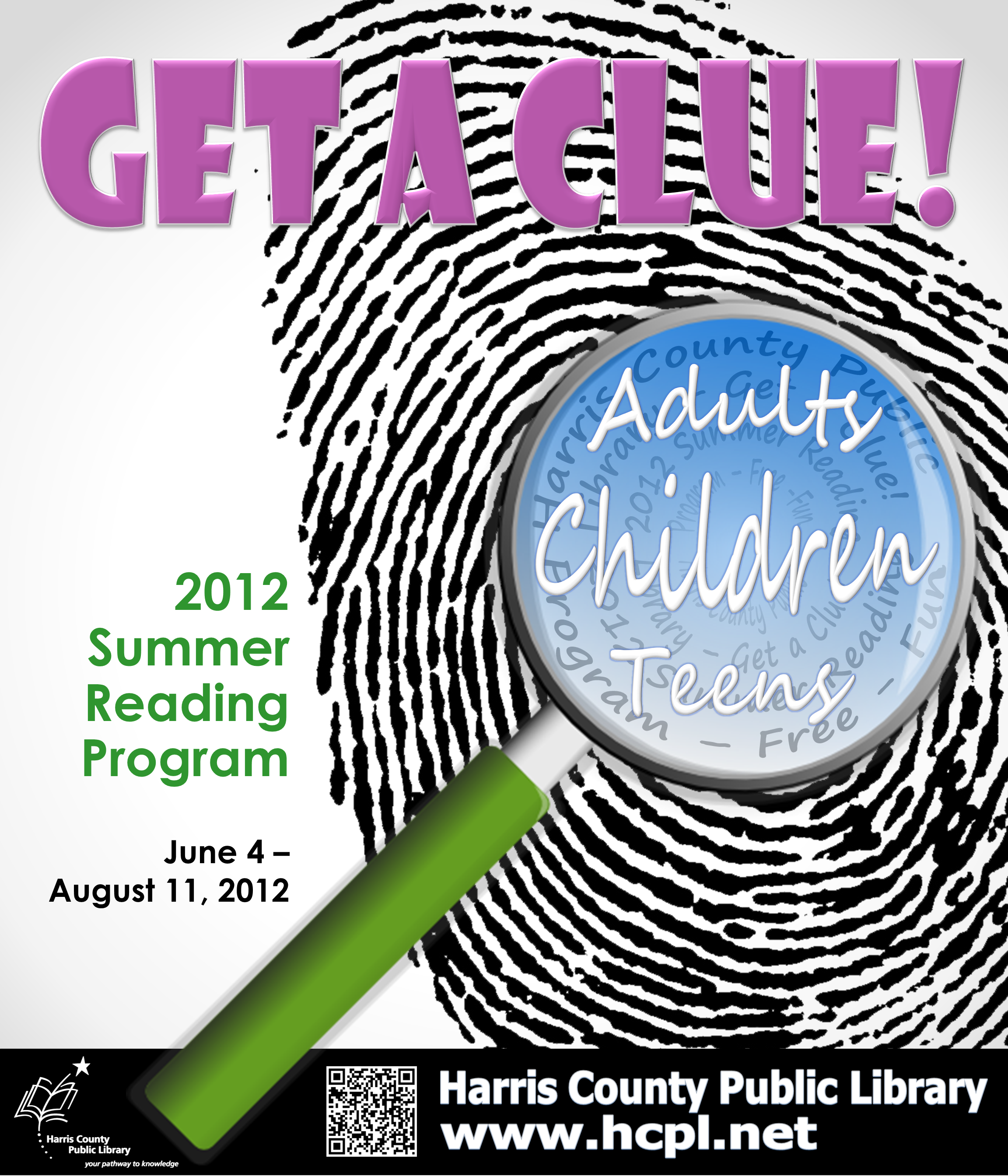 If you’re in the Houston area, love to read, miss those summer reading programs you participated in as a kid, and have a Harris County Library Card, you’ll be happy to know about the Harris County Public Library Get A Clue Summer Reading Program. And yes, its for kids AND adults, and the prizes are awesome.
HCPL will be drawing from registered readers to win a Kindle Touch eReader on Monday, June 11th. Every two weeks of the program, we’ll randomly draw from current registrants for an eReader prize, either a Kindle Touch or a NOOK Simple Touch. At the end of the summer, we’ll have drawings from readers who complete the program for one $30 Amazon gift card at each branch library and two grand prize drawings — one for a Kindle Fire and one for a NOOK Color.
Thanks to the Harris County Friends of the Library for providing the prizes and their generous support of Summer Reading!
I’ve got my profile set up and my first three reading sessions entered. I’m really excited about this, and hope to get an e-reader out of it so that I will be more accessible to upcoming authors as a reviewer. I know its more cost efficient for authors to send an e-book rather than a hard copy, but I wont be getting myself an e-reader unless I win it or earn it via Amazon credit as an affiliate. If/when I do get one, I will only accept review copies on it, I wont be purchasing e-books if the book is available in a traditional format. I’m old school, what can I say.
Music You Can Read To
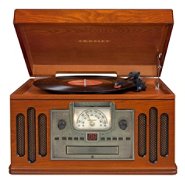
Best Gift Ever
When starting my day, I almost always flick on the switch to the radio and set my mood. There’s cooking breakfast music, dancing music, workout music, sex music… there’s music you write to, music you relax to, music you mow the lawn or party to, there’s I’m working on the car music, there’s its raining outside music… and of course, every book lover has their favorite reading music.
Lately, my favorite reading music has been Andreas Vollenweider
 While listening to the calm, but not sleepy, tunes of Vollenweider’s many instruments, his work suits both jazz and classical moods, and I’ve found it to be a perfect companion to Ayla’s school time. School time is quite short, as she’s only a year and a half. But while she masters holding a writing utensil and hanging out at the kitchen table while snacking on cheerios, I’ve been reading segments of Susan Wise Bauer
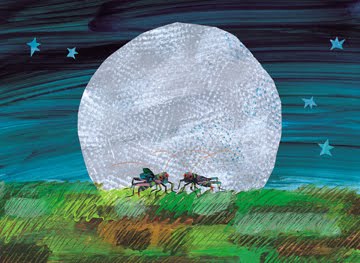
from Eric Carle’s The Very Quiet Cricket, features great reading noise for baby at the end of the book
After Ayla goes to bed at night, I usually read while my husband watches TedTalks on Netflix. After he falls asleep, though, the music I read to is a little bit different. Its the music of a quiet house. My tea pot steaming on the stove, my beagle jingling around the house as he nestles into a cozy place to sleep for the evening. Through open windows comes the singing of crickets, frogs, and cicadas. Sometimes I can hear Solovino, our stray cat, pad by the front patio windo. You would think cats would be quiet and stealthy, he can be, but mostly he likes to taunt my dogs. Solovino was born under our deck, the other kittens from the litter found homes via neighbor friends and moved away, but Solovino now stalks our street and kills our mice population. There are about four houses that ‘share’ him. My next door neighbor gave him his name, she says it means he is “an univited guest that doesn’t want to leave,” but if we were all true to ourselves we would admit that we would hate to see him go. He is the loudest meower that has ever lived, you can hear that cat all the way across the neighborhood and some days I spend my reading time blocking out his competitive high pitched sing song MEOW while also intermittently egging him on with a cat call of my own. Now, while I type, the gentle hum of a fan is buzzing and I can just barely hear the hubby breathing in his sleep. As soon as this post is done, its back to the books, because the sound right now is in that happy soothing place (teetering on the virge of annoying, but too calming to quite get there).
Do you listen to music while you read? What is your favorite music to read to? If you don’t, what is your reading environment like… indoors, outdoors, do you start the kettle to hear the whistle blow, do you wait until night to hear the cicadas chirp?
Love this book, review on its way!

What if you thought strawberry was just the flavor of your favorite candy? What if that’s all it was?
If you plug Senate Bill S510, the Food Safety Modernization Act, into any search engine, you get a whole lot of people up in arms about the government not allowing people to home garden or save seeds. True? Maybe; maybe a stretch. Maybe just the beginning. . .
This is the idea behind my new novel series, Seed Savers. Today I’m posting a excerpt from chapter 6.
HOW LONG HAD IT BEEN, Ana thought to herself, since real food had appeared on store shelves? She counted the years and then thought of the children. She realized it had easily been gone for the entirety of their short lives. And the backyard gardens had disappeared even sooner—especially in cities. Why, urban gardens had been an oddity even when she was…
View original post 207 more words
Weekly Low Down on Kids Books – 6/05/12

There’s nothing better than coming home from an outing (story and play time at the library) to a tired, snuggly kiddo. Ayla and I hunkered down in the bean bag while reading through our haul from the library and Felicity napped. First on the roster: Bats at the Beach
As we closed the book, reading the last line: “Shh – now sleep. The moon’s out of reach. The night was just perfect for bats at the beach,” Ayla’s little eyes began to blink shut. She lazily pointed to the bag of library books and we made it half way through the first page of the next title before she started to pass out completely. After Bats at the Ballgame, I had no intention of hunting down Brian Lies other work any time soon, my nephew loved it, but I wasn’t sure our house was ready for those titles yet. After Bats at the Beach, though, I can’t wait to find a copy of Bats at the Library.





 Anakalian Whims
Seed Savers – a series to be treasured
June 8, 2012 at 1:00 am (Education, Reviews) (books, Christian fiction, dystopian society, fiction, gardening, homeschooling, kids books, reviews, S. Smith, Seed Savers, self-sufficient living, series, social commentary, Treasure, young adult)
Author S. Smith has written the latest and greatest of young adult dystopian society novels. In the spirit of the previously mentioned Lowry novel and and Monica Hughes’ Invitation to the Game , Smith has given us solid middle grade tale featuring a new (and somewhat real) futuristic threat – illegal gardening. It’s yet another great pre-cursor to students preparing to read Orwell’s 1984
 . Educators everywhere should be aware of this rising star in children’s literature.
The detailed history of how this society came to be is part of its unique twist. Most dystopian society stories don’t spend a lot time telling you how it got this way, just that it did and people didn’t notice, the path somewhat alluded to but not specific. Smith helps point out the steps leading up to this future with factoids that suspciously resemble things that are happening in both the farmlands and corporate America. From living organism patents made legal in the 1980’s to genetically engineered seedlings, Smith spells out just exactly how this future (though a little outlandish in a society newly obsessed with being eco-friendly in its marketing) could quite possibly go from where it is now to the kind of United States described in the book (corporations and the government in bed with each other making trouble for the little people – Banks, anyone?… in combination with the idea that a government can make a plant illegal – marijuana comes to mind). Yet, she does this effortlessly, without killing the flow of the story.
I personally love social commentary presented through the art of fiction. (You like this too? Check out this site: http://www.jstor.org/discover/10.2307/371512?uid=3739920&uid=2129&uid=2&uid=70&uid=4&uid=3739256&sid=56242603693). I find it compelling and quite frankly the best way to address particular situations that when written about in a nonfiction format becomes an irate rant. I love the way it personalizes events and characters in a book so quickly, in a way that the average story cannot do. Get under the skin of an art fanatic… make it impossible for art to be appreciated, collected, loved (if you’re not a reader, check out the movie Equilibrium, then again, if you’re not a reader what’s up with you reading my blog? What brought you here? Leave me a comment.) Tug at the heartstrings of a gardener… attack the very core of their being by telling them in this reality, they can’t have one.
Needless to say, I loved it. S. Smith, you are brilliant, my dear, and I can’t wait to read the rest of the series. This one is going on loan to my nieces and nephews, is getting short listed on my very long list of required reading for my daughter who will one day be homeschooled. It will be the fun fiction to parallel our botany classes that week, the friendly reminder of why she will be taught to tend her own garden, and perhaps raise a chicken.
Buy Your Copy of Seed Savers Today!
Visit the author’s website here: http://authorssmith.com/
Want to start your own garden (before its too late!), check out Mel Bartholomew’s Square Foot Gardening tutorial: http://www.youtube.com/watch?v=N5Lu-7FIj_g
Also for fun, check out this blog: http://www.thisgardenisillegal.com/
Permalink 10 Comments