Interview With Author Tanya Egan Gibson

Tanya Egan Gibson, photo from article: http://www.marinij.com/lifestyles/ci_12499312
I read How to Buy a Love of Reading
- Fitzgerald is obviously a heavy influence for you, who else were among your first literary loves?
Kurt Vonnegut, for sure, in high school. Slaughterhouse-Five changed the way I thought about what a novel “should be.” C.S. Lewis in elementary school. I loved the Narnia books. I wanted a wardrobe. Oh, and between that, all of Conan Doyle’s Sherlock Holmes tales. I had a serious crush on Holmes—the more eccentricity the better.
I should probably clarify, too, that it took me a really long time to appreciate Fitzgerald. I didn’t like The Great Gatsby in high school or in college. It wasn’t until I was assigned to teach it at a high school in California that I saw it differently. One of my students asked, “So why is Daisy such a bee-atch?” Which snapped me out of concentrating on the book’s famous symbolism (The Green Light! The Eyes of Doctor T.J. Eckleburg!) and refocused me on the people (characters) and their desperation to be loved.
- My favorite part of HTBALOR is how raw Hunter comes across, how much his character development rings true. That’s rare for a female author to write a male character so well. Is he the character you identify with most? Or did you fall in love with him a little? (Admittedly, I did a little of both.)
As a lifetime watcher of shows like Beverly Hills 90210 (the original one) and its successors, I always found the rich-kid-who-lives-alone-in-a-posh-hotel-or-other-parentless-situation to be a cool trope. (Yeah, we can call it a stereotype, but the literary ring of “trope” sounds much more forgiving.) I’m fascinated by stereotypes because it seems to me that people (real people, not just characters) often end up becoming them of their own volition, giving up on some of their most interesting dimensions for the safety/security/ease of neatly defining themselves.
The rich-kid-who-lives-alone is nearly always a misunderstood “bad boy” who (when we meet him at, say, the beginning of a CW television series) is engaging in self-destructive behavior and has a mean streak. Usually, as the series progresses, the character cleans up his act (usually for the love of a good girl) and he learns to become a responsible person (with, perhaps, a couple of dips into recidivism when the ratings need a boost) and discovers his inner poet/artist/recycling advocate/vegan.
So, when I wrote Hunter, I kept wondering what such a character would be like the other way around: What if the character was originally a responsible, mature-beyond-his-years person who knew who he was? What if living alone with too much money and little supervision hadn’t turned him into a spoiled, self-destructive brat? What if he liked to cook and knew how to clean and didn’t act or feel embarrassed about being a book geek? What would it take for that character to end up turning himself into the self-destructive-kid-with-a-mean-streak stereotype? Looks. And being looked at.
I suppose that’s a long preface and I still haven’t answered your question—sorry! What fascinates me about Hunter is that being so highly visible (an overnight hottie who never meant to be a hottie) deprives him of being himself. He wants to be kind and gentle and loving and loved. At his core these—and privacy—are what he most values. But these aren’t qualities valued in an appearance-obsessed community or expected of him as the community’s golden child.
So many of the good things Hunter does for other people are quiet, under-the-radar, private. Yet he’s constantly getting the message from his parents and peers—and even his college application essay prompts–that nothing matters if people can’t see it. (Thank you, reality TV society.) So he kind of splits himself into public-Hunter and private-Hunter. And in so doing, unravels.
Which, finally, brings me to answering your question: Yeah, I probably understand Hunter the best out of my characters because he’s desperate to reshape his world into something lovely and full of love—and also made to feel embarrassed about such inclinations. Like private-Hunter, I’m hopelessly thin-skinned and I get crushes on authors (even dead ones) and I daydream about them being kind. I’m very self-conscious, an introvert who pretends to be an extrovert because I really like people and like to talk with them—even though they often scare me. I write about love and loveliness; I believe there is much love and loveliness in life waiting to be discovered. (I’ve been called a Pollyanna. To my face.) But I’m no longer embarrassed by it.
- It’s clear you have a love/hate obsession-like relationship with meta-fiction. It’s also clear how beautifully you write the layers of a book, like a rose in bloom or an onion being peeled. When you are writing, do you find that meta-fiction lends itself to these unfolding layers or does it work against it?
Yup, I wrote a novel that makes fun of meta-fiction while taking the form of meta-fiction. So yeah, I do both love and hate it. Oh, and thank you for the compliment. Back to the love-hate relationship: It’s complicated. Self-consciousness tends to get in the way of emotion. (Have you ever watched a play where one of the actors is supposed to say something like, “I swoon for you!” but is too embarrassed to go all the way with it, his self-consciousness turning it hollow?)
Meta-, of course, is about consciousness of self. But it also invites the reader backstage, saying, “Slip in behind the curtain. It’s okay, there’s room. Check out that actor’s insincerity!” Maybe this affords the reader the opportunity to observe up-close that the actor is shaking, and gives him or her clues to the emotion behind the hollow “I swoon for you.” Maybe the real story isn’t the play on the stage, but rather the story of why that actor is too terrified/nervous/exhausted/ill to embody the emotion of that line. So the question is whether it’s worth sacrificing the outer story (the story being played out onstage with the supposedly swoon-worthy damsel) to this inner story.
For me, the answer is sometimes, and only if I’m sure that the main narrative (swoon-worthy damsel) is ultimately deepened, emotionally, by that meta- jolt. When you go meta-, you’re sacrificing the readers’ waking dream—plucking them out of a world and then asking them to willingly reenter it. That’s a lot to ask.
The short answer to your question: I cut way more meta-material than I ever use.
- One of the characters, Bree McEnroy, writes a meta-novel. Do you have a favorite book from another author that fits this genre? If so, what is it and when did you first discover it?
Waterland, by Graham Swift, is one of my favorite books ever. I discovered it in graduate school, where my love-hate relationship with postmodernism and all things meta- broke down into way more hate than love. Waterland was assigned in a British Literature course I did, in fact, love–a respite from talking about literary theorists with difficult French names.
The novel is about a history teacher who is supposed to be teaching his students about the French Revolution. But who, because he’s sort of losing it, starts telling his students about his own personal history instead. Among other things, the book calls into question the difference (if any) between story and history.
- Your book references several fictional characters as authors and includes excerpts from their work. Do you have full manuscripts of these books lurking away somewhere? Like J.K.Rawling’s Tales of Beedle the Bard and Quidditch Through the Ages, do you have plans to publish these?
No full manuscripts exist of Between Scylla and Alta Vista or Unwritten. I promise. I did write small excerpts of them for my website, though, where a few pages of each of these books “exist” on a virtual bookshelf. In “Hunter’s journal” (on my website)—the story he wants to write about a girl and boy going on a ski trip in fact existed as a large flashback in an earlier draft of HTBALOR. (It was originally the story of how Hunter and Carley, the protagonist of HTBALOR, met. Later, it was replaced by a shorter flashback near the end of the book where they bond over an incident on the Long Island Sound.)
- As a writer, I dread asking this question (I have no idea if I will finish my own novel this year or this decade), but as a fan I am dying to know: when can we expect another book?
HTBALOR was published eight or nine years after I started writing it. I’m hoping the novel I’m currently writing (the working title is LANDS) won’t take quite that long. Like HTBALOR, it contains a meta- element, and getting all the layers of it to line up (while at the same time making each layer emotionally true to itself) is, as I indicated above, kind of tricky. Plus, I’m balancing writing with taking care of my two wonderful children, ages 7 and almost-4. One nice thing about LANDS: it takes place at a fictional theme park, so my children love coming along on amusement park research trips and think the pictures in my shelf full of amusement park research books are very cool.
- The cover art of the Dutton hardback edition, also featured on your website, is the reason I picked up your book. As a writer and art fanatic with a Bachelors in Marketing, I can’t help but wonder: Were you involved in picking out this art, or was it all Dutton? If so, what was your level of involvement?
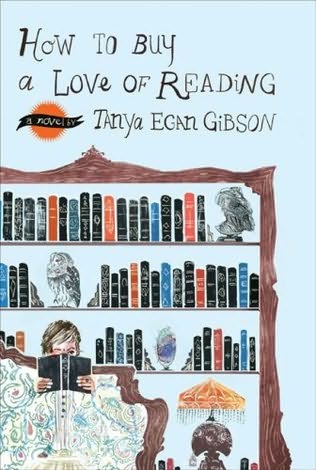 Dutton chose the cover design and illustration, which were done by an artist named Ben Gibson (no relation). I think it’s beautiful, and I was particularly happy about the way the girl’s body. The spine of the book kind of becomes her spine, but the rest of her body seems to blend into/disappear into the couch. Weight is overly important in the fictional community of HTBALOR—the protagonist, according to the personal trainer hired by her mother, is 57 pounds overweight—and this rendering of Carley honors the conclusion of the book, in which the reader is never told what “size” she ends up.
- Does the cover art for this book represent your own art tastes? Who is your favorite artist? (Or what is your favorite piece?)
I’m kind of a Philistine when it comes to art. Not a three-dogs-playing-poker or velvet-Elvis glow-in-the-dark wall art Philistine—but still pretty unknowledgeable. (I did, at least, learn something from doing research for Bree’s never-to-be-completed book about art patronage.) I’m particularly fond of my seven-year-old daughter’s pastel rendering of two orange Amazon rainforest frogs and my three-year-old son’s multi-colored blob paintings that he insists are either trucks, dinosaurs, or me.
- Carley and Hunter are both only children. Did you have siblings growing up?
My brother wasn’t born until I was ten or eleven and we were raised in different households—after my parents divorced, my father remarried, so we’re half-sibs who were kind of each raised as only children. While it’s wonderful to have a sibling as an adult (my brother is very cool), I definitely wondered, as a child, what it would be like to have someone there to do things with. My daughter likes to tell people that my husband and I had her little brother “so I’ll always have someone to play with.” Which is not exactly untrue.
- What is one thing you want your readers and fans to know about you?
I love reading and writing so much, and feel unbelievably fortunate to have a book out there in the world. I love to write emails to authors when I enjoy their books, and when I receive emails/Facebook messages/Tweets from readers who connected emotionally with HTBALOR, it makes my day. Reading, for me, is all about connection, and when people take the time to tell me that my novel made them feel something, I’m thrilled beyond words.
Please follow Tanya Egan Gibson on Twitter @tanyaegangibson.
Follow this link to purchase How to Buy a Love of Reading
Guest Blogger Carolina Ciucci
 on The Name of the Rose
I knew next to nothing about The Name of the Rose when I first decided to read it. I knew it was set during the Middle Ages and that it was an accurate portrayal of the way people perceived the world back then, but I had no idea what the plot was, what the characters were like, and so on and so forth. You could have told me I’d be reading a chronicle about the slow progression from the Roman latifundium and into the feudal system and I’d have most likely believed you. And I certainly wouldn’t have imagined it to be both a gripping thriller and a thought-provoking treatise on philosophy and theology all at once.
The story is told by an elderly monk who reminisces on the week he spent accompanying William of Baskerville, his mentor and father’s friend, at a monastery. Baskerville’s initial mission is to intercede before the Pope’s men in order to get him to acknowledge Franciscan poverty as a legitimate Christian doctrine. However, he’s quickly swept up into a whirlwind of deaths, all mysterious and apparently all connected to the abbey’s library- a library the otherwise very open abbot has forbidden them to visit.
Everything about this book blew me away. From the painstakingly detailed description of a XIV century West European abbey and life within its walls, to the portrayal of the conflicts shaking the once upon a time unmovable Christian Church right to the core, passing through the way it reflected upon books; it was all so brilliantly crafted and depicted that it left me staring at the final page for several minutes before closing the book, more than just a little dazed and not quite sure how I was feeling. Now, a couple of days later, I think I’m ready to elaborate on the effects The Name of the Rose had on me.

Image of Library found on blog.christianitytoday.com
On one hand, it helped me get a better grasp on notions I had seen in class but had not really understood, finding them much too abstract and complicated at the time. It was an invaluable company to my Europe I and Spanish Lit classes, only a lot more fun and a lot less restrictive- don’t get me wrong, I like the material I read for class. But my inner ‘I-want-to-read-what-I-want-when-I-want-it’ rebellious reader is often put off when I’m on a deadline. Especially when I’m supposed to analyze and dissect texts I’d like to absorb slowly, at my own pace. So yeah, it was a relief to sink into a work of fiction I didn’t have to analyze, one I could simply enjoy and wonder and work out theories about. And of course, because of that, I absorbed said notions, said mindset, without even realizing that I was.
And then there’s the numerous passages dedicated to books. Oh, my. I didn’t just read these, I devoured them. Books were still such a novelty back in the XIV century, and it was enthralling to explore different opinions on something that is now an intrinsic part of my life, hell, an intrinsic part of who I am, but was once almost a taboo. It made me wonder- Why do I read? Why is the information contained in a book so precious to me? It reminded me of the fact that a book is nothing without a reader, that the words held in it are nothing but syntax if somebody doesn’t open it and is willing to give it the time and effort required to make it something more. It showed me, more than anything, the unique relationship between writer, reader and book. It reminded me of what a powerful, somewhat threatening tool knowledge is- and therefore why books have been both cherished and destroyed throughout history. The ‘library-as-a-labyrinth’ metaphor will certainly go down in my books as one of the most beautiful, accurate descriptions of the mysteries and wonders a library holds.
This was my first time reading this novel, but it won’t be the last. I want to come back to it after taking Latin next semester, after learning more about medieval politics and religion, after having the time to let the seeds it planted grow and want more.

To Eden Phillpotts
Agatha Christie opened her novel Peril at End House with a dedication:
To Eden Phillpotts
to whom I shall always be grateful for
his friendship and the encouragement
he gave me many years ago
Immediately, I was intrigued.

Eden Phillpotts
Eden Phillpotts was an English author, poet, and dramatist born in 1862 in India. He lived near the Christie household when Agatha was young and still unpublished. She visited him reguarlary under the advisement of her mother, so he could mentor her and guide her writing into a lifelong career. Phillpotts was the first professional writer to read any of Agatha’s unpublished pieces.
A letter survives of some of the advice he had to bestow on the young budding writer:
“You have a great feeling for dialogue… You should stick to gay, natural dialogue. Try and cut all the moralizations out of your novels; you are much too fond of them and nothing is more boring to read. Try and leave your characters alone, so that they can speak for themselves, instead of always rushing in to tell them what they ought to say, or to explain to the reader what they mean by what they are saying. That is for the reader to judge for himself.” ( www.poirot.us )
Phillpotts’ family moved from India when he was three years old. At seventeen, he worked as a clerk for an insurance company, where he fell in love with theatre and decided to become an actor. When he realized acting wasn’t for him, he pursued a career in writing instead. So young when he began, its no wonder he enjoyed encouraging another young talent when he saw one. Phillpotts’ own first publication was his poem “The Witches Cauldron” which kicked off a slew of published articles, reviews, short stories, plays, and novels. Later, he was know to also write under the name Harrington Hext.
Phillpotts was known to befriend many of history’s greats: Arthur Conan Doyal, Henry James, George Bernard Shaw, Arnold Bennett, Jerome K. Jerome, and obviously Agatha Christie. As a sign of both friendship and his faith in Christie’s writing ability, Phillpotts introduced Christie to his agent at Hughes Massie. The dedicated novel Peril at End House was the seventh in the Hercule Poirot series, published in 1932. Its nice to know that she fit in a dedication to a friend and advisor long before his death in 1960, many times friends are not so lucky to appreciate each other prior to memorial memos.
My Very First Giveaway!
 I received a copy of Elizabeth George’s Believing the Lie in December 2011 from Dutton Books. Its a beautiful hard back, released to the public January 2012. It has been read twice, but is in excellent condition, and although I am a horder at heart and would like to hold onto and cherish every book I’ve ever had the pleasure of reading, I decided I would use this copy to host my first giveaway. (Get my hands dirty with all this fabulous giveaway excitement, so to speak.)
The conditions of this giveaway are that you (in good faith and on scout’s honor) follow me on twitter, follow my blog, and leave a comment on this post that includes your email address. If you don’t leave your email address I will have no way of contacting you if you win!
This book is the latest in the Inspector Lynley series, but you don’t have to have read previous books in the series to get into the story, George tells you all you need to know. It is the first book in the series that I have read, and I plan to read more once I am done with my Agatha Christie Crime Collection marathon. Believing the Lie follows the investigation of a supposed drowning on a family estate of a clan full of secrets and shocking lies. George’s character development skills are surprisingly detailed and thorough for this genre, and its a good book for general fiction lovers to read if they want to dip their toes in the mystery section for a few days. The 608 pages goes fast.
Along with this book, I will ship a small Scentsy surprise in the form of a Scent Circle. If you don’t know what that is, check out my website here, and fall in love: https://akklemm.scentsy.us/Scentsy. Winner will be announced and contacted on April 30th. Let the comments, twittering, and following begin!
Library Living

Beauty and the Beast, Disney
Every book lover has dreamed of one day living in a library.
Here is the story of a man who did.
(Prior to attending Baylor University, Benny was a Dallas Baptist University student with me. He’s a fabulous guy, with some really unique life experiences.)
Library Living: Baylor alumnus ran low on cash, used study carrel for home
Oct. 2, 2009
By Olga Gladtskov Ball Reporter
Not many Baylor students can say that they have lived in the library for six months, spent a night in a Mexican jail or organized a campaign to bring Kinky Friedman onto the Baylor campus. Baylor alumnus Benny Barrett did all of it, and more, during his time at Baylor.
Barrett’s journey to Baylor began when Dr. Gary Cook, the president of Dallas Baptist University, encouraged Barrett to go on a campus visit to Baylor to consider transferring. While on his visit, Barrett ran into Dr. Robert Sloan, then chancellor of Baylor.
 |
Jed Dean | Photo EditorBenny Barrett, former Baylor student who had to choose between secretly living inside Moody Memorial library or leaving Baylor, rests his head against the very carrel he lived in for almost two semesters. |
“I just walked up to him and ask him if he was Dr. Sloan because he looked like what I imagined he would look like,” Barrett said. Barrett told Sloan that he had just met an old friend of Sloan’s the week before. Sloan and Barrett discussed the friend, and Sloan invited Barrett to meet with him the next week. After the meeting, Barrett decided to attend Baylor.
Once at Baylor, Barrett ran into financial problems, causing him to research a new place to live: Moody Memorial Library. Barrett began his research in April 2006 and moved all of his belongings to his study carrel in May.
“I would show up to tests an hour late during summer session because the library opened at 9 and had to give some lame excuse about oversleeping,” Barrett said. For Barrett, the most difficult time in the library during the summer was during Fourth of July weekend, where he was not able to leave for days because the library closed for the holiday.
When the fall semester began, Barrett began to work at the library from 4 to 8 a.m. He would then sleep inside his carrel for a few hours before class.
“The libraries are important havens for study and respite, and my faculty, staff and I work hard to make them pleasant and safe student-friendly spaces,” said Pattie Orr, dean of university libraries. “I was not here at Baylor when Benny was in this difficult situation, but if I had been I would have wanted to reach out to him to see how we could help.”
Orr also said that Barrett was the only case of someone living in the library that she has heard.
“I lost weight,” Barrett said. “My eyes were always bloodshot. I would sometimes wear sunglass to class to hide it.”
Barrett hid his food, mostly consisting of Ramen noodles, behind his books. He also had a hot water heater and a sleeping bag hidden in his carrel. Barrett stopped sleeping at the library in December, when Dr. Scott Moore, associate professor in Great Texts, called him into his office.
“I explained my living arrangements to him and he got me placed in a dorm for the rest of the semester,” Barrett said. Prior to the meeting with the professor, Barrett had only told a few friends about his living conditions.
Moore said he was horrified when he found out that Barrett was living in the library. He then contacted others to help Barrett move into a dorm.
“I just got the ball rolling,” Moore said. “I called Frank Shushok (who supervised housing arrangements at the time) and said we’ve got to find this guy a dorm room. Frank called Jackie Diaz in financial aid and the folks in Campus Living and Learning, and they did all the work.”
“Friends invited me to live with them, but I didn’t want to be a leech,” Barrett said. Barrett was given a loan at the end of the semester to pay for the rest of his education.
“I found out about Benny’s secret lair in the library only from my colleague Scott Moore, who also told me that Benny was showering and changing clothes at the Student Life Center, Said Ralph Wood, university professor of theology and literature. “Moore made sure that Benny was able to get a scholarship that paid more than tuition alone.”
During his semester in the library, Barrett spent a night in a Mexican jail with his former roommate Osione Itegboje. Itegboje took Barrett to Mexico with him so that Itegboje, who is from Nigeria, could renew his visa. However, the pair was sent to jail when a guard discovered that Itegboje lacked a Mexican visa.
“It was a crazy experience,” Barrett said. “A whirlwind of a weekend.”
Itegboje and Barrett were released the next day and told that they could not enter Mexico for a year, under the threat of six months in a Mexican prison.
While on campus, Barrett fought another battle — governmental candidate, novelist and country singer Kinky Friedman had asked Barrett if he could arrange for him to speak on campus. Barrett met Friedman at a Willie Nelson concert, and Friedman had expressed interest in speaking at Baylor. Barrett then founded Baylor Independents and began the process to get Friedman to Baylor.
“I have never been called to the principal’s office, Pat Neff, so many times,” Barrett said, “No one wanted him to speak on campus.” Barrett convinced administrators that if Friedman was not allowed to speak, Baylor would be showing favoritism toward Governor Rick Perry, who had already spoken at Chapel.
“They finally let him come on campus but wouldn’t let me have a reception for him so I had it at the Judge Baylor House, which isn’t associated with Baylor, but many people thought it was when they came,” Barrett said. The Noze brothers awarded Friedman with the honor of “Yellow Noze of Texas.”
Barrett, who graduated in 2008, still visits campus often, walking his teacup Chihuahua, Malcolm X, and spending time at his favorite place on campus: the library.
“Would that there were more Benny Barretts,” Wood said.
http://www.baylor.edu/lariat/news.php?action=story&story=62329
Book Love Art
I have always been a lover of books, and of art. If you’ve followed my blog for very long at all, you’ve seen lots of Bryan Collins pieces floating around. I’ve even encouraged the purchase of his bookmarks in a previous post. Its why I am completely obsessed with Ophelia’s Quote Mugs. With that in mind, I’m sure you can only imagine my complete and utter joy when I saw this:



This is the photography handiwork of “Boy Wonder” Joel Robison. Joel lives in British Columbia Canada and apparently is self taught, playing with his camera and computer to master the self portrait. I love his stuff. He has work available on Etsy: http://www.etsy.com/people/boywonder, and I hope everyone who reads this post takes a look at what he has for sale and finds themselves a treat.
Les Miserables Blog Hop
I have been picking up and setting down Hugo’s Les Miserables for a few months now. Its not fair… to me, to the book, to dear Hugo. I WANT to read it, I do, but I need some buddies. So I found the perfect solution to my dilemma and I hope some of you will join.
 Kate’s Library is this cute little book blog, with a huge following, that I stumbled across on Carolina Cuicci’s blog Reading Against The Clock (.blogspot.com). It seems I am not the only one with a brain block on Hugo this year and Kate is hosting a read-a-long. The details are provided below on the link, but I’ll quote a few of the highlights.
http://kateslibrary.blogspot.com/2011/11/chunkster-readalong-les-miserables-2012.html
From Kate’s Library:
Have you ever wanted to read Les Miserables? Do you want to bond with your fellow bloggers through a fun readalong? Do you like big books and you cannot lie? Are you looking for a readalong/challenge that’s incredibly low key? Do you want to grab 2012 by the face and make it the best reading year ever?
If the answer to any of these questions is “YES!” you may consider joining me in a 2012 litventure. I’m hosting a readalong/challenge to read Les Miserables by Victor Hugo throughout the year 2012.
Each blogger that participates will be posting updates of the sections they have read as they complete them. So whether you are a blogger wanting to add your opinions to the cyber world concerning Hugo’s great work, or are just a reader wanting follow the hop, check it out.
My post on Fantine.
My post on Cosette.
My post on Marius.
I read Saint Denis during Banned Books Awareness Week, read about it here.
My post on St. Denis.
My final post on Jean Valjean, the musical, and the 2012 movie.
A New Children’s Book by Temara Moore
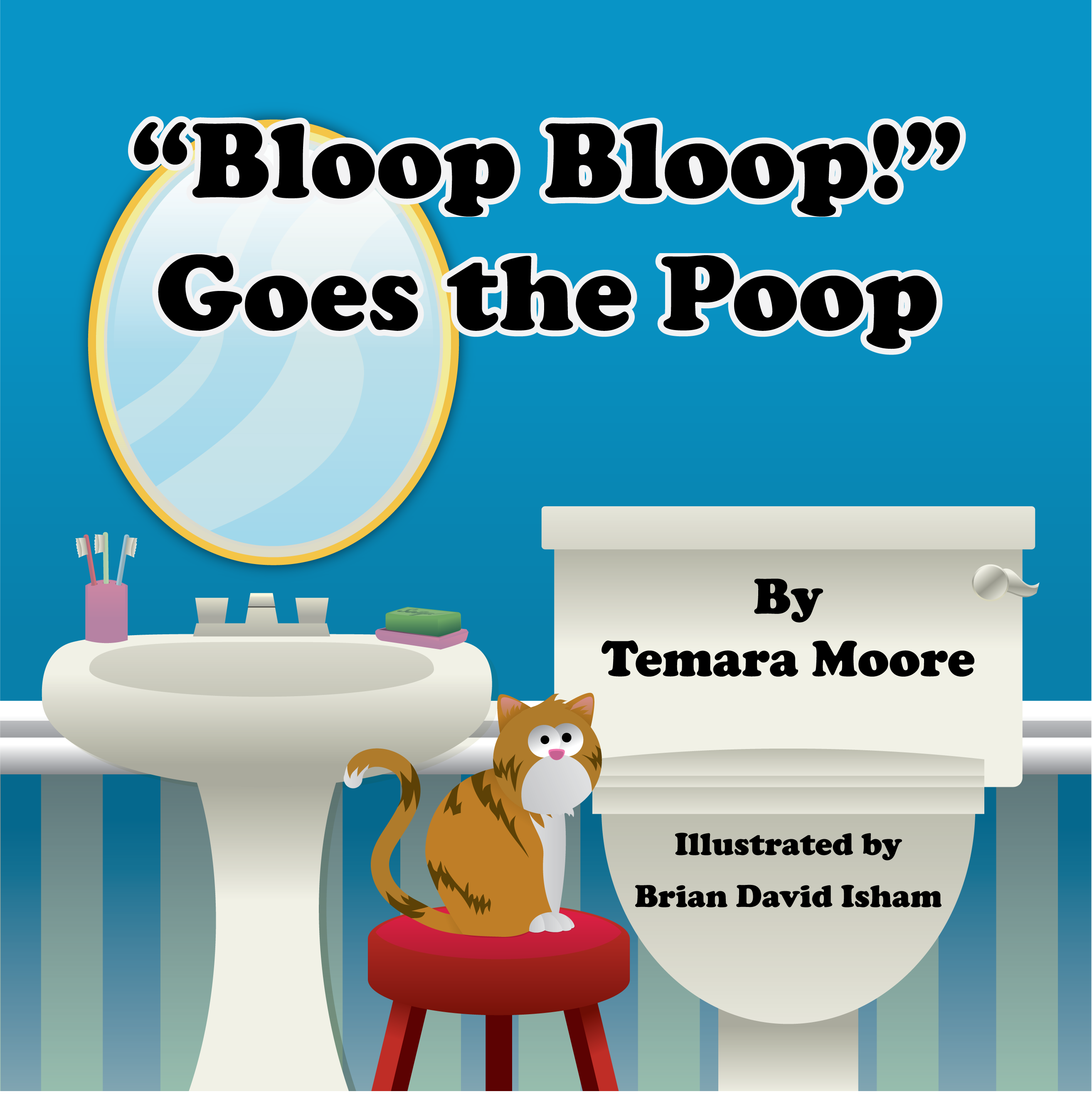 Title: “Bloop Bloop!” Goes the Poop
Author: Temara Moore
Illustrations: Brian David Isham
We Dream Publishing – http://www.wedreampublishing.com
Genre: Picture Book, Potty Training
I have to admit, prior to having a toddler of my own, the whole concept of potty training books was something I found ridiculous. Now, as potty training becomes a reality and my own kiddo is showing more and more interest in the toilet (and she already loves books) its making a little more sense.
So my husband and I were pretty excited to sit down with our first training tool. Temara Moore sent me a copy of “Bloop Bloop!” Goes the Poop
We didn’t get very far when trying to read the book to Ayla the first time through. She was so excited about the pictures and the cat that follows the little boy to the bathroom that she stole the book and spent about ten minutes flipping through the pages herself. I don’t have the most patient kid when it comes to story time, but I love that she shows an interest in reading on her own. She loves her books and at nearly 18 months has become a page turning pro.
The second time through was much more successful. We made it all the way through the story with many “Ooohs” from Ayla and emphatic pointing to illustrations she had now familiarized herself with. By the end of the book she was telling me “Bloop Bloop! Bloop Bloop!” I would not be surprised if she had some of the rhymes memorized a few months down the road when her annunciation improves. Thank you, Temara, for our copy of the book. It will be well loved.
Information regarding a book signing and reading from the author to follow at a later date. Be sure to follow this blog for the details!
The Name of the Rose Readathon
Disclaimer: This is not the guest blogger post previously mentioned. Caro’s review of this book can be found here.
I first read The Name of the Rose
My sister had read Umberto Eco’s work when she was in college, I always imagine it was one of the last books she read on her own before before she started to have problems with her vision, but that could be a complete fabrication of my own mind. She loved it and was excited to hear that I had stumbled across the book and felt the pull of intrigue on my soul. You know that feeling when you first find something or someone you know you will fall in love with but you don’t know when or why, you just know its going to happen? That’s the feeling I got the moment Eco’s book first hit my hands.
And I did fall in love. The Name of the Rose is genius, Umberto Eco is a genius. I eagerly read through each line, so excited about what would come next, thrilled to pieces at the idea of a library being a labyrinth in a spooky monestery. I was in love page after page until I settled on the very last line with a deep sigh at its ending “stat rosa pristina nomine, nomina nuda tenemus.” I’d be lying if I didn’t admit that upon first reading, that last line’s deep sigh wasn’t just a lament over the ending of the book, it was also one of complete puzzlement and disastifaction in not fully understanding the meaning behind that last line, but knowing that of course there must be one. Insert googling the quote, briefly reading a few things, being sad over the fact that I didn’t catch a literary reference on the first try because I’d never been exposed to Bernard whoever in my life, therefore wouldn’t have caught the reference the first time through, regardless of my intelligence level, and now you have a full visual of that deep sigh. I haven’t read Bernard of Cluny’s (or is it Morlay, I find multiple references naming the author as Morlay instead of Cluny – clearly I need to brush up on my Medieval History) De Contemptu Mundi
After reading The Name of the Rose, I devoured Foucault’s Pendulum
 Because I had already read The Name of the Rose before, I decided that this time I would read through my copy of The Key to The Name of the Rose
For starters, the story stays really fresh and you don’t have to back peddle at all. No double checking to see if that part you read two nights ago is still there. (You know you do that too sometimes, even though the book is clearly the same size it was before, has the same number of pages, sometimes you feel the need to breeze through the parts you already read to make sure you didn’t dream something up in the interem.) You don’t feel as inclined to re-check any translations you did, its fresh, its right, you only have so long to read this next portion, so get on with the story.
All in all, I enjoy The Name of the Rose every time I read it. I can’t wait to see what Carolina Cuicci has to say in her guest blog post and I hope you’ll come and read through her post with me. And maybe, when we have a readathon for The Island of the Day Before
Weekly Low Down on Kids Books – Easter
With Easter this past weekend, we spent the week with Betty Bunny.
(Fellow Christians, please don’t harass me about how Easter is not about bunnies, but our Lord Jesus Christ because Easter is actually a celebration of the goddess Oestre and fertility and the spring equinox and all that and we Christians kinda sharked the holiday for our own purposes. We celebrate Christ’s resurrection separate from Easter in our house. Pagans and lovers of Mother Earth please don’t harass me about Betty Bunny not having anything to do with celebrating nature, I know, I know.)
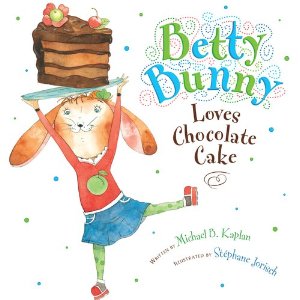 Betty Bunny
We also read If Beaver Had a Fever