More Great Things from Chris Rogers…
 Title: Slice of Life
Author: Chris Rogers
Genre: Mystery/Suspense
Length: 390 pages
The fourth novel in the Dixie Flannigan series, Slice of Life is actually only the second Chris Rogers book that I’ve read. I usually keep strict enforcement of the rule that I read a series in order, but I had it on good authority (from the author) that even though each book follows chronologically, the stories stand completely on their own.
Having enjoyed Bitch Factor so much, I took a risk and decided to jump ahead to the book that was sitting there in my hands rather than wait to come across the in between titles.
I’m glad I did. Rogers was right about her work, each story stands alone quite nicely. Sure, a lot of things had happened since the first book, but they were briefly alluded to and I didn’t feel like I had missed anything at all. Nor did I feel like she was retelling a previous story (like some authors do in their flash backs to prequels) when referencing occurrences from the first title.
Rogers has an effortless storytelling style that fits well in the mystery/suspense genre. She’s a true artist. And not just in storytelling. If I remember correctly, when chatting about her books at the signing we had at the Half Price Books Humble store, she paints and designed the picture used in Slice of Life. The book is set in the Galveston art scene with a bit of gambling and a few dead bodies, so I thought the cover suited the story quite nicely and really shows off the talents of the author.
Even though I have broken the cardinal rule and ‘skipped to the end’ I plan to go back and read the second and third books when I find them. Rogers has hinted at some interesting history between the characters that I’d like to know in more detail, without giving away any previous tales endings.

Chris Rogers at Half Price Books Humble
The Sleepless is a Groggy Reader…
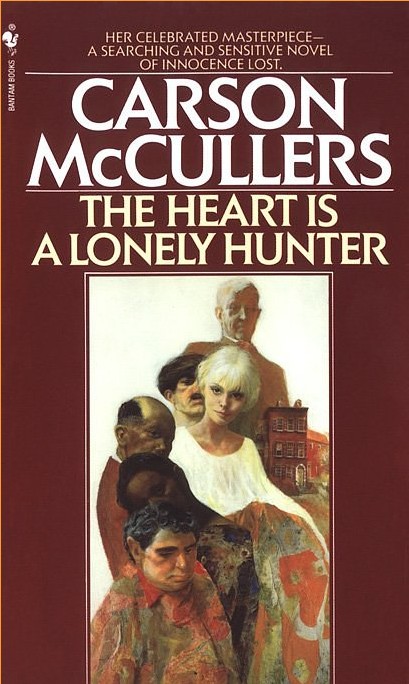 Title: The Heart is a Lonely Hunter
Author: Carson McCullers
Publisher: Bantam Books
Genre: Fiction
Length: 307 pages
The first half of the book blew me away. Carson McCullers was a genius… a prodigy in my mind for those first hundred and fifty pages.
I think I disappointed my book club members, though, because after that halfway mark I started to seriously lose interest.
What we have here is circumstantial reading. I’m 99% certain that I had way too much going on this last week with the May the Fourth Be With You Event at Half Price Books in Humble (see previous post) and stayed up waaaaaaaaaaaaay too late too many nights in a row to truly enjoy Mick and her little gang of misfits on the outer edges of society.
When I sleepy read, I get a little cranky. Doctor Copeland started to piss me off. Jake became a burden. I started to feel endeared to lazy Antonapoulos because he was fabulously lazy and I, too, wanted to laze around and sleep the day away. Only Singer remains as he should, a tragically romantic icon.
Words to the wise: Don’t read this tired, but definitely read it. Also, my book clubbers make the most fabulous pies.
Things you should be sure to read prior to tackling McCullers: Thorstein Veblen’s Conspicuous Consumption and Karl Marx’s Communist Manifesto. Trust me, they are handy source documents to have under your belt and filed away in your brain anyway.
I am currently reading February House by Sherill Tippins. Very insightful into the life of McCullers and worth any reader’s while.
Now this sleepy reader is over and out.
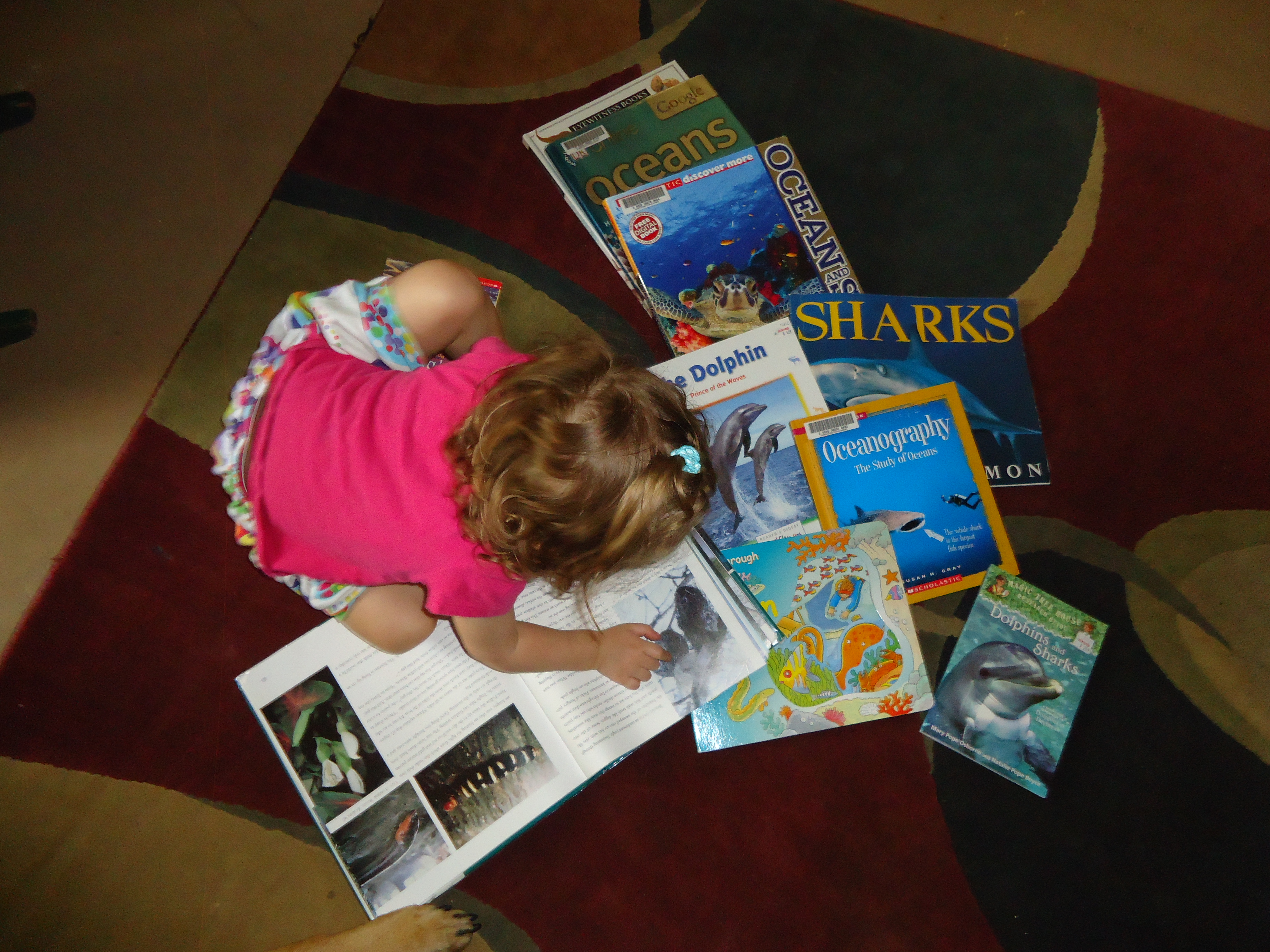


Bitch Factor
 Title:Bitch Factor
Author: Chris Rogers
Genre: Mystery/Suspense
Publisher: Bantam
Length: 293 page
To be honest, I probably wouldn’t normally pick a up a book called ‘Bitch Factor’ or even a book with bitch in the title. I’m not morally opposed or anything, it’s just generally not my cup of tea. Past my middle school years (when I was completely enthralled with all things John Grisham), I haven’t really been into many mysteries out side of cozy foodie/bookshop/coffeehouse kinds or the kind that aren’t always shelved in mystery like Carlos Ruiz Zafon and Kate Morton… literary awesomeness built in mysterious layers.
To be fair, Chris Rogers sucked me in with the cover of Slice of Life and her sparkling personality. She is a fantastic lady, and I really enjoyed talking with her at the latest Half Price Books Humble book signing. Getting a copy of Slice of Life made me a little leery, it’s a ways into the Dixie Flannigan series, and last time I did that was the Elizabeth George review for Believing the Lie and I felt like a fish out of water. So I began Bitch Factor, the first of the series.
I DEVOURED IT.
I’ll put that in regular font so it’s easier to quote, if anyone is feeling quotey: Chris Rogers’ storytelling is so riveting that when I read her book, I devoured it.
Dixie Flannigan is a bad ass. She’s a believable bad ass. As a female black belt Kung Fu instructor, I get a little frustrated with women who think they can handle more than they can. Be confident. Be awesome. Stay fit, stay trained. But sometimes you have to acknowledge the fact that at 120 pounds and five feet tall, there are some limitations you may face when dealing with 180-200 pound men – like size and strength. In those situations, you have to think your way through. You have to be careful, aware, and plan in numerous contingencies. Dixie Flannigan is awesome because, for once, she does just that… without whining. Whiny, helpless heroines are worse than over confident unrealistic ones. Dixie is perfectly balanced.
Rogers took a story of a female bounty hunter, inspired by a chat she had with a taxi cab driver, and ran with it. Often compared to Janet Evanovich’s Stephanie Plum series, there are two things about Chris Rogers and Dixie Flannigan you should know: 1. Dixie actually knows what she’s doing, where (at least in the first installment) Plum seems to flail around until something happens. 2. Rogers’ writing isn’t tainted by a history of writing romance novels, it’s higher quality work. Oh, and, now I shall add a third… I have nothing against Evanovich or Stephanie Plum, I’m just deeply surprised it’s the more popular series right now.
On top of that, Dixie Flannigan (like her creator) is from the Houston area. It’s so refreshing to have someone write Houston well. Dixie Flannigan isn’t just kick ass, she’s kick ass from my home town. She pops in and out of Spring Branch, she visits The Heights, she drives down 59. The familiarity of it all is a lovely break from all the many, many mysteries set in Detroit, New York City, and Chicago… places I’ve never been. Even if you don’t read mysteries, if you’re from Texas – this book is for you.
I have it on good authority that you don’t have to read these stories in order, so I plan to skip onto Slice of Life since it’s sitting on my nightstand (that’s typically a cardinal sin in my house). I do plan to collect and read the whole series though, it’s too fantastic not to.
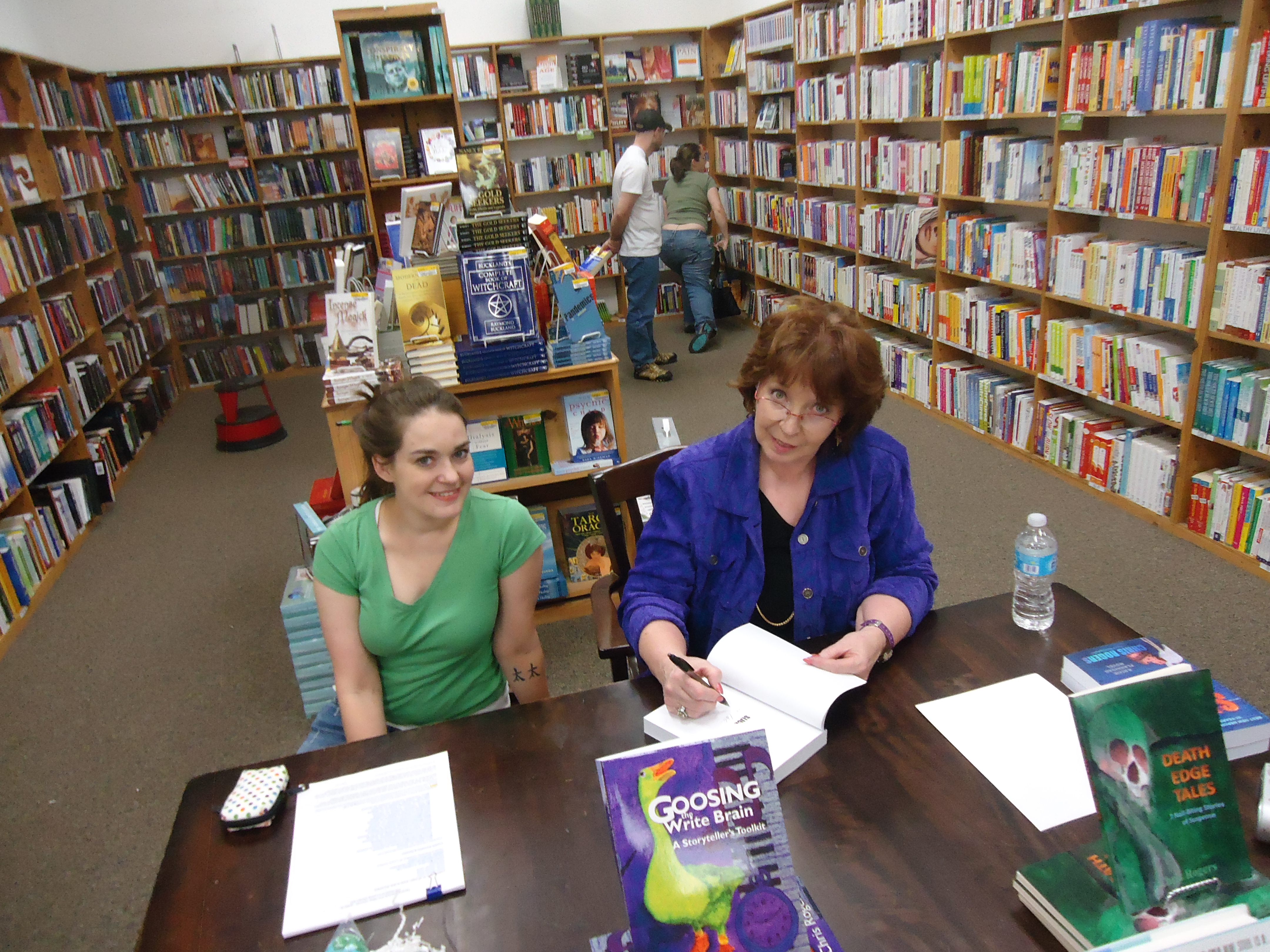
May 2013 Events
At Half Price Books Humble

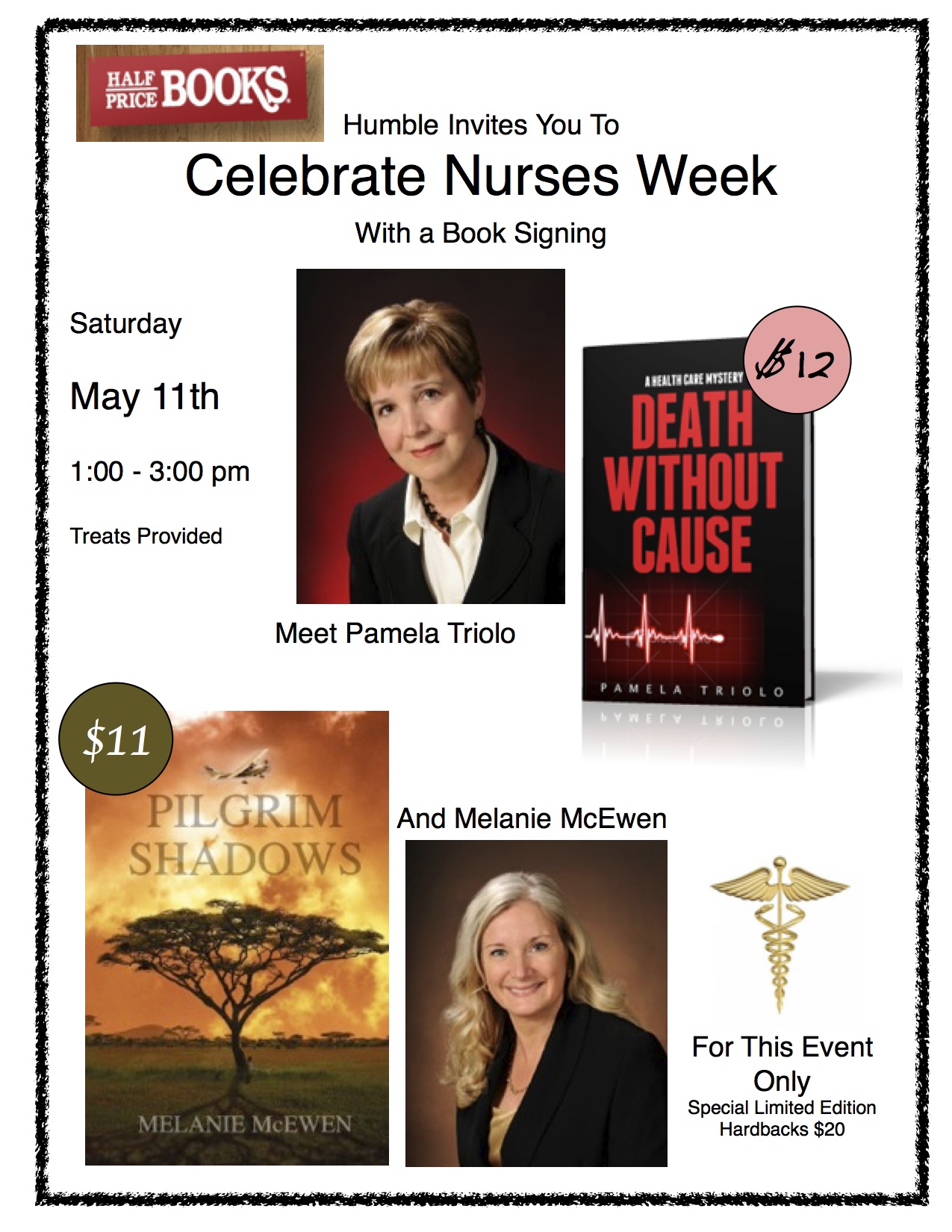
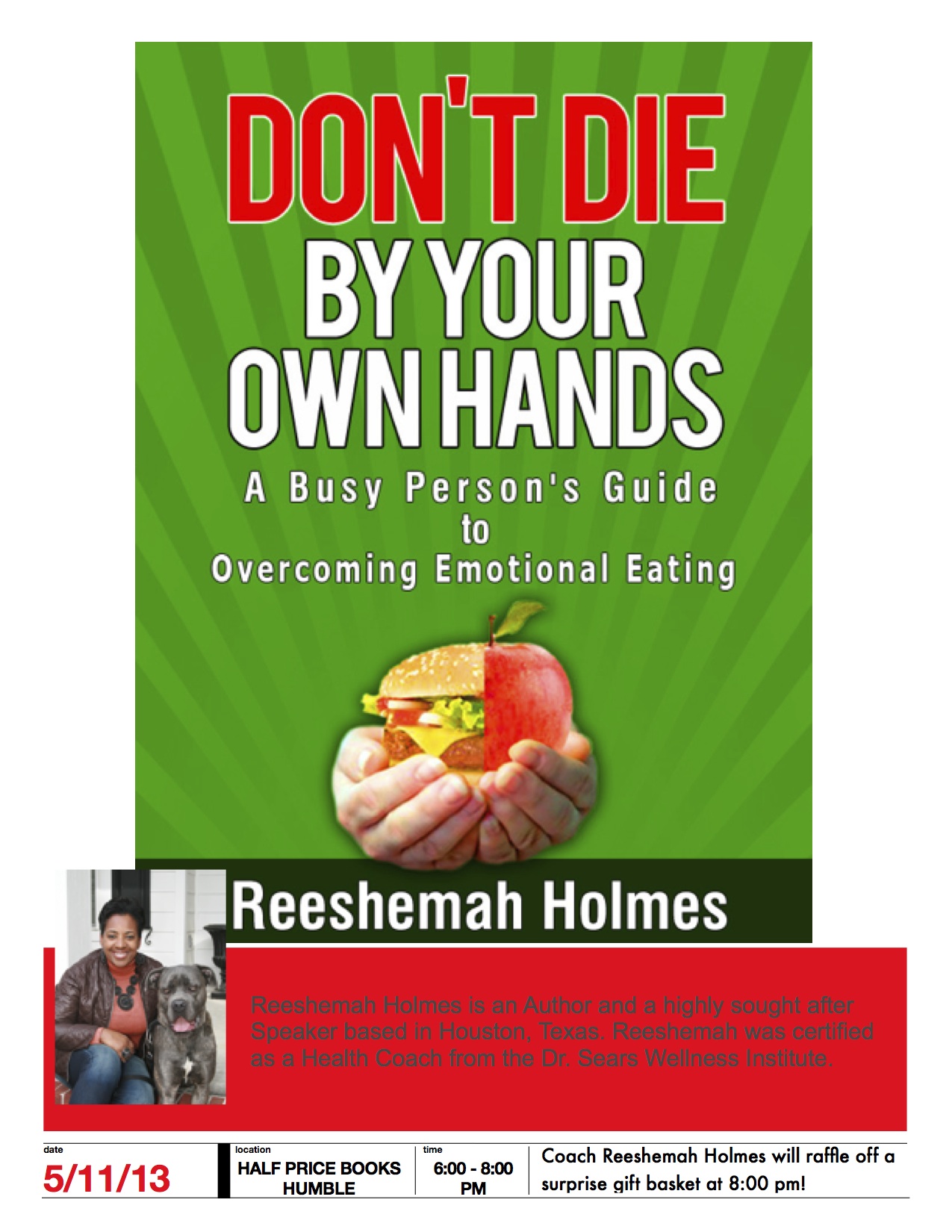
Don’t forget, we also do Book Club on the first Monday of the month, Poetry Night on the first Thursday of the month, and Journaling on the second Thursday of the month.
Homeschooling Agendas
 Title: Lessons Learned
Author: Andrea Schwartz
Genre: Homeschooling, Education, Christianity
I have mixed feelings about this book. On one hand everything she said I agree with. On the other hand, the way she said it often made me cringe and think of severely right-winged “Jesus-freaks.” The DC Talk fan in me thinks Andrea Schwartz shouldn’t and wouldn’t mind being called that. The fellow Christian in me tells me it’s a little unfair to call her that when I agree with her points and conclusions. The public-school educated child wants to scratch my eyes out and scream, “Really!? Did you have to use the phrase God-hater that way?”
Homeschooling for many is merely an educational choice… the public school system is broken and parents no longer feel comfortable counting on the state to properly equip their child with the realities of the world. Children are being herded from class to class like cattle. Fine teachers are being stretched too thin and don’t have the time, energy, or resources to give each student the educational nurturing they deserve. Everything has become about teaching a test, obeying dress codes, and keeping everyone happy and supposedly safe, rather than about creating an environment of true scholarship.
For others, and possibly what it is misguidedly known for… it’s for freaks who don’t get along with the rest of society. Potential crazies, kids that don’t groom properly, weirdos… I hope that stigma can be put to rest as I found just as many people who fit this description in public school as I did outside of it. If your parents are socially awkward you will probably have a lot of socially awkward tendencies whether you spend 8 hours a day with them or without them. I went to public school my whole life and I will totally admit to being a little bit strange. I live inside my head a lot, and there are plenty of social cues that I completely miss. Some kids I’ve seen were far more socially awkward under the pressures of a school environment where they are forced to try to fit in with a thousand people their own age, when in the real world they get along better in a more diverse setting where they are not expected to be like everyone else.
Then, there’s the other group, the Religious group… For many parents, choosing to homeschool your child is a calling from God. We have been given this precious child to train up in the ways they should go and we want to ensure that we do that the best we can every step of the way. Submitting them to 8 hours of frustration, government indoctrination, and poor education is not high on the list of things we believe God wants for our children.
In our household, we’re one and three. Yes, I believe passionately about being good stewards of our minds. I desire to eagerly pursue all the most riveting aspects of educating my daughter that I can. I am completely caught up in the idea of combining a classical styled education with a tiny twinge of unschooling so that my kid gets the most thorough and engaging education available… custom tailored to her little brain and the way it works. I want to give her the education I didn’t get. I want her start out ahead in life, prepared for anything! But I also believe this passion for education was given to me by God. I believe that it is God who calls us to be good stewards of our minds. I believe that having the freedom to not be politically correct in our studies and studying from the Bible throughout our day will only prepare her more, provide her with a firmer foundation.
Andrea Schwartz comes off as believing God first and education second. I believe that to be an honorable and good philosophy. But I believe that by putting God first, your education will be enhanced, not placed on the back burner as some would suppose. How fascinating will it be to read the Bible, Augustine’s Confessions, and Homer during our Ancient History studies… I can’t wait.
Jessie Wise and Susan Wise Bauer explain this all best in The Well Trained Mind:
“People of faith have influenced history at every turn. Until the student is willing to examine honestly and soberly the claims of relivion in the history of mankind, this study will be incomplete.
In the effort to offend none, the public schools have managed to offend practically everyone – either by leaving religion and ethics out of curricula altogether or by teaching them in a way that satisfies neither believers nor skeptics. In sympathy, we’ll say that the public schools are in an impossible situation. They are legally bound to avoid the appearance of promoting one religion over another. And in a mixed classroom, how can you take one religion seriously without antagonizing those who don’t share it? […]
When you’re instructing your own child, you have two tasks with regard to religion: to teach your own convictions with honesty and diligence, and to study the ways in which other faiths have changed the human landscape.”
Susan Wise Bauer and her mother then spell out very elegantly how to do this: including religious works in the study of primary sources, researching the beliefs of all the major faiths, seek out biographies of those who have changed others’ belief systems, and keep a watchful eye for any logical fallacies, chronological snobbery, and so on.
I am a huge Susan Wise Bauer fan, her books are what I am using to map my own child’s education. I recommend Susan Wise Bauer for any homeschooling parent of any religion.
As for Andrea Schwartz… her stuff is really great if you are a Christian parent who homeschools or is thinking of homeschooling. I have a huge problem with her description of her son’s experiences in community college, they seem unusually extreme. But then again, I live in Texas and they are in California, a lot changes culturally from state to state. Regardless of the fact that her complaints about public school differ from my own, Schwartz reminds you to stay the course and remember the number one goal of making a disciple of your child, a well-educated disciple, but a disciple none-the-less. We are not just teaching our children their math, science, and history. We are not just teaching our children the pleasure of research and reading. We are not just teaching our children how to learn. We are teaching our children how to live, how to walk wisely, and how to make logical choices while still keeping the faith.
Where Curiosity Comes to Stay
One of my favorite shops put out a short film. The shop is called Good Books in the Woods, I credit them for inspiration in the bio on the back of my first novella which will be coming out soon. Recently, I planned to write a When We’re Not Reading segment on the release party for the film as well as on Journaling Night for HPB Humble. The post never occurred as I had so much fun at both events, I forgot to take pictures.
Luckily, I don’t have to spend too much time what an incredible evening it was… coffee, wine, cookies, fruit trays, book browsing, film viewing… all in the cozy living room of Good Books in the Woods, because the film is available for you to see too.

Click the movie poster to view the You Tube video.
I hope you enjoy it!
As for Journaling… the second Thursday of every month at 7:00 pm, I sit myself at the table in the Metaphysics and Health section at Half Price Books Humble with journals, pens, prisma pencils, clip art, and a whole lot of creative energy. Inevitably, one or two customers always join me. It’s really relaxing and offers a chance to really kick all your cares from the day out of your mind.
Needless to say, despite the fact that the segments are called When We’re Not Reading, there’s generally a bookish theme to every aspect of our lives.
Falling in love with History…
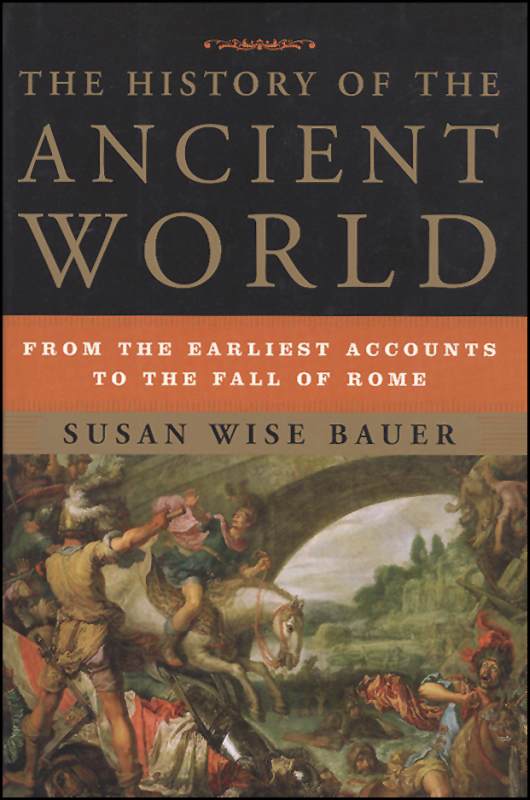 Title: The History of the Ancient World
Author: Susan Wise Bauer
Publisher: Norton
Genre: History
Length: 868 pages
I enjoyed history in school, but only when it was taught by certain teachers. I distinctly remember thoroughly loving Coach Masters, my World History teacher in high school. In hindsight, I’m not sure if it was because he was so awesome, or because it was the first time someone actually presented me with history I could be passionate about – not just enjoy in passing. Masters made you dive in with all you had and really learn it; it wasn’t just dates and factoids, it was people, their dreams, their loves, and their wars.
As an adult, reading history has become a little more specific. I tend to read a lot of Ancient and Medieval history most, they are kind of my go to topics. There is so much that was skipped over in school and it is so riveting! So naturally, when I decided to homeschool my daughter I started collecting the Susan Wise Bauer history books – they are fascinating overviews of history as well as wonderful teaching tools.
Reading Susan Wise Bauer reminds me of that history class with Coach Masters. She gets personal.
It took me a full year to read The History of the Ancient World, mostly because I made a promise to do at a snail’s pace. I plan to use it as a loose textbook for kiddo’s high school years and I wanted to make sure that you could pause, go read other things, and come back to it. Is it reasonable to assign this for a year in addition to x number of other books? Yes, oh, well then lovely.
The book is wonderful and impressive. Bauer makes history accessible and easy to understand in a world filled with dull and extensive flow charts that will make even the most knowledgeable scholars heads spin.
My absolute favorite is a lengthy footnote on the Borg (from Star Trek) and how similar the mentality of the Borg was to a tribe of people sweeping the land in the very earliest parts of history. ‘See?’ she practically says, ‘It’s good to be a sci-fi nerd.’
My only lament – and this may simply be a first edition issue – is that toward the end I began to find typos (I think). There’s an amputed that should be amputated. I honestly thought maybe it was a variance of the word I had never seen used and had to look it up. There’s a died that should have been die. These two things tripped me up for a second, but I found it a little refreshing. Having just written a book myself it was good to know that someone I esteem so highly also makes errors when writing her books.
But then there was the bit that tripped me up a LOT. During the aftermath of Alexander the Great’s death there are two spellings for what I’m 99% positive is supposed to be one person. Welcome to the great Cassander vs. Cassender dilemma…
The first time I saw this, I thought: Is there one person or two? Am I really ignorant with poor reading comprehension and these are two distinct people? There’s no way I can be the only person to find the longest running series of typos ever… But for pages on end Bauer switched from Cassander to Cassender.
If it is a typo, I get it. In my novella I couldn’t keep my fingers from typing Lilly Hollow to save my life, when the name of my imaginary town is Lily Hollow. It drove me absolutely crazy going through and fixing them all. If there is a typo found in my novella post publication, I would bet money that it will be in the form of an extra L.
With Cassander and Cassender there are soooooo many times that it is written as both. Part of me is still convinced that there is a strong possibility that I am just that dumb. I will be seeking out a second edition just to figure it out. The ancient world is full of mystery and excitement and long winded Chinese dynasties and Egyptians going crazy with who they marry and who they kill, but the acting king(s) of Macedonia post Alexander the Great is the guy(s?) that throws me for a loop.
All in all, though, I STILL think this is a must have in any historian’s or homeschooler’s library. It was worth every penny and I think that this one – for once – is one I actually paid full price for at Barnes & Noble. Bauer will remind you that there is so much to discover and be passionate about in history, because there’s just so much of it in general… you may even fall in love.
The Best of Foodie Memoirs
Title: Lunch in Paris
 Author: Elizabeth Bard
Publisher: Back Bay Books
Genre: Travel/Memoir/Cooking
If you are looking for Eat, Pray, Love or Julie & Julia at the bookstore – STOP. Pick this up instead. It’s friendlier, wittier, and far more relaxing.
It was the water color that got me first. That and the fact that I love memoirs with recipes, they pretty much dominate my source of kitchen plans. Then, that first page of that first chapter: Coffee, Tea, or Me and her description of herself – I felt so at home, so in league with a kindred spirit.
She says things like “I stood pressed against the wall, like a field anthropologist caught in the middle of a buffalo exorcism,” when describing a French dance party. How can you not fall in love with a writer that expresses herself like that? I literally started laughing out loud, and I hate using that phrase since all the texters in society have begun speaking how they type, so when I use it I really mean it.
Bard is pleasant and loveable. She has dilemmas that I can sympathize with, as opposed to Gilbert’s laments in Eat, Pray, Love which seemed all a little over the top and self inflicted. I did laugh a few times when she chalked something her husband did up to his being French, a lot of times it just seemed very husbandy to me. But for the most part, I think I was only laughing when I was truly meant to, when she utilized some turn of phrase or told a story that should make the corners of your mouth twitch while you read.
My favorite moment was when a friend tells her she can’t just go to the market for the rest of her life. Before Bard got a chance to say it herself, I inwardly pleaded… why not? It doesn’t matter whether you loathe or love the grocery stores here in the states, Bard will make you fall in love with European markets and long desperately to go make purchases at a butcher shop in Paris and linger over vegetables in the streets.
Go. Buy. Enjoy. I know you’ll love it.
Newspaper Clippings On Chesil Beach
 Or IN On Chesil Beach, rather…
Title: On Chesil Beach
Author: Ian McEwan
I love used books mostly because of the crap you find inside them. Receipts, plane tickets, love letters, movie stubs, money – I’ve found it all.
In On Chesil Beach, a book published in 2007, I found a 1990 Wall Street Journal clipping of a book review written by Richard Locke. It discussed McEwan’s most recent title at that time, Innocent, and compared him and other contemporary authors to Graham Greene.
It was the highlight of McEwan’s novel for me, the only other redeeming quality being McEwan’s excellent prose and the use of the word ‘wafted.’
I’ve read other work by McEwan, Amsterdam

Love this picture by a fellow book reviewer. Click to read her take.
Where Atonement
As I told fellow book clubbers, I think Atonement is an atypical novel for McEwan. It highlights all his strengths as a novelist and abandons a lot of the things I dislike about his other work.
I didn’t enjoy On Chesil Beach, but as usual McEwan’s prose was lovely. I just didn’t like the story. I was uncomfortable with two married people trying to figure out how to have sex on their honeymoon for 200 pages. Amsterdam was equally annoying and somewhat dull.
Atonement is truly the equal opposite of the other two titles. It has layers upon layers, I sympathize with characters. Briony, though a sort of villain, is also a rich, multifaceted character. It is a genius piece of work that can be discussed along side the genius of John Steinbeck’s East of Eden without ever wondering why it is sharing shelf space with such a prolific artist of words.
 I can read Atonement over and over again and find new things to marvel over. The first time I spent countless hours studying words and names… Briony, which means “climbing plant.”
Bryonies are occasionally grown in gardens, sometimes accidentally, sometimes deliberately so. Some species find use in herbal medicine. Generally however, these plants are poisonous, some highly so, and may be fatal if ingested. – Wikipedia
This time, a fellow HPB Humble Book Clubber pointed out the stunning use of windows, glass, and viewpoints of the characters. As well as Triton being the statue in the fountain that supplied the initial setting for all the confusion… Triton who is a messenger of the sea, and the confusion being that of miscommunications and vivid imaginations. There is a wealth of things to dive into when re-reading the book.
Even if On Chesil Beach offers similar literary gems to dig into, I have no desire to do so. I feel as though Edward and Florence have annoyed me enough already in this lifetime. I debate, even now as I type, whether to keep the book at all. I may give it away, it is in near mint condition and other people enjoy things I do not. But neurotic hoarder in me wants to create a shelf in my library of all books I find featuring the word ‘wafted’ and perch it there along with the rest. It is a good thing I am married. I am sure my husband will cock an eyebrow in that meaningful way that says ‘Don’t be crazy’ and I shall submit to the idea that it makes a better gift than tribute to my odd obsessions.






 Anakalian Whims