Bouquet of Color
Revisiting…

Title: I Love Dirt!
(52 Activities to help you and your kids discover the wonders of nature)
Today, we went for a much needed walk in the woods. When the weather is nice, we’re out there five days a week. When the weather is too hot to be nice, we’re out there four days a week. When the weather is obnoxiously freezing cold, wet, and completely unnatural to a born and bred Texan, we hide indoors and rock back and forth holding our hot coffee and teas. Well, not quite, but close. We actually sit by the window and watch the birds eat bits of things we’ve left in the yard, name the squirrels that live in the trees out back, and read stories by the fire burning in the fireplace.
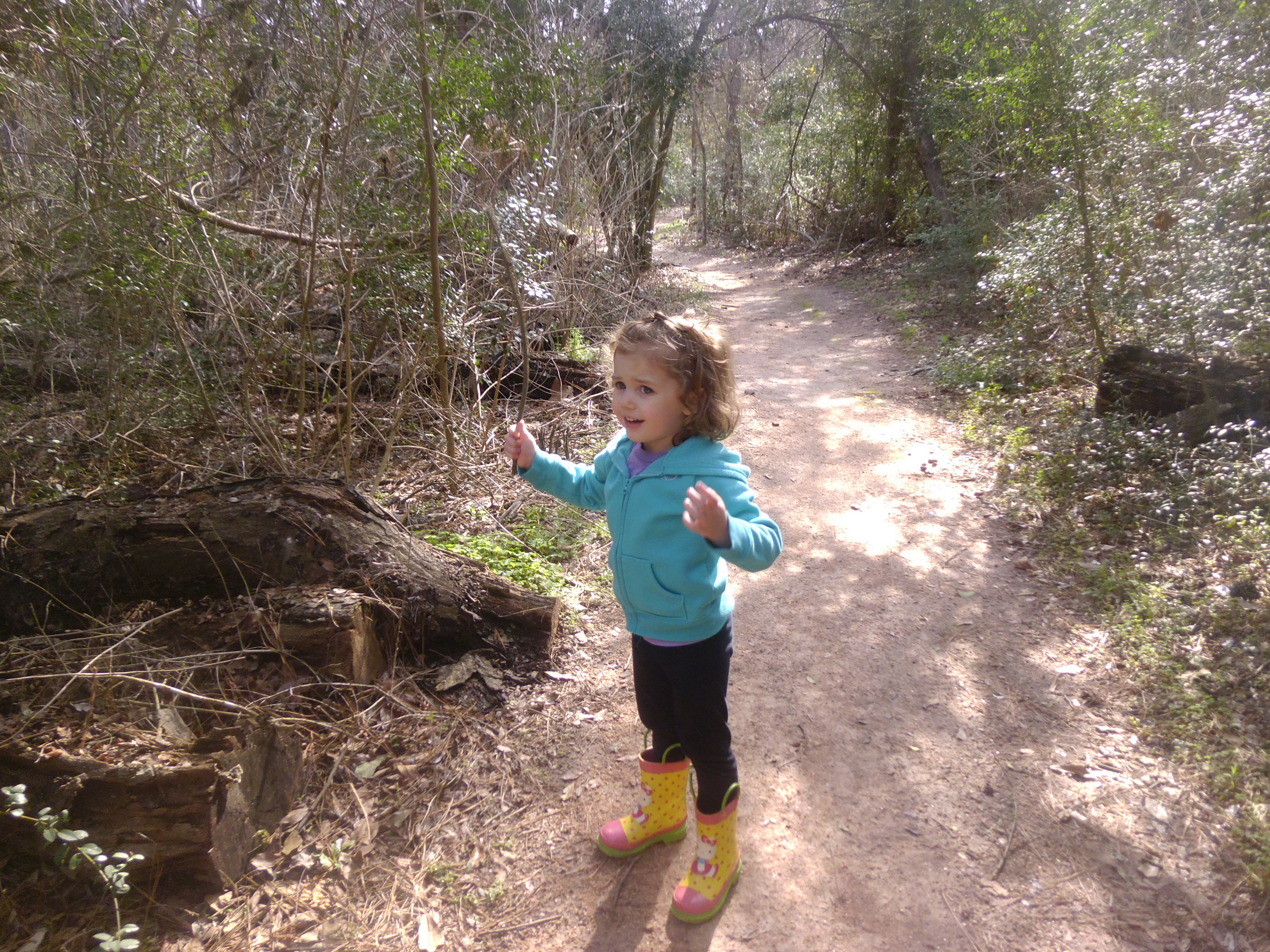
Today, the sun was out for a bit. It wasn’t quite so cold. We needed the woods and we needed it bad. There was cheering involved.
So, we loaded up our trustee going out bag and went for a trek. Tucked inside was our copy of I Love Dirt and as soon as we hit the trails we read from chapter two: Bouquet of Color.
Bouquet of Color is an exercise in finding flowers and identifying how many colors we can see. It’s a purely natural I Spy game.
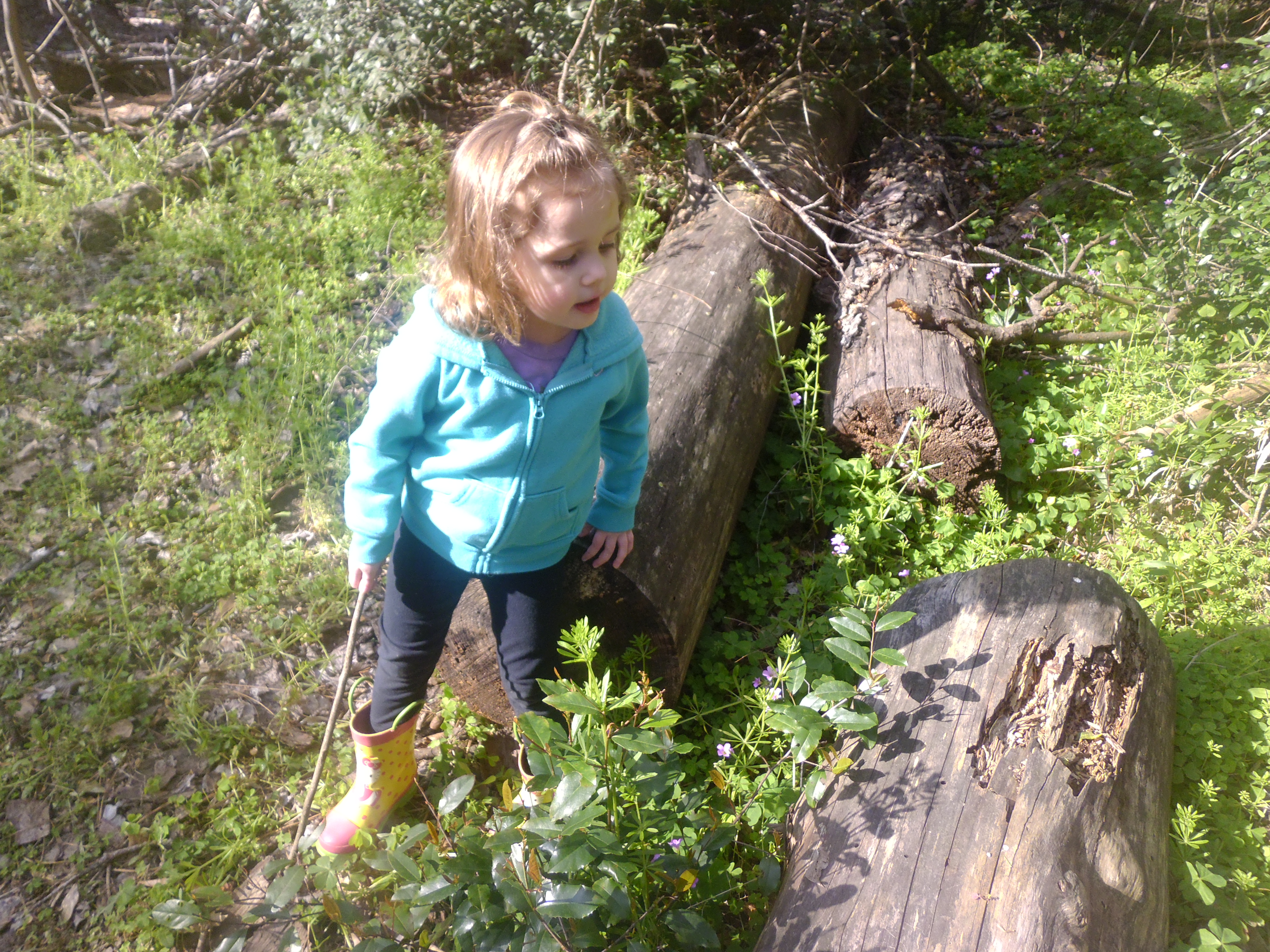 We discovered more flowers we would call purple than I would have supposed. Lots of purple field pansies, baby blue eyes (that look more purple than blue), and even some butterfly peas. We saw a lot of pointed phlox, but that is categorically considered a ‘red’ wildflower… so maybe we’re a little colorblind because they looked pinkish purple to us.
Of course, there was a lot of yellow in the form of dandelions, but not as many as I would have guessed. We found a lot of dewberry patches sporting their telling white blooms, and took note of where they were so we could come forage berries come summer. Yet, tt seemed Kiddo was still shouting “I see purple!” more than any other phrase.
 We were pretty excited about the blossoms on this tree. See what they look like up close. Anyone know what it is?
Click this photo to find out…

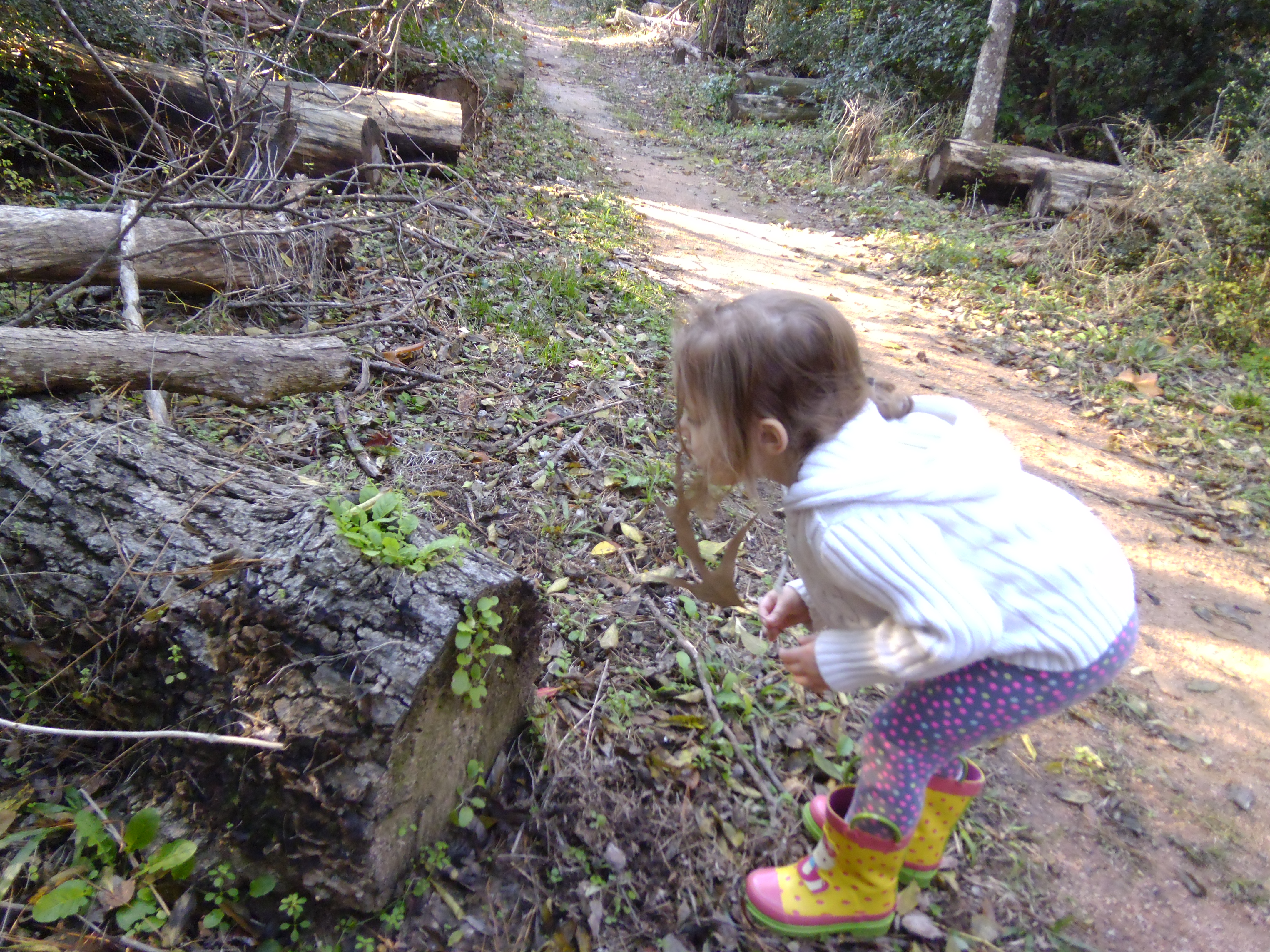
Sometimes on the trail we get distracted from whatever task is at hand and just enjoy ourselves. Here she said, “I want to put the sun in my mouth!” I couldn’t resist snapping that picture.

Histories and Education
 In my pursuit for knowledge, and for schooling my own child, I have been pretty diligent about reading as much history as I have the mental capacity to remember. That means I read at least one non-fiction book a month (whether history or not) and I include one non-fiction book per quarter in the Half Price Books Humble Book Club line up.
This quarter we’re planning to discuss Herodotus’ Histories in March. (We meet the first Monday of the Month at 7:30 pm.) This isn’t just a fascinating work to read for book club, it was also on my life long list of books to read before I die. It’s a tome; but it’s important, I think.
Not only is it important, I have a pretty awesome copy (The Landmark Herodotus
So as I make my way through this book, that could serve as a book press for other books if I ever needed it to, I will share with you the gathered notes of our club members:
THE HISTORY OF HERODOTUS
(Notes provided by Glenn Ray)
Book 1 CLIO
Below are the important kings and many of their exploits from book 1 ‘CLIO’. There are 9 books in all.
The ‘¶’ below is used to represent chapter #’s in this book.
A vertical line ‘|’ on a row by itself means next person down is child of this king.
NOTE: Where there is not a ¶ starting the line, then these are mostly from Wikipedia.
Below are 3 lines of kings, not all ancestral succession:
-
Lydia (modern day western Turkey) kings: Gyges, Ardys, Sadyattes, Alyattes, Croesus
-
Mede/Persian kings: Deioces, …Cyaxares, Astyages, Cyrus the Great, … Tomyris of Massagetae (not Mede or Persian) …
-
Darius I
Gyges
(¶8 Candaules was king of Sardis & Lydia before Gyges,
& his favorite spearmen was Gyges;
Candaules shows Gyges his wife (Nyssia) naked)
(¶11,12, 13 Gyges, at Nyssia’s command, kills Candaules, becomes king; but
that vengeance for the Heracleidai (descendants of Heracles (Hercules)) will come upon the descendants of Gyges in the fifth generation [that being Croesus below].)
(Gyges reigned from 716 BC to 678 BC (or from c. 680–644 BC).)
(¶14 led an army against Miletus)
|
Ardys
(Ardys II or Ardysus II) 678-629 BC (or 644-c.625)
(¶15 became king of Lydia; and continues daddy’s fight against Miletus)
|
Sadyattes
(629-617 BC (or c.625-c.600))
(¶16 became king of Lydia for 12 years; made war vs Cyaxares – king of Medes)
(¶18 and continues daddy’s fight against Miletus)
|
Alyattes
king of Lydia (619–560 BC)
(capital Sardis, & controlled all Asia Minor west of the River Halys, except Lycia.)
(fought against Cyaxares – king of Media, during the Battle of Halys, /wikipedia)
(¶18 and continues daddy’s fight against Miletus)
(¶25 reigned 75 years)
|
Croesus (pronounced ‘KREE-sus’)
(GLR: some info below is from: http://www.ancient.eu.com/croesus/)
King of Lydia 560-547 BC (palace of Croesus was at Sardis.)
(GLR: Croesus, you will see, is one mean grandpa)
(funded construction of the great Temple of Artemis at Ephesus, one of the Seven Wonders of the ancient world. / http://www.ancient.eu.com/croesus/)
(¶30 asks Solon who is happiest).
(Solon was an Athenian statesman, lawmaker, and poet)
(¶53 Croesus is also famous for asking the Oracle at Delphi whether he should go to war against Persia. And… destroy a great empire)
(¶55 Croesus consulted the Oracle & was told …a mule of the Medes shall be monarch…)
(¶69 alliance with the Lacedemonians)
(¶73 marching into Cappadokia to fight Cyrus, who to avenge his brother-in-law Astyages (who was defeated by Cyrus)
(¶79 Croesus’ horses feared the camels of Cyrus and ran.)
(¶84 Cyrus’ man Hyroiades scaled the wall of the citadel at Sardis and Croesus is defeated)
(¶86-7 Croesus in the Pyre)
(¶91 Croesus learns the mule = Cyrus)
Deïokes (or Deioces)
(In the late 8th century BC)
(¶96 – was the first king of the Medes per Herodotus.
(¶97…his decisions proved to be according to the truth)
|
Phraortes
king of Media 665 – 633 BC)
(Phraortes started wars against Assyria, but was defeated
and killed by Ashurbanipal, the king of Neo-Assyria.)
|
Cyaxares [or Kyaxares in Gutenberg version]
king of Media 625–585 BC)
(¶73 Scythians serve Cyaxares human meat, and Scythians runaway to Alyattes at Sardis for protection)
|
Astyages
(king of Media 585 BC-550 BC)
(ruled in alliance with his two brothers-in-law, Croesus king of Lydia
and Nebuchadnezzar king of Babylon, whose wife, Amytis, Astyages’ sister,
was the queen for whom Nebuchadnezzar was said to have built the Hanging Gardens of Babylon)
(¶108 dream abo vine from Mandane; ordered Harpagos to kill grandson [Cyrus])
(¶118, 119 Astyages serves Harpagos his own son)
(Bible xref: Daniel 13:65(1). (1)This is per the “Douay-Rheims 1899 American Edition” of the Bible, note the KJV stops at chapter 12.)
|
¶107 Daughter – Mandane married Cambyses from Persia
|
Cyrus the Great,
king of Persia, 600 BC or 576 BC–530 BC
(¶55, 56 & 91 Cyrus is the mule)
(Bible xref: 2 Chron 36:22-33; Ezra 1:1-8, 3:7; 4:3,5; 5:13-17, 6:3,14, Isaiah 44:28, 45:1,13; Daniel 1:21, 6:28, 10:1,
and 1 Esdras 2. [Note: Church councils rejected 1 and 2 Esdras as non-canonical])
(was the monarch under whom the Israelites Babylonian captivity ended / Wikipedia)
(was prompted by God to make a decree that the Temple in Jerusalem should be rebuilt / Wikipedia)
(¶79 Cyrus uses camels against Croesus’ horses (horses fear the camels and ran.)
(¶84 Cyrus’ man Hyroiades scaled the wall of the citadel at Sardis and Croesus is defeated)
(¶141 Cyrus spoke fable to the Ionians and Aiolians, piper played for the fishes in the sea)
(¶155-156 Cyrus takes on his mean grandpa Croesus [who multiple times tried killing Cyrus] as closest councilor)
(¶178-183 Cyrus plans & does to conquer Assyria & Babylon; Describes city of Babylon)
(¶205 Cyrus attempts to conquer Massagetae & their queen Tomyris)
(¶209 Cyrus dreamed Dareios/Darius would attempt to over throw him)
(¶211, captures 1/3 of her army & son Spargapises sleeping)
(¶213 -214, After Tomyris’ son, commits suicide, she defeats & kills Cyrus & give thee thy fill of blood.)
(¶216, Massagetae custom: when a man becomes very old, he is slaughtered, flesh boiled and the family banquet upon it.)
Darius I 550–486 BC
the third king of the Persian Achaemenid Empire
(Reigned 522 BC to 486 BC (36 years))
(Darius is mentioned in the Biblical books of Ezra, Nehemiah, Daniel, Haggai, and Zechariah.)
(¶187 Darius attempts to rob Babylon Queen Nitocris’ grave)
(¶199. Now the most shameful of the customs of the Babylonians…)
More notes to come as we progress through our reading . And when I’m done with Herodotus, I plan to conquer Xenophon…
I’ll keep you posted.
In the meantime, I challenge everyone to pick up any ancient history book and learn something about the world they didn’t know before this year. The most fascinating thing to me about it all is that, even though civilizations change and grow and change and grow… people essentially, are always – at their core – pretty much the same. I love learning about the world today through the eyes of our past.
Shropshire Lasses (and dog)
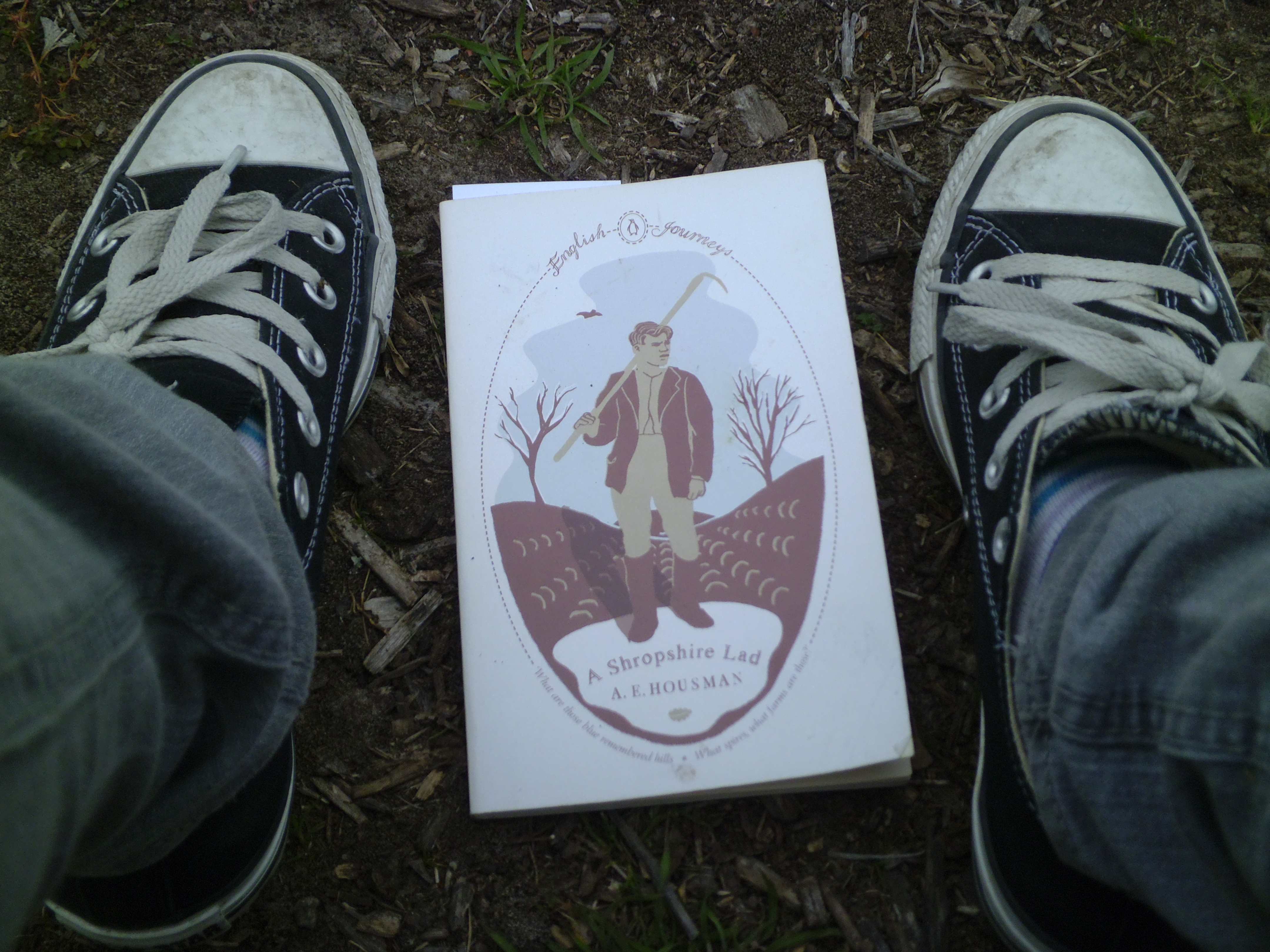 Title:A Shropshire Lad
Author: A.E. Housman
Publisher: Penguin (Classics)
Genre: Poetry (English Journeys)
A few years ago I became completely hooked on the Penguin Great Ideas series. I think they’re wonderful pocket sized source documents to keep around the house. I also love the Great Journeys… and now, I have a small collection of English Journeys as well.
The kiddo and I love scampering through the woods. We also love reading outside. These little paperbacks are the perfect books to tag along for our wooded adventures and frolics in the park.
Not to mention that, today, I think Housman became my favorite male poet – a title previously held by William Carlos Williams. The two are nothing alike. But I am nothing like who I was when William Carlos Williams was awarded his place on my mental pedestal.
Where William Carlos Williams amused me with “This is Just to Say”:
I have eaten
the plums
that were in
the iceboxand which
you were probably
saving
for breakfastForgive me
they were delicious
so sweet
and so cold
I was in middle school when I discovered this. For some reason I found this bluntness endearing. I thought, “What a wonderful jerk to address poetry with such sarcasm.”
I don’t want poetry to be sarcastic anymore. I don’t appreciate the uncaring witticism the same way.
I do, however, love this:
Oh, when I was in love with you,
Then I was clean and brave,
And miles around the wonder grew
How well did I behave.And now the fancy passes by,
And nothing will remain,
And miles around they’ll say that I
Am quite myself again– “A Shropshire Lad: XVIII”
Ok, well, it seems it’s always the jerk lines that appeal to me. But at least it’s not about stealing plums anymore. Housman has real heart and soul as he describes landscapes and lovers, crickets and dead soldiers, the woods and the very real feelings of longing for something that has gone. All so beautiful and natural; and the pattern in which he writes lends itself to easily reading it aloud outdoors while the kiddo plays.

The dog seemed to enjoy it too. He stopped to look at me every time a poem ended as though I was denying him the chance to be included in the written word of humans.

Poetry and Paint
 Title:The Road Not Taken and Other Poems
Author: Robert Frost
Publisher: Dover Thrift Edition
Genre: Poetry
I have a hard time reading poetry silently. When I’m reading it in my mind, my eyes tend to skip over the words like stones on water.
But aloud – that’s a different story.
Nothing calms us faster in my house (the kiddo and I) than poetry, painting, and a little Alt-J in the background. I don’t know how I survived sadness and melancholy before Alt-J was a part of my world.

The latest masterpiece – age 3.
This week we read through a Dover Thrift Edition of Robert Frost: The Road Not Taken and Other Poems. Like most people, kiddo will probably be far more familiar with The Road Less Taken than any of Frost’s other poetry. We don’t just read it out loud when we paint, but out on the trails in the woods too. Poetry is appropriate for painting, Frost is great while tromping on leaves. He just has a woodsy feel to him.

Starting a new piece during a poetry day.
I Love Dirt!
Title: I Love Dirt!
Author: Jennifer Ward
Foreword: Richard Louv, author of Last Child in the Woods
Illustratator: Susie Ghahremani
I popped in at Half Price Books after a long season off from scheduling book signings. Tucked low in my employee cube was a book – this book – with a post it note on it from my boss.
“Andi – I thought you might like because of the woods you live by!”
I did like it, immediately. And bought it with my Christmas money.
The book starts with a riveting foreword about the nature of nature in the United States and how much we have strayed from the outdoors. Interestingly enough, the more we stray from outdoor life, the more children struggle with obesity, ADD and ADHD, as well as depression.
And the more kids spend outdoors?
“A 2005 study by the California Department of Education found that students in schools with nature immersion programs performed 27 percent better in science testing than kids in traditional class settings. Similarly, children who attended outdoor classrooms showed substantially improved test scores, particularly in science. Such research consistently confirms what our great-grandparents instinctively knew to be true, and what we know in our bones and nerves to be right: free-play in natural settings is good for a child’s mental and physical health. The American Academy of Pediatrics agrees, stating in 2007 that free and unstructured play is healthy and essential for children.”
 I’m in love with this book. I already do a lot of nature activities with my child – foraging for starters. We play outside at the public park, we walk nature trails, we run, we jump, do cartwheels in the grass, hunt insects and lizards, sword fight with sticks, and sing our ABCs at the tops of our lungs by the creek. As Ward states in her introduction, “There is nothing more joyful and inspiring to watch than children discovering the world around them.”
All of the activities in this book are pretty much cost free. The only one I found that requires any kind of purchase is the bird feeding one, and that’s only if you want to do it big and don’t have spare groceries in your house. The activities are simple, like sprinkling orange peels in your yard or covering pine cones with peanut butter and bird seed to bird watch from inside when it is too cold to be outside.
The book is broken up seasonally, so you can hop in and do something no matter when you pick up the book. Each activity has a prompt or a concept to get your child thinking about the activity and world itself.

Homeschooling Schmomeschooling
One thing I know I’ve done is slack off on my homeschooling posts. Some of you may be relieved by that as you follow this for adult book reviews. However, this is something I plan to be more consistent about in the year 2014 (what’s a new year without resolutions to fail at?). So, I’ll start with our wonderful Christmas gifts and how that has altered our January plans for the better.
Series Title:The Cat in the Hat’s Learning Library
 Title: There’s a Map on My Lap!
With her birthday money, kiddo picked out and purchased Oh Say Can You Seed? (All about flowering plants) and If I Ran the Rain Forest (All about tropical rain forests). I was so proud of my three year old, she picked them out herself without being swayed by me and she continues to select them to be read at bed time – obviously not swayed by me because bed time is when I want to read the shortest book possible.
Each one of these books includes all sorts of information, new vocabulary words, and everything a kid needs to know to get started with that particular topic. There’s even a handy glossary at the end that could later serve as a spelling word list.
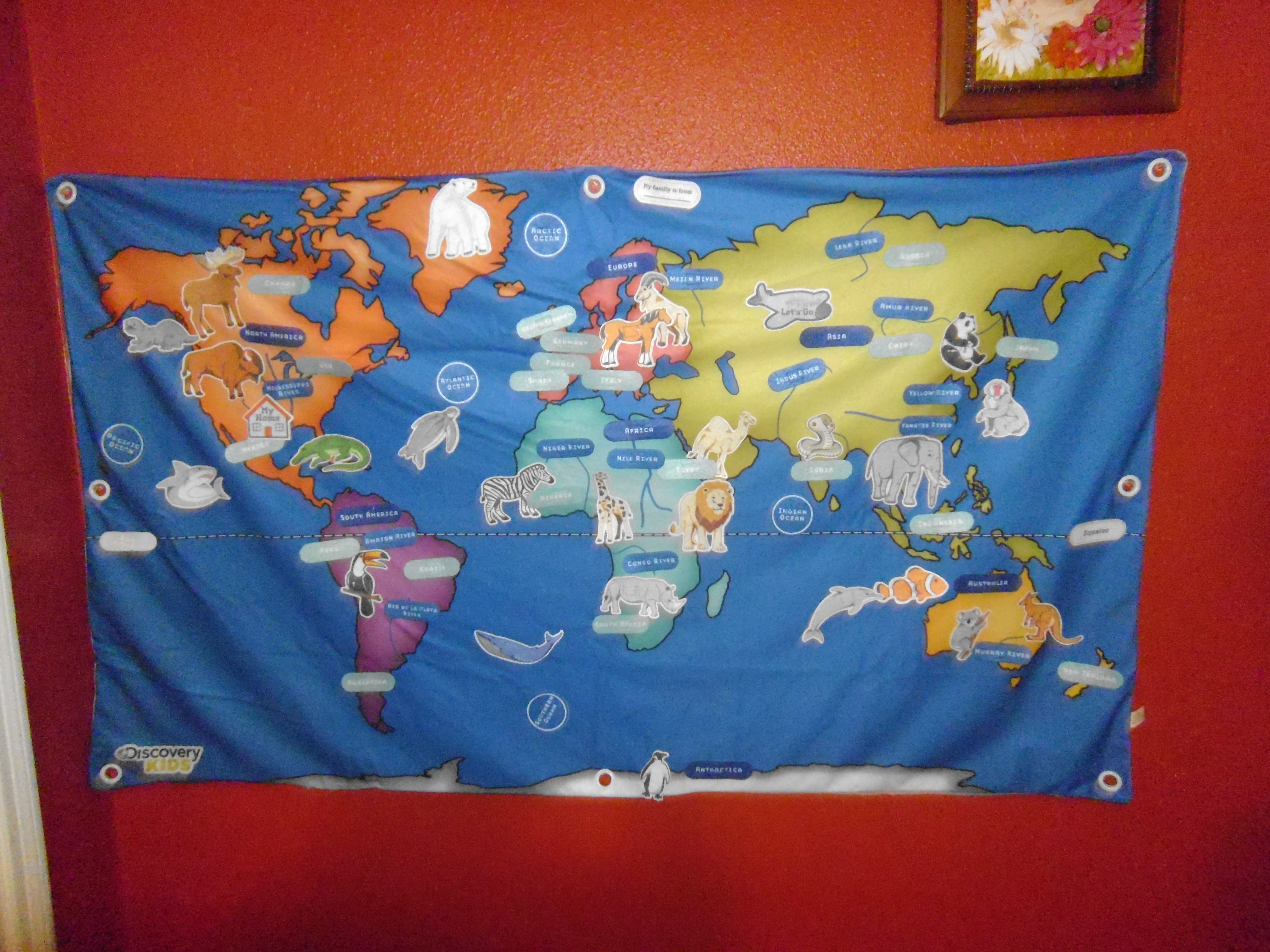
So when we saw There’s a Map on My Lap we were pretty excited. And when Grandmom got her a Wall Map too – well, it was all over. We have been having ‘map time’ every chance we get.
 Title: Magic Tree House
Author: Mary Pope Osborne
We did a pretty extensive Titanic unit awhile back. We read both Magic Tree House books as well as a few of those early reader books. There was a picture book we tackled, and we even found a replica of an old newspaper page from the day the Titanic sunk.
Kiddo likes history and really likes boats and ships. She built our very own Titanic out of play dough one day, which was pretty exciting.
 I will not have a kid that watches the Leonardo DiCaprio movie at 16 and says, “I didn’t know that was REAL!” (http://www.washingtonpost.com/business/technology/titanic-tweets-some-say-they-didnt-know-titanic-wasnt-just-a-film/2012/04/10/gIQA8fZY8S_story.html).
Even though I’m not a big fan of the movie and what it has to say morally, I can’t wait for Kiddo to see it – even if it means me letting her watch it at a younger age and fast forwarding through the inappropriate parts (you know, the ones that made the film PG-13) – because seeing the ship in all its glory is a phenomenal experience. Already, she enjoys looking at diagrams of how the ship was set up and pictures that were taken. We liked this National Geographic list and pictures too: http://kids.nationalgeographic.com/kids/stories/history/10-cool-things-about-the-titanic/
Other Projects…
Christmas was kind to us in regards to school projects. Already we have started the year off by growing rock crystals of our very own.

This was more of a lesson in patience than anything else. She thought the science lesson was cool, but really it was about learning to go check on it every hour on the hour and how long an hour was.
We’re pretty excited about 2014 and what it has in store for us. Kiddo turns four in October and we have so many fun things to do before then.
Eratosthenes
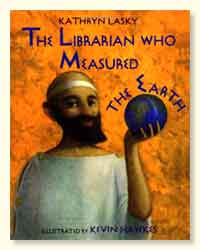 Title: The Librarian Who Measured The Earth
Author: Kathryn Lasky
Illustrations: Kevin Hawkes
I stumbled on this book by complete accident. Most my homeschooling tools I seek out or find while searching the non-fiction section with a thought in mind. This book I merely acquired and had no idea it was going to be added to our core curriculum.
Although I love the Sir Cumference books, I often wondered how I would properly include those books into a classical education for my child when studying the circumference belongs in the times of Ancient Greece. Now I have my solution. Sir Cumference will be fun re-iteration of facts learned. Where The Librarian Who Measured will definitely be a part of our first years of school.
 I’m sure I learned about this guy at some point in school, but it didn’t sink in. His name didn’t even sound vaguely familiar when I started reading this story to kiddo before bed last night. But as I read, my mind raced to the day we will sit and discuss Eratothenes in context. We will talk about Ancient Greece and the ancient libraries. We will discuss oranges and circumferences. We will talk about the planet and maps of the world. We will study things in a manner in which she will remember it – as opposed to a passing one liner in a text book. This book made me happy for days of school in our future.
Introducing the Octopus… and Tolkien Week
Weekly Low Down on Kids Books and Adventures in Homeschooling with an Octopus and Tolkien…
 Title: Squishy the Octopus
Author: Mary Reason Theriot
Illustrations: Zoie Mahaffey
The last few weeks have been exciting. With the start of fall and the new school year and kiddo turning three in October, we’ve been diving more heavily into “school time.” There was a video floating around on facebook, courtesy of the Libertarian Homeschooler or maybe Practical Homeschooling – not sure which, dealing with the camouflage abilities of the octopus.
The video we watched (Where is the Octopus?) is here: http://www.sciencefriday.com/video/08/05/2011/where-s-the-octopus.html.
Add in discussions of legs, all things regarding the prefix “oct,” and an a event where Mary Reason Theriot debuted her children’s books, we’ve had quite a big week!

Authors Mary Reason Theriot & Jennifer Theriot
Theriot is quite a popular novelist on Amazon. Living in Louisiana with her husband and daughter, she avidly writes spooky thrillers with a southern twist that only the home of the Cajun seem to be able to offer. But most recently, with the aid of her extremely enterprising daughter, she’s branched out and started writing children’s stories as well.
In Squishy the Octopus, a little octopus with a big anger management problem learns to control his temper with the help of his other sea creature friends. On various pages, like in the video above, Squishy changes color. My own little kiddo got really excited when this happened, “Let me see the picture!” she’d exclaim, “What color is he now?”
Unrelated to sea creatures, but highly related to our homeschooling life, is the fact that this week is Tolkien week. September 21st was the 76th anniversary of the publication of The Hobbit by J.R.R. Tolkien. An day that was celebrated with the first annual Fall Festival at

Archie Rocks Acoustic, little Theriot and my own kiddo in the garden at GBITW.
Good Books in the Woods. There was a costume contest, a toast to Tolkien, Mary Reason Theriot doing a book signing, Aoristos portraits being drawn and more. It was a pretty neat event, which we wrapped up at home with the kiddo indulging in a long time favorite The Lord of the Rings cartoon (the 1978 one, we have it on VHS… and yes, we still use our VCR).
September 22nd (yesterday) was Bilbo and Frodo Baggins’ birthday! They were born in different years, but on the same day! Something, I suppose, only truly geeky Tolkien fans care about. So this week is Tolkien week.
I may work for Half Price Books, a company I absolutely adore for so many reasons, but I spend a good chunk of my spare time at Good Books in the Woods. It is definitely my home away from home these days. My kid plays in the garden and with the toybox set up in the kids section while I absorb the ambiance of a house taken over by books. If my husband ever let me, the inside of my house would look exactly like Good Books…
The Vikings Take Over Our Library
 As everyone else heads back to school, I looked over the last month and realized we really did treat the hottest months of the year like a summer vacation this year… mostly lolling around the house between events, taking extra naps after our dance parties in the living room, and mostly hiding our pasty skin from the hot, Texas sun. So I tackled cleaning out the closets, while everyone else was out buying school supplies, and organized our life the way it has always been organized in my brain… in unit studies. Of course, that got me in the mood to really tackle “school time” with more vigor and this last week or so we jumped back into the swing of things with Ancient Greece and Rome and then The Vikings and the Celts.
Viking Ships at Sunrise by Mary Pope Osborne was next in our Magic Tree House Adventures. We have not acquired the Viking research guide yet, but I believe there is one. We also re-read DK’s Eye Wonder Viking book, we had read it once before while perusing the exciting world of piracy, and a little repetition is good for a kiddo.
 But the really exciting book for this particular unit study was The Hero Beowulf.
Eric A. Kimmel’s retelling of Beowulf is a pretty neat picture book add on for little people. It’s illustrated by Leonard Everett Fisher and is complete with an author’s note about the original poem in the back. Beowulf, after all, isn’t just a monster myth, it’s the “oldest surviving epic poem in English literature,” all the way from the sixth century, to your hands now.
I can’t reiterate enough how much the classical education style appeals to me by teaching so much history through the other subjects… or rather teaching all the other subjects by tackling history so thoroughly. I love that there are so many resources, like Kimmel’s picture book, to make the tales and the culture more real and the epic poem more accessible when the time comes to tackle the original work; because in classical education everything repeats at a higher level over and over again.
After reading The Hero Beowulf, kiddo ran to grab other books with Viking ships on them and said, “Look mommy, more Beowulfs!” So she doesn’t entirely get it yet, but hey, she’s two.
The Dark is Rising Sequence: Book One
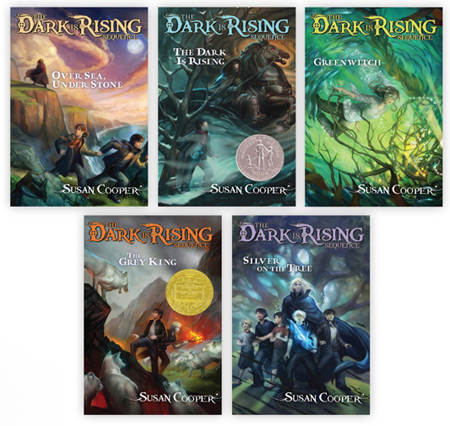
 The Dark is Rising Sequence started in 1965 (probably much sooner if you were to talk to the author) with the publication of Over Sea, Under Stone under the name Susan Cooper Grant. In 1973, The Dark is Rising would come out, followed by Greenwitch in ’74, The Grey King in ’75, and finally Silver on the Tree in 1977. The Dark is Rising was a Newberry Honor book (runner up to the Newberry Medal) and The Grey King actually won the Newberry Medal.
The books have stared back at me from shelves my entire life, but I didn’t actually pick them up to read until this year – my 29th year – for a Young Adult book club at Half Price Books (Humble).
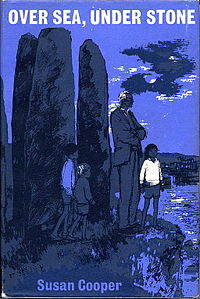
Having finished Over Sea, Under Stone I can officially tell you that I’m hooked. Not only will I finish reading the series, I will be releasing my reviews of each book in a serial here on my blog and I am adding all the books to my daughter’s homeschool curriculum, with some help from a website I stumbled across: http://www.andrews.edu/~closserb/courses_211_review_studyguide.html
Title: Over Sea, Under Stone
Author: Susan Cooper
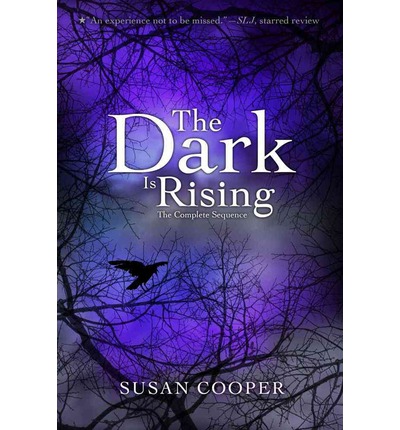
I am reading from this edition.
Genre: Young Adult/ Fantasy/ Mystery
Length: 236 (book one) out of 1082 pages (whole series)
You might wonder why a fantasy series has become a mandatory reading assignment for my daughter. If you follow my blog at all, you might have an idea. Over Sea, Under Stone is just screaming to be part of a King Arthur unit. Pendragon’s name is dropped countless times; myths, legends, fairy tales, and the search for the grail make up all the major plot points; and, it’s full of research and adventure. What better to inspire a ten year old into the exciting world of a lifetime in literature?
The following I took straight from the aforementioned site I stumbled upon re-posted here in case the link ever fails):
A writer must be able to do or manage the skills of writing fiction:
Plot–What sort of story line has Susan Cooper devised? What happens? Is it a satisfying story line? Does it seem appropriate for the story?
 Conflict–What is the conflict of the story? What is at stake if the central characters fail in their quest? Who are the opponents in the story? How do they complicate the plot?
Characters–Who are the main characters in the story? What does Cooper tell you about each one of them? How does each character differ from the others? How does Cooper compare Simon, Jane, and Barney? What is each child’s personality and why is this personality important to the story? Why does Cooper choose children as the heroes and heroine of the story? Why not Great Uncle Merry?
Setting–Where does the story happen? What is the country side like? How is this appropriate to the story? Could Cooper set the story anywhere else and still make it work as effectively as it does now?
Symbols–What objects in the story take on symbolic meaning? In what way is the grail a symbol? Rufus the dog? The manuscript? Each of the characters? The rising tide or the boats? The fact that the grail is found in a cave? The standing stones?
Theme–Considering all of the elements mentioned above, what is Cooper’s point (this gets us into the third form of knowledge; see below)?
 A writer must know about the Arthurian tradition in general and the grail tradition particular:
The grail is an object of great significance and importance. What did you notice in the stories you read? How does Cooper convey this concept in her story?
The grail can be found only by the most perfect of knights. What qualities do Percival, Galahad, and Bors de Gannis have? Does this suggest a reason why Cooper decided to send children rather than adults on the quest?
Grail knights always demonstrate their perfection by undergoing severe temptations. What temptations do Percival, Galahad, and Bors face? What temptations to Simon, Jane, and Barney face?
In the grail stories the heroes live by strict codes of ethics. Describe the grail knights’ value system. What rules do Simon, Jane, and Barney live by?
Grail knights always have a spiritual mentor. Who functions in this role in each story?
How do boats or other symbols like the wind, the number three, or color help to make the stories’ points?
Grail stories often center on illusion and false realities. What illusions do the three grail knights face? How does Cooper suggest that reality is not what the children believe it to be?
Grail stories fundamentally center around the quest for perfection and the test of one’s character. How does the quest test each grail knight or each child in Cooper’s story? What does each child learn from the experience?
Grail stories often involve magical, mysterious, or mystical places like castles or dark forests. Where in Cooper’s story do you notice elements of mystery?
Grail stories ultimately change how the central character views life. What is the effect of the search for the grail on each of the three grail knights? On the three children in Cooper’s story?
A writer must have a message, theme, point, or lesson to communicate.
What is Cooper message? What is she trying to say about the human experience?
In what ways might the children’s experience parallel our own experiences? What do we learn about ourselves from their experience?
What quests do we have to face? How might/should we go about accomplishing these quests? What do we learn from the children’s experiences which might guide our quests?
I love how this enjoyable fiction lends itself so readily to the study of storytelling, the King Arthur tales, the development of legends in general, religious history, as well as the kiddo’s general history lessons as we sort out documented history from legendary fictions developed over time.







 Anakalian Whims