The Beginner’s Goodbye
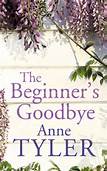 Title: The Beginner’s Goodbye
Author: Anne Tyler
Publisher: Knopf
Genre: Fiction
Length: 198 pages
I have two Anne Tyler books on my bookshelf. I acquired them somehow, possibly gifts or hand-me-downs from someone else. I know I didn’t buy them, because I’ve never felt moved to read them. Perhaps they were freebies I toted home thinking, “I might need these if I start dying from cancer.” It’s morbid, but it is a frequent thought where free books are concerned. I worry that I will be trapped in the house or the hospital without reading material. That must be a phobia of some kind or another, I’m sure of it.
The two books I have are Back When We Were Grown Ups and Digging to America. They sit perched there right after Mark Twain and before John Updike. I almost put them in the garage sale we had this week, but couldn’t bring myself to do it. Something about them makes me want to hold on to them even as I try to decide what to keep and what not to keep during our ‘we might be moving, but aren’t sure’ months.
 This last week at the library, however, I caught a glimpse The Beginner’s Goodbye in the stacks. On the cover is a coffee cup and a dainty tea cup, immediately invoking the idea that two very different companions will be separated and someone will find themselves with a hole in their heart.
There are many covers out for this book, published in 2012, by a Pulitzer prize winner, everyone wants to add their own touch and be associated with it. But this one with the cups, that’s what did it for me – that is what captures the essence of the book in my mind. That’s what conveyed that essence to me from the shelf and prepared me for a mood that I wanted. The other covers are beautiful, but I probably would have gone on forever ignoring them.
Anne Tyler wrote something in The Beginner’s Goodbye that I wish I had written. I suppose I say that fairly frequently, but it is the highest compliment I know how to give. There is much in the reading world I enjoy with all my heart but wouldn’t necessarily long to have my name attached to it. This, is not one of those things, this is lovely and beautiful and gives you a taste of sweet humanity that even the greatest of storytellers seem to miss sometimes.
Appropriately titled and timed for my life, I’m learning to say goodbye to books that I anticipated keeping until my kid was old enough to read and discard them. I might be saying goodbye here soon to my extensive library. Granted, I could get rid of half my books and still have more books than anyone else I know, but sorting through them is hard for me. By checking out this book from the library, Anne Tyler has made it clear that I at least need to read her other two before I give them up – and that when I give them up they should be wrapped and lovingly gifted, not tossed in a garage sale.
Interview with Jason Kristopher
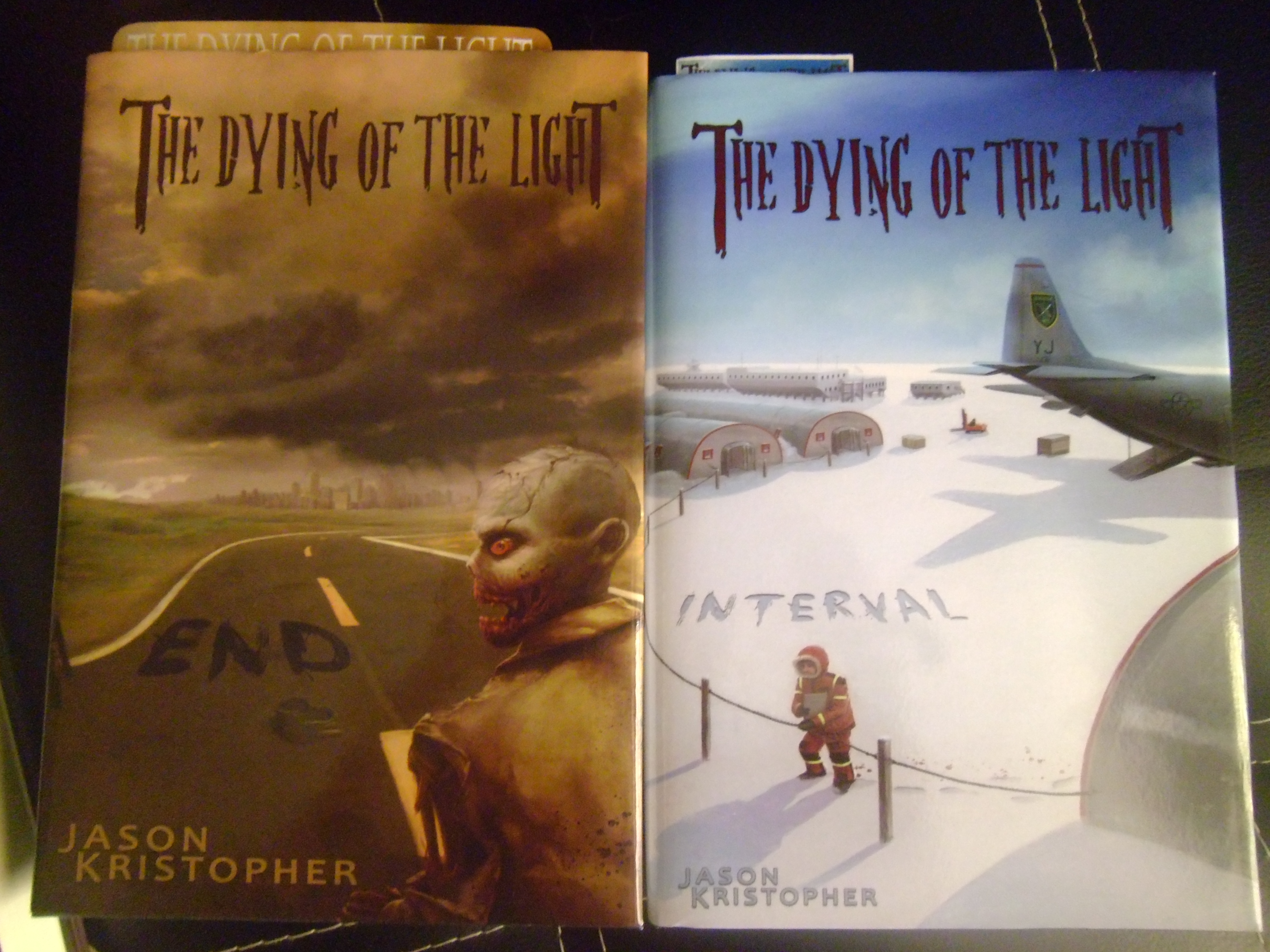 1. Your books (The Dying of the Light
First, a realistic and scientifically-vetted reason for zombies, as in it’s not just supernatural or science fiction ‘hand-waving.’ Second, and this is the key difference, the books aren’t about the zombies. Yes, they have zombies in them, and action and blood and guts and gore, but at its core, The Dying of the Light is a story about people. I always tell potential readers that it could’ve been anything that ended the world: aliens, earthquakes, global warming… none of that matters. This series is about the end of these people’s own personal worlds, and how they deal with what happens during and after, and more importantly, with each other. That’s the real story – the rest is just window-dressing.
2. What inspired you to write zombie novels? Did the characters come to you as products of the apocalypse, or did you drop them into that setting after their inception?
The idea for the story was a mash-up of two different dreams, actually. One about a lone zombie survivor on an island, the other about the end of the world (though I didn’t know at the time what had done it). My writer’s brain smashed them together, and suddenly, there was a zombie apocalypse trilogy. It makes me a bit nervous about the other connections my mind makes, actually…
3. Stephen King says people who don’t read don’t have the tools to write. Who are your favorite authors? Who inspires you to write? Who do you read to gain more writing energy?
 Would it be trite to say Stephen King? His book On Writing is the single best treatise on the craft of authorship that I’ve ever read. As for other fun favorites, I have a ton, but a few that come to mind: Isaac Asimov, Terry Brooks, Jim Butcher, Orson Scott Card, Arthur C. Clarke, Donaldson, Jordan, Koontz, Niven, Pratchett… see what I mean? For inspiration, I look at some of my friends, like George Wright Padgett (Spindown), who wrote one of my personal Top 5 sci-fi books. That is inspiring, to me. I like to re-read some books if I’m having trouble with a book I’m writing, too. For example, I’ll revisit The Hitchhiker’s Guide to the Galaxy series if I’m stumbling over dialogue – even though it’s English slang, Douglas Adams was a master of dialogue.
4. Do you have play lists of mood music you write to? If so, which artists/songs generally make the cut?
If I have music on, it’s generally instrumental – tuneful background noise, basically. The soundtrack to Lord of the Rings, or Last of the Mohicans, that sort of thing. If I’m struggling with a particular type of scene, I’ll find some music that fits that ambiance. For example, my “Car Chase” playlist has Guns N’ Roses, Project Pitchfork, Rihanna, and even Motley Crue. But usually, I like it quiet or very low music when I’m writing; it keeps me focused.
 5. You are not just an author, but the owner of a publishing company: Grey Gecko Press. Tell me a little about that. What made you decide to open such a venture and what are your goals for the company?
I’ve always been business-minded, and when I published my first book, I knew there would be business expenses involved. Originally, I never planned to publish anyone else’s work, but then a friend (author Wayne Basta) asked if I could help him, and Aristeia: Revolutionary Right became the second book published under the Grey Gecko imprint. I found I really enjoyed working with other authors to share great stories, even if they weren’t mine, and I had the ability to do it… so why not? From the beginning, the company has been about treating authors fairly, publishing great books, and doing things the right way, even if that bucks centuries of tradition.
As far as goals… well, I’ve long said that I’d like for Grey Gecko to be ‘the Google of publishing.’ Most people interpret that to mean I want to be rich, when that’s not at all my goal. I want Grey Gecko Press to be huge because it would mean that every author would have a chance at the same kind of success that only a few get now with traditional publishing. Every struggling writer, pounding away at their keyboard (or typewriter, I’m not judging) would know that at least one company would look at their work when it was done, regardless of their past publishing experience – because, at the end of the day, Grey Gecko isn’t about making money: it’s about publishing great books and putting authors first. As you can tell, I’m quite passionate about this endeavor.
6. You’re quite an entrepreneur. What other projects do you have up your sleeve?
I think it’d be gr eat to have a Grey Gecko bookstore, for one thing. For another, we haven’t been able to focus on as much as I’d like with Grey Gecko is giving back to our community. I’ve got some ideas for creating local resources and ‘maker-spaces’ for writers of all types and kinds. When we’re ready, I’d like to take our business model into other fields, as well, including movies, film, and even music. So yeah, a few projects on the horizon!
7. How would you feel about having your books made into a television show or series of movies? Would you want to write your own screenplays? Who would be your ideal director?
One of the comments I have most about my books are that they’re very visual, very cinematic, and I agree! I think they’d make great movies/TV shows, mainly because that’s what I see in my head when I write them. I’m not sure about writing the screenplays myself, although I’d give it a try. There’s a lot about the behind-the-camera part of the film industry that I don’t know, so I’d at least listen to some experts… though naturally I’d want final say. I’d rather not have it made at all than made badly. I’m not sure of all the director’s names on The Walking Dead, but they do such a masterful job with a show that’s so similar in tone, that I’d likely pick one of them, given the choice.
 8. You’ve had booths at Comicpalooza and done numerous book signings with local bookstores. What were those experiences like for you? What are your favorite parts? What are your least favorite parts?
Despite what I may say on Sunday afternoon at a convention, I actually enjoy talking to people about our books. Helping people discover a new book they haven’t heard about, or seeing their excitement at the next volume in a series, or seeing the light of wonder shine in a child’s eyes as I hand them a copy of Greystone Valley is why I do what I do. As far as book signings go, I enjoy them for many of the same reasons; talking to people about my books and getting t hem excited about reading is a blast. What it really comes down to for me, though, is that I’m a storyteller at heart; however I can tell you a story, I’m going to do it. My least favorite part of all these things would be the setup, teardown, and logistics that go into planning them… mainly because I’m lazy! I’d love to show up with a cup of coffee and find everything set and ready to go, but that’s the price you pay for being your own boss, I guess!
9. What other published work have you been a part of? And what can we expect to see from you in the future?
Aside from The Dying of the Light, I’ve also published several short stories, some of which are based in my zombie series, some not. I also contributed one of my favorite short pieces, The Art of Steaming, to the horror anthology A Fancy Dinner Party, along with 9 other Grey Gecko Press authors, and it was also featured in the collection Penny Dreadfuls: Halloween Special. For future work… boy, have I got some ideas for you!
First, I’m finishing The Dying of the Light with the third book, Beginning, due out this winter. Then there’s Under a Cloud-covered Moon, the first in a series about an irascible, anti-hero detective who works for the Seattle Metahuman Crimes Unit, solving crimes by and against ‘metas’ – non-supernatural mutants who’ve been called ‘vampires’ and ‘werewolves’ for centuries by those who had no idea of their true nature. I’ve also got a middle-grade/YA story in mind about a Teddy Bear (because it’s a job, not a toy) named Freddy McPhane, as well as my epic fantasy series of 30 books (no joke), not to mention the 150+ other ideas I have written down. I’m going to be busy!
10. If there is one thing you would want your readers and fans to know about you, what would it be? If you had one request of your readers and fans, what would it be?
I want all my fans and readers to know that I love hearing from them! Whether it’s a quick note, or a detailed letter, I’m always excited to connect with my readers, which is best done through email at jason@jasonkristopher.com.
For a request, I’d request everyone who enjoys the books they read, especially indie books, to leave a review on Amazon, GoodReads, or elsewhere. Short of buying more books, a review is the best way to support indie authors and small press. That and telling all your friends, of course! To find out why reviews are so important, visit my blog: On the Importance of Reviews, or, It’s Just 21 Words!
Unexpected Odes to Literature
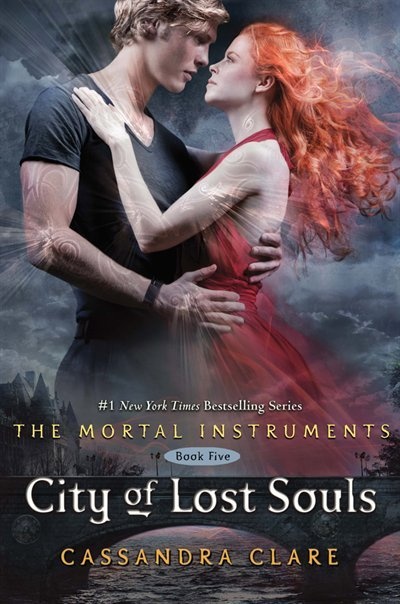 Title: City of Lost Souls
Author: Cassandra Clare
Genre: Young Adult/ Fantasy
Length: 534 pages
For me, what makes the writings of Cassandra Clare so captivating isn’t the fairy tale romance, the paranormal elements, or the bad ass fight sequences… at the heart of it all, it’s the way Clare manages to make a young adult fantasy saga an sequence of unexpected odes to her favorite pieces of literature.
“No man chooses evil because it is evil. He only mistakes it for happiness, the good he seeks.” – Mary Wollstonecraft
“Love is familiar. Love is a devil. There is no evil angel but Love.” – William Shakespeare, Love’s Labour’s Lost
“I love you as one loves certain dark things.” – Pablo Neruda, “Sonnet XVII”
“All changed, changed utterly: A terrible beauty is born.” – William Butler Yeats, “Easter, 1916”
Whether the story was constructed around these quotes, or the quotes  were slipped into the story, the two halves were beautifully married together. Just as Clare always manages to do.
If you recall my review of The Book of Secrets you should be well aware of how much I cherish this particular aspect of storytelling. I love peeping into the mind of the author and what they’ve read before – what work we may have both cherished. I love to see how others acknowledge how literature builds a soul. Even if that soul is an imagined character in another book.
A reviewer on Goodreads mentioned they thought it was silly that all these Shadowhunter kids were completely oblivious of what went on in the mundane world half the time – Jace completely misses references to Madonna or Dungeons & Dragons games – but are well versed in William Shakespeare and Dante.
As a classical book geek it makes perfect sense to me. I was raised on Charles Dickens and the Brontes, not the latest boy band or pop culture trends. Poetry is timeless. New Kids on the Block obviously not so much.
One doesn’t expect these odes and references in a paranormal teen romance. I suppose that’s what makes them so stunningly lovely.
City of Glass
It seems even though this is my second time reading this book (my second time through the series as I prep to read the final volume!), I didn’t write proper reviews for each one.
I addressed the series, made references to Cassandra Clare’s work in many of my reviews, but City of Glass never got a review all it’s own.
So here it goes:
 Title: City of Glass
Author: Cassandra Clare
Genre: Young Adult/ Teen/ Fantasy
Length: 541 pages
The book cover finally features a boy *with* his shirt on. However, the cover still annoys me. I suppose I’ll never get over how embarrassing they are. I’ve never preferred having actual people on the front covers of the books I read, unless of course they’re in some sort of Victorian garb. For some reason a person on the cover never truly embodies the mood of a story the way I want it to. I prefer buildings, scenery, landscapes, or the hint of a person.
For instance…
 That’s a cover I don’t mind flashing the masses, a train full of people, other moms at a public park, or I don’t know – MY KID.
Who am I kidding? In the U.S. the cover up top is the only one that is going to move copies of the book. I’m an odd duck. I know that.
Regardless of all that – I still adore these books. Brain candy, teen flick, romance nonsense and all. I just love them.
I love the book references, the intelligent quotes, the very teen appropriate quips. I love that Jace (Jonathan) Wayland/Morgenstern/Herondale/whoever reminds me so very much of my own Jonathan at that age. Clare has cocky teenage boy dialog down to an art. Jace’s cockiness rings true and familiar, the knowledge that he is attractive and desired, edged with angst anyway.
I remember those conversations. I remember the beautiful, desired boy flirting with me – the short, somewhat tomboyish and frumpy nerd who was always a little out of place. Granted, I never got Luke & Leia -ed like Clary and Jace did. But I think what makes these books so marvelous is despite the fantasy, despite the action and apocalyptic level of drama, despite the paranormal parts that drip into every aspect of the story – there’s something familiar for everyone in these stories. Especially City of Glass, and the ever burning question so many romances have: If it’s not forbidden will he/she still want me?
This time around I re-read the first book, City of Bones, after seeing the movie. The library didn’t have the second book, City of Ashes, on hand so I just skipped it and went onto City of Glass. By doing this, I was brought to a whole new level of appreciation for the series, Cassandra Clare, and each book individually.
Even though I jumped in having skipped the second book – I wasn’t lost. Although the second book is pivotal to an epic saga of the Nephilim, I didn’t feel out of sorts by not having read it. Clare does such an excellent job of having each book stand on it’s own even though it’s merely a puzzle piece in a giant story. I love that.
I know it’s the thousandth time I’ve said this, and I shall say it a thousand times more – Well done, Cassandra Clare, Well done.
Do I feel bad about re-reading young adult titles over and over again and the age of thirty? No, not anymore.
“A children’s story that can only be enjoyed by children is not a good children’s story in the slightest.”- C.S. Lewis
Love Letter to Literature
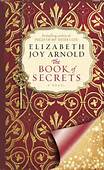 Title:The Book of Secrets
Author:Elizabeth Joy Arnold
Publisher: Bantam Books
Genre: Fiction/ Literature/ Books About Books
Length: 450 pages
I checked this book out from the library, but this is not a library book. This is a book you need three copies of – a hardback first edition signed by the author, a copy for reading and scribbling notes in the margins, and a copy to loan to your friends. I’m devastated that I’ll be shoving it through a book drop later this afternoon, it will leave my hands and slide down a shoot to be re-cataloged and re-shelved. When all I really want to do is sleep with it under my pillow.
I was up all night reading. Not all night, but well passed my thirty year old motherhood appropriate bedtime.
Part One was titled Chronicles of Narnia, Part Two: Where the Wild Things Are, and so on – each section of the book titled and designed to reflect story that tied ever so gracefully into a famous book title. The whole book is not just a riveting story, it is a love letter to literature.
If you are a Kate Morton fan, the architecture of this book will be right up your alley. It’s beautifully done, marvelously written, and simultaneously raw and eloquent. It may even be better than anything Kate Morton wrote, and saying that feels like blasphemy because I adore her and own all her books.
There were so many gorgeous quotes I wanted to underline, and now I don’t know where they were in the book, because it was a library copy so I couldn’t. I should have jotted them down, but I was too eager to read what would come next. The whole reading experience was captivating and surreal.
“I thought it was a dream,” Thomas said. We were sitting in the library…
A Tea Shop Mystery
 Title: Death by Darjeeling
Author: Laura Childs
Publisher: Berkley Prime Crime Mystery (Penguin)
Length: 242 pages
The best thing about cozy mysteries is generally not the mystery, but the cozy. The whole point of reading them is to sink luxuriously into a world of soothing smells and comforting sensations.
I find myself completely suckered by any paperback with the familiar palm labeled “Berkley Prime Crime Mystery,” knowing full well I’ll be in for a delightful dive into a two hundred page world. Usually part of fun serials, Berkley corners the market on the cozy mystery genre with this logo.
Laura Childs pulls the cozy serial off beautifully with her Indigo Tea Shop run by one Theodosia Browning. Such a delightful name! When I read or hear it I immediately think of Theodosia Burr Alston. Childs doesn’t stop there, though, the Indigo Tea Shop also features a dog named Earl Grey!
Tea preparation tips, recipes, and delightful garden descriptions will have you wishing you lived in South Carolina amidst a caddy historical society sampling tea blends.
For a more thorough review and a Darjeeling Cashew Cream Cheese recipe, click the photo I borrowed from the Kahakai Kitchen. It will take you to their blog.
Jane Austen Themes Soothe My Heart
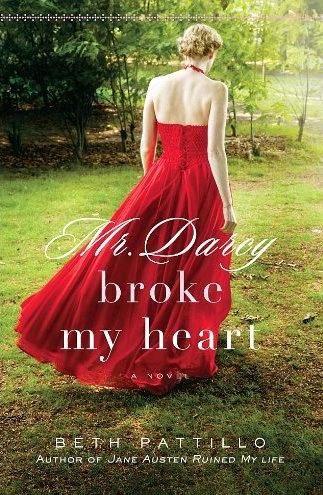 Title: Mr. Darcy Broke My Heart
Author: Beth Pattillo
Genre: Fiction/ Chick-Lit
Publisher: Guideposts
Length: 268 pages
This book is adorable. There’s a lot of reviews on Amazon regarding it that I don’t understand because it seems people went into it expecting far more quality literature references and less cheesy romance – but I specifically picked it up because my brain hurt and I wanted to not think. If you want to shut yourself off from life for two or three hours, this book is perfect.
Claire is invited to read her sister’s paper at a Austen fan club in Oxford. Once she gets there, however, she finds herself infatuated with a fellow seminar member like a silly school girl. Claire embraces a teen girl mentality for a brief few days away from home – appropriate for her character since she never really got to be a silly teen because her parents died in an accident and she had to raise her kid sister.
If you were a silly teen once, however, the idea that a grown woman would be so ridiculous is a little irritating. Of course, there’s plenty of Jane Austen interludes to distract you from that irritation, and Pattillo’s version of what First Impressions might have been is fun.
This is not the best Jane Austen spin off or tie in. Follies Past by far takes the cake on the genre. But it’s good fun, light-hearted, and makes for a great right before bed or bubble bath read.
To Live And Die By Books
“She never wanted me to save her, only to love her as she was.”
– from The Archivist
The awful truth of it all is that madness isn’t beautiful. But it can be made to sound like it is by literary giants who suffer from it or have had someone close suffer from it. Anyone who has read the works of Sylvia Plath or T.S. Eliot could tell you this. Martha Cooley makes this so utterly clear in The Archivist. Reading Cooley’s work is like coming home.
“Her anger lay just under the surface, and it governed. I was foolish to think I could urge or lead her anywhere.”
If you’ve known or been close to a manic depressive, you know how maddening this can be. You know how frustrating the inability to react properly to anything that goes on in their head. You know how quickly you, too, can be sucked into their reactions and find yourself angry as well. You also know how wonderful is the defense mechanism of diving into a good book or hiding away with your journal and pen.
“People with special powers are frightening to love. That’s why Eliot and Vivienne were doomed by the way – why their marriage was bound to fail. They terrified each other.”
The literary mind finds safe places where it can… inside the pages of books.
“[…]While denial is useful, it has its price. There’s no such thing as identity without history.”
So many quotes from Cooley moved me with their simplicity and truth. They are words that I feel in my bones. “Authentic moral resonance,” Robert Taylor of the Boston Globe called it. Resonance is always felt in my bones, for all their conditioning I am oddly hyper aware of them. They are undeniably tied to my passions – my loves – my needs – my life.
 In 1998, Steven Moore of the Washington Post Book World, wrote: “It is rare and gratifying to read a novel about people who take literature seriously, who practically live and die by books…”
It’s not so rare anymore with the likes of Diane Setterfield, Carlos Ruiz Zafon, and Kate Morton lurking about. These days there is a whole sub-genre of fiction dedicated to it featuring titles like The Secret of Lost Things and The Little Book. My own book is a feeble attempt to honor these authors with a dose of what suited the publishing company at the time. The Bookshop Hotel is a bit of a romance – but one where the main character is quite in love with books and her small town more than in love with another human.
Poets, a marriage, diaries… Possession won awards and became insanely famous. Somehow, however, Cooley’s book got buried once it ceased being a New York Times Bestseller – but it should never be forgotten.
I think I’m drawn to these kinds of books because I always find peoples’ relationships to books telling of what their relationships to people are. Sampling someone’s library is like peering into their soul and seeing where their loyalties lie. Or, if they have loyalties at all.
There’s a quote on page 47 that I find so familiar –
“She had become familiar to me physically as well as intellectually; I knew her dark brows and good coloring, […] the slope of her neck, the slight overbite of her upper teeth. I was familiar with the details, yet she eluded me. Something to do with her motives remained completely beyond my grasp.”
I find this true of many people I’ve encountered. And many books too. You hold them, weigh them in your hands. You lovingly caress their spines. You know their smell, you know what they are saying. You know their stories, their backgrounds, their recurring themes. But you couldn’t begin to comprehend why they are telling you and what motivated them to do so. You’re not always certain what they want you to do with the information. That part belongs tucked away in someone’s secret heart and one can only guess.
“I sat at my desk, staring at the note and struggling to make sense of it. I remember feeling a peculiar detachment – as if I were someone else, trying to unravel a mystery that was captivating but in which I wasn’t personally implicated.”
The Archivist is a must have for any book lovers library, especially for those who live and die by the printed word.
Follies Past – A Review
 Title: Follies Past
Author: Melanie Kerr
Publisher: Petticoat Press
Genre: Historical fiction/ Classic spin-off
Length: 272 pages
“Follies Past” should be the name of the file folder for every other Jane Austen spin off, because this book blows them all out of the water.
This is by far the best Austen spin off I’ve had the pleasure of reading. Most Pride & Prejudice sequels or prequels read like fan fiction, but Kerr has managed to construct a novel that reads like one of Austen’s own making. It could very well have been a long lost manuscript of Jane’s, documenting the characters of Pride & Prejudice before they encounter the Bennets.
I was so happy reading this, I’ve always longed to get a bit more of Georgiana’s story. Kerr does an excellent job of taking the small tidbits of information we know about characters and giving them a full and lush back story without straying from our vision of them.
I think Caroline Bingley was truly brought to life as well. I both hate her more and less – how is that possible? Through Darcy’s eyes: “He ought to have known that a lady who is too sparkling and clever is also cunning and insolent and not to be trusted.”
Much is learned from Darcy’s perspective without the act of spelling everything out, something other books have done in diary form turning Darcy into an effeminate sap. Instead, from Kerr, Darcy expresses himself naturally and in his own fashion: “Gibbon’s History is worth an entire library of your sentimental drivel. The depth and breadth of his scholarship paints a picture of the Empire that may never be surpassed. How can you compare such an achievement to your works of vapid sentiment.”
Kerr has stayed true to the characters, true to the time, and yet wielded a rich and elaborate story. It’s beautiful and brilliant, and I cannot imagine an Austen fan who would not love it.
My one criticism is this: I ADORE the front cover of this book – but my first and continuous reaction is that it is not a cover that belongs on *this* book. It’s a fun and awesome piece of art, I’d even hang it on my wall I like it so much, but it doesn’t truly portray what is within the pages.
Below, Miss Golightly is caught on film inspecting Kerr’s book. She had the same reaction I did to the cover, “Oh I love that cover! Wait, her writing sounds like it could be Jane Austen! That’s incredible. I’m a little confused by the cover now.”

Five stars for the story. Five stars for the cover art. But only three stars for matching the cover art to the story.




 Anakalian Whims
Literary Journal Monday – Mapping My Mind
March 10, 2014 at 10:14 pm (In So Many Words, Reviews, The Whim) (ADD, ancient history, books, dystopia, dystopian society, fiction, Gone, good books in the woods, Hunger, Lang Leav, literary journals, London Review, love, Michael Grant, poetry, reading life, reviews, romance, series, social commentary, Tonight You're Mine, You Instead, young adult)
I am not ADD, but my mind is often many places at once. It goes and goes… it races… it is unstoppable.
I was craving a little bit of dystopian society literature after reading Herodotus. My brain spinning in a circular momentum about democracies, oligarchies, and dictatorships. Darius and then Xerxes tyrading around ancient lands building the Persian Empire. A thousand utopian and dystopian variations of all societies throughout history – a million possible outcomes for our modern world – twisting about in my mind. Conveniently, it was at this moment that a trailer for the movie Divergent came on and I thought, “It’s about time I read Veronica Roth.”
Cue discussion of autism I’ve been having on and off with people since reading Not Even Wrong written by Paul Collins. Collins is an amazing author and obscure historian. Still suffering from story hangovers from Divergent and the movie Tonight You’re Mine (all about instantaneous human connections) – I found myself thinking about my niece’s Gone series.
Set in a town in California, all the kids fifteen and under have been left in a supernatural bubble – all adults over puberty have vanished, leaving kids and babies to fend for themselves and create a new government. Not unlike Lord of the Flies, different factions have formed. One is under the leadership of Sam Temple, another under his half brother Caine (the biblical implications of Caine and Abel not to be lost on readers, of course). Sam and his new girlfriend, Astrid, are two of the oldest left behind. They have formed a parental union for the younger kids, caring for all the helpless, including Astrid’s autistic brother.
Like bumper pool – or pinball, if you missed out on the bumper pool phenomena – the synapses in my brain spark and twitch and leap bringing me back to Paul Collins/Not Even Wrong/ McSweeney’s Quarterly Concern. Then, I find myself thinking, “Goodness, it’s Literary Journal Monday.
London Magazine February/March 1981 Vol. 20 Nos. 11 &12
The Private Letters of Tennessee Williams and a piece on Gore Vidal catch my eye. I flip through the first few ads, the table of contents, then stop dead on a heading: FINAL REMINDER.
My thoughts have veered so far off track that I forget what I was reading altogether. I flip through the journal in my hand trying to grasp the reason I had sat down to look at this in the first place.
It’s March. St. Patty’s Day is coming up. Irish authors keep popping in and out of my mind. Ireland… Scotland… Tonight You’re Mine… music… poetry… Derek Mahon, an Irish poet’s name blinks at me from the page of the literary journal in my hand. Literary Journal Monday, of course. I read the poem “The Elephants” first. I love elephants. Then my eyes skip over to “April in Moscow” and I read “Spring burst into our houses…” It does, doesn’t it? Just bursts right in and none too soon. At the end of the poems there is an ad for the Poetry Society Bookshop at 21 Earls Court Square in London. I wonder if it is still there.
If they do still exist, I bet they have a copy of Lang Leav’s Love & Misadventure. I’m dying for a copy. Leav has been speaking to my soul lately. Misadventures stuck in the cogs of the mind of a woman turned 30.
A line from Grant’s book swings into full view of my mind’s eye:
There rarely is when a hug is really needed. It’s that moment Leav writes about…
The lack of selfishness between the characters at this point is refreshing in fiction and real life.
In a 2014 American Society of infantile adults who never learned to fend for themselves and work hard without constant praise, we are fascinated by literature and movies where children and teens are forced to grow up overnight and be adults.
It’s sad when the idea of fifteen-year-olds co-leading a community and making wise, unselfish decisions for themselves and each other sounds absurd and fictional. My associative mind leaps back to all the ancient history I’ve been studying, back to the likes of King Tut – pharaoh at age nine – dead by nineteen, married somewhere in between.
We believe in responsible marriages like the Romans, but we chase telepathic connections like the Greeks. What a very convoluted and contradictory way to live – the reality of a dystopian society is that every society is a dystopia – even a society of one. Our minds are everywhere and nowhere. Of course we are in conflict.
I suppose you Literary Journal Monday followers got a little more than you wanted. I bit off more than I could chew today. I attempted to map my own mind and identify all the associations and patterns, leaving myself somewhat exhausted from chasing whimsies.
At least I got to spend a few stolen moments in this room…
Permalink Leave a Comment