HPB Humble Book Club Meeting March 2013
Lords of Finance Discussion Part Three (to read parts one and two, start here)
 Title: Lords of Finance
Author: Liaquat Ahamed
Publisher: Penguin
Genre: Economics/ History
Length: 508 pages
When all was said and done, Lords of Finance was a pleasant (and very meaty) read. It was definitely nice wrapping up the completion of the book with a discussion at Half Price Books among customers turned friends. The discussion definitely went down well with some home made German Chocolate Pie brought by a member.
 We sat together with internet research and a handy dandy chart of all the key players in Ahamed’s book and brought up our favorite quotes as well as bits and pieces that piqued our interest.
I was especially intrigued by the dialogue between Senator Mayfield and Senator Brookhart on pages 316-317 regarding Texas wanting to pass a bill prohibiting gambling via the stock market. Apparently, there were a lot of hearings that went on “in an attempt to refine the distinction between investing and gambling.” Upon reading this I immediately wanted to hash out the distinction and research the laws with others. What a fascinating paper this would make for a young economics student to be assigned in order to both understand the inner workings of the stock market and to establish their own world view in terms of monetary ethics and morals. Honestly, have you ever wondered… What is the line between gambling and investing? Off hand, I’m not sure I have a steadfast answer to give. Do you?
At the meeting we talked about businesses that are publicly traded verses those that are not. We touched on Roosevelt and Hoover and what they had to deal with as presidents in comparison to what Obama is dealing with today, and over all what a relevant piece of history this book is. One of my favorite quotes came very late in the book on pages 438-439:
When, in August 1932, a reporter for the Saturday Evening Post asked John Maynard Keynes if there had ever been anything like this before, he replied, “Yes. It was called the Dark Ages, and it lasted four hundred years.”
That line from Keynes about the Great Depression had me smitten with him. When I got to the store, I immediately headed toward the economics section and picked out a book he wrote called The General Theory of Employment, Interest, and Money
It took us awhile to decide who would actually be purchasing the only title by Keynes in the store. Everyone, I think, likes to read titles mentioned in books they read and Ahamed mentioned Keynes work quite a bit. We are in agreement that the books (both Keynes’ and Ahamed’s) should be used as require reading for economics classes, both high school and college. As someone who actively participates in continuing education on a self-study basis, I am interested to see how the end of this book leads into World War II. So many financial agreements were made and unmade, I want to know in detail how things were handled during the war on a financial level. None of us in the group were financial historian buffs and were unable to answer our own questions, but discovering the answers in the future should be exciting.
As for our reading future as a group, we tossed around ideas for the next set of books. This isn’t quite set in stone just yet, but it’s looking like the HPB Humble Book Club reading schedule will look like this:
April: On Chesil Beach – Ian McEwan (we will probably also discuss Atonement)
May: The Heart is a Lonely Hunter – Carson McCullers
June: The Princess Bride – William Goldman (the online Half Price Books book club will also be discussing this book in June)
July: John Adams – David McCullough
August: The Color Purple – Alice Walker
Any changes to this tentative reading schedule will be made at the April meeting.
While Away with Winston
Lords of Finance Discussion Part Two
Title: Lords of Finance: The Bankers Who Broke the World
Author: Liaquat Ahamed
Publisher: Penguin
Genre: Economics/ History
Length: 508 pages
“Socialism is a philosophy of failure, the creed of ignorance, and the gospel of envy, its inherent virtue is the equal sharing of misery.”
Winston Churchill. That quote is really intense! But we’ve all heard it, I’m sure. And everyone knows the name Winston Churchill, has a basic idea of what he looks like, and knows where he belongs in history. Everyone knows he’s great. But beyond one little paragraph of description and some quotes you’ve heard, how much do you actually know?
The second installment of the Lords of Finance posts is in regards to Parts 2&3 of the book. Actually, it’s in regards to the parts in those parts that talked about Winston Churchill. It was during these segments that I realized how much I didn’t know about him at all.
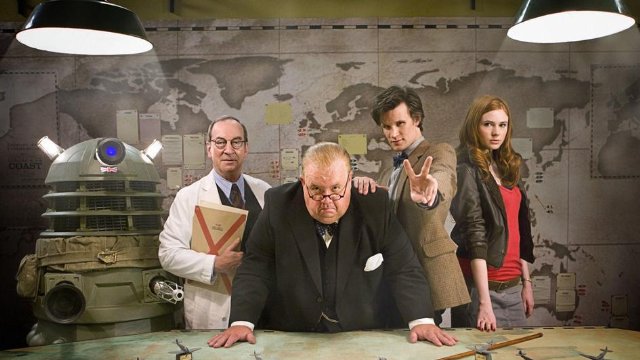 All of my knowledge of the man prior to this book was based in a few intense quotes, a lot of school propaganda, and a few character appearances in Doctor Who episodes. Frankly, prior to reading this book I didn’t feel much inclined to study up on Churchill, I mean could he be any cooler than how he is portrayed in Doctor Who? I doubt the real Churchill had a direct line to The Doctor or any time traveling space alien for that matter. But obviously, one must move on from fictional portrayals and out of context quotes at some point in their life – and Ahamed makes me want to.
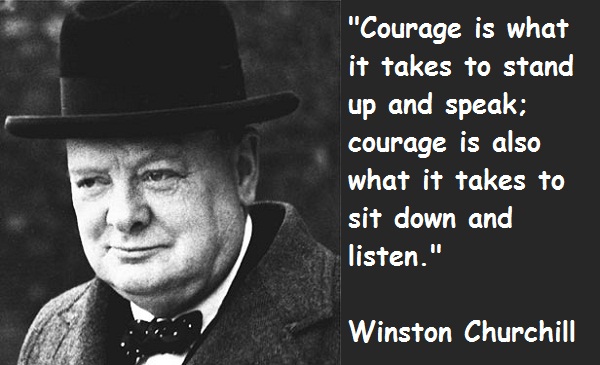 While I was reading about the “turbulent pushing busybody Winston” with his silk underwear, champagne, and Havana cigars, I immediately remembered a story I heard about him once. Someone once told me that Winston Churchill
So mid sentence, I left my toddler at the kitchen table putting together a completely unrelated paper penguin craft, and took a look at my library shelves. I have one biography and two books written by him. The books look like they belong to a set, a familiar set that I took home impulsively pieces at a time; but now that I am looking at them with curious research eyes they seem completely foreign and magical.
I still have much to read about The Bankers Who Broke the World, but a little visit with The Last Lion would be nice. What do you know about Churchill? Would you be interested in reading up on the great man with me?
Follow this link to read the next installment in the Lords of Finance discussion.
Economic Education

Lords of Finance Discussion Part One (I am writing this only 150 pages into a 508 page book. I anticipate a series of reviews, much like how I handled Les Miserables in 2012, except over a short amount of time. I will have the book completed no later than March 4th, 2013)
Title: Lords of Finance: The Bankers Who Broke the World
Author: Liaquat Ahamed
Publisher: Penguin
Genre: Economics/ History
Length: 508 pages
Inevitably I read something and find about ten more things I need to read. My constant lament on this blog is why we didn’t read more source documents in school. So is it any wonder at all that while reading Lords of Finance for the HPB Humble Book Club I discover that I absolutely must have a copy of The Economic Consequences of the Peace
In addition to that title, I find myself longing to dive into more history books on the time period as well as full length biographies on a few of the people mentioned. You wouldn’t expect that kind of revelation out of reading a finance book, but Ahamed has a way of turning a phrase that makes interest and exchange rates, and the people directly responsible for their flux, fascinating.
I think this would be a great title to hand to a high school student during an economics course, it would definitely make the class more interesting. I enjoyed my economics classes in college, taught by a clever little man with a wonderful accent (Scotland? Liverpool? Not sure) and had a great sense of humor despite teaching all his courses at eight o’clock in the morning. But what I remember of high school economics was pretty cold and void of any kind of spunk. It was filled with boring formulas, worksheets, and a fairly heavy textbook that we read very little of. Obviously, the formulas are handy and important, but couldn’t there have been a little more meat? A little more perspective? A little more history?
Maybe living in a recession has weighed heavily in how I view the dollar, but I would like my child to grow to understand how much the economy effects politics, social customs, humanity, and art.
Idolizing money is a concern and a problem, but seeing how money fits into our lives and the bigger picture is important. So often we are taught that money is separate and that we should keep it that way, but the truth is money is never separate. Our history is riddled with money driven politics, so why is our history class and our economics class separate? Our religions are filled with instructions on what to do with our money, our philosophies rooted in our thoughts on whether to live richly or poorly and how rich and poor are defined. I think the history of banks, the dollar, and what your views are on the matter should all be addressed while you are learning how to calculate it, not as a completely separate train of thought.
 Ahamed’s Lords of Finance was recommended to me by a customer at Half Price Books, it was actually chosen for the Humble location’s book club by that same customer, and I am so glad I took his advice. We will be discussing the book as a group March 4th, 2013, starting at 7:30 pm. Additional members are welcome, so if you are interested in the book and are in the area, please join us. Treats are provided.
So far, the book is enlightening and informative, it covers a lot of the banking information provided in the documentary Zeitgeist without the haze of conspiracy theories and blasphemy. I imagine we will have a lot to discuss when we meet. Until then, I plan to share my own thoughts here.
Other titles in my personal Economic Library:
Adam Smith’s The Wealth of Nations
Thorstein Veblen’s Conspicuous Consumption
Craig Karmin’s The Biography of the Dollar
Thomas Stanley’s The Millionaire Next Door
Please share any titles you think should be added from a historical, philosophical, or sheer financial perspective.
My Classical Re-Education Part 2
Kiddo and I started the year reading The Confessions over breakfast… we got caught up in The Magic Tree House Adventures and that got put on the back burner, but I intend on putting a good dent in this list this year, so we need to get back on it. Feel free to join me.

The Story of Me: Autobiography and Memoir
PART TWO of The Well-Educated Mind
Augustine – The Confessions
Margery Kempe – The Book of Margery Kempe
Michael de Montaigne – Essays
Teresa of Avila – The Life of Saint Teresa of Avila by Herself
Rene Descartes – Meditations
John Bunyan – Grace Abounding to the Chief of Sinners
Mary Rowlandson – The Narrative of the Captivity and Restoration
Jean-Jacques Rousseau – Confessions
Benjamin Franklin – The Autobiography of Benjamin Franklin
Henry David Thoreau – Walden
Harriet Jacobs – Incidents in the Life of a Slave Girl, Written by Herself
Frederick Douglas – Life and Times of Frederick Douglas
Booker T. Washington – Up from Slavery
Friederick Nietzche – Ecce Homo
Adolf Hitler – Mein Kampf
Mohandas Gandhi – An Autobiography: The Story of My Experiments with Truth
Gertrude Stein – The Autobiography of Alice B. Toklas
Thomas Merton – The Seven Storey Mountain
C.S. Lewis – Surprised by Joy: The Shape of My Early Life
Malcolm X – The Autobiography of Malcolm X
May Sarton – Journal of a Solitude
Aleksandr I. Solzhenistyn – The Gulag Archipelago
Richard Rodriguez – Hunger of Memory: The Education of Richard Rodriguez
Jill Ker Conway – The Road from Coorain
Elie Wiesel – All Rivers Run to the Sea: Memoirs
Oh Heavenly Days
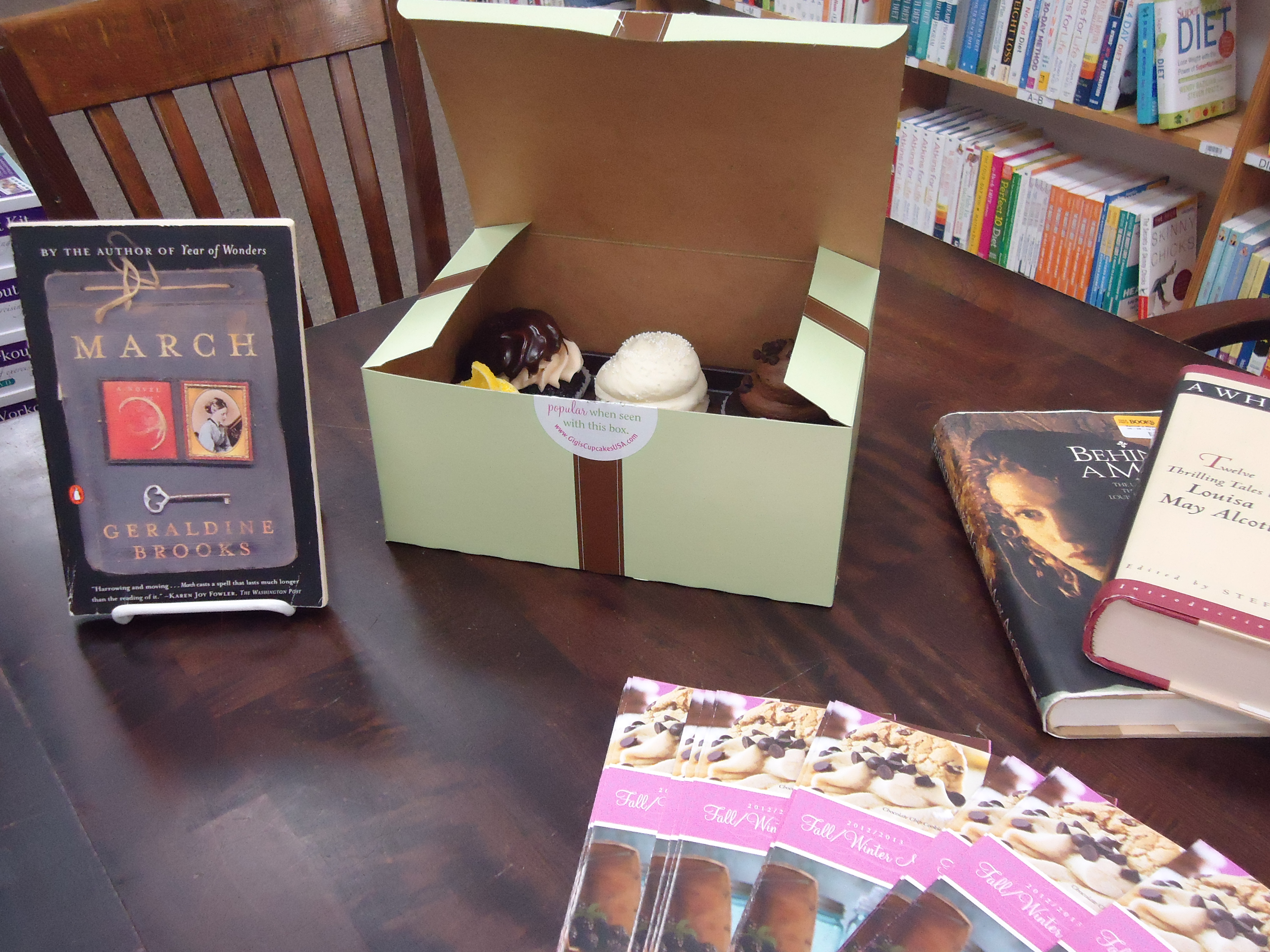 My post today is supposed to be an update of last night’s book club meeting at Half Price Books in Humble. We discussed Geraldine Brooks’ March, Alcott’s Little Women, Bronson Alcott, Fruitlands, and more. Gigi’s Cupcakes in The Woodlands donated a half dozen cupcakes (which are more like really rich mounds of awesomeness than your typical idea of a cupcake) and mid way through the discussion and a bit of double vanilla icing melting in my mouth, all my very southern self could think was “Oh My Heavenly Days.” The I-literally-feel-like-I-am-in-heaven version of that line, not the rolling of the eyes sarcastic version… you fellow southerners know the very huge difference.
The discussion was awesome. I am quite enjoying this little once a month activity. I love how prepared my gentleman patron comes, with several books and research in tow. I love yacking aimlessly on end about our likes and dislikes and anything about the book that has moved us that much. Add in free cupcakes from GiGi’s and I feel as though we have created a true little slice of heaven tucked away in the corner of Half Price Books.
As far as the discussion of March was concerned, one thing that was agreed upon was the difficulty in reconciling the characters Brook created with the characters we all know and love from Little Women. How did such a hot-headed Marmee become such a controlled and beautifully calm version we read in Alcott’s original work? Things that Brooks clearly well researched don’t mesh with the feel we have for the same history growing up in the States. One thing that stuck out in our minds, as a group, is whether Marmee would have actually gone and stayed under the same roof with the character Grace. What do you think? It’s not too late to join the discussion, leave your thoughts in a comment or come to the meeting next month.
We also agreed on a memorable quote that made an appearance quite early in the novel:
“For to know a man’s library is, in some measure, to know his mind. And this mind was noble in its reach, wide in its interests, discerning in its tastes.” – pg. 18-19
Of course a group of bibliophiles would enjoy that one, of course.
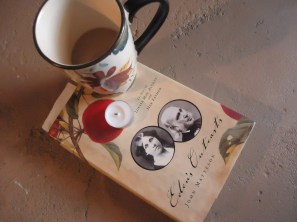 I am still reading Eden’s Outcasts, a book about Bronson Alcott and his daughter Louisa May. I believe I expressed this opinion last night, so I shall re-hash it here, and will probably say it again when I provide an official review of the biography… Bronson Alcott was a weird dude.
Louisa May Alcott’s father was a true transcendentalist, and with that come some shocking beliefs to someone raised as I was. To have your sole guide to life be your own conscious is rather difficult when your conscious moves you to establish a commune with other transcendentalists. Fruitlands became a commune of many differing beliefs and activities that never seemed to find a happy balance. You have one member running the place naked with another member refusing to farm, another with children, and others anti-children. The only common belief system to educate and be separate from the world. In Bronson Alcott’s attempt to create a heavenly utopia he created a hot mess, which upon seeing it I would exclaim in sarcasm now: Oh My Heavenly Days.
I am amazed that Louisa May Alcott came out mostly well adjusted. I am not, however, surprised that the story of Little Women in a happy little world to lose yourself. Little Women functions as a biography of the best versions of her family brought to life in fiction, all the strange and unhappy parts discarded probably for the sake of sanity.
That brings me back to Geraldine Brooks’ March. March is a much darker, sinister, true to life version of the tale of Little Women and Mr. and Mrs. March. It is a grown ups history. I think what is most difficult is reconciling the fictional tale of Little Women with the very real feeling war novel of March. There are some details here and there that ring false, but for the most part it is graphically realistic of some pieces of the Civil War. It captures the darker sides of human nature that Little Women does not address, things that coming from an abolitionist’s family Louisa might have been very familiar.
What do you think?
If These Walls Had Ears

 Title: If These Walls Had Ears
Author: James Morgan
Publisher: Warner Books
Length: 275 pages
“A house is man’s attempt to stave off the anarchy of nature. Ripping up that floor had allowed a disturbing glimpse into the house’s secret life. It’s more comfortable not to know about such things.” – pg. 88
James Morgan may have been speaking about Billie Murphree’s floor rot from undercover water, but no words used in description of a house have ever hit me harder or rung so true.
Barely two years into owning our own home, my husband ripped up our living room carpet. We had lofty ambitions of laying tile or hardwood floors. We had tiled the living room of a town home once and it had turned out quite nicely for the low cost of $400. Those were the days when we thought home repair and renovation fun. Now, it’s just a necessity. No sooner had the carpet been pulled up, we discovered what we un-lovingly refer to as The Grand Canyon in our foundation.
Upon further inspection, the enormous crack ran from one end of the house to the other, from the outer wall where my rose and herb garden touches our driveway, through the kitchen, under the bar, across the living room, down the hallway, into the bathroom, and right out the outer wall against the side yard where I hope to make a courtyard one day.
 We were devastated. We had bought our dream home, except for the master bathroom which will forever irritate and haunt my poor husband, only to find that it wasn’t a dream at all. Our dream home was a wreck, a fixer upper, a money pitt – it kind of still is.
We had $15k worth of foundation repair done at a discounted price – the company is run by a saint – literally, he’s a Gideon, and I’m quite certain he felt sorry for us. He even gave us plenty of time to pay him off and didn’t charge us interest. No sooner had we paid our bill in full, we discovered the breakfast room was now sliding into our back yard and had to have more foundation repair. Our back fence, our back door, my daughter’s window, nothing in this house is safe. It’s fragile, it’s old, it’s exhausting. We had to dig up our front yard and repair plumbing ourselves, we’ve had work done by professionals under both bathrooms.
Oh, and our insurance company is worthless, they paid for exactly nothing.
Yes, Mr. Morgan, a home is man’s attempt to stave off the anarchy of nature. Nature riots in many ways: mud sliding our from under our apparently unstable foundation, a shake slithering up through the crack in our living room, the rain rotting our fence, the winds of Hurricane Ike displacing our other fence and blowing out a window pane in our back door. Our sidewalk to our mail box sunk into our front yard, a storm took down our light post. It never ends. It’s never over.
Despite the issues, despite the debt, despite it possibly being the biggest mistake of our married lives, I’m in love with this house. We’ve been through ups and downs, trials and errors, hell and we’re not quite back, but it’s my home. Technically, it belongs to the bank, but we live under the illusion that it’s ours, and the illusion has a safe feeling to it, until the next time something breaks…
“In a house you never can tell where the next trouble will erupt. A door knob will suddenly come off in your hand. A heating duct in the belly of the house will lose a screw and pop out of its fitting. Even if you think you know the trouble spots, you’ll be taken by surprise. A piece of upstairs trim will swell up and warp, and the next thing you know, the rain will be leaking in downstairs and two walls away.” – pg. 109
 Still, for whatever reason, everyone loves old houses. I remember when we were house hunting I specifically asked for a house in an older neighborhood surrounded by trees. “Nothing newer than the ’80’s,” I told my realtor, “No cookie cutter neighborhoods.” “Why, oh Why?!” I inevitably cursed later when we had to shave down parts of our interior doors so we could open and close them because the house had shifted yet again. “Why?!” we yelled when a brick just came out of our stoop, just slipped right out from under our door and lay across the porch where a welcome mat should have been. “Why?!” we screamed when a board from our deck in front of the garage door collapsed.
Because like Morgan says,
“Old houses look like home to us. They appeal not to our practical side but to whatever romantic part of us traffics in hopes and dreams, or wallows in nostalgia. They’re flirts, old houses. They get painted up real pretty – the way this house was when I first saw it – and they show off a lot of front porch and invite you in for a little French dooring, and the next thing you know, they’ve snared another sucker.” – pg. 180
Morgan’s book is endearing, nostalgic, and beautiful. It speaks to home owners, future home owners, and anyone who has ever fallen in love with a building of any kind. If These Walls Had Ears really speaks to my heart. There’s even an Andi that shows up briefly and takes part in 501 Holly’s biography. It makes you hope that in another fifty or so years someone will write a sequel to this old house’s life story.
The only part I didn’t like, despite a very beautiful quote in it, was the epilogue which summed up the lives (or the divorces and deaths, rather) of all the people who once lived in 501 Holly. It was depressing to say the least.
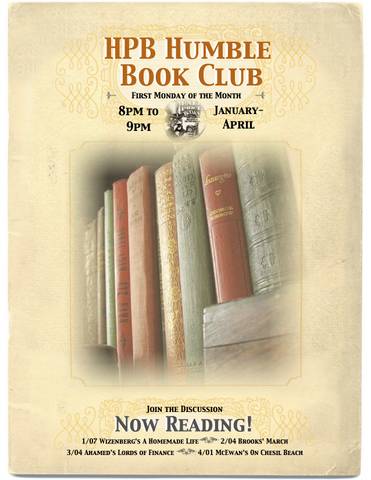
HPB Humble Spring Book Club Picks!
A Rich Anthology

Rich Fabric lying on a piece of my own rich fabric, a quilt made by a family friend’s grandmother.
Title: Rich Fabric
Editor: Melinda McGuire
Length: 165 pages
When I first booked Melinda McGuire to do a signing at Half Price Books in Humble, I didn’t know I was about to meet one of the sweetest and down to earth people ever. A successful indie author of southern fiction and fellow Texan, she has been to the store for two events now, and hopefully more. Her most recent project, Rich Fabric, is an anthology about quilting, “the tradition, culture & symbolism.” With a dozen contributors, memoirs, short stories, tidbits, tricks of the trade, and all sorts of cozy anecdotes, Rich Fabric truly shows off the exciting and colorful heritage of quilting.
During the book signing on November 3rd, Melinda was kind enough to give me a copy of this little anthology, and yesterday I finally sat down to read it by my fireside, hot cocoa in hand. I knew it would be interesting and precious, but I didn’t expect such a lovely and diverse group of writers. Not all were from the south, not all were over thirty; in fact, there were contributors from all over and of all ages. The entire work is dedicated to a woman whose work is included within the pages, but died before Rich Fabric’s publication, an avid quilter named Crystal Vining. All the profits go to the Twilight Wish Foundation, a non-profit organization that grants wishes to senior citizens living at or below the poverty level, but the work itself leaves you with a strong sense that quilting is not just something of interest to senior citizens, but the young and the very young as well.

A beautiful inscription.
I have truly enjoyed the stories and pictures in Rich Fabric. I have enjoyed the feeling of getting to know families I have never met while being inspired to hunker down and complete my own unfinished quilt, as I have been working on one for years but all the quilts in my house were made by others. Many of the anecdotes were so intimate and involved, I began to feel a little sad for my quilts not having such an involved history. Each of mine were made by friends of the family and their families, they are items I received used, merely by accident; though they are well-loved here in my home, I do not personally know their crafters or the circumstances in which they were brought into existence. Then, I read Claire Burson’s piece about her quilt, passed down through the family and cherished but the intimate details being lost. She explains the treat and delight in the mystery of the quilt itself, how there is beauty in the known facts but beauty in the lost details as well because then she can imagine all the possibilities. In that moment, the sadness for my hand-me-down quilts was gone and I realized she was right, it is kind of nice to be able to imagine.
I hope there will be more Rich Fabric volumes. It truly is a little treasure to have on the shelf, and with all the lovely stories within its pages it is only so glaringly obvious that there must be so many more out there in the world. I’d like to read those too some day.
Great Journeys – Marco Polo
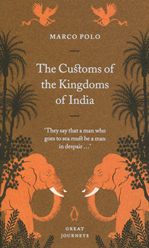 Title: The Customs of the Kingdoms of India
Author: Marco Polo
Publisher: Penguin Books
Length: 86 pages
Inspired by the Great Ideas series, Penguin Books printed a Great Journeys companion series as well. From Herodotus to George Orwell, the series chronicles twenty of the most famous and intriguing adventurers in history. Third in this series is Marco Polo’s journey to South Asia, where he discusses the culture, the economy, the industry, religious practices and more.
I picked this book up for two simples facts: 1. I am collecting all of Penguin Books Great Ideas publications and 2. There are elephants on the front cover. I adore elephants. They are powerful, dignified, trustworthy, humorous, and endearing. Marco Polo’s The Customs of the Kingdoms of India has little do with elephants.  Actually, I’m pretty sure it has absolutely nothing to do with elephants. Of course, that’s not the point, elephants are broadly recognized as a symbol of India/ South Asia, so naturally they would be an image of choice for the front cover of an Indian travel book.
Marco Polo does not go into great detail about how the elephants are used as means of transportation, status symbols, work beasts, and more. He mentions them in passing, but says in the places he visits, they are not indigenous to the area but imported from other islands. He does, however, discuss the art of physiognomy, which immediately made me think of the science fiction piece by Jeffrey Ford called The Physiognomy
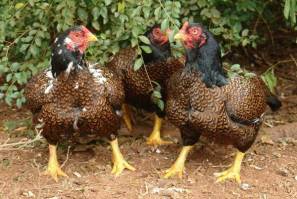
Did Marco Polo’s “prettiest hens” look like these?
Apparently, in South Asia, hens represent prosperity, and today you can buy ‘prosperity hens,’ little talismans similar to a rabbit’s foot. Of course, Marco Polo again does not go into detail regarding this, he merely mentions their beauty and moves on. Marco Polo’s writing is that of traveling merchant. He chronicles quick and simple descriptions that would be useful for a businessman, but avoids the great detail of a philosopher or anthropologist. The things that strike his fancy for elaboration are the rituals that would intrigue a vendor, rather than those that would fascinate a theology student. Where he does talk about religion, it seems to be in a political and historically informative way to help you understand a province as a whole, moving quickly to the supplies they live on because of their past. Like a professional trader, he wishes to dwell on the rice, the wheat, and the growth of cotton. Respect for various people groups and villages he encounters is highly dependant on how much they function on industry and marketplaces.
I don’t believe Marco Polo to be much of a writer, and I think his accounts would have benefited from being written while on his voyage. But according to historians, he dictated these adventures of sailing the Indian Ocean later to a fellow inmate in prison. This practice of dictation could have played a role in his style of often informing his reader “I will tell you how” and “I will describe to you,” as well as “let me tell you why” and so on; repetitive and unnecessary phrases that, quite frankly, annoyed me.
Still, this concise 86 page piece is interesting, and a great addition to any young scholar’s library. It would be a wonderful supplement to a world geography study on South Asia for a middle grade student and could open up a lot of dialogue between teachers and students regarding history, religious practices, other cultures, world economies, and more.
Emma, my introduction to the Viking era
 Title: Emma: The Twice-Crowned Queen
Author: Isabella Strachan
Publisher: Peter Owen Publishers
Length: 192 pgs.
First of all, let me premise this by informing you that like the Catherines/Katherines of Henry VIII’s time, the name Elgiva/Emma runs rampant during the Viking age of England. For instance, the subject of this biography was born Emma but the English chose to call her by the Latin equivalent: Elgiva. Emma was the second wife of the widowed Ethelred, whose first wife’s name was Elgiva. When Ethelred (king of England under the Saxons) dies and his land then conquered by the Danes (while King Swegn ruled), a Dane named Canute (Cnut) came to power. Emma becomes his wife as well, but guess what? He already has a ‘wife’ named… any takers? anyone? anyone? Yep, Elgiva. This makes for some interesting reading, but Strachan eases the issue by always referring to Emma as only Emma and providing a handy-dandy cast list in the front of the book.
When I first heard of Emma, I expected a woman who was cunning and manipulative. Someone with political the intrigue of a Cleopatra or Elizabeth I. I thought I’d be reading about a woman with a deep political agenda, always out-playing others in a real-life chess match. Instead I found a woman who seems to me to have been more adaptive, reactive, a survivor constantly caught between a rock and a hard place. The Twice-Crowned Queen is less of a political master mind and more of a drowning victim always bobbing up to the surface of the water just moments before death.
She was young when she became the bargaining chip in an arranged marriage to King Ethelred. It was a political ploy of others that ensured the Normans and Vikings were kept at bay during a time of imminent war, as both her father and half-brother were Dukes of Normandy with close, friendly ties to the Vikings. After Ethelred dies and England taken over by the Danes, Canute is chosen to be the new King. The problem with this arrangement is that the Church and Cabinet wanted Emma to remain the Queen. It remained good political sense, but Canute already had a wife. Canute had a handfast wife, referred to as Elgiva of Northampton. From what I gather from Strachan, a handfast wife was the Medieval equivalent of a ‘Common-law wife.’ Handfast wives had all the political and societal rights of a true spouse, but were not recognized by the church. Later William the Conqueror’s own mother would turn out to be a Handfast Wife, which was why he was a Duke of Normandy but still got called William the Bastard.
Either way, there was a lot of drama surrounding Emma’s marriage to Canute. He seems to have been completely in love with Elgiva of Northampton and despite promising that Emma would be his only Queen and her children heir to the throne, Elgiva was the only one granted regency rights over her own lands and it was her son Harold that took the throne upon Canute’s death. Emma was again just a political pawn to keep the peace, and in keeping the peace was forced to send her own children (from Ethelred) away to grow up abandoned by their mother while fighting tooth and nail to keep her children by Canute in the running for the throne. There is a poem called Samiramis that I’d like to get my hands on, written by the Normans of the time, that tells their account of the entire incident.
What I initially saw as an intense woman ensuring each of her children had a chance to rule (as her son Harthacnut from Canute and her oldest son Edward from Ethelred both eventually become King, while her daughter was the Queen of Germany), after the biography I feel that most of this was just chance and circumstance. Harthacnut was indeed fought for to be King, but his half-brother Edward the Confessor became King despite his mother. Edward actually stripped Emma of all her political rights as soon as he gained the throne. One of the clenchers for me having been interested in studying her was that she was William the Conqueror’s great-aunt, but he did not seem to have much of a tie to her, he merely showed a bit of respect for his cousins.
I am glad I read the book. Although I am disillusioned about her character, I think she’s still mighty impressive and wonder why she was left out of my education. Reading this biography made me intensely interested in reading additional history on William the Conqueror and his mother Arlette (Herleva). Lady Godiva also makes a cameo appearance, which piqued my interest as well as a man named Olaf Haraldsson. As I always say, the more you read, the more you discover you need to read.
This book would make a great addition to a well-read 11-12 year old’s Medieval history curriculum. It is short, sweet, and informative of not just Emma but a huge piece of history that made the English monarchy what it later became. And I loved it.




 Anakalian Whims