Afternoons on the Amazon
Our Magic Tree House Adventures
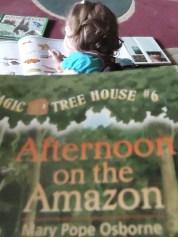 As part of our Magic Tree House regimen, the kiddo and I read through everything and anything we could get our hands on regarding rainforests. It’s been about a week, and every afternoon we’ve been diving into the magic of the Amazon River and its surrounding rainforests.
Last time we shared our Magic Tree House Adventures, we’d just finished our fourth set: Pirates Past Noon and Pirates! Fifth in line was Ninjas at Night, and I was searching high and low for a Research Guide (“Fact Tracker”) on Ninjas and could not find one. It looks as though I may have dreamed that one up. So we read the fictional adventure and moved on to Afternoon on the Amazon
So I built my own unit with out the help of Mary Pope Osborne, and found some pretty awesome books in our personal library the process…
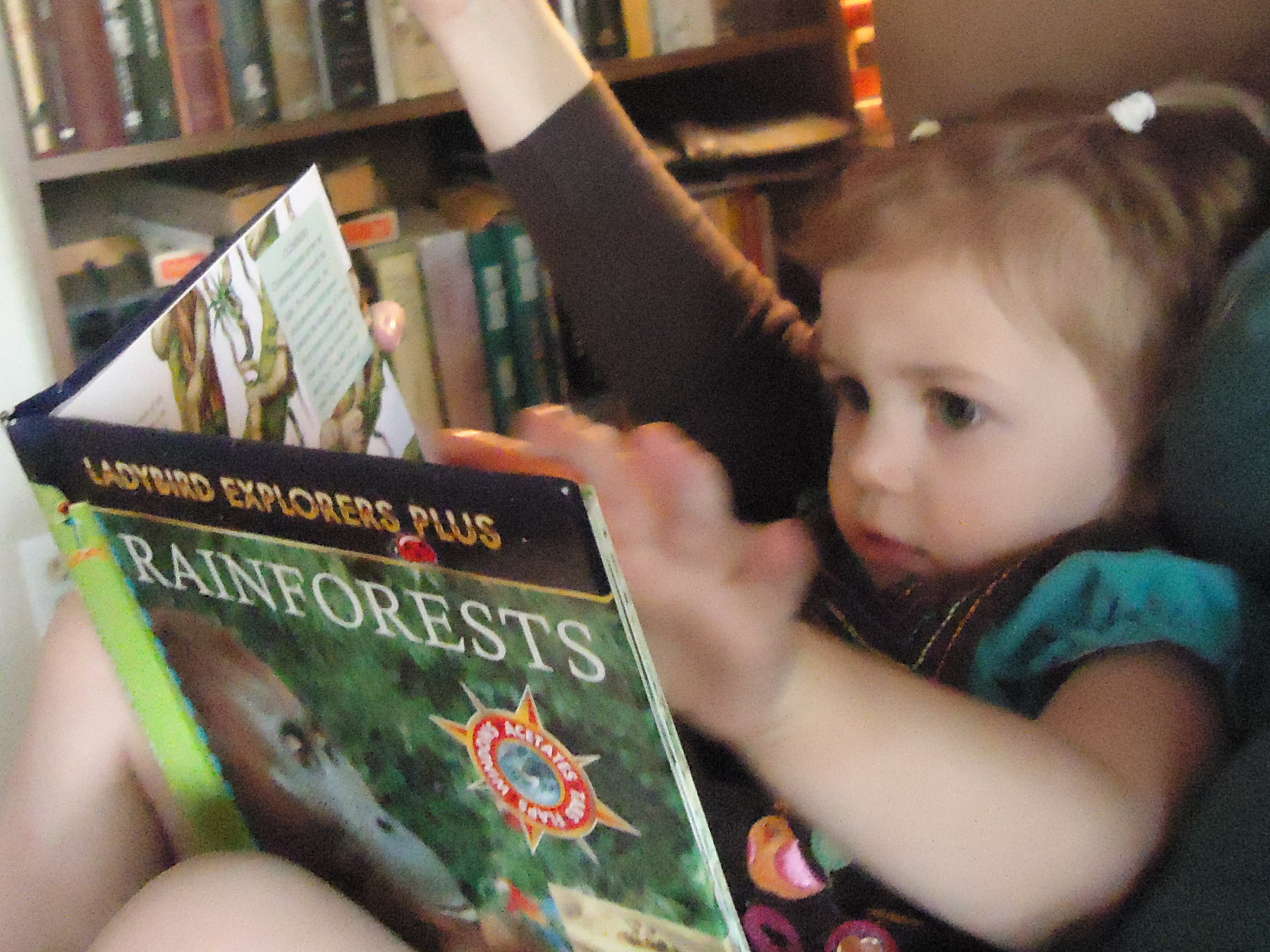
Ladybird Explorers Plus: Rainforests
The Ladybird Explorers Plus series are flip/tab books with tons of information. They are great book to have if you have lots of different ages in the house. Even though I can’t say that from the experience of having lots of various aged children, I can say it from the experience of being just as fascinated by this book as my toddler. The pictures are lovely, the facts surprising (I didn’t know there were dolphins in the Amazon River, they must have skipped over that in my childhood rainforest studies), and the tabs and flaps were fun. One of our favorite tabs makes an Asian elephant move a heavy log. Another causes the monkeys to swing through the trees. It includes detailed but simple charts with flaps that show the water cycle in a rain forest, and clear glossy photos that overlap pages like you would find for an overhead projector. The chapter “Beauty in the Forest” lives up to its name and is indeed full of very beautiful illustrations of the trees, birds, and flowers.

Learn About Rainforests by Jen Green
The Learn About series is fantastic for the pictures now, but even more important for all the projects later. This really spells out detailed activities to do with an older child when we tackle the rainforest more formally. It shows you step by step how to plant your own canopy, how to make molds of animal tracks in the forest, and the basics of field studies. It is only 63 short pages in length, but the pages are full of facts, gorgeous photography, and 24 projects geared toward 8-12 year olds. It is advertised as “a fascinating fact file and learn-it-yourself project book” which to me is the very definition of what you should have in a homeschooler’s library. I’m not sure why they are priced so high on Amazon, but I got mine for a couple bucks at Half Price Books.
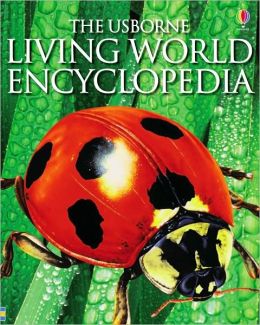 The Usborne Living World Encyclopedia
First, I love Usborne. Second, the Living Encyclopedia will be making its way into many lessons, as it covers all living things all over the world. Being that it covers so much, naturally there is a huge section on rain forests that made for some nice supplementary pictures to gaze at while reading our fiction. The kiddo was really taken with the unrelated lady bug on the front cover, but also liked seeing the extra pictures of the dolphins and jaguars while we were reading Dora and Diego’s Adventures, where they travel through the rainforest, use a dolphin to pull them through the Amazon river, and save Baby Jaguar.
Homeschooling / Life With a Toddler
Tea Time
We have tea parties with our geography lessons. She knows her southern states and can identify North America on a world map. No matter what, she can always find Texas, even when all its borders aren’t clearly drawn on… she looks for the Gulf of Mexico.

Card Games
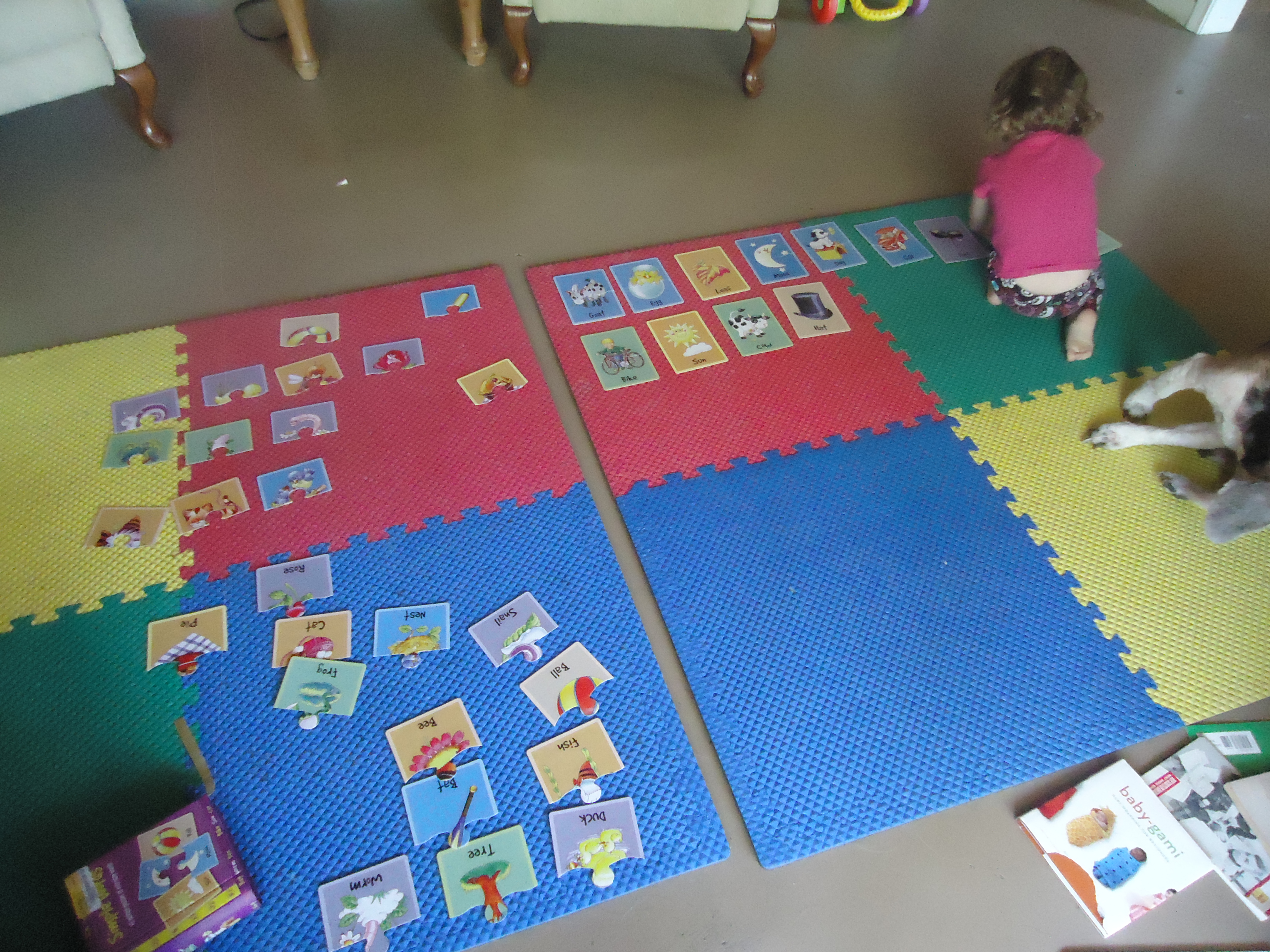
She loves to play cards… these are first word matching puzzle cards. The nice, straight rows are all her doing. She’s quite the neat-nick.
Arts & Crafts
Painting is the best. Featured here is an acrylic on canvas piece.

Story Time
Story time at Half Price Books cannot be missed. It is an essential part of our weekly lives.

A Two Year Old Reads The Lorax
I sat down at the breakfast table with my daughter who will be two and a half in a month. It’s St. Patty’s Day, so I thought I would read something appropriately Irish to her over breakfast. I didn’t have much follow through, though, because my daughter looked at me with those big blue eyes, batted them, and said, “Read The Lorlax, Mommy, the Lorlax.” This pronunciation is a great improvement from when she was calling him the “Workass.”
So I went and got Dr. Seuss’s The Lorax and began to read. There was an interruption regarding her cereal, another about the dog, a few more about the characters in the book. Two pages in I shoved the book at her and said, “You read it.”
And this is how my two year old read The Lorax, along with great gestures and emphatic pointing:
“Town!
Grickle-grass!
Essepting Oooooooold crows.
TED!
Find the Lorlax! The Lorlax!
Baby Lorlax!
Butterfly milk!
Truffula Trees…
and seeds!
And Seed.
Last Seed.
The End.
Ok, Green Eggs and Ham, Mommy.”
More Homeschooling with a Toddler – Pirates!
It took longer than expected, but we read through Magic Tree House book #4 Pirates Past Noon
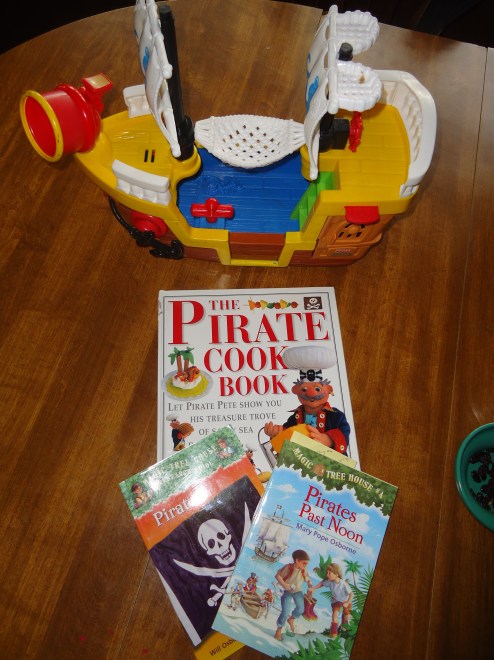
While reading the companion book, kiddo sorted sea shells and counted her treasure…


After that we learned about Vikings and ancient maps… even learned how to spell “Map.”


And that’s what homeschooling a two year old looks like.
Homeschooling a 2 Year Old
Looks like this…

I read Magic Tree House #3 Mummies in the Morning and its companion research guide Mummies and Pyramids while she looked at lots of pictures. The books with pictures were The Kingfisher Atlas of the Ancient World, a Reader’s Digest What Life Was Like, a coffee table book called The Pyramids and Sphinx, and a hardback I plan to use as a textbook when we do this again called Life in the Ancient World

Then we learned that P is for Pyramid. After several pictures, lots of blue lines, a few attempts to write some letters, she can at least say the word and identify the drawing – mostly – sometimes she says triangle or boat instead. I think she sees triangles and thinks of the sails on a crude drawing of a sailboat.
Anyway, that quickly turned into this:
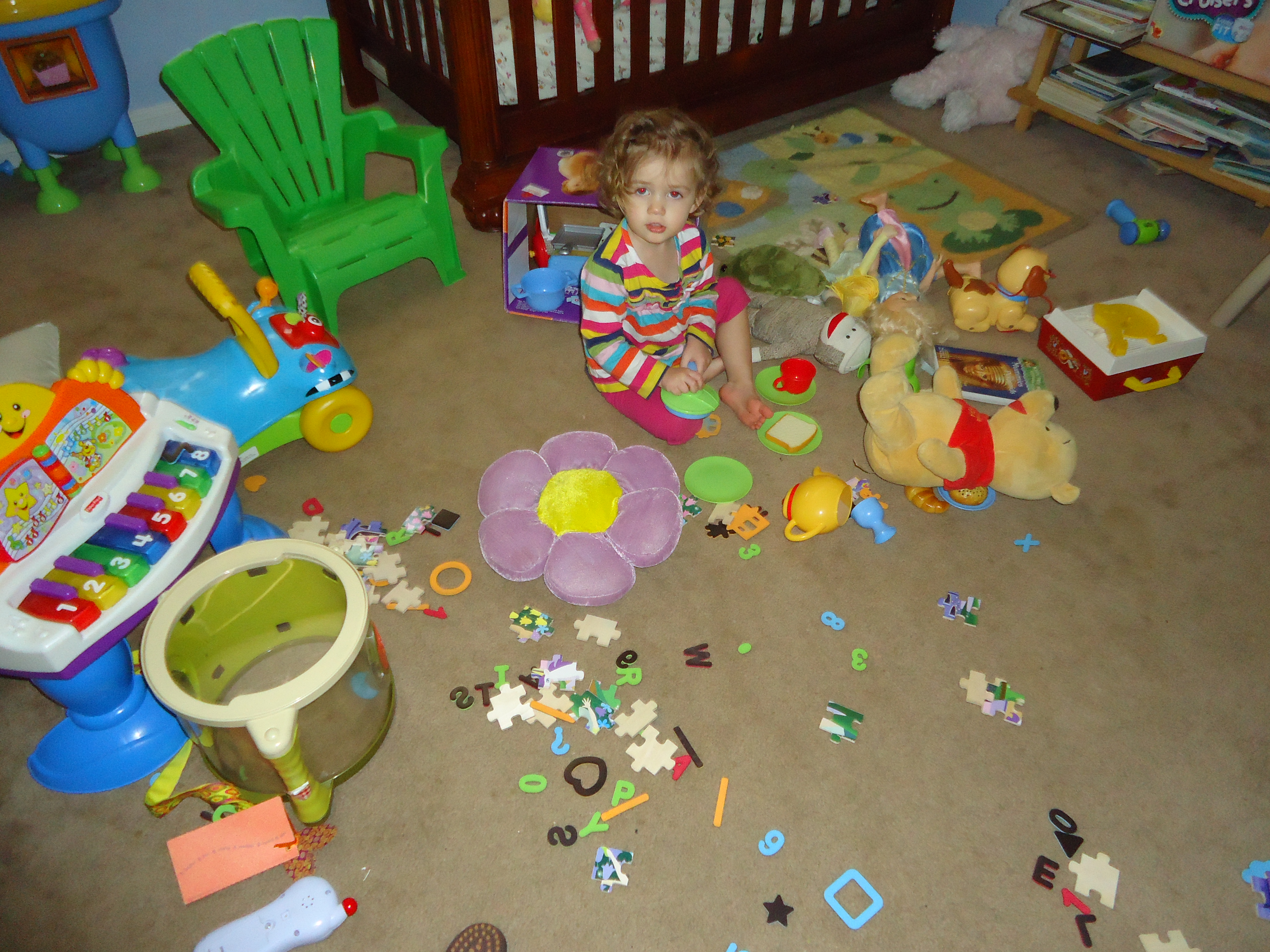
And that’s what homeschooling a two year old looks like.
Magic Tree House Adventures – Knights!
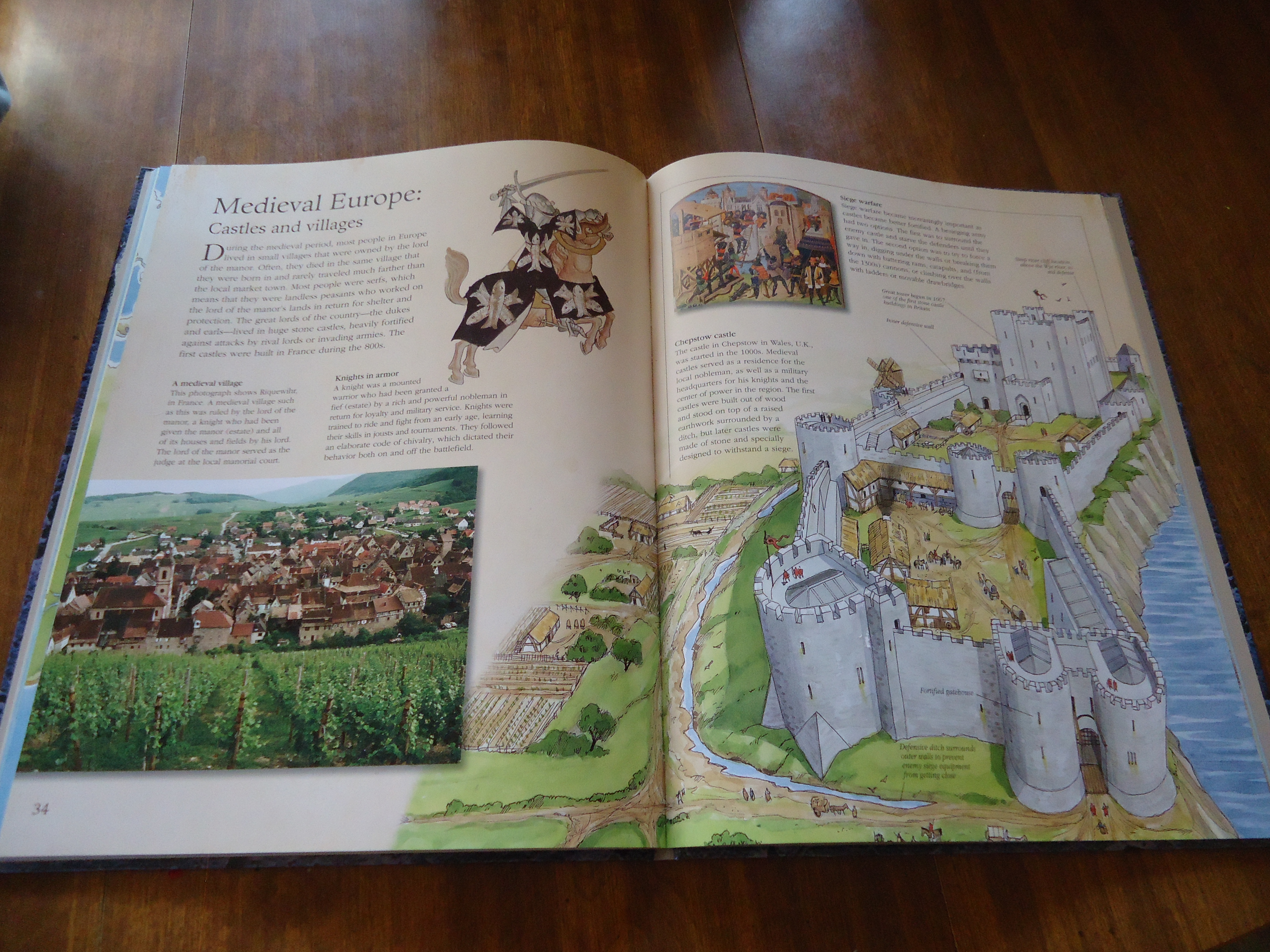
The Kingfisher Atlas of the Medieval World
(… Castles! And Medieval Times!)
 Today we read up on everything Knights and Castles
“A Feudal System has four parts! From top to bottom it goes: King, Barons, Knights and Serfs!” Sadly, I’ve already forgotten the tune to which we were singing/chanting this bit of information, maybe one day it will come to me again, or maybe we’ll find a new tune. Either way, munchkin was climbing in and out of the laundry basket this morning singing, “King! Baron! Knight! Serf!” so I win.
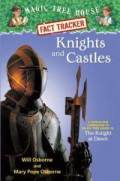 It was at this point that I decided: in addition to reading through this pairing and prepping kiddo’s future education (when she’s old enough to tackle these projects properly with crafts, writing assignments, and vocabulary tests), I’m going to blog our prepping routines… separate from the Weekly Low Down on Kids Books installments. I know I will find it handy for when we repeat this reading exercise in a few years, but maybe someone else can find it handy now.
I can’t wait to take the kiddo to Medieval Times. I’ve always enjoyed the place and once she is old enough to go, I think it would be a great way to end an educational adventure. As she’s only two and today’s reading was somewhat (though not completely) impromptu, I took her to the closet thing to a castle we have readily available.
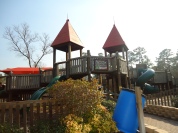
The Spring Community Playground, part of Liberty Park looks like a giant, wooden castle to me. It has several keeps, a palisade, horses to ride, and all sorts of castle/fortress styled fixtures. According to the park’s website:
This playground was built by the Spring community for the betterment of the Spring community ultimately for the enjoyment by our children with community donations and community volunteer labor. It was built in 5 DAYS from January 29th to February 2nd 2003 with over 900 community volunteers. A large majority of the volunteers were parents, grandparents and friends of students from Hirsch, Smith and Jenkins Elementary Schools. We also had volunteers from Austin, San Antonio, Dallas, Houston, Kingwood, Conroe, Laredo, and Mexico.
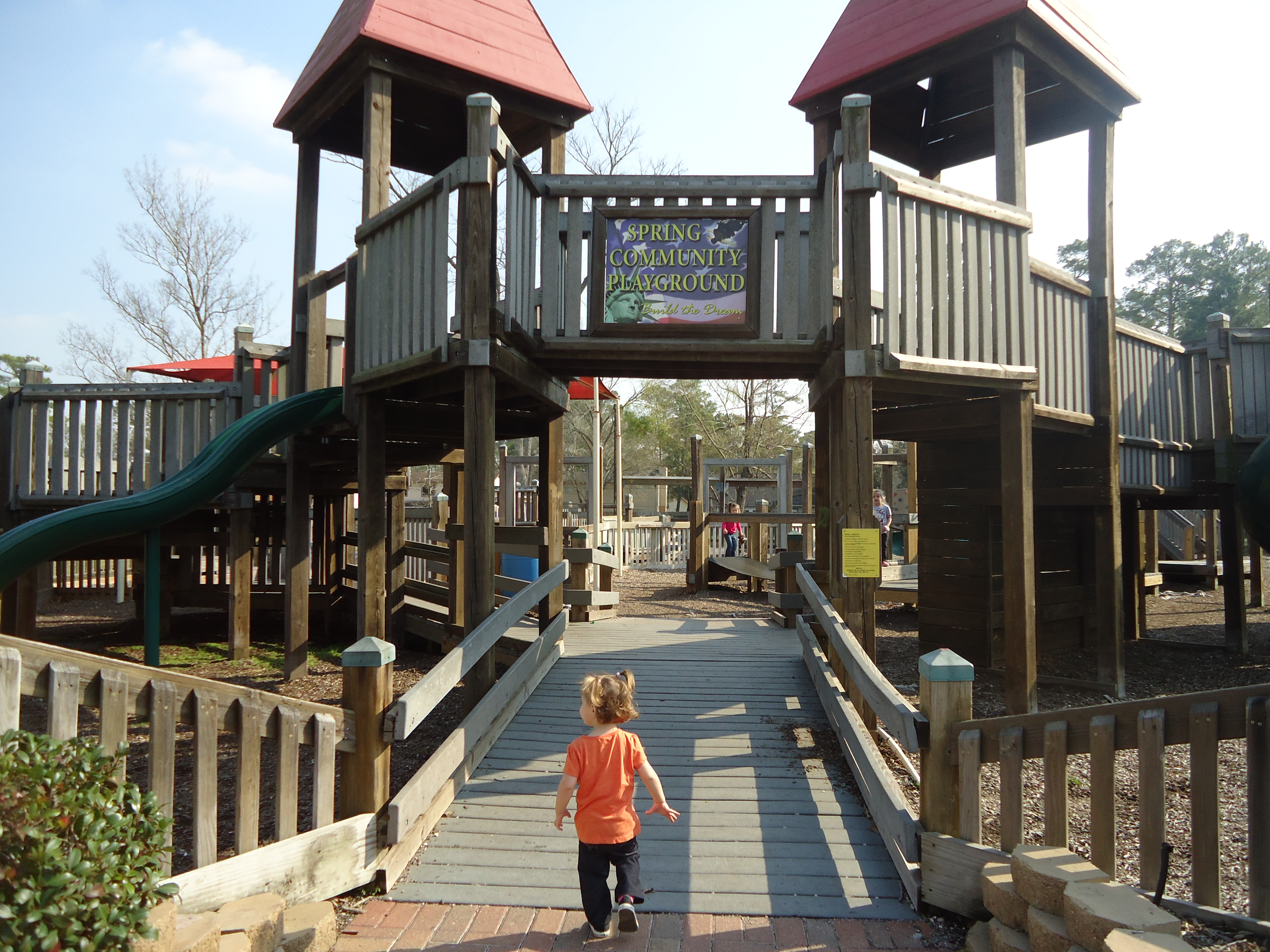
Obviously, there’s a huge difference between this and an actual castle! But it’s fun to walk the park and read the engraved pieces of wood that tell who donated what. I want the kiddo to grow up with a strong sense of community… our neighborhood is our manor, and all that.
When she’s older, we’ll be able to spread the study over the course of a week and add more books and activities. For instance, on day two we could read The Time Warp Trio
This unit would also be a great opportunity to spend the week going through one Sir Cumference book a day for the start of math lessons.
For lunch, I’ll take the opportunity to serve “feast foods.” I found an entire web page dedicated to recipes of the day, and I love to eat to match our educational themes. Plus, I want my daughter to know her way around the kitchen before she goes off to college, unlike me. So as she gets older, we’ll be making all our meals in the kitchen together – themed or not.
I would definitely try to work in her first horseback lesson during this week if she hadn’t started them already, after all knights, caballeros, Ritters, and chevaliers, are all just soldiers on horseback, as the MTH Research Guide will tell you.
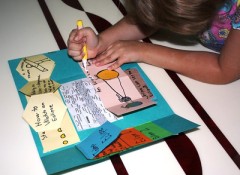
Click image to visit a lapbooking tutorial website.
For the most part, though, we will spend our days reading, making lap books, journaling what we’ve learned, playing dress up, and gearing all our artistic energy at the topic. Homeschool Mom and Blogger of My 2 Small Boys has images of her kids’ notebooks on Knights and Castles here: http://my2smallboys.blogspot.com/2012/01/middle-ages-knights-and-castles.html.
When the weekend roles around, if the study lands in the summer, perhaps we will go to the beach and build sandcastles; If in the fall, maybe we’ll head out to the Texas Ren Fest.
Knights and Castles Library List
Saint George and the Dragon (a great precursor to have on hand for Spenser’s The Faerie Queen, we’ve already read it quite a few times)
Castle Diary by Richard Platt
The Knight at Dawn by Mary Pope Osborne
Knight by Christopher Gravett
Knight ~ A Noble Guide for Young Squires
100 Things You Should Know About Knights and Castles by Jane Walker
If You Lived in the Days of Knights by Ann McGovern
Castle: Medieval Days and Knights by Kyle Olmon
Knights in Shining Armo by Gail Gibbons
Knights and Castles by Seymour Simon
The Usborne Book of Castles by Lesley Sims and Jane Chisolm
What If You Met a Knight? By Jan Adkins
Imagine You’re a Knight by Meg Clibbon
Take Care, Good Knight by Shelley Moore Thomas
The Knight and the Dragon by Tomie DePaola
In the Castle by Anna Milbourne
The Castle That Jack Built by Lesley Sims
The Tournament by Heather Amery
Some more ideas: http://www.angelfire.com/dc/childsplay/castleunit.htm
Weekly Low Down on Kids Books – Dinosaurs!
 I read Magic Tree House #1: Dinosaurs Before Dark
We had to stop a few times to draw a rhinoceros onto our ‘R’ page, check out whales and their sizes in relation to dinosaurs in our encyclopedia, and to correct behavior as she climbed in my living room window sill that is about three and half feet off the ground. We even had a brief whistling lesson after reading how the wind was whistling around the tree house. Overall, she enjoyed it, so we moved onto the Research Guide
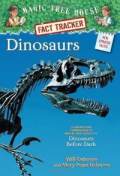 Mary Pope Osborne and her husband Will Osborne joined forces and started writing nonfiction companion books to the fictional Magic Tree House adventures. When I first discovered this, I started purchasing them in pairs, vowing to use them as fun assignments while home schooling. I’d like for kiddo to grow up in the habit of reading a nonfiction title that somehow relates to every fiction title that she devours, expanding both her facts and her imagination. What better way than to start with research guides to her first chapter books?
Why am I reading these to her so early? Frankly, it’s quite hilarious to watch a two year old run circles in your living room chanting, “Fossils! Minerals! Dinosaurs!” at the top of her lungs, while her dog (who happens to be the biggest one we own) lays in the center rolling his eyes.
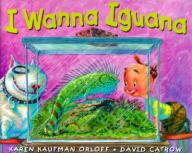 Chapter three of the research guide Dinosaurs talks about iguanas and how Gideon Mantell though the dinosaur teeth he and his wife found were giant iguana teeth. Of course, we had to stop to re-read I Wanna Iguana
All in all, we had a good ‘school day’ this morning, something we have been working on being more diligent about now that kiddo is two and it has actually managed to get too cold to venture out as much.
Weekly Low Down on Kids Books – Math Adventures
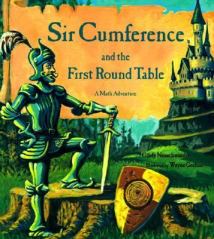 Title: Sir Cumference and the First Round Table
Author: Cindy Neuschwander
Illustrator: Wayne Geehan
I think everyone who has talked to me for longer than a minute and a half about children’s books knows how much I adore Brian P. Cleary
So a two year old who still stumbles through her ABC song, can only manage some really intense stripes when writing, and can only identify circles and triangles isn’t really ready for a book about circumferences, diameters, the concept of a radius, parallelograms, diamonds, and all that, but that’s when it is perfect to start reading these stories. By the time she needs the information, I want the stories thoroughly engrained in her mind.
Sir Cumference is a knight, married to Lady Di of Ameter, father of a short-stack son named Radius. With their help, King Arthur is able to come up with a plan to keep his knights on their best behavior as they discuss the well-being of Camelot. Add to the cast of characters a carpenter named Geo of Metry, the books instill all the basic concepts of geometry in the disguise of some exciting fake King Arthur folklore. Start reading the books to your kid from birth through early elementary school and you’ve got one math savvy child without even trying. As a home school mom with a serious distaste for math, I want my kid to enjoy it and make her life a lot easier than mine was by the time her high school curriculum comes along.
For slightly older kids, I’d say ages 5-10, the book easily lends itself to hands on activities. Paper projects, baking projects, even wood working if you were bold and wanted to make an actual play table, the story takes you step by step through cutting a rectangle down into all the various shapes. And, of course, it’s a series. Click the Sir Cumference link to purchase from Amazon. Click the collection image to go to another blogger’s reviews.
Other Sir Cumference
 Sir Cumference and the Dragon of Pi
Sir Cumference and All the King’s Tens
Sir Cumference and the Viking’s Map
Sir Cumference and the Isle of Immeter
Sir Cumference and the Great Knight of Angleland
Sir Cumference and the Sword in the Cone
(As an Amazon affiliate I earn from qualifying purchases.)
Emma, my introduction to the Viking era
 Title: Emma: The Twice-Crowned Queen
Author: Isabella Strachan
Publisher: Peter Owen Publishers
Length: 192 pgs.
First of all, let me premise this by informing you that like the Catherines/Katherines of Henry VIII’s time, the name Elgiva/Emma runs rampant during the Viking age of England. For instance, the subject of this biography was born Emma but the English chose to call her by the Latin equivalent: Elgiva. Emma was the second wife of the widowed Ethelred, whose first wife’s name was Elgiva. When Ethelred (king of England under the Saxons) dies and his land then conquered by the Danes (while King Swegn ruled), a Dane named Canute (Cnut) came to power. Emma becomes his wife as well, but guess what? He already has a ‘wife’ named… any takers? anyone? anyone? Yep, Elgiva. This makes for some interesting reading, but Strachan eases the issue by always referring to Emma as only Emma and providing a handy-dandy cast list in the front of the book.
When I first heard of Emma, I expected a woman who was cunning and manipulative. Someone with political the intrigue of a Cleopatra or Elizabeth I. I thought I’d be reading about a woman with a deep political agenda, always out-playing others in a real-life chess match. Instead I found a woman who seems to me to have been more adaptive, reactive, a survivor constantly caught between a rock and a hard place. The Twice-Crowned Queen is less of a political master mind and more of a drowning victim always bobbing up to the surface of the water just moments before death.
She was young when she became the bargaining chip in an arranged marriage to King Ethelred. It was a political ploy of others that ensured the Normans and Vikings were kept at bay during a time of imminent war, as both her father and half-brother were Dukes of Normandy with close, friendly ties to the Vikings. After Ethelred dies and England taken over by the Danes, Canute is chosen to be the new King. The problem with this arrangement is that the Church and Cabinet wanted Emma to remain the Queen. It remained good political sense, but Canute already had a wife. Canute had a handfast wife, referred to as Elgiva of Northampton. From what I gather from Strachan, a handfast wife was the Medieval equivalent of a ‘Common-law wife.’ Handfast wives had all the political and societal rights of a true spouse, but were not recognized by the church. Later William the Conqueror’s own mother would turn out to be a Handfast Wife, which was why he was a Duke of Normandy but still got called William the Bastard.
Either way, there was a lot of drama surrounding Emma’s marriage to Canute. He seems to have been completely in love with Elgiva of Northampton and despite promising that Emma would be his only Queen and her children heir to the throne, Elgiva was the only one granted regency rights over her own lands and it was her son Harold that took the throne upon Canute’s death. Emma was again just a political pawn to keep the peace, and in keeping the peace was forced to send her own children (from Ethelred) away to grow up abandoned by their mother while fighting tooth and nail to keep her children by Canute in the running for the throne. There is a poem called Samiramis that I’d like to get my hands on, written by the Normans of the time, that tells their account of the entire incident.
What I initially saw as an intense woman ensuring each of her children had a chance to rule (as her son Harthacnut from Canute and her oldest son Edward from Ethelred both eventually become King, while her daughter was the Queen of Germany), after the biography I feel that most of this was just chance and circumstance. Harthacnut was indeed fought for to be King, but his half-brother Edward the Confessor became King despite his mother. Edward actually stripped Emma of all her political rights as soon as he gained the throne. One of the clenchers for me having been interested in studying her was that she was William the Conqueror’s great-aunt, but he did not seem to have much of a tie to her, he merely showed a bit of respect for his cousins.
I am glad I read the book. Although I am disillusioned about her character, I think she’s still mighty impressive and wonder why she was left out of my education. Reading this biography made me intensely interested in reading additional history on William the Conqueror and his mother Arlette (Herleva). Lady Godiva also makes a cameo appearance, which piqued my interest as well as a man named Olaf Haraldsson. As I always say, the more you read, the more you discover you need to read.
This book would make a great addition to a well-read 11-12 year old’s Medieval history curriculum. It is short, sweet, and informative of not just Emma but a huge piece of history that made the English monarchy what it later became. And I loved it.





 Anakalian Whims
Eden’s Outcasts – A Review
March 10, 2013 at 9:18 pm (Reviews) (A Whisper in the Dark, American History, An Old Fashioned Girl, bill bryson, Bill Cosby, biography, books, Bronson Alcott, Civil War, debt, Dickens, Eden's Outcasts, education, fame, family relationships, feminism, Fruitlands, Goethe, history, homeschooling, jo march, John Matteson, Little Women, Louisa May Alcott, Love and Self-Love, mental illness, pulitzer prize winner, race relations, Ralph Waldo Emerson, reviews, social commentary, Thereau, transcendentalism)
Author: John Matteson
Genre: Biography/ History
Publisher: W.W. Norton & Company
Length: 497 pages
I knew I wanted to read this book the first time I saw it at Jill’s Books in The Woodlands a few years ago. I have loved Louisa May Alcott all my life and in the last few years I’ve really started to enjoy the art of the biography. My best friend bought it for me on the spot because she is one of those beautiful people who doesn’t think people should be denied their bookish desires. It wasn’t until March (a novelization of the younger years of Marmee and Mr. March) was chosen for the HPB Humble Book Club that I actually committed to sitting down with it in an attempt to understand Brooks’ portrayal of the patriarch.
*Notes about A Family in Debt*
So my review of the biography begins with Bronson Alcott’s astonishing ability to over zealously botch everything he touches. This trait of Bronson is made overwhelmingly clear around page 181. By this time in the biography, his utopian commune Fruitlands has failed, he has lost all his manuscripts, the house the family is living in was purchased with his wife’s inheritance, and he has completely disappointed me. At this point in his life Bronson refused to be employed and takes up an architectural endeavor on Emerson’s land, a building that would be nicknamed “Tumbledown Hall” and “The Ruin.” For a man portrayed as one so taken with education, he tackled projects with a whole lot of zeal and not nearly enough research. When he did research, others’ ideas were usually disregarded in order to implement his own innovative plans. To me, most his plans pretty much always sucked.
On the other hand, Louisa, his daughter, was exceptionally prudent. She had an intense crush on Ralph Waldo Emerson when she was young, which I find adorable, but never shared the love letters she wrote to him. Instead, when the crush was over, she burned them, but continued to look up to Emerson as a teacher. Emerson would be a part of Louisa May Alcott’s life from her birth until his death.
Bronson may have failed in many things during the first half of his life, but his efforts as a father are later a solid testament to home schooling. Matteson shares on page 182 that
Bronson Alcott, I believe, had some serious issues. Matteson has the grace to allow you to come to this conclusion on your own before he shares the fact that mental illness did indeed run in the family and that it is likely that both Bronson and Louisa May were manic depressive or bipolar, but that there is no way to know for sure.
Bronson’s worldview was both passionate and skewed. He established his house at Hillside (a few years before the well-known Orchard House) as an underground railroad station and fought viciously for equal political rights for African Americans. Then in contradiction to his own actions stated that blond hair, blue eyed people were closer to God and that black men should not be allowed to reproduce. How these beliefs reside in one human being baffles me. It reminds me of an observation Bill Bryson made in his book The Lost Continent, where when traveling the United States he identifies a curious contradiction in American culture and race relations. In the north, Yankees are known for their belief in equality and pretend to make no distinction between black and white in personal treatment and political issues, yet they live very segregated lives and rarely share the same neighborhood. However, in the deep south, there is a general assumption of hatred between the two groups, but they live side by side as neighbors.
Why such dichotomy? I find it all rather ridiculous. In Bronson’s case, he refused to use products made by slaves and destroyed his career on the principle that even black students had a place in his school. Kudos! But then he thinks something so crass as an idea that black men should be denied their God given right to have children. Absurd!
I find Bronson entirely too duplicitous. He insisted on a family commune but almost left his family to a more philosophic way of life. He was passionate about fatherhood, but made it very difficult for his children to feel worthy of his praise. He desired a Utopia, but in every action tore what could have been to the ground. His ease in living off hand outs from the labor of his friends while simultaneously declining anything done honestly through the labor of animals is confusing. It is no wonder to me that the father figure in Little Women is both absent and idolized. The fact that Bronson went to such great lengths to have a perfect transcendental family and then refused to accept work when it was offered because he had as “yet no clear call to any work beyond [him]self,” is irritating. The Alcotts were flooded with debt and Bronson had the means to fix it, but was too busy living in his head.
The greatest contradiction of all is that in the second half of his life he would rectify my horrible opinion of him…
*Notes about An Authoress*
The thing I love most about biographies is the same thing I love about “bookish” books – they provide lists, a more diverse reading experience. While reading Eden’s Outcasts, the biographer periodically offered reviews and insightful critiques to Alcott’s little known works. So while reading her biography, I was also led to read specific stories out of A Whisper in the Dark , like Love and Self-Love. It also led me to desire to seek out a piece called Hospital Sketches.
Matteson continues to offer literary criticism on many of Alcott’s publications and goes into a lengthy discussion of An Old Fashioned Girl . It is during this portion of the biography that Bronson has redeemed himself as a father in my eyes. At this point he was quietly living at Orchard House in between traveling and making his money. His ideals were far less irritating later in life than when he had a poor young family to support, because at this point Louisa’s fame had made the entire Alcott family debt free. This success and income is also what finally made Bronson a more supportive father who spent many of Louisa’s later years doting on her and praising her success.
This age old story of the parent-child relationship reminds me of a Bill Cosby sketch where he laments his parents as grandparents.
In the story An Old Fashioned Girl, Alcott actually praises her father by inferring that,
Matteson continues to say,
This is a much different sentiment than that during the aftermath of Bronson’s failed Fruitlands. Mostly proud father, but partly opportunist, Bronson wrote, “I am introduced as the father of Little Women, and I am riding in the chariot of glory wherever I go.” Bronson may have begun to be capable of providing for his wife and family, but only because Louisa made it possible with her fame.
As Matteson picks apart Alcott’s life and novels, he states:
Of her own fame, Alcott said: “I asked for bread and got a stone, – in the shape of a pedestal.”
*What it all Means to Me…*
All in all Matteson’s biography of Louisa May Alcott and her father is the most well-written and thorough biography I’ve ever had the pleasure of reading. I hung on every word.
All the detailed family relationships, the well thought out literary critiques, and little factoids like the fact that Louisa was the first Concord woman to register to vote, made the whole book a joy to read.
Above all, I am pleased that Matteson has finally put into words a truth that has been part of my own beliefs since childhood when I first read most of Alcott’s work. Without reading Matteson’s biography I may have never come to understand a piece of myself and where aspects of my own worldview were initially formed. It seems that my ideas regarding feminism may be largely attributed to what Louisa imparted to me through her novels, as our views are nearly identical.
Louisa’s ideas call for
Matteson also says that
Whether you want to be a doctor or stay home and bake pies, male or female – just do it well.
I could not agree more.
Permalink 2 Comments