Log Off and Smell the Lattes
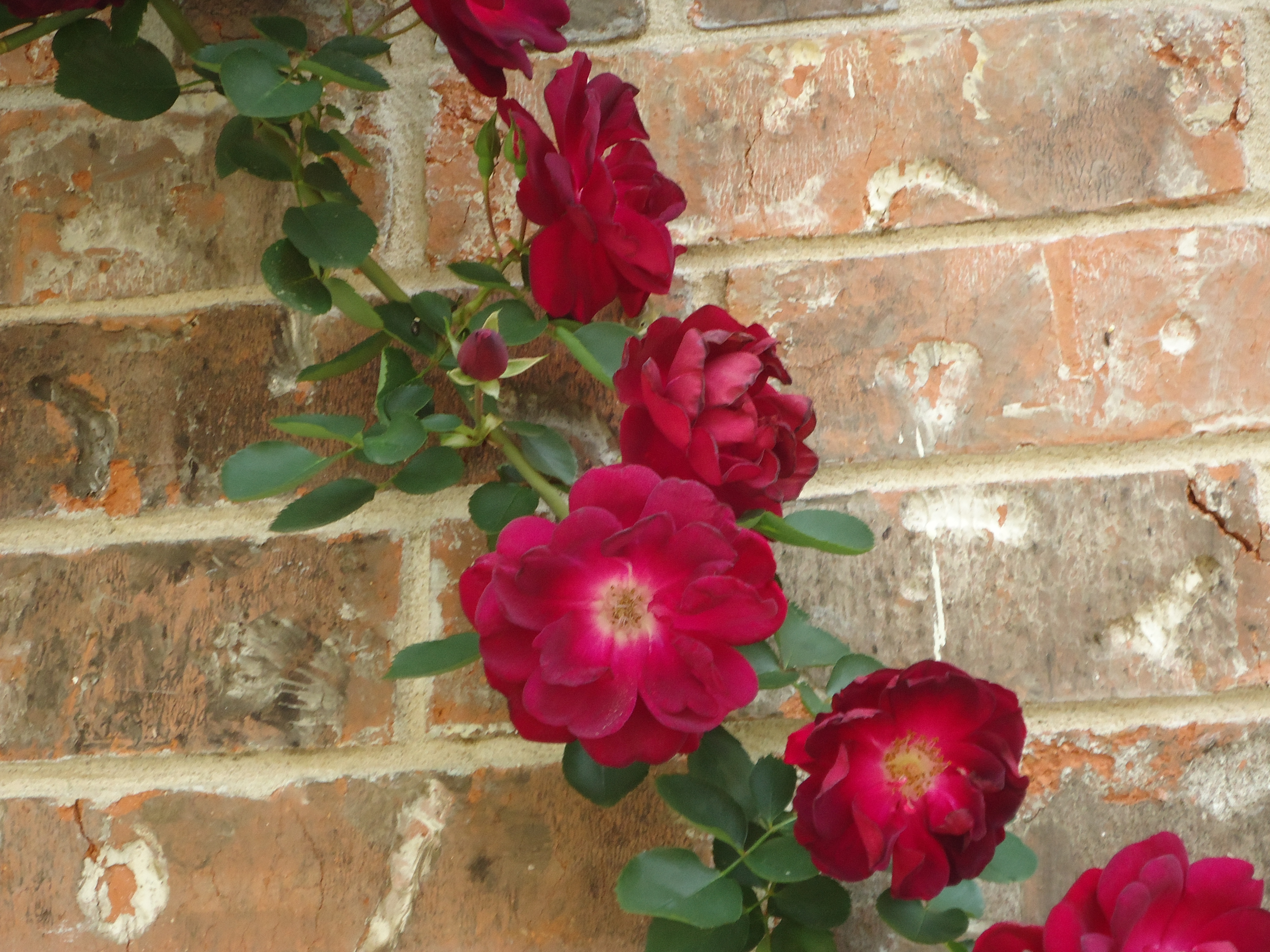 The phrase used to be ‘stop and smell the roses,’ I don’t know that it’s an entirely accurate turn of phrase anymore.
I am a busy lady with lots of activities, but mostly I’m busy on the internet. I have my personal accounts, and most things started out as hobbies, but somewhere along the way all my hobbies turned into jobs – and most these jobs include manning facebook, twitter, pinterest, and a whole host of other social media. Not just for me and my writing career, but for my art company, bookstores, and, well, everyone.
Because I do all this from an actual computer, because I don’t have what I call a ‘fancy’ phone or any kind of ‘spectacular device’ (smartphone, ipads, and whatever other twenty-first century gadgets the world has at their fingertips these days), when I go on vacation, or even a business trip, I get a true break from everything.
I had a book signing in Dallas this past weekend. Which means from the time I got into my car to drive the four hour trek to the time I pulled back into my driveway 72 hours later, I was on internet silence. No facebook to log into. I didn’t have a chance to or even a reminder to tweet anything. My blog became an afterthought; and everything of the cyberspace variety went 100% on the back burner so that I could spend all my time with the real world – or ink and paper when I didn’t want to look beyond my nose.
And guess what?
It was marvelous.
Click the photo to see all the pictures from the HPB Preston Village book signing.
My afternoon at my signing was completely focused on my customers, my business partner, and the beautiful friends that came to visit and support me. I’ve seen many authors sit behind author tables and have no clue how to interact. Instead they spend precious moments when they could be chatting with fans, typing on smartphones or figuring out how to take credit cards. Being able to accept credit cards sure does make things simple for people – but my tech-free weekend kept all transactions cash only, and I have to say, it was nice.
Afterward, a group of us went off to a new restaurant in the Bishop Arts District of Dallas called Smoke. I highly recommend eating there for anyone who hasn’t tried it. The food was excellent, the service was great, and the place had a pretty stellar vibe. (By the way, the creme brule is to die for – and the best part is the candied ginger. ) Part of that vibe, I must say, was enhanced by the fact that we spent little to no time on our phones!
 Instead, we discussed future events for Aoristos and myself, as well as books (both published and not yet published). To the right, my lovely friend Miss Golightly is taking a brief gander at the Follies Past by Melanie Ker while we wait for our dinner. (I’m still reading, but there will be a review posted soon! Austen fans, stay tuned!)
Time and time again I have gone to dinner with the far less considerate only to sit at a table and watch people facebook and text all their friends who aren’t present. It’s something I’ve never appreciated. So, although having a smart phone would make many of my events have a more solid online presence, I am not inclined to purchase one until I absolutely have to. I’m less interested in an online presence and more interested in being present. The online part can happen before and after, in my opinion.
After being stuffed to the gills with the most amazing barbecue I’ve had in a long time, I finished the day at my aunt and uncle’s house. It’s practically a bed and breakfast it is so cozy and relaxing. Homemade lattes were made, there was some time in the garden, and then afterward the kiddo and I slept here…

Clearly, this is after I mussed up the pillows. 
FYI, there’s a manlier room down the hall…
It was the best sleep I’ve had in a good long while. Probably helpful that my eyes hadn’t spent any evening time looking at a computer screen. (Not to mention, I was physically exhausted.)
Bright and early, and well rested, the next morning… I stepped out of my room to something that is nothing short of heaven to my soul:
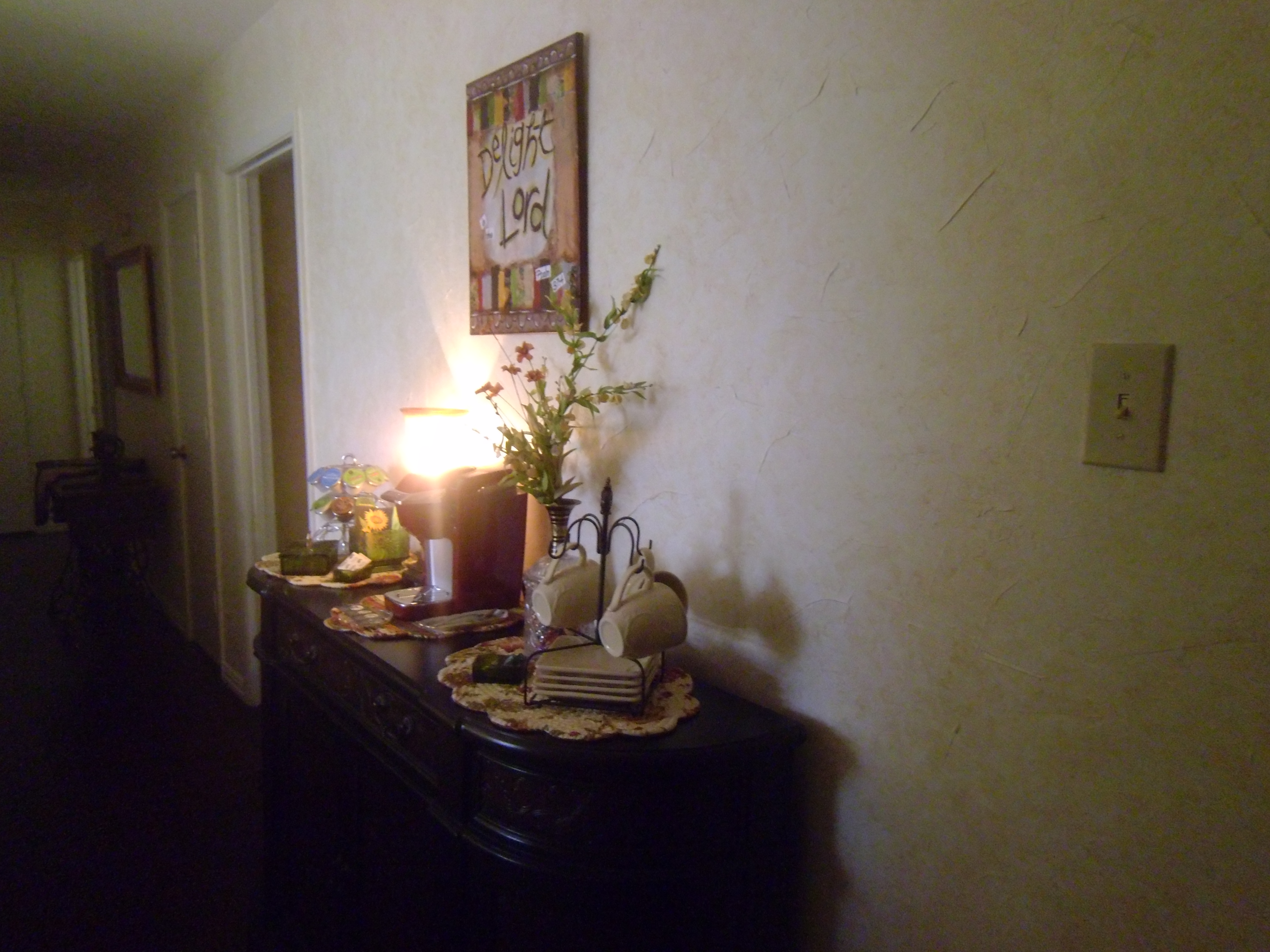 Yes, that’s a coffee bar right outside the guest bedroom. Complete with bottled water for the Keurig, International Delight creamers (in hazelnut and french vanilla), sugar packets, and real mugs!
After helping myself to coffee, I took my journal and Melanie Kerr’s book and headed to the room one door down…
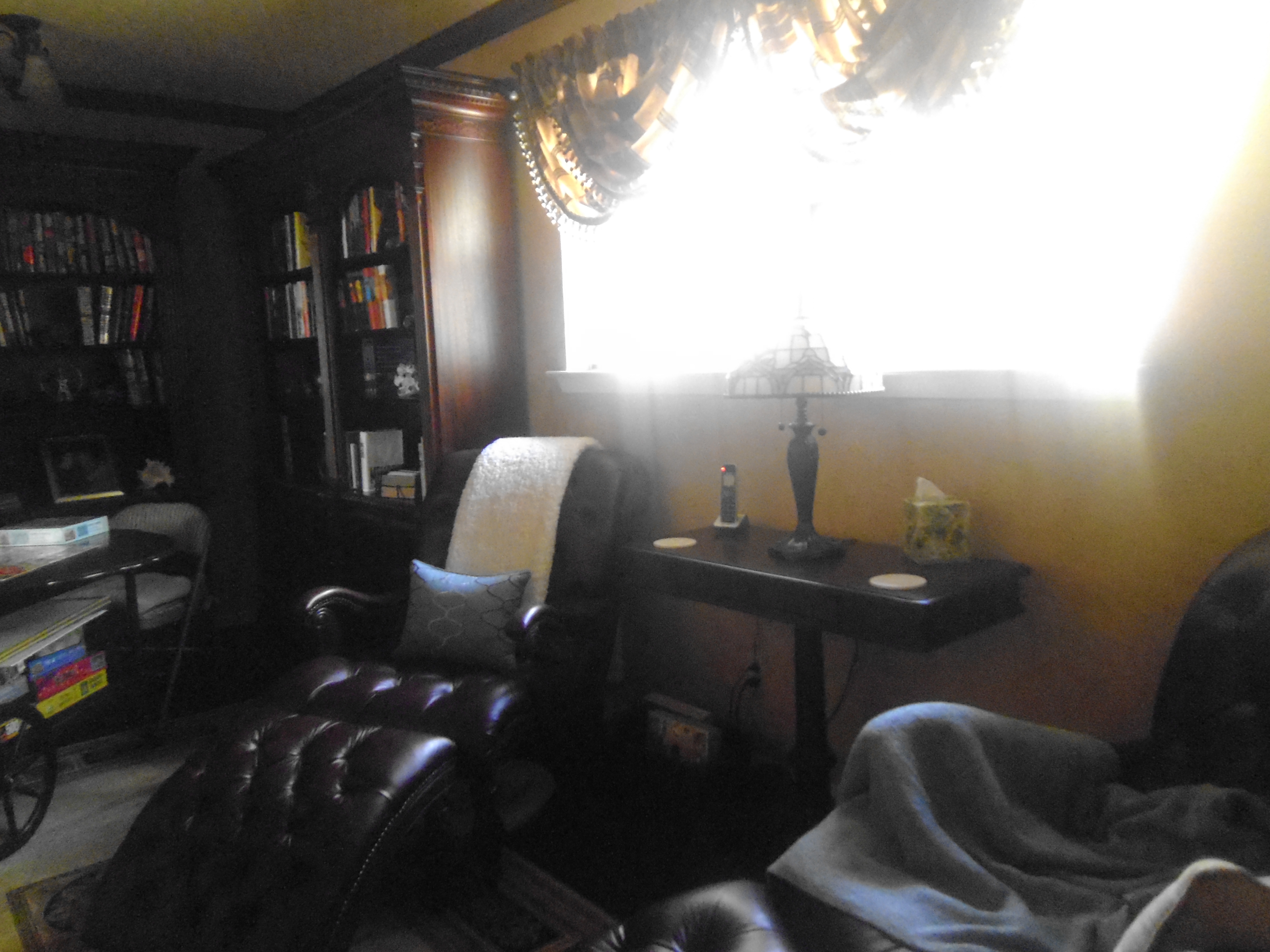
It was a beautiful morning. I did what I do every morning, sans computer screen blinking at me. That lack of a computer screen makes all the difference. And although computers are useful, and I adore my jobs and the freedom I have to raise my daughter while working mostly from home; once in awhile I need to remember that just because I’m sitting, doesn’t mean I need to be sitting with technology.
Log off… smell the lattes… breathe, relax, enjoy.
Kim, World Traveler
 Meet today’s Guest Blogger: Kim Ogonosky. She’s a reader, a writer, has the most *amazing* singing voice, and loves to travel…
I firmly believe that people who love to read are natural born travelers.
There is no scientific data to back this up; it is my [completely biased] personal opinion based on firsthand experience. Simply put, I love to read, and I love to travel.
Of course the word “travel” does not necessarily need to be understood strictly as the physical act of traveling. For avid readers who get metaphorically lost in literature, are they not, in a sense, traveling as well?
You bet they are, and I can attest to this. I traveled to Pemberley with Elizabeth Bennet where I fell hopelessly in love with Mr. Darcy. I partied with the wild, over-indulgent upper crust of society at Jay Gatsby’s mansion on Long Island’s West Egg. I’ve been to post-apocalyptic worlds and dystopian societies. I’ve traveled halfway around the world and broken the barrier of time. I’ve laughed, I’ve cried, and I’ve thrown things across the room in outrage.
And if anyone dares tell me this is not a form of travel, I assure you they have never gotten lost in a book!
Aside from traveling through books, I also love to physically travel. Never one to sit still, I am always looking for the next adventure. I once said my life’s goal is to visit every single country before I die. I have 13 under my belt, which means I have approximately 183 to go. Hey, a girl can dream!
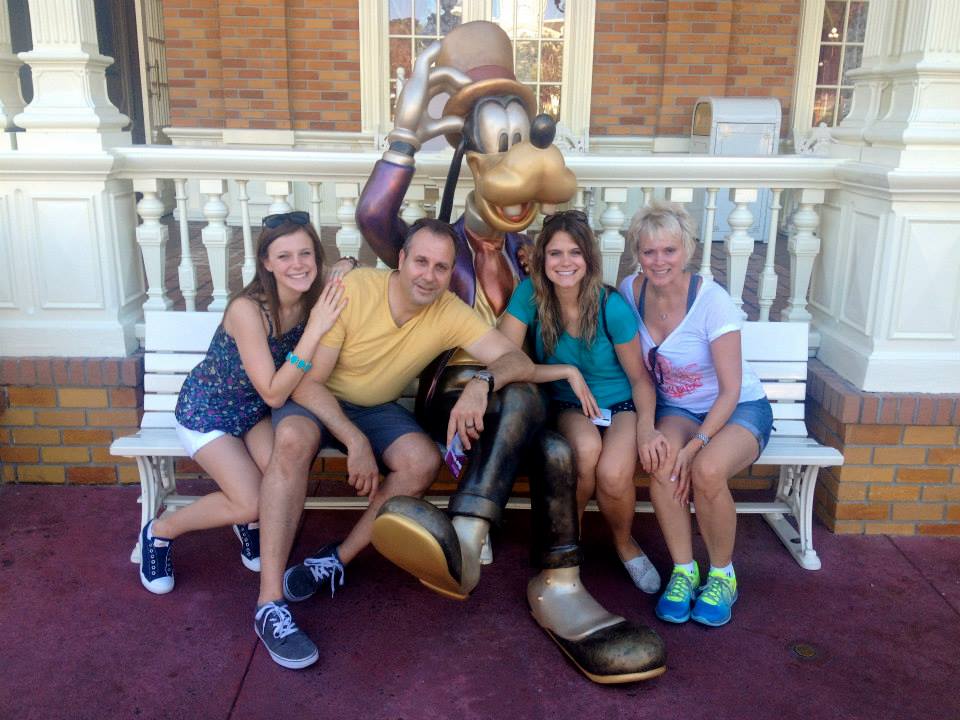
My favorite place in the world is Florence. My favorite family vacation has been to Disney World. And I definitely recommend taking your significant other to the Caribbean for a vacation that looks like it came straight from your computer’s screensaver. But the most influential trip I have ever taken was to Tanzania.
In graduate school I was given the opportunity to travel to Dodoma, Tanzania to help film a documentary about a nongovernmental organization called BRAC. Another student and I were sent there to highlight their Empowerment and Livelihood for Adolescent girls program. I had never picked up a video camera before in my life, and I only knew a few choice phrases in Swahili, but off I went with just one other person, malaria pills in tow!
Side note: I have never taken any sort of illegal substance, but I’m pretty posit
ive if I did, the effects would be similar to that of taking malaria pills. That stuff is no joke.
When I got back from Africa, I remember people asking me if I had “fun.” Yes, it was the most influential experience of my life thus far, but I would choose other adjectives to describe it: Eye-opening, humbling, transformative, educational, challenging, and emotional all come to mind.
The pinnacle moment of the trip came when the Internet at our hotel went out, and I almost had a nervous breakdown.
My Family
Now, in my defense, the reason I had the nervous breakdown was because I wanted to contact my loved ones, not because I wanted to update my Facebook profile, so it was coming from a well-intentioned place.
However, we had just spent the day in the nearby villages interviewing these incredible young girls who had faced more hardships in their lives than the majority of us could ever imagine. Many didn’t have shoes. Most didn’t have clean water. And a startling number were in danger of not finishing their educations. Yet they came together to sing, dance, play, learn about how to start their own businesses, and support one another through strong female friendships.
And here I was at my hotel, with a pool, a nice restaurant, and plenty of clean water, crying about the Internet going out.
Needless to say, I was dealt with a healthy dose of perspective in that moment.
So yes, my trip to Africa was the most eye-opening, humbling, transformative, educational, challenging, and emotional experience of my life. And I wouldn’t trade it for the world. I learned so much from these brave young women, and I was inspired to immerse myself in similar travel situations again. Not because it was “fun,” but because I learned so much about the world, about humanity, and about myself.
Sounds a little like reading a really good book, doesn’t it? And here we are, coming full circle!
I recently stumbled upon what I consider to be the opportunity of a lifetime. An up-and-coming travel website called Jauntaroo is hiring a “Chief World Explorer” who will travel the world for a year, while blogging and filming webisodes about their experiences. Moreover, this person is encouraged to participate in “Voluntourism” activities while traveling. Sign me up!
Yes, the competition is stiff, but if I’ve learned anything from my books it’s that you must go after your dreams. Or simply put, if you don’t shoot, you don’t score!
I went for it and submitted a video application for this position, which can be found at www.bestjobaroundtheworld.com/submissions/view/12992. It is only a minute long, so should you decide to watch, it will not take up a lot of time. After having read this and watched the video you feel I would be well suited for the job, I would be incredibly grateful if you “liked” my video. You don’t have to fill out any forms, and you can do it once every 24 hours if it tickles your fancy! This would be an incredible experience, and I would love to be given the chance to travel the world and take others with me on the journey- through the fun, the relaxing, the challenging, the emotional, and the meaningful times.
Thank you for taking the time to hear my story. I wish all of you safe, exciting, and meaningful travels, be it in the metaphorical or the physical sense. Life would be so less interesting without them.



The Labrador Wild
 Title: Letters to the Granddaughter
Author: Philip Schubert
Length: 198 pages
Travel books that focus on the adventure aspect of the traveling really excite me. I loved Bill Bryson’s A Walk in the Woods, enjoy anything on nature, and was really excited to get a copy of Schubert’s own adventures in my hands.
Schubert took on the hefty project of retracing the steps of Dillon Wallace, a man who took the risks of nature by storm and conquered the edge of death several times. Reading about Wallace and Mina Hubbard, and all the others of the major voyages through the Labrador in the early 1900’s shocked me – how had I never heard of this man before? How was he not mentioned along with other well known explorers like Lewis and Clark?
 Schubert’s book is truly incredible, as I suspected it would be. Since its arrival at my home, it has been sitting on the shelf taunting me as I completed other reading assignments and projects that were first in line. My fingers itched to open its pages and my eyes longed to feast on all the many maps and photography both antique and recent.
Despite said maps and imagery, I still had a difficult time picturing just where in the world the Labrador lie. Clearly my geography education is lacking.
Whether or not you enjoy the great outdoors and the sheer adventure of hiking and canoeing, the extensive research and travel done to put this book together is impressive. Whether or not you plan to sit and peruse each and every detail and hunt down Wallace’s original work upon acquiring a copy of Schubert’s book, this title makes for an excellent coffee table book. Already, guests haven’t been able to help but pick it up and thumb through it when coming to my home. The maps, the pictures, seeing the difference between a pair of trees in 1903 versus 2012… it’s all so riveting.
Having read the book, I have no intense desire to trek the route myself (and get killed), but I’d love to find a way to visit the plaque where Mina Hubbard’s husband died. Another especially intriguing location from the pictures is the Three Gorges, on page 117 of the book there’s a stunning photograph of quite an impressive view. I’d love to stand there myself.
 To readers who plan trips to famous writers’ houses, don’t miss out on Dillon’s former house in Beacon, New York. It’s gorgeous. I want it.
To Boy Scouts (my husband is an Eagle), this is a must read. After his days of trekking through the Labrador and documenting his time there, Dillon Wallace “established the Boy Scout movement in Dutchess County and was himself scoutmaster of Troop 1 in Beacon.” (pg.185) His books were later included in the Every Boy’s Library Series.
I’m still on the lookout for copies of the original works by these amazing people, there are plenty online but despite supporting online purchases through Good Books in the Woods, HPBmarketplace.com, and lastly Amazon.com, even Abebooks every now and then… I rarely order online myself. I prefer to find that perfect copy calling my name in the brick and mortar store. When Dillon Wallace and Mina Hubbard’s books finally do call my name, I will excitedly scoop them up because I’ll be adding them and Schubert’s own research to the kiddo’s classical education reading list.
Visit the Author’s website.
The Best of Foodie Memoirs
Title: Lunch in Paris
 Author: Elizabeth Bard
Publisher: Back Bay Books
Genre: Travel/Memoir/Cooking
If you are looking for Eat, Pray, Love or Julie & Julia at the bookstore – STOP. Pick this up instead. It’s friendlier, wittier, and far more relaxing.
It was the water color that got me first. That and the fact that I love memoirs with recipes, they pretty much dominate my source of kitchen plans. Then, that first page of that first chapter: Coffee, Tea, or Me and her description of herself – I felt so at home, so in league with a kindred spirit.
She says things like “I stood pressed against the wall, like a field anthropologist caught in the middle of a buffalo exorcism,” when describing a French dance party. How can you not fall in love with a writer that expresses herself like that? I literally started laughing out loud, and I hate using that phrase since all the texters in society have begun speaking how they type, so when I use it I really mean it.
Bard is pleasant and loveable. She has dilemmas that I can sympathize with, as opposed to Gilbert’s laments in Eat, Pray, Love which seemed all a little over the top and self inflicted. I did laugh a few times when she chalked something her husband did up to his being French, a lot of times it just seemed very husbandy to me. But for the most part, I think I was only laughing when I was truly meant to, when she utilized some turn of phrase or told a story that should make the corners of your mouth twitch while you read.
My favorite moment was when a friend tells her she can’t just go to the market for the rest of her life. Before Bard got a chance to say it herself, I inwardly pleaded… why not? It doesn’t matter whether you loathe or love the grocery stores here in the states, Bard will make you fall in love with European markets and long desperately to go make purchases at a butcher shop in Paris and linger over vegetables in the streets.
Go. Buy. Enjoy. I know you’ll love it.
A Tidbit from Miss Golightly
If these images don’t put you in the mood to read Lord of the Rings, I don’t know what would.

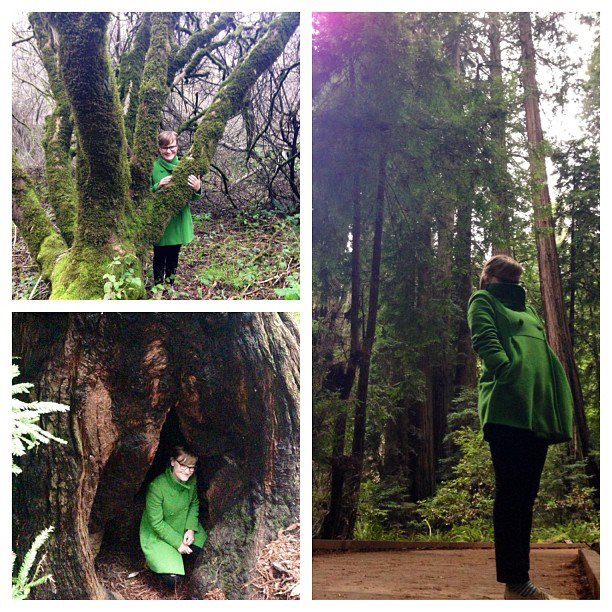
Miss Golightly at Muir Woods National Monument.
Great Journeys – Marco Polo
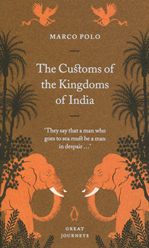 Title: The Customs of the Kingdoms of India
Author: Marco Polo
Publisher: Penguin Books
Length: 86 pages
Inspired by the Great Ideas series, Penguin Books printed a Great Journeys companion series as well. From Herodotus to George Orwell, the series chronicles twenty of the most famous and intriguing adventurers in history. Third in this series is Marco Polo’s journey to South Asia, where he discusses the culture, the economy, the industry, religious practices and more.
I picked this book up for two simples facts: 1. I am collecting all of Penguin Books Great Ideas publications and 2. There are elephants on the front cover. I adore elephants. They are powerful, dignified, trustworthy, humorous, and endearing. Marco Polo’s The Customs of the Kingdoms of India has little do with elephants. 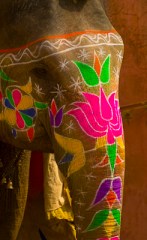 Actually, I’m pretty sure it has absolutely nothing to do with elephants. Of course, that’s not the point, elephants are broadly recognized as a symbol of India/ South Asia, so naturally they would be an image of choice for the front cover of an Indian travel book.
Marco Polo does not go into great detail about how the elephants are used as means of transportation, status symbols, work beasts, and more. He mentions them in passing, but says in the places he visits, they are not indigenous to the area but imported from other islands. He does, however, discuss the art of physiognomy, which immediately made me think of the science fiction piece by Jeffrey Ford called The Physiognomy
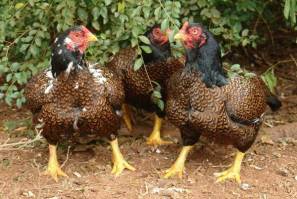
Did Marco Polo’s “prettiest hens” look like these?
Apparently, in South Asia, hens represent prosperity, and today you can buy ‘prosperity hens,’ little talismans similar to a rabbit’s foot. Of course, Marco Polo again does not go into detail regarding this, he merely mentions their beauty and moves on. Marco Polo’s writing is that of traveling merchant. He chronicles quick and simple descriptions that would be useful for a businessman, but avoids the great detail of a philosopher or anthropologist. The things that strike his fancy for elaboration are the rituals that would intrigue a vendor, rather than those that would fascinate a theology student. Where he does talk about religion, it seems to be in a political and historically informative way to help you understand a province as a whole, moving quickly to the supplies they live on because of their past. Like a professional trader, he wishes to dwell on the rice, the wheat, and the growth of cotton. Respect for various people groups and villages he encounters is highly dependant on how much they function on industry and marketplaces.
I don’t believe Marco Polo to be much of a writer, and I think his accounts would have benefited from being written while on his voyage. But according to historians, he dictated these adventures of sailing the Indian Ocean later to a fellow inmate in prison. This practice of dictation could have played a role in his style of often informing his reader “I will tell you how” and “I will describe to you,” as well as “let me tell you why” and so on; repetitive and unnecessary phrases that, quite frankly, annoyed me.
Still, this concise 86 page piece is interesting, and a great addition to any young scholar’s library. It would be a wonderful supplement to a world geography study on South Asia for a middle grade student and could open up a lot of dialogue between teachers and students regarding history, religious practices, other cultures, world economies, and more.
HPB Humble October Meeting Prep
Bill Bryson’s bestselling books include A Walk in the Woods, Notes from a Small Island, In a Sunburned Country, Bryson’s Dictionary of Troublesome Words, A Short History of Nearly Everything, which earned him the 2004 Aventis Prize, and The Life and Times of the Thunderbolt Kid. Bryson lives in England with his wife and children. – from The Official Bill Bryson Website, http://www.randomhouse.com/features/billbryson/about.html
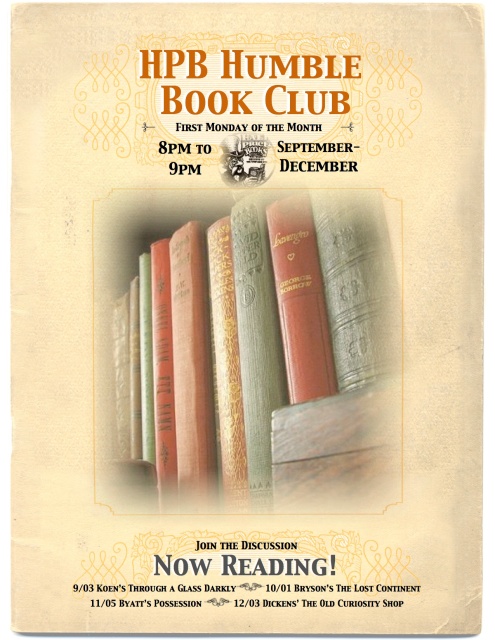
Discussion Topics for October 1st:
- “It must be very frustrating to have a truly unique experience.” – pg. 159 What unique experiences have you had lately?
- There is a Veblen reference on page 151, “conspicuous consumption.” How do you feel about this assessment of America?
- What did you think of Bryson’s description of the south?
- Have you ever stopped to read historical landmarks? Do you know about the historical landmarks here in Humble?
- What was your favorite part of the book? What was your least favorite part of the book?
Below I have included historical landmarks of Humble, TX, taken from the Humble area website: http://www.humblearea.com/history/
|
Humble, Texas Historical Markers Humble Cemetery – Humble (227) This cemetery is believed to be the town of Humble’s oldest. The earliest documented burial is that of Joseph Dunman (1867-1879). Also believed to be buried here in an unmarked grave is Jane Elizabeth Humble, wife of the community’s founder, Pleasant Humble. The first legal record of the cemetery appears in a deed transferring the cemetery property from Jonas Altmont to trustees in 1914. Civil War veteran Houston Young and several World War I veterans are also interred here. This cemetery serves as a reflection of Humble’s pioneer heritage. Humble Lodge No. 979, A.F. & A.M. – Humble (164) Near the turn of the century, the town of Humble was home to many Masons who were members of lodges located in nearby towns. With the help of local Justice of the Peace F. K. Wise, Humble area Masons organized their own lodge in 1908. Humble State Bank president and future Texas Governor Ross Sterling (1875-1949) provided meeting facilities in the bank building which formerly stood at this site. After the bank burned in 1912, the Masons bought the property and built a new lodge hall. The Masons have been active in civic programs over the years. Humble, City of – Humble (164) A pioneer oil boom town. Originated as crossroads community named for settler Pleasant Smith Humble (1835?-1912), who lived here before 1889, hewing his timber into railroad ties, mining gravel from his land, keeping store, and serving as justice of the peace. Neighbors included the Bender, Durdin, Isaacks, Lee, Slaughter, and Williams families. Economic bases were farms and sawmills. The post office opened 1902. In 1904 C. E. Barrett (1866-1926) drilled for oil in this area, securing small production on Moonshine Hill. On Jan. 7, 1905, he brought in the No. 2 Beaty Well which yielded 8,500 barrels a day, opening the great boom. From a village of 700, Humble grew at once into a town of 20,000. Field production– the largest in Texas for the year 1905– was 15,594,923 barrels of oil. The field was named for the town. A group of its operators, including Ross S. Sterling, later (1931-33) governor of Texas, in 1911 incorporated a new oil company named for the field, thus spreading into the annals of world commerce the town’s name. Production from several strata here exceeded the total for fabulous Spindletop by 1946. Known as the greatest salt dome field, Humble still produces and the town for which it was named continued to thrive. Moonshine Hill – Humble (105) Early reports of natural gas seepages in this area were not uncommon in the late 19th century. James Slaughter noticed such natural occurrences near the San Jacinto River in 1887. Several years later, with S. A. Hart, he set up a drilling operation in the area, but it proved unsuccessful. Charles Barrett, a former Huston merchant, also drilled wells here, but found the results limited. In 1904, the Higgins Oil Company brought in a major gas well and the following year, the first successful oil well was drilled. This area, known as the Moonshine Hill section of the great Humble oil field, became the site of a boom town. Within months of the 1905 discovery, the population of the Moonshine Hill settlement increased to 10,000. Early operations associated with the site included the Moonshine Oil Company of Walter Sharp, Ed Prather, and Howard R. Hughes. Although tents comprised most of the early structures, Moonshine Hill eventually included a church, school, postal station, stores, hotels, and saloons. Despite three separate boom eras, the last occurring in 1929, Moonshine Hill declined as a community. Its brief existence, however, had a dramatic impact on the economic development of Humble and Houston. Texas Sesquicentennial 1836 – 1986 First United Methodist Church of Humble – Humble (86) Founded in 1886, Humble was an oil boom town in 1907 when the Rev. J. T. Browning of Houston began conducting Methodist worship services for residents of the area. The services were first held in a building that had housed a bottle factory. In 1908, this church was organized with 37 charter members. The following year, the congregation constructed their first building, a small frame structure later destroyed by fire. Subsequent church facilities have reflected the continued growth of the congregation and community. Texas Sesquicentennial 1836 – 1986 Lambrecht’s Artesian Well – Humble (50) An oil well drilled at this site in 1912 yielded not oil, but free-flowing artesian water. The following year, German native Nick Lambrecht (1855-1920) purchased the property. Lambrecht served as justice of the peace and mayor during Humble’s oil boom days in the early 20th century and in 1904 had installed a water system to meet the needs of the many oil field workers who came to town. Lambrecht’s artesian well was used to supply water to bathhouses and was also piped to nearby homes. In earlier years, water had been hauled to town in barrels on horse-drawn wagons. Texas Sesquicentennial 1836-1986 |
Bill Bryson, I adore You
 Title: The Lost Continent
Author: Bill Bryson
Publisher:Harper Perennial
Length: 299 pages
I read A Walk in the Woods a year or two ago and I remember thinking, “What a witty, sarcastic, jack-ass – I love him!” The same holds true for one of Bryson’s earlier works, The Lost Continent.
This book is a great travel memoir of a road trip in America, back when it was still glaringly clear that we were The United States of America, each part of our country a very unique place, in the midst of the late 80’s and early 90’s when the lines were getting blurred and we as a nation fell more and more into a federal ‘group-think’ existence.
Being from the south, there are many times when I feel I should be greatly offended by the things Bryson has to stay about my neck of the woods. Three things must be said about my not getting offended 1. We southerners don’t offend easily, we just pat your hand and say ‘Bless Your Heart’ for not understanding us and 2. Bryson is funny and intelligent, and despite a lot of generalizations and false conclusions, many parts of his descriptions are familiar and full of truth. But finally, 3. “The South” and “Texas” don’t always mean the same thing, we are a brand all our own, and mighty proud of it.
Bryson’s version of tourism is wonderful. It has both the comprehension of American ways and not quite being an outsider, as well as the fresh eyes of someone who has been away for so long. His adventures around national landmarks, travels through run of the mill towns, and his uncanny ability to not be duped in one instance and be completely suckered in another is fantastic. He finds himself in both the best and the worst of places. From the smallest hotel room in NY to the cleanest hotel room in New England, Bryson experiences it all, and shares every scurrilous detail.
If you’ve ever stepped foot in any of these places, you can’t help but enjoy his descriptions. If you haven’t yet been there, you find yourself intrigued. If you’ve ever read Conspicuous Consumption, you can’t help but notice how Bryson spells out the concepts Veblen’s concepts with severe imagery. If you’ve never read anything at all, you can at least appreciate his comedic nature and how much his books will make you laugh.
Scentsy pairing: Clean Breeze or Route 66
As usual, I’m enjoying Bryson’s work quite a bit and am so excited to get a chance to discuss this book with other people at the Half Price Books Humble Book Club meeting on October 1st. There’s still a few days to find a copy, read it, and pipe in at the meeting.
Author Karen Rose Smith Guest Blogs
I find interacting with authors on Twitter to be very exciting, and it’s always fun to share my twittering adventures with my fellow readers and blog subscribers. Karen Rose Smith is a best-selling, award-winning author. Her 80th novel will be published in 2013. Below, she shares a little bit about her life as a writer.
What Inspires Me
 Writing and living are interchangeable for me. They are so glued together that I realized while writing this blog that whatever inspires me for one inspires me for the other. Peaks and valleys in one affect the other. So when I think about inspiration for either writing or living, I can lift my heart in these ways.
Ever since I was a young girl, music has made a difference in my life. (That is probably why one of the romances in my new series revolves around music.) Until I was five, my parents and I lived with my grandfather and my aunt. After that they lived next door. I come from an Italian heritage, and my grandfather was an immigrant. He played the mandolin beautifully. On weekends friends would stop by with guitars and an accordion, and he and his friends made music. That music brought into the house fellowship, fun and a sense of well-being. Also in my grandfather’s house was a player piano. We inserted what was called a “roll” and a melody magically played while my mother and I would sing along. She played the piano herself, and I would accompany her, too. It was natural for me to learn to play the piano myself. Through the years I learned to express emotion through the playing. I found joy and inspiration in the music. With this history, I never just listen to a song. I feel it. Today I listen for artists and music which can stir that deep creative part of me, whether it does that by bringing back memories, lifting me to a mountaintop, soothing pain and stress away, or urging me to write a particularly emotional scene. Music lifts me over the writing bumps or life’s bumps.
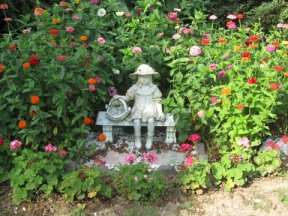
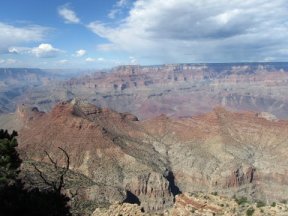 Traveling to a place with power also renews me. I believe everyone can find places that fill them with peace and an overwhelming sense of well-being. When I was a child, I had access to a relative’s farm. There was something about the fields of grass, the scent of orange blossoms and honeysuckle, the playfulness of kittens around the barn and the beauty of horses in the corral that always washed over me in a particularly healing way. I loved just being there and soaking it in. As an adult I feel drawn to places where I can feel a power greater than myself–the ocean, the cliff dwellings in the southwest, the Appalachian mountains, the big blue sky over Santa Fe, Sedona and the Grand Canyon, a memorial garden my husband and I created in memory of my parents in our own backyard. All of these places, as well as the memories from being in them, fill me up when I am empty and help me to keep going.
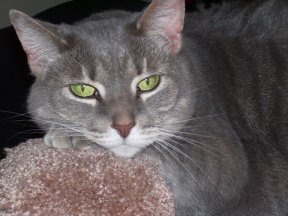 Since emotion and my creative energy are also integrally linked, the people I love and who love me also inspire me. My husband reminds me that I always say each book is different and eventually my characters show me the way. Talking to my son long-distance reminds me the bonds between a mother and child are never-ending. When my BFF’s daughter runs to me for a hug, I am inspired to look at the world through her eyes–in a more innocent, unspoiled way. My writing friends listen and help me get unstuck when a scene or character is being stubborn. Also my three cats, Ebbie, London and Zoie are constant companions who remind me to be playful. Ebbie joins me when I work or listen to music. London curls on my lap or beside me for an afternoon break. Zoie exhibits pure kittenhood. Their presence fills me with a sense of joy and contentment.
Inspiration surrounds me in many forms. I just have to know how to listen, where to go and whom to turn to in order to find it. Somehow I always do and life and writing flow on.
Buy Her Books Here!
Readers can visit her websites:
http://www.karenrosesmith.com/
http://www.karenrosesmithmysteries.com/
http://twitter.com/karenrosesmith/
Facebook (Karen Rose Smith author)
Access her e-zine In Touch at karenrosesmith-ezine.blogspot.com for new releases and contests.
Experiencing the Olympics in England
Hey Americans! Chat about The Olympics with my friend who is over there, right now, in the thick of it!

The ceremony may be old news, but the items director Danny Boyle chose as illustrations of Britishness could easily be a blueprint for a blog like mine, celebrating the differences between US and UK life. This is the intro to a series of posts treating items in the opening ceremony that foreigners might not have understood.
It’s ironic that the Olympics turns so many people into couch potatoes for the duration, sitting on sofas watching the fittest people in sports (UK English: in sport) leap and twist and run and throw. And it’s also ironic that an event that everyone is at pains to say promotes harmony between nations should be so overtly nationalistic, not least at the opening ceremonies, where the trick is to balance two human impulses: to celebrate the characteristics of your own tribe and to welcome visitors from other tribes.
This time last week British newspaper…
View original post 565 more words



 Anakalian Whims