Song for Papa Crow
 Title: Song for Papa Crow
Author: Marit Menzin
Publisher: Schiffer Publishing
Genre: Children’s Picture Book
I was delighted to have Schiffer Publishing contact me to review a selection of their picture books. There can never be too many children’s books here in the Klemm household, as kiddo devours them for breakfast, elevenses, lunch, dinner, and bedtime. We’re readers. We read. We’re also artists and we love admiring quality picture books.
As a homeschool mom of an aspiring birder, I couldn’t find Song for Papa Crow any more perfect.
This is a lovely story about how Little Crow loves to sing. He sings his heart out and in the course of teaching children what birds of North America make what sounds, we also follow Little Crow on a a journey of self-discovery and why it’s a beautiful thing to be yourself.
Menzin’s collage art is gorgeous. Kiddo and I adore all the rich colors. We spend a good deal of time outdoors and it’s wonderful to see nature portrayed with so much texture even while confined to the pages of a book.
Of course, after every book, I ask kiddo what she thinks. My three year old smiled broadly and responded, “I think it’s ridiculous.” Ridiculous, naturally, being pronounced ridicooooolous and said for the sheer enjoyment of using the word. Proven by the fact that she has asked for me to read “the Papa Crow one” at least twice a day since our first reading.
Now, a week later, I ask kiddo:
“Would you like to say anything about Papa Crow to our readers?”
“Yes,” she says decisively.
“What would you like to say?”
“Nothing at all, I just want it to be SEEN.”
Powerful words from a three year old, I think. She’s right, we could talk about how awesome Papa Crow is all day, but when all is said and done, Menzin’s collages simply must be seen.
Songs for Papa Crow will accompany us to Story Time at Half Price Books Humble for the next two weeks (July 2nd & 9th). We meet every Wednesday, all summer, at 10:30 am. Though we typically read multiple titles, we tend to choose a favorite to feature each week. We will also have a few Schiffer Kids Spring 2014 Catalogs for patrons of Story Time to peruse. Snacks are provided.
I look forward to reading more from Schiffer Books as well as Marit Menzin. The Klemms are officially fans for life.
The Skinny on Landscaping
I wrote an article for a website that didn’t get used. It happens sometimes, no biggie. But this particular article is one that I did a great deal of researching before I wrote and actually talked to professionals that I know personally. So, I want to share the blogger’s version (which means I’ve dressed it down and added my two cents where I otherwise would have held my tongue a bit).
The Skinny on Landscaping and Outdoor Projects
(DIY vs. The Contractor on the most common outdoor ventures)
Everyone loves a good do it yourself project. Pinterest and the TLC channel have made them more popular than ever. Home Depot and Lowe’s are certainly your helpful neighborhood DIY Home Project instigators and dare I mention the keeping up with the Joneses mentality amidst a major recession.
However, there are projects that are just not do it yourself friendly and with all the handy books, websites, and television channels, it’s hard to know which are for you and which warrant a good old fashioned contractor – especially when we’re dealing with our lawn and garden.
Re-Sodding Your Grass
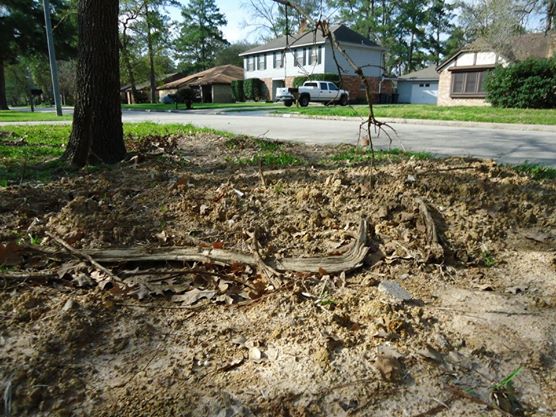
Actual “before” photo of our front yard.
Landscaping is the most commonly chosen as a do it yourself renovation. Ironically, people hire companies to mow their lawns, weed their gardens, and trim their hedges, but when it comes to things like re-sodding their grass, more often than not, they opt to do it themselves.
Despite the process being fairly simple, though, most landscapers will encourage customers (and friends) to hire out a company. You might assume it is so they can get more business, but they are honestly advising this in your best interest. A landscaper can get grass at a discounted rate, already has the equipment on hand, and are experienced and efficient.
Tito Ortega of Ortega Lawn Care recommends calling your local landscaper for any grass project
“over a full pallet. For what someone pays for a pallet of grass, soil, and renting tools they don’t have, I charge more or less the same and all they have to do is pick up the phone. And I provide a warranty, plus informational packets on how to care for it properly.”
I had his help when I resod my own lawn after an extensive plumbing project in my front yard and can vouch for his sentiments. The process is easy, sure, but we still had to rent tools. I had to pay regular Joe Schmo prices for my grass – instead of fabulous bulk prices that businesses have access to. Over all I felt all sorts of useful, my grass is beautiful, but I didn’t really save any money by doing it myself.
Pruning Trees and Shrubs
A lot of people prune their own trees and shrubs, but Gardener Joe in Washington State of PangeaGardenscapes.com encourages tree owners to call a professional. Many do-it-yourself sites, such as http://www.diyornot.com, propose the opposite, reporting that even after you purchase the sheers and appropriate tools you’ll still save 56% on just the first pruning.
Yet, Gardener Joe has some advice concerning that:
“Many people try to keep plants small which never works. A plant is programmed to grow to a mature height. Many times people buy a plant not understanding the maturity of said plant. Also topping a tree and some shrubs are a no-no. I belong to plant amnesty and if you check out plant amnesty.org it has many examples of different plants. So in my business I offer garden coaching services. I show how to prune and why. As well as my garden class I give once a month at our local library.”
So if you ar e going to trim your own trees and shrubs, do the research and know your plant. Otherwise, spend the extra dime to call a professional who can teach you about what you have in your yard so you can help your plants live long, healthy lives for the expense you’ve already put into having them there in the first place. Many people prematurely kill off plants that would have lasted for generations by cutting them back too far and not giving them the appropriate room to grow. Homeowners who plan to stay in the same place for thirty plus years should be very conscientious of this issue, otherwise they’ll find themselves spending thousands more over the lifetime of the property than they would if they spent a little bit up front consulting someone. For more tips, follow Joe’s Facebook Page.
We trim our own shrubs, but not our own trees. The danger factor isn’t worth the risk when you’re talking about limbs falling from the heavens onto things like your car or the roof of your house. Even with the shrubs, I see Gardener Joe’s point. We did some research into ours and learned how to take care of the shrubs we inherited with our house – when the old owners came by for a visit they gasped, “We could never get them to bloom like that when we were here.” According to a lot of professional landscapers and truly green thumb kind of people, many people think they are over or under watering when really they are trimming the hedges incorrectly. Save yourself the cost of new plants every few years and have a professional teach you how to do it right – whether that professional is from the pages of a book or has been hired to come out and talk to you by appointment.
Building a Fence
You may need to call a contractor for planting new grass and trimming trees, but you’re probably looking for what you can do yourself. It’s far more cost efficient for you to mow your own lawn and weed your own garden, but the other best DIY option for outdoors is to build your own fence. Everyone should get that experience in before they die and it’s definitely worth the savings on your wallet.
Most landscapers and handymen will charge you roughly 30% more than the cost of materials. That’s about the difference of an $800 fence and a $1200 fence, just to have someone else do it. Though quality work might be worth that, there’s nothing worse than looking out at a fence you paid too much for that doesn’t look quite the way you’d like.
My husband was extremely busy with work the year after Ike and the hurricane had taken down our whole side fence. We hired s omeone to take care of it because we had three dogs and needed it up sooner rather than later. We shopped around, we called the most affordable handyman, he had good reviews online. My husband still complains about that fence. We overspent and the fence boards are spaced too far apart. It drives us crazy. Last year, when a tree took down another section in the opposite corner of the lot, we built it ourselves.
The most cost efficient of fencing options is a neighbor friendly fence, where each neighbor takes on the cost of the panels that face their yard and each section alternates. I’m especially partial to these because I had one growing up. It makes the most economical and hospitable sense. Get to know your neighbors, be old-school, built it together.
No matter what your project, remember to research materials and processes, be realistic about your abilities and your time, and call around for multiple quotes. Weigh the expense up front against the lifetime expense of the plants or space in question, and plan carefully.
Of course, this is primarily a book blog, so I have to share my favorite DIY Landscaping books, which are pretty much gardening specific because I’m a gardener.
The Complete Book of Practical Gardening
Small Gardens
Square Foot Gardening by M. Bartholomew
Low Maintenance Gardening
Herbs and the Kitchen Garden by Kim Hurst
To read articles that DO get used by Money-fax.com, check out my Freelance Writer page and follow the links.
Life Lessons in Paint
Homeschool ing is a little more than having a lot of books at your disposal. Not much more, mind you, because books can answer all life’s questions – but still there’s a little bit more.
Our version of more involves a lot of art supplies. I wait for great sales, sometimes I even buy used canvases for next to nothing at Goodwill and garage sales and whitewash them, I’ve even been known to pull canvases out of trash cans. I’m that mom. One way or another I want to get art supplies into my daughter’s hands, and not the “kid” version s – I want her to have real paint, real brushes, and real canvases to work with.
At Christmas we requested that in lieu of toys and other items that will end up donated when she outgrows them or trashed when they are obliterated from use, to gift her art supplies instead. We’re not depriving her for the sake of enrichment, I assure you. I believe free play is essential and important. The girl gets tons of toys on her birthday and throughout the year and has mountains of them. Does she need mountains of them? No. Will we use the art supplies? Oh yes.
Thus began our friends and family slowly jumping on board with how we handle our week, our budget, and our holiday requests. As my daughter started to produce piece after piece (some not shown as they were gifted away prior to me thinking out documenting them)…

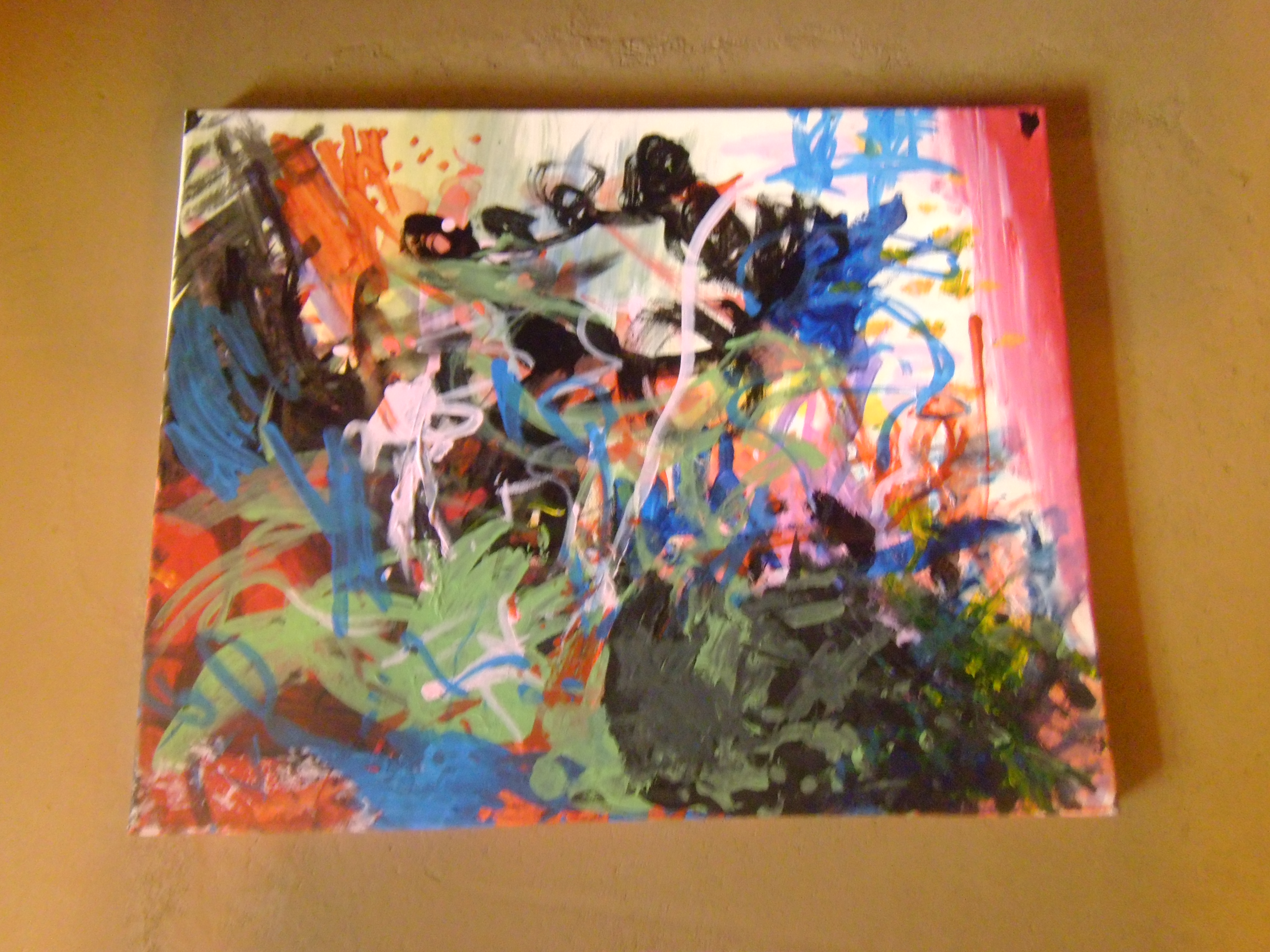
She chooses her own colors, even mixes them if she has to and decides which brush she wants to use at any given moment.  Each piece is entirely her own and we even discuss what she wants to name each one.
Pursuing art in this fashion is a daily exercise in understanding the scientific side of color (what it takes to make a color), as in the beginning we started only with primary colors, though we have been gifted additional ones. She is learning about texture, movement, and how to convey emotion.
In addition to that, she understands saving and budgeting for things she wants. How to prioritize certain desires: sometimes she uses birthday money for books, sometimes for toys, and sometimes for her own art supplies. (Even more often, she opts to put it in the piggy bank or fund an extra trip to Chick-fila.)
It also brings the books we study to life.
Since birth, I have made a point to introduce her to as many of the Getting to Know the World’s Artists
We read through The Metropolitan Museum of Art’s “Monet’s Impressions: Words and Pictures by Claude Monet” all the time. She seems to like the Impressionists a lot.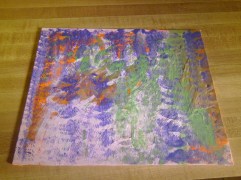
Which kick started our trips to the lake, taking paints and canvases to paint outdoors like they discuss in one of our favorite art books:
Picture This!
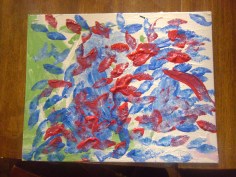
We also have a book on Frida, called “Frida Maria: A Story of the Old Southwest” by Deborah Nourse Lattimore, because all art forms are welcome in our house, as well as every bit of history we can find.
Which is why we also picked up a copy of “Leonardo: Beautiful Dreamer” by Robert Byrd at the library. We’ve been reading a few pages of that every day and I could not be more pleased with a picture book.
More than anything in this adventure through motherhood and homeschooling, I’m realizing that so much of ‘homeschooling’ has very little to do with what I know or what I can teach – it’s about granting access to where the knowledge is. It’s about handing her the tools and giving her the freedom to figure it out, to learn, and discover. So many times people argue that homeschooling stunts children to only learn what their parents know, when in reality it is quite the opposite. When they have so much free time, under a little nudge here and some pointers there, children are much more likely to learn to learn for themselves. A parent’s job, a teacher’s job, is to provide the tools for them to do that.
I didn’t think these things from the get go. I merely picked up books that caught my attention. I got her the art supplies initially because I had taken art in high school and my sister has always had natural talent with a sketchbook. I wanted my kid to get these things in her hands sooner rather than later because I had a lot of anxiety regarding art supplies – I was afraid to be freely creative because I feared being wasteful with something considered semi-precious. But over the last year and a half of actively putting these supplies in my kid’s hands, I have shaped a philosophy.
Here is a canvas, here is a paintbrush, here are some paints, here are a few books that show you the glorious nature of art throughout history – suddenly, you have a child who is beginning to understand history, humanity, science, and the world at large. Imagine the implications when I give her the tools to language and math. The sky is the limit and the list of people who learned to think through information on their own become the inspiration: Einstein, Curie, Alcott, Da Vinci…

Sun-Burned Days
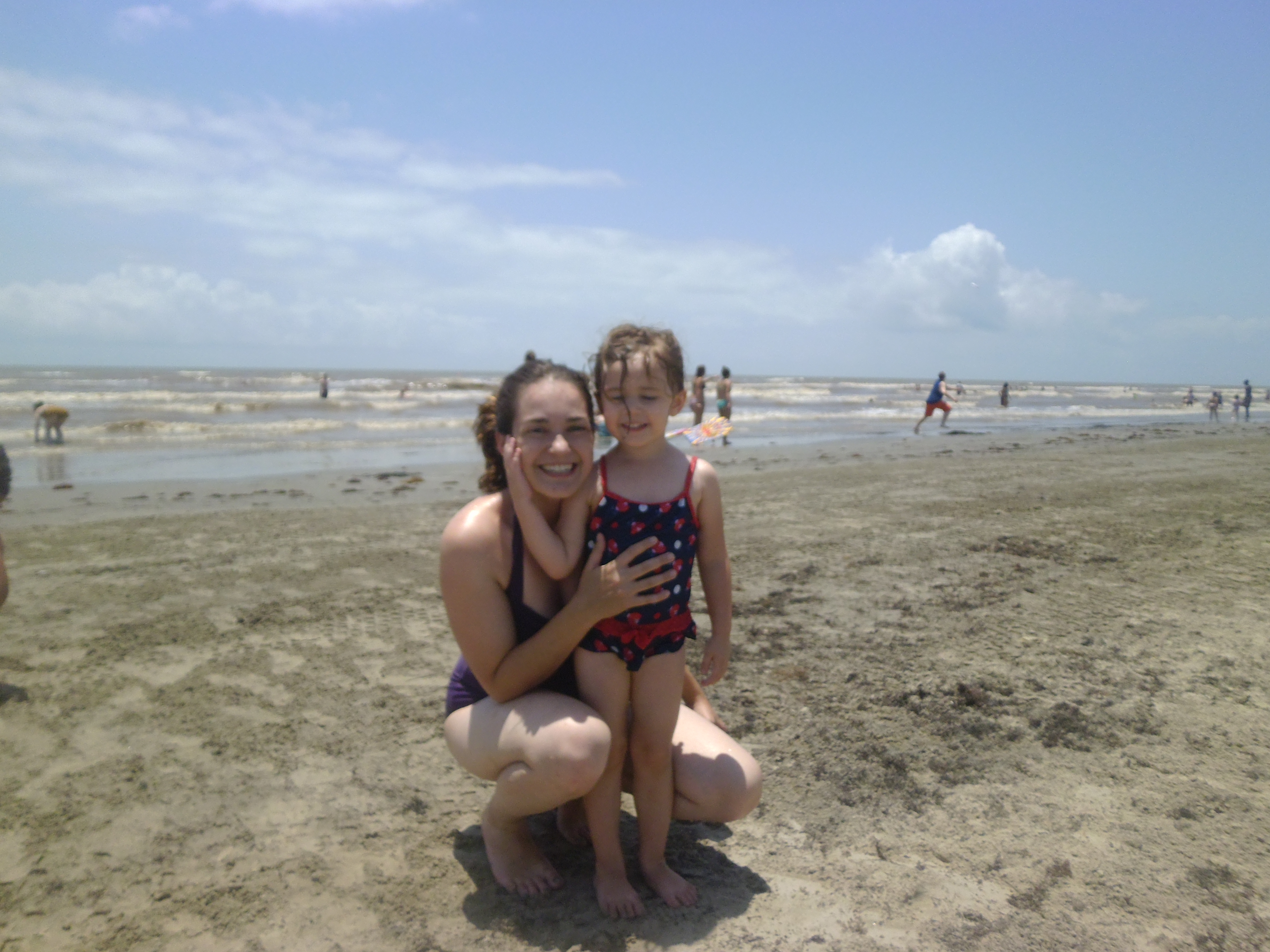 We went to the beach yesterday. It was amazing. We played in the sun, splashed in the waves, built sand castles with moats and walls and invading armies. We applied sunblock every 30 minutes to our fair-fair skin – spf 50. And in between those moments sprayed another kind of sunblock over our whole body to ensure that I hadn’t missed any spots.
Nonetheless, today we are burnt. Really burnt. Ok, so kiddo is moderately burnt and my legs look like lobster legs.
These are the days when being a reader and quasi hermit come in handy… we are sitting in the cool of the house watching book-based movies (The Rise of the Guardians) and patting our body parts down with home remedies.
So far, it has been a steady application of vinegar water (to take the heat out), egg whites (to minimize the blistering), aloe vera (because everyone knows to use aloe!), and at some point today I plan to try out a black tea poultice but that will require me to go purchase some Earl Gray. Frankly, neither one of us wants to leave the house.
Prior to all this excitement (or miserable post-beach adventurism) however, I was seriously looking into the idea of moving closer to the shoreline. (I’m still thinking I want to add this to my bucket list.) If only for a 6 month lease someday.
 Galveston in particular is full of a rich history that I was briefly introduced to in school, mostly surrounding the epic flood of 1900 and the statue memorializing that event. I remember studying the great September 8th flood in both fourth grade and seventh grade. I even wrote a fictional diary of a girl caught in the flood as part of a required creative writing exercise. With 145 mile an hour winds, near total destruction, families lost and killed, I sort of believed it wasn’t a viable living option. Despite it being a great place to visit for the day, when Ike hit, I was still surprised to learn that people actually live on the island year round. I grew up believing it was a Houstonian’s day trip destination and nothing more.
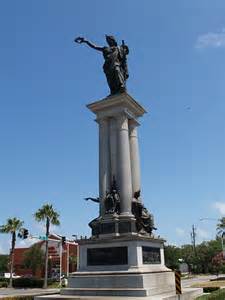 One in particular that amazed me this weekend was the statue regarding the Texas Revolution. It’s huge, and gorgeous, and well worth a child’s research paper. Despite all the intense Texas History a child is submitted to as a ward of the Texas public education system, I had completely been unaware (or merely forgot) that Galveston was the Republic of Texas’ capital city.
I definitely want to incorporate more beach trips into our lives – despite our fair skin and my current severe sun burn. But if I were to ever live there for a few months or so with our kiddo, I have so many cool lessons plans already half built around what would become our daily schedule. Just the architecture alone is worth a good week’s worth of study.
The whole day was a gentle reminder to be a tourist in your own city from time to time. It can be highly educational.
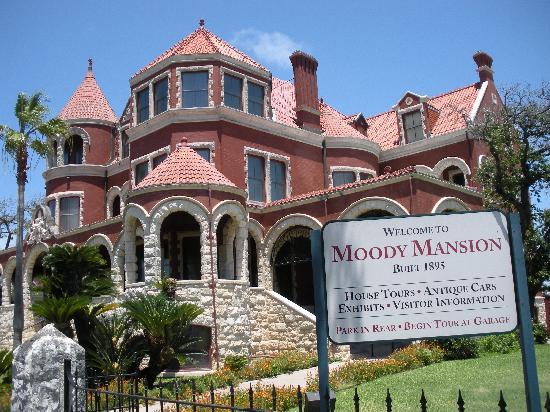
Until then, maybe we’ll check out some Books about Galveston Island
Stuffed Grape Leaves and Dewberry Pie
Homeschooling adventures have turned into some serious life skills lessons, which in turn have become foraging.

As previously mentioned, we use foragingtexas.com as a main source of information, but we do a lot of external research on our own as well.
Mustang Grapes – from foragingtexas.com
Scientific name: Vitis mustangensis
Abundance: plentiful
What: fruits, leaves, young tendrils
How: fruit raw (very tart), cooked, dried, preserves, wine; leaves and tendrils cooked,
Where: Edges of woods. Mustang grape leaves are fuzzy and have a white underside.
When: summer
Nutritional Value: calories, antioxidants
Other uses: water can be obtained from the vines (see technique in grapes- muscadine post), wild yeast from the fruit
Dangers: Mustang grapes are very acidic and handling/eating large amounts of the raw fruit can cause burns to hands and mouth.
When homeschooling, this is a good time to teach your kiddo about plant classifications. While picking the leaves (we had a mixture of Mustang grape leaves and Muscadine grape leaves, but I don’t recommend stuffing the Muscadines, they end up a little stringy).
Kingdom – Plantae
Order – Vitales
Family – Vitaceae
Genus – Vitis
Species – V. mustangensis
Our lessons then continue into the kitchen where we follow recipes and learn about fractions and conversions. You’d be amazed at how much a three year old will pick up on if you just show them. We halved this recipe: http://allrecipes.com/recipe/my-own-famous-stuffed-grape-leaves/ as well as added lemon balm from our home garden to the rice mixture.
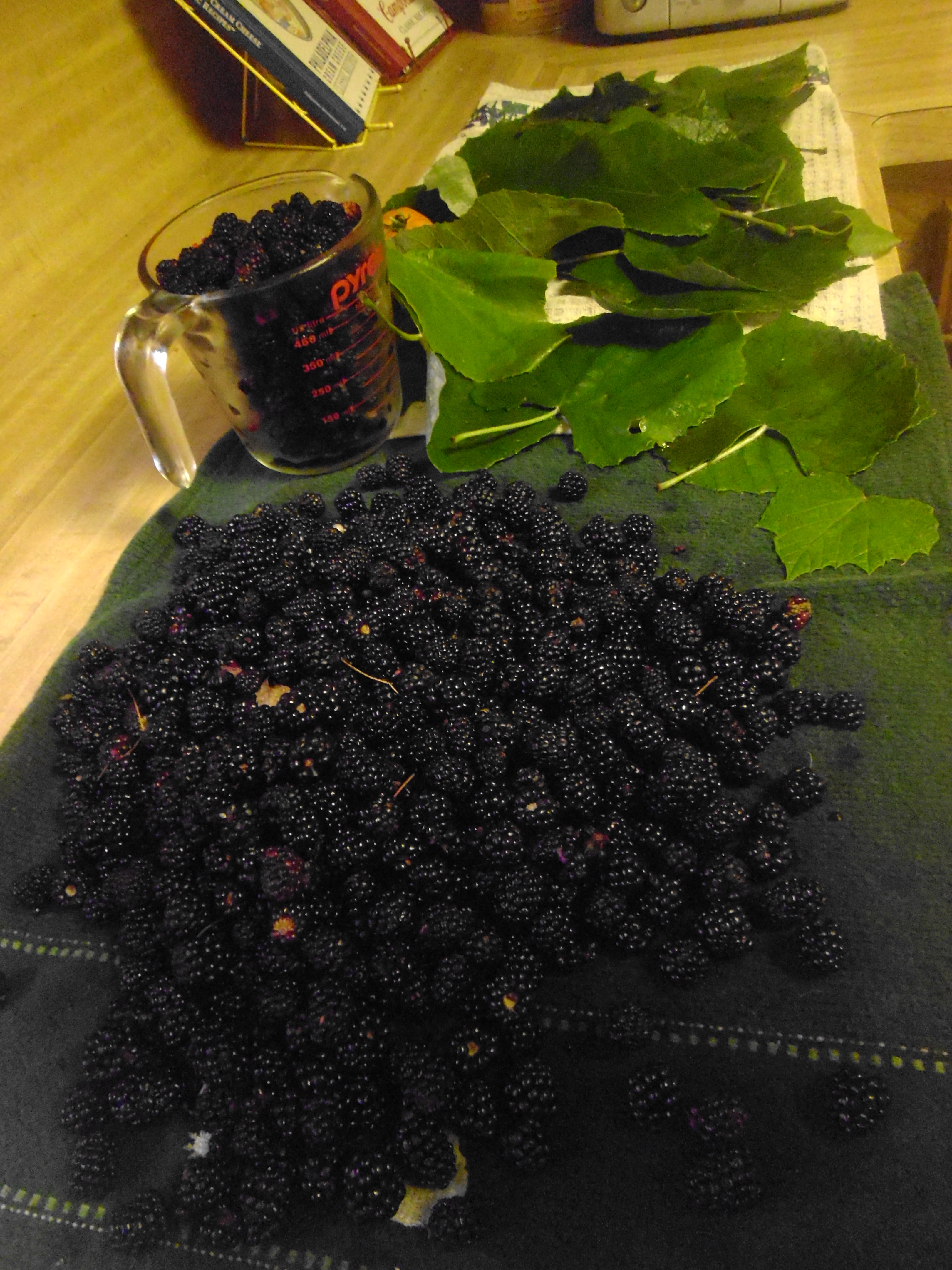 Our dewberry & grape leaf haul.
Dewberries – from foragingtexas.com
Scientific name: Rubus species
Abundance: plentiful
What: flowers, berries
How: open mouth, insert flower/fruit, then chew. seep flowers/young leaves in hot water for tea
Where: Sunny wastelands, borders between woods and fields. Dewberry plants grow as a low, horizontal ground cover.
When: Spring
Other uses: wine, jelly, tea, wine
Nutritional Value: carbohydrates, vitamin C; small amount of minerals and vitamins A & B
Dangers: sharp thorns
Again, our goal is to memorize the classifications and understand how they work:
Kingdom – Plantae
Order – Rosales
Family – Rosaceae
Genus – Rubus
Species – R. arborginum
Well, that and to make pies.
We used this pie recipe, except exchanged the blackberries for dewberries, and used a bit more sugar.
It was a hearty dinner and dessert.
Arbor Day

Arbor Day was yesterday. It’s always a nice ending to all the Earth Day celebrations… recycling, going green, celebrating the earth, and then – oh yes, plant a tree.
Of course we had to celebrate in the woods. So we took to the trails as usual and found our way to a lake. It was pretty fun teaching the kiddo to read a map – she’s already had a lot of exposure via The Cat in the Hat’s Learning Library book about maps. Putting it into action was a little bit more work than listening to me read clever poetry though.
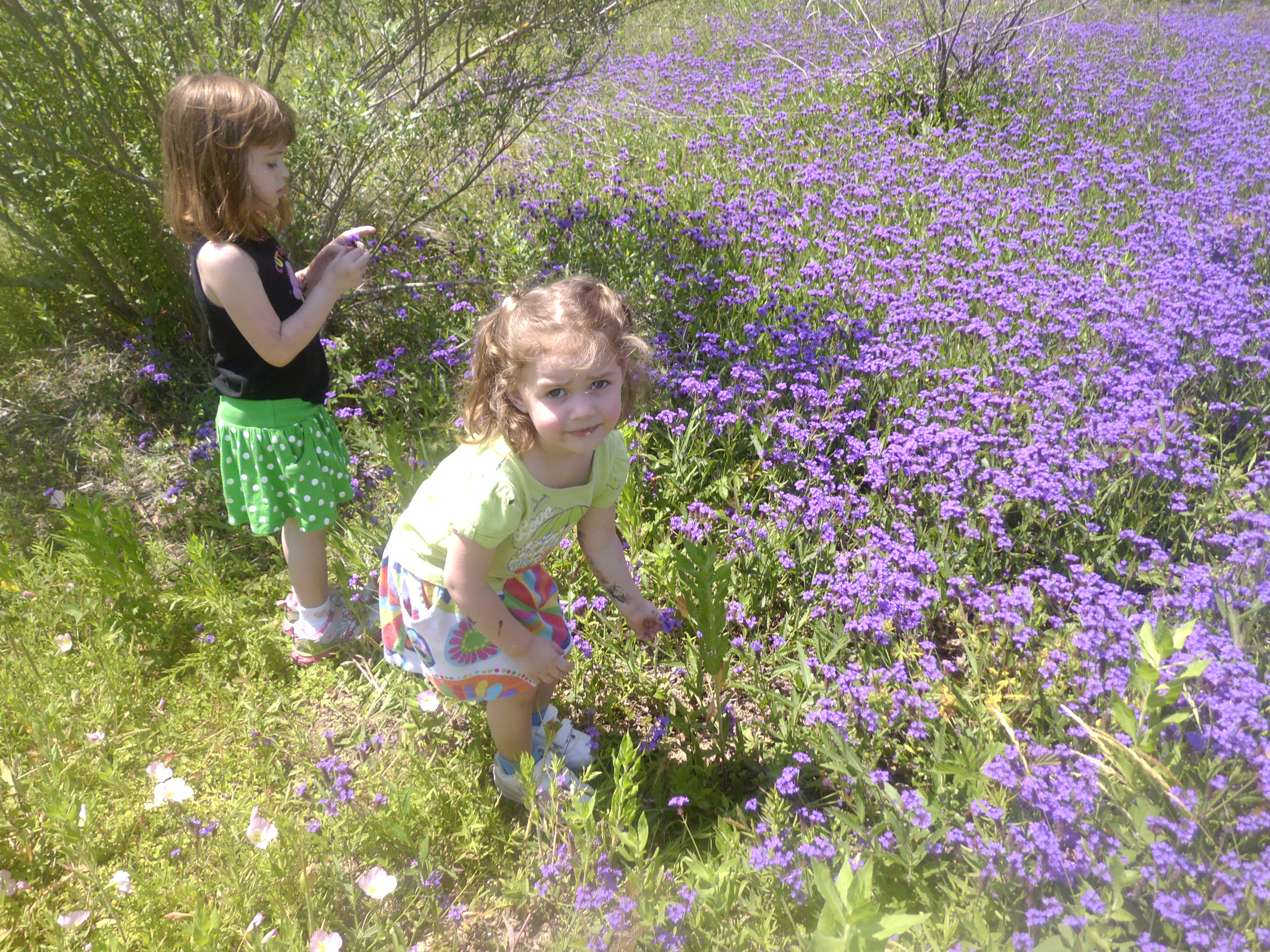 We found the lake, a dock, and a pavilion. The kiddo painted and ate snacks, played with her homeschool buddy, and helped me pick dewberries. (Of course, little girls get distracted by pretty purple flowers. There were a lot of pretty purple flowers.)
For those who aren’t from the area: dewberries are basically blackberries. They look the same, taste the same, everything is about the same, they just grow on a vine-like plant (‘small trailing bramble’) that usually stays closer to the ground rather than the larger bush where you’d find blackberries. They’re of the same genus of plant – Rubus – and taste great raw, cooked, or baked into pies or muffins.
Which is exactly what we did.
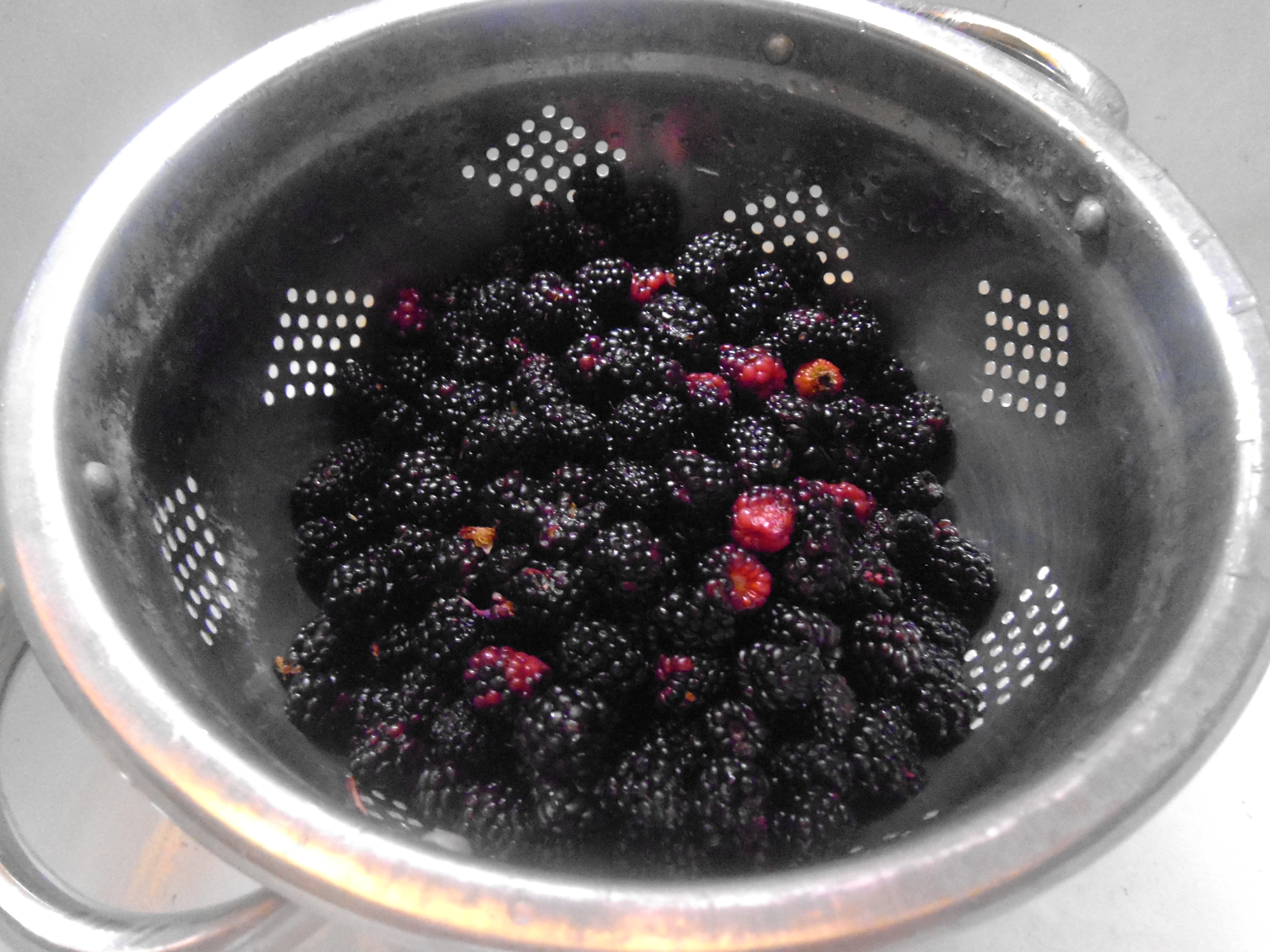


Dewberry Muffins
2 cups flour
3/4 cup sugar
2 tsp. baking powder
1/4 tsp. salt
1 egg
3/4 cup milk
1/4 cup vegetable oil
1/4 cup vanilla extract
1 tsp. lemon extract
1 tsp. ground clove
1 quart freshly picked dewberries
Mix all ingredients well. Pour into muffin pans, bake for 30 minutes with the oven on 350.
If you can’t plant a tree, then plant any seeds you get your hands on. Seeds are important.
So, after all the fun and excitement of yesterday, today we stayed indoors. At Half Price Books…
We attended/ hosted another Half Price Books Humble event today. It was seed driven and sponsored by the Mercer Arboretum volunteers. Information about the Arboretum was shared with all the HPB customers, kids were given an opportunity to plant their own seed in little cups and take it home, and packets of free seeds were handed out.


Lessons in Fleabane
 My favorite thing about homeschooling is hitting the books and walking in the woods. All of our lessons involve those two things in some combination or another and it’s so invigorating. Fresh air, sunshine, open spaces, trees, and good books – I don’t understand how I learned anything in any other fashion. With spring upon us, we’ve been going headlong into Wildflowers of Texas
 So on our trail walk today, we collected fleabane flowers. (Kiddo likes to pick them anyway, so if we’re collecting flower baskets, I’d like to get good use out of them.) There are a whole host of lessons that come into foraging. Identify the plant, spell the name of the plant – with a three year old we get to talk about phonics and how the ‘ph’ in Philadelphia makes the same sound as the ‘f’ in Fleabane. I wonder if in the long run the F sounds will always bring to mind images of white sunflower-like-daisy flowers and the smell of fresh, nearly summer tea. We learned that “fleabane” is a common name for Erigeron and is part of the Asteraceae (sunflower) family.
 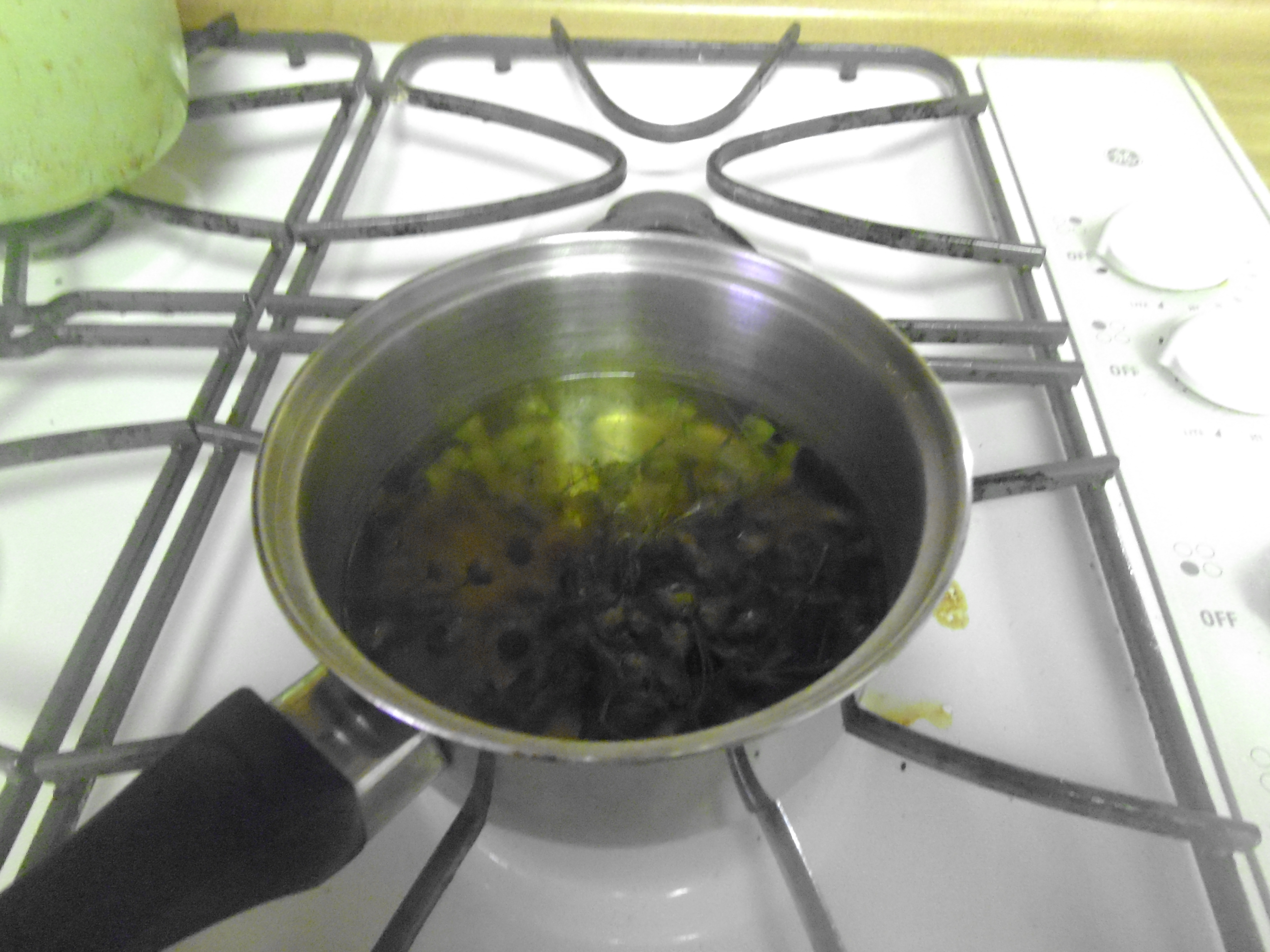 Once home, another science lesson ensues. Boiling water on the stove. After all, boiling is the rapid vaporization of a liquid with occurs when heat is applied. We get to discuss the words ‘rapid’ and ‘vaporization.’ Rapid ties into our synonyms lesson (from the Bryan P. Collins’ Words are Categorical series that we’ve been reading since birth.) Kiddo’s eyes light up when she sees the water get hot enough to cause steam and bubbles.
 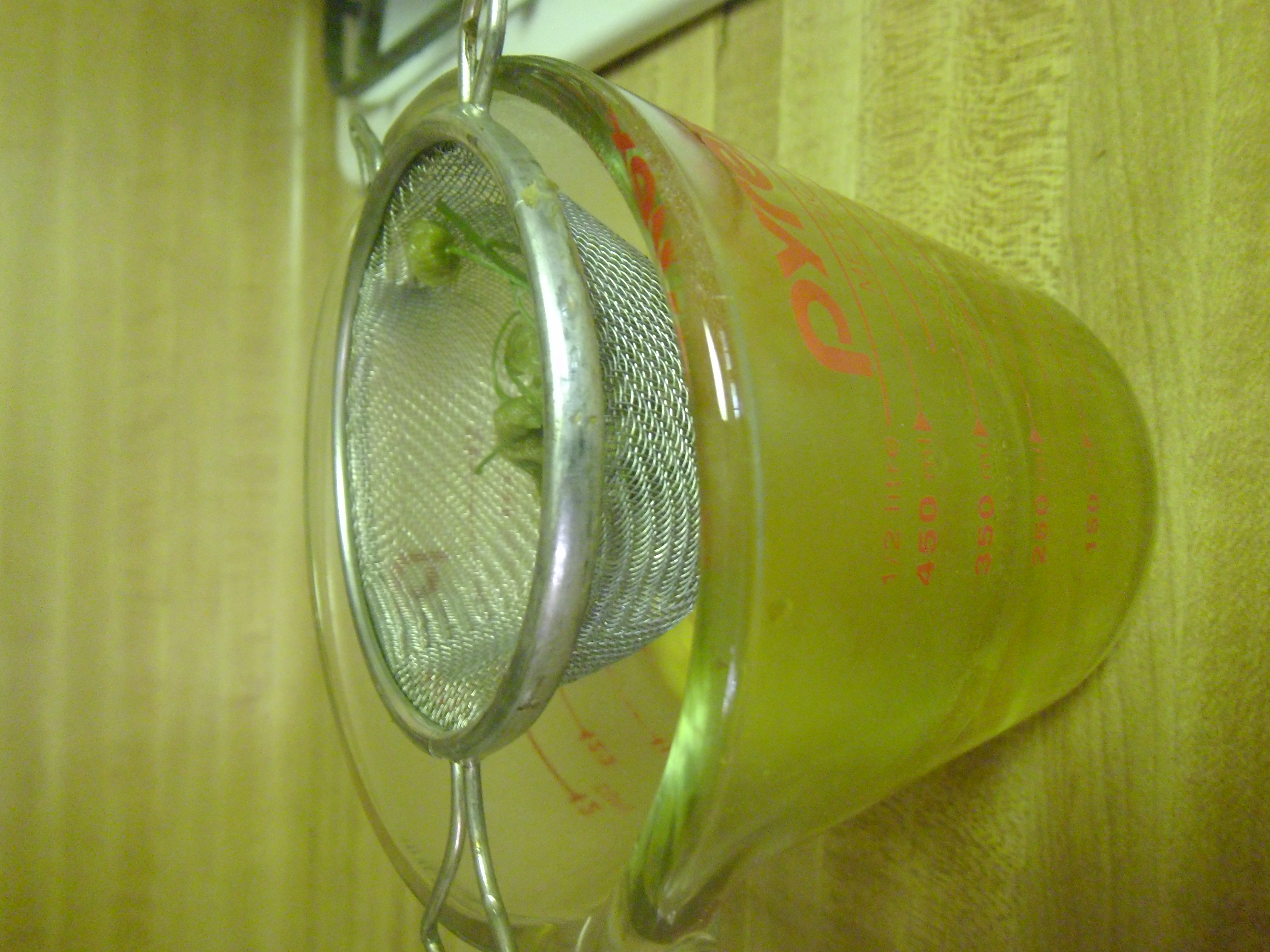 We’ve used the strainers before, and the measuring cups, but becoming a pro in the kitchen is something to strive for daily. Making tea this way is the perfect opportunity to practice reading our measurements and understanding what those mean… two cups, one cup, half cup, etc. Understanding these concepts visually before setting fractions in front of them when they’re older is essential, I think. Plus, there are some practical life skills gained from knowing how to make fresh food from fresh sources.
  I also like her growing up knowing that food has purpose beyond pleasure and satisfaction. This tea, for instance, has very little flavor. It is a bit floral, obviously, having been made from flowers, but without honey tastes a bit like fancy water. It is a natural insecticide but is edible. You can treat headaches with it as well as inflammations of the nose and throat. It cleanses the kidneys and can aid against gout. Be warned, like chamomile and licorice root, fleabane tea made from the roots can induce miscarriages and was commonly used for menstrual issues and birth control by Native American tribes. Now, we’re diving into history…
  The picture came out a little blurry. But now, we’re enjoying our tea and a game of Name That Continent. Happy Earth Day.
Earth Day Reading With Little People
The Weekly Low Down on Kids Books – selected by The Kiddo
Holiday reading with preschoolers can actually be quite fun. Although most people are doing a lot of Easter books, we’ve spent our focus on nature, enjoying spring, and covering the catechism this week. Easter bunnies and egg hunting a thing on hold for now.

Our daily go to during any season tends to be Cat in the Hat Learning Library
Life Cycles
Because it’s Earth Day season (the actual day is April 22nd, which falls on a Tuesday this year), we’ve been reading up on conservation and organic gardening. Of course, that also means that I’m letting my three year old water my tomatoes and walk in my garden. It’s a learning experience for her and a letting go experience for me.
That’s why the woods being by the house is best for us. It’s where I can really let her go and frolic and be herself.
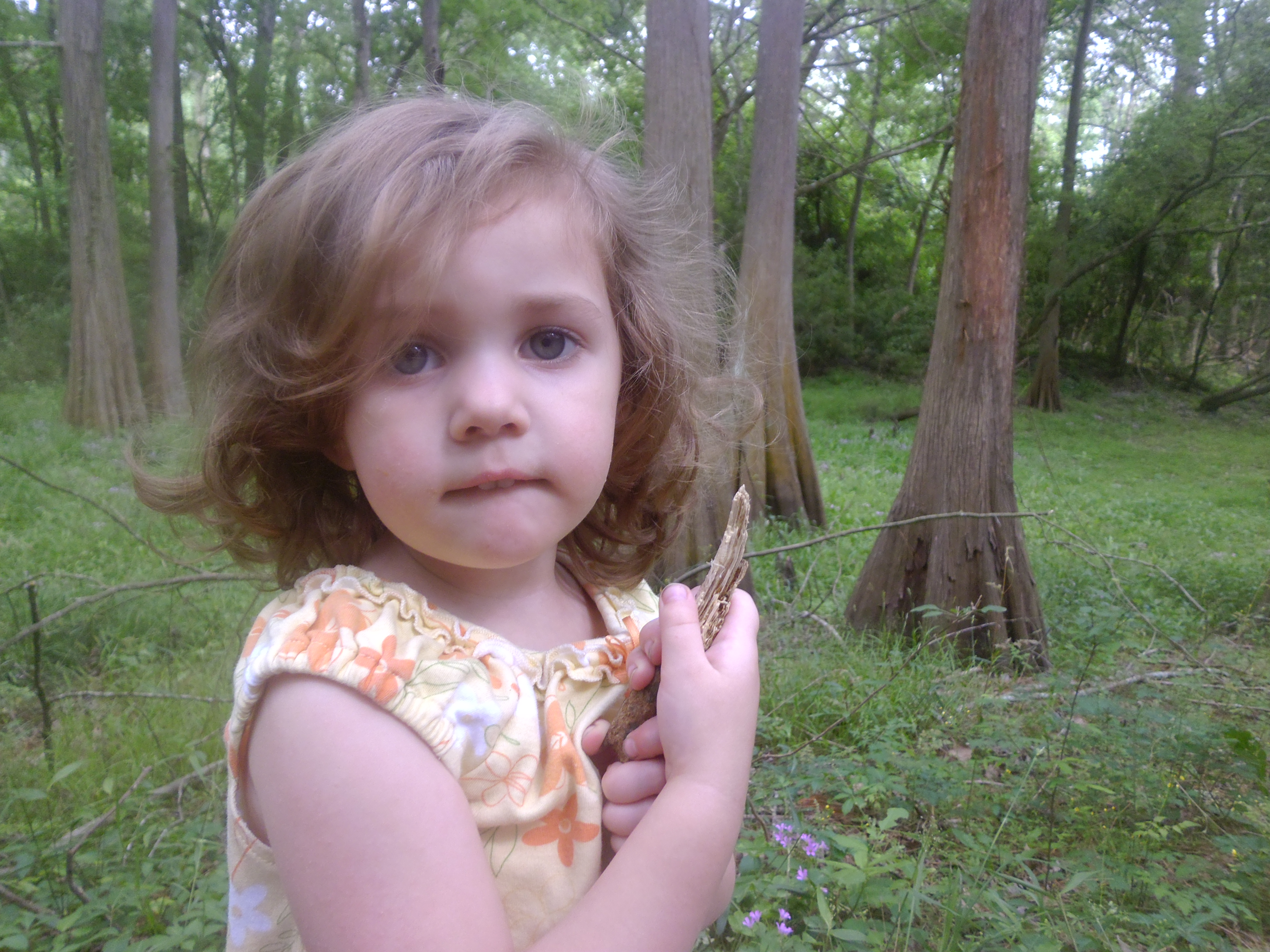
When we get to the open fields she gets to pick as many flowers as she wants.
 Whether you want to make it part of your normal routine or you’re just celebrating Earth Day, check out kiddo’s favorite books and find a good outdoor park this weekend. The fresh air and sunshine is amazing.
Freelance Writing
 I wish this blog was a post about me receiving one of those… see Daphne, above, a royal portable from 1930. Green, no less.
It’s not.
But it is pretty exciting.
I’m pursuing supplementing my income with freelance writing jobs. So far, I have been hired on by Money-Fax.com and I’m enjoying it quite a bit. Money-Fax has me writing about Kid & Family Budgeting, which is pretty perfect because I’m a homeschool mom chronically on an author budget. (That’s code for mommy who lives off nothing.)
Here are links to my published articles, so far:
The Economics of Cloth Diapers
How to Entertain Your Child for Free This Summer
How Much Does it Really Cost to Homeschool
The more traffic my articles get, the more people will want to have me write them – naturally. So, please, if you have someone in your life any of these articles would interest, share them.
There are more to come. Keep checking Money-Fax.com for budget friendly pets and ways to celebrate Easter. Browse through their site for other helpful articles as well. They are an education service geared toward helping the public learn to improve the state of their finances.
Housman for Kids
 A Weekly Low Down on Kids Books
Title: A Shropshire Lad
Author: A. E. Housman
Illustrator: Charles Mozley
Genre: Poetry
In February I stumbled across A.E. Housman. Between the state of my soul, the weather, and Housman’s poetry, I found a little hub of safety. In the words of my best friend, “Where has he been all our lives?”
Apparently everywhere.
Even in kid’s books, of all places.

The book I found is a $10 hardback from Good Books in the Woods. It’s a hardback. It was printed in 1968, and the style of binding, as well as the illustrations, reflect that. To me, it’s the perfect edition to have floating around the house for your kiddo to discover and flip through as early readers. Same classic poetry with a much different kid friendly feel.




 Anakalian Whims