Weekly Low Down on Kids Books 4/17/12
 11 Experiments That Failed Deemed Awesome
“That was great! It was hilarious. It reminded me of myself. People should read it because its really, really, really funny. Its not really a story, its more about things you shouldn’t do at home,” my eleven year old niece, Ashleigh Raine, says as she finishes 11 Experiments That Failed
I brought a stack of library books with me to my sister’s house to watch five of her six children, along with my own kid, while they rushed Alexandrea (the 3rd in line) to the ER for a broken arm (compliments of the fabulous climbing tree in their backyard). After completing their chores, the kids got to sit down to a few episodes of Transformers, and then it was off to nap, rest, and reading time according to their respective ages.
The youngest asleep upstairs, the two eldest bee-line for the bag of books from the library – new books, ones they don’t see every day, like most kids in a toy store their eyes light up with glee.
I talk to Ashleigh about whether I can quote her in my blog, and as we discuss the book Ethan Blaise, age nine, asks about an illustration on an open page. “What is that kid doing?”
“You should read it,” Ashleigh pushes the book across the carpet to him. Ethan immediately stretches out, belly down, on the floor, kicking his feet while audibly snickering throughout the book.
While Ethan reads, he intermittenly laughs aloud while Ashleigh reads over his shoulder, distracted from the book she picked up to read second, apparently she would rather re-read 11ETF with her brother.
“You think its funny too?” she asks him.
“Yeah,” he grins, smacks his gum, and continues to flip through the pages while laughing and reading the best parts aloud.
When he finishes he tells me, “This one is funny!”
“Is it the most hilarious book you’ve ever read?” Ashleigh asks him.
“Yes, it is the funniest book I’ve ever read. ‘What you need is a message, a toilet, a bottle…’ ” This last bit I assume is a quote from the book as the two continue to quote the book from memory for about ten to fifteen minutes before they remember they are now hungry and flee to the kitchen to raid the pantry for crackers.
I initially checked this book out to read to Ayla, but I haven’t got around to it yet. I am posting this review solely on the reactions of my niece and nephews recommendation. If you are shopping for nine to eleven year olds, I think you’ll have a winner.
Guest Blogger Carolina Ciucci
 on The Name of the Rose
I knew next to nothing about The Name of the Rose when I first decided to read it. I knew it was set during the Middle Ages and that it was an accurate portrayal of the way people perceived the world back then, but I had no idea what the plot was, what the characters were like, and so on and so forth. You could have told me I’d be reading a chronicle about the slow progression from the Roman latifundium and into the feudal system and I’d have most likely believed you. And I certainly wouldn’t have imagined it to be both a gripping thriller and a thought-provoking treatise on philosophy and theology all at once.
The story is told by an elderly monk who reminisces on the week he spent accompanying William of Baskerville, his mentor and father’s friend, at a monastery. Baskerville’s initial mission is to intercede before the Pope’s men in order to get him to acknowledge Franciscan poverty as a legitimate Christian doctrine. However, he’s quickly swept up into a whirlwind of deaths, all mysterious and apparently all connected to the abbey’s library- a library the otherwise very open abbot has forbidden them to visit.
Everything about this book blew me away. From the painstakingly detailed description of a XIV century West European abbey and life within its walls, to the portrayal of the conflicts shaking the once upon a time unmovable Christian Church right to the core, passing through the way it reflected upon books; it was all so brilliantly crafted and depicted that it left me staring at the final page for several minutes before closing the book, more than just a little dazed and not quite sure how I was feeling. Now, a couple of days later, I think I’m ready to elaborate on the effects The Name of the Rose had on me.

Image of Library found on blog.christianitytoday.com
On one hand, it helped me get a better grasp on notions I had seen in class but had not really understood, finding them much too abstract and complicated at the time. It was an invaluable company to my Europe I and Spanish Lit classes, only a lot more fun and a lot less restrictive- don’t get me wrong, I like the material I read for class. But my inner ‘I-want-to-read-what-I-want-when-I-want-it’ rebellious reader is often put off when I’m on a deadline. Especially when I’m supposed to analyze and dissect texts I’d like to absorb slowly, at my own pace. So yeah, it was a relief to sink into a work of fiction I didn’t have to analyze, one I could simply enjoy and wonder and work out theories about. And of course, because of that, I absorbed said notions, said mindset, without even realizing that I was.
And then there’s the numerous passages dedicated to books. Oh, my. I didn’t just read these, I devoured them. Books were still such a novelty back in the XIV century, and it was enthralling to explore different opinions on something that is now an intrinsic part of my life, hell, an intrinsic part of who I am, but was once almost a taboo. It made me wonder- Why do I read? Why is the information contained in a book so precious to me? It reminded me of the fact that a book is nothing without a reader, that the words held in it are nothing but syntax if somebody doesn’t open it and is willing to give it the time and effort required to make it something more. It showed me, more than anything, the unique relationship between writer, reader and book. It reminded me of what a powerful, somewhat threatening tool knowledge is- and therefore why books have been both cherished and destroyed throughout history. The ‘library-as-a-labyrinth’ metaphor will certainly go down in my books as one of the most beautiful, accurate descriptions of the mysteries and wonders a library holds.
This was my first time reading this novel, but it won’t be the last. I want to come back to it after taking Latin next semester, after learning more about medieval politics and religion, after having the time to let the seeds it planted grow and want more.

To Eden Phillpotts
Agatha Christie opened her novel Peril at End House with a dedication:
To Eden Phillpotts
to whom I shall always be grateful for
his friendship and the encouragement
he gave me many years ago
Immediately, I was intrigued.

Eden Phillpotts
Eden Phillpotts was an English author, poet, and dramatist born in 1862 in India. He lived near the Christie household when Agatha was young and still unpublished. She visited him reguarlary under the advisement of her mother, so he could mentor her and guide her writing into a lifelong career. Phillpotts was the first professional writer to read any of Agatha’s unpublished pieces.
A letter survives of some of the advice he had to bestow on the young budding writer:
“You have a great feeling for dialogue… You should stick to gay, natural dialogue. Try and cut all the moralizations out of your novels; you are much too fond of them and nothing is more boring to read. Try and leave your characters alone, so that they can speak for themselves, instead of always rushing in to tell them what they ought to say, or to explain to the reader what they mean by what they are saying. That is for the reader to judge for himself.” ( www.poirot.us )
Phillpotts’ family moved from India when he was three years old. At seventeen, he worked as a clerk for an insurance company, where he fell in love with theatre and decided to become an actor. When he realized acting wasn’t for him, he pursued a career in writing instead. So young when he began, its no wonder he enjoyed encouraging another young talent when he saw one. Phillpotts’ own first publication was his poem “The Witches Cauldron” which kicked off a slew of published articles, reviews, short stories, plays, and novels. Later, he was know to also write under the name Harrington Hext.
Phillpotts was known to befriend many of history’s greats: Arthur Conan Doyal, Henry James, George Bernard Shaw, Arnold Bennett, Jerome K. Jerome, and obviously Agatha Christie. As a sign of both friendship and his faith in Christie’s writing ability, Phillpotts introduced Christie to his agent at Hughes Massie. The dedicated novel Peril at End House was the seventh in the Hercule Poirot series, published in 1932. Its nice to know that she fit in a dedication to a friend and advisor long before his death in 1960, many times friends are not so lucky to appreciate each other prior to memorial memos.
My Very First Giveaway!
 I received a copy of Elizabeth George’s Believing the Lie in December 2011 from Dutton Books. Its a beautiful hard back, released to the public January 2012. It has been read twice, but is in excellent condition, and although I am a horder at heart and would like to hold onto and cherish every book I’ve ever had the pleasure of reading, I decided I would use this copy to host my first giveaway. (Get my hands dirty with all this fabulous giveaway excitement, so to speak.)
The conditions of this giveaway are that you (in good faith and on scout’s honor) follow me on twitter, follow my blog, and leave a comment on this post that includes your email address. If you don’t leave your email address I will have no way of contacting you if you win!
This book is the latest in the Inspector Lynley series, but you don’t have to have read previous books in the series to get into the story, George tells you all you need to know. It is the first book in the series that I have read, and I plan to read more once I am done with my Agatha Christie Crime Collection marathon. Believing the Lie follows the investigation of a supposed drowning on a family estate of a clan full of secrets and shocking lies. George’s character development skills are surprisingly detailed and thorough for this genre, and its a good book for general fiction lovers to read if they want to dip their toes in the mystery section for a few days. The 608 pages goes fast.
Along with this book, I will ship a small Scentsy surprise in the form of a Scent Circle. If you don’t know what that is, check out my website here, and fall in love: https://akklemm.scentsy.us/Scentsy. Winner will be announced and contacted on April 30th. Let the comments, twittering, and following begin!
Les Miserables Blog Hop
I have been picking up and setting down Hugo’s Les Miserables for a few months now. Its not fair… to me, to the book, to dear Hugo. I WANT to read it, I do, but I need some buddies. So I found the perfect solution to my dilemma and I hope some of you will join.
 Kate’s Library is this cute little book blog, with a huge following, that I stumbled across on Carolina Cuicci’s blog Reading Against The Clock (.blogspot.com). It seems I am not the only one with a brain block on Hugo this year and Kate is hosting a read-a-long. The details are provided below on the link, but I’ll quote a few of the highlights.
http://kateslibrary.blogspot.com/2011/11/chunkster-readalong-les-miserables-2012.html
From Kate’s Library:
Have you ever wanted to read Les Miserables? Do you want to bond with your fellow bloggers through a fun readalong? Do you like big books and you cannot lie? Are you looking for a readalong/challenge that’s incredibly low key? Do you want to grab 2012 by the face and make it the best reading year ever?
If the answer to any of these questions is “YES!” you may consider joining me in a 2012 litventure. I’m hosting a readalong/challenge to read Les Miserables by Victor Hugo throughout the year 2012.
Each blogger that participates will be posting updates of the sections they have read as they complete them. So whether you are a blogger wanting to add your opinions to the cyber world concerning Hugo’s great work, or are just a reader wanting follow the hop, check it out.
My post on Fantine.
My post on Cosette.
My post on Marius.
I read Saint Denis during Banned Books Awareness Week, read about it here.
My post on St. Denis.
My final post on Jean Valjean, the musical, and the 2012 movie.
A New Children’s Book by Temara Moore
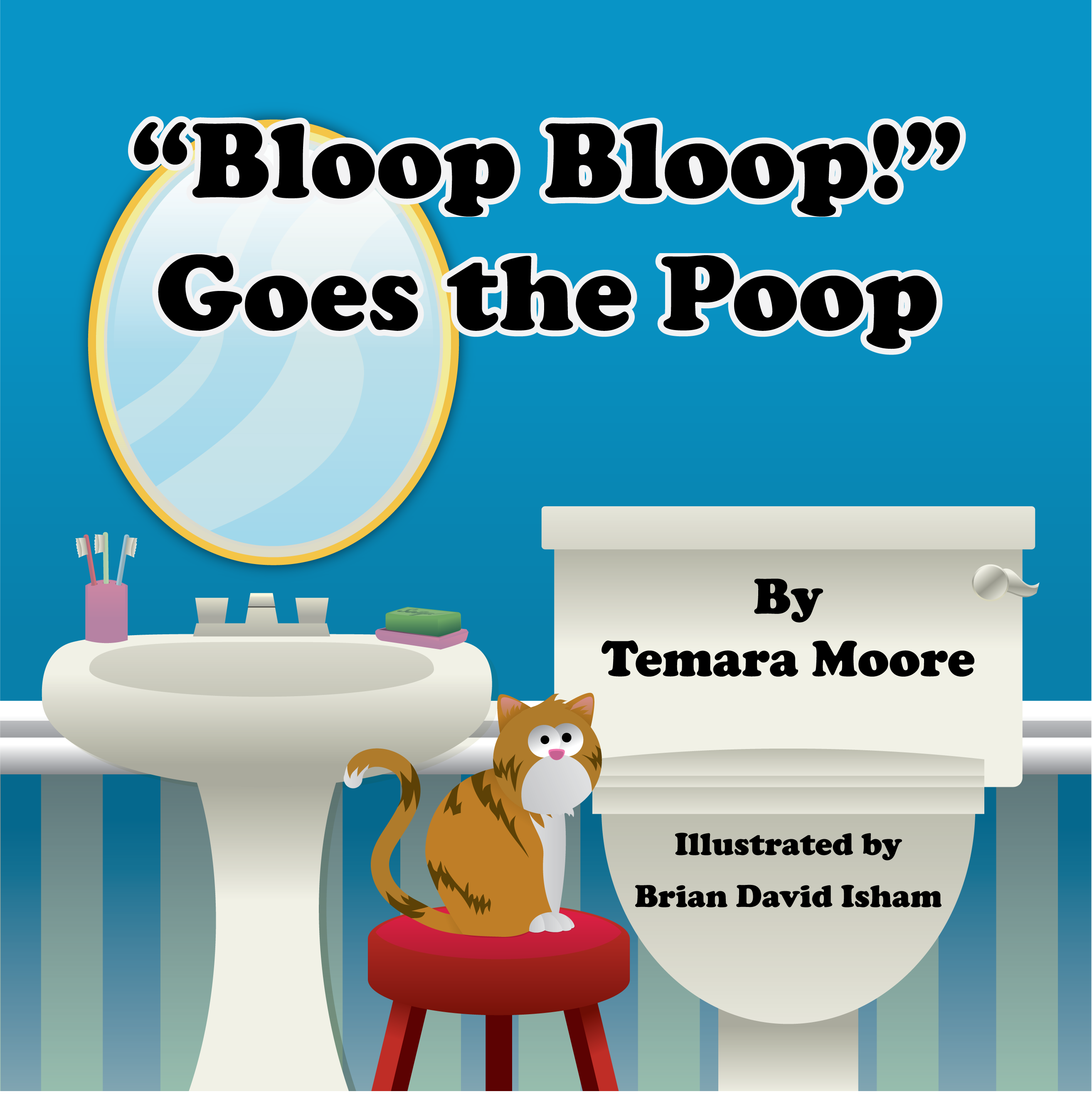 Title: “Bloop Bloop!” Goes the Poop
Author: Temara Moore
Illustrations: Brian David Isham
We Dream Publishing – http://www.wedreampublishing.com
Genre: Picture Book, Potty Training
I have to admit, prior to having a toddler of my own, the whole concept of potty training books was something I found ridiculous. Now, as potty training becomes a reality and my own kiddo is showing more and more interest in the toilet (and she already loves books) its making a little more sense.
So my husband and I were pretty excited to sit down with our first training tool. Temara Moore sent me a copy of “Bloop Bloop!” Goes the Poop
We didn’t get very far when trying to read the book to Ayla the first time through. She was so excited about the pictures and the cat that follows the little boy to the bathroom that she stole the book and spent about ten minutes flipping through the pages herself. I don’t have the most patient kid when it comes to story time, but I love that she shows an interest in reading on her own. She loves her books and at nearly 18 months has become a page turning pro.
The second time through was much more successful. We made it all the way through the story with many “Ooohs” from Ayla and emphatic pointing to illustrations she had now familiarized herself with. By the end of the book she was telling me “Bloop Bloop! Bloop Bloop!” I would not be surprised if she had some of the rhymes memorized a few months down the road when her annunciation improves. Thank you, Temara, for our copy of the book. It will be well loved.
Information regarding a book signing and reading from the author to follow at a later date. Be sure to follow this blog for the details!
The Name of the Rose Readathon
Disclaimer: This is not the guest blogger post previously mentioned. Caro’s review of this book can be found here.
I first read The Name of the Rose
My sister had read Umberto Eco’s work when she was in college, I always imagine it was one of the last books she read on her own before before she started to have problems with her vision, but that could be a complete fabrication of my own mind. She loved it and was excited to hear that I had stumbled across the book and felt the pull of intrigue on my soul. You know that feeling when you first find something or someone you know you will fall in love with but you don’t know when or why, you just know its going to happen? That’s the feeling I got the moment Eco’s book first hit my hands.
And I did fall in love. The Name of the Rose is genius, Umberto Eco is a genius. I eagerly read through each line, so excited about what would come next, thrilled to pieces at the idea of a library being a labyrinth in a spooky monestery. I was in love page after page until I settled on the very last line with a deep sigh at its ending “stat rosa pristina nomine, nomina nuda tenemus.” I’d be lying if I didn’t admit that upon first reading, that last line’s deep sigh wasn’t just a lament over the ending of the book, it was also one of complete puzzlement and disastifaction in not fully understanding the meaning behind that last line, but knowing that of course there must be one. Insert googling the quote, briefly reading a few things, being sad over the fact that I didn’t catch a literary reference on the first try because I’d never been exposed to Bernard whoever in my life, therefore wouldn’t have caught the reference the first time through, regardless of my intelligence level, and now you have a full visual of that deep sigh. I haven’t read Bernard of Cluny’s (or is it Morlay, I find multiple references naming the author as Morlay instead of Cluny – clearly I need to brush up on my Medieval History) De Contemptu Mundi
After reading The Name of the Rose, I devoured Foucault’s Pendulum
 Because I had already read The Name of the Rose before, I decided that this time I would read through my copy of The Key to The Name of the Rose
For starters, the story stays really fresh and you don’t have to back peddle at all. No double checking to see if that part you read two nights ago is still there. (You know you do that too sometimes, even though the book is clearly the same size it was before, has the same number of pages, sometimes you feel the need to breeze through the parts you already read to make sure you didn’t dream something up in the interem.) You don’t feel as inclined to re-check any translations you did, its fresh, its right, you only have so long to read this next portion, so get on with the story.
All in all, I enjoy The Name of the Rose every time I read it. I can’t wait to see what Carolina Cuicci has to say in her guest blog post and I hope you’ll come and read through her post with me. And maybe, when we have a readathon for The Island of the Day Before
Weekly Low Down on Kids Books – Easter
With Easter this past weekend, we spent the week with Betty Bunny.
(Fellow Christians, please don’t harass me about how Easter is not about bunnies, but our Lord Jesus Christ because Easter is actually a celebration of the goddess Oestre and fertility and the spring equinox and all that and we Christians kinda sharked the holiday for our own purposes. We celebrate Christ’s resurrection separate from Easter in our house. Pagans and lovers of Mother Earth please don’t harass me about Betty Bunny not having anything to do with celebrating nature, I know, I know.)
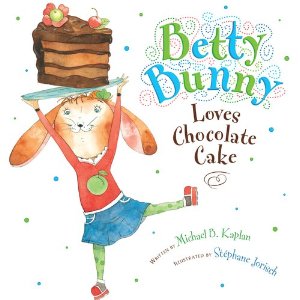 Betty Bunny
We also read If Beaver Had a Fever
Coming Soon…
Follow this blogger on Twitter @carolinaciucci
A Guest Blogger!
A fellow tweet peep suggested a Name of the Rose readathon for this weekend, which I am enjoying immensely! Goal: complete Umberto Eco’s The Name of the Rose during Easter Weekend. Caro is a university student, voracious reader, and fellow blogger of Reading Against The Clock (http://readingagainsttheclock.blogspot.com/). This is a re-read of The Name of the Rose for me, so I am excited to be able to post a review by someone seeing Eco with fresh eyes! Caro is posting updates of her reading experience throughout the weekend, so please go check out Reading Against the Clock, but don’t forget to come back here for the Official Review!
Spring on Some Christie
Gone are the cold evenings bundled by the fireside with our hot tea, cozy blankets, and Agatha Christie books. Now, its Spring in Texas, so our evenings involve a crap ton of humidity, cold sweet tea, and holding whatever Christie novel I’m in the middle of in front of an open window while praying for a breeze. Still, even though the mood has changed, there’s something so comforting in the consistency of reading through such a large series. Cold days, warm days, happy days, sad days, it doesn’t matter – I know I will close the night with a few chapters of Hercule Poirot, pompous egg-shaped head and all, coming to the rescue with the truth.
So much of my reading in my life has been seasonal. I always save Sherlock Holmes for the winter months. Anne of Green Gables owned my summers as a child. Some things just move me as stories that should be read at certain times of the year, let the story meld with an existing environment to provide the perfect mood. I even set my Scentsy warmers to scents that will match! So you can guess my hesitation sitting down with Hercule Poirot as the weather got warm, now that I’ve snuggled up with him all winter.
Yet, March blessed me with The Murder of Roger Ackroyd, The Big Four, and The Mystery of the Blue Train. Roger Ackroyd was shocking and wonderful, The Big Four surprisingly huge in its worldwide grandeur, and The Mystery of the Blue Train cozy in its step back into the traditional Poirot pace. The weather didn’t take away from any of these stories, Christie gets you into the story so efficiently, so effectively, you can’t be distracted by the outside world; afterall, Poirot has a mystery to walk you through, a mystery only he is equipped to solve. I can’t wait to see what is in store for our household with the titles coming up in April and the rest of the year.







 Anakalian Whims